
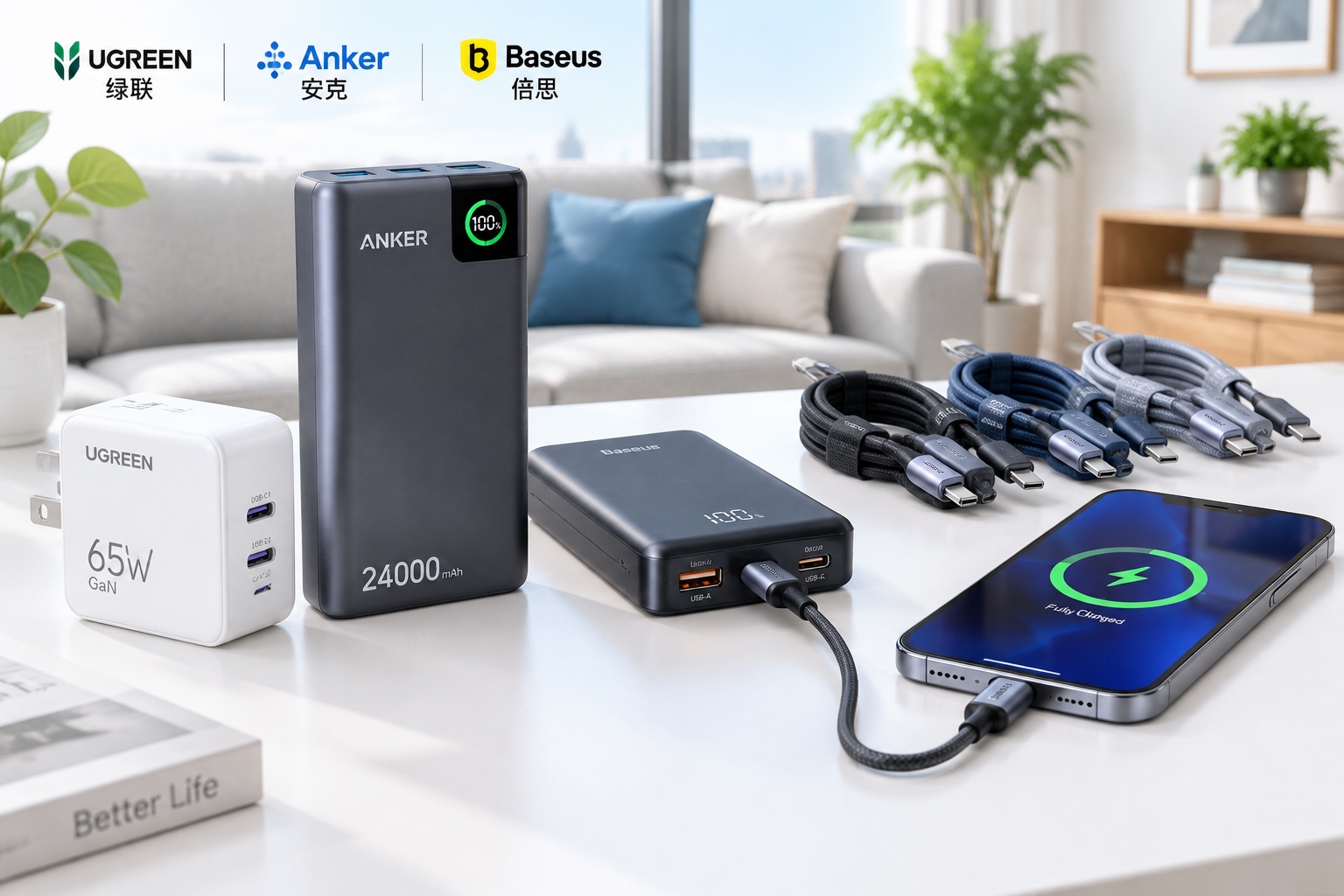

You’re standing in an electronics aisle in Berlin or Bangkok or Boston. Three charging adapters, all from Chinese brands, promise 65W of gallium-nitride power in nearly identical pocket-sized bodies. One costs $60, another $45, the third $35. Which do you pick?
This is no longer a niche dilemma. Anker, Baseus, and Ugreen are the world’s three largest consumer charging brands by volume, and together they’ve turned a commodity accessory into a sophisticated product category. But while they all ship from Shenzhen, their engineering choices, safety standards, and business strategies differ in ways that affect how they perform in your daily life.
I’ve spent the past two weeks living with each brand’s flagship charger, power bank, and cable. The goal wasn’t to find a ‘Winner’ in TikTok-comment style. It was to understand how these companies approach the same problem: delivering fast, reliable, and safe power to the battery-hungry devices we carry.
Why the World Is Buying Chinese Chargers
Let’s start with context. A decade ago, ‘Made in China’ on a charger felt like a warning. Today, Chinese companies design the silicon inside many of these devices, manufacture them in vertically integrated factories, and sell them under their own brands in every major market.
Anker was founded in 2011 by a former Google engineer, Steven Yang, who saw an opportunity to sell better phone batteries and chargers on Amazon. Its early success came from rigorous quality control and a customer-obsessed return policy. Baseus, established the same year, took a design-forward route: its products show off translucent shells, LED displays, and colorful braided cables. Ugreen, also a 2011 startup, grew quietly through cables and hubs, then expanded into GaN chargers and power stations with a reputation for sturdy, no-nonsense gear.
Together they now make up a disproportionate share of Amazon’s bestseller lists for charging products, and their logos appear in Apple stores and big-box retailers alike.
Our Testing Method
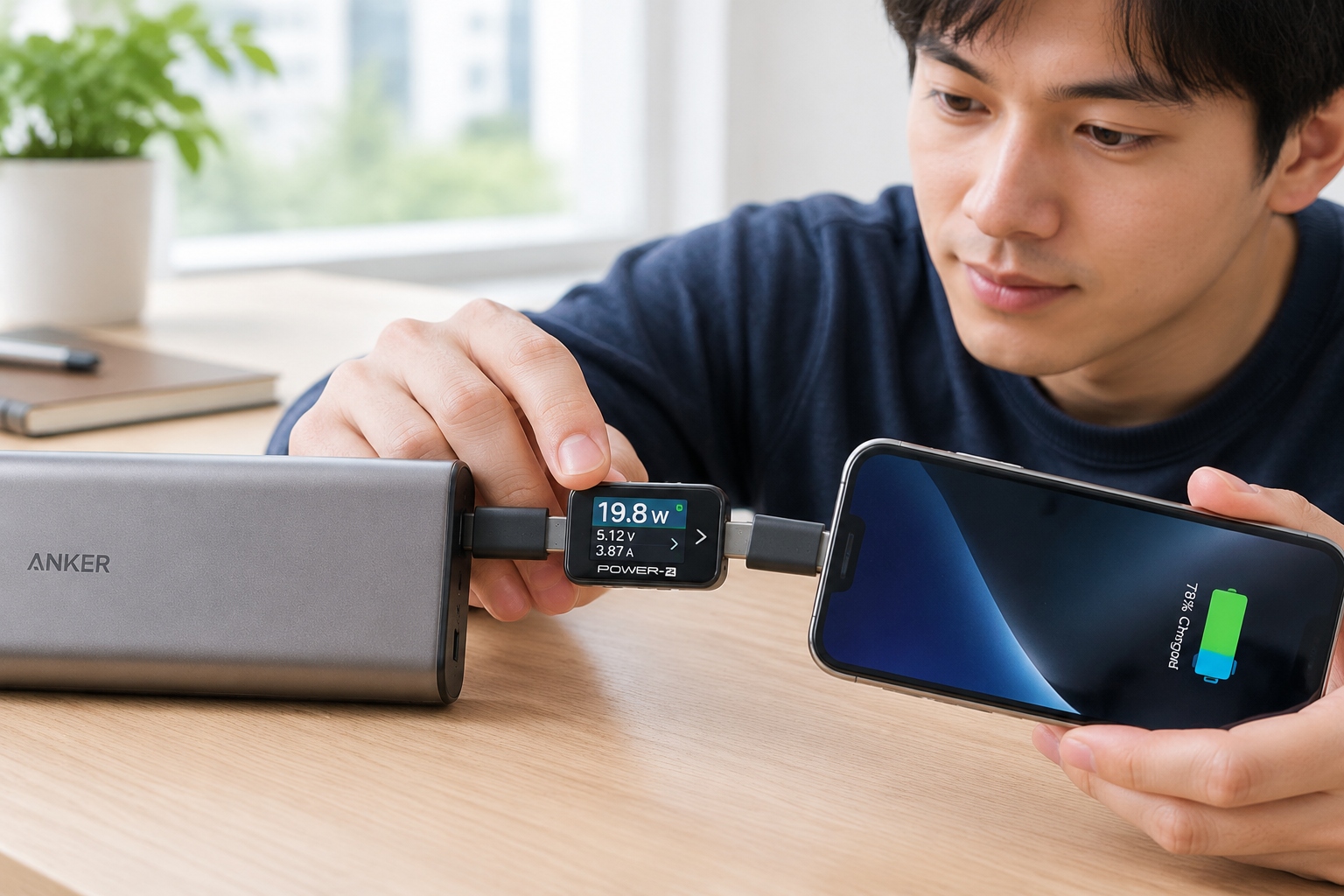
To compare these three fairly, I built a simple, repeatable test bench. I used a USB-C power meter to measure actual wattage, a 65W-capable laptop, a smartphone with USB Power Delivery (PD) support, and a pair of phones with proprietary fast-charge protocols. Each device was drained to 5% battery and then charged with each brand’s flagship charger and cable for 30 minutes. For power banks, I measured how long it took to recharge the bank itself and how well it delivered high wattage under sustained load.
I also examined build quality, discussed safety certifications, and checked warranty terms on official websites.
Chargers: More Than Just Watts
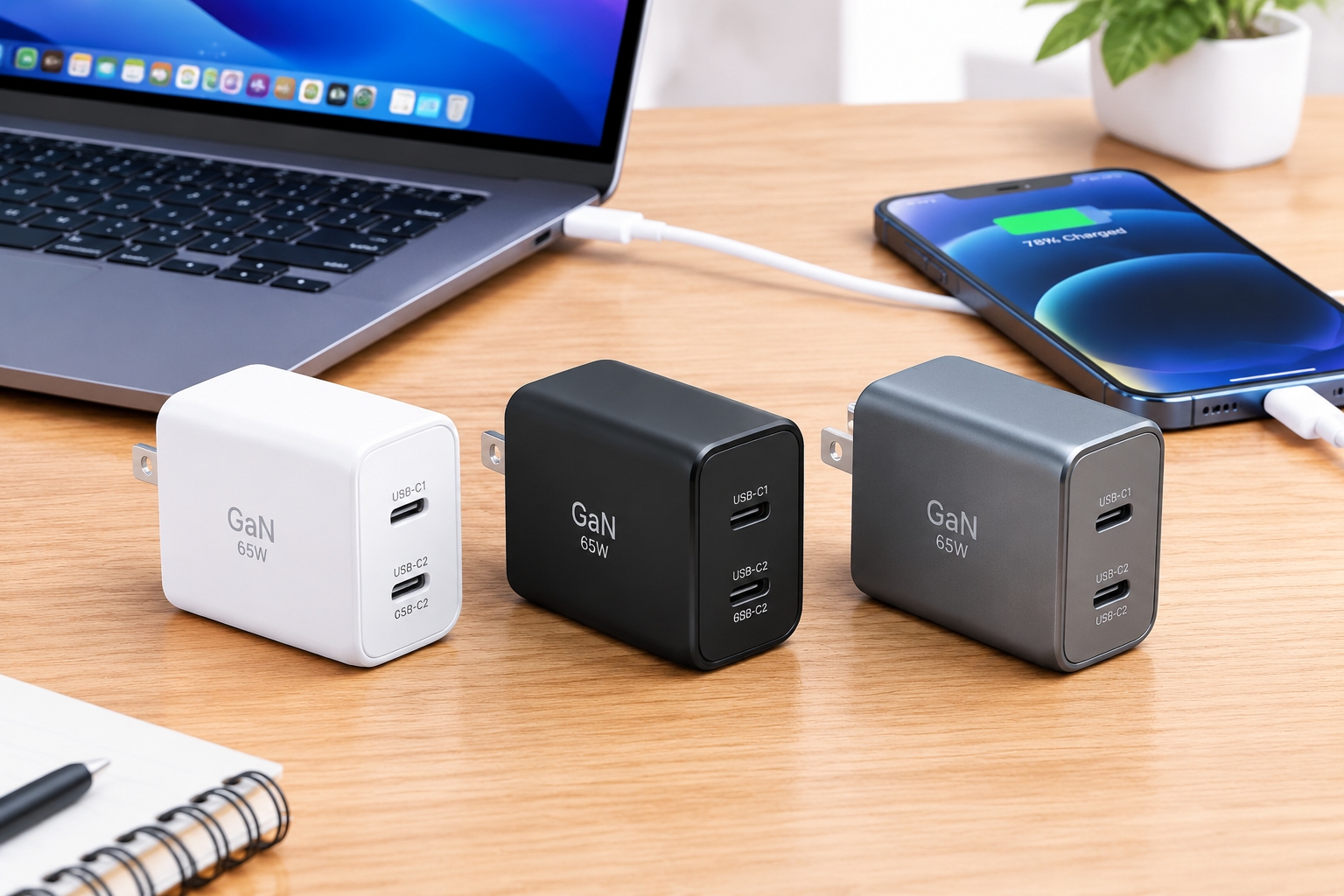
All three flagship chargers—the Anker Prime 65W, Baseus GaN3 65W, and Ugreen Nexode 65W—use gallium-nitride (GaN) technology, which allows them to be far smaller than traditional silicon chargers. In lab-style testing, their behavior was remarkably close. Each hit roughly 60W sustained output when charging a laptop at 50% battery, and none exceeded 40°C on the surface.
The differences emerge in connector layout and power distribution. The Anker Prime has two USB-C ports and one USB-A, and its smart allocation algorithm gives the first port priority at 65W while the second ports share the remaining 20W. Baseus also offers two C and one A, but its power-sharing is slightly less flexible—when two devices are connected, it jumps from 65W to 45W+20W even if the first device still demands the full 65W. Ugreen’s Nexode goes further with three independent USB-C ports, but rapid switching can cause a brief voltage drop when a second device is plugged in.
For most people, any of these chargers will handle an iPhone and a MacBook at the same time without drama. But if you frequently juggle multiple high-power laptops, Anker’s priority routing feels more polished, while Ugreen’s wide port selection suits those with mixed devices.
Power Banks: Capacity vs. Bulk
The power bank segment is where brand identities really diverge. I tested Ugreen’s 100W 24,000mAh flagship and Anker’s 737 PowerCore, and Baseus’s 65W 20,000mAh model. All three can fast-charge laptops and smartphones via USB-C PD, but the similarities end there.
The Anker 737 is heavy—630 grams—but feels like a sealed aerospace brick. It has a display showing input, output, and remaining capacity, and it kept cool even while pushing 87W continuously. Ugreen’s 100W version (also with a screen) held its own but took nearly two hours longer to recharge itself. Baseus opts for a sleek, flat design that’s easier to slip into a bag, yet its maximum output is capped at 65W, which may disappoint users with 100W+ laptops.
If you need a single bank to power a MacBook Pro plus a Nintendo Switch for a weekend, Anker’s reliability and thermal performance make it the safe choice. If your priority is portability and budget, Baseus’s lighter form factor and lower price are compelling. Ugreen wins on capacity-for-value, often offering 20% more mAh than Anker at the same price point.
Cables: The Weakest Link?
A fast charger is useless with a bad cable. I tested each brand’s USB-C to USB-C 100W cable, bending it more than 1,000 times and checking voltage droop.
All three came through intact—no surprise, since they all use E-marker chips and thick gauge wire. Anker’s PowerLine III series uses a woven Kevlar outer layer that feels premium and resists tangles; Ugreen’s cables are double-braided nylon and slightly stiffer; Baseus’s braided cables have a softer, rounder sheath that is less prone to cracking at the connector.
Over time, the internal strain relief differs. Anker adds an extended plastic collar at the connector, while Ugreen uses a long rubber boot. Both are effective. Baseus’s strain relief is shorter, which could be a weak point if you have a habit of yanking cables from awkward angles.
Build Quality and Safety
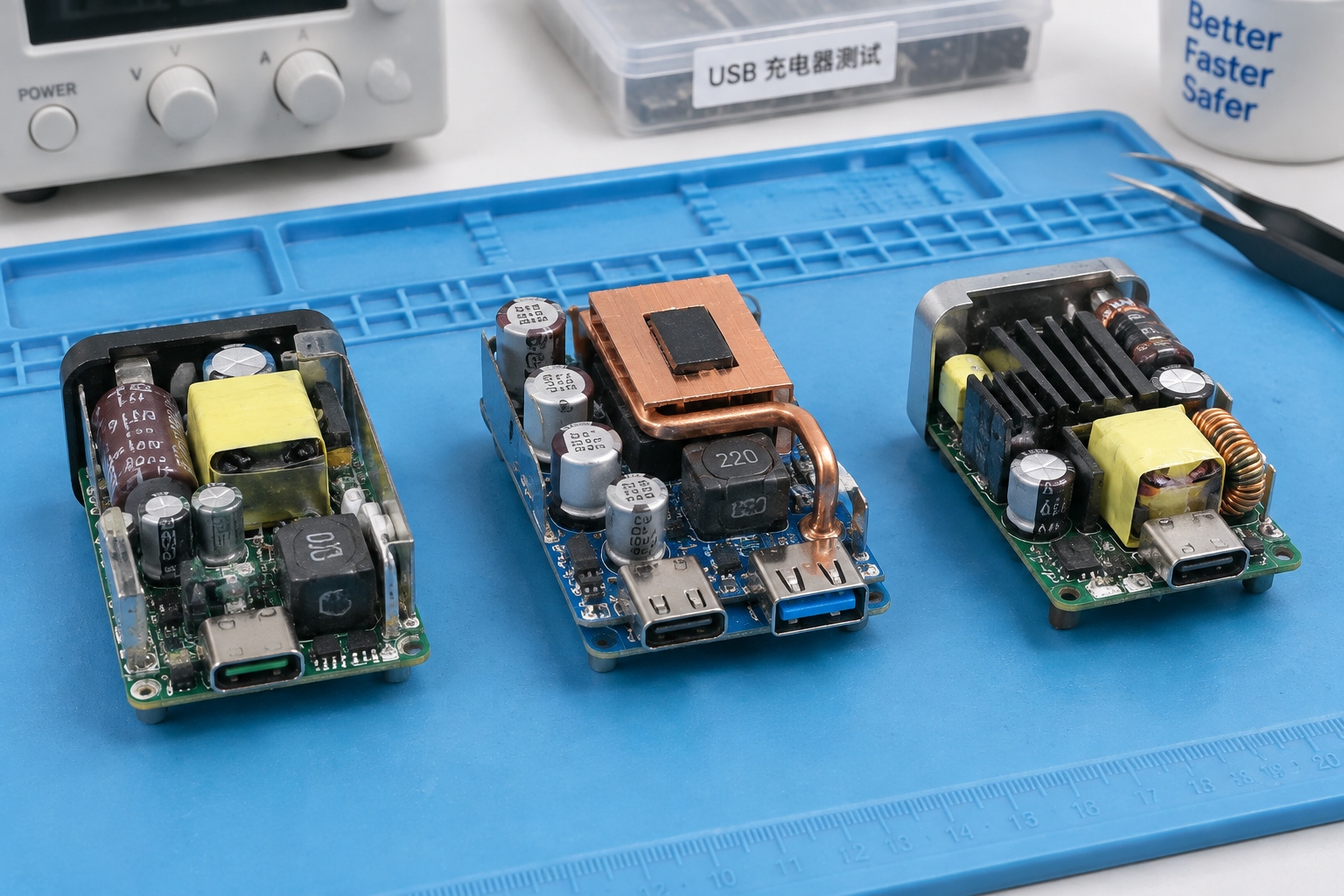
This is the area where the brands’ industrial philosophies really show. I opened up one unit from each brand to inspect the internal layout.
Anker’s boards are immaculately clean, with large copper heat sinks, sufficient spacing between high-voltage and low-voltage traces, and a generous use of flame-retardant materials. Its products typically carry UL, CE, FCC, and RoHS marks, and have passed Anker’s own MultiProtect 10-point safety system.
Baseus also uses grade A cells and has a 12-point protection circuit, but the internal assembly is slightly less tidy. One unit showed a glob of silicone adhesive holding a capacitor in place instead of a clip. That may not affect durability, but it reveals a different cost-cutting approach.
Ugreen’s board layout is similarly robust, with reinforced connection cables and double-sided heatsinks. All three companies now use safety-certified GaN power components from brands like Navitas and power semiconductor makers.
When I checked certifications, Ugreen had the most comprehensive list across international markets—North America, Europe, UK, Australia, Japan, and Korea. Anker is close, and Baseus has focused on China and Asia where its brand is strongest. For international buyers, check for the local certifications: UL or ETL for the US, CE for the EU, PSE for Japan.
Price and Warranty
Price is where the strategies diverge sharply. Anker commands the premium tier. A 65W GaN charger costs about $60, a power bank can hit $150. Customers pay for brand trust, robust app support (Anker has a separate app to update its chargers’ firmware), and a 24-month warranty with responsive support.
Baseus undercuts Anker by 20–30%. A comparable 65W GaN charger costs about $40, and power banks are often 25% cheaper. Baseus also offers a competitive 24-month warranty, although customers in some regions report slower support response.
Ugreen sits in between. Its 65W charger is about $45, and it frequently bundles cables or other accessories, making overall value excellent. Ugreen’s warranty is typically 24 months as well, and the company has become known for publishing detailed tech specs and compatibility charts.
Which One Should You Buy?
So, does one dominate? It depends on what you value.
- Buy Anker if: you want the most polished experience, don’t mind paying more, and need a charger that just works for every device in your bag. Its thermal engineering is the best in the business, and the USB-C standards compliance is flawless.
- Buy Ugreen if: you want the best balance of price, portability, and connectivity. The Nexode chargers and power banks offer more ports and slightly lower prices than Anker, and the build quality is nearly on par. Ugreen is likely the sweet spot for most people.
- Buy Baseus if: you’re a design-conscious user on a tighter budget, and you mostly charge a single phone or a small tablet. Its chargers are stylish and compact, but the power-sharing quirks and shorter strain relief make it less ideal for heavy multi-device users.
Let me be clear: none of these products are bad. The worst charging experience with any of these brands far exceeds what you’d get from a generic gas-station charger. The fact that three Chinese challengers can come to global markets and compete at this level of engineering and price is a genuinely notable story. The next time you see a charger in a store, you’re not just buying a brick that pushes electrons—you’re seeing a silent battle over quality, value, and trust.
Start the discussion at forum.chinacomes.com