


Let me introduce you to Maya, a product designer from France who moved to Shanghai last year. When her Chinese colleagues started talking about “Golden Week” before National Day, she asked the obvious question: “Wait, so how many days off do I actually get?” The answer isn’t one simple number. Foreign employees in China are covered by the same labour law as local workers, but the way public holidays and annual leave interact can feel confusing when you’ve just arrived.
This guide cuts through the jargon. You’ll learn about the 11 statutory public holidays you can expect, how to calculate your paid annual leave, what happens if your employer asks you to skip it, and what to do with leftover days when you leave your job.
China’s 11 Public Holidays: Same for Everyone Working in China
China has 11 statutory public holidays. Some are fixed to the solar calendar, others follow the lunar calendar. Every worker in China is entitled to all of them, whether you have a Chinese or foreign passport.
- New Year’s Day (January 1) – 1 day
- Spring Festival (Chinese New Year, 1st–3rd day of the first lunar month) – 3 days
- Qingming Festival (Tomb-Sweeping Day, around April 4–6) – 1 day
- Labour Day (May 1) – 1 day
- Dragon Boat Festival (5th day of the fifth lunar month) – 1 day
- Mid-Autumn Festival (15th day of the eighth lunar month) – 1 day
- National Day (October 1–3) – 3 days
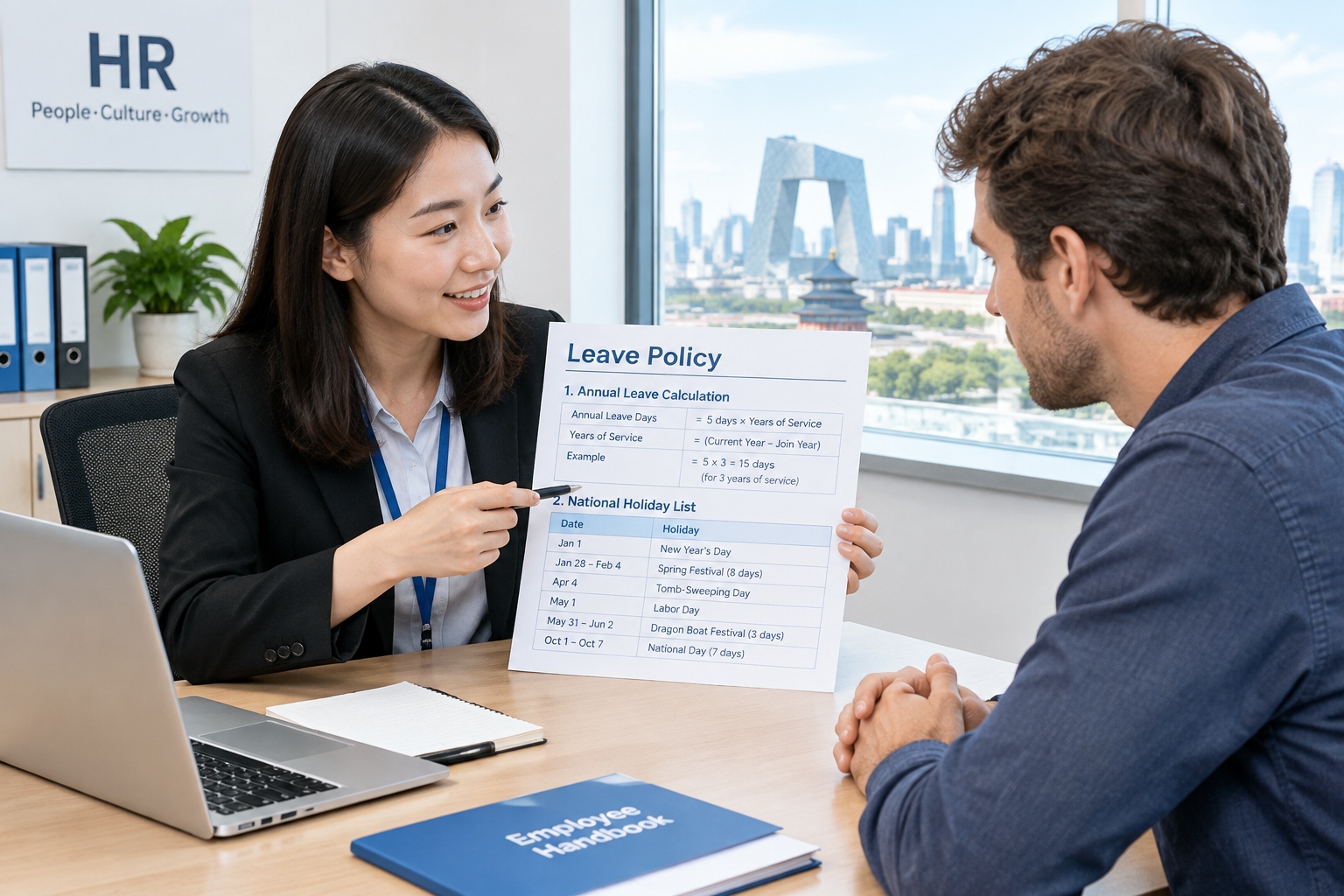
In practice, the government often moves weekend rest days around these holidays so people get longer consecutive breaks. For example, Spring Festival sometimes becomes a seven- or eight-day holiday, and National Day becomes “Golden Week.” But that also means you may need to work on a weekend “make-up” day before or after the holiday.
This system applies to every employee on Chinese payroll, including expats. Your employer can’t legally reduce these days or replace them with cash unless a specific regulation allows it.
How Many Days of Annual Leave Do Foreign Employees Get?
Paid annual leave is a separate right from public holidays. It is regulated by the Regulations on Paid Annual Leave for Employees, and it applies to foreign employees too. Here’s the core scale based on cumulative working years:
- 1 to 10 years of total work experience → 5 days per year
- 10 to 20 years → 10 days per year
- More than 20 years → 15 days per year
But there’s a catch for expats. The law says “cumulative working years”, and Chinese authorities usually interpret this as years spent working in China, not your entire career back home. So if you arrive at age 35 with 12 years of experience in Germany, your Chinese employer is not automatically required to give you 10 days of annual leave. Many multinational companies do count overseas experience as a perk, but it’s not a statutory right. Always check your contract and HR policy.

What about Your First Year in China?
Under the law, you need to have worked continuously for one year in China before you become entitled to paid annual leave. That means if you’re starting your first job in China, you typically can’t take paid annual leave during that first 12 months. Once you reach the one-year mark, your leave starts to accrue. If you later change jobs without a long gap, your years of service carry over.
If you join a Chinese company mid-year, the leave days are prorated for the calendar year. The standard formula is:
(number of remaining calendar days in the year ÷ 365) × your full annual leave entitlement.
For example, Maya signs a contract on July 1 and is entitled to 5 days per year. For that first year, she gets (184 ÷ 365) × 5 ≈ 2.5 days. Many companies round up to the nearest half-day or full day.
What If You Don’t Use Up All Your Annual Leave?
The law strongly encourages employers to let you take your leave. But if your workload makes annual leave impossible, and you’re willing to give it up, the company must pay you compensation.
The rate is 300% of your daily wage for each unused annual leave day. However, your normal salary already covers the equivalent of that day, so in practice your employer pays an extra 200%. To calculate your daily wage, the common reference is monthly salary ÷ 21.75 (average working days per month).
Let’s say Maya earns 21,750 RMB per month. Her daily wage is 1,000 RMB. If she has 5 unused annual leave days when the year ends, she receives an additional 5 × 1,000 × 200% = 10,000 RMB on top of her regular salary. The other 100% is considered part of her normal pay.
This compensation usually applies only to leave that you ask for in writing and that the employer refuses to schedule. If you simply don’t file for leave, many HR departments will not voluntarily pay you extra at the end of the year.
Can Foreign Employees Also Celebrate Home-Country Holidays?
China’s labour law doesn’t automatically give you time off for, say, Thanksgiving or Independence Day. Unless your employment contract explicitly lists home-country public holidays as additional paid days off, you’ll need to dip into your annual leave to celebrate them.
Some foreign-invested companies, especially those with headquarters in Europe or North America, grant a mix of both Chinese and home-country holidays. Others offer extra “home leave” days. These are contractual perks, not legal rights, so read your offer letter before signing.
When Can Your Annual Leave Be Reduced or Withheld?
Certain long absences can make you ineligible for annual leave in that same calendar year:
- Sick leave over a certain threshold: 2 months if you have less than 10 years of cumulative experience; 3 months if you have 10–20 years; 4 months if you have more than 20 years.
- Unpaid personal leave an aggregate of 20 days or more, and your employer did not deduct wages for it.
- If you already receive other paid long leave, such as winter or summer vacation, that exceeds your annual leave entitlement.
Note that “sick leave” here refers to paid sick leave under the workplace medical system, not just any medical note.
Leaving a Job Mid-Year: How to Cash Out Unused Annual Leave
When your contract ends or you resign before the year is up, your employer must pay you for the annual leave you have earned but not taken. The calculation is prorated based on the number of days of the calendar year you have worked:
(days worked in the year ÷ 365) × full annual leave entitlement − annual leave days already used.
If the result is less than one full day, the employer doesn’t have to pay you for that partial day. This is a common point of dispute, so keep track of your leave records.
Quick Checklist for Foreign Employees in China
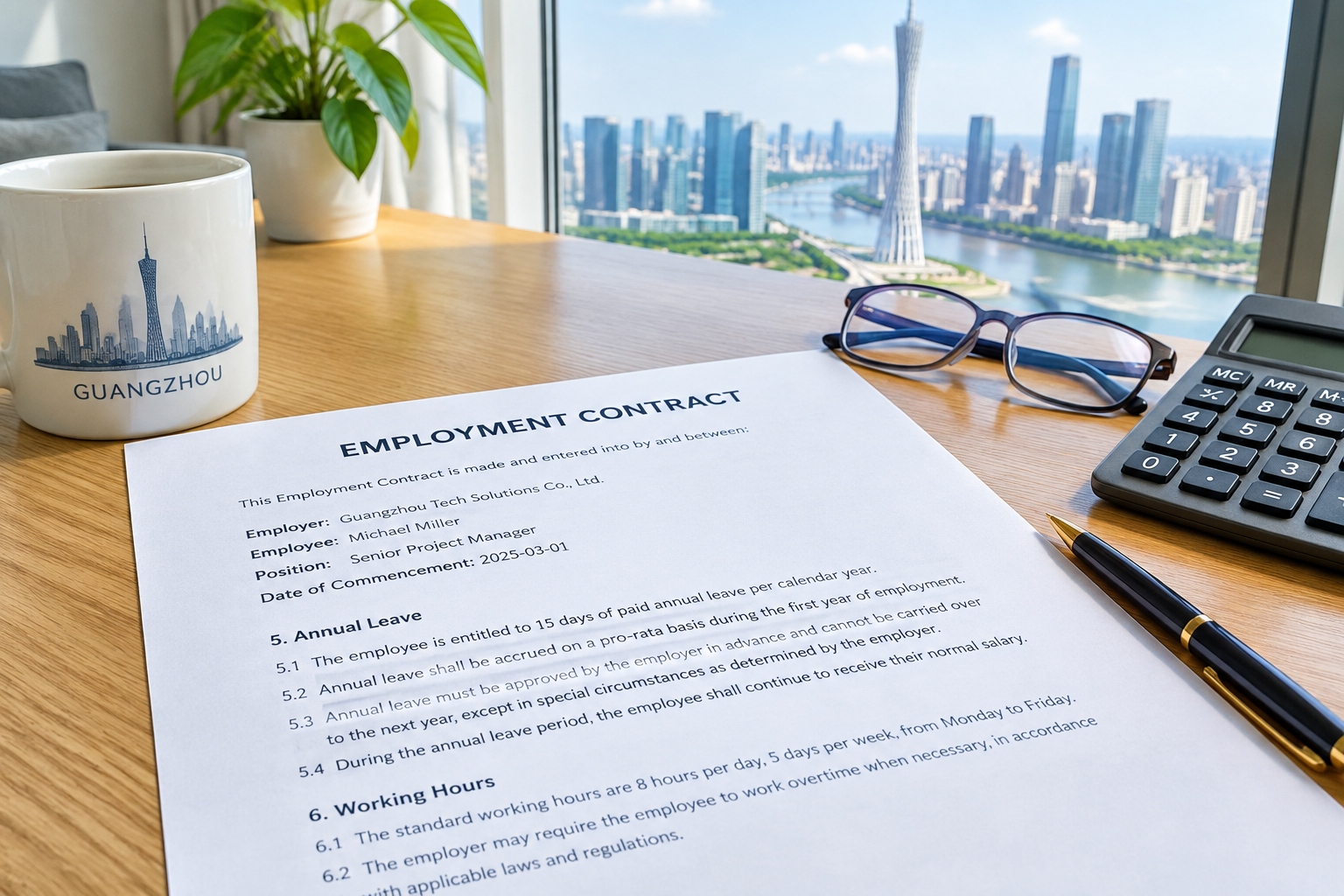
- Know your legal public holidays — 11 days found on the Chinese State Council’s annual notice.
- Calculate your annual leave based on China-relevant work years, not necessarily your global career.
- Read your employment contract for additional rest days, home-country holidays, and special leave clauses.
- If you’re at a new company, ask HR how they treat first-year annual leave.
- When leaving a job, request a written statement of your unused annual leave settlement.
China’s leave system already gives many expats a comfortable number of days off, especially when public holidays and annual leave are planned together. The key is to understand the rules, keep your own records, and have a friendly conversation with HR before the year ends. Question is, will you spend your time exploring the Great Wall or perfecting your noodle-pulling skills?
Start the discussion at forum.chinacomes.com