
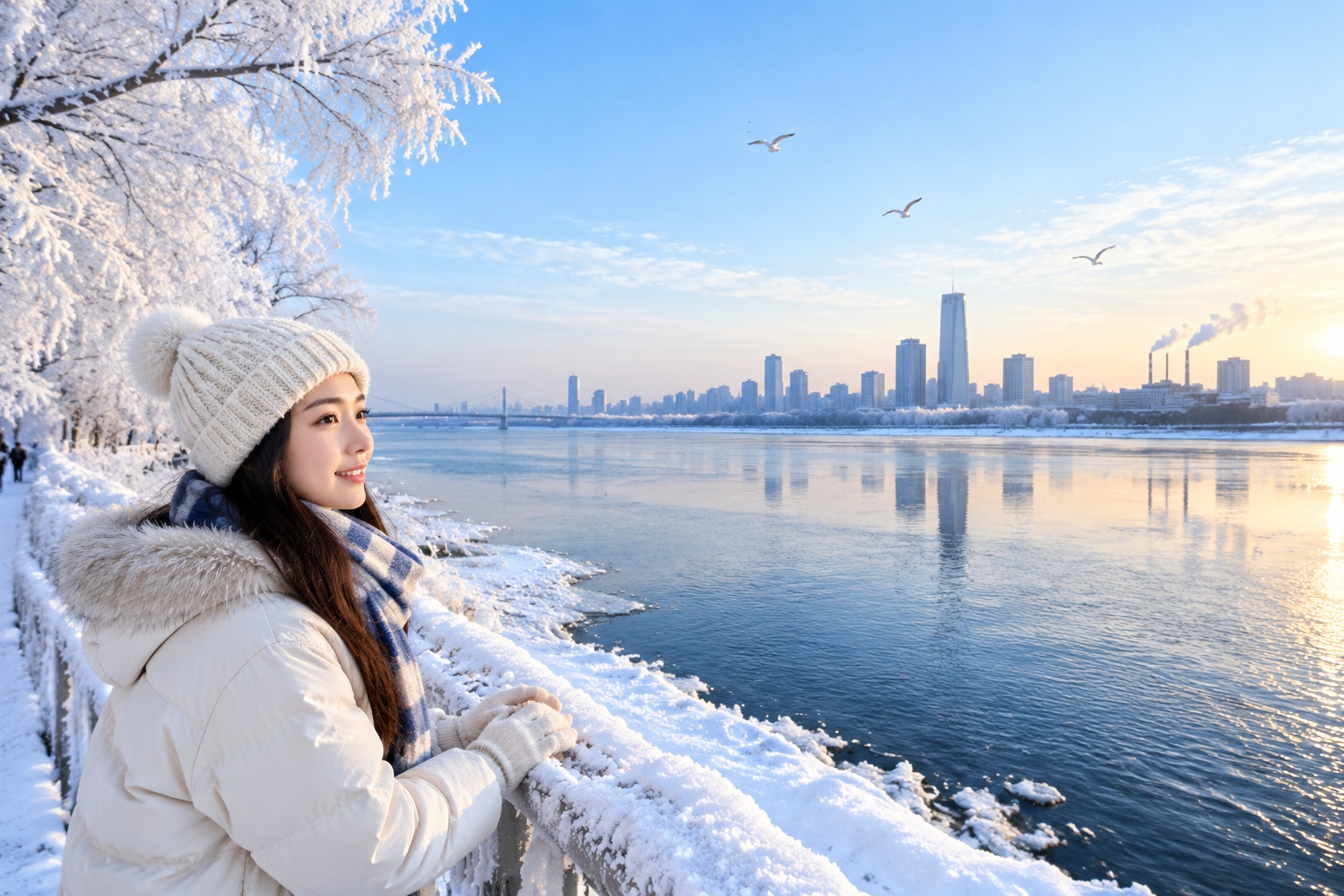

On a January morning, at 6:30 a.m. with the air temperature at minus 18 degrees Celsius, a line of tourists stands along the Songhua River in Jilin City, northeastern China. They are not waiting for the sun, but for the river to “turn into ice flowers.” Overnight, the steam rising from the river’s surface has frozen onto the bare willow branches, transforming them into elaborate, white feather-like sculptures. The crowd, many of them from southern Chinese cities where snow is a rare promise, shoots with phones and cameras while their breath forms small clouds.
What most visitors don’t realize is that the spectacular scene is not a purely natural phenomenon. It exists because of a dam, a river, and a local economy that has learned to market winter magic.
Why the Songhua River Refuses to Freeze
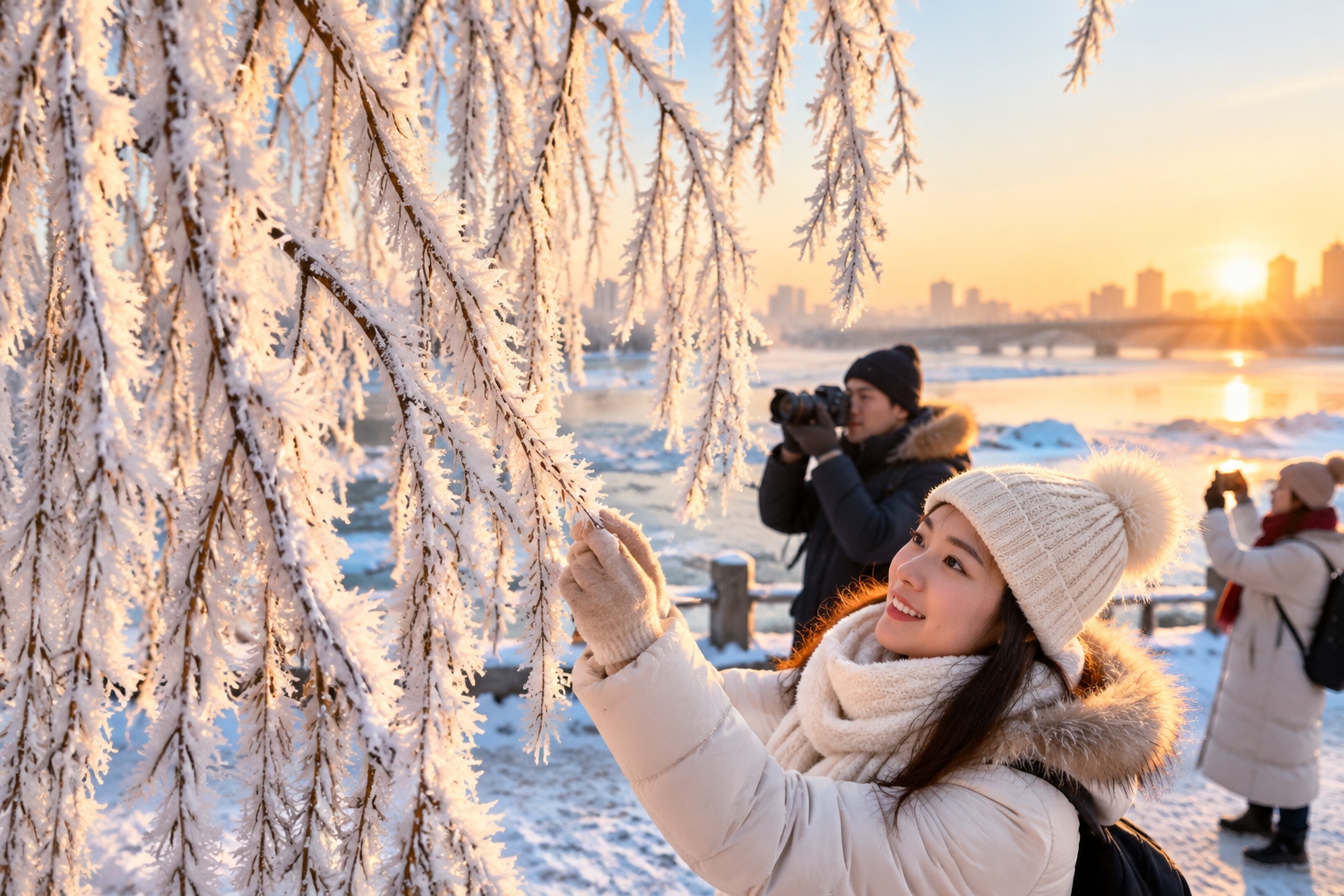
The rime ice, called wusong by locals, forms when about -20°C air meets warmer water. Most rivers in Northeast China freeze solid in winter. But the Songhua River at Jilin City runs open because of the Fengman Hydropower Station, about 24 kilometers upstream. Built in the 1930s and reconstructed in recent years, it releases water from the bottom of a deep reservoir. This deep water stays relatively warm—around 2 to 4 degrees Celsius—even in winter. Released into the downstream river channel, it keeps the water flowing and ice-free for over 50 kilometers, creating an almost unnatural corridor of open blue water in a frozen landscape.
This warmth produces evaporation. When the moist air hits cold trees, frost deposits in layers. “Without the dam, there would be no rime here,” explains Zhang Wei, a local tour guide who has led winter tours for nine years. “It’s a wedding of human engineering and weather.”
The Dam’s Double-Role in Nature
Some environmental economists describe the dam as both a blessing and a challenge. It creates an ecosystem where wintering birds can survive and where tourism can flourish. But it also alters the river’s natural flow and temperature regimes. The Fengman dam is the biggest hydropower plant in Northeast China, generating electricity for the region’s industrial cities. Balancing power generation, flood control, and the aesthetic demand for a “steam effect” during rime season becomes an annual tricky operation for water managers.
In recent years, the city has sometimes adjusted water releases during cold spells to keep the open water area wide enough for rime to form—a rare example of coordinating infrastructure for aesthetics. “We don’t have precise control of the weather,” a municipal water official told China News, “but we can adjust the river’s pulse and hope for a temperature drop.”
An Unexpected Sanctuary for Wildlife
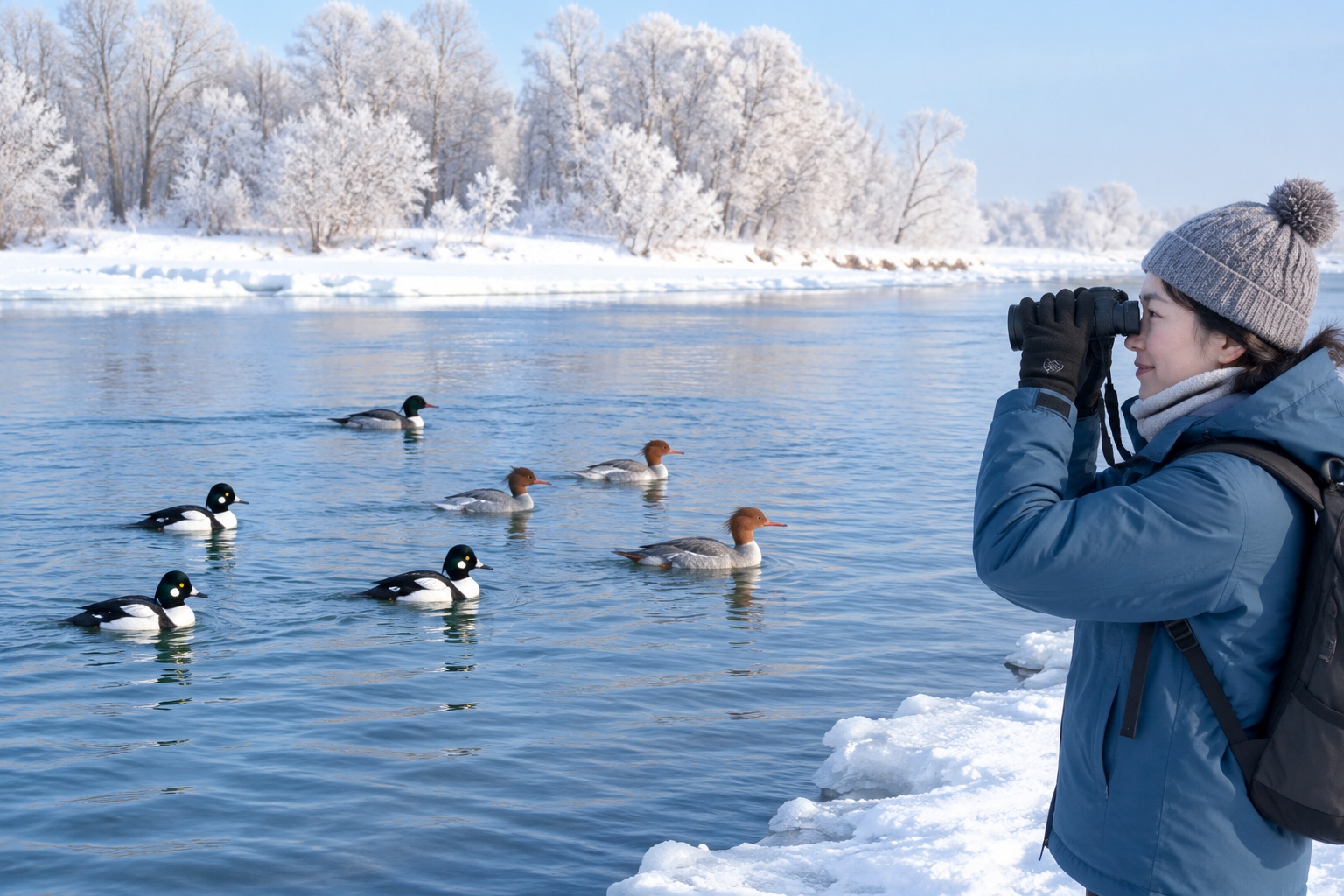
The same warmth that creates rime allows a vibrant winter ecosystem to thrive. On a stretch of open water just a few kilometers from downtown, dozens of common mergansers, goldeneyes, and the occasional white-tailed eagle are spotted every winter. Ornithologists from the local forestry department have counted over 5,000 wintering waterbirds on the Songhua River in Jilin City in a single year—a surprising number for a city in a cold region.
These birds attract a different kind of tourist: serious birdwatchers with telescopes and heavy lenses. A retired factory worker named Liu Guodong, 67, has been photographing the river for over a decade. He now leads a volunteer group that monitors the birds and reports to the wildlife authorities. “I used to fish in this river when I was young,” Liu says, pulling up his collar against the wind. “Now I count birds. It’s better, because you give back.”
The birds also add ecological value. Local fishermen and researchers say the health of the fish populations is closely linked to the clean water quality needed for the birds to stay. But the delicate food web is vulnerable to pollution from urban runoff and boat traffic. “If we don’t keep the river clean, the birds disappear first, then the rime scene loses its soundtrack,” Liu says.
Tourism Transforms a Riverside Economy
Winter tourism around rime has grown into a major local industry. Jilin City attracts an estimated 10 million tourists during the peak season from late December to February, and the municipal tourism bureau reports that winter hospitality generates several billion yuan in revenue each year. The famous Rime Island (Wusong Island) and the nearby village of Zengtong have become hot spots.
Wang Lina, 45, runs a guesthouse in Zengtong. Eight years ago, her family lived almost entirely on corn and soybean farming. Then they built a simple home-stay with four rooms. Today, she has 18 rooms and hires six people from the village in winter. “We book out almost every night from January to mid-February. Tourists come from Shanghai, Guangzhou, and even overseas—people who have never seen real ice,” she says. Her home-stay offers heated beds, large windows facing the river, and in the morning, a home-cooked breakfast of corn porridge and pickled vegetables.
Selling the Cold Outside the Season
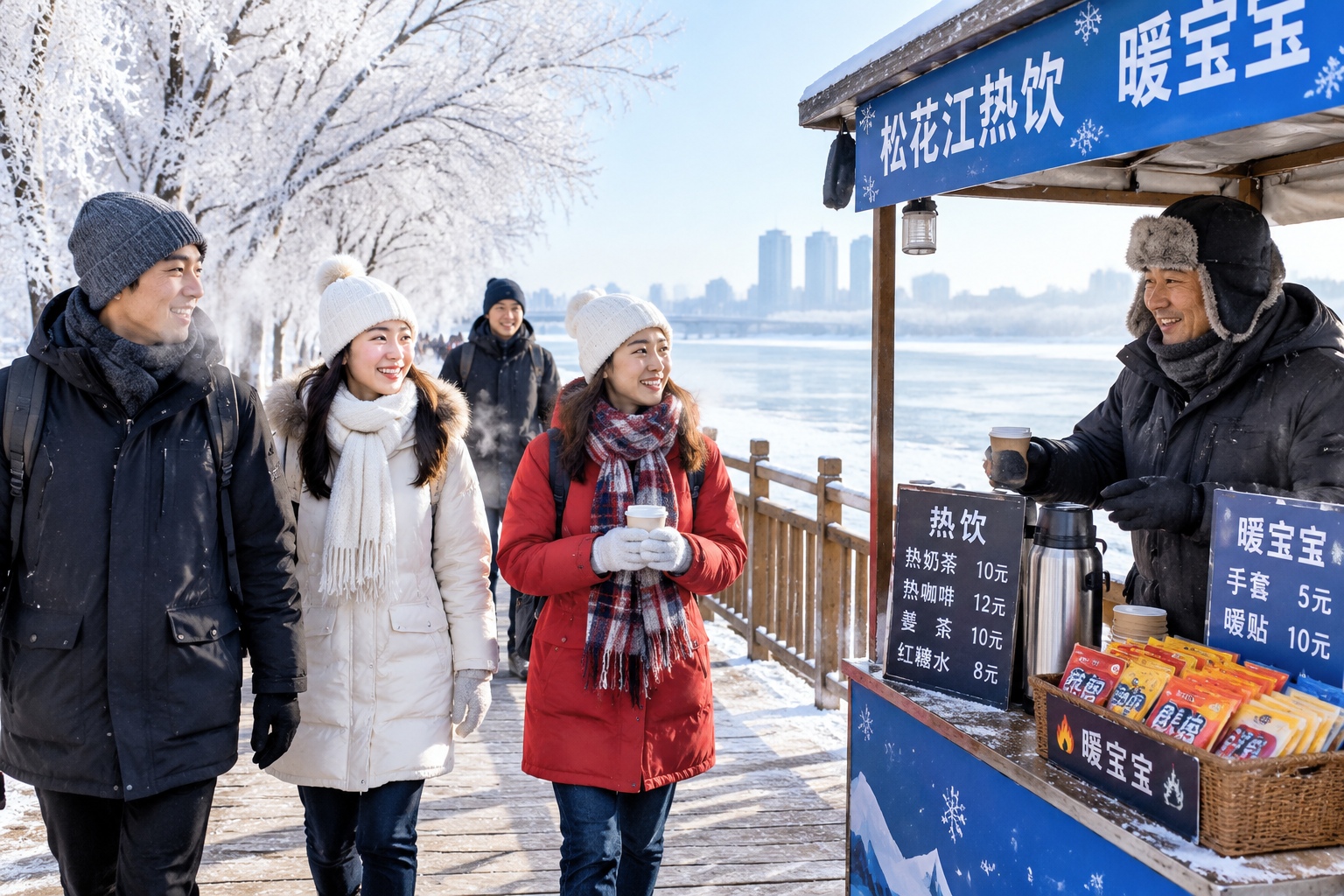
Not everyone can run a guesthouse. Some locals have found creative ways to profit from the rime. A 30-year-old photographer, Li Ming, started selling disposable camera covers and hand warmers at popular viewpoints. Others offer “rime photography tours” for groups, charging 500 yuan per person. Farmers who still own small groves of willow trees now charge entrance fees to let photographers access the best angles. This side income is often higher than a full season of harvesting.
The economic shift is visible: many old wooden boats have been converted into floating photo platforms, and local farmers now wear modern jackets while promoting “traditional” sleigh rides. It is a hustle, but it brings jobs to a region where heavy industry—especially chemical plants and steel mills—has been declining for years.
Growing Pains: Crowds, Trash, and Climate Change
Tourism has its dark side. On weekends, the paths along the popular riverbank are packed, and some visitors wander off the designated boardwalks, crushing frost flowers and damaging young reeds. “Years ago, people threw plastic bottles into the river,” Wang Lina admits. “The village now organizes cleanup teams twice a week.” In response, local authorities have placed waste bins every hundred meters, and remote-controlled drones monitor illegal behavior. They even introduced a “no-touch rule” for rime—someone who knocks off ice from branches for a “snow flurry” video can receive a fine.
Climate change adds a long-term threat. Data from the Northeast Normal University suggests that while the number of rime days (days when rime forms) has not dropped significantly so far, winter temperatures in Northeast China have risen by about 1.5 degrees Celsius over the past fifty years. If this trend accelerates, the window for rime might become shorter, and the ice might be less robust. “The rime seasons are impressive, but we still see strange warm fronts each year,” says atmospheric scientist Wang Jie. “We are learning to adapt, but the environment’s patience is not unlimited.”
The Rime as a Mirror of Modern China
The rime ice along the Songhua River is often described as China’s most Instagram-able natural postcard in winter. But for those who look closer, it is a symbol of how China is navigating its own blue-green economy. A century ago, these riverbanks were just farmland and fishing villages. A half-century ago, they were dominated by smokestacks and chemical plants. Today, the same river powers energy for millions, shelters rare birds, and supports a tourism economy that thrives in the coldest months.
The local government’s recent moves signal a broader shift: it refused to approve a large riverside commercial development in 2022 to preserve the natural shore, and it has funded wetland restoration and bird habitat monitoring. The community sees the value of conservation in economic terms. “If the river is clean, the frost still comes, and people still come,” says Liu Guodong. “But the frost is fragile. The river is the real thing.”
Start the discussion at forum.chinacomes.com