


Two in the morning, one thumb, three applications
My daughter was eleven days old. She was asleep on my chest, and I was lying in the dark holding my phone above her head with one hand, screen dimmed so the light wouldn’t wake her.
On the screen was a form. Name. ID number. Hospital. Address. Marriage certificate number — the app had already filled that one in. I didn’t have to dig out the red booklet.
Twenty minutes later I had submitted three things at once: her household registration, her health insurance enrollment, and her social security card. Two days later a courier knocked with a thin white envelope.
I never went to a government office. Not for her birth registration, not for my social security transfer between two provinces, not for taking money out of my housing fund. That isn’t a boast. It’s a description of how the boring parts of life in China quietly moved onto phone screens over the past six or seven years — and how little of it gets explained to newcomers.

First, what a “government app” actually means here
There isn’t one app. There are layers, and knowing which layer does what saves a lot of confusion.
The three layers
National. The National Government Service Platform has its own app and, more usefully, a mini-program inside WeChat and Alipay. Cross-province business lives here.
Provincial or city. Zhejiang has Zheli Ban, Shanghai has Suishen Ban, Guangdong has Yue Shengshi, Beijing has Jingtong. Daily life sits here: birth registration, residence permits, housing fund, medical insurance, traffic fines, and a long tail of things you’d otherwise queue for.
Ministry-specific. Zhangshang 12333 for social security and pensions. The National Medical Insurance Service Platform app for medical insurance. A separate app for tax filing season.
Most people reach all of them through WeChat or Alipay, where they sit as small icons in a “city services” panel. You don’t need to remember websites. You need a Chinese mobile number and a real-name check.
The face scan is the door
Everything starts with your face. You hold the phone up, blink or turn your head, and the system compares you to the photo on your ID card. About eight seconds. It fails in dim light, it fails if you’re wearing a hat, and it fails if your ID photo is from when you were fifteen. Pass it once and almost everything else opens.

The birth paperwork: three documents, one form
China has been rolling out something called yi jian shi — “one matter” — which bundles procedures that always happen together into a single application. Birth is the classic case.
In most provinces now, a parent can apply for all of the following in one sitting:
- Household registration for the newborn
- Enrollment in employee or resident medical insurance
- A social security card, mailed home
- In some places, a vaccination record book and a maternal health booklet
What I did not do: photocopy my ID, photocopy my marriage certificate, get a stamped form from my employer, or take a number at a district office. The system pulled my marriage record from the civil affairs database and my residence record from the police database. The form asked for maybe ten fields.
One thing to know: the birth medical certificate itself is still issued by the hospital, usually before you’re discharged. That piece of paper is the foundation. The online part starts after it exists.
The catch nobody mentions
Where you register your child still matters. Registration follows one parent’s household registration location, and that location can affect which school your child can attend later. The application is digital. The rules behind it are local, and they’re not. Ask a Chinese friend or your HR team about your specific city before assuming anything.
Moving between provinces without losing your social security
I moved from one province to another for work. Under the old system, transferring your social security account meant going to the office in the city you left, collecting a printed certificate, then physically carrying it to the city you arrived in. Leave before the paperwork is ready and you come back for it.
Now you submit a transfer request on Zhangshang 12333 or the national platform, and that’s it. The two local offices talk to each other through the national system. Mine took about three weeks, and I got a text message when it was done. Actual time I spent: roughly four minutes.
Since 2020 the central government has published a growing list of “cross-province” items. It started with 140 and has expanded most years since. Things that genuinely work across provincial lines: transferring pension and medical insurance accounts, residence permits for newborns, renewing some professional licenses, replacing a lost ID while travelling.
Medical insurance changes daily life the most. If you live in a city that isn’t your registered home, you file one online record, and then your insurance card works at local hospitals — the bill is settled at the counter instead of you paying upfront and claiming it back later.
The housing fund: money that arrived while I was at work
The housing provident fund is a mandatory savings account. You pay in, your employer matches, and it’s meant for housing. Two generations of Chinese workers assumed the money was locked up until retirement or a property purchase.
In most cities now, renters can withdraw part of it monthly or quarterly through the city app. Mine went like this: open the housing fund section, choose “rent withdrawal,” confirm the amount, submit. No lease contract upload. No proof of rent. The city roughly knows what rent costs, sets a monthly ceiling, and lets you take up to that.
The money hit my bank account 26 hours later.
Buying a home is a heavier process, with more documents and, in some cities, a counter visit. But rent withdrawal — the part young people actually use — is now a two-minute task.
Where it still breaks
This is the part the promotional version leaves out, and it’s the part you need.
Some things are still on paper, on purpose
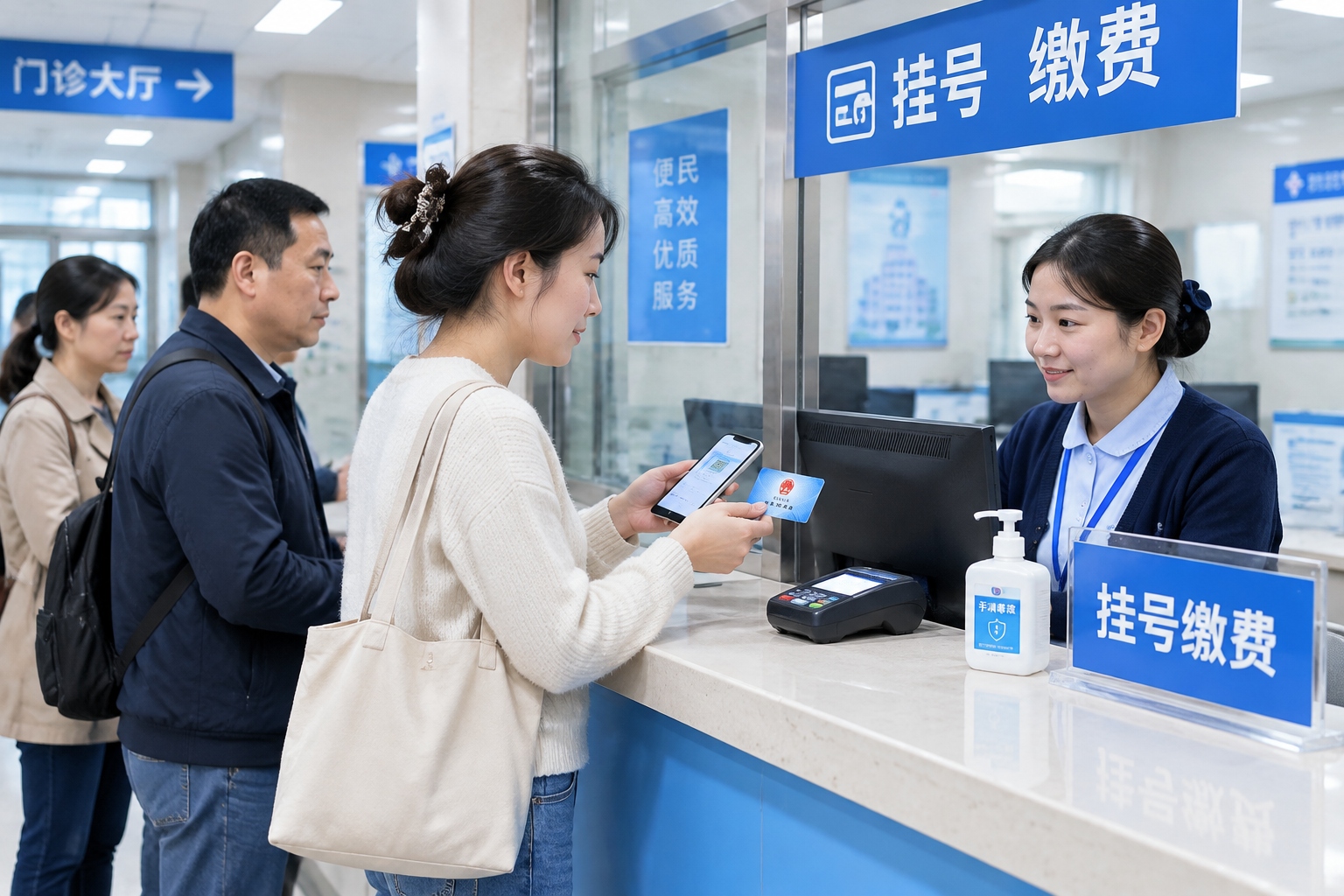
Opening a bank account in person is still the norm at most branches. Property transfers, notarization, court filings, and many divorce or inheritance procedures require a physical visit, often at a specific office in a specific district. Marriage and divorce registration still happens in person, at the office for one partner’s registered area.
These apps assume a Chinese ID
Everything above runs on a mainland ID number, a real-name phone number, and often a bank card. If you’re a foreign resident, your options narrow sharply. Some provincial apps accept a foreign permanent resident ID; many don’t. In practice, foreigners queue at the counter for tasks Chinese citizens finish on a phone — and they usually need a passport plus a translated, stamped copy of whatever document is in question.
Older people, smaller cities, bad lighting
My mother is 71. She can use WeChat, but face scans often fail in her apartment at night, and these apps assume a comfort with small text and nested menus that not everyone has. An informal division of labour has grown up around it: adult children handle their parents’ applications remotely. In smaller counties, the online menu is shorter than in big cities, and some services will stay on paper another year or two.
Fragmentation is real
Three related tasks may need three apps, and one of them will ask again for information you already gave. The direction is toward merging, but the single-app version isn’t here yet. Expect to search in Chinese for your city name plus what you want to do.

A short checklist you can actually use
- Before anything: get a Chinese mobile number in your own name and complete real-name verification on WeChat or Alipay. Nothing works without this.
- Find your city’s app: search your city name plus the service you need, or ask HR. Use it inside WeChat or Alipay rather than installing six apps.
- Look for “one matter” bundles: birth, marriage, buying a home, starting a company, retiring. These combine three to eight separate procedures.
- Prepare these once: ID number, phone number, bank card, household registration location, and your employer’s credit code if you’re employed. Most forms reuse them.
- Expect results by courier. Physical cards and booklets are almost always mailed. Give a real address and a phone someone answers.
- When it fails, it’s usually one of four things: the face scan, your registration location not matching the service, a document that only exists in another province’s system, or a service your city hasn’t put online yet. The fix is usually a phone call to a district office, not another app.
What it actually feels like
The honest version: this is neither magic nor finished. It’s an unusually successful piece of boring infrastructure, the kind nobody photographs. Its value isn’t that China has clever apps. It’s that a clerk in one province’s database can now ask a clerk in another province’s database a question, without a citizen standing in between.
For a new parent at 2 a.m., that’s the difference between losing a day to a queue and losing twenty minutes to a form on a glowing screen, while a baby sleeps on your chest.
Start the discussion at forum.chinacomes.com