

Same Country, Same Morning, Different Breakfast
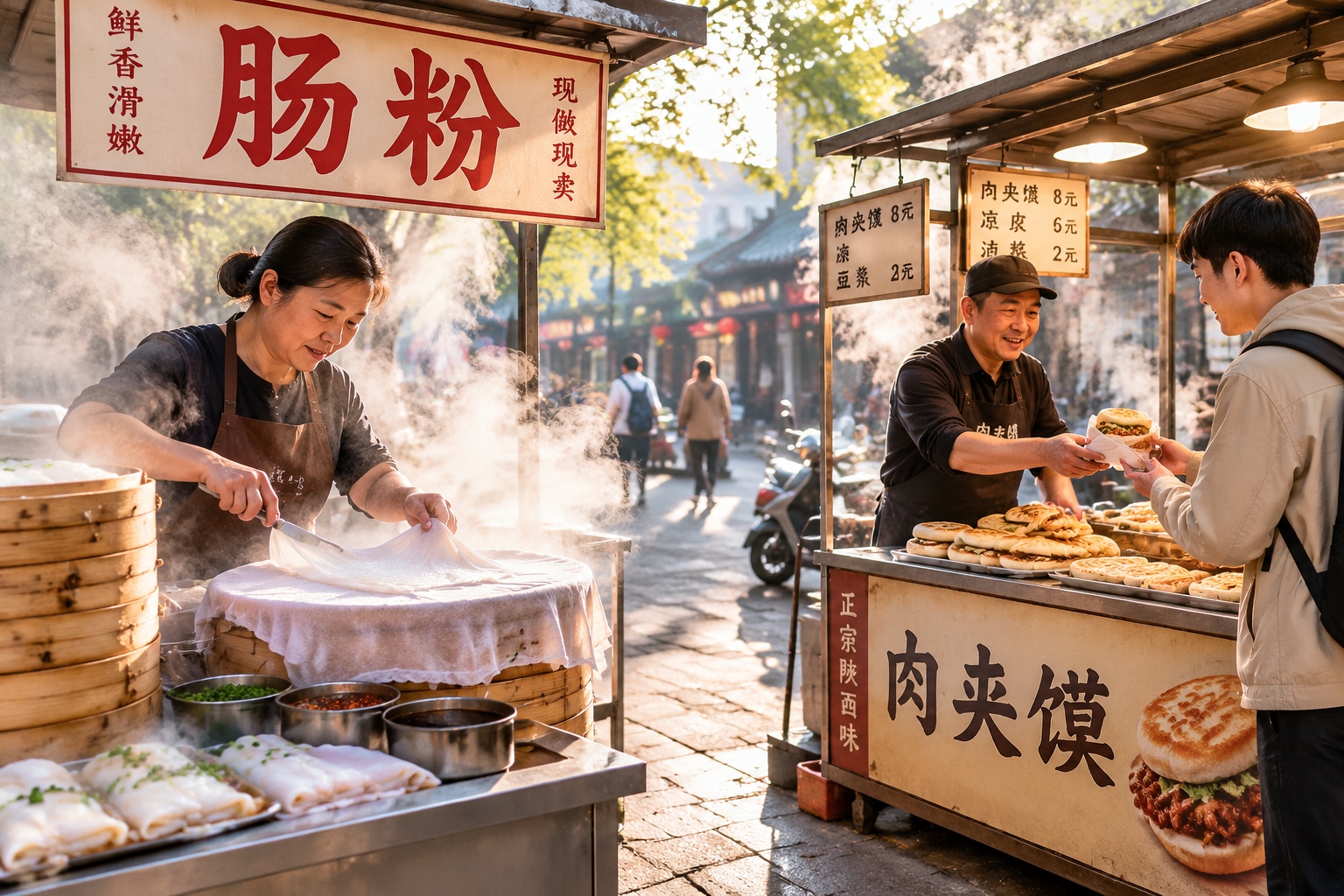
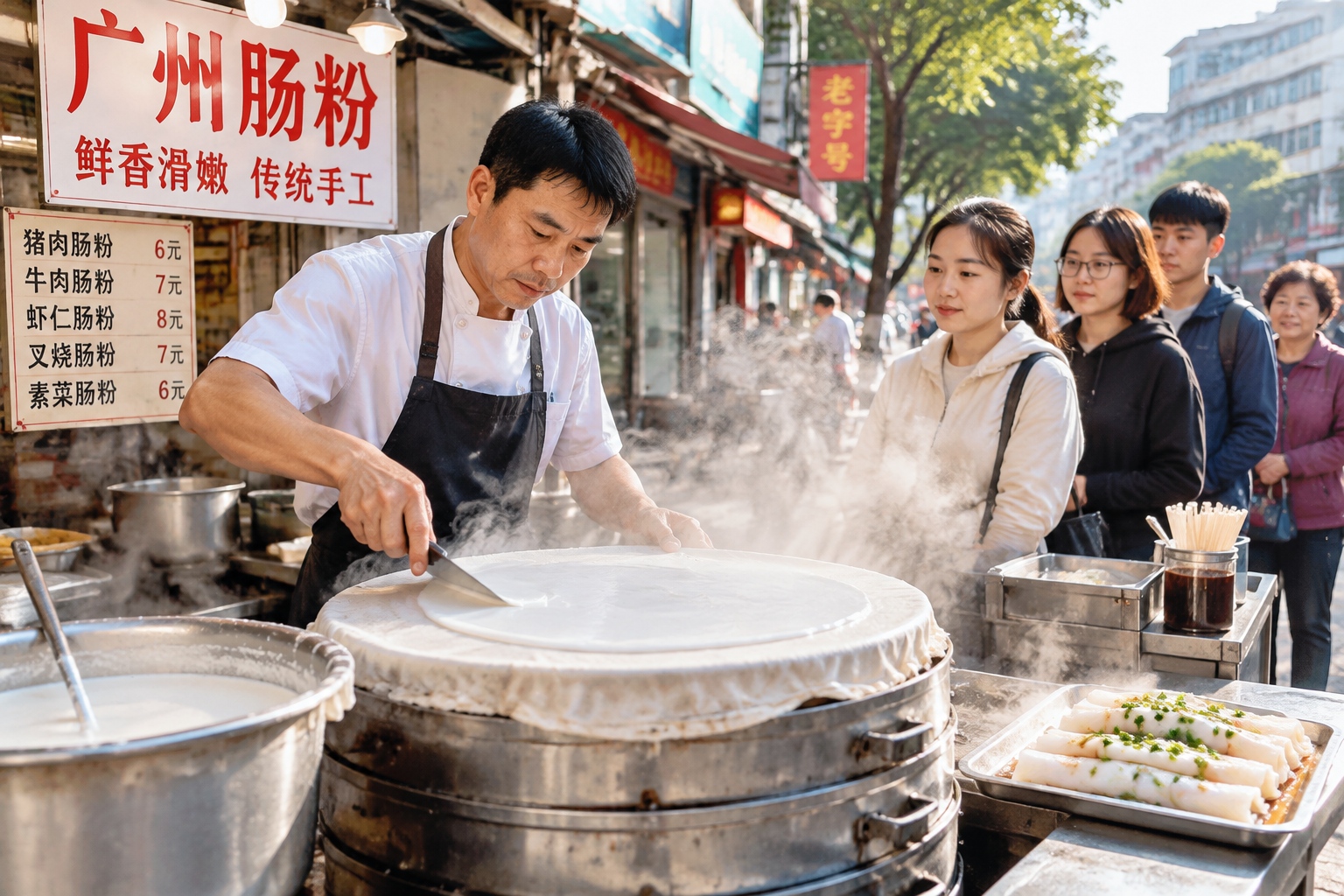
At 7 a.m. in Guangzhou, a woman in a hurry stops at a street cart. The vendor spreads a thin layer of rice batter onto a cloth steamer, cracks an egg on top, adds a few shrimp, rolls it up, and drizzles soy sauce. She pays 6 yuan (about 85 cents) and eats it standing up, with a plastic bag around her hand. Twenty minutes later, she’s on the metro.
At the same moment in Xi’an, a man in a puffer jacket sits down at a small stall. He orders a roujiamo—a crispy bun stuffed with chopped braised pork—and a bowl of steaming lamb soup. He tears pieces of flatbread into the soup, adds chili oil, and eats slowly, warming his hands on the bowl. The bill comes to 20 yuan.
Both are in China. Both are eating breakfast. But they might as well be in different countries. That’s the thing about Chinese breakfast: it changes dramatically from region to region. And that diversity tells you a lot about how the country works.
Why Breakfast Looks Different in Every Chinese City
The simplest explanation is geography. China is huge. The south is wet and warm; rice grows well there. The north is drier and colder; wheat, millet, and other grains are the staples. So breakfast follows the crops. In the south, you’ll find rice noodles, rice porridge, and steamed rice rolls. In the north, you’ll find wheat-based buns, flatbreads, and noodles.
But it’s not just ingredients. History, climate, and daily rhythms shape what people eat. In hot, humid Guangzhou, breakfast tends to be light and quick—something that won’t weigh you down. In colder Xi’an, breakfast is hearty and warming—something that fuels you through a long morning.
And then there’s the social side. In many Chinese cities, breakfast is eaten outside the home. Long commutes, small kitchens, and affordable street food make it easier to grab something on the way to work. That’s very different from the Western idea of cereal and toast at the kitchen table.
A Morning in Guangzhou: Rice Noodle Rolls and Congee
Let’s go back to that Guangzhou street cart. The dish is called changfen, or rice noodle roll. It’s made by pouring a thin batter of rice flour and water onto a cloth stretched over a steamer. The vendor adds fillings—egg, pork, shrimp, vegetables—then rolls the cooked sheet into a cylinder. It’s soft, slippery, and mild, usually dressed with sweet soy sauce and a little chili oil.
The fillings vary. Some carts offer just egg and scallions; others have pork, beef, shrimp, or even lettuce. The batter can be made from regular rice flour or a mix with wheat starch for a chewier texture. In Chaozhou, a similar dish is served with a thick gravy. In Guangzhou, the soy sauce is usually sweetened.
Next to the cart, there’s often a pot of congee—rice porridge cooked until it’s silky and smooth. You can get it plain or with pork, century eggs, or fish. People dip youtiao (fried dough sticks) into the congee for a crunch. A typical breakfast costs between 5 and 15 yuan.
Dim sum? That’s more of a weekend thing, or a special occasion. On a regular Tuesday, most people don’t sit down for a full dim sum meal. They grab a rice noodle roll and keep moving. Morning tea, or yum cha, is a Cantonese tradition of drinking tea and eating dim sum, but it’s usually a leisurely weekend activity, not a quick weekday breakfast.
A Morning in Xi’an: Roujiamo and Yangrou Paomo
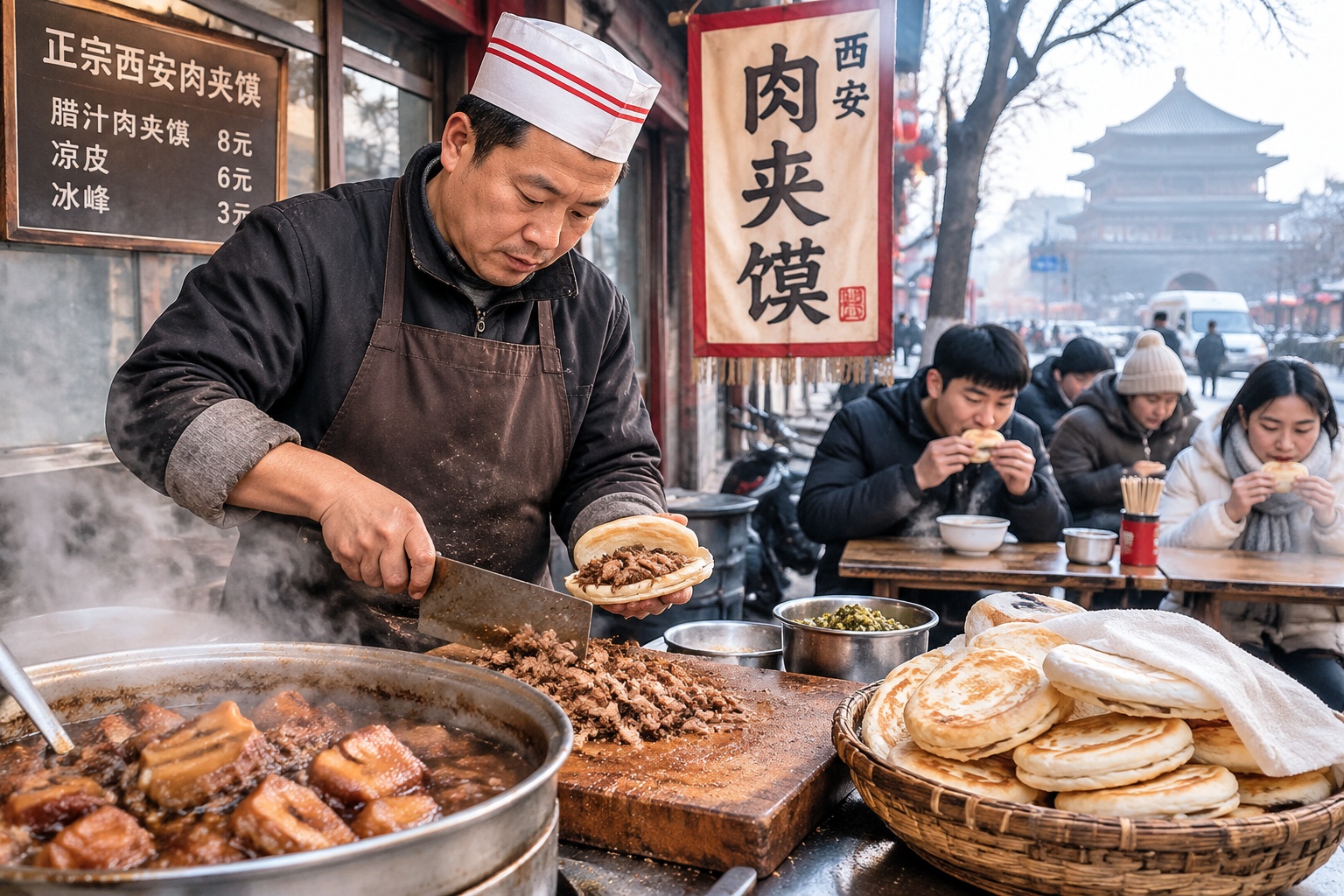
Now jump to Xi’an, the ancient capital in central China. The morning air is cold, especially in winter. Breakfast here is designed to stick to your ribs. The most famous item is roujiamo—often called a Chinese hamburger, but that’s not quite right. The bun is more like a crispy flatbread, and the filling is pork that’s been braised for hours in a fragrant broth of soy sauce, star anise, and cinnamon. The meat is chopped fine, then stuffed into the split bun. It’s juicy, salty, and addictive.
Roujiamo has a long history. Some say it goes back to the Qin dynasty, but the modern version became popular in the Tang dynasty. The name literally means “meat sandwiched in a bun.” The bun, called baiji mo, is baked until crispy on the outside but soft inside. It’s a street food classic.
Another classic is yangrou paomo: a bowl of rich lamb soup served with pieces of flatbread. You tear the bread into small pieces yourself, then the server pours the hot soup over it. It’s a slow, hands-on breakfast—not something you eat while walking. In Xi’an, breakfast is often a sit-down affair. People take their time, especially in winter. It’s a moment to warm up before facing the day.
There’s also hu la tang, a spicy, peppery soup with vegetables, meat, and vermicelli. It’s thick, warming, and slightly numbing. On a freezing morning, it clears your head.
Beyond Two Cities: A Quick Tour of Chinese Breakfasts
Guangzhou and Xi’an are just two examples. Every region has its own morning rituals.
- Beijing: Jianbing—a savory crepe made with mung bean flour, eggs, scallions, and a crispy cracker, folded and wrapped in paper. Eaten on the go.
- Shanghai: Shengjian bao—pan-fried pork buns with a crispy bottom and juicy filling. Also cifantuan, a sticky rice roll with pickles and pork floss.
- Sichuan: Spicy noodles, often with chili oil and minced pork, served in small bowls. Breakfast can be fiery.
- Hunan: Rice noodles in a spicy broth, topped with braised beef or pork.
- Lanzhou: Beef noodles in a clear broth with hand-pulled noodles and sliced beef, a morning staple.
The list goes on. The point is: there is no single “Chinese breakfast.” That’s a foreign simplification.
Why Do Chinese People Eat Breakfast Out So Often?
Walk through any Chinese city at 8 a.m. and you’ll see the same scene: street stalls, small shops, and carts selling breakfast to a steady stream of customers. Why is breakfast so public here?
Several reasons. First, commuting. Many people leave home early and travel 30-60 minutes to work. Making breakfast at home would mean waking up even earlier. Second, housing. Not everyone has a large kitchen, and some shared apartments have limited cooking space. Third, price. Street breakfast is cheap—often cheaper than cooking at home when you factor in time and ingredients. Fourth, taste. It’s fresh, hot, and made to order.
It’s also social. You nod to the vendor you see every day. You chat with neighbors while waiting. Breakfast is a small daily ritual that connects people to their neighborhood.
What About Drinks?
Breakfast drinks vary too. In the north, hot soy milk is a classic, often served sweet or savory. In the south, you’ll see more tea, especially in Guangzhou where morning tea is a tradition. Coffee is gaining ground among younger urbanites, but it’s usually an addition, not a replacement. A typical breakfast might be a rice noodle roll and a cup of hot soy milk, or a roujiamo and a bottle of iced tea.
What’s Changing and What’s Not
China is changing fast, and breakfast is not immune. In big cities, you’ll now see younger people grabbing a latte and a croissant from a convenience store or a bakery. International chains like McDonald’s and Starbucks offer breakfast menus, though they’re not always cheap. Delivery apps like Meituan and Ele.me let you order breakfast to your office in 20 minutes.
But traditional breakfast is far from dead. In fact, many street vendors have adapted: they now accept mobile payments (scan a QR code), and some have joined delivery platforms. The food itself remains recognizably local. People are proud of their regional breakfast—ask someone from Wuhan about reganmian (hot dry noodles), and they’ll tell you it’s the best in China.
There are also health concerns. Some younger people worry about oil and salt, and opt for lighter options like soy milk and steamed buns. But for most, breakfast is still a moment of pleasure, not a nutritional calculation.
Breakfast as a Window into China
If you want to understand China, don’t just read the headlines. Go find a breakfast stall. Watch how the vendor moves. Listen to the orders. Sit down with a bowl of soup. You’ll see the country’s regional diversity, its fast pace, its love of good food, and its everyday social fabric—all before 9 a.m.
Next time you’re in China, skip the hotel buffet. Walk to the nearest street corner. You’ll learn more in one bite than in a hundred news reports.
Start the discussion at forum.chinacomes.com