
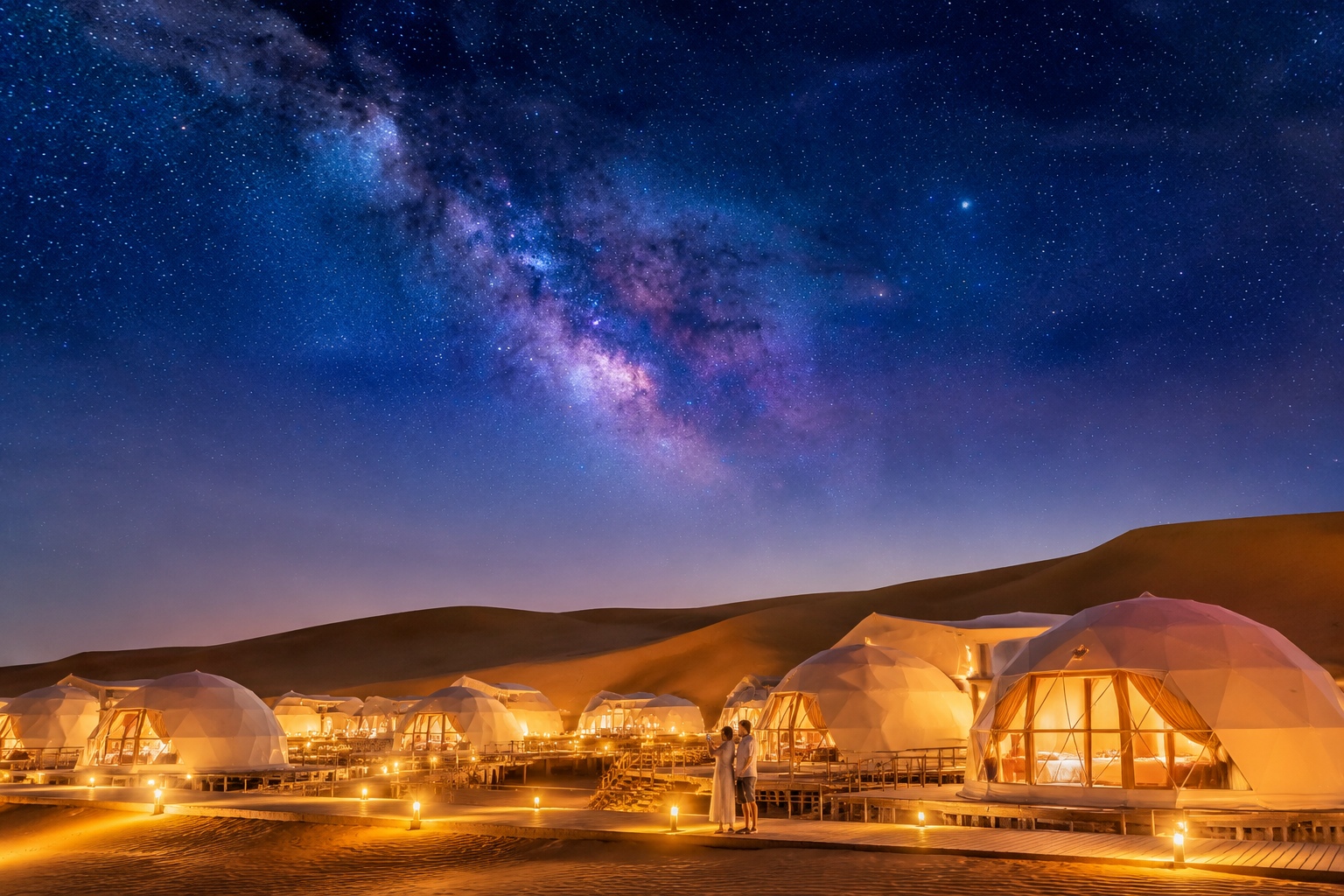

It began with a video on my phone. A friend who barely posts anything had shared a clip from somewhere in China. In the darkness, curved white cabins sat on bare sand dunes, glowing like small moons. Above them, the sky was so packed with stars that the Milky Way looked like silver powder thrown across black glass. ‘Where is that?’ I asked. ‘The star hotel in Ningxia,’ she replied. ‘And yes, it costs about 2,000 yuan a night.’
That is roughly $300 – enough for a fine hotel room in London or Tokyo. But there is no high street or business district here, only dunes and desert air. The question, for anyone who has never experienced the place, is simple: what does a night under the western China sky actually deliver?
A Hotel Built to Face the Sky
The property is not one building but a resort at the edge of the Tengger Desert, in Zhongwei, a small city in Ningxia Hui Autonomous Region. To get there, you fly to the regional capital Yinchuan, ride a high-speed train for about an hour to Zhongwei, then take a shuttle that rolls past sand and scrub for another 20 minutes. The road ends at a cluster of white dome-shaped cabins, half-buried star rooms and a glass-fronted lobby restaurant.
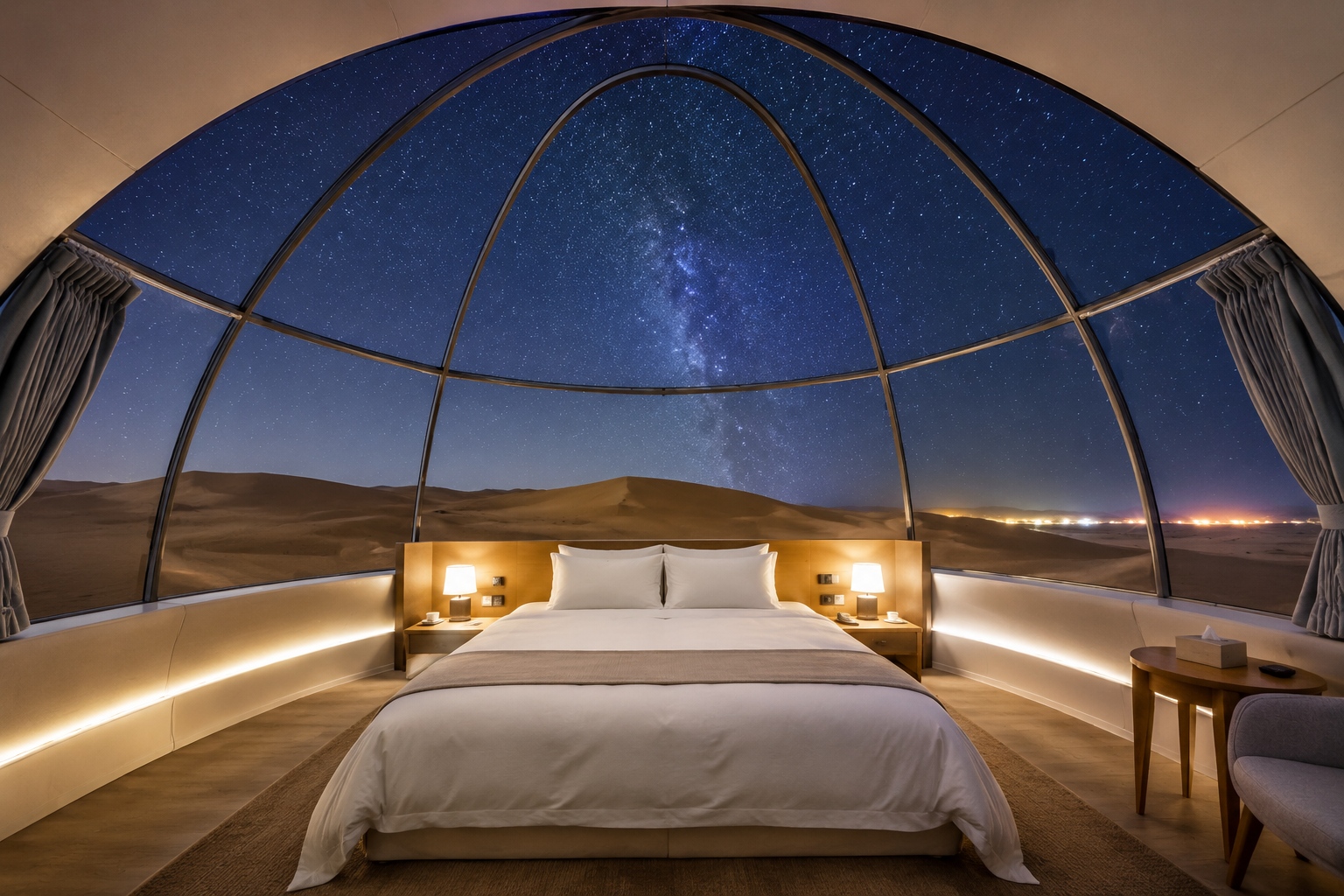
This is the desert star hotel – a name that spread across Chinese social media long before it appeared on Western travel feeds. Some rooms look like igloos with floor-to-ceiling glass; others are shaped like spaceships half sunk in the sand. The most requested rooms are the glass domes where the bed sits below an arched window. On a clear night, you can lie still and watch the sky move.
Rates range from about 1,200 yuan in winter to more than 2,000 yuan on summer weekends and national holidays. That price includes breakfast, a hotpot dinner, stargazing tours, basic photography support and several desert activities. In a place where no other hotel is walking distance away, the rate starts to sound less like a room charge and more like a package ticket to an experience.
Who Actually Pays 2,000 Yuan a Night?
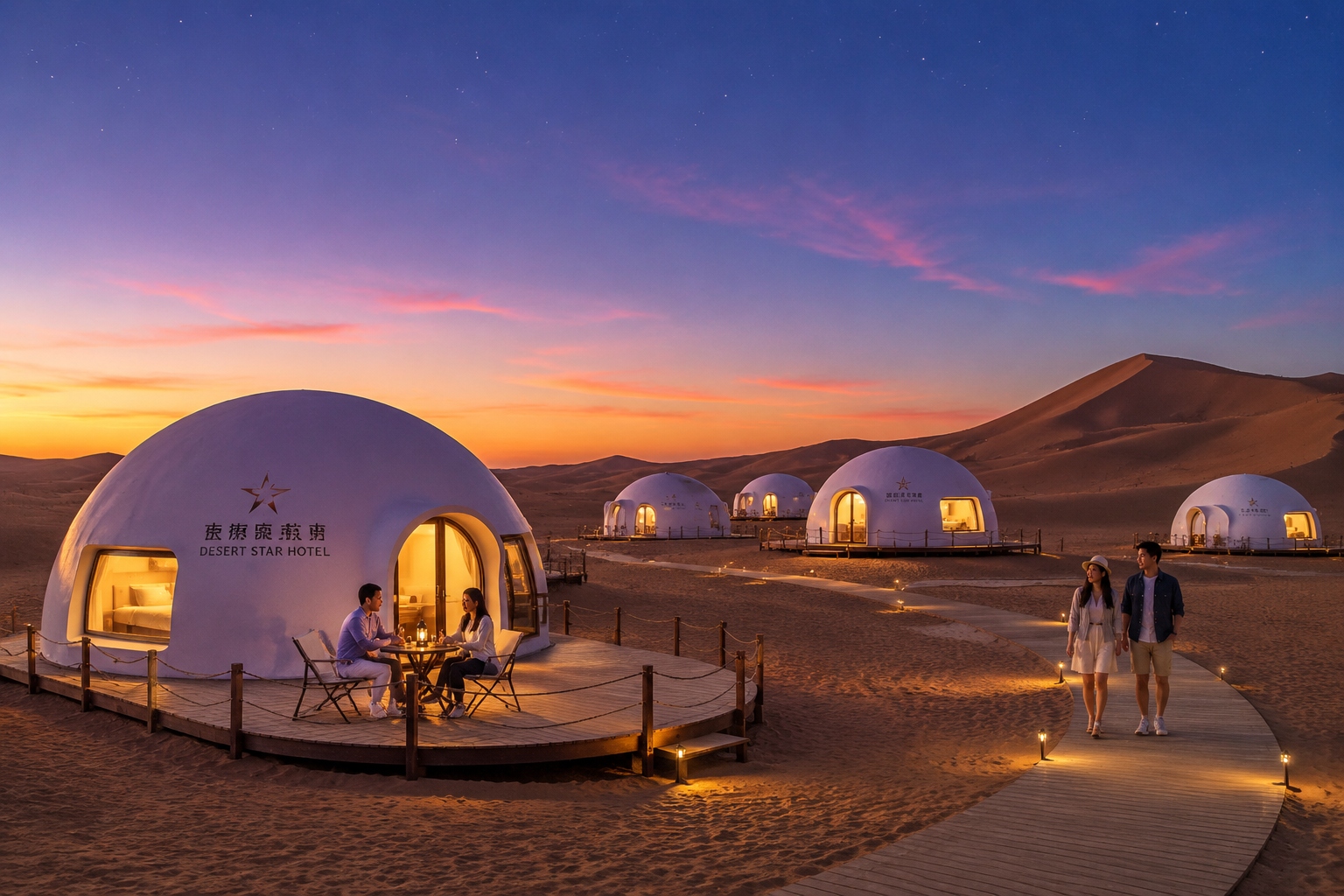
What surprised me during the evening astronomy program was the mixture of guests. Most came from Beijing, Shanghai, Shenzhen and other dense eastern cities. There were young couples clearly celebrating something, families with children worn out from sand sliding, a handful of solo travelers in their twenties and a few middle-aged women travelling together.
A hotel staff member told me that many guests book the place for a special date – a birthday, an anniversary, an engagement. One group had come all the way from Guangzhou to surprise a friend who loved astronomy. Another guest, a nurse from Chengdu, had taken three days off simply because she wanted to see the summer Milky Way with her own eyes.
The common thread is not money, but absence. For many Chinese from large cities, a truly dark sky is something that no longer exists near home. Light pollution has erased all but the brightest stars from the night above most urban neighbourhoods. Ningxia’s dry air and low population density make it one of the best star-watching spots in the country. For people who have never seen a genuine night sky, paying 2,000 yuan to see the galaxy feels less like an expense and more like a cultural experience.
What Does the Money Actually Buy?
The rooms are not huge. Many are around 30 square metres, with a comfortable bed, a clean bathroom and a design that does not try to compete with the sand. There are no big TVs facing the pillows; the hotel would rather you spend your evening outdoors. The included hotpot dinner is generous, with lamb, fresh vegetables, tofu, noodles and local tea. On the night I visited, the service was efficient enough to make me forget how far we were from the nearest large town.
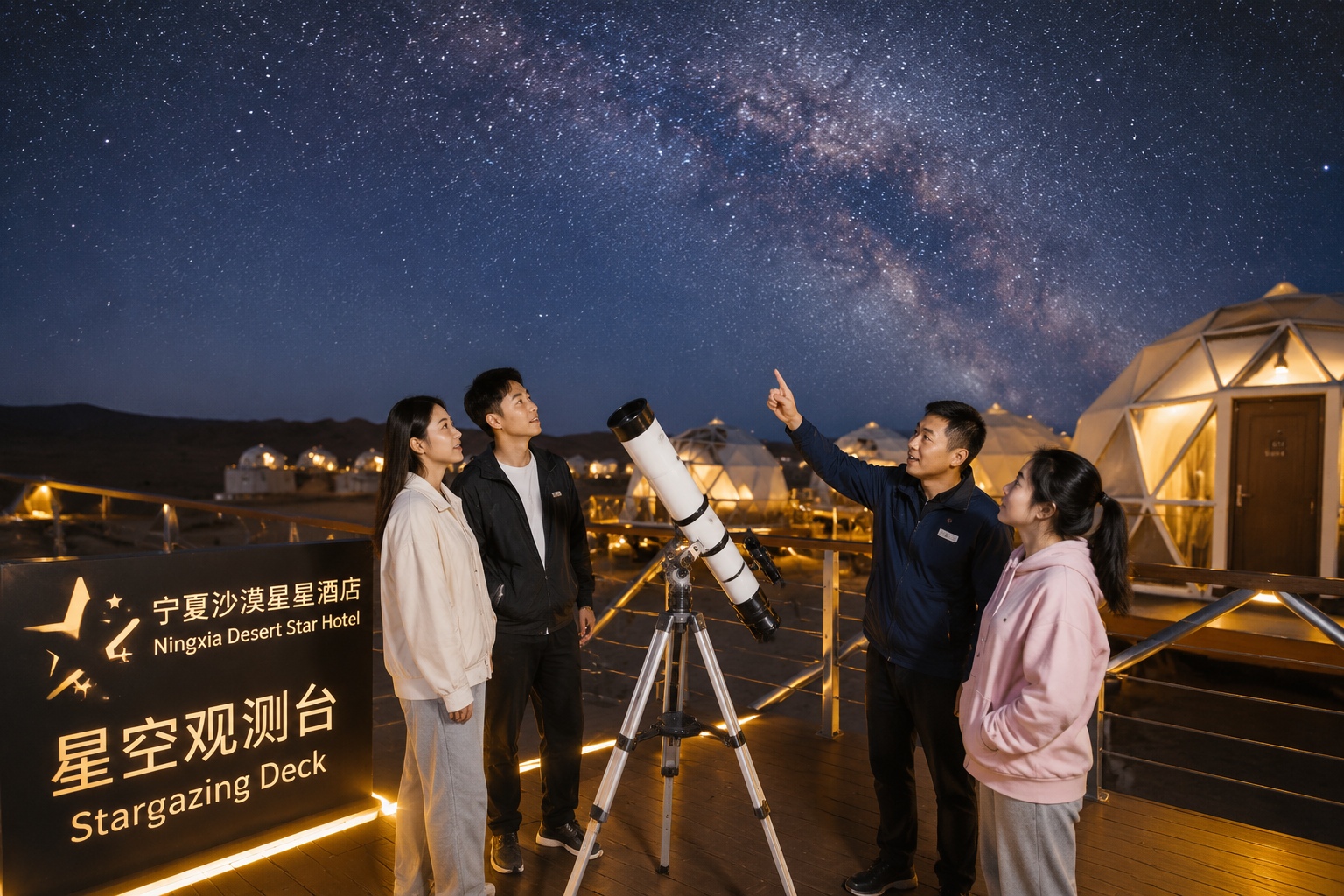
But the true value emerges after sunset. Around 9 p.m., the resort dims most of its lights. A guide walks guests to a stargazing platform a few steps from the rooms, where telescopes are already set up. He points out Jupiter, Saturn, the Andromeda galaxy and satellites crossing the sky like slow moving stars. He also shows guests how to switch their phones to night mode and capture a portrait with the Milky Way behind them, no professional camera required.
The biggest luxury may be silence. A few metres away from the hotel, guests can stand on the sand and hear nothing but the wind. In a country of 1.4 billion people, that kind of quiet is harder to find than a five-star bathtub. One visitor from Shanghai called it ‘an emotional reset.’ After a long day of desert sun and an evening of stargazing, I understood why.
More Than a Bed With a View
The surrounding area makes the night feel earned. During the day, guests can sand-ski down tall dunes, ride camels along old trade routes or explore Shapotou, a nearby scenic zone where the Yellow River runs alongside the desert. The hotel also arranges guided desert walks and evening bonfires. A short drive leads to a surviving stretch of the Ming Great Wall, adding a layer of history to a trip that many guests book mostly for the sky.
At night, the schedule does not stop at the telescope deck. There is an astronomy talk in the lounge, and later a bonfire gathering on the dunes. Photographers on site help visitors take lasting images of themselves alone or with friends under the clear galaxy. One middle-aged woman from Chengdu looked at her phone screen, laughed and said, ‘I came alone, but I do not feel lonely here.’ That sentence seemed to capture what the hotel is really selling: a sense of being tiny enough to feel part of something huge, yet comfortable enough to be looked after.
Small City, Bigger Stage
Not long ago, Zhongwei was mainly a stop for travellers on their way to Shapotou’s sand-skiing and rafting sites. The star hotel added a new layer to the town’s reputation. The resort is run by a state-owned tourism company, and many of its guides, cooks, drivers and housekeepers come from Zhongwei itself. A few kilometres down the road, local families have opened farm stays and snack stalls. During the summer season, even the normally empty dunes begin to feel busy.
Locals have mixed feelings about the hotel’s price. A taxi driver I met near Zhongwei said he had never spent the night there. ‘Too expensive for me,’ he shrugged, ‘but it brings visitors. My brother works as a driver in the desert now.’ That is the reality for many Chinese destinations: an ambitious project can look out of touch for local residents, while at the same time creating jobs and putting a small place on the map.
Is It Worth It?
There are fair criticisms. Two thousand yuan a night is far more than many Chinese families pay for a month of accommodation. The sand gets into places, the temperature swings can be dramatic, and the food, though better than expected, is not a reason to travel across the country. This is not a copy of a five-star international chain. It is a different kind of luxury, built around darkness and silence rather than marble and champagne.
For the guests I met, the price was not an ordinary habit. It was a treat, a celebration, a pause. When I turned off the lamp and lay back in bed, the glass ceiling above me was already filled with stars. The Milky Way crossed the full length of the dome, not as a screen saver but as something alive and near enough to pull me out of my own thoughts. The next morning, everything looked plain: yellow sand, blue sky, camels waiting with sleepy faces. But the memory of the night did not fade.
Would I pay $300 again? Probably yes, though not every year. The actual cost of a desert star hotel is not the booking fee. It is the willingness to give up bright screens for one evening and let the universe be the only show. In Ningxia, that show happens almost every clear night, and for a growing number of travellers, it is worth every yuan.
Start the discussion at forum.chinacomes.com