

Introduction
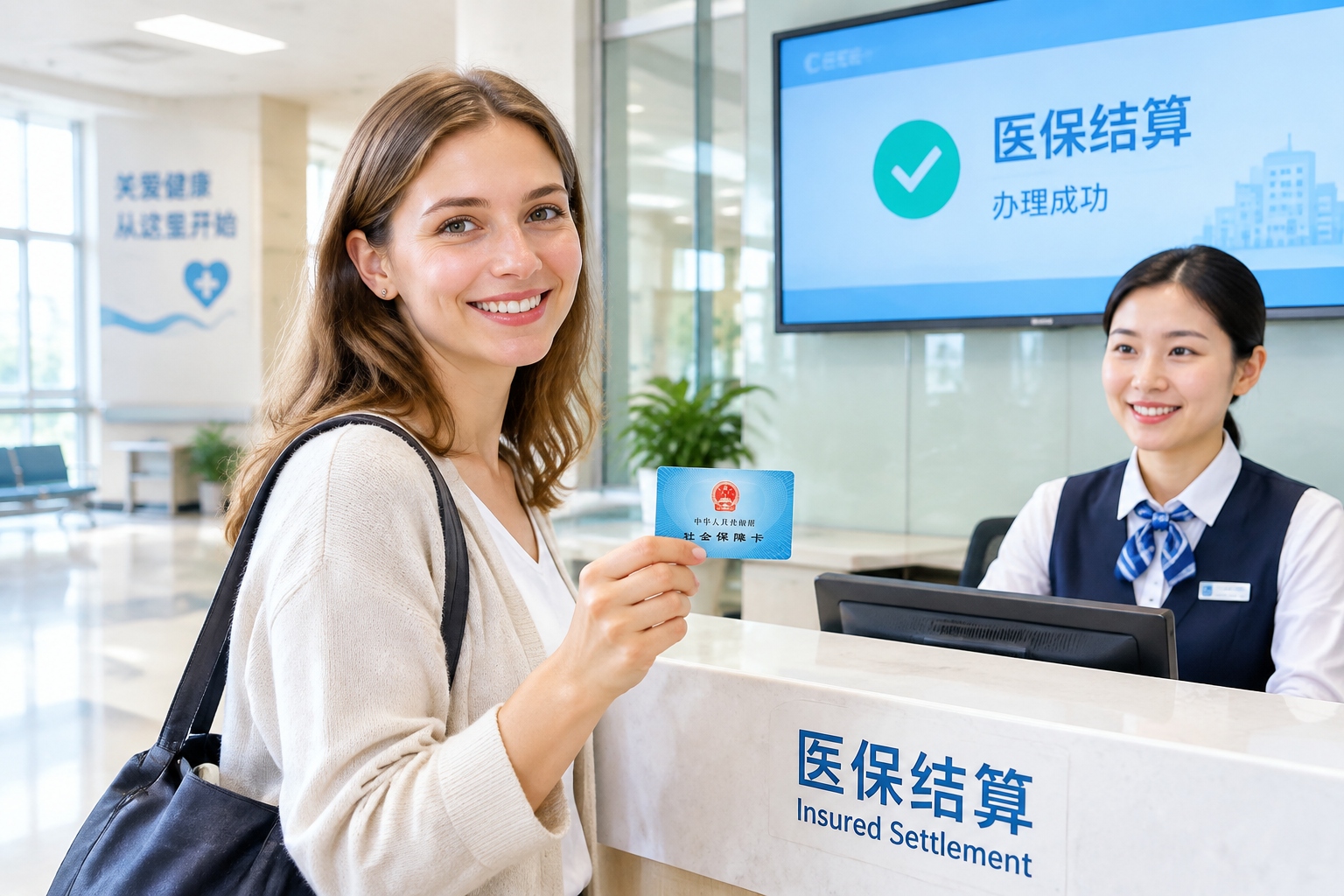
Last November, Maria Gonzales, a Spanish teacher at a university in Shenzhen, came down with a bad cough. At a hospital clinic, she handed the cashier her social security card. A few seconds later, the screen showed her bill: “insurance reimbursement ¥260, personal payment ¥70.” She paid without fully understanding how the numbers came about. If you’re an expat employee in China, you may find yourself in the same situation. The good news is that China’s basic medical insurance is a practical and efficient system once you know the key rules.
Who Can Enroll? Foreign Workers and China’s Basic Medical Insurance
Since 2011, all expat employees working under a valid work permit and labor contract with a Chinese company are lawfully required to participate in the social insurance scheme, which includes basic medical insurance. It is not optional, and it’s not something you can opt out of to get a higher salary. Your employer withholds a personal contribution from your monthly pay — typically around 2% of your salary before tax — and also pays a larger company contribution (usually 6% to 12%, depending on the city) into the public medical insurance pool.
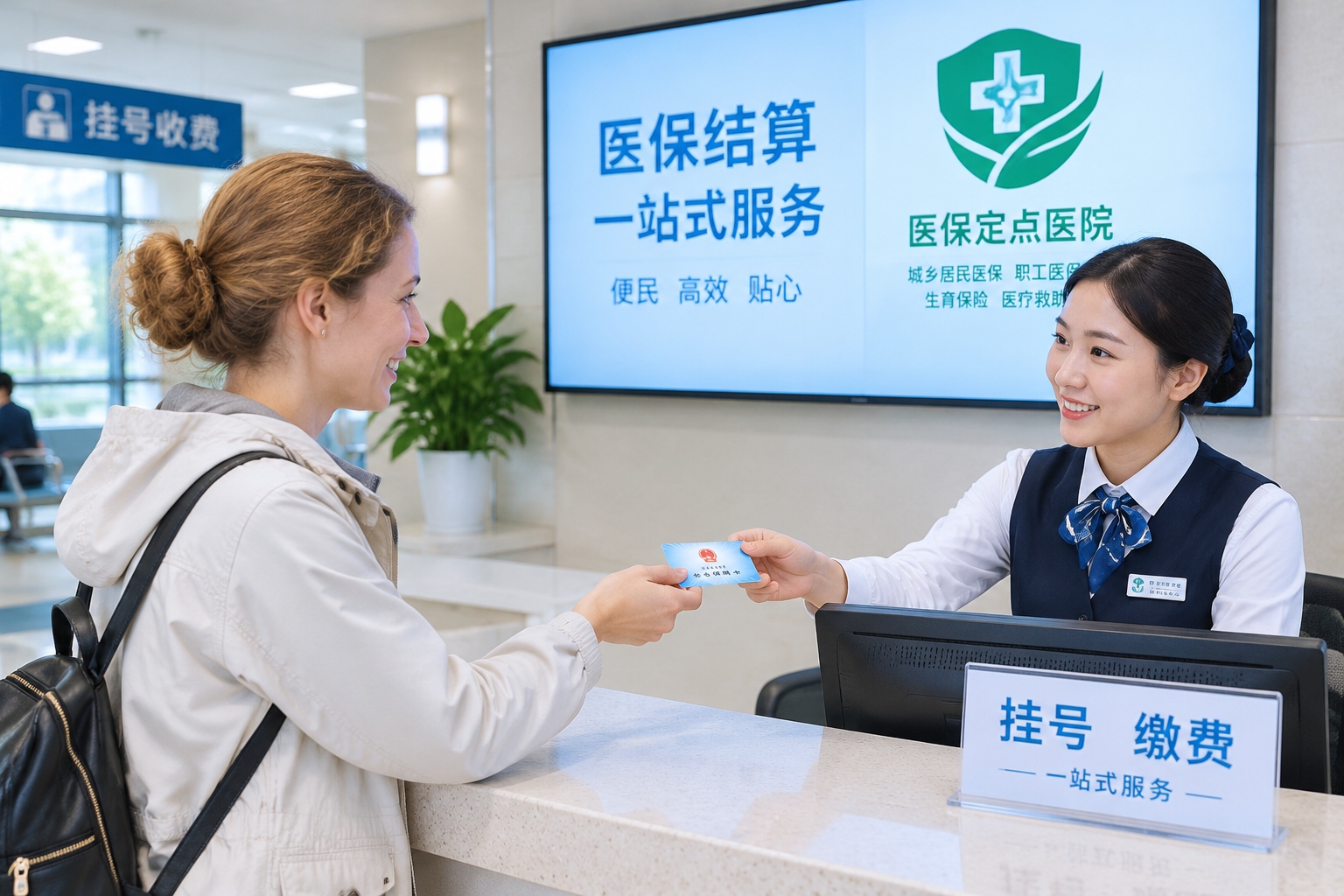
Once enrolled, the local medical insurance bureau will issue a social security card (社保卡) or you can activate an electronic version on your phone. This card is your key to accessing medical care with insurance coverage. Under the law, foreign employees enjoy the same medical insurance benefits and responsibilities as Chinese employees. There are no separate policy schemes holding you to lower standards.
How Reimbursement Works: Outpatient Visits, Hospital Stays, and Deductibles
Medical insurance in China is managed at the municipal level, which means the reimbursement rates, deductibles, and caps can differ from city to city. However, most cities follow a similar logic.
Outpatient Care
For ordinary clinic visits, the reimbursement rate depends on the type of facility. Small community health centers usually have higher reimbursement ratios, sometimes 70%–80%. Large general hospitals, on the other hand, tend to reimburse at a lower rate, say around 50%–60%. You’ll also have an annual deductible — usually between ¥300 and ¥1,800 — which means the first few hundred yuan of your outpatient medical expenses each year are paid entirely from your own pocket.
Your personal medical account, funded by your own payroll contributions, is always available to pay for co-pays, prescription drugs at pharmacies, and fees that insurance doesn’t cover. Once you pass the deductible, the public pooling fund starts paying the share of the cost that the insurer covers.
Hospital Stays
If you’re admitted to hospital, the reimbursement is far more generous. For bills between the deductible and the annual cap, the insurance fund generally covers 70%–90% of eligible expenses. The exact share varies by the hospital’s tier and the total bill. Many employees find their out-of-pocket costs after an operation or serious illness account for only a small fraction of the full bill.
Where the Money Comes From
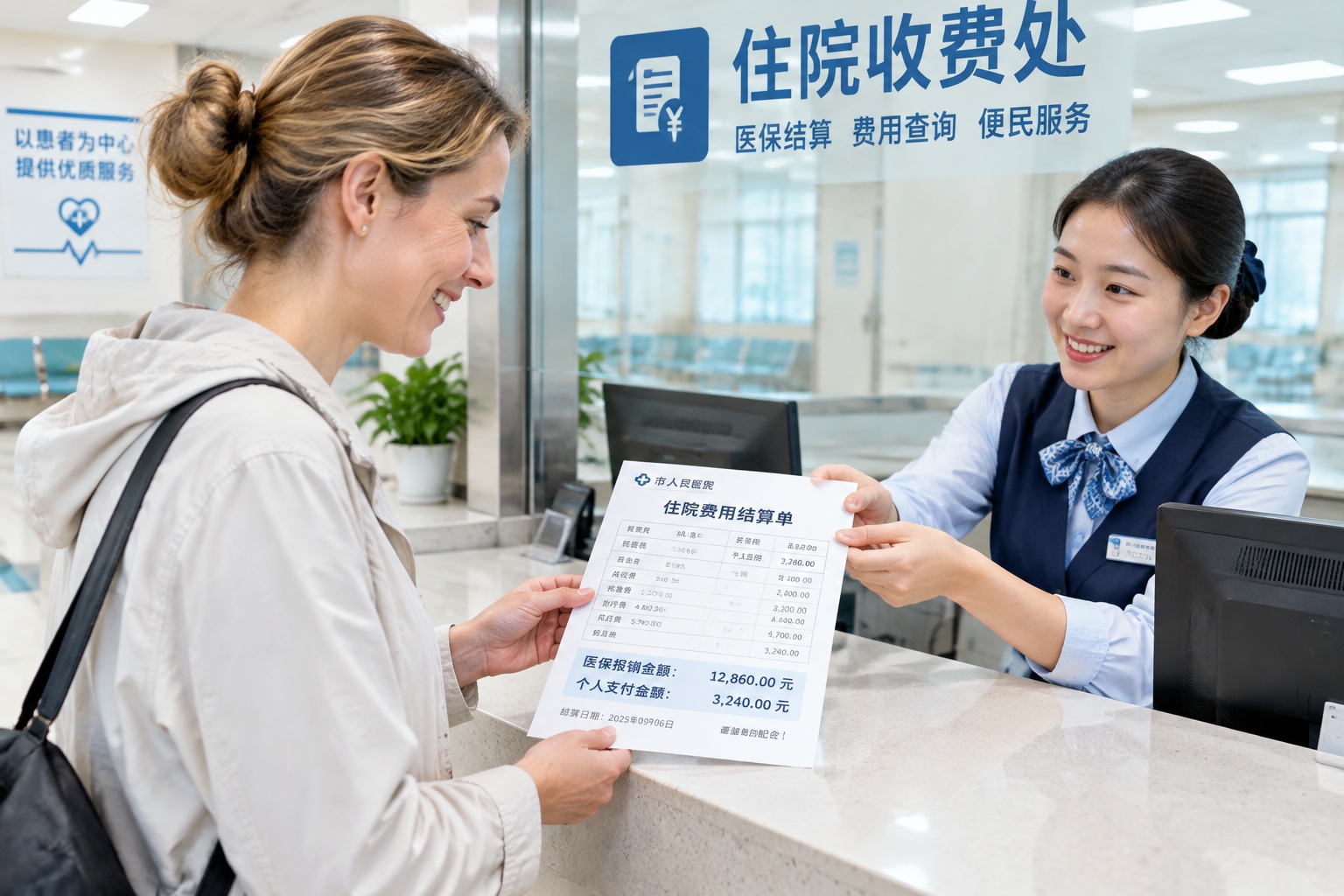
Understanding this separation helps you estimate expenses: one part comes from your personal account, which is like a health savings account, and the other part from the social pooling fund, which is borne by all insured workers. When you settle a bill, the computer automatically splits it between these sources.
The Drug List: Categories A, B, and Fully Self-Paid
One reason Maria’s bill looked confusing is the national drug reimbursement list. The list is revised by China’s healthcare authorities and includes thousands of medicines, grouped into two categories for reimbursement purposes.
- Category A drugs (甲类) are clinically essential and generally low-cost. Their full cost is counted as eligible medical expense, meaning they are reimbursed at the standard rate, and you only pay the applicable coinsurance.
- Category B drugs (乙类) are typically newer, pricier, or more specialized. Before reimbursement, you must personally pay a certain percentage of the drug price — commonly 10% to 30%. The remaining amount then counts toward your reimbursable expense and is split between the insurer and you.
Any drug not on the national list is completely self-pay. For example, some imported herbal supplements or over-the-counter cold medicines might not be included. When your doctor writes a prescription, you can ask whether the drug is Category A or B before you pay. If cost is a concern, ask if a Category A generic alternative exists.

Special Disease Outpatient Treatment: A Lifeline for Chronic and Severe Illnesses
China’s insurance isn’t just for emergencies. People with long-term conditions — like diabetes, hypertension, cancer aftercare, kidney dialysis, or asthma — need regular outpatient treatment. Yet standard outpatient reimbursement is often too low to make such care affordable over time. For this reason, many city-level insurers have set up a designated list of severe or chronic diseases that qualify for a separate, more favorable outpatient reimbursement scheme.
Under this program, often called “special disease outpatient treatment” (特殊病种门诊) or “outpatient co-pay for chronic diseases,” once your condition is approved, all related outpatient visits and prescriptions are reimbursed at the much higher inpatient rate. Approval usually begins with your doctor completing a diagnosis and submitting a form to the local medical insurance center. You or your hospital can do this. The qualifying diseases and the exact reimbursement rate vary by city.
Practical takeaway: If you have an ongoing medical condition, talk to your doctor and HR. They can help you apply. Once approved, the savings can be enormous.
Cross-City Care: Why Registration (备案) Is a Must
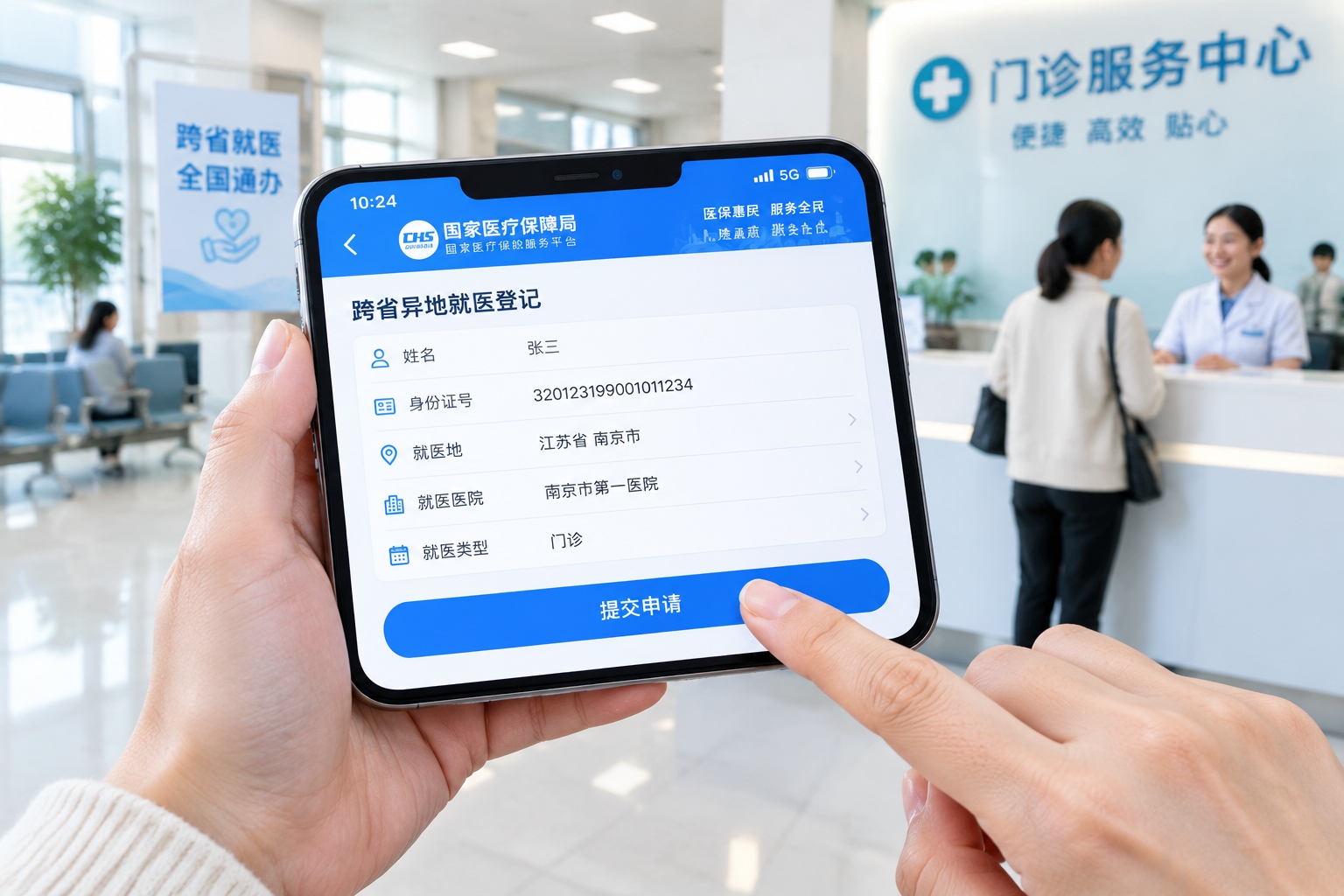
In China, even though reimbursement is administered locally, the system now supports direct settlement of medical bills across provinces — but only if you’ve registered ahead of time. “Cross-city care registration” (异地就医备案) tells both your home insurer and the visiting hospital that you are a patient travelling for treatment. Registration can often be done in minutes through the official National Medical Insurance Service app (国家医保服务平台) or the local WeChat mini-program.
You’ll need your medical insurance card or digital code, plus some identification. Depending on your situation, you may be asked to provide a temporary residence certificate or a referral letter from your local hospital. For emergency visits, most cities now accept “offline registration later” as a fallback, but don’t rely on it.
How to do it, step by step:
- Download the National Medical Insurance Service app.
- Log in with your social security ID and phone number.
- Select “cross-city medical care filing”.
- Choose whether you’re filing for long-term living in another city (for a long assignment or retirement) or temporary medical treatment in another city.
- Follow the prompts to input the destination city and the hospital, then submit.
After approval, which can take just a few workdays, you can go to any designated hospital in the target city and present your social security card or electronic code. On discharge or after an appointment, the system calculates reimbursement according to your home city policy, and you only pay the remainder.
Case Study: Maria Handles Three Types of Care
When Maria’s cough turned into a diagnosis of asthma, she was worried about long-term costs. Here’s how using the right insurance procedures helped her.
A Regular Outpatient Visit
Her university’s HR department enrolled her in Shenzhen’s employee basic medical insurance, and she chose a community health center as her designated first-visit clinic. A typical check-up with a specialist and a common inhaler cost ¥800. Because she had already used her account for other expenses, she had hit the annual outpatient deductible. The system showed ¥560 to be covered by the insurance pooling fund, and ¥240 out-of-pocket (paid from her personal account and bank card).
Chronic Care Program Approval
Because asthma is on Shenzhen’s list of chronic outpatient diseases, her doctor filled an application for the “special disease outpatient” program. After approval, her quarterly visits for asthma-related care were reimbursed at the inpatient rate — about 80% in her case. As a result, a ¥1,200 follow-up visit left her with only ¥240 to pay.
An Emergency in a Neighbouring City
While travelling in Guangzhou, she needed urgent care at a hospital there. Her HR had forwarded a tip about the national app. She spent two minutes filing the cross-city registration on her phone while in the taxi. At checkout, the hospital charged ¥2,000 for treatment. The system, using her Shenzhen policy, paid ¥1,600, and she paid ¥400 on the spot. No paperwork.
Note: These amounts are illustrative and based on common Shenzhen policies in 2024. Different cities and individual plans will produce different numbers. Always ask your HR or the local medical insurance authority for the exact percentages that apply to you.
Key Points to Remember
- You are covered as an employee from day one. Your employer is responsible for enrolling you and withholding contributions.
- Reimbursement rates vary widely: outpatient roughly 50–80%, inpatient 70–90%, depending on the city and facility.
- Category A drugs are fully eligible; Category B incur an extra self-pay share; unlisted drugs are entirely self-pay.
- If you have a chronic or serious illness, ask about the special disease outpatient program in your city.
- Don’t skip cross-city care registration before going outside your insured city.
- When in doubt, talk to your HR representative — it’s part of their job to know the local rules.
China’s medical insurance system may look like a maze at first, but the more you understand it, the more you’ll appreciate how smoothly everyday care can work. The rules keep evolving, often in the direction of broader coverage and easier direct settlement. Now that you know the basics, next time you’re at a pharmacy or hospital, you’ll know the right questions to ask.
Start the discussion at forum.chinacomes.com