

The First Stranger
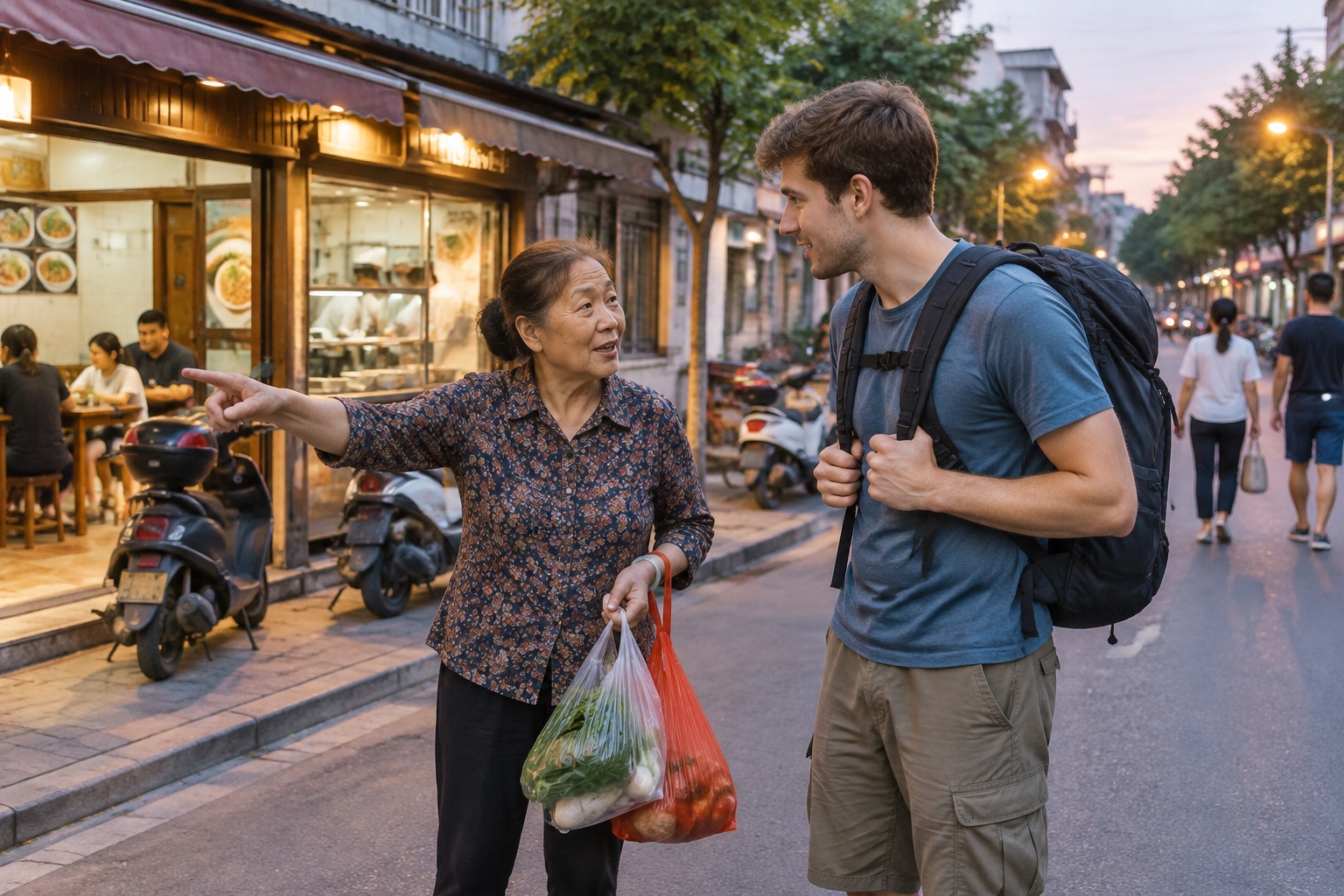
It was 10 p.m. in Beijing. My phone was at 8 percent, the map had stopped loading, and I was standing at a wide intersection near Dongzhimen with a backpack, a printed page with my hostel address on it, and the particular kind of confidence that evaporates about twelve hours into a long flight.
A woman in her fifties walked past with two bags of groceries. I said something in my three words of Mandarin that meant roughly “hostel, please.” She set the bags down on the pavement. She looked at the address. Then she picked the bags back up, tilted her head for me to follow, and started walking.
She went six blocks out of her way. At the door she pointed, said something I didn’t catch, and left before I could offer her anything — money, tea, a photo of my dog back home. She just nodded and walked back the way she came.
My American brain kept waiting for the catch. There wasn’t one.
It Kept Happening
Over the next ten days — Beijing, Chengdu, Shanghai — that scene repeated in smaller ways, maybe fifteen times in total.
In a Chengdu cafe, I left my phone on the table and went to the bathroom. When I came back, it was still there. The waiter had wiped the table around it and folded a napkin underneath, like it was something asleep.
At a night market, I bought a bottle of water that cost two yuan and handed over five. The vendor counted out three in change, then pushed a coin back across the counter because I had misread the price and he wasn’t going to keep the difference.
At a subway exit in Shanghai, I asked a college-age guy which line went to the Bund. He checked his own phone, said “follow me,” walked me through two corridors and up two escalators to the right platform — and then sprinted back the way we came, because he had been heading somewhere else entirely.
On the high-speed train from Beijing to Xi’an, I was wrestling my suitcase toward the overhead rack when a teenager put both hands under it and lifted before I could say anything. His mother watched him do it and looked pleased.
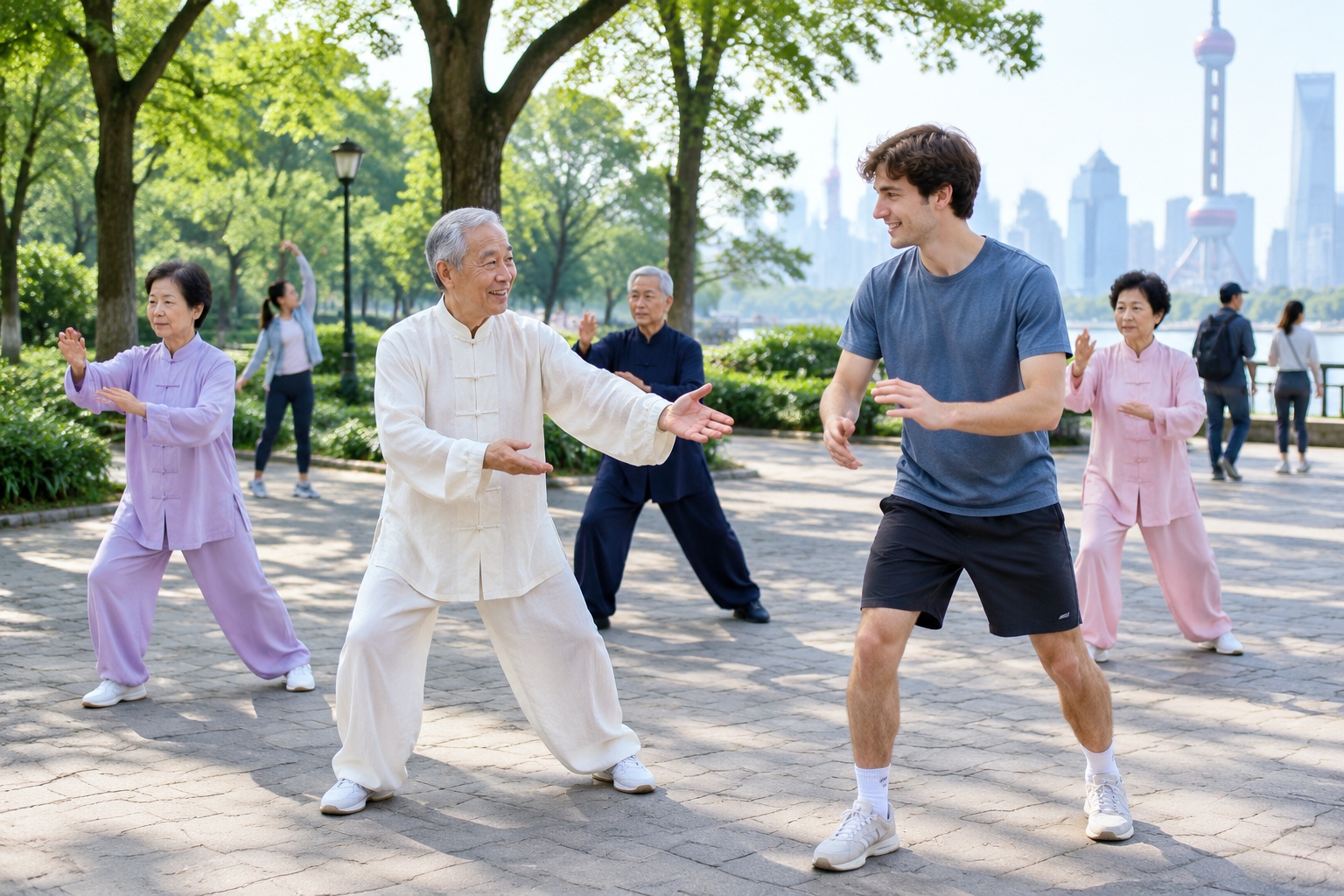
And one morning in a Shanghai park, a man in his seventies waved me into a line of people doing slow tai chi. I was badly out of sync with everyone. Nobody laughed. A woman behind me just put her hands on my shoulders and moved me half a step to the right.

Why the Streets Feel Like a Living Room
Part of what makes those encounters normal is simply how Chinese cities use public space. At 11 p.m. in Chengdu, families were still out. Grandmothers danced in plazas with a speaker on a cart. Kids rode scooters in lazy circles. Convenience stores glowed, noodle shops were still serving, and old men played cards on a folded table under a streetlight.
The American urbanist Jane Jacobs called this “eyes on the street” — the idea that a busy, mixed-use block looks after itself better than an empty one. In most Chinese neighborhoods, the sidewalk is the living room. People nap on park benches. They bring thermoses. They sing badly and loudly, in public, without embarrassment.
That density is exhausting sometimes. It is also a form of insurance. Someone is always around, and almost everyone around is doing something ordinary — eating, walking a dog, waiting for a grandchild outside a school gate.
Growing up in the United States, I absorbed a different map of the world: gated communities, Ring cameras, neighborhood apps full of alerts about unfamiliar cars. The working assumption is that a stranger is a risk to be managed. China runs on nearly the opposite assumption, and after a few days it starts to feel less naive than I expected.
Yes, There Are Cameras. That Isn’t the Whole Story
I should be straight about this part, because foreign readers always ask. Cameras are everywhere in Chinese cities — on poles, above shop doors, inside subway entrances, sometimes in alleyways so narrow you wonder who is watching. Widely cited estimates put the national total in the hundreds of millions. That is real, and for a visitor from a country that argues constantly about privacy, it is genuinely striking.
The numbers behind street safety are also real. United Nations data puts China’s intentional homicide rate at roughly 0.5 per 100,000 people, against about 6 per 100,000 in the United States. Robbery and phone-snatching are rare in city centers. Private handguns are effectively unavailable to ordinary people, and in a country of 1.4 billion that fact changes the temperature of a street at night more than any camera does.
But cameras don’t explain the woman with the groceries. A camera doesn’t lift your suitcase onto a train rack or hand you back a coin. What I noticed over ten days was that most of the safety I felt came from people — a shopkeeper who knows every face on the block, an auntie who notices a child standing alone, a delivery rider who stops to let you cross.
That is not the same as a society without conflict. There are scams, especially aimed at tourists. There are arguments, shoving matches, bad traffic, and plenty of things I couldn’t understand because I don’t speak the language. Being a guest who is treated kindly is also not the same as living here.
What Ten Days Couldn’t Tell Me
I want to be careful about what my experience actually proves, which is not much. I was a visitor with a return ticket, staying in the central districts of three big cities. I didn’t see rural China, didn’t work in a Chinese office, didn’t try to rent an apartment, challenge a landlord, register a business, or deal with a hospital at 2 a.m.
I walked under the cameras; I never had to live with them. And friendliness toward a visibly foreign visitor is a specific thing — it doesn’t automatically say anything about how a delivery worker, a migrant factory hand, or a young person looking for work experiences the same system day after day.
There is also a language wall. I understood maybe one word in twenty of what was said around me. When someone laughed, I usually had no idea at what. Some of the friction I might have noticed in a language I spoke probably slid right past me.
The Reflex I Brought Home
A few weeks after I got back, I was standing in an airport in California, and I caught myself doing the American street posture: shoulders up, bag pulled in front of my body, eyes down, giving nobody a reason to speak to me.
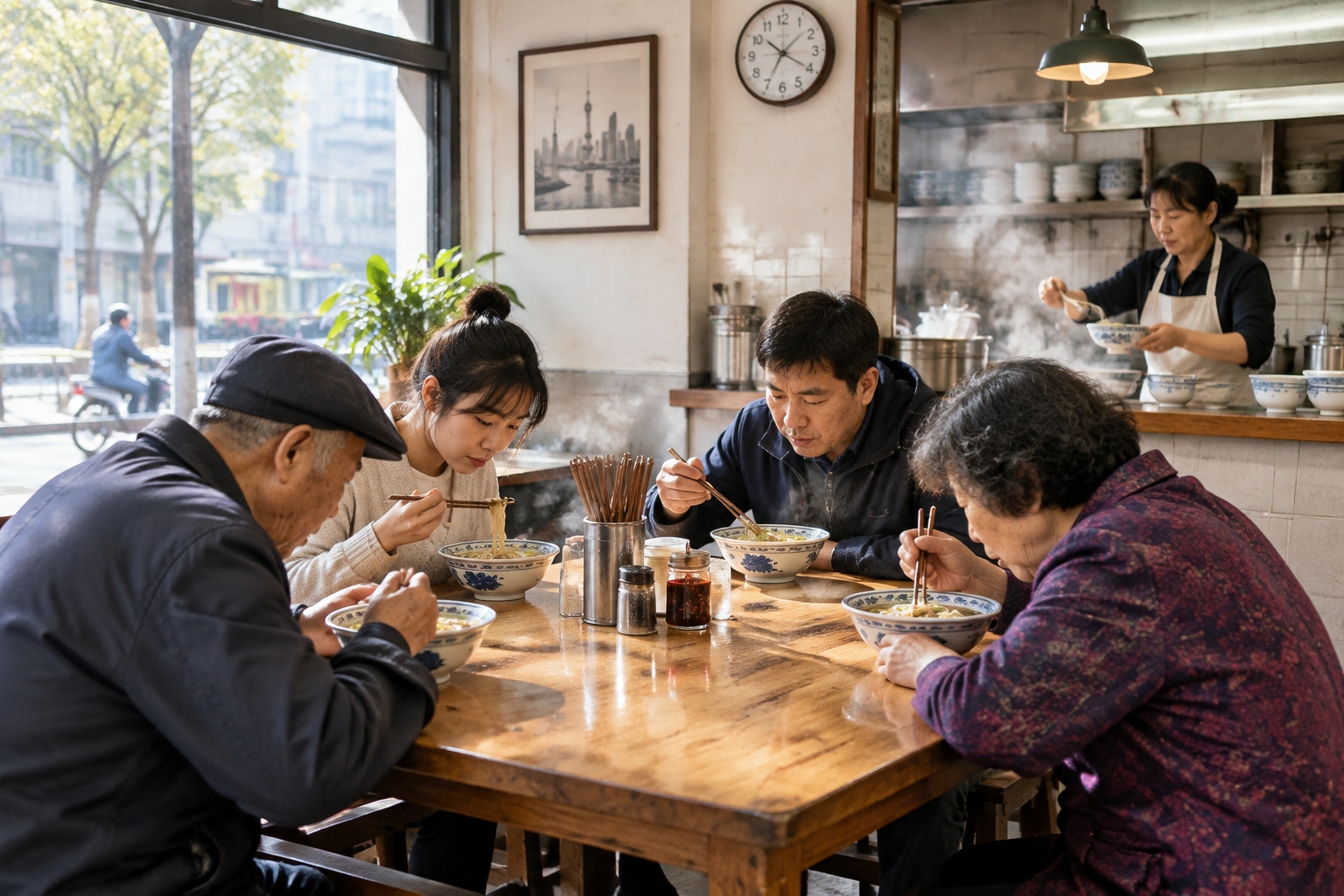
A friend in Beijing once told me a phrase I keep thinking about: 别把所有人都当坏人 — don’t treat everyone as a bad person. It sounds like an obvious thing to say. In practice it’s a habit, built out of thousands of small, low-stakes exchanges with people you’ll never see again: asking for the time, asking which exit, asking whether this is the line for the noodles.
Ten days isn’t proof of anything. But it did change my default setting. When someone I don’t know approaches me now, my first thought is a little less likely to be “what does he want.”
If you ever go, try counting the times a stranger helps you and asks for nothing back. Then ask yourself what your own country’s default assumption is — and where you learned it.
Start the discussion at forum.chinacomes.com