

Eleven Americans, Twelve Days, and a Question They Couldn’t Answer
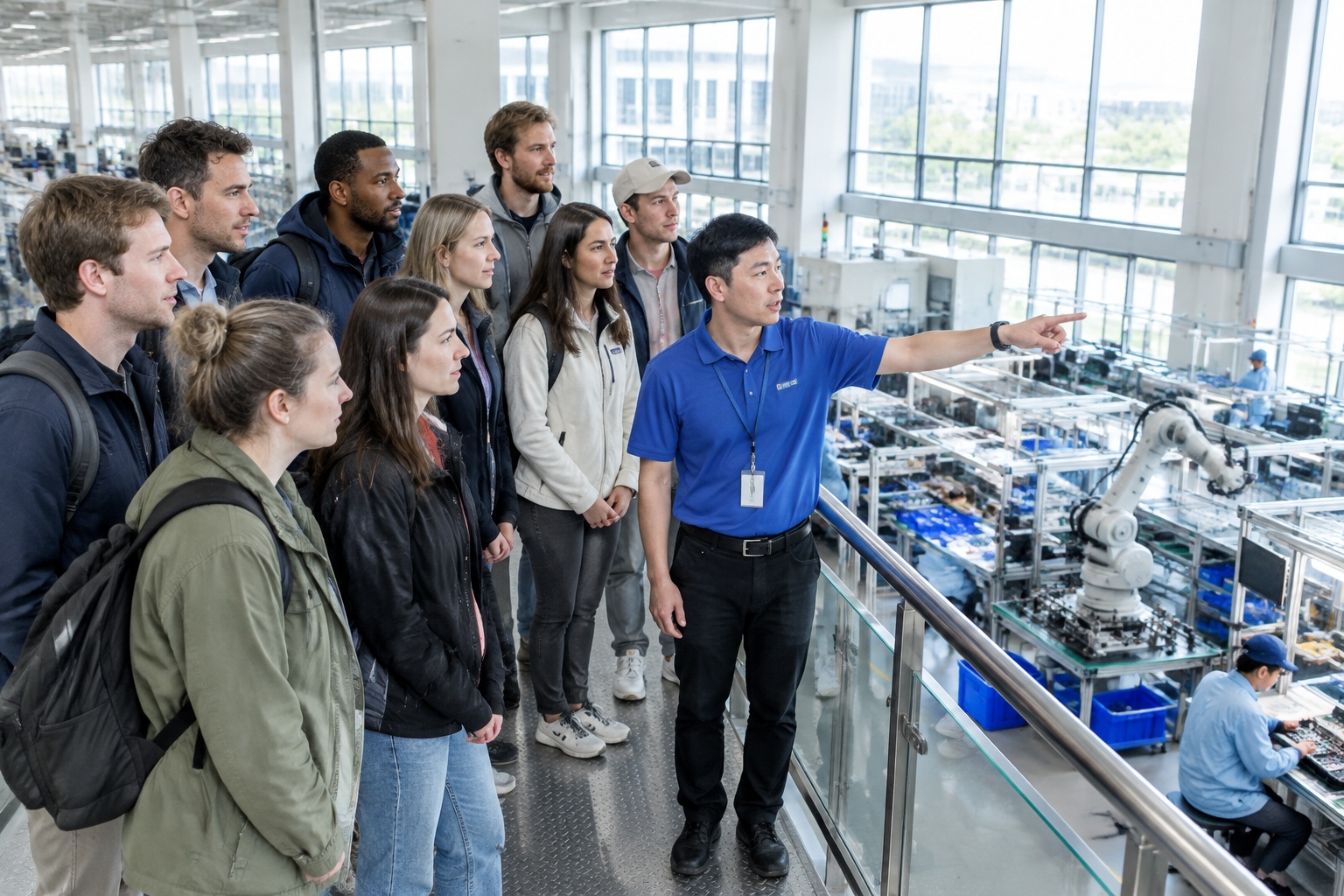
Shenzhen, 7:20 on a Tuesday morning. The breakfast room on the 31st floor smelled of congee, steamed buns, and instant coffee. Ray, a retired Army logistics officer from Virginia, stood at the window with a plate he hadn’t touched. Below him, the Nanshan skyline was still half sunk in fog.
“This looks like a movie set,” he said. “Somebody built this for the cameras.”
Across the table, Marcus, a venture capitalist from Austin, laughed into his coffee. “Give it three days,” he said. “You’ll stop saying that.”
Marcus was wrong about the timeline. It took Ray four days. But the fact that all eleven of them — a venture capitalist, a high school principal, a retired soldier, an ER nurse, a small-town reporter, a city planner, a machine-shop owner, a political science professor, a union organizer, a Lutheran pastor, and a software engineer — ended up somewhere different from where they started is the reason this story is worth writing down. They came for twelve days in March, through Shenzhen, Chengdu, a county in Anhui, and Shanghai. They left with fewer certainties and more questions. That, they would tell you themselves, is the point.
Before They Landed
The trip was organized by a small nonprofit that runs exchange programs for mid-career Americans who have never been to mainland China. Before departure, each participant filled out a two-page questionnaire. Nine of the eleven described their overall view of China as “mostly negative” or “mixed.” Three used the word “threat” somewhere in their answers. None had been to the country before. Only one spoke any Mandarin.
They were not, in other words, a friendly audience. That’s what made the following twelve days interesting.
Shenzhen: The First Crack
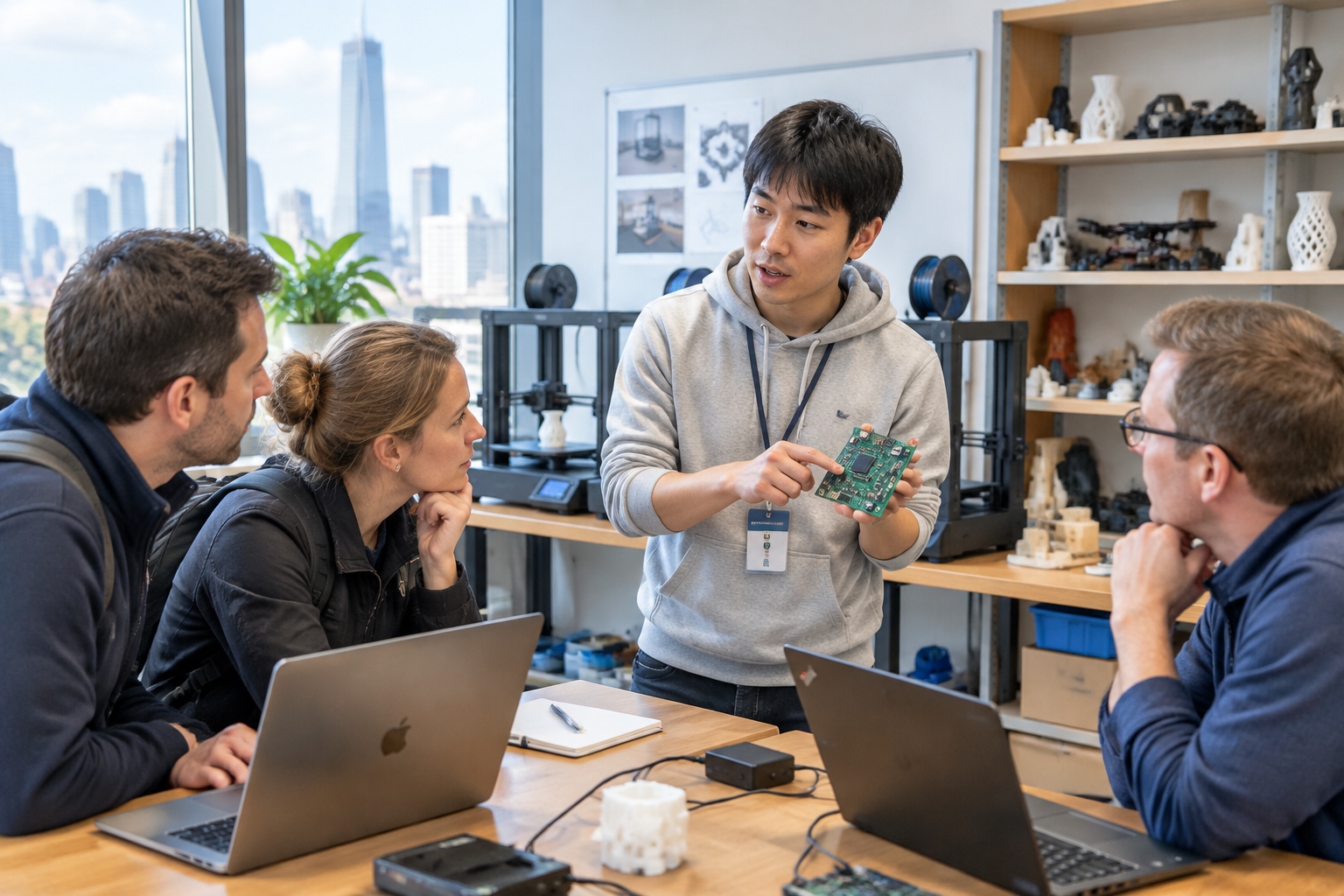
On day two they visited a hardware startup in an industrial building near the Bao’an district line. Twelve employees, three 3D printers, a wall of failed prototypes. The founder, a 29-year-old engineer named Zhou, walked them through a battery management board his team had redesigned fourteen times in six weeks for a European client.
Marcus, who has funded hardware companies in Texas, asked how they handled intellectual property. Zhou looked confused for a second, then laughed. “We handle it by moving faster,” he said. “By the time someone copies version six, we’re on version eleven.”
Marcus wrote that down. Later, over lunch, he said something he repeated several times over the trip: “I came here expecting a copying machine. I’m watching a company that ships faster than my portfolio companies, and I can’t tell you why.”
The Factory Floor Doesn’t Argue
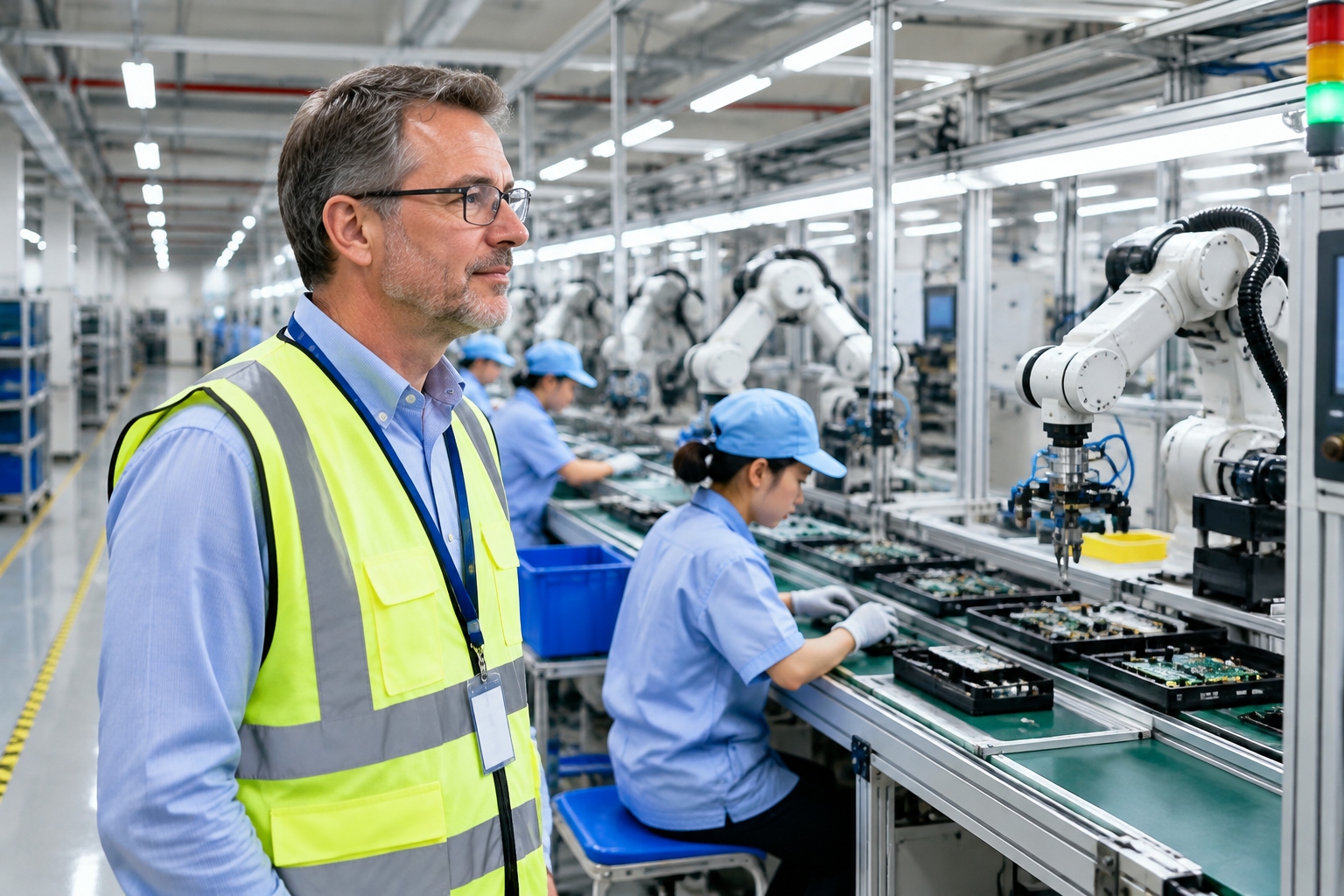
Greg runs a 40-person machine shop outside Grand Rapids, Michigan. He came expecting to see what he’d read about: rows of low-wage workers on assembly lines. What he saw in a Dongguan electronics plant was a lit floor with 380 workers and a lot of robots. In 2015, the plant manager told him, the same floor employed 1,200 people and produced less.
Greg asked whether the workers who lost those jobs were angry. The manager said most had moved into quality control, maintenance, and logistics — jobs that pay more but demand more. Some hadn’t made the transition. The manager didn’t pretend otherwise.
“I’ve been telling my guys for ten years that we can’t compete with that,” Greg said that night. “Now I’m standing there looking at a plant that’s more automated than mine.”
Chengdu, Where the Argument Gets Complicated
Chengdu is where the group split. Diane, the principal from Ohio, and Priya, an ER nurse from Houston, spent a morning at a community health center in a residential district. The center handled 400 walk-in patients a day. Blood tests were 30 yuan. A doctor saw each patient for about eight minutes. Both women were struck by how fast it moved — and by how little paperwork there was compared to an American clinic.
Priya asked about privacy and record-keeping. The answer was a national electronic health ID, which she found efficient and slightly alarming at the same time. On the walk back, she counted seven cameras on one block. “I can’t decide if I feel safer or watched,” she said.
That evening, the whole group ate at a night market near Kuanzhai Alley. Plastic stools, skewers, beer in small glasses. A vendor in her fifties, spotting the group, asked — through a translation app — whether Americans really eat sandwiches every day. Everyone laughed. Tom, the reporter, later wrote that this was the first moment he felt the trip was about people rather than systems.

A Village That Ships to the World
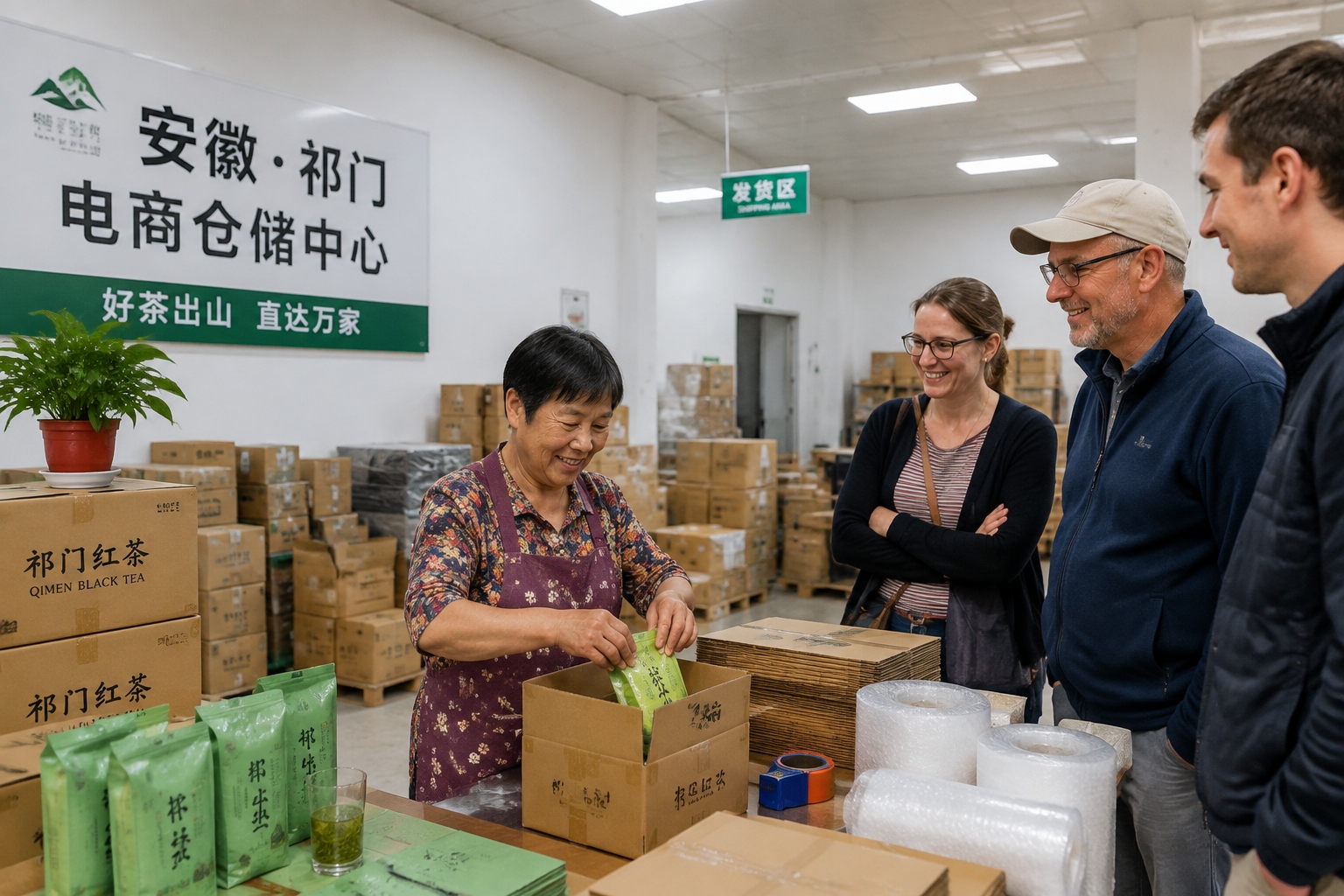
In a county in northern Anhui, the group visited a logistics hub for rural e-commerce. From a warehouse the size of a basketball court, 62-year-old Wang and about thirty other workers packed and shipped tea, dried bamboo, and pickled vegetables. Wang told them, through an interpreter, that she ships about 400 packages on a good day. Her daughter runs the online store from Hefei.
Karen, the pastor from Minnesota, asked what had changed most in her life. Wang thought about it. “I used to sell at the market in town,” she said. “Now I know when someone in Guangzhou buys my tea the next morning.”
Karen later said the moment broke something in her. “I came here with a picture of rural China that’s forty years old,” she said. “That’s on me.”
What They Couldn’t Explain Away
Not everything translated into wonder. Sarah, the political science professor, kept a notebook of what bothered her: the cameras, the difficulty of accessing certain news sites, the exam pressure visible on the faces of teenagers leaving a Chengdu tutoring center at 9 p.m., the gap between gleaming new districts and older neighborhoods ten minutes away.
“Anyone who tells you this trip is all one thing is selling something,” she said on day nine. “I have seen things I admire and things I would fight against at home. Both are real.”
The Hospital Test
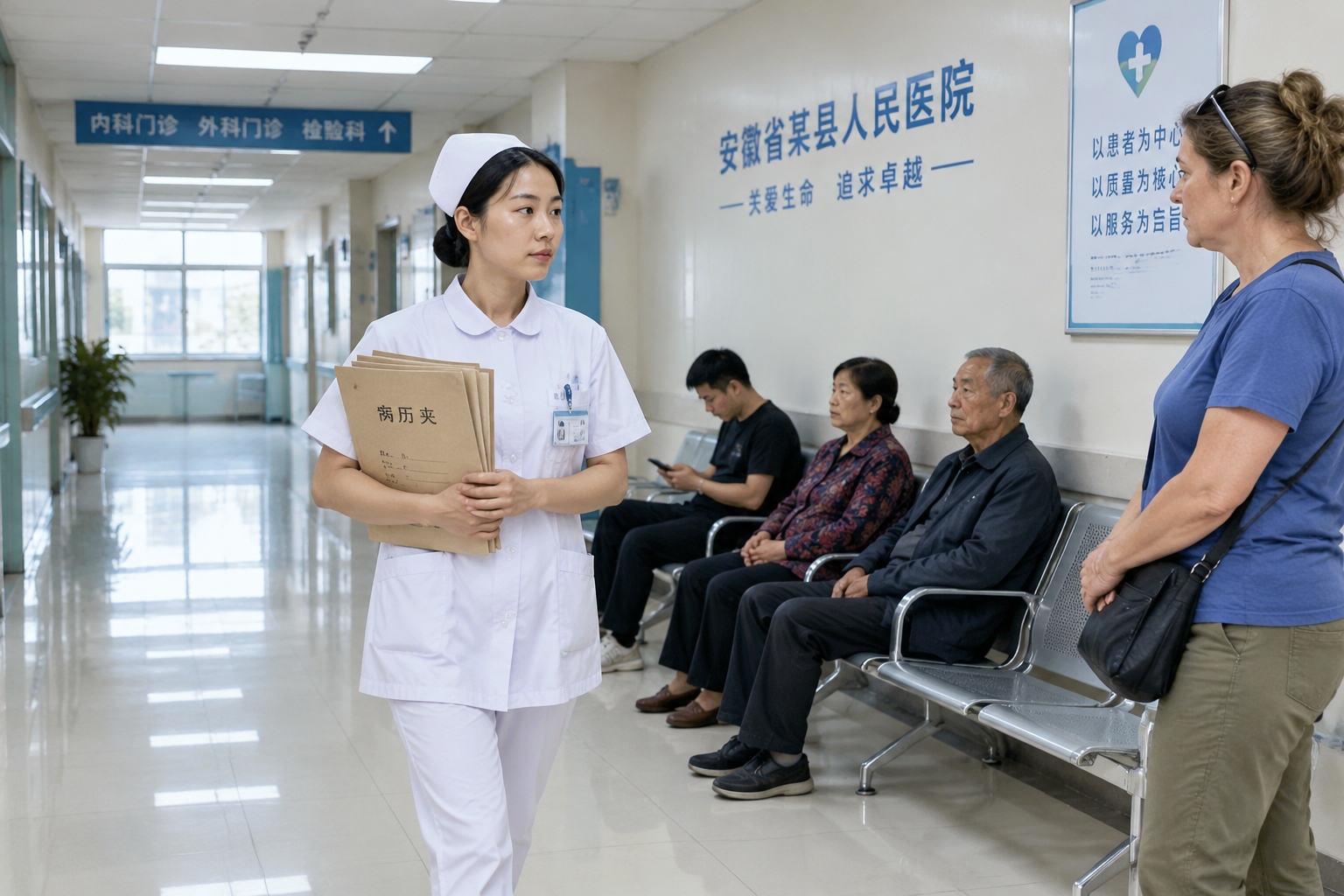
On day ten, Priya got her wish and visited a county hospital in Anhui. A 400-bed facility serving 600,000 people. She watched a nurse start an IV on a farmer who had walked in from a village four kilometers away, uninsured by American standards, and pay less than 100 yuan for the visit. She also watched the nurse carry three patients’ charts at once, because the hospital was understaffed.
“It’s not better or worse,” she said afterward. “It’s a different set of tradeoffs. We trade access for quality. They trade quality for access. Neither of us has solved it.”
The Last Night
Shanghai, the Bund, last evening. A cold wind off the river. The group stood at the railing and watched the Pudong skyline come on, building by building.
Ray, who had called it a movie set on day one, was quiet for a while. Then he said: “It’s not fake. It’s just not mine.”
On the flight home, all eleven filled out the same questionnaire they’d filled out before. The results were not a conversion story. Nine still described themselves as “concerned” about some aspect of U.S.-China relations. But ten wrote that their view of China had become “more complicated” or “more specific.” The one holdout wrote: “I need more information.” Everyone agreed that was an improvement.
What They Took Home
None of them moved to China. None of them became advocates. A few said they’d come back; most said they’d read differently. The engineer, Ben, started learning Mandarin on his commute. Diane, the principal, is trying to set up a video exchange between her school in Ohio and a school in Chengdu. Greg went back to Michigan and priced out one robot arm for his shop, then two.
The thing they all mentioned, in different words, was speed. Not the speed of trains or factories, but the speed at which ordinary people expect things to change. In Anhui, a woman in her sixties told Karen, “I don’t know what will be different next year, but something will.” Karen wrote it down and, months later, still couldn’t decide whether it was a promise or a warning.
That ambiguity, more than any statistic, is what eleven Americans carried home. They came with a conclusion and left with a question. It’s a small thing. It’s also how understanding starts.
Start the discussion at forum.chinacomes.com