


Why That Listing Looks Like a Steal
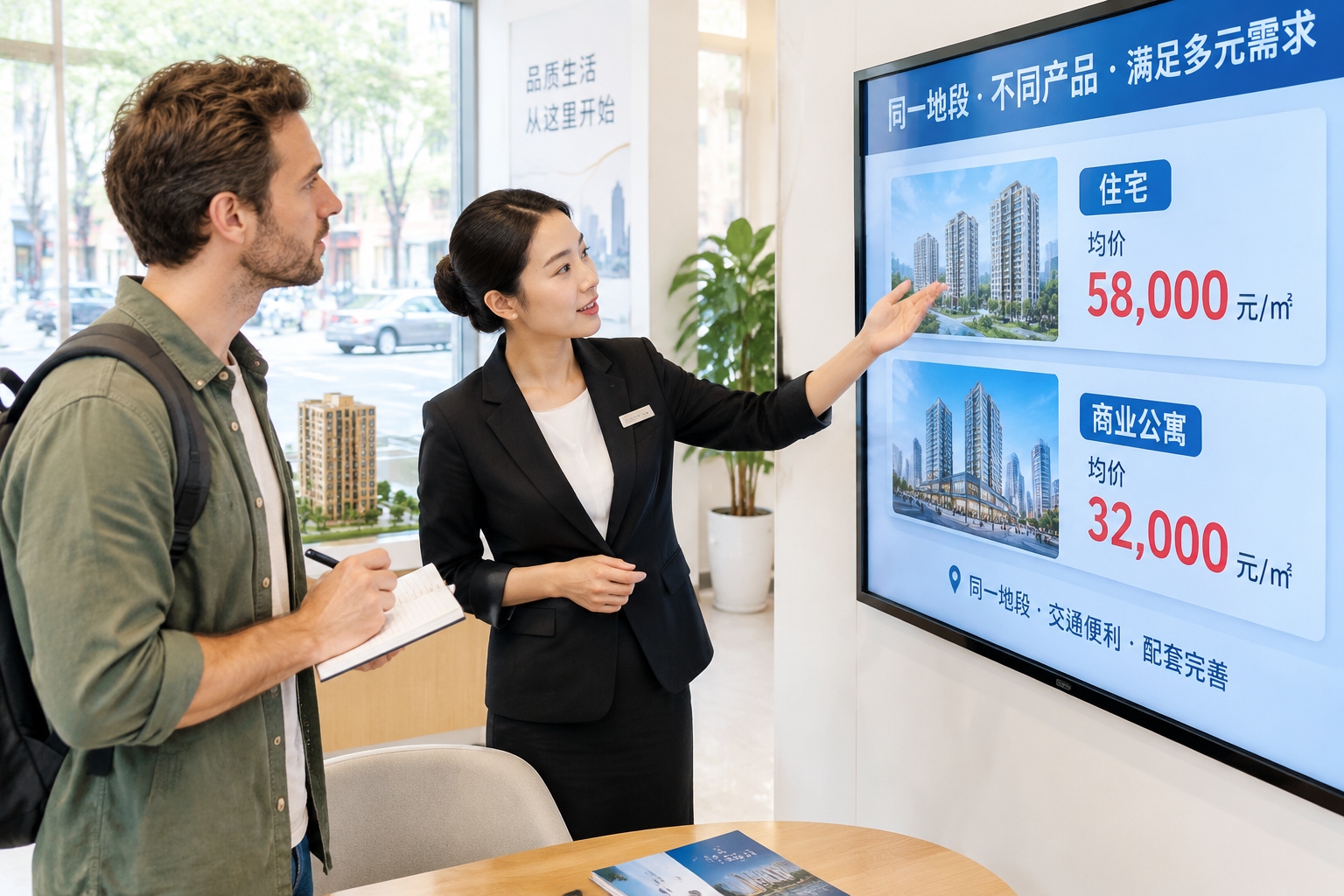
Tom, a product designer from Toronto, sits in a Shanghai sales office flipping through brochures. He just toured a newly finished 130-square-meter unit in a central district, priced about 40 percent lower than the residential resale units in the same block. The furniture is modern. The view is fine. The only unusual phrase in the agent’s pitch is “commercial apartment.”
In China, “commercial apartment” has a much heavier meaning than “apartment with a ground-floor shop.” It generally describes a unit built on commercial land—the same land category used for offices, shops, and hotels. Developers often sell such units under names like “loft” or “studio,” and the price per square meter may look attractive. But what you lose in ownership rights, monthly costs, and resale options usually only becomes clear after the purchase.
Before you sign anything, here are the differences that matter.
Land Tenure: 40 Years vs 70 Years
In China, land belongs to the state. Your property purchase gives you ownership of the building and a leasehold for the land under it. Residential land is usually granted for 70 years; commercial land for 40 or 50 years. That already puts commercial apartments at a 20-to-30-year disadvantage.
At expiry, the gap becomes even more important. The Civil Code, which took effect in 2021, says residential land-use rights will renew automatically for dwelling use, though the renewal fee rules have not yet been settled. Commercial land, in contrast, must go through a renewal application process, and the local authority may charge a market-rate land premium. If you are buying a 40-year asset and hoping it will behave like a 70-year one, that expectation is a financial risk.
The School District and Hukou Trap
China’s public schools admit students based on household registration, or hukou, address. In most cities, only a residential apartment qualifies for the public-school placement linked to its neighborhood. Commercial apartments generally do not qualify, and they also cannot be used for hukou registration in most urban areas.
An expat whose child attends an international school might shrug at this. But when you sell, the next owner is likely to be a local family. They will ask two questions: Can I get hukou here? Will my kids get into the nearby school? If the answer is no, your commercial unit becomes attractive only to investors—a much smaller audience.
Utility Bills: Where the Price Gap Fades
Because the land is classified as commercial, water and electricity providers charge business rates. In a typical Chinese city, commercial electricity runs from about 0.8 to 1.5 yuan per kilowatt-hour, while residential electricity costs about 0.5 to 0.6 yuan. Water bills often follow a similar pattern.
Property management fees are another monthly line item. Residential complexes usually charge 1 to 5 yuan per square meter per month; commercial towers or office conversions can charge 10 to 20 yuan or more. For a 100-square-meter unit, that adds up to several hundred yuan more every month. Some commercial buildings have no gas connection, so cooking is limited to induction cookers.
Mortgage: Bigger Down Payment, Shorter Repayment
Foreigners who hold a valid work permit and have bank accounts in China can usually get a mortgage for residential property, as long as they have worked or studied in China for at least one year. Chinese banks treat commercial apartments almost like business loans, even if you plan to live there.
Typical commercial apartment terms require at least a 50% down payment, a maximum 10-year loan term, and interest rates 10 to 20 percent above the central benchmark. Residential buyers, by contrast, can put down 30% to 50% and borrow over 25 to 30 years, depending on the city and first/second home status.
Do the math on a 3-million-yuan unit. A residential first home with 30% down and a 25-year loan at roughly 4.5% would cost about 10,500 yuan per month. A commercial unit with 50% down and a 10-year loan at 6% would cost roughly 16,700 yuan per month—before you even add the utility gap.
Holding and Selling: Taxes That Stick Around
Commercial property is more expensive to buy and hold. When you purchase, residential deed tax is tiered at 1% to 3% based on size and whether you own other homes. Commercial deed tax is always 3%, and individuals may face a 0.05% stamp duty that homebuyers do not pay.
Selling costs are where the gap gets really obvious. A residential property can be sold without value-added tax if held for two years, and without income tax if held for five years and it is your only home. Commercial units get neither exemption. VAT is charged on each transfer at about 5%, and you may owe personal income tax of roughly 20% on the gain. Some municipalities also impose land value appreciation tax at 30% to 60% on large gains. In practice, sellers often pass these costs into the asking price, making a “cheap” unit less competitive on the resale market.
The Decision Table: Residential vs Commercial
Use this table as an early filter before you fall in love with a listing.
| Factor | Residential unit | Commercial property |
|---|---|---|
| Land use period | Usually 70 years | Usually 40 or 50 years |
| Renewal after expiry | Automatic renewal for dwellings; fee unclear | Requires reapplication; may include land premium |
| School district | Usually eligible | Not eligible |
| Hukou registration | Usually allowed | Not allowed in most cities |
| Utility rates | Residential rates | Commercial rates, about 1.5 to 3 times higher |
| Property management fee | 1–5 yuan/m² per month | 8–20 yuan/m² per month, sometimes higher |
| Mortgage down payment | 30%–50% depending on city | Often 50% or higher |
| Mortgage term | Up to 25–30 years | Usually maximum 10 years |
| Mortgage rate | LPR plus small margin | LPR plus 10%–20% margin |
| Deed tax on purchase | 1%–3% | 3%, plus 0.05% stamp duty |
| VAT on resale | Exempt after holding 2 years | Payable on every transfer, about 5% |
| Income tax on resale | Exempt after 5 years if only home | 20% of gain or a local percentage |
| Land value appreciation tax | Not applicable to personal home sales | Can be charged on significant gains |
| Resale buyer pool | Broad pool of local families | Limited to investors or businesses |
After reading the table, go back to your own living plan. If you need a home for hukou, school, and twenty years of stability, the lower sticker price of a commercial unit loses its appeal. If you merely want a central place for short-term stays, or a long-term rental asset, then the disadvantages may be something you can tolerate.

Three Checks Before You Sign
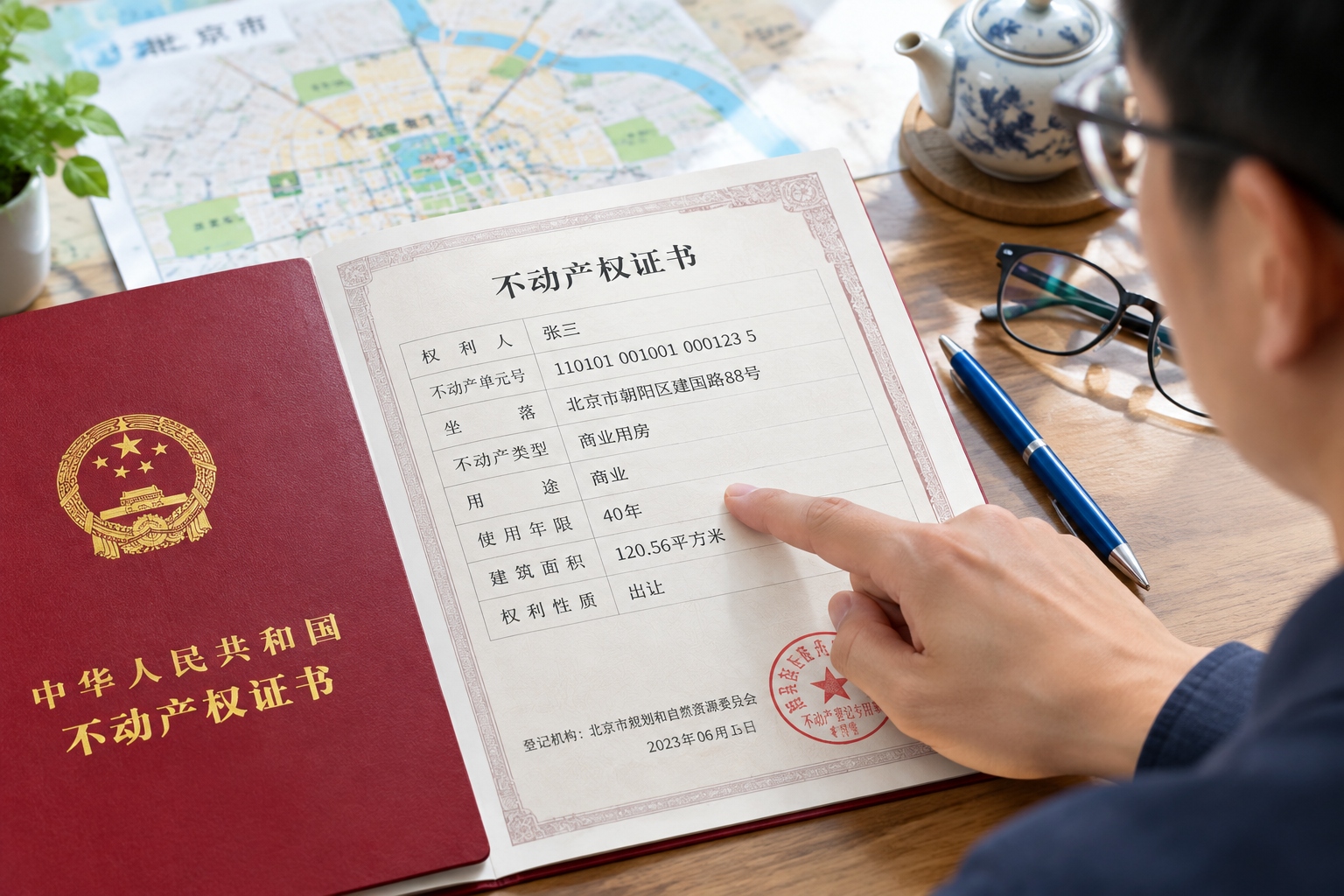
First, ask to see the Real Estate Ownership Certificate and look for the “use type” field. If it says commercial or office, ignore the sales brochure. The certificate is the only version that counts.
Second, check the land permission record. Some projects were approved strictly as office space; converting them into residential-style lofts can create trouble with planning or fire safety departments later. Ask the developer for the construction planning permit and compare it to what the agent is selling.
Third, confirm your eligibility as a foreign buyer with the local housing authority. Many cities allow a foreigner who has worked or studied for a year to buy one residential unit for self-use, but commercial property can be treated differently. A 30-minute phone call to the housing transaction center will save you from relying on the agent’s promises.
Bottom Line: Shop by Your Life, Not the Price per Square Meter
A commercial apartment can be a practical choice for an expat who wants a low-cost central base and does not plan to use hukou or public school benefits. But if you need long-term residence stability or want to resell to local families, choose a residential unit, even at a higher price.
China’s property market is not one market. The label on the property certificate reaches deep into your monthly bills, your mortgage stress, and the day you sell. Knowing the difference before you pay the deposit is the cheapest homework any foreign buyer can do.
Start the discussion at forum.chinacomes.com