

Introduction: A handful of lunar history
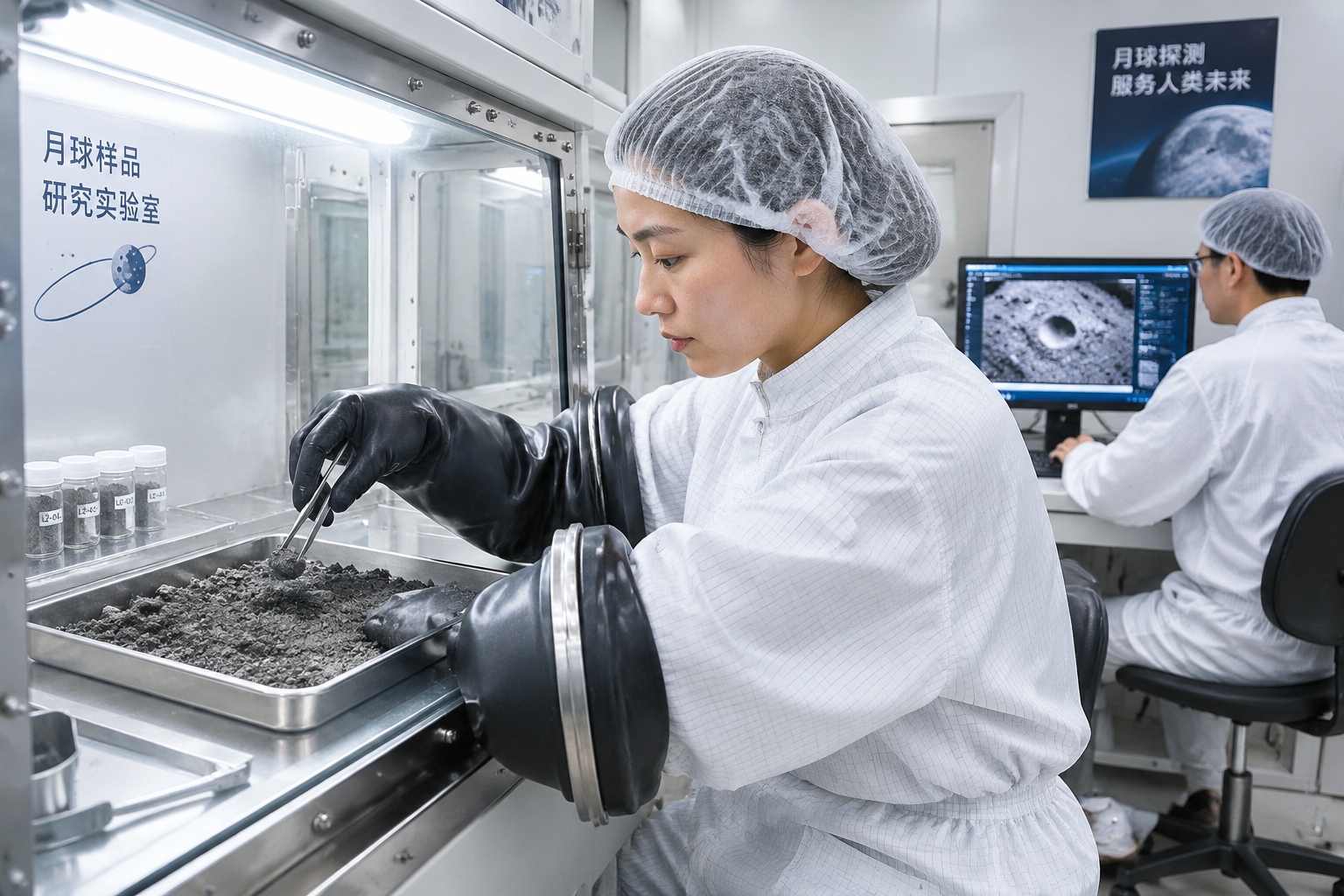
In a cleanroom in Beijing, a researcher in a white protective suit leans over a stainless-steel glovebox. Inside, a small metal tray holds a layer of grey powder and a few darker lumps. The material is so precious that the room is continuously monitored, and every movement is carefully planned. This is the first batch of lunar far-side samples ever returned to Earth, collected by China’s Chang’e-6 spacecraft from a region called the South Pole–Aitken Basin.
The spacecraft launched on May 3, 2024, and spent 53 days in space. After landing in a cratered highland, it scooped and drilled into the Moon’s surface, packing more than 1.9 kilograms of rock and dust into a sealed return capsule. The capsule touched down in Inner Mongolia on June 25. Now that the samples have been unpacked and catalogued, the scientific phase is just beginning.
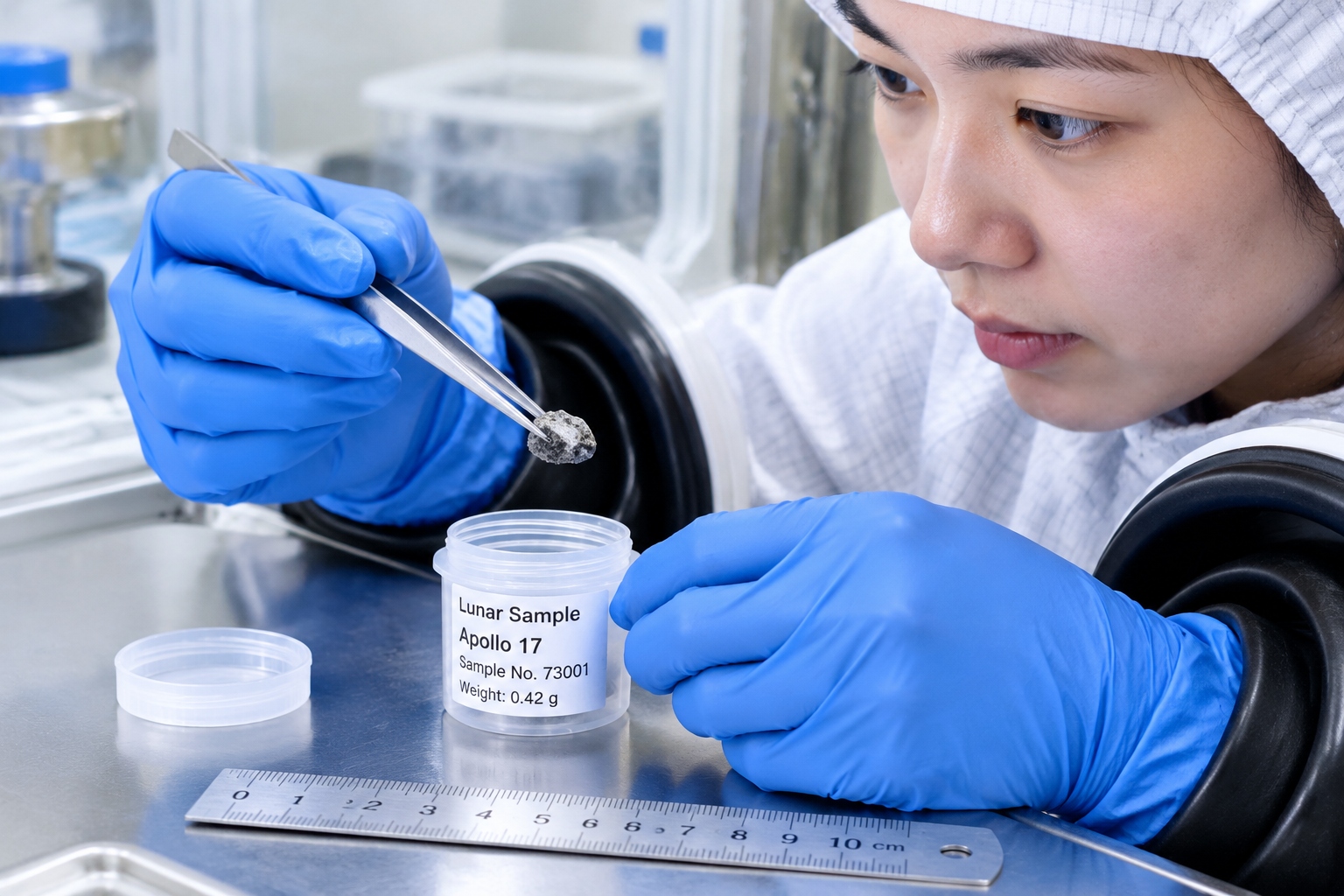
What will researchers actually do with these rocks? The short answer is: a lot of careful laboratory work, spanning chemistry, physics, geology, and even space resource engineering. But the real question is what the rocks can tell us about the Moon’s formation, its volcanic past, and the possibility of water ice hiding in lunar soil.
Why the far side is not just another piece of the Moon
If you looked at the Moon through a backyard telescope, you would see mostly smooth, dark patches on the near side. These are ancient lava plains, called maria. The far side, first photographed by Luna 3 in 1959, looks completely different: a thick, heavily cratered crust with almost no dark maria.
Scientists have argued for years about this asymmetry. Some think the near side’s crust is thinner, allowing magma to rise to the surface. Others point to a giant impact that struck the far side—the South Pole–Aitken Basin—which could have excavated deeper material and changed the crust’s structure. This basin is one of the largest recognized impact structures in the Solar System, with a diameter of about 2,500 kilometres and a depth of several kilometres.
The key is that the Chang’e-6 samples come directly from inside or near this basin. That means they likely include impact melt rocks, fragments of the lunar mantle, and soil that has chemically interacted with the extreme conditions of the far side. No other sample set we have—from Apollo, Luna, or Chang’e-5—covers this geological context.
Who gets to study the samples?
The samples are managed by the China National Space Administration (CNSA), which has set up a transparent distribution process. Like NASA, it invites researchers to propose experiments. An expert committee reviews the proposals based on scientific value, technical feasibility, and contamination control. After approval, the applicant can request a specific mass of material—sometimes less than a gram.
In late 2024, the first batch of Chang’e-6 samples was delivered to a dozen Chinese institutions. The allocation totaled around 1.1 kg, with individual groups receiving from 0.5 to 20 grams. The remaining samples are kept in storage for future needs. International researchers can also apply, provided their home country has a cooperation agreement with CNSA or they join via a Chinese collaborator. This is similar to how Chang’e-5 samples were shared with European and other international teams.
Four big questions scientists hope to answer
1. How old is the South Pole–Aitken Basin?
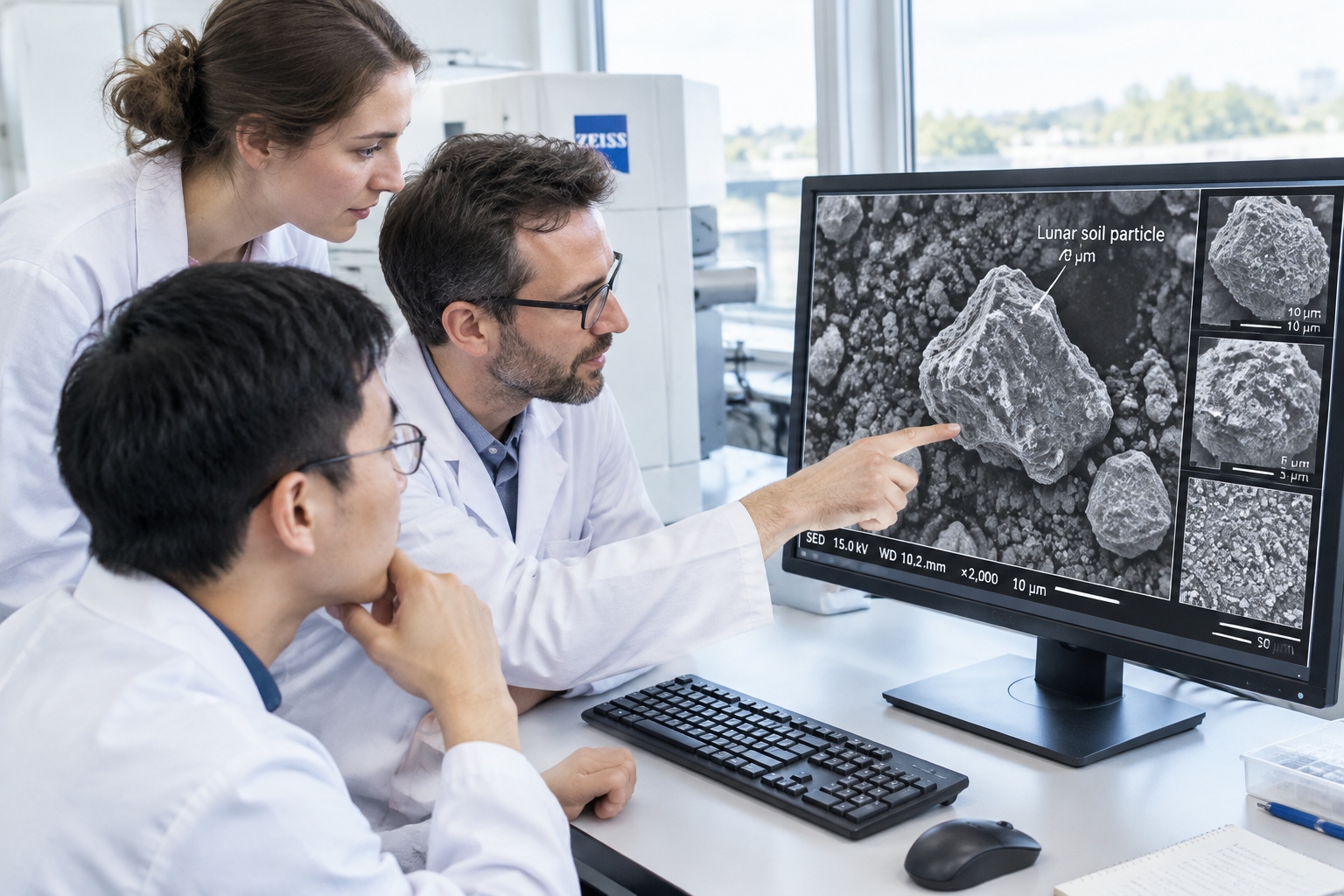
The basin is so ancient that its age is hidden beneath the dust. Impact melt rocks formed during the collision contain minerals that can be dated using radioisotope methods, such as argon-argon and lead-lead. Those dates will give a precise benchmark for the impact record of the inner Solar System. If we know when this huge crater formed, we can improve the crater-counting age scale used to date Mars, Mercury, and other rocky worlds.
2. Why did the far side stop erupting?
The lunar near side was volcanically active for almost a billion years, but the far side shows little lava. The composition of basaltic fragments in the sample can reveal the mantle source and how much heat was available. Some samples may even come from volcanic events that occurred after the basin formed, giving clues about the volcanic history of a region we assumed was quiet.
3. Is there water trapped in the lunar soil?
Recent satellite missions have detected water ice and hydroxyl molecules in permanently shadowed craters near the poles. But those observations are remote. The Chang’e-6 samples include material from high latitudes, which may have trapped volatile compounds over billions of years. By heating the sample and analyzing the released gases, scientists can measure how much water, sulphur, carbon dioxide, or chlorine is actually present. That would be vital for future crewed missions: if astronauts can use lunar water for drinking or fuel, it would change the economics of exploration.
4. How did the lunar crust evolve?
The South Pole–Aitken Basin likely excavated material that originally came from the Moon’s lower crust and upper mantle. Those rare fragments can tell us how the crust differentiated, and whether the Moon’s early magma ocean produced minerals we haven’t yet seen in other samples.
What the samples mean for future missions
The results won’t stay in academic journals. Engineering teams planning China’s future lunar research station are interested in the mechanical properties of the regolith—how it compresses, how much dust it throws up when landers arrive, and whether it can be sintered into bricks. The Chang’e-6 samples come from a high-latitude, heavily cratered region that is unlike the sites of earlier missions. That data will help choose safe landing places for the older generation of landers.
There’s also the question of using lunar materials. If the samples contain water-rich minerals or even trace amounts of ice, then in-situ resource utilization becomes much more realistic. A future station could extract water from soil, split it into oxygen and hydrogen for propellant, and reduce the cost of transport from Earth.
An open door—and a few obstacles
China has emphasized international cooperation for Chang’e-6. Scientists from the European Space Agency and several countries have already participated in data analysis, and the same open model is being used for distributing samples. For American researchers, however, there are legal restrictions: NASA is prohibited from cooperating with China without congressional approval. This doesn’t stop some U.S. scientists from seeking collaboration through workshops or unofficial channels, but it’s a significant hurdle. Many lunar scientists hope that the scientific value of these samples will eventually override political barriers.
Conclusion
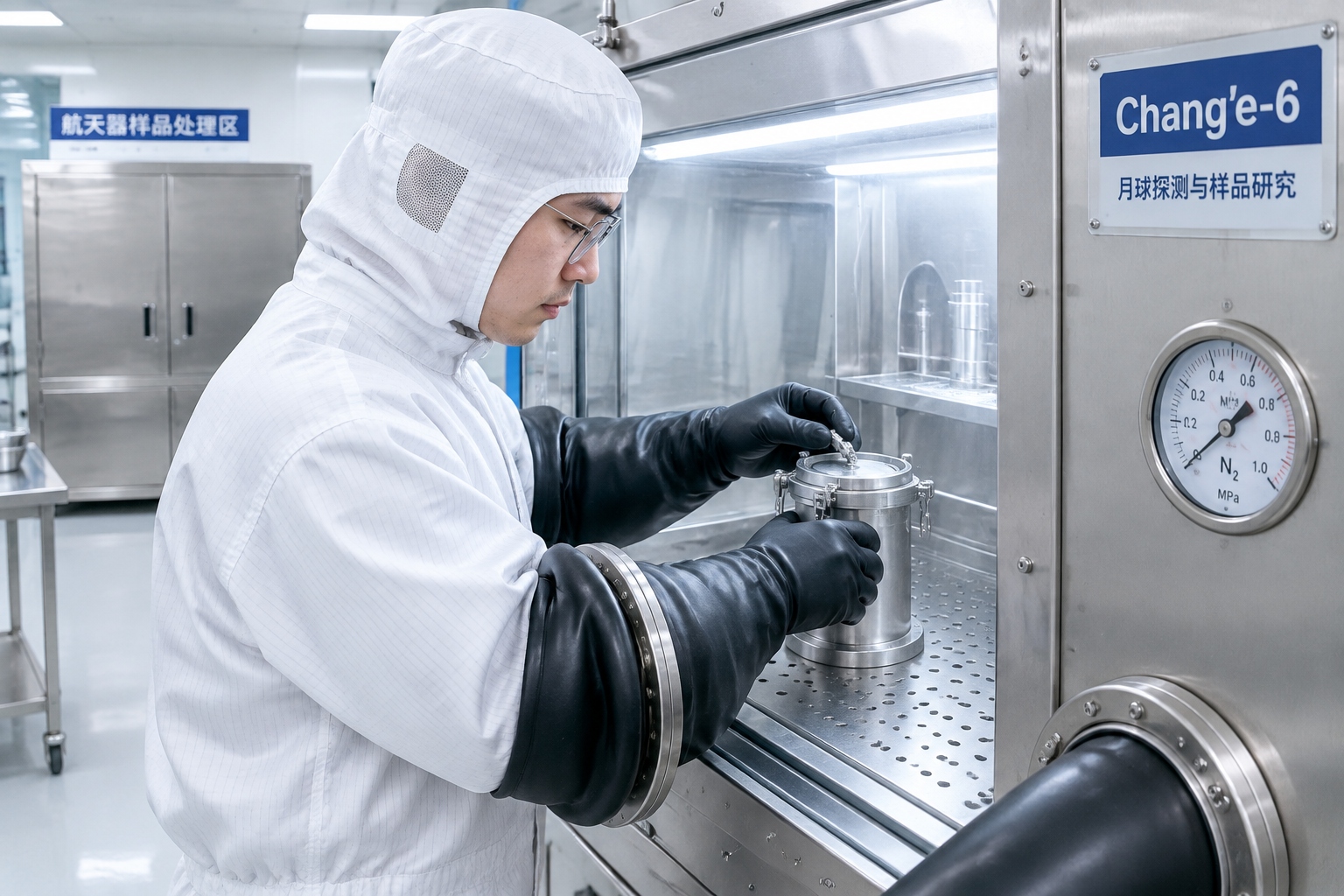
Back in the cleanroom, the researcher seals a small capsule inside a nitrogen-filled glovebox and hands it to a colleague. The capsule will be delivered to a university lab where a team will spend two months extracting a clean piece of basalt for dating. It’s painstaking, unglamorous work—but it is the only way to turn dust into knowledge. Each fragment of lunar soil answers a question we could not answer from orbit or with robotic instruments alone. The far side of the Moon is still largely unexplored, but with the help of these samples, the next chapter of lunar science is already being written.
Start the discussion at forum.chinacomes.com