
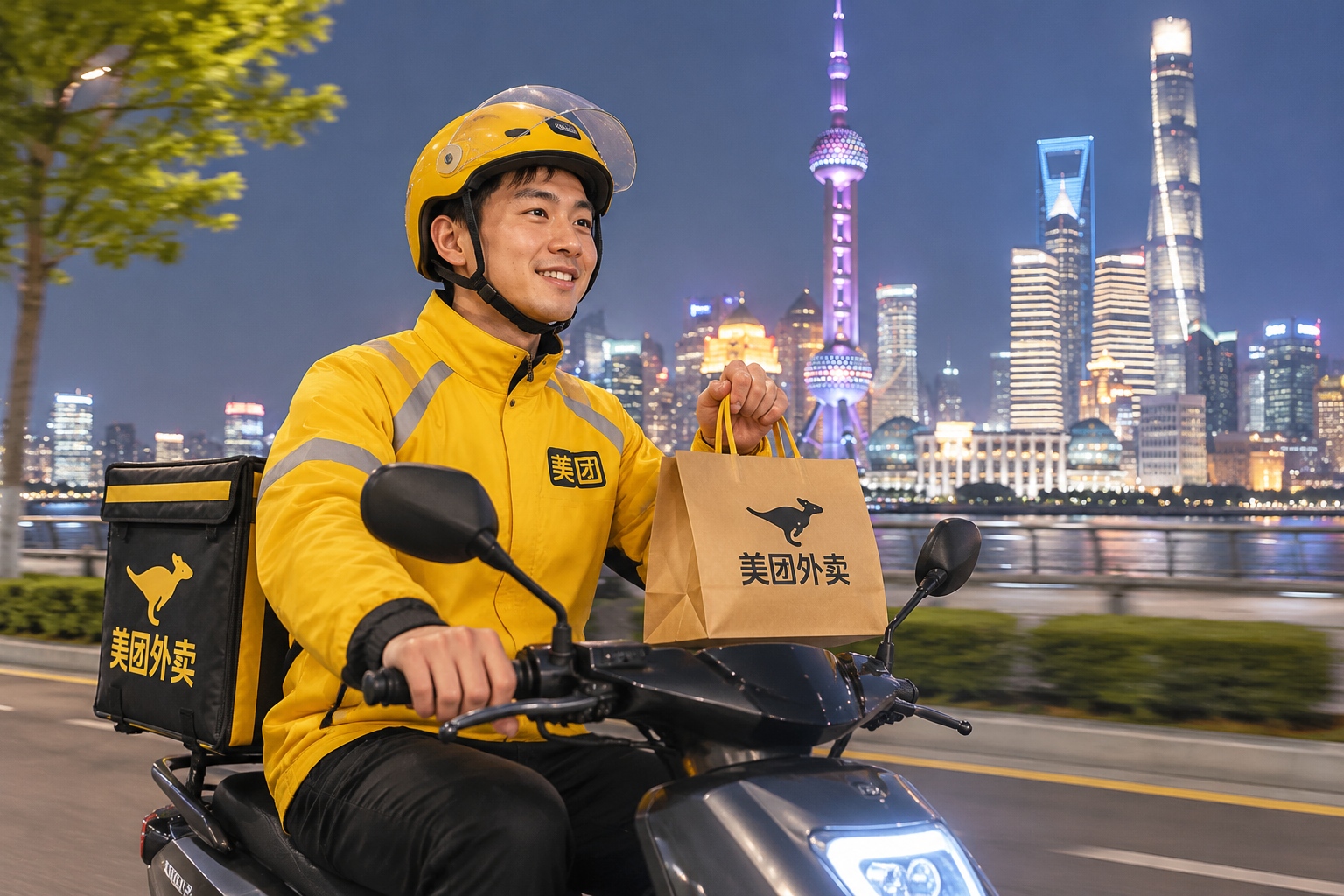

The Midnight Feast That Arrived Before You Could Blink
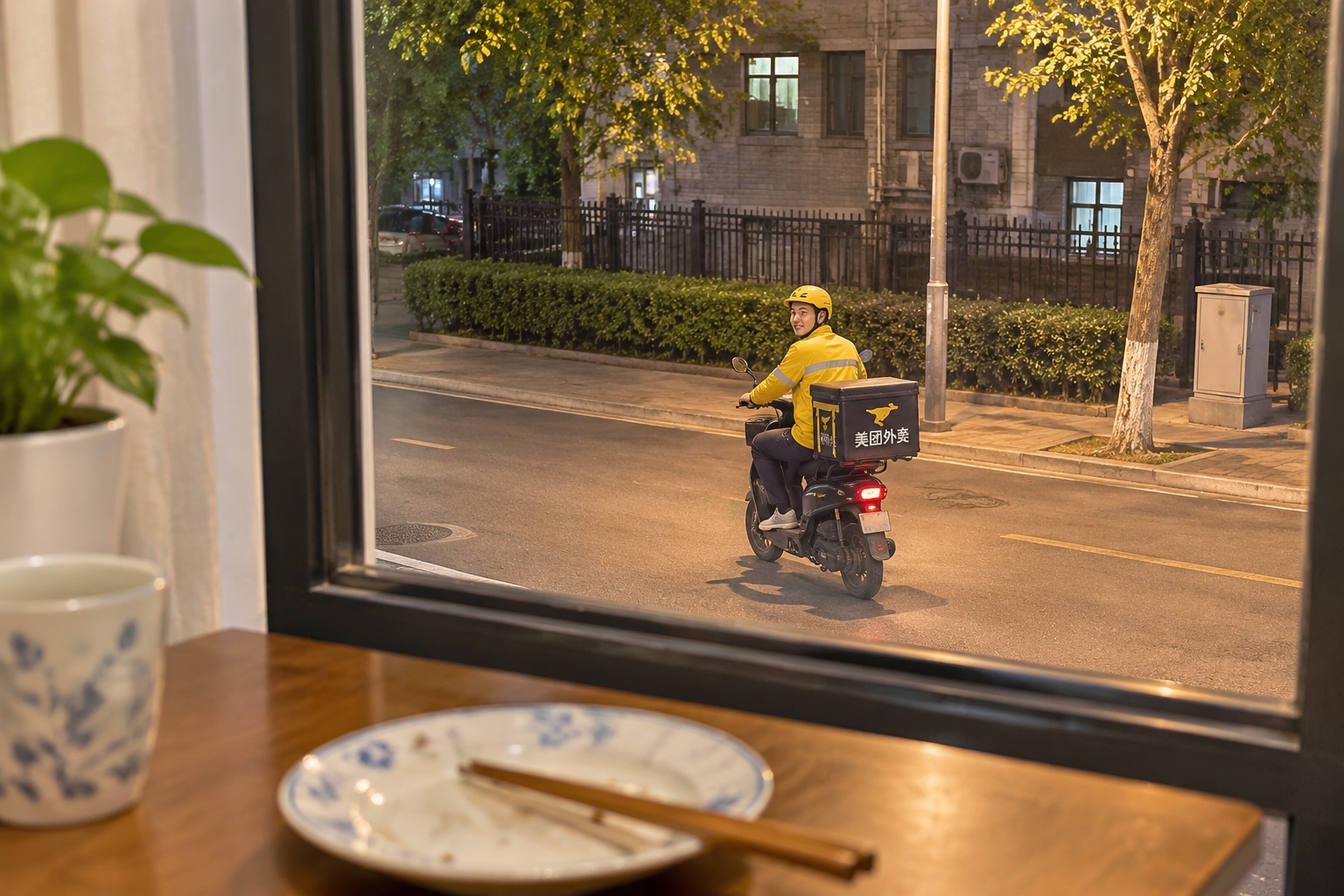
It was 11:30 PM on a Tuesday in Beijing. I hadn’t left my apartment, but my craving for Peking duck had escalated from a whim to a mission. In most Western cities, ordering a high-end meal this late means either settling for lukewarm pizza or accepting that the kitchen is closed. Here, I tapped an icon on my phone, paid roughly $42 (300 RMB), and within 25 minutes, a knock came at the door.
The rider wasn’t sweating through his shirt in exhaustion, nor was he looking apologetic for being “late.” He simply handed over the bag, smiled briefly, and vanished back into the neon-lit night. This isn’t magic; it’s logistics on steroids. For many overseas readers, China’s food delivery scene is often reduced to a stereotype of cheap labor racing against time. But if you look closer at how that $42 dinner arrived, you’ll see a sophisticated ecosystem where speed has become a cultural default, and the rider is less a servant and more a specialized urban athlete.
Why “Fast” Isn’t Just About Hurrying Up
To understand the phenomenon, you have to forget what food delivery looked like in New York or London five years ago. In those cities, waiting 45 minutes for a burger was standard frustration. In China, waiting 10 minutes is a success story; waiting 30 is a customer service crisis.
This expectation isn’t born from impatience alone. It’s built on data. Platforms like Meituan and Ele.me don’t just guess where riders should go. They calculate traffic patterns, elevator wait times in high-rises, and even the average walking speed of pedestrians in specific neighborhoods. The algorithm acts as a chess master, positioning riders near hotspots before orders are even placed.
When I asked a local tech friend why people pay for this speed, he laughed. “It’s not just about hunger,” he said. “It’s about control. In a city where work hours can be unpredictable, knowing exactly when your dinner will arrive gives you back a slice of time. It’s the cheapest way to buy certainty.”
The Human Element Behind the App Icon
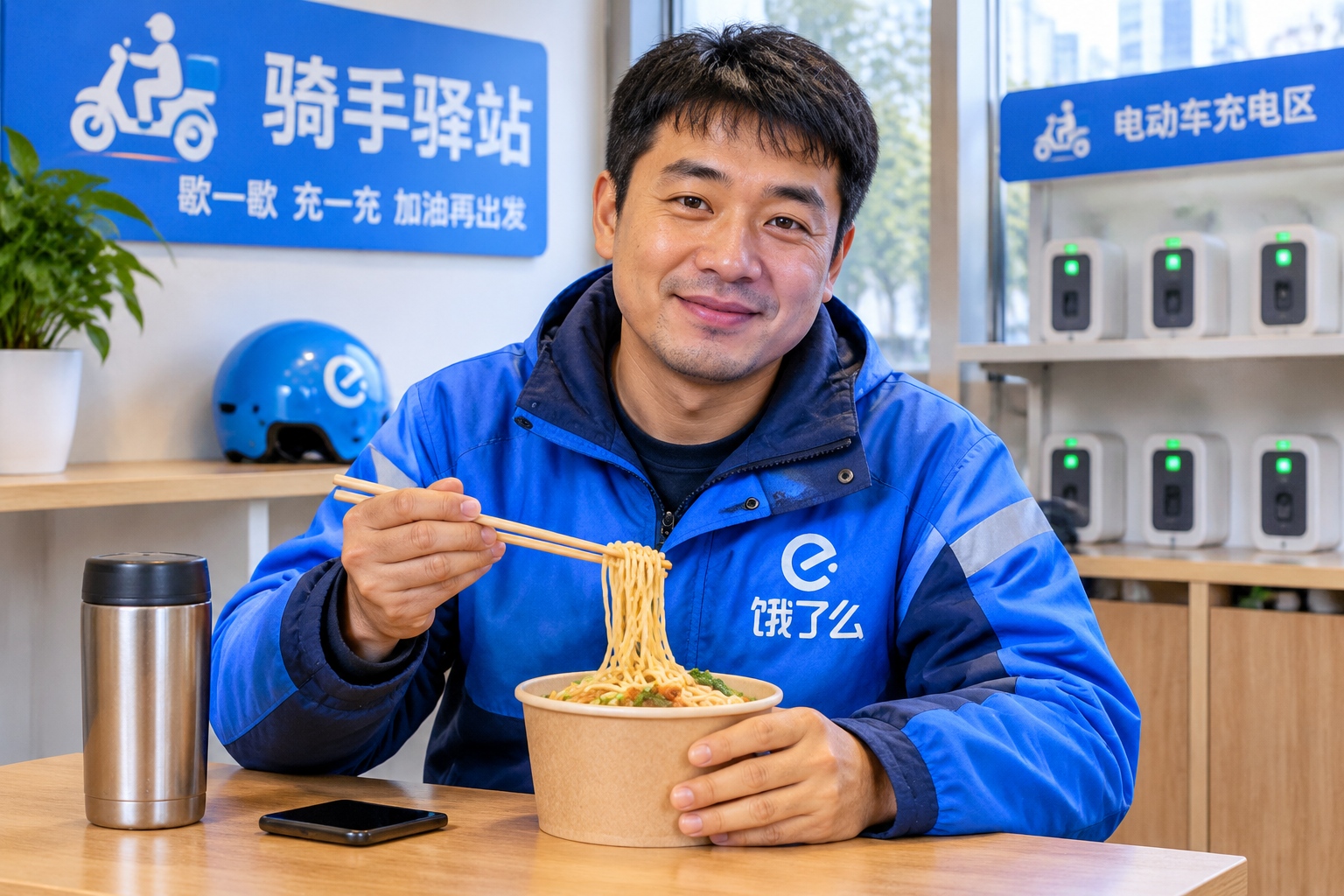
Let’s talk about Li Wei. He’s 34, from Anhui province, and has been delivering food in Shanghai for six years. When I met him at a “Rider Station” (a rest hub provided by platforms and local communities), he was charging his electric scooter and eating a simple lunch of noodles.
“People think we just run around like crazy,” Li Wei told me, wiping his mouth. “Actually, it’s a mental game. I know which buildings have elevators that break on weekends. I know which security guards let you in fast and which ones make you register. I plan my route like a GPS, but with human intuition.”
Li Wei isn’t the underpaid slave of popular Western narratives. His income fluctuates, yes, but he averages between $1,000 and $1,500 a month, often working six days a week. He saves money to support his parents and hopes to eventually open a small restaurant. The “gig economy” here is brutal in its competitiveness, but it also offers a mobility ladder that many young migrants use as a stepping stone.
There’s a dignity in the interaction, too. While customers can be demanding, there’s a growing social consciousness. During heavy rain or extreme heat, it’s common to see comments on orders saying, “Take your time, safety first.” Platforms have even introduced mechanisms where riders can pause their clock during severe weather without penalty—a small but significant shift from the pure “algorithm is king” era.
Tech That Wears a Helmet
The speed we marvel at isn’t just human effort; it’s hardware. Walk along any street in Shenzhen or Hangzhou, and you’ll see riders wearing smart helmets that monitor fatigue and connect to the app for voice commands, so they don’t have to look at their phones while riding. These helmets also alert dispatch centers if a rider crashes, triggering an immediate response.
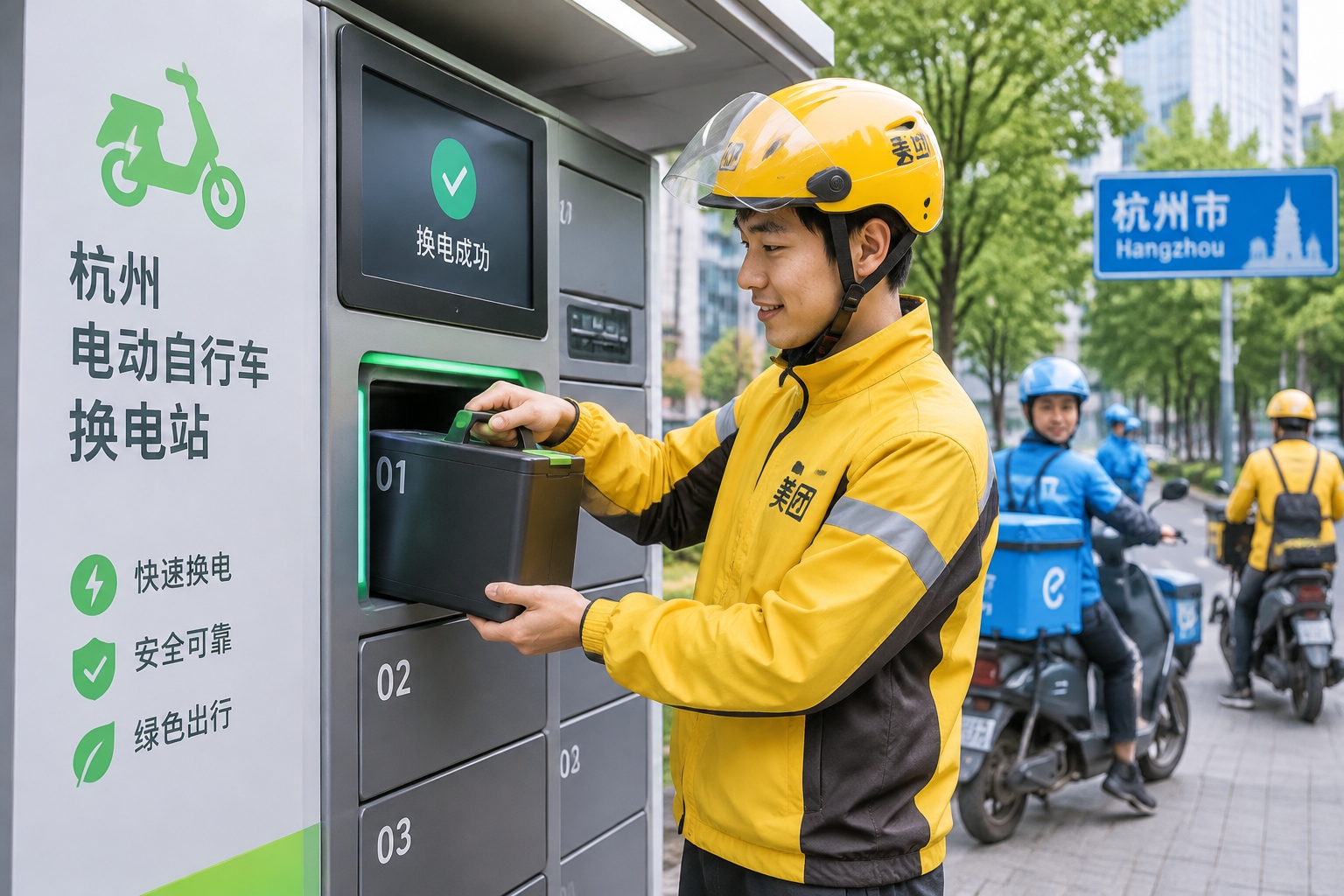
Then there’s the infrastructure of energy. Instead of plugging in scooters overnight (which is dangerous and inefficient), Chinese cities are dotted with battery-swapping cabinets. A rider pulls up, swaps their depleted battery for a fully charged one in 30 seconds, and keeps moving. It’s like refueling a jet fighter, but for dinner.
This tech stack has massive employment implications. The food delivery industry in China supports millions of jobs. According to recent reports, platforms employ over seven million active riders. This isn’t just “gig work”; it’s a primary income source for rural migrants who might otherwise struggle to find formal sector jobs without higher education credentials.
The Price of Convenience
Is this system perfect? Absolutely not. The pressure to deliver fast can lead to traffic violations, and riders often skip breaks to maximize earnings. There are ongoing debates about social insurance coverage for gig workers, a legal gray area that the government is slowly trying to clarify with new regulations requiring platforms to contribute to rider welfare.
However, from a consumer perspective, the trade-off feels increasingly acceptable. When I ordered that $42 Peking duck, I wasn’t just buying food. I was buying the ability to work late without stress, to host friends spontaneously, and to live in a high-rise apartment without ever needing to cook.
As Chinese cities continue to densify and digitalize, this model of “instant everything” is expanding beyond food. Groceries, medicine, flowers, and even electronics are delivered within the hour. The line between “online” and “offline” life has blurred completely.
What This Means for Your City
If you’re reading this from London, New York, or Sydney, your local delivery apps are likely trying to catch up. But they lack the density and infrastructure that make China’s speed possible. You can’t replicate the 30-minute promise without the battery-swap networks, the high-density housing, and the cultural acceptance of on-demand labor.
China’s experiment with ultra-fast delivery is a preview of where urban life might go globally: a future where distance matters less, and time becomes the most valuable currency. Whether that future is desirable depends on how much you value convenience versus community, and speed versus sustainability.
For now, I’ll just enjoy my cold tea and empty plate, wondering how long it will take for this “lightning” to strike in your neighborhood.