

A delivery drone and a herd of sheep
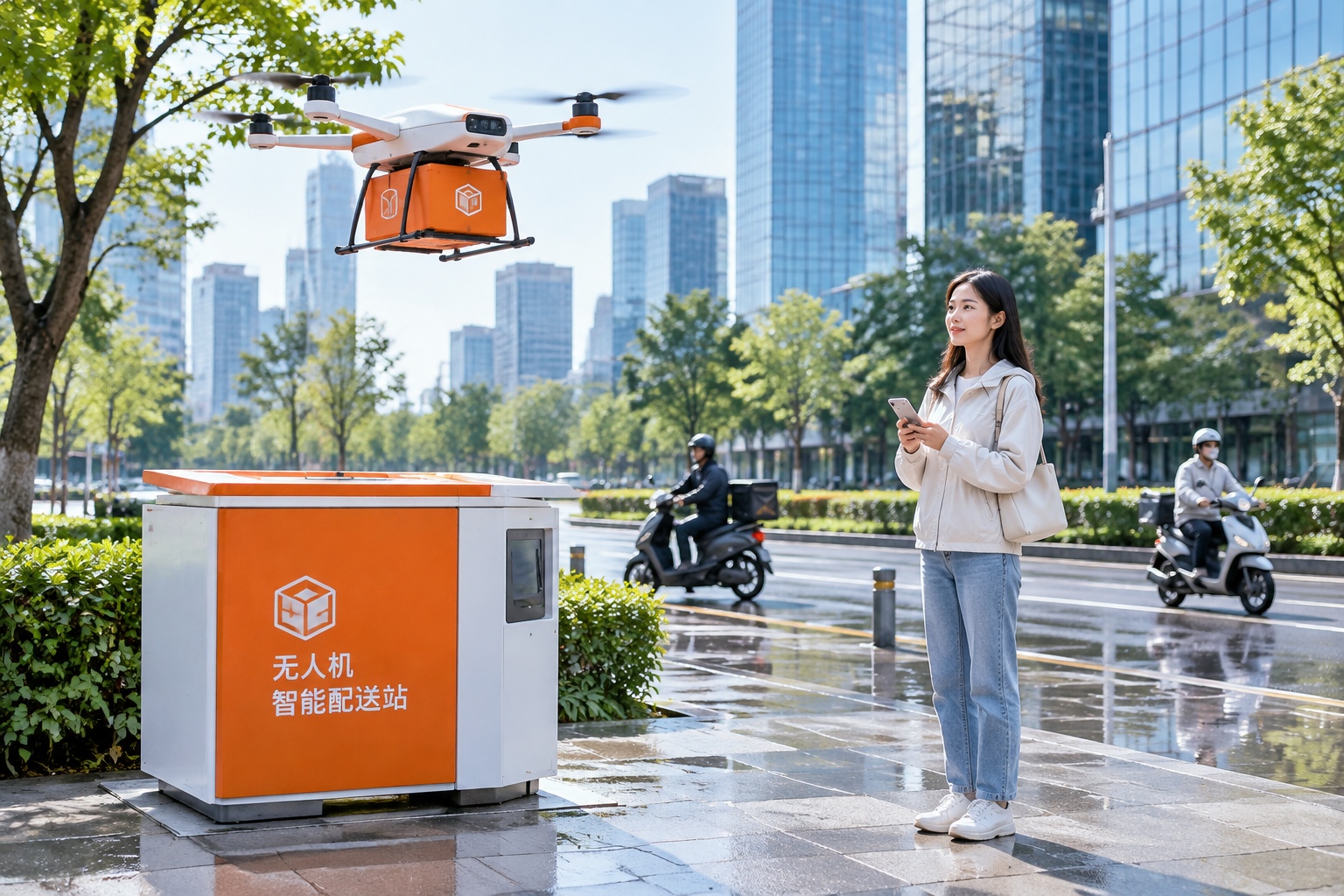
At 11:40 on a Tuesday morning, a white-and-orange drone hovers over a pickup kiosk outside an office park in Longgang, Shenzhen. It lowers a paper bag of cold noodles into a slot. Twelve minutes earlier, a customer on the 14th floor tapped order on her phone. She never spoke to a human being.
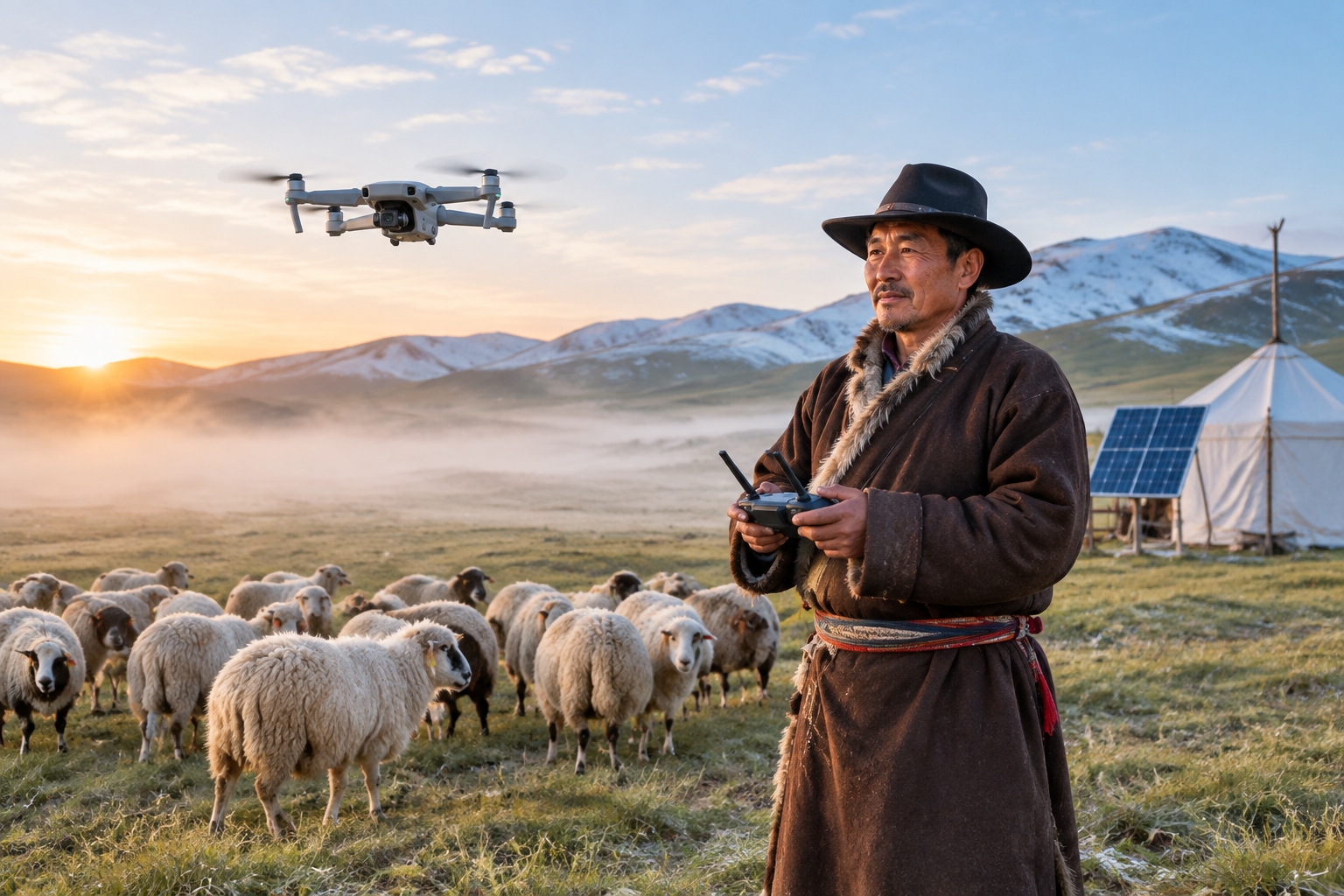
Eighteen hundred kilometers northwest, it is 6:20 a.m. on the grasslands of Gannan, the Tibetan prefecture in southern Gansu. Tsering, 52, is walking behind 300 sheep. One is missing. He pulls a small quadcopter out of his coat — bought by his son, who works in an electronics plant in Shenzhen — sends it up, and finds the stray in a gully four minutes later. Then he takes out his phone and scans a QR code at a roadside shop to buy a bag of milk powder for his grandson.
Both scenes are unremarkable in China right now. Put them side by side and you get closer to the real shape of the country than any single headline.
The income gap is wider than most outsiders assume
In 2023, Shenzhen produced about 3.46 trillion yuan of GDP with 17.8 million residents. Gansu produced about 1.18 trillion yuan with 24.7 million.
Divide it out: roughly 194,000 yuan per person in Shenzhen, about 48,000 yuan per person in Gansu. In dollar terms, around $27,000 versus $6,700 — a gap of roughly four to one. Shenzhen’s per-capita output sits near Portugal’s. Gansu’s is close to Thailand’s or Colombia’s.
The geographic mismatch is just as striking. Shenzhen covers just under 2,000 square kilometers — smaller than Luxembourg. Gansu is 425,800 square kilometers, within a rounding error of California. Same country, same laws, same currency, four-to-one income gap.
Readers outside China sometimes picture the country as a single-speed machine: everything fast, everything new. It is not. A more useful comparison might be the European Union, where a worker in Bulgaria and a worker in Luxembourg live inside one market with a gap that is, if anything, wider. Or the United States, where the Bay Area and rural Mississippi are separated by a similar distance in income and a much bigger one in life expectancy.
Why Shenzhen is fast
Shenzhen’s speed has a starting date. In 1979 it was a border town and a cluster of fishing villages with about 300,000 people. It was designated a Special Economic Zone in 1980 — an experiment in letting foreign investment and private business operate under controlled rules. Factories arrived first, then supply chains, then engineers.
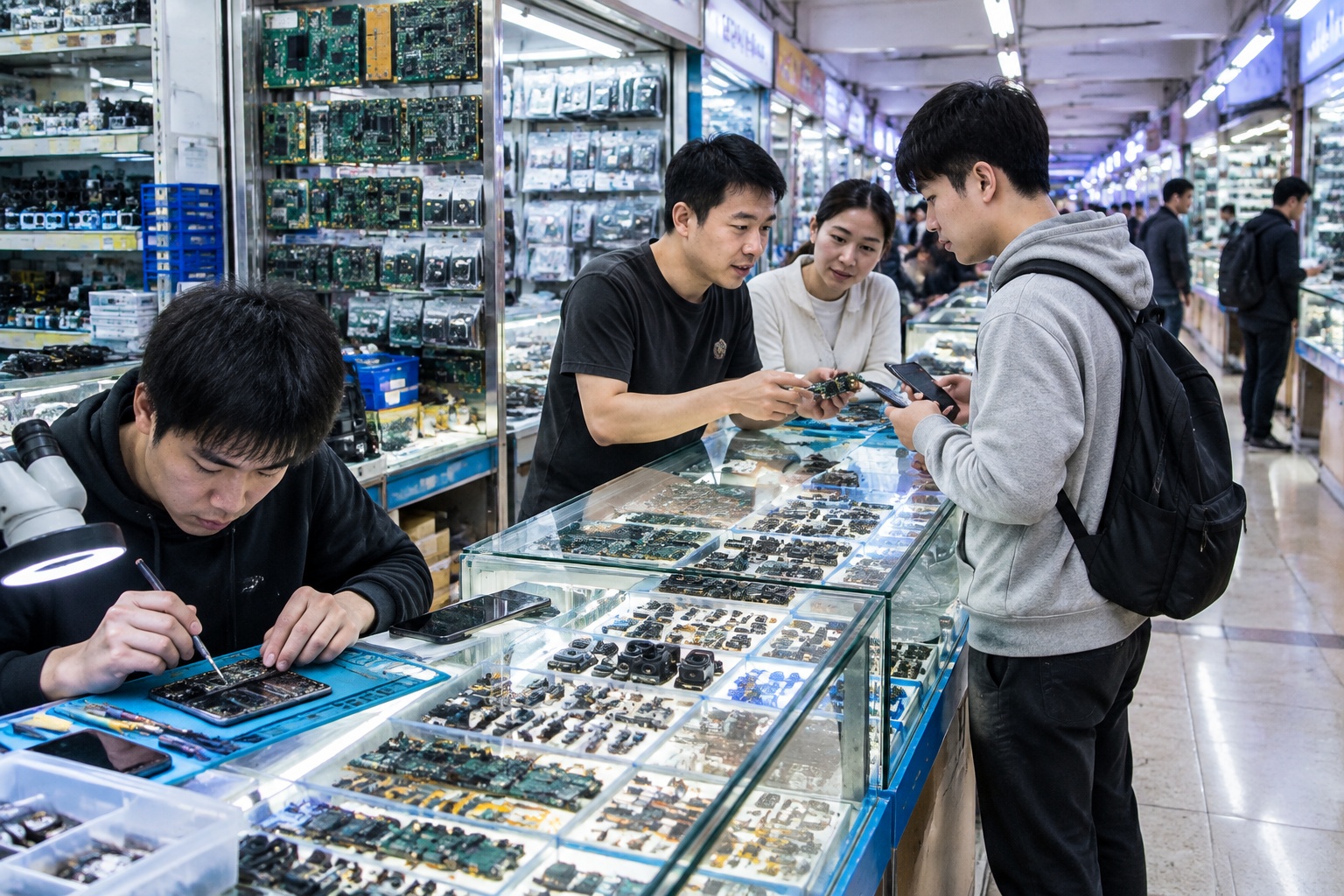
The result is a city where you can prototype a hardware product in a week. Huaqiangbei, a market district of a few square blocks, sells components for practically any consumer electronic device on earth. DJI, the world’s largest consumer drone maker, was founded in Shenzhen in 2006 and still builds its supply chain there. Huawei, Tencent and BYD are headquartered in the same city.
That density is why a drone can deliver noodles. Meituan and SF Express have been running drone delivery routes across parts of Shenzhen since 2021, and the city has built hundreds of takeoff and landing pads on rooftops and in parks. The phrase low-altitude economy entered the national government work report in 2024; industry analysts estimate the sector could reach 1.5 trillion yuan by 2025.
Why Gansu runs at a different speed
Gansu’s constraint is not laziness or policy neglect. It is water, distance and terrain.
Most of the province is arid. Rainfall in parts of the Hexi Corridor falls under 100 millimeters a year, and the farms and cities that exist depend on rivers fed by glaciers in the Qilian Mountains — glaciers that are shrinking. A province the size of California holds less renewable freshwater than a single medium-sized European country. That caps how many people, factories and fields it can support.
Distance matters too. Lanzhou, the capital, sits 1,800 kilometers from the coast. For decades, moving goods to a port cost more than making them. The province’s population has actually been edging down as young people leave for coastal cities — the same pattern that emptied parts of Appalachia, eastern Germany or rural Spain.
What Gansu does have is land, wind, sun, minerals and cool air. Jinchang sits on one of Asia’s largest nickel-cobalt deposits — which is to say, a chunk of the raw material for the batteries inside those Shenzhen-made drones and electric cars.
The infrastructure floor is much flatter than the income gap
Here is where foreign visitors usually get surprised. The income gap between Shenzhen and Gansu is roughly four to one. The infrastructure gap is nothing like that.
More than 99% of China’s administrative villages have fiber broadband and 4G, and 5G has spread far beyond the big cities. Express delivery reaches villages that a decade ago were accessible only by dirt road. Mobile payment is effectively universal — the same QR code you scan at a Starbucks in Shenzhen is scanned at a noodle stall in a Gansu county town.
That combination changed what rural Gansu can sell, and to whom. In Longnan, in the south of the province, farmers who once sold walnuts and Sichuan pepper to a middleman at whatever price he named now livestream them to buyers in Guangzhou and Shanghai. Village-level solar stations sell power to the grid and route the revenue to village committees and households, an approach known here as solar poverty alleviation.
The most visible example came in spring 2024, when Tianshui’s version of malatang — a cheap, numbing, chili-heavy soup — went viral on Douyin. A city of three million people found itself hosting millions of visitors in a matter of weeks. The local government added free shuttle buses and opened government parking lots to out-of-town cars. Vendors who had sold a few dozen bowls a day were suddenly hiring relatives to keep up.

The same province also runs fast
It would be a mistake to read Gansu as simply behind. In several areas it does things Shenzhen cannot.
Drive west of Dunhuang and you reach a 100-megawatt concentrated solar plant: roughly 12,000 mirrors arranged in concentric circles, all aiming sunlight at a tower filled with molten salt that stores heat and keeps generating electricity after dark. It came online in 2018, one of the first commercial plants of its kind in Asia.
Further west, near Yumen and Guazhou, thousands of wind turbines line the Hexi Corridor, one of the best wind resources on the planet. An ultra-high-voltage line finished in 2017 carries that electricity 2,387 kilometers to Hunan. Newer projects are doing something stranger: instead of exporting electrons, Gansu is exporting computation. Qingyang, in the east of the province, is one of eight national computing hubs under the East Data, West Computing plan — data centers placed where land is cheap, air is cool and power is abundant.
Gansu’s role, in other words, is not to become Shenzhen. It is to be one of the places Shenzhen’s economy runs on.

What actually connects the two
People. Gansu’s young workers head east; the money they send home pays for houses, school fees and, occasionally, a drone. Shenzhen’s companies sell phones, cars and solar panels back west. Since 2010, the coastal city of Xiamen has been formally paired with Linxia, a poorer prefecture in Gansu, sending teachers, doctors, factory orders and market access in a system called paired assistance — the closest thing China has to a structured regional development transfer.
The honest part of the story is what has not converged. A rural resident in Gansu who turns 60 draws a basic pension measured in the low hundreds of yuan a month; the average urban worker’s pension is more than ten times that. Rural clinics are improving and cross-province medical billing now settles directly at the counter, but a serious illness still often means a trip to Lanzhou or Xi’an. Hukou reform has made it easier to move to a city, but not equally easy everywhere, and Shenzhen remains selective about who it takes.
Those are real differences, and they shape real lives.
Two speeds, one country
Back in Gannan, Tsering’s son comes home for Spring Festival. He brings a phone, a power bank and stories about a city where machines deliver lunch. His father explains how the sheep price moved this year, and how the drone found a ewe in the fog.
Neither of them is living in the real China more than the other. The four-to-one gap is not a temporary glitch that a few more years of growth will erase; some version of it will still be there in 2040, because geography, water and distance do not disappear. What has changed — and what a visitor notices within a day — is that the floor under both of them has risen a great deal. The herder has 5G and a QR code. The drone has a supply chain built by people whose parents may well have left a place like Gannan.
That is the more accurate picture: not one country racing forward and another left behind, but a very large country running at several speeds at once, with the same phones in everyone’s pockets.
Start the discussion at forum.chinacomes.com