
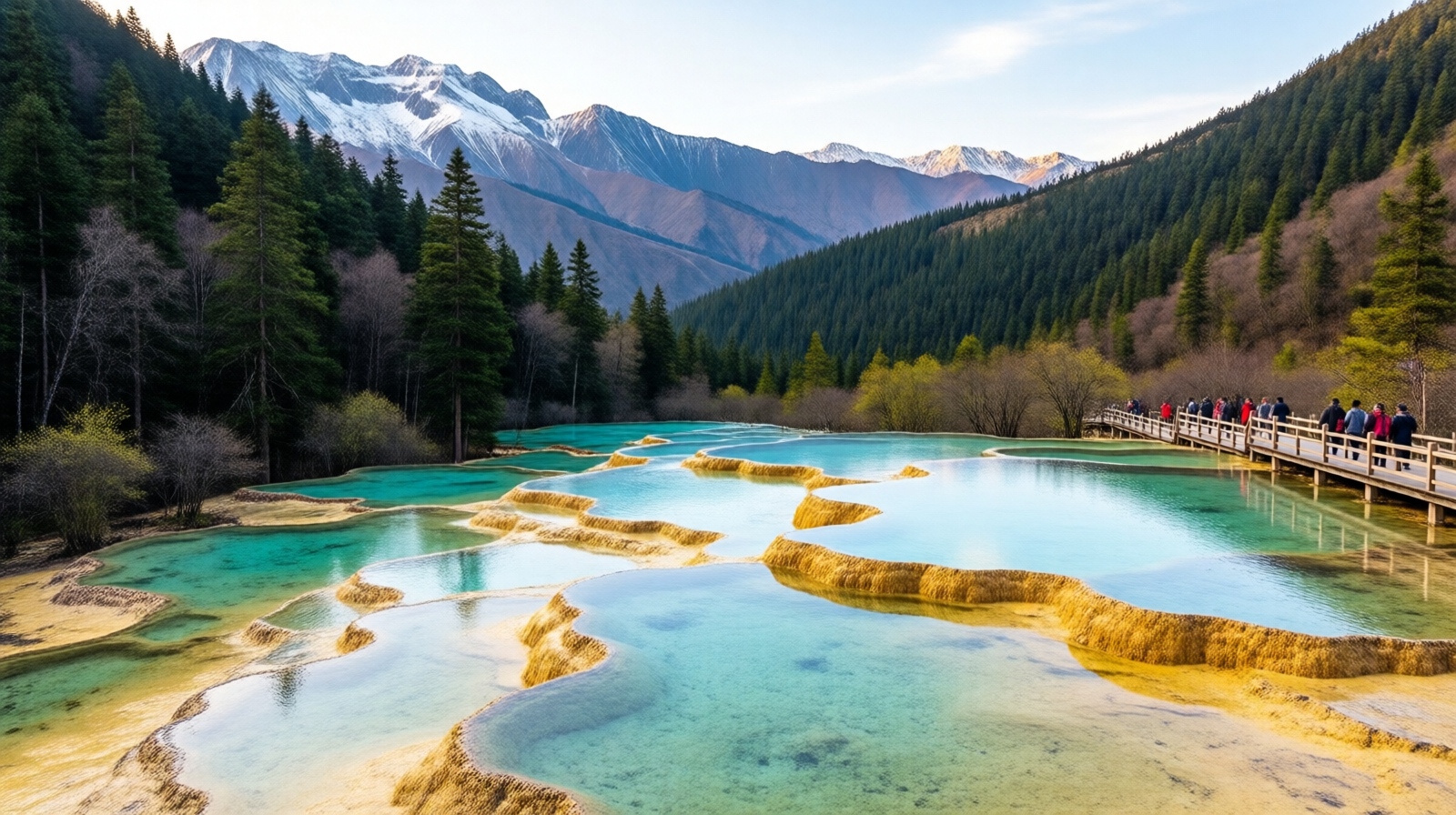

First Glimpse: A Valley Painted in Layers
Imagine standing on a wooden boardwalk at 3,200 meters, breathing crisp mountain air. Below you, thousands of turquoise, amber, and emerald pools cascade down a golden slope. In the distance, a snow-dusted peak mirrors itself in the water. This is Huanglong, a valley in Sichuan Province, China, that many Western travelers have never heard of—even though it has been a UNESCO World Heritage site since 1992.
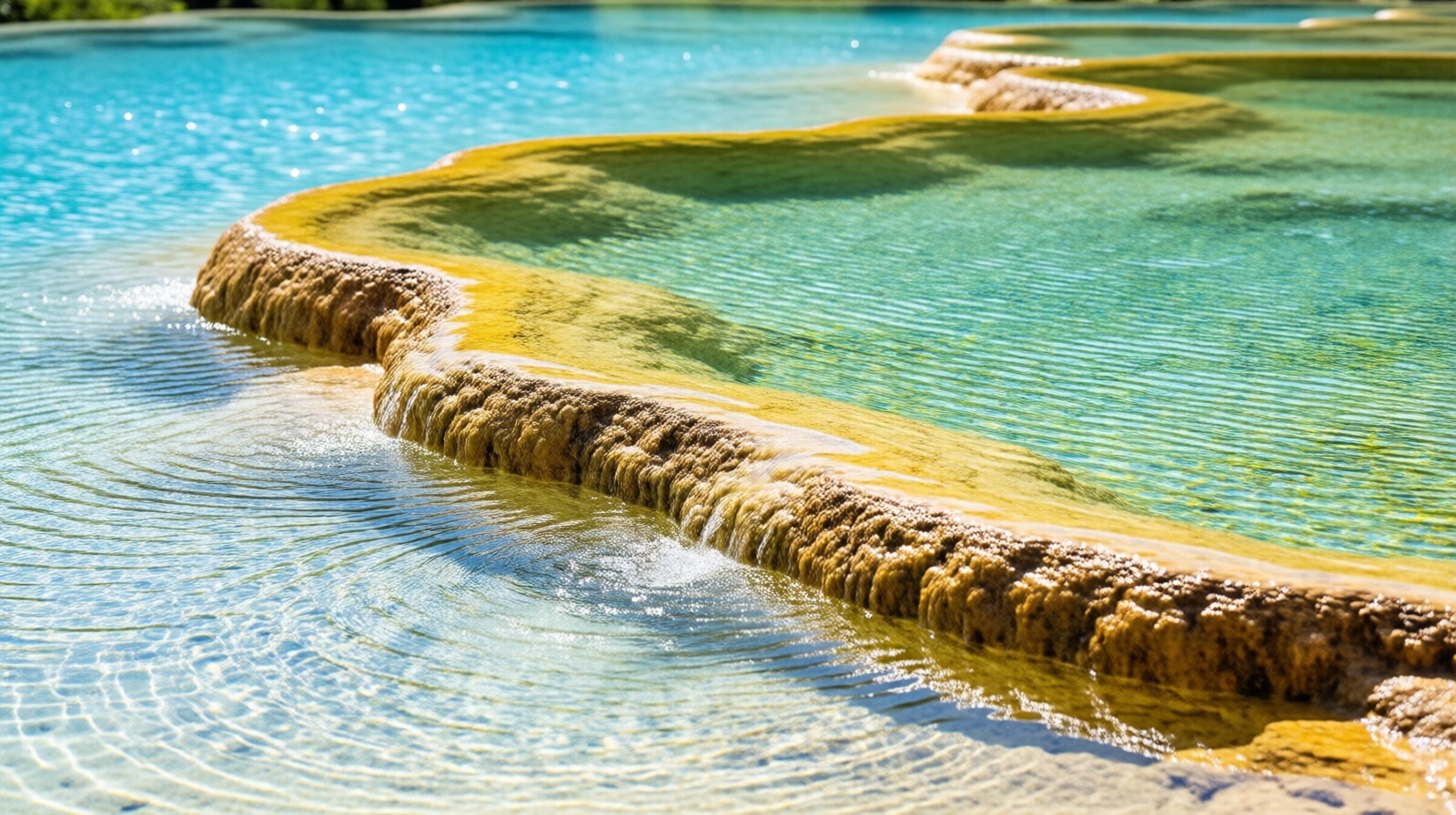
What Makes Huanglong’s Pools So Colorful?
The secret lies in the water itself. Rain and snowmelt seep through ancient limestone and emerge as springs rich in calcium carbonate. As this water flows over the valley floor, it deposits layers of travertine, a form of calcium carbonate, slowly building natural terraces and dikes. Over roughly 60,000 years, these formations have created more than 3,000 interlocking pools that stretch for several kilometers along the mountain.
Why the colors? It’s a mix of minerals and tiny organisms. Some pools appear bright blue because of dissolved magnesium or light-scattering particles; others glow yellow-orange from iron compounds or bacteria. You might also see shades of green where algae thrive. The result is a mosaic that changes with the angle of the sun—a natural kaleidoscope that photographers never tire of chasing.
The Main Attractions: Five-Colored Pond and More
Huanglong’s most famous spot is the Five-Colored Pond (Wucai Chi), a cluster of basins near the top of the valley. Depending on the light, the water shifts between aqua, emerald, and honey tones. Walk further down, and you’ll pass the Golden Beach, a long slope of travertine that shimmers like a river of gold. The Valley of Bizarre Hills, another highlight, is filled with hundreds of tiny pools resembling a topographical miniature. In total, the boardwalk trail is about 4.2 kilometers, so you can see the full spectrum without exhausting yourself.
Getting There: More Accessible Than You Think
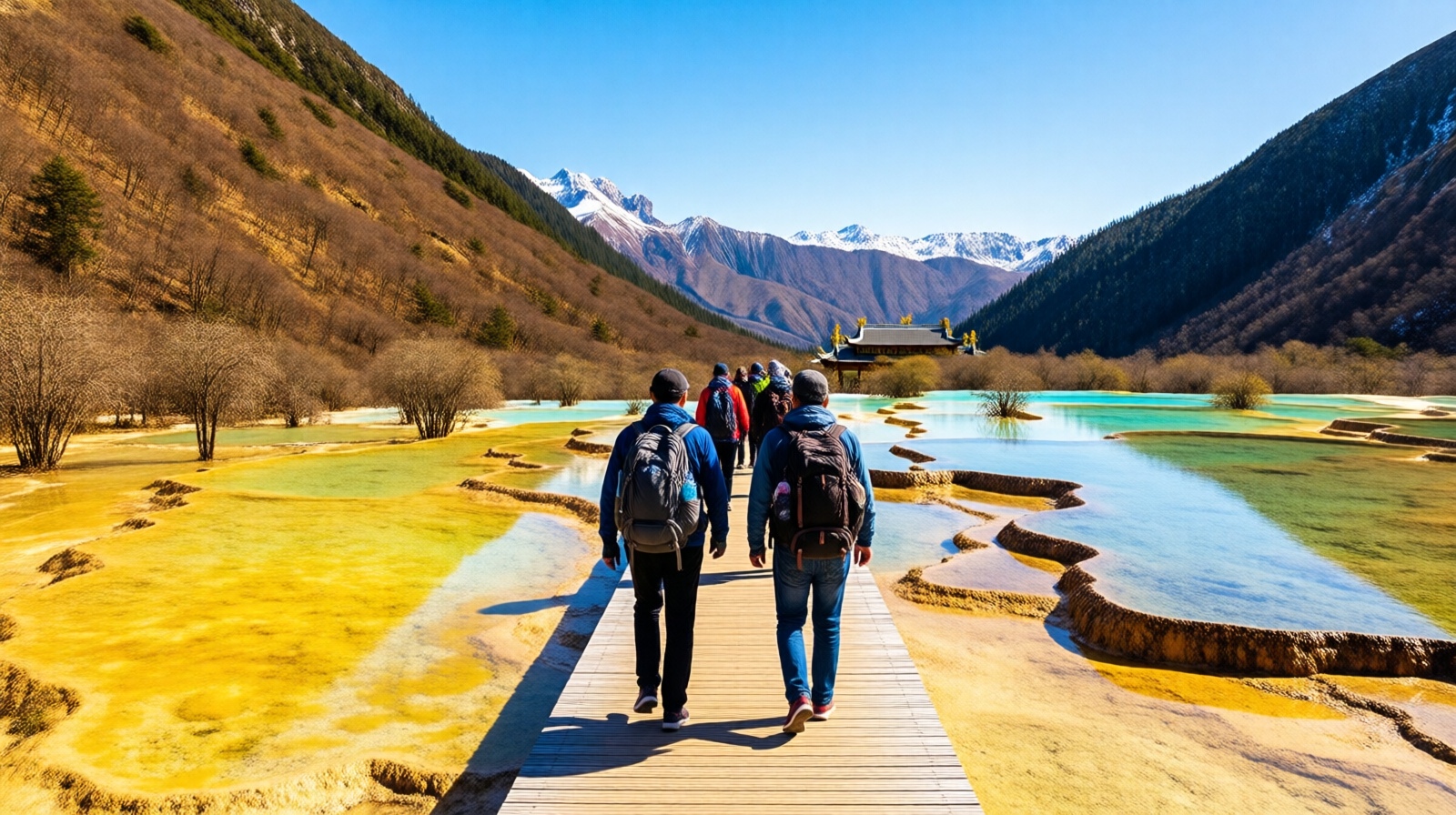
Huanglong is located in the Aba Tibetan and Qiang Autonomous Prefecture, about 300 kilometers north of Chengdu. Most visitors fly directly from Chengdu to Jiuhuang Airport, which is about an hour’s drive away. Alternatively, a scenic bus ride from Jiuzhaigou—the famous “fairy tale world”—takes about 2–3 hours. From the entrance, a cable car can whisk you up to the top rim (3,500 meters) so you can walk downhill through the pools, saving energy and giving you a bird’s-eye view.
The hike itself is not physically demanding, but the altitude can be. At 3,000–3,900 meters, some travelers feel mild dizziness or shortness of breath. Take it slow, drink plenty of water, and consider buying an oxygen canister at the base for about 30 yuan (roughly $4). A straw and mask are included, and it can be a lifesaver if you’re not acclimated.
A Living Museum Under Strict Protection
Huanglong’s fragile ecosystem needs careful management. To balance tourism and conservation, the park limits daily visitors to around 30,000 and enforces a strict boardwalk system. Stepping off the wooden paths can damage the travertine, which takes hundreds of years to regrow. Rangers patrol the area, and signs remind visitors to stay on the route. The local Tibetan and Qiang communities play an active role as tour guides and lodge operators, so your ticket purchase directly supports their livelihoods.
In 2023, the management introduced a real-time monitoring system that tracks water chemistry and pool conditions, ensuring the colors stay vibrant despite the rising number of visitors. Infrared cameras also help detect wildlife like giant pandas and golden monkeys, which are occasionally spotted in the surrounding forest.
Why Huanglong Belongs on Your China Itinerary
Most international travelers heading to Sichuan go to Jiuzhaigou, famous for its crystal lakes and waterfalls. But Huanglong offers something even more surreal: a landscape that looks artificially painted yet is completely natural. It’s a destination that rewards the curious traveler willing to venture off the typical route. While Jiuzhaigou feels like a fairytale, Huanglong feels like a geological wonder—an entire mountain turned into a palette.
As one German visitor put it, “You hear about China’s neon cities and spicy food, but nobody mentions this dreamy alpine palette. It’s like another planet.” The nearest town, Songpan, is a historic border town where Tibetan horse culture meets Han Chinese trade—another reason to extend your stay.
Practical Tips for Your Visit
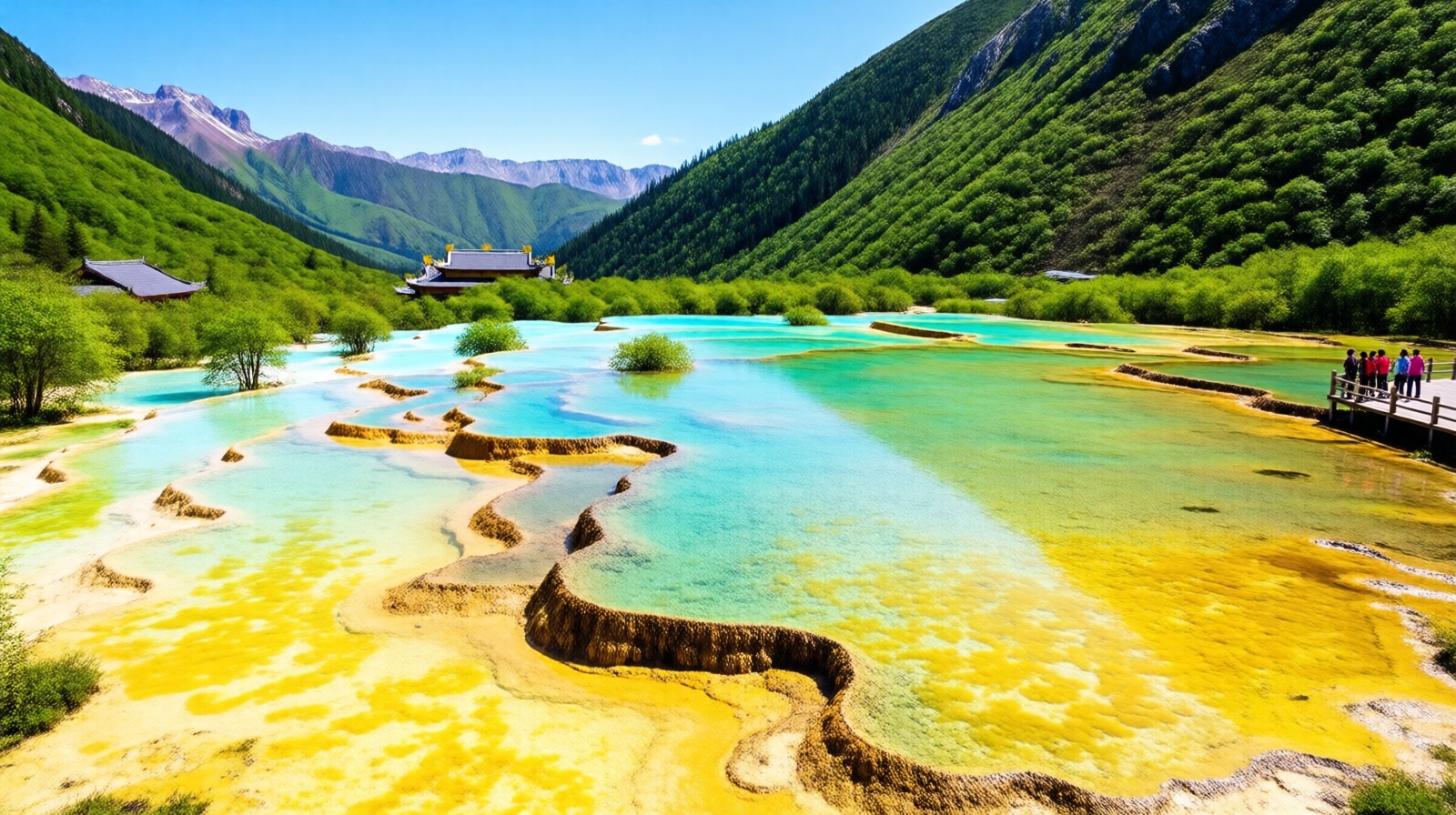
- Best time: September to October, when the pools reflect autumn foliage and the weather is clear. July and August are rainy, while winter snow may close some walkways.
- Duration: Half a day is enough for the main loop. Start early to avoid crowds and afternoon clouds that can obscure the peaks.
- Packing: Layers, comfortable shoes, sunscreen, sunglasses, and a rain jacket. The alpine sun is intense, and sudden showers happen.
- Altitude: Spend a day in Chengdu or Jiuzhaigou to acclimatize before hiking above 3,000 meters. If you feel severely unwell, descend immediately.
- Entry payment: Admission is around 160 yuan (about $22) in peak season; the cable car costs an additional 80 yuan one way.
Conclusion: Nature’s Own Palette
Huanglong’s 3,000+ colored pools are not just a scenic wonder; they’re a reminder that nature’s most astonishing art doesn’t require a human hand. From mineral-rich springs to the patient accumulation of calcium carbonate over millennia, every color tells a story of geology and life. Next time you plan a trip to China, look beyond the skylines—venture into the mountains where snowcaps and turquoise waters collide. You’ll leave with a new definition of “palette.”
Start the discussion at forum.chinacomes.com