


It Starts with a Post
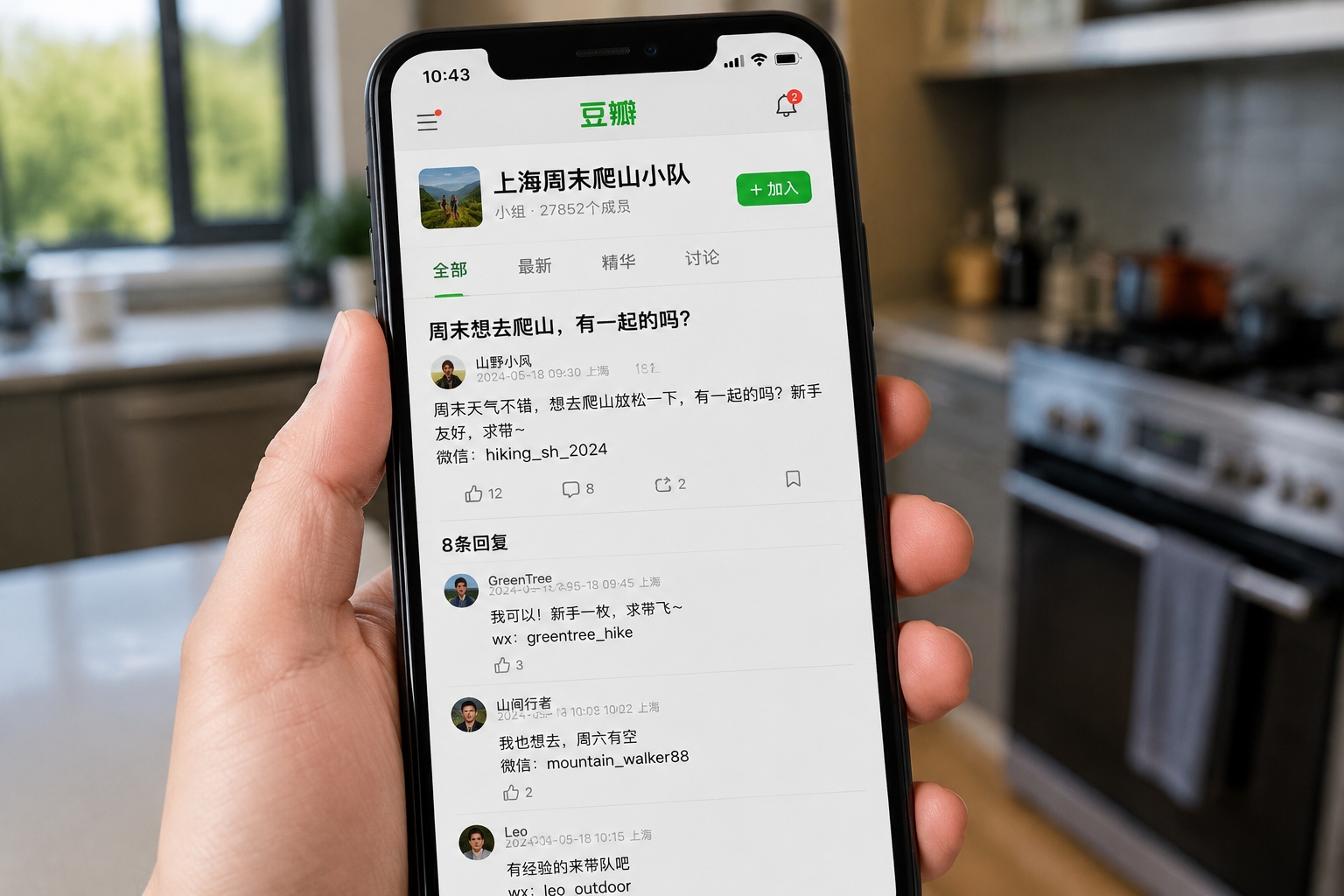
Chen Wei, a 26-year-old graphic designer in Shanghai, had been living in the city for six months and felt isolated. Then one evening, bored and scrolling through Douban, she stumbled upon a group called “Weekend Hiking in Shanghai.” She joined, introduced herself, and within a week was invited to a Saturday hike in the hills outside the city. By the end of the day, she had exchanged WeChat contacts with five new friends.

This is not an unusual story in China. For millions of Chinese young people, finding like-minded friends no longer depends on chance encounters at work or school. Instead, they turn to Douban—a platform that combines social networking, book and film reviews, and especially interest-based communities called “Douban Groups.” These groups are the closest thing China has to Reddit or old-school forums, but with a distinctly local flavor: they often lead to real-life meetups, from casual dinners to weekend trips.
What Is Douban and Why Does It Work for Meeting People?
Douban (douban.com) started in 2005 as a book and movie review site. Over time, it evolved into a massive social network centered around shared interests. Its core feature is Douban Groups—user-created forums where people discuss everything from obscure indie music to urban gardening, from queer book clubs to cat lovers. According to Douban’s own data, there are over 1 million groups covering nearly every conceivable interest. What makes Douban different from WeChat or Weibo is that the connections are interest-first, not social-circle-first. You can join a group without knowing anyone there, and the expectation is that you share a common passion.
For foreigners in China, Douban can be a goldmine for meeting locals and expats alike. The platform has a simple, mobile-friendly interface, and most groups are open to anyone. The key is knowing how to navigate it.
Step 1: Find Your Niche Group
Start by downloading the Douban app (available in Chinese app stores, and the English version is limited, but many groups use a mix of Chinese and English). Search for keywords in English or Chinese that match your interests. For example:
- “Hiking in Beijing” → 北京徒步
- “Board games in Chengdu” → 成都桌游
- “Vegetarian cooking” → 素食烹饪
- “LGBTQ+ Shanghai” → 上海LGBTQ
Once you find a group, browse its recent posts. Active groups will have daily threads. Pay attention to the “intro” posts—many groups ask new members to introduce themselves (自我介绍). That’s your first opportunity to get noticed.
Step 2: Break the Ice Online
Chinese internet culture is surprisingly warm in interest-based communities. Don’t be shy to post a short introduction: “Hi everyone, I’m [name], just moved to [city], and I love [activity]. Looking for people to explore with!” Use WeChat as your contact—almost everyone in Douban groups will share their WeChat ID in posts or private messages.
Another effective tactic is to reply to event posts. Many groups have dedicated threads for organizing offline activities. For example, a “Hotpot Dinner” thread might have a poll for dates and locations. Simply comment with your availability and your WeChat, and the organizer will add you to a group chat.
Step 3: Attend Real-Life Events
Once you’re in a WeChat group for a specific event, the rest is simple. Most events are casual and low-cost. Common formats include:
- Dinner outings (especially hotpot or BBQ, which are communal and easy to split the bill)
- Outdoor activities (hiking, cycling, park picnics)
- Game nights (board games, card games, or even mahjong)
- Cultural meetups (book clubs, film screenings, language exchanges)
Chinese etiquette for group meetups: The organizer usually sets a time and place, and everyone pays their own share (AA制, or “go Dutch”). It’s common to bring a small gift like snacks or drinks if you’re a guest. Don’t worry about being a foreigner—most groups are very welcoming, and many younger Chinese enjoy practicing English or learning about other cultures.

Step 4: Start Your Own Event
If you can’t find a group that matches your interest, start one! Creating a Douban group is free and easy. Give it a clear name and description in both Chinese and English. Then post an event thread with a date, time, and location. For example: “Saturday Coffee Chat at Wukang Road – All Welcome.” Share the post in related groups or on your WeChat Moments.
Pro tip: Use a popular café or a public park as the first meeting spot. It’s neutral, safe, and easy to find. You’ll be surprised how many people show up.
Tips for a Smooth Experience
- Safety first: Meet in public places, especially for the first time. Let a friend know where you’re going.
- Language: Most Douban groups use Chinese. If your Chinese is limited, try groups that cater to English speakers or international communities (e.g., “Beijing Expats” or “Shanghai International Friends”).
- WeChat is essential: Almost all logistics (scheduling, payment, sharing photos) happen on WeChat. Make sure your WeChat account is set up and you’re comfortable using it.
- Be patient: Not every event will be a perfect fit. Try a few different groups before you find your tribe.
Real-Life Success Stories
Li Na, a 30-year-old product manager in Shenzhen, joined a Douban group for “Urban Gardening” and ended up co-organizing a weekend plant swap at a local park. “I met people I would never have crossed paths with at work,” she says. Similarly, an American expat named Tom used Douban to find a weekly board game night in Chengdu. “It’s how I made my first real friends in China,” he said.

Conclusion
Finding friends in a new city can be daunting, especially in a country with a different language and culture. But Douban groups offer a low-pressure, high-reward way to connect with people who already share your interests. The process is simple: join a group, say hello, show up to an event. Before you know it, you’ll have a local friend group you built yourself.
Start the discussion at forum.chinacomes.com