
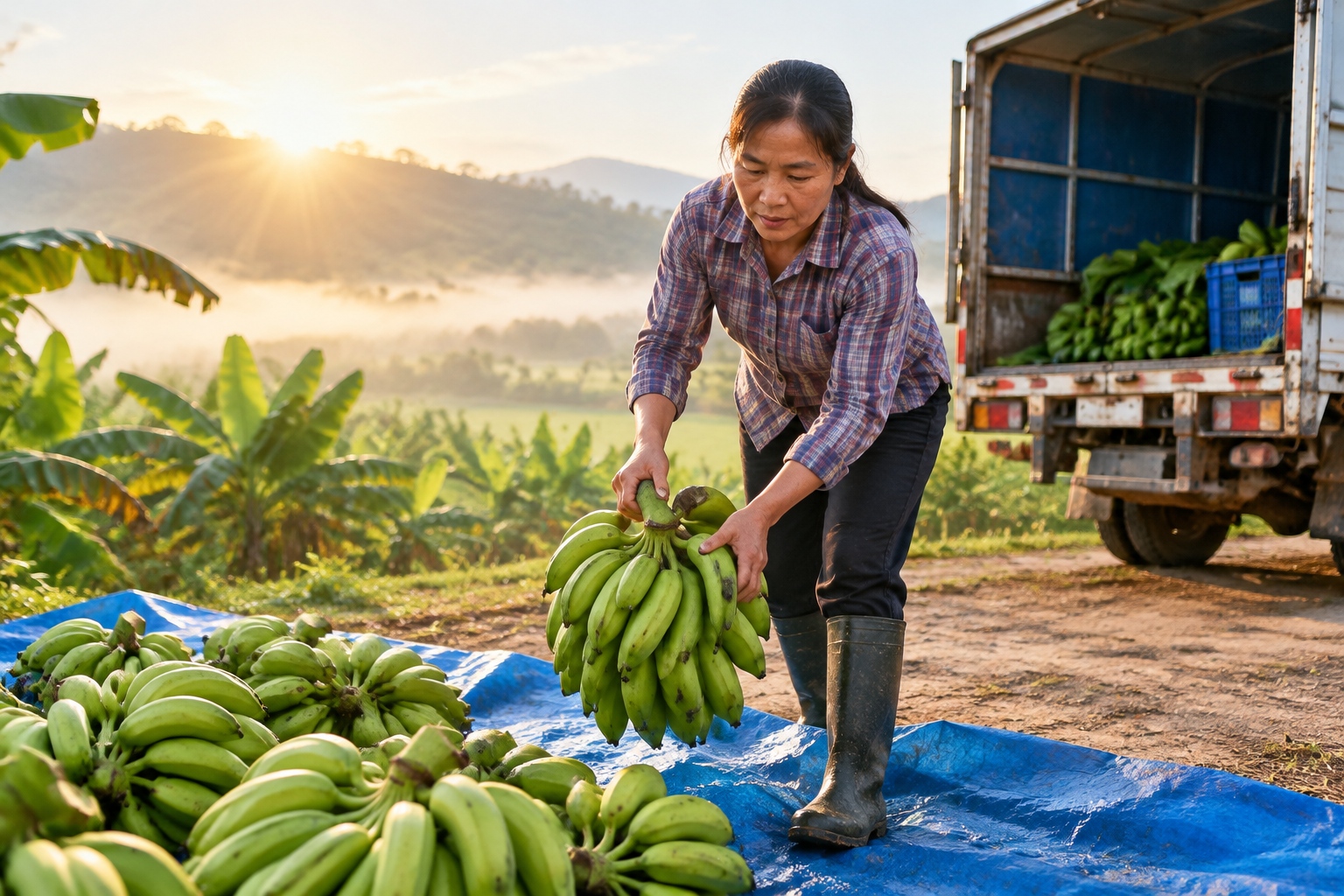

At 4:30 in the morning in Ledong County, Hainan, a banana farmer named Chen Yalan is already in the field. The air is thick and warm, and the leaves are still wet. She cuts a bunch of bananas from the tree with a curved knife, then lays it gently on a blue plastic tarp. A truck from a collection point will arrive at six. By noon, those bananas will be in a packing house forty minutes away. Within forty-eight hours, some of them will be on shelves in Beijing.
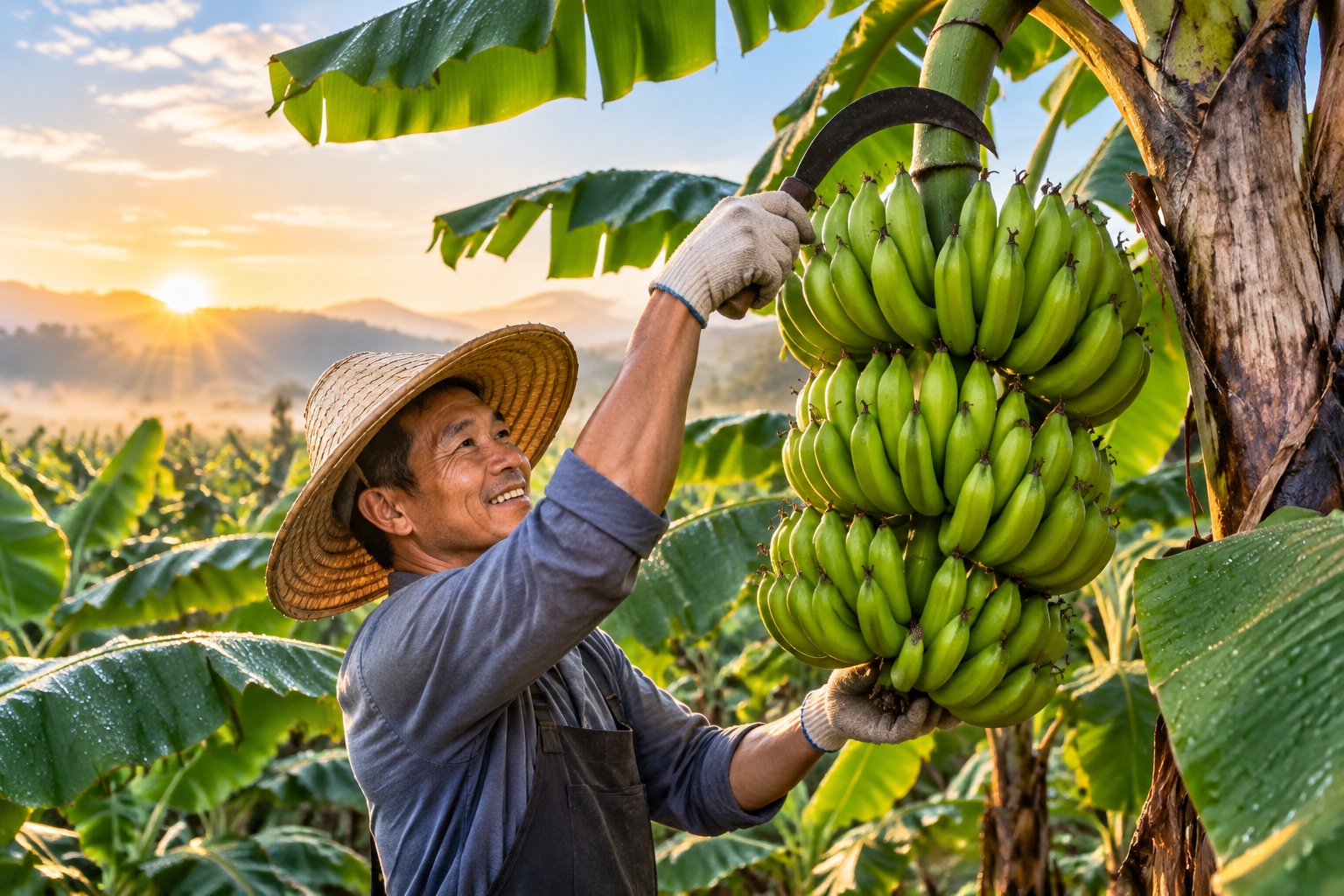
Chen has been growing bananas for nineteen years. She tells me that in a good year, she sells a pound of bananas for about 1.8 yuan to the collection point. In a Beijing supermarket, that same pound might sell for 3.5 yuan, sometimes 3 yuan on promotion. That gap sounds reasonable. But here is the counterintuitive part: in a small town in Hebei or Guangxi, the same banana often costs more—sometimes 4.5 yuan, sometimes 5 yuan per pound. How can a banana be cheaper in Beijing, where rent and wages are far higher?
The answer is not in the price tag. It is in the journey.
First Stop: The Collection Point
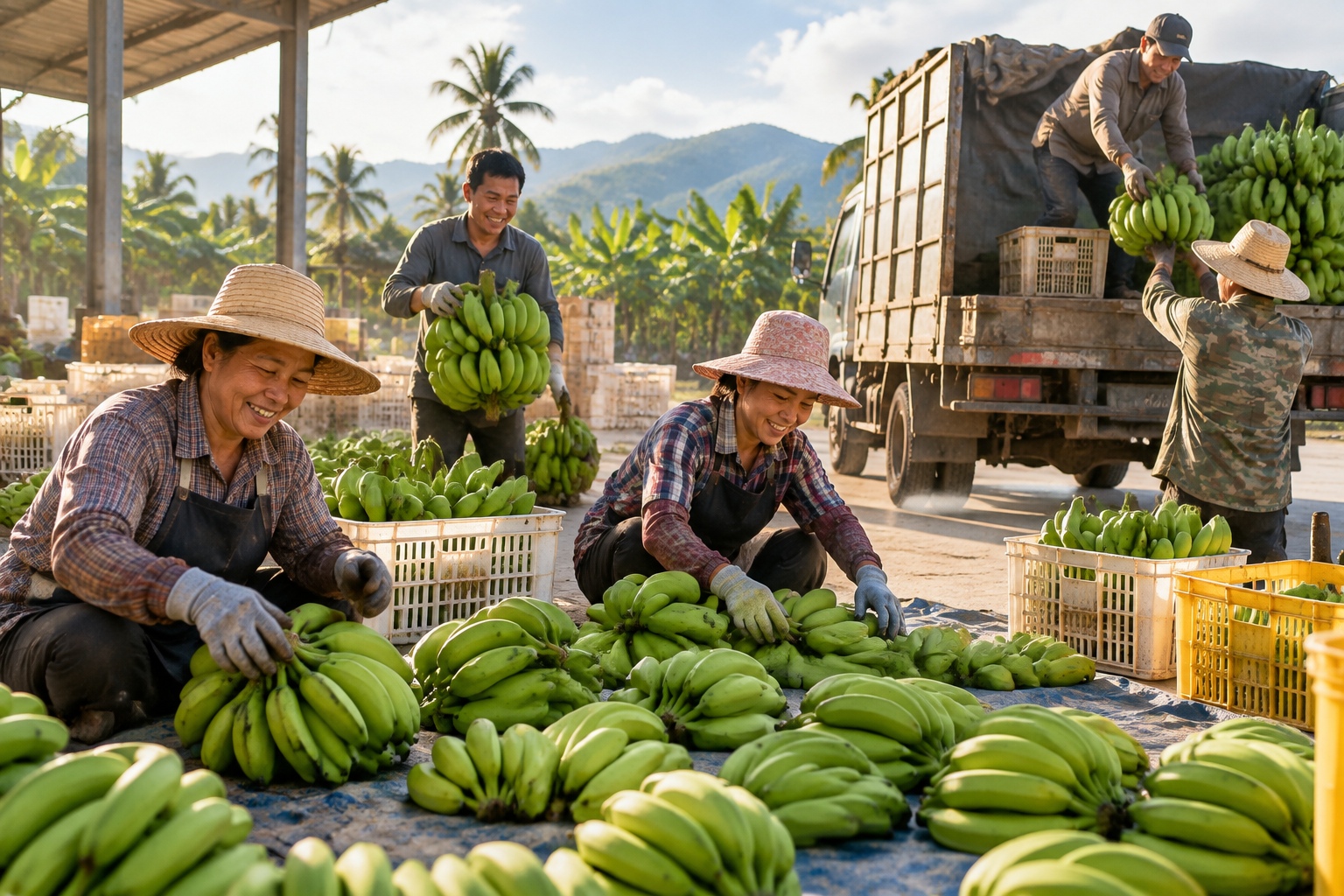
At the collection point, a man named Wu Jie buys bananas from dozens of small farms like Chen’s. He sorts them by size and ripeness, then loads them onto a larger truck headed for Haikou, the provincial capital. Wu’s margin is thin—maybe 0.2 yuan per pound. He makes money on volume. A single truck can carry twenty tons. If he fills it, he earns 8,000 yuan before costs. If he doesn’t, he loses money.
This is the first layer of China’s fruit supply chain: aggregation. Small farms sell to small collection points, which sell to larger ones. Each step adds a little cost, but also creates efficiency. Without Wu, Chen’s bananas would rot in the field.
Second Stop: The Regional Wholesale Market
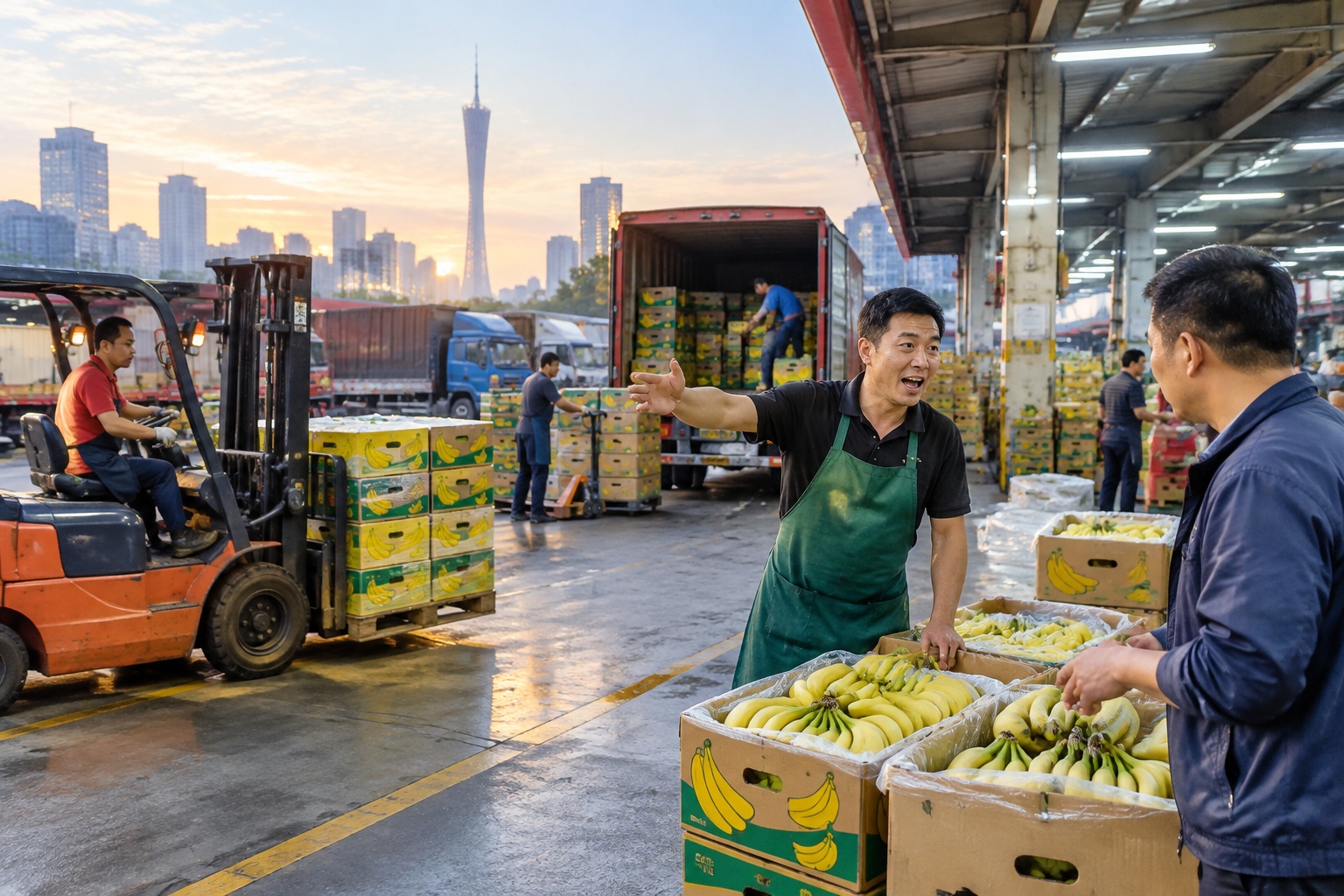
By the next morning, the truck reaches a wholesale market on the outskirts of Guangzhou or Zhengzhou. This is where things get interesting. The market is vast—hundreds of stalls, forklifts weaving between trucks, the smell of diesel and overripe fruit. A wholesaler named Li Wei buys the bananas from Wu’s truck. He sells them to two kinds of buyers: large supermarket chains that send their own trucks, and smaller traders who will carry them to towns and cities across the region.
Here, the price difference emerges. A large supermarket chain like Yonghui or Walmart buys ten tons at a time. It has its own cold-chain trucks and distribution centers. It negotiates a price of 2.2 yuan per pound. A small trader from a county town buys only one ton. He pays 2.8 yuan per pound because he has less bargaining power and higher unit transport costs. Same bananas, different price.
Third Stop: The City Distribution Center
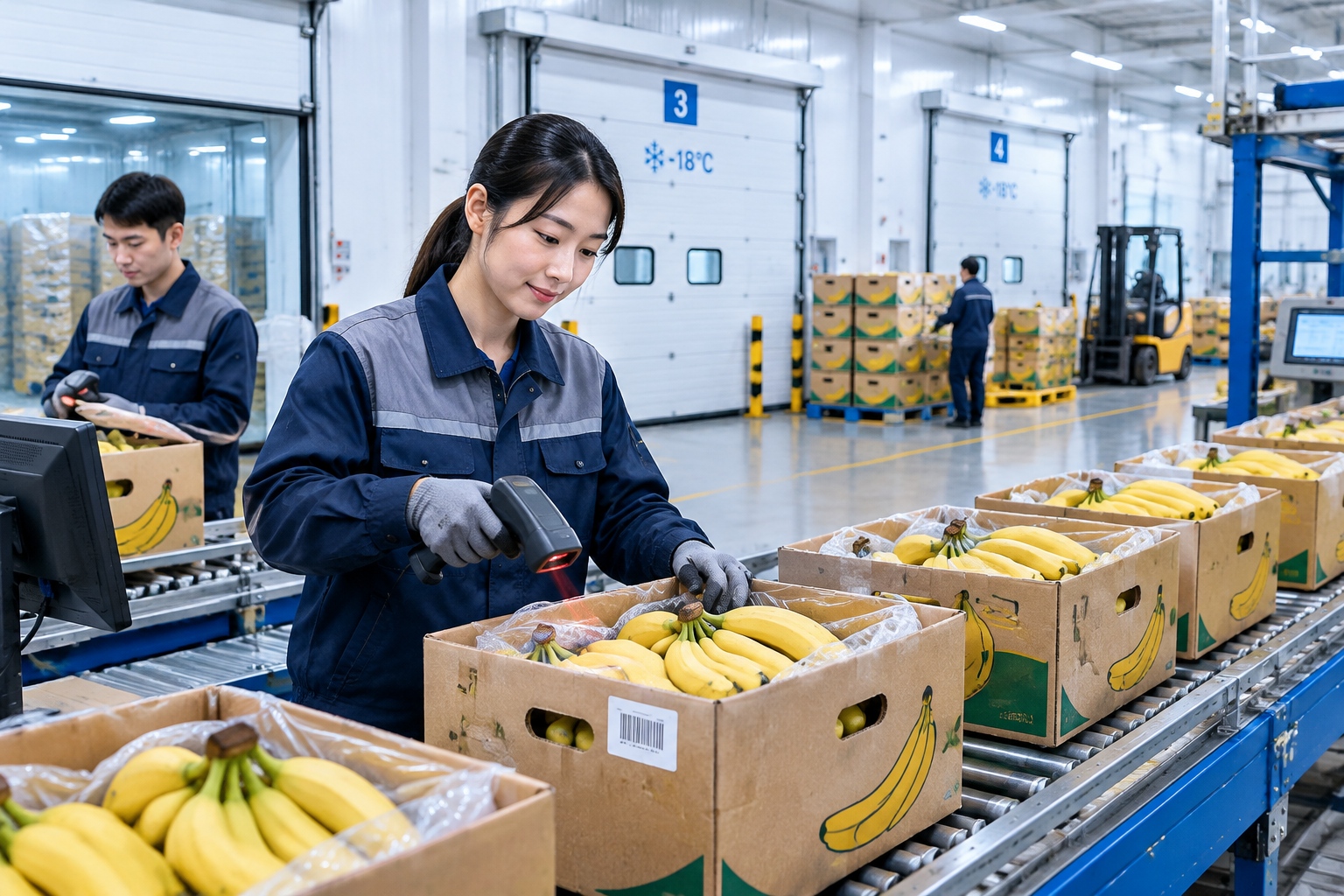
From the wholesale market, the supermarket chain’s bananas go to a distribution center on the edge of Beijing. These centers are enormous—climate-controlled, automated, running twenty-four hours. A single center might handle 200 tons of fresh produce per day. The bananas are unloaded, inspected, and loaded onto smaller trucks for individual stores. The cost of this step is surprisingly low: about 0.15 yuan per pound. Why? Because the center runs at full capacity. Every truck is full. Every worker handles thousands of pounds per shift.
This is the second key to the puzzle: scale. A small town’s supermarket cannot afford a distribution center. It buys from a local wholesaler, who bought from a regional wholesaler, who bought from the Guangzhou market. By the time the banana reaches the small-town shelf, it has passed through four or five hands. Each hand adds 0.3 to 0.5 yuan per pound.
Fourth Stop: The Small-Town Store
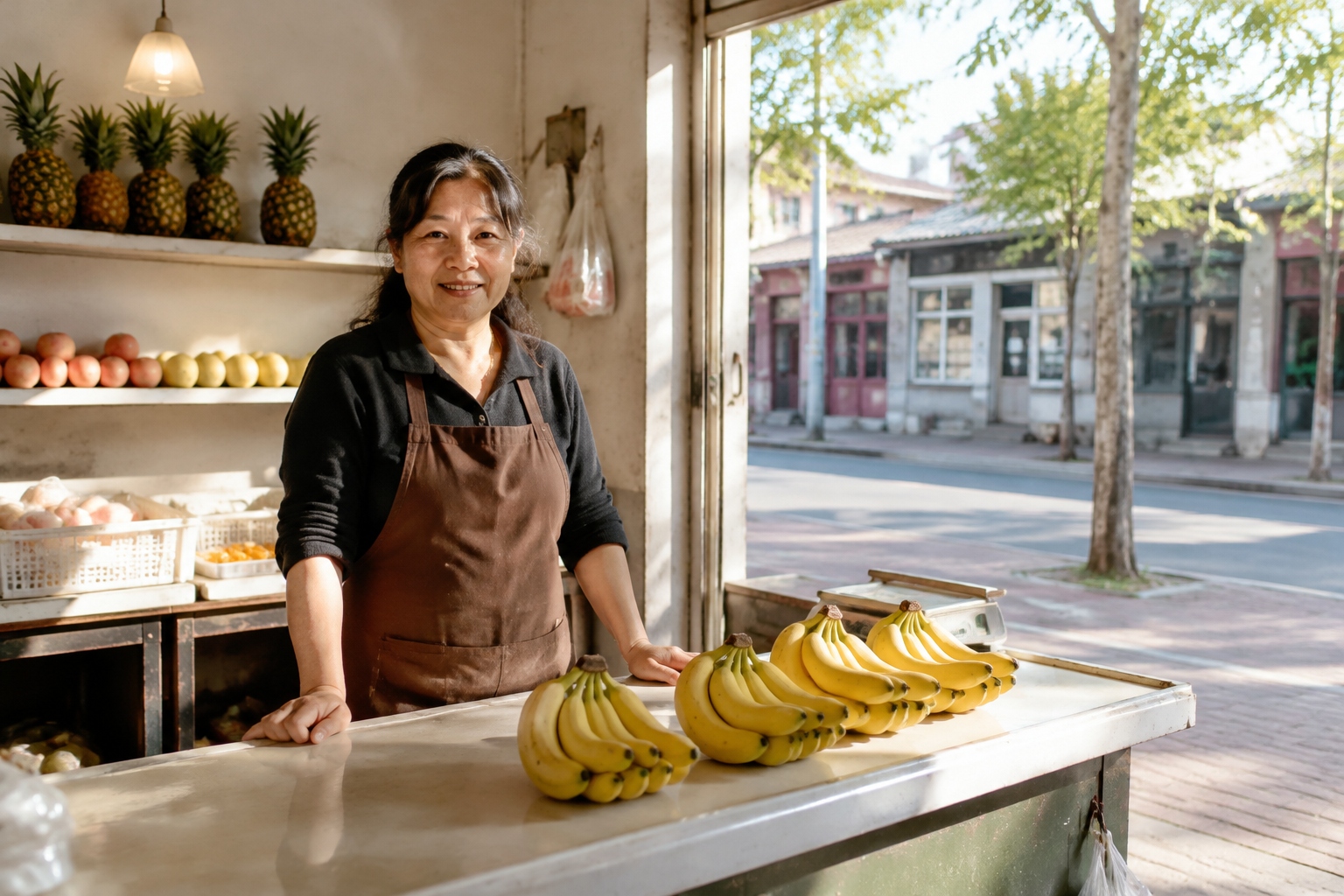
In a county town in Hebei, a shop owner named Zhang Min buys bananas from a local wholesaler. She pays 3.8 yuan per pound. She sells them for 4.5 yuan. Her rent is low—maybe 2,000 yuan per month for a small storefront. Her labor is cheap—she and her husband run the store themselves. But her costs per pound are higher than a Beijing supermarket’s. Why? Because she sells only fifty pounds of bananas a day. The Beijing supermarket sells five hundred. Her spoilage rate is higher because fewer customers mean fruit sits longer. Her supplier charges more because she orders less.
Zhang knows her customers find bananas expensive. But she cannot lower the price. If she sells at 4 yuan, she barely breaks even. If she sells at 3.5 yuan, she loses money.
Why Big Cities Win on Price
The banana’s journey reveals four forces that make big-city shelves cheaper for many standardized goods:
1. Scale. Large buyers purchase in bulk, negotiate lower prices, and spread fixed costs across more units. A Beijing supermarket chain buys bananas by the truckload. A small-town store buys by the box.
2. Fewer middlemen. Big cities are close to regional wholesale markets and distribution centers. Small towns are at the end of the line. Every extra hand adds cost.
3. Faster turnover. A Beijing supermarket sells bananas in two days. A small-town store might take five. Slower turnover means more spoilage, and spoilage is passed on to the customer.
4. Fiercer competition. Beijing has supermarkets, wet markets, online grocery apps, community group buying, and discount stores all fighting for the same customer. Bananas are often sold at a loss to attract shoppers. Small towns have fewer options, so prices stay higher.
This does not mean everything is cheaper in big cities. Housing, restaurant meals, haircuts, and healthcare are almost always more expensive. Local seasonal vegetables in a small-town wet market can be dirt cheap. But for standardized goods—bananas, shampoo, packaged noodles, milk—the big-city advantage is real.
What This Means for Ordinary People
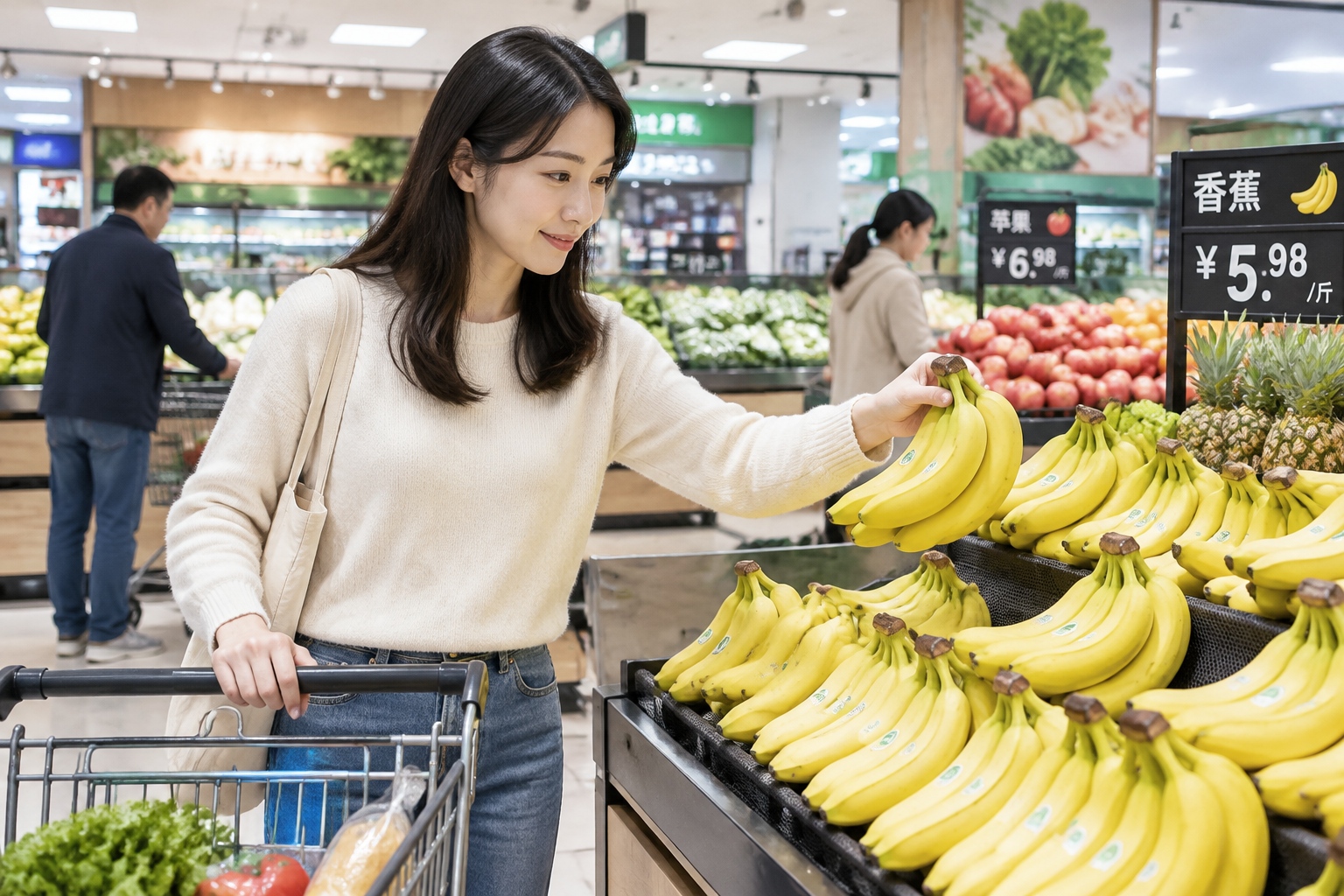
For Chen Yalan in Hainan, the journey means she earns a modest but stable income. For Wu Jie, the collection point operator, it means thin margins and high risk. For Zhang Min in Hebei, it means she cannot compete on price with the supermarket thirty miles away. For a Beijing shopper, it means bananas are affordable—but the shopper may not realize why.
China’s retail landscape is not a simple story of rich cities and poor towns. It is a story of logistics, scale, and competition. The banana does not care about rent. It cares about how many hands it passes through, how fast it moves, and how many buyers are fighting for it.
Next time you pick up a banana in a Beijing supermarket, think of Chen Yalan in Hainan, cutting it from the tree at dawn. The distance between them is not just kilometers. It is a chain of decisions, trucks, and markets that determines what you pay.
Practical Information for Travelers and Curious Readers
How to see this supply chain yourself: Visit a regional wholesale market early in the morning (4–7 AM). In Beijing, Xinfadi Market is the largest. In Guangzhou, Jiangnan Market. In smaller cities, ask for the “pifashichang” (wholesale market).
Best time to visit: Spring and autumn, when produce variety is highest. Avoid major holidays when markets are chaotic.
What to bring: Comfortable shoes, a face mask (dust and smells), and small cash for samples. Most vendors speak only Chinese, so a translation app helps.
Cost: Free to enter. A pound of bananas at a wholesale market costs 1.5–2.5 yuan. At a small-town store, 4–5 yuan. At a Beijing supermarket, 3–3.5 yuan.
Note: Do not romanticize the journey. It is hard work, thin margins, and long hours. But it is also one of the most efficient food supply chains in the world.
Start the discussion at forum.chinacomes.com