
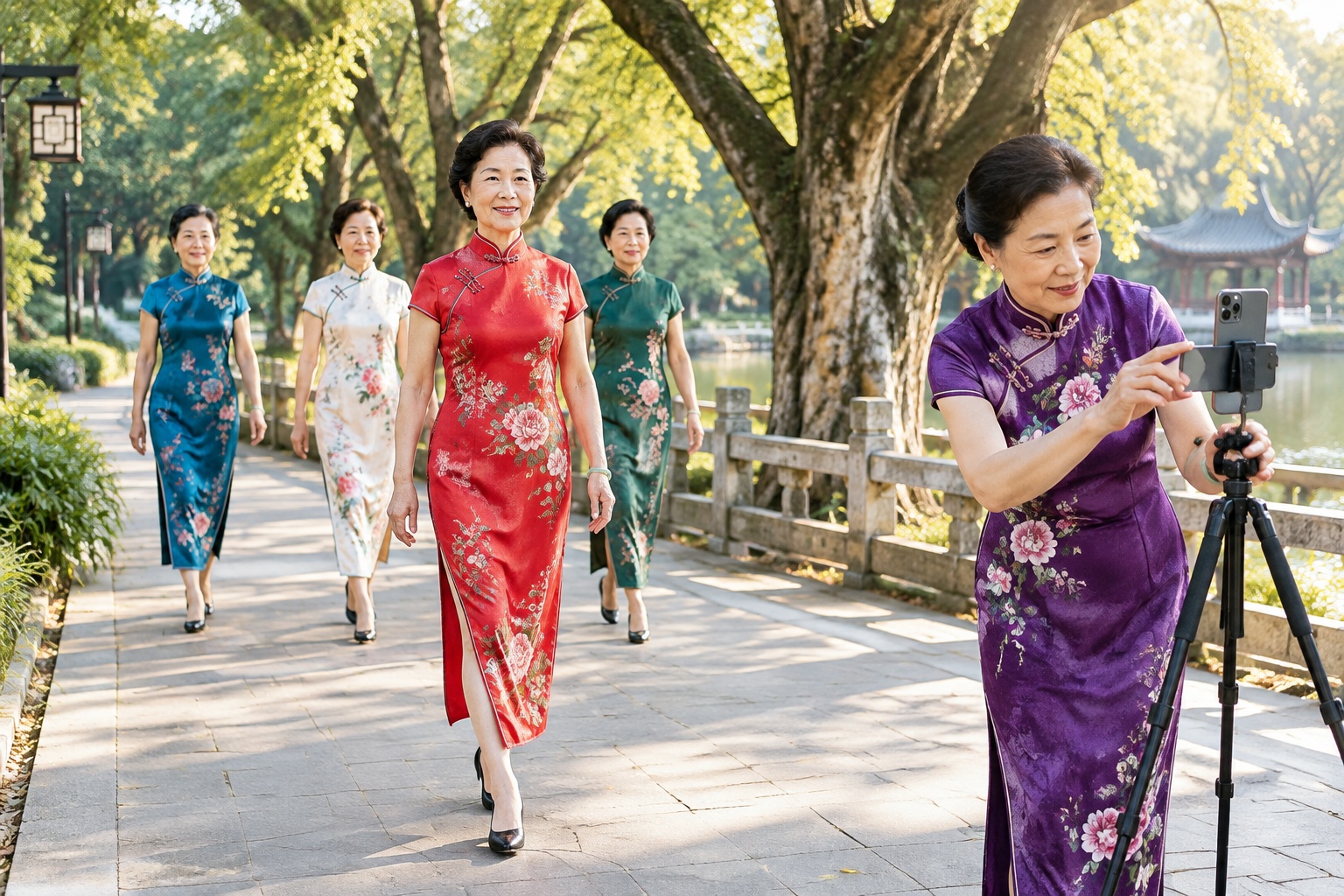

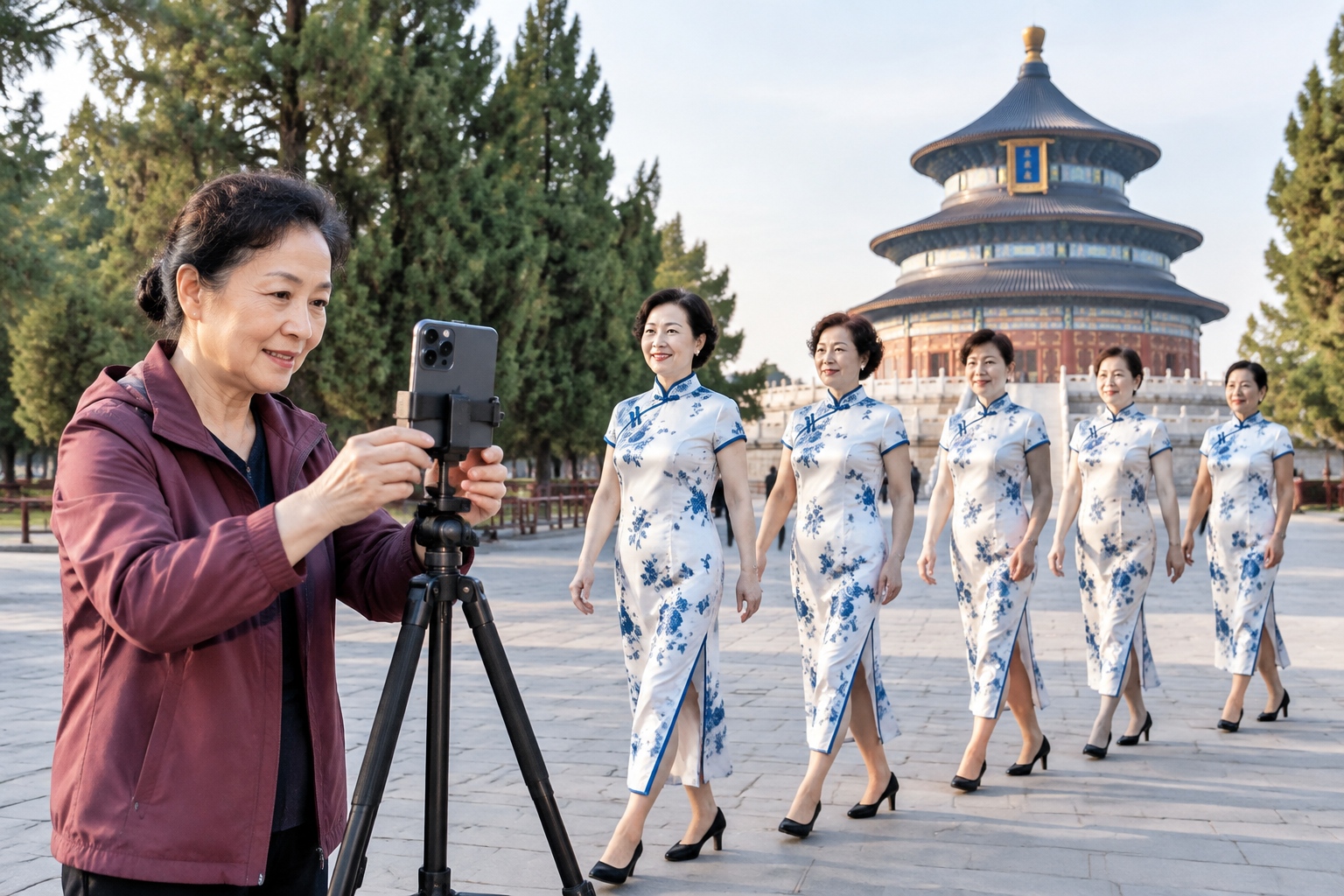
A Morning at Beijing’s Temple of Heaven Park
It’s 7 a.m. on the ninth day of the ninth lunar month, and 62-year-old Wang Aiyi is already adjusting her phone on a tripod. Behind her, a dozen women in matching qipaos practice their model walk under ancient cypress trees. Wang isn’t just participating—she’s filming. Today is Double Ninth Festival (Chongyang), a traditional day for honoring elders. But Wang has a different plan: she’ll post three videos before lunch.
“My daughter taught me how to edit last year,” she says, tapping the screen to trim a clip. “Now I have 4,000 followers. They call me ‘Qipao Sister.'”
From Park Benches to Phone Screens
Across China, the Double Ninth Festival—which falls on October 11 this year—has traditionally meant family gatherings, climbing hills, and chrysanthemum tea. The message was simple: respect your elders. But walk through any city park or tourist spot today, and you’ll see a different scene. Seniors aren’t just being cared for; they’re creating.
The New Park Regulars
In Shanghai’s Fuxing Park, 68-year-old Li Shushu sets up his ring light before his wife even finishes her morning tai chi. The couple runs a Douyin account with over 10,000 followers, documenting their retirement travels. “We used to just take photos for ourselves,” Li says. “Now we film for our fans. They ask us where to eat, what to see. We feel useful.”
Selfie sticks and phone tripods are as common as walking sticks in parks these days. Groups of seniors choreograph dance routines specifically for vertical video. Choirs pause mid-song to check the framing. The tools of youth culture have become tools of elder expression.
At the Landmarks
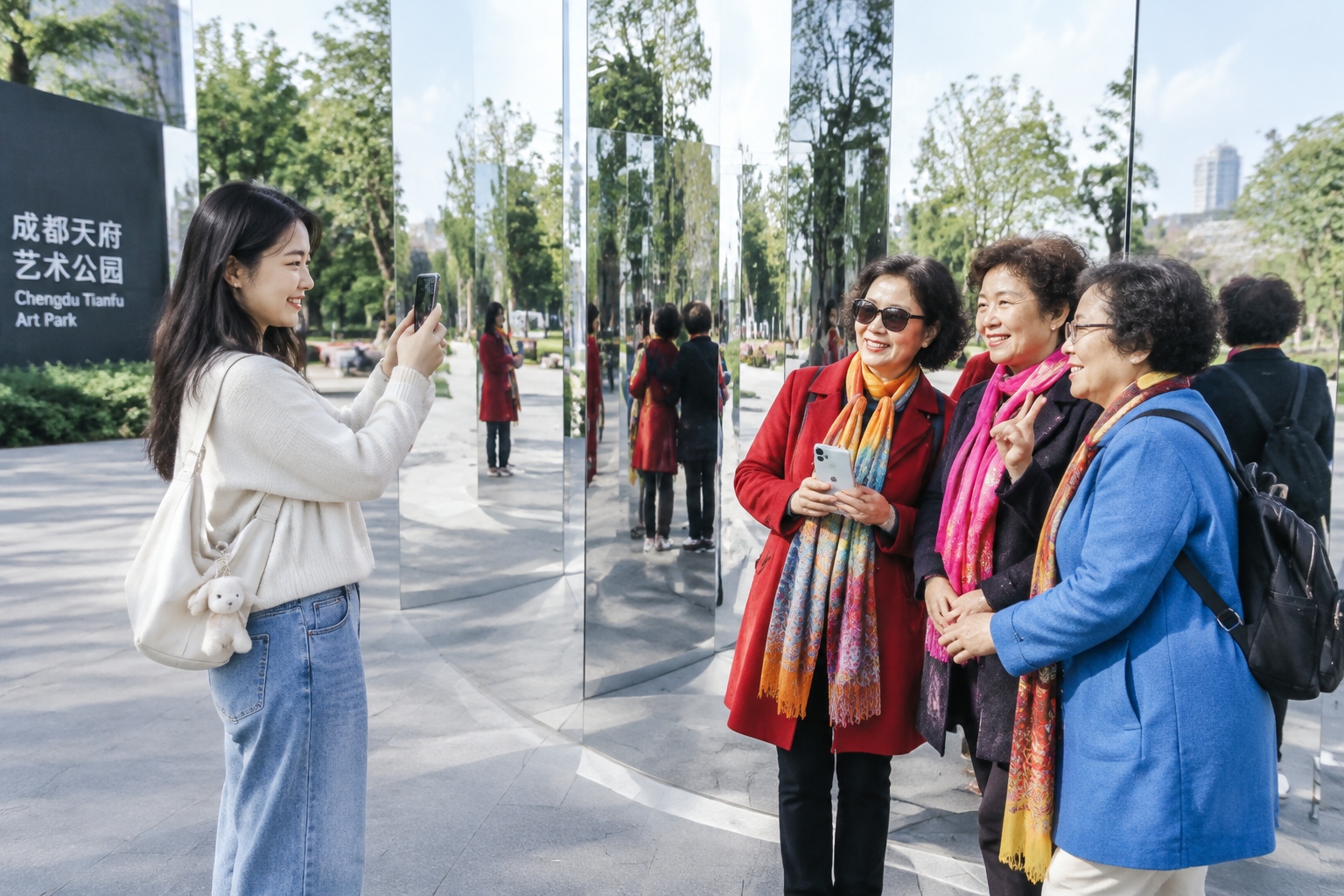
At Chengdu’s new Tianfu Art Park, a group of seniors in bright scarves poses in front of a mirrored installation. A young influencer waits patiently to take her own shot. Instead of tension, there’s collaboration. “I’ll take yours if you take ours,” a 70-year-old woman tells the influencer, handing over her phone. They swap cameras, then swap WeChat contacts.
At Home, Across Generations
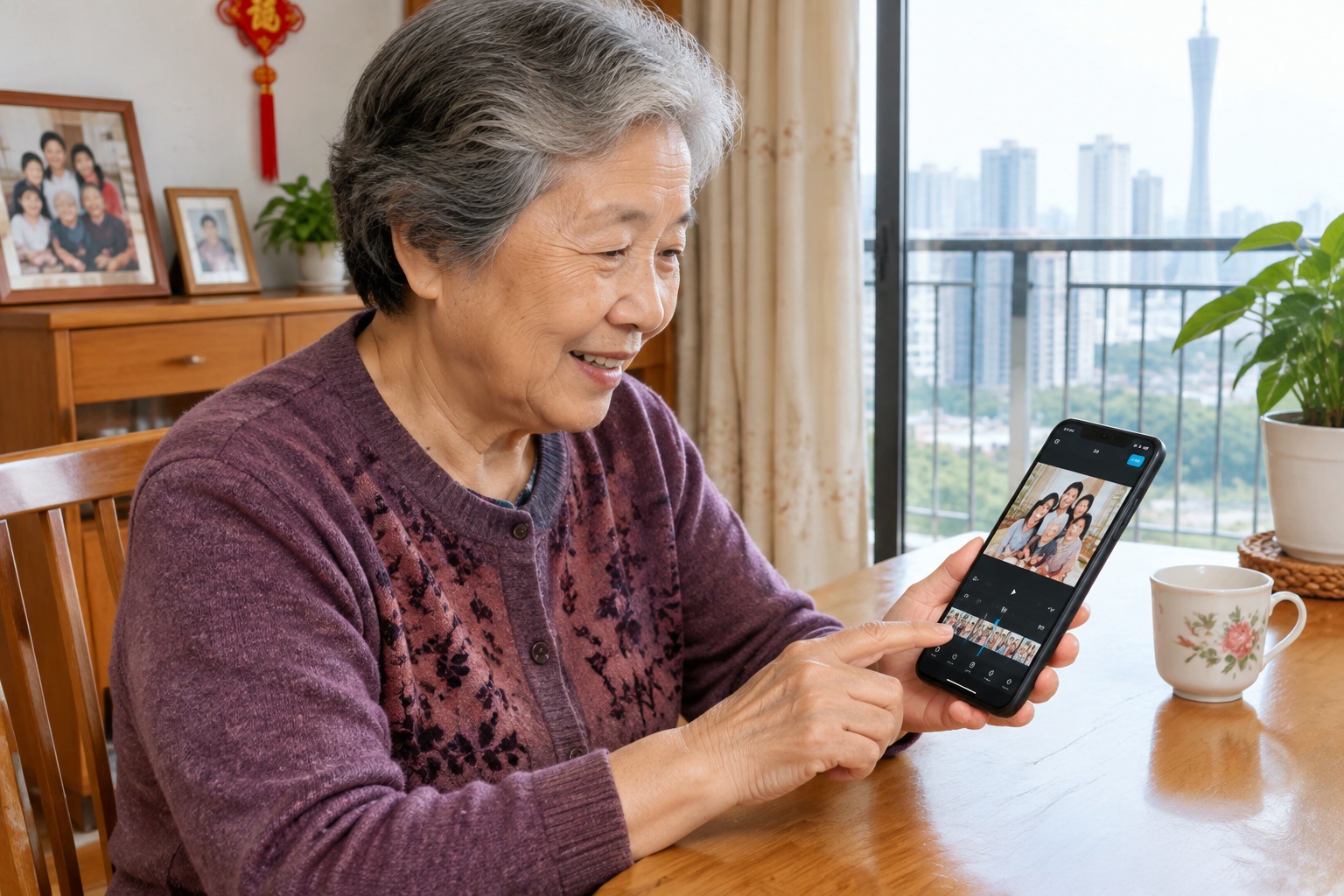
The learning goes both ways. In Guangzhou, 75-year-old Chen Nainai spent last week mastering a new editing app. Her granddaughter in Toronto sent a tutorial video. “She said, ‘Grandma, use the sparkle effect.’ I didn’t know what that was. Now I do.” For Double Ninth, Chen is sending her granddaughter a two-minute video of family photos, set to music, with captions she typed herself.
Why Seniors Are Embracing Short Video
This isn’t a niche trend. According to the China Internet Network Information Center, over 150 million Chinese citizens aged 60 and above were online by mid-2023—more than the total population of Japan. Short video platforms report that users over 60 are their fastest-growing demographic. Why?
Retirement Has Changed
Many of today’s Chinese seniors retired during a period of rapid economic growth. They have pensions, time, and—crucially—a desire for self-expression that their parents’ generation rarely had. “I raised my kids. I worked for 35 years,” Wang says. “Now it’s my turn.”
Technology Got Easier
Douyin and Kuaishou now offer large-font modes, voice-to-text captions, and one-tap editing templates. Xiaohongshu has a “senior creator” guide. The barriers that once kept older users passive consumers have largely fallen.
Social Life Moved Online
For many seniors, likes and comments have become a new form of neighborhood gossip—but kinder and wider. “I have friends in Xinjiang and Hainan now,” Li says. “We’ve never met, but we watch each other’s videos every day.”
Money and Mindset
Average urban pensions have risen steadily for two decades. Seniors are spending on travel, photography gear, and even video courses. A 2023 report from the China Aging Research Center found that over 40% of urban seniors had purchased digital products or services in the past year.
Three Seniors, One Double Ninth Festival
Beijing: Wang Aiyi, 62, Model Team Videographer
By 10 a.m., Wang has filmed the qipao walk, a group photo session, and a short interview with the team leader. She edits on the subway home, adding captions and a trending song. Her video goes live at 2 p.m. By dinner, it has 1,200 likes. “My son commented with a thumbs-up emoji,” she says. “That’s better than a phone call.”
Chengdu: Li Shushu, 68, Travel Vlogger
Li and his wife take the metro to a new skywalk. He films her walking toward the camera, then turns the phone on himself. “Today is Double Ninth,” he says to the lens. “We’re 68 and 65. We’re not old yet.” They stop for hotpot, film the steam rising, and post a 15-second clip. A fan comments: “You two give me hope.”
Guangzhou: Chen Nainai, 75, Long-Distance Grandmother
Chen’s video for her granddaughter is simple: photos of family meals, a clip of her watering orchids, and a final shot of her waving. She adds text: “We miss you. Eat well.” She sends it at 8 p.m., which is 8 a.m. in Toronto. Her granddaughter replies with a heart. “Before, I would just call and cry,” Chen says. “Now I make something. It feels better.”
Platforms, Parks, and Communities Respond
The silver-haired creator boom hasn’t gone unnoticed. Douyin launched a “Silver Age Inspiration” fund in 2023, offering training and traffic support for creators over 60. Kuaishou runs offline workshops in community centers. Scenic spots from Hangzhou’s West Lake to Xi’an’s City Wall have added senior-friendly photo spots with wider benches, better lighting, and signs showing optimal camera angles.
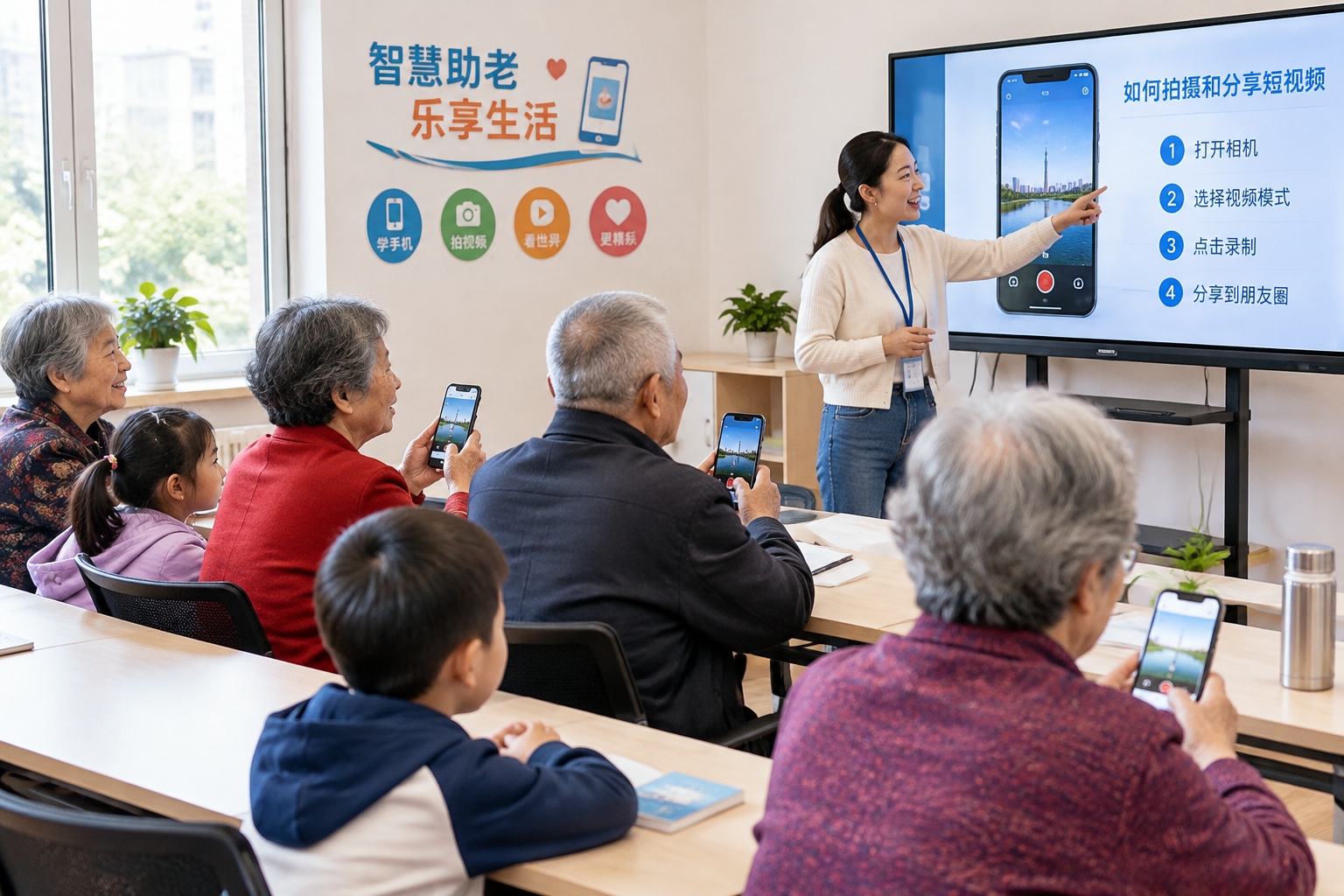
In Beijing’s Chaoyang District, a community center holds smartphone classes every Wednesday. This week’s session is a Double Ninth showcase: students present their short videos to classmates and family. “We started with three students,” the instructor says. “Now we have forty. Some bring their grandchildren.”
How Does This Compare Globally?
Seniors in the U.S., Europe, and Japan are also online, but the scale and style differ. In Japan, where the population is older, senior YouTubers exist but often focus on crafts or cooking. In the U.S., Facebook remains dominant for older users; TikTok skews younger. China’s short-video ecosystem—mobile-first, algorithm-driven, and intensely social—has pulled seniors in faster and more visibly.
Part of it is infrastructure: cheap smartphones, ubiquitous 5G, and super-apps that bundle messaging, payments, and video. Part of it is cultural: Chinese seniors often live near their children and grandchildren, but not always with them. Short video bridges physical distance while creating new digital communities.
The Heart of Double Ninth, Updated
Double Ninth has always been about connection—between generations, between people and nature. The tools have changed. The impulse hasn’t.
Wang’s son calls her after seeing her video. Li and his wife plan their next trip based on fan suggestions. Chen’s granddaughter sends back a video of her own, showing her Toronto apartment decorated with a paper chrysanthemum. “She learned that from me,” Chen says, smiling at her phone.
Respecting elders once meant serving tea and listening quietly. Today, it also means watching their videos, leaving comments, and asking them to teach you the latest editing trick. In China, growing old doesn’t mean fading away. It means hitting publish.
Start the discussion at forum.chinacomes.com