

A Saturday at the Old Film Studio
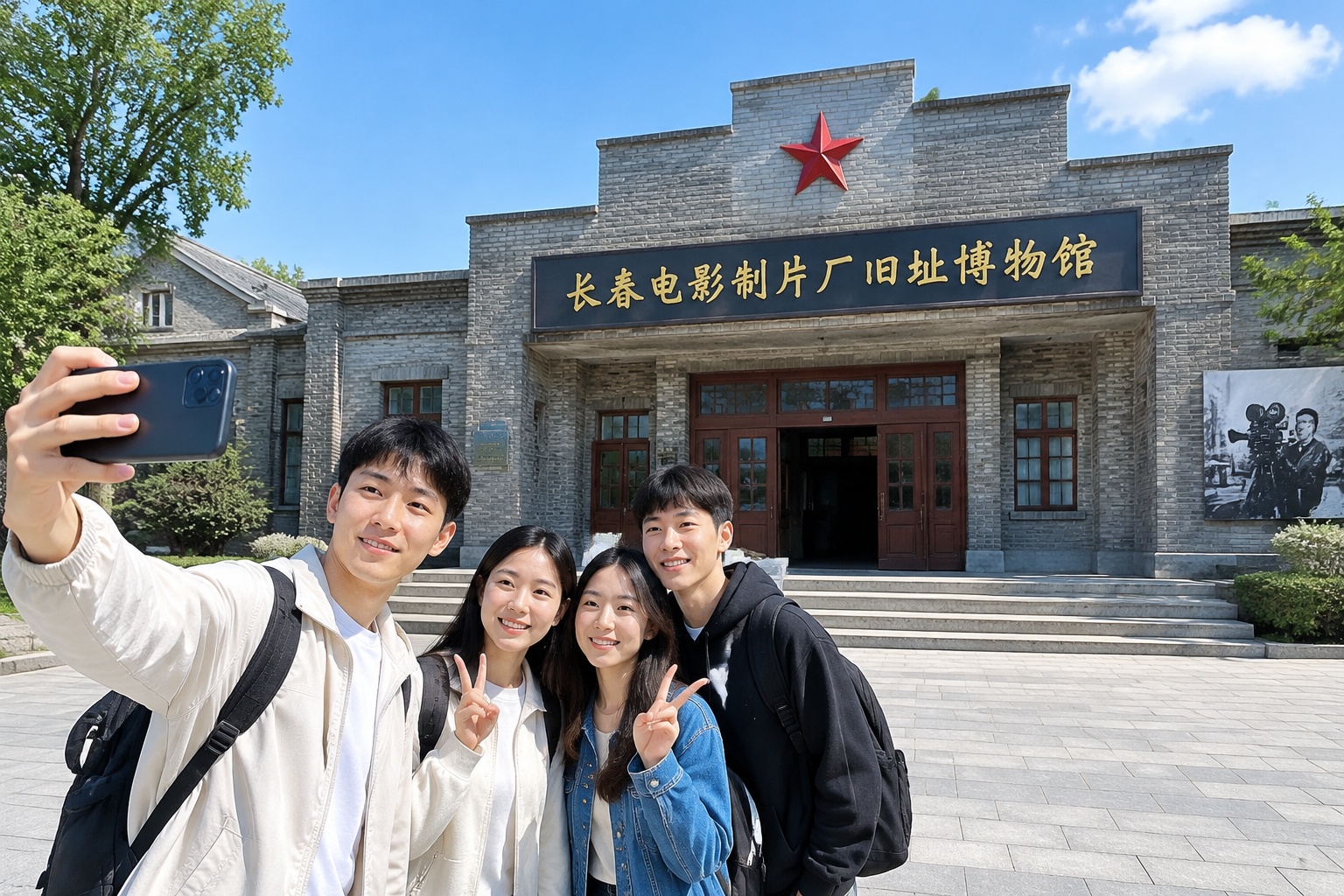
On a bright Saturday afternoon, a group of college students stand outside a modest gray building in northeastern China’s Changchun city. They hold up phones and take selfies under a red star emblem on the wall. Above their heads, a line of Chinese characters reads: “The Cradle of New Chinese Cinema.”
This isn’t a film set. It’s the former Changchun Film Studio, now partly a museum and partly a living cultural space. The students may not have watched the classic black-and-white films made here in the 1950s and 60s, but they order coffee from a themed café where the cups carry lines from those old movies, and they laugh as they pose with a life-sized statue of a famous film soldier.
If you want to understand how old Chinese institutions stay relevant, this place is a good starting point.
From “Manchukuo Film Association” to “New China’s Cradle of Cinema”
Changchun Film Studio’s history is tangled. The site was originally built in 1937 as the Manchukuo Film Association, a movie studio set up by the Japanese occupiers to produce propaganda films. After 1945, the Chinese Communist Party took over the studio and moved in equipment and personnel from other parts of China. In 1946, it became the Northeast Film Studio, later renamed Changchun Film Studio.
For decades, it was the most important film studio in China. It produced the first feature film of the People’s Republic, Bridge (1949), as well as beloved classics like On the Mongolian Steppe, Heroic Sons and Daughters, and Five Golden Flowers. These films weren’t just entertainment; they shaped how generations of Chinese people understood their own country. A famous line from one movie — “To the motherland, never say goodbye” — was quoted everywhere from school textbooks to weddings.
But by the 1990s, the studio struggled. China’s movie industry went through massive changes, and state-funded studios found it hard to compete with independent filmmakers and imported Hollywood blockbusters. For a while, Changchun Film Studio seemed like a dusty relic, surviving mainly on old memories and a handful of TV productions.
What Visitors Do Today
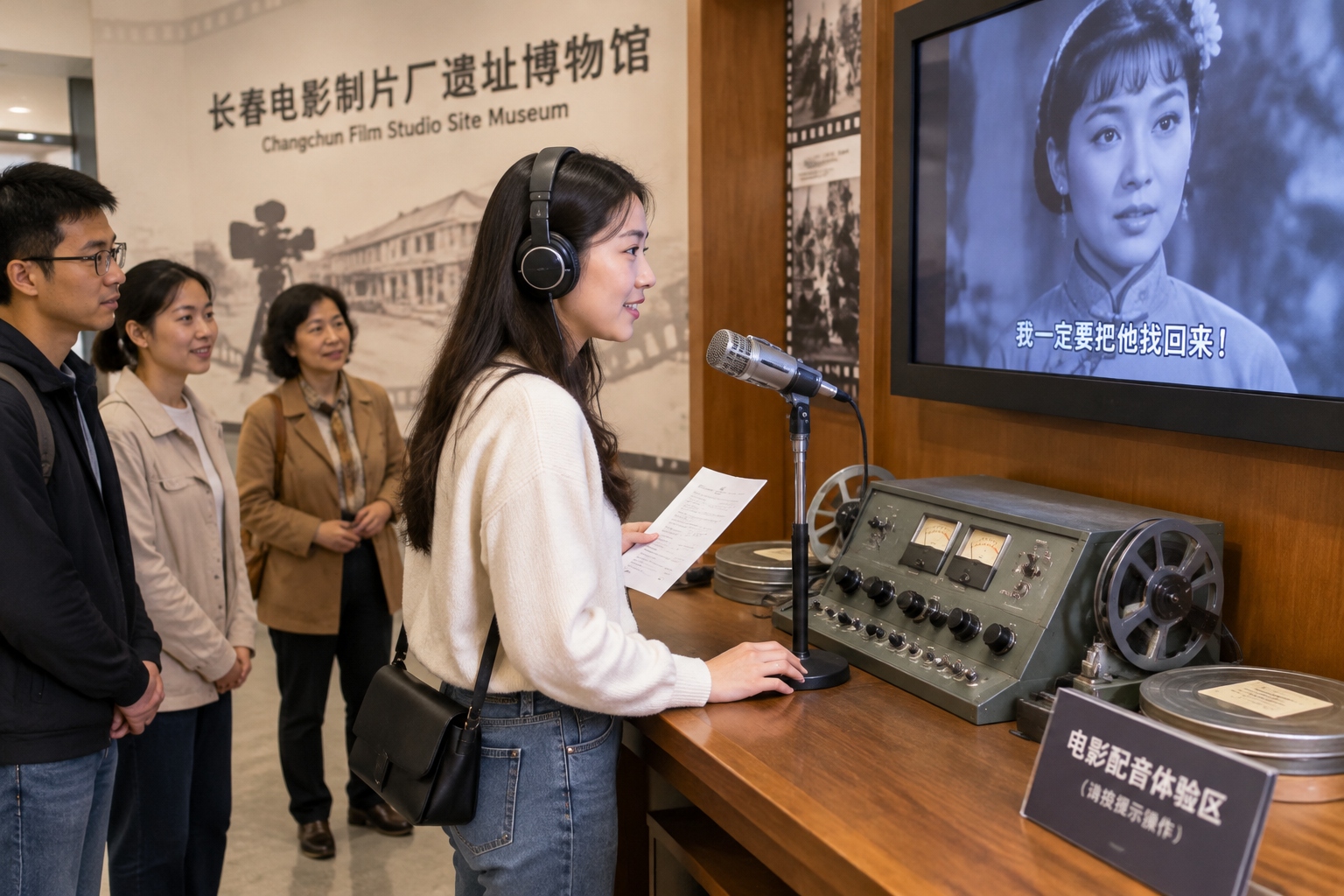
In 2014, the studio opened its old buildings to the public as the Changchun Film Studio Site Museum. Walking through the museum feels like stepping into a time machine, but not a dusty one. You can go into a preserved dubbing room, where sound engineers once synchronized dialogue for hundreds of films. You can stand inside a replica of a 1950s train carriage used in On the Mongolian Steppe. You can even record your own voice for a famous scene and send the audio file to your phone.
“My grandfather was a prop maker here,” says Liu Yang, a young guide at the museum. “He used to tell me stories about carving wooden guns and painting village walls for battle scenes. When I was in college, I heard the museum was hiring, so I applied. I never thought a film studio would feel like family.”
Liu says one of the biggest surprises is how young the crowd is. “Some visitors are film students. But many are just young people who like to dress up and take photos. They think it’s ‘aesthetic’ — a nice background for social media.”
The museum has embraced this trend. There are spots designed for photos: a red telephone used in a spy movie, an old projector room, a stairway covered with film posters from different eras. Visitors can rent period costumes and recreate scenes from Five Golden Flowers or Heroic Sons and Daughters.
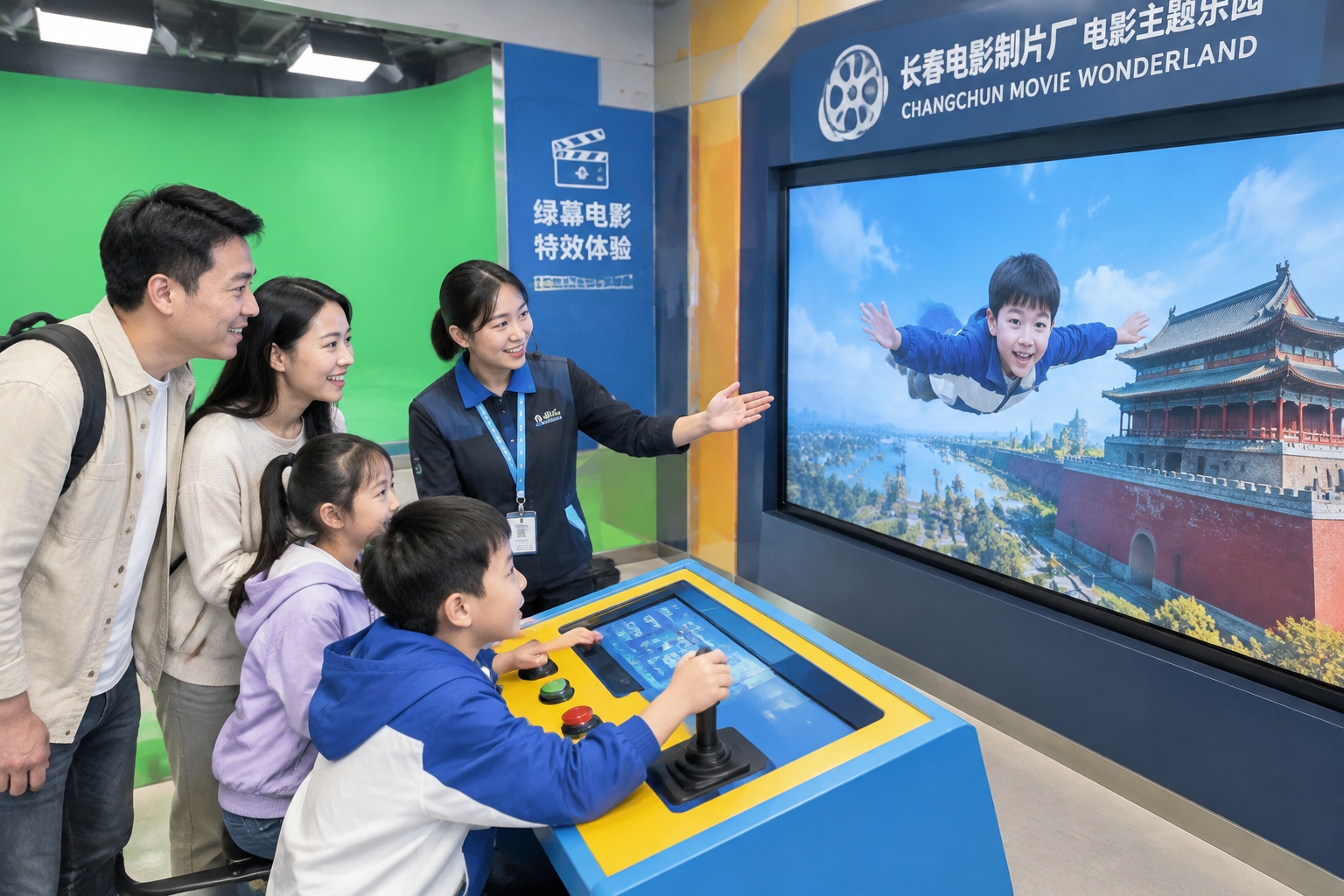
Beyond the museum, the studio also runs Changchun Movie Wonderland, a theme park that opened in 2005. It’s not as big as Universal Studios, but it has the same idea: let visitors experience film special effects. You can stand in front of a green screen and watch yourself “fly” like a kung-fu hero, or sit in a shaking chair while a giant 3D dragon breathes on your face. Local families love it; for many kids, it’s their first taste of how movies are made.
The Challenge of Staying Relevant
Not everything is smooth. The theme park’s facilities are aging, and some interactive exhibits feel dated compared to the hyper-polished attractions in Shanghai or Beijing. The museum curators are aware of this. They have brought in virtual reality headsets that let you “walk” through a 1940s film set, and they are working on an app that uses augmented reality to animate the old posters when you point your phone at them.
“We don’t want to be a place that just shows old stuff,” says Chen Wei, a senior manager at the museum. “We want to explain how movies are made, and how Chinese movies tell the story of our country. That’s why we keep adding interactive programs.”
There is also the question of how to keep the old studio connected to today’s film industry. Changchun Film Studio no longer produces films on its own, but it has become a co-producer on several recent blockbusters, including The Wandering Earth series. That might surprise people who thought the studio was history. Actually, it still owns a large archive of film materials and a library of classic titles, which gives it a seat at the table when new projects need footage, music, or research.
The Changchun Film Festival, held every two years since 1992, also brings filmmakers and audiences back to the city. During the festival, the museum stays open late, and you can meet actors, watch restored old films, or attend workshops on sound design.
Why It Matters for Visitors from Abroad
If you’re not Chinese, you might wonder: why should I care about a film studio in a northeastern city I’ve barely heard of? The answer is that Changchun Film Studio is a mirror of China’s own transformation. It started as a colonial tool, became a propaganda engine, then a cultural icon, then a forgotten hero, and now is reinventing itself as a public playground. That arc is not unique — you can see similar patterns in old studios in other countries — but the details are very Chinese.
What’s also Chinese is the way the studio blends education with fun. Visitors don’t just watch; they touch buttons, hold props, and make their own movie clips. The idea is that culture should not be a museum piece. It should be something you experience in your hands, your ears, and your camera roll.
And there is something genuinely moving about standing in a dubbing room and hearing the voices of actors who died decades ago, recorded on old magnetic tape. A young woman from Shanghai who came to see “the most retro spot in Changchun” told me she burst into tears after watching a restored clip from Heroic Sons and Daughters. “I didn’t grow up with these films, but my grandmother did. I FaceTimed her right after, and she started singing the theme song. That was the best moment of my trip.”
Changchun Film Studio is not likely to become China’s Hollywood. It’s smaller, colder, and far from the sea. But it doesn’t need to be. It has its own charm, which comes from age, memory, and a stubborn ability to try new things.
On your next trip to China, maybe you won’t go to Changchun. But if you do, step into the old studio. Walk through the fake streets and the real movie cameras. Order a coffee with a line from a 1960s movie printed on the cup. Point your phone at a poster and watch it move.

You’ll see that the future of Chinese cinema isn’t only about box office records and CGI monsters. It also lives in places where people who love stories keep finding new ways to tell them.
Start the discussion at forum.chinacomes.com