

A Bill, Read Twice
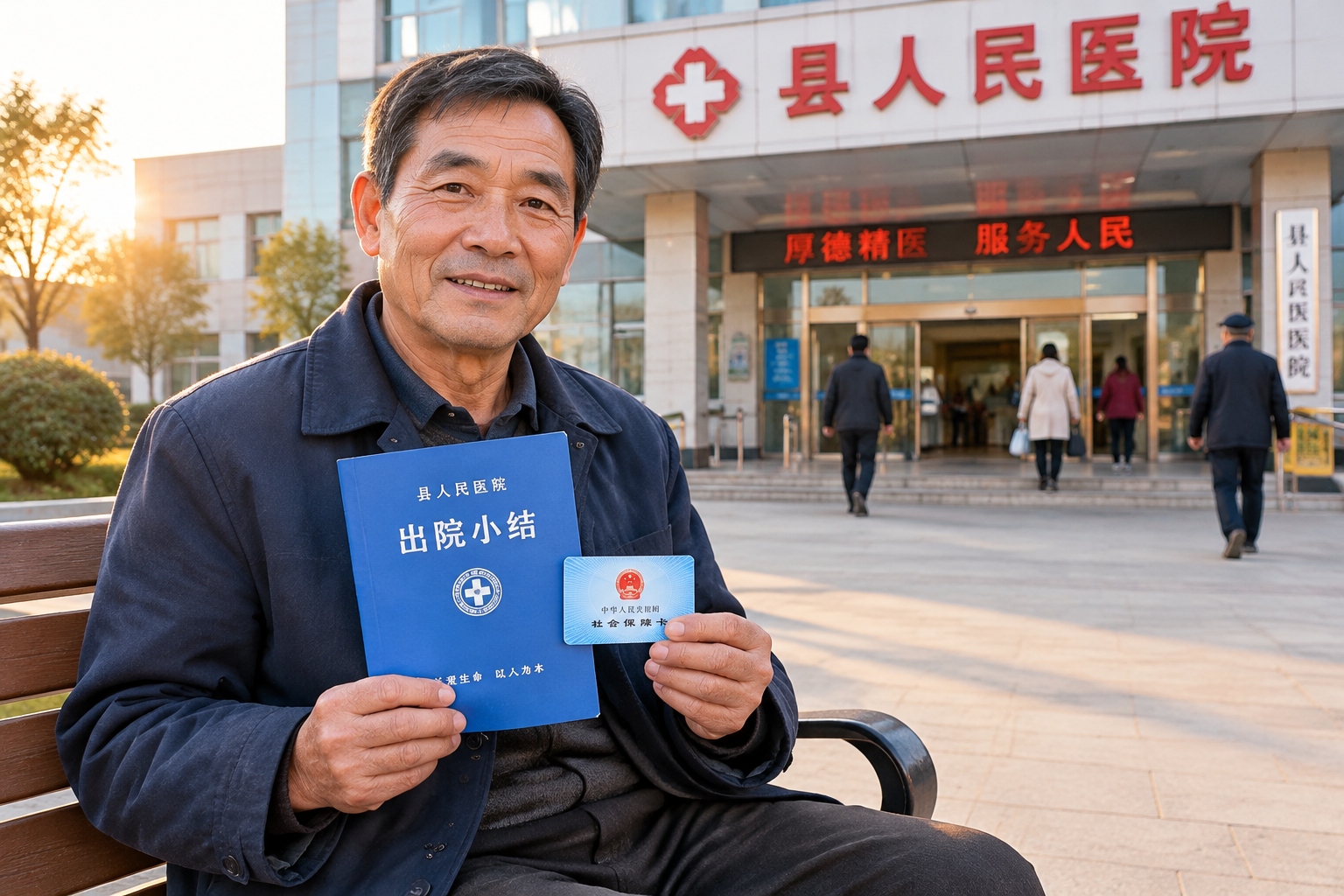
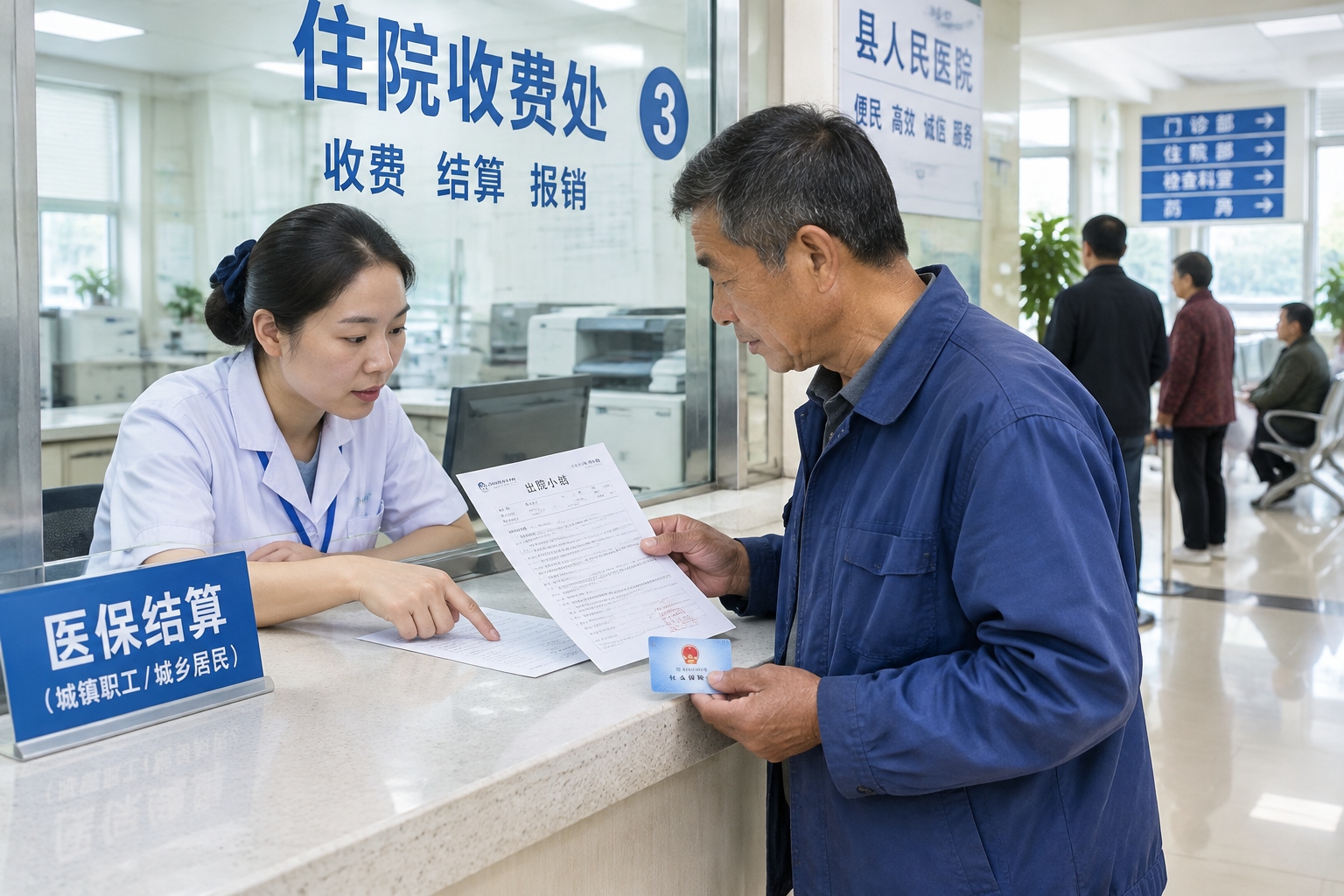
At the payment counter of the county hospital in Henan Province, Li Guohua held the blue discharge summary in both hands. The total was 46,280 yuan. He had braced himself for that number. But the clerk’s next sentence caught him off guard: ‘After insurance, you pay 9,740 yuan.’
Li, 58, is a farmer from a village outside Zhoukou, one of the most populous prefectures in central China. He had just spent ten days in the hospital after a heart stent procedure. A decade ago, the same condition would have meant selling his two pigs, borrowing from his brother, and years of frugal living. This time, he simply handed over his social security card.
In 2003, China launched the New Rural Cooperative Medical Scheme (新农合) to give rural residents basic health insurance. At first, coverage was thin: reimbursements often maxed out at 30 to 40 percent of hospital costs, and many county hospitals were not even covered. Farmers like Li had a saying: ‘Small illness? Drag it. Serious illness? Wait for fate.’
That began to change in 2016, when the rural scheme was merged with urban resident insurance into a unified Urban-Rural Resident Basic Medical Insurance. The government heavily subsidizes the premiums. Li pays 380 yuan a year, and his local government pays the same amount. In return, he gets coverage for hospital stays, critical illness, and most outpatient chronic care.
The Bill That Made the Difference
Li’s discharge summary listed every item: the stent (9,800 yuan), the drugs (7,340 yuan), the nursing and tests (14,120 yuan), and the intensive care unit for two nights (14,020 yuan). Total: 46,280 yuan. Under the basic insurance scheme, his hospital in Zhoukou applied a reimbursement rate of 68 percent. The hospital automatically deducted the covered portion, leaving a balance of 14,810 yuan.
Then came critical illness insurance — an extra layer that kicks in when annual medical costs exceed a threshold. For Li, the threshold is 12,000 yuan. Since his total bill was well above that, the critical illness insurance paid another 5,070 yuan. In the end, Li owed exactly 9,740 yuan.
He did not have to pay upfront. In China’s medical insurance settlement system, the hospital collects only the self-pay part at discharge. ‘I didn’t have to run between offices,’ Li says. ‘It was all done at the window.’
From Debt to Relief
Li still remembers his aunt’s illness in 2009. She had a hip replacement that cost 50,000 yuan. The family paid most of it out of pocket. For years, they ate vegetables from the field and did not dare buy meat. ‘In those days, going to the hospital meant going bankrupt,’ he says.
Today, rural residents have a three-layer safety net: basic insurance, critical illness insurance, and medical assistance for the poor. Li’s cousin, a low-income farmer, had a surgery for stomach cancer; after all three layers, the family paid less than 6 percent of the total cost. A 2023 study by Peking University’s China Center for Economic Research found that the incidence of catastrophic health spending among rural residents dropped by nearly half between 2013 and 2020.
Village Clinics and Cheaper Medicine
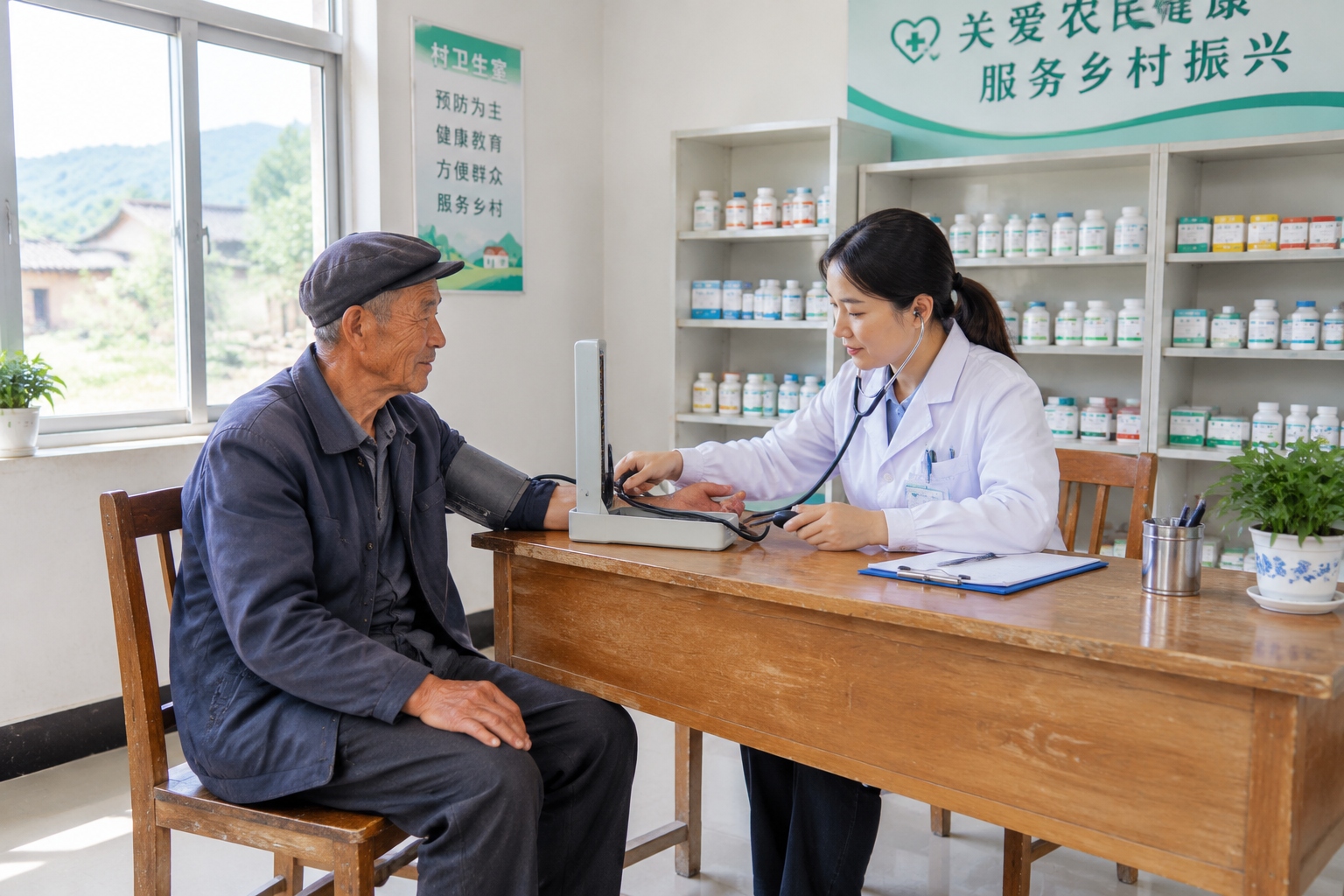
The change is visible at the village level too. Li’s village clinic was renovated in 2020. It now has a separate room for chronic disease management. The village doctor, Chen Xiaoyan, keeps a notebook with 347 villagers who have hypertension or diabetes. She calls them every month to remind them to pick up their medicine.
The medicine price is one of the biggest victories of China’s national bulk procurement program. Since 2018, the government has organized multiple rounds of volume-based procurement, called ‘drug negotiation’ in Chinese. A month’s supply of amlodipine, a common blood-pressure drug, now costs about 2.8 yuan, down from 28 yuan before. ‘More people are willing to take medication consistently,’ Chen says. ‘In the past, many would only come when they were seriously ill.’
Family Doctor Contracts
Li and his wife are both enrolled in the family doctor contract service. A county doctor, a village doctor, and a public health worker form a team. They visit the village every month to measure blood pressure, review prescriptions, and give lifestyle advice. It is not perfect, but it is a shift from passive treatment to active management.
Cross-Province Settlement
Another major milestone is direct settlement outside one’s home province. Li’s daughter works in Guangzhou, 1,200 kilometers away. Last year, she took her mother to an outpatient clinic in Guangzhou. Li’s wife used her Henan social security card, and the hospital settled the bill directly through the interprovincial clearing system. ‘We didn’t have to go home to reimburse,’ Li says, shaking his head. ‘We just paid the self-pay part.’
According to the National Healthcare Security Administration, as of 2023, more than 90 percent of county-level hospitals nationwide have joined the cross-province settlement network. That matters for hundreds of millions of migrant workers who live and work far from their registered hometowns.
What Remains Difficult
Li is careful not to overstate the progress. His county hospital is a second-tier hospital; the nearest top-tier (level 3A) hospital is in Zhoukou city, an hour away by bus. For complex conditions like advanced cancer, patients often need to go to provincial capitals or Beijing. Even with reimbursement, travel, accommodation, and high out-of-pocket costs for drugs outside the basic list can be a heavy load.
There are also regional disparities. In wealthier provinces, reimbursement rates can be 10 to 15 percent higher than in poorer western regions. A 2022 report from the Chinese Academy of Social Sciences noted that out-of-pocket medical spending still accounts for about 28 percent of total health expenditures in rural areas — high by international standards, but down from 50 percent two decades ago.
Mental health and elder care are newer challenges. Li’s village has about 800 residents, and nearly a third are over 65. Many live alone. The family doctor visits help, but they cannot replace specialized geriatric care.
A Bill He Can Live With
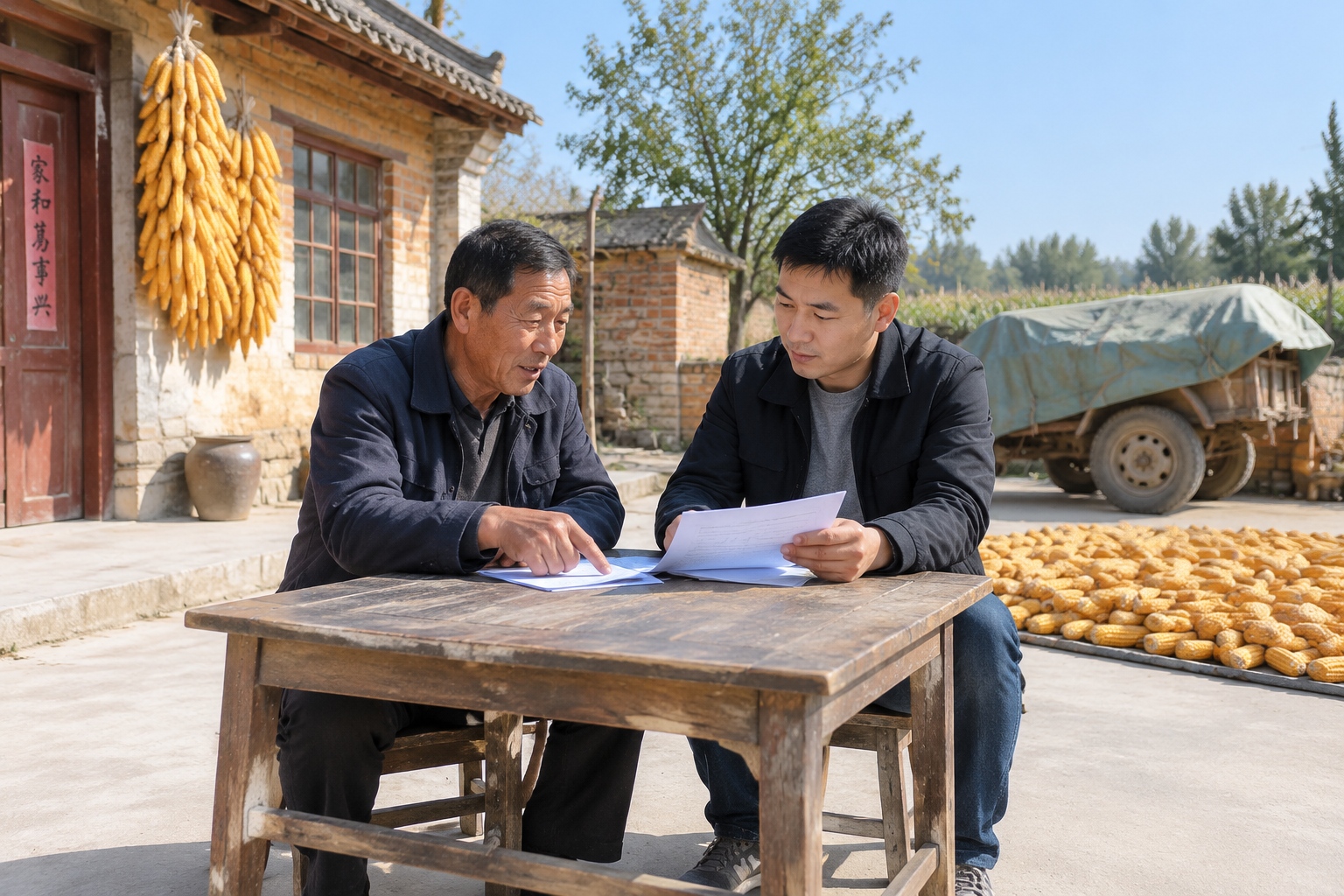
Outside the hospital, Li did the math again with his son. 46,280 yuan total, 9,740 yuan self-pay. That is still four months of income from his five acres of wheat and corn. But it is not a catastrophe. He does not have to sell the land, nor borrow from relatives.
His son, 27, works at an electronics factory in the provincial capital. He is part of a generation that may never farm, but for now, the family’s social security card is their safety net. ‘At least we are not afraid of getting sick anymore,’ Li says quietly. ‘That is a huge change.’
Start the discussion at forum.chinacomes.com