

Two Januarys in the Same Country
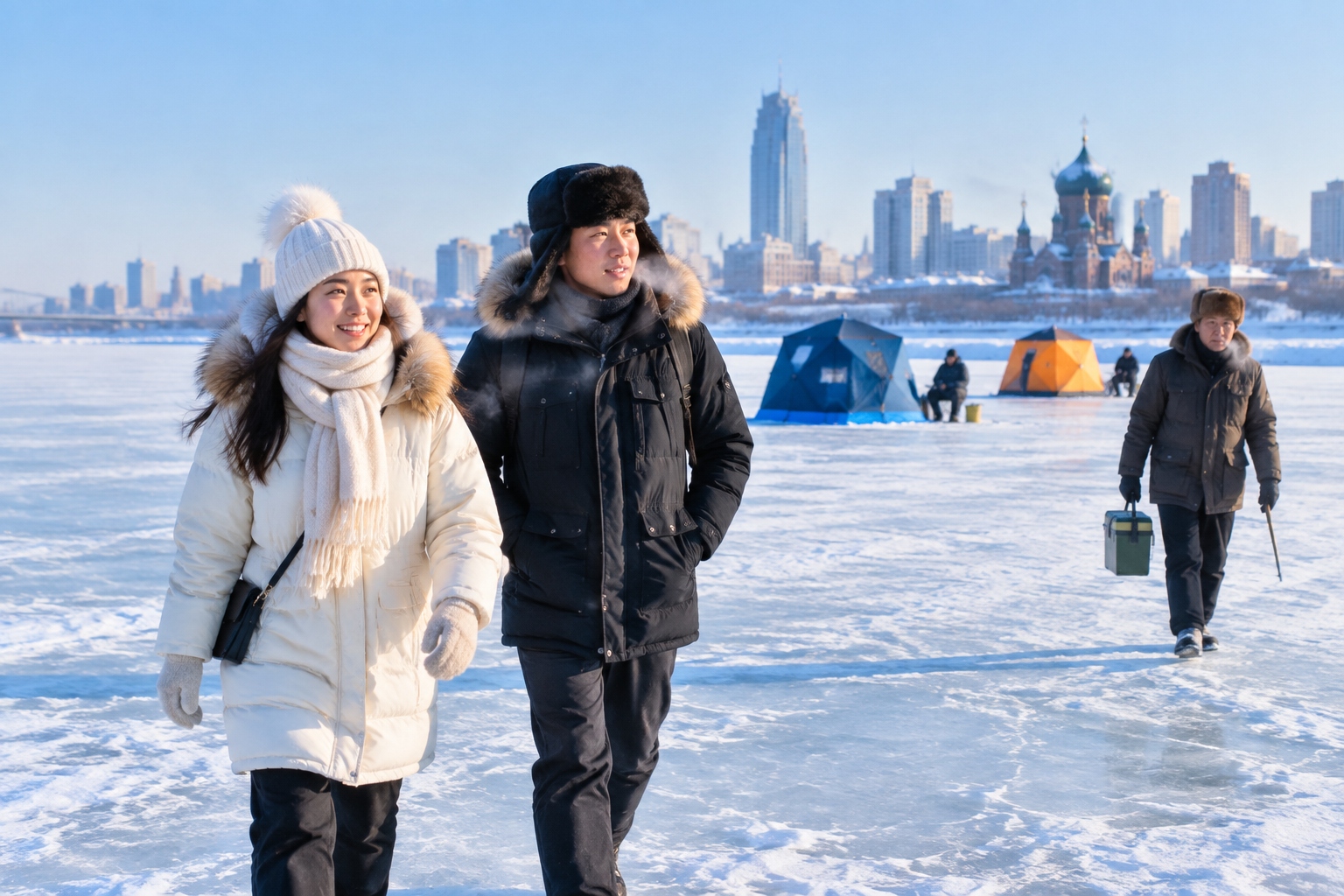
On a normal January morning in Harbin, in China’s far northeast, the temperature is often around -20°C. On the same morning in Sanya, on the southern island of Hainan, it is around +24°C – beach weather, with people swimming before breakfast. The gap between them is roughly 45 degrees, and both cities run on the same clock.
That clock is one of the stranger consequences of Chinese geography. Beijing time (UTC+8) applies from the Pacific coast all the way to the border with Central Asia. Urumqi, the capital of Xinjiang, sits about 2,400 kilometres west of Beijing; in midwinter the sun rises there close to 10 a.m. on the official clock, and many local businesses quietly keep their own schedule two hours behind it.
China covers roughly 9.6 million square kilometres – about the same as the United States, a little smaller than Canada, larger than Australia. It runs from around 18°N on Hainan to 53.5°N at Mohe, a north-south span comparable to the distance from Guatemala to the Canadian border. Latitude alone does not explain the country’s weather, though. Add altitude – the Tibetan Plateau averages over 4,000 metres – plus a coastline facing the Pacific monsoon, and you get one of the widest ranges of climate found inside a single set of borders anywhere on earth.
A Temperature Range That Rivals a Continent
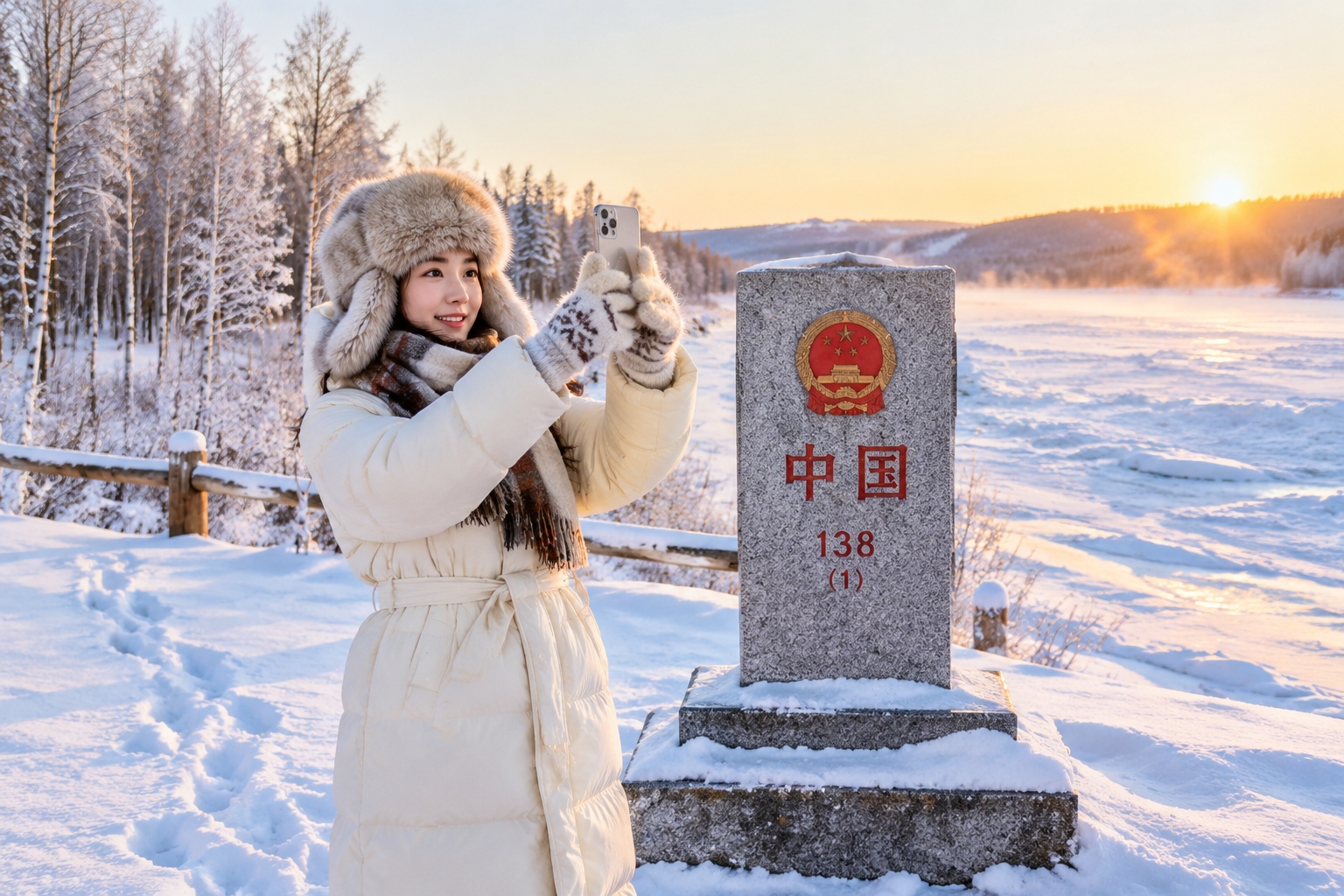
Mohe, a city of roughly 50,000 people in Heilongjiang province, is the coldest place in China. On 22 January 2023, its observatory recorded -53.0°C, the lowest temperature ever measured in the country, breaking a record that had stood since 1969. Winter there runs from October to April, the river freezes more than a metre thick, and schools cancel classes when it drops below -40°C.
At the other end is the Turpan Depression in Xinjiang, a basin 154 metres below sea level and ringed by desert. Air temperatures there have passed 50°C, and ground-surface readings have gone above 80°C – hot enough to bake an egg on the pavement, as visitors routinely demonstrate. Between China’s record low and its record high sits a spread of well over 100 degrees Celsius, comparable to the full range recorded across the entire contiguous United States.
Rainfall is just as uneven. The national average is around 630 millimetres a year, but Toksun County, in the Turpan Basin, averages under 10 millimetres – in some years barely one. Parts of Hainan and Medog County in southeastern Tibet receive more than 2,000 millimetres. In practical terms, that is the difference between farming with karez irrigation channels that tap underground water, as Turpan’s grape growers have done for centuries, and farming rice in fields that are never dry.
The Line That Splits Winter in Two
If you want to understand how Chinese people actually experience climate, look at a map of heating pipes. Geographers draw a line from the Qinling Mountains in Shaanxi east to the Huai River in Anhui. It roughly follows the January 0°C isotherm and the 800-millimetre rainfall line, and it divides the country into two very different winters.
North of that line, cities run central heating. In Harbin, the official heating season runs from 20 October to 20 April – six months – and apartments are commonly kept above 20°C. People wear T-shirts indoors while it is -25°C outside. Nationally, the system covers more than 10 billion square metres of urban floor space, and it has been heavily converted from coal to natural gas over the past decade. That conversion is one reason Beijing’s average PM2.5 concentration fell from 89.5 micrograms per cubic metre in 2013 to around 30 in recent years.
South of the line, there is no central heating at all – not in Shanghai, not in Wuhan, not in Hangzhou. January averages 4-5°C in Shanghai, but indoor temperatures in a poorly insulated apartment can sit near 10°C, and a sunny day outside often feels warmer than the living room. University students in Wuhan study in puffer jackets; families buy electric heaters, thick slippers and heated blankets. Every winter, the question of whether to extend central heating south resurfaces in Chinese media, and every year the answer is roughly the same: the pipes would cost hundreds of billions of yuan and the heating season would be short. Instead, southerners buy air conditioners with heating modes – the same machines they use in July.

What the Climate Decides About Food
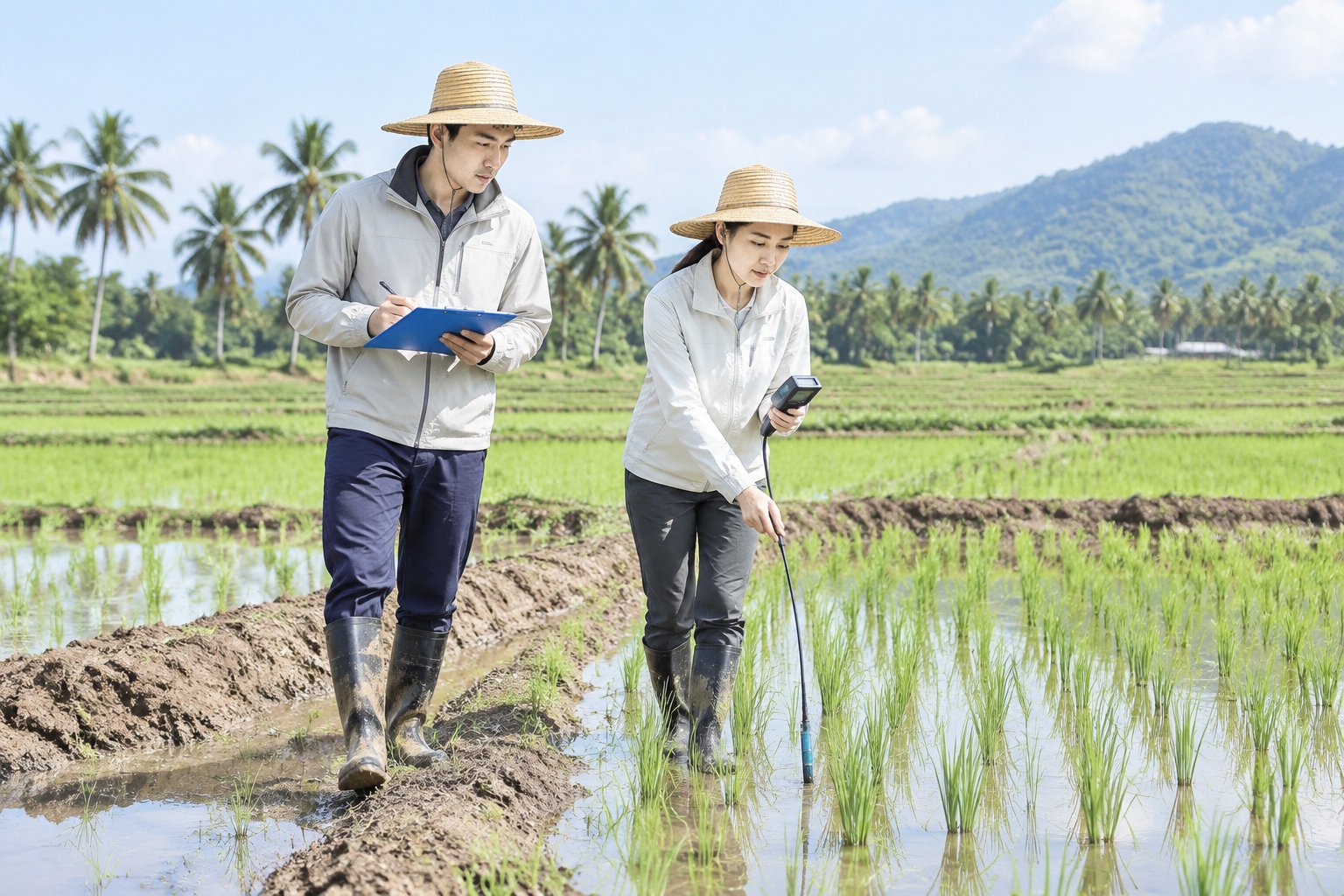
Climate also shapes what ends up on the table, and where it is grown. Hainan has enough heat and water to grow two or three rice crops a year. Heilongjiang, at the other end of the country, grows one – but on a vast scale, producing about 78 million tonnes of grain in 2023, roughly one of every nine tonnes grown in China.
The two ends are connected. Since the 1950s, plant breeders have used Hainan as a winter nursery, a practice known as nanfan. Because the island stays warm in January, they can grow an extra generation of rice or corn each year instead of waiting for spring, cutting years off the breeding cycle. More than 70 percent of the new crop varieties approved in China in recent decades passed through Hainan at some stage. In winter the traffic runs the other way too: Hainan and Yunnan supply much of the fresh vegetables eaten in northern cities in January, a supply chain known as “southern vegetables shipped north.”
Heating, Cooling and the Wires in Between
Keeping a country this climatically uneven comfortable takes an enormous amount of energy, and demand peaks in different places at different times. Chinese cities now have more than 130 air conditioners per 100 urban households; rural households have roughly 70 per 100. In the summer of 2024, the national power load crossed 1.45 billion kilowatts for the first time – roughly double the peak demand of the United States.
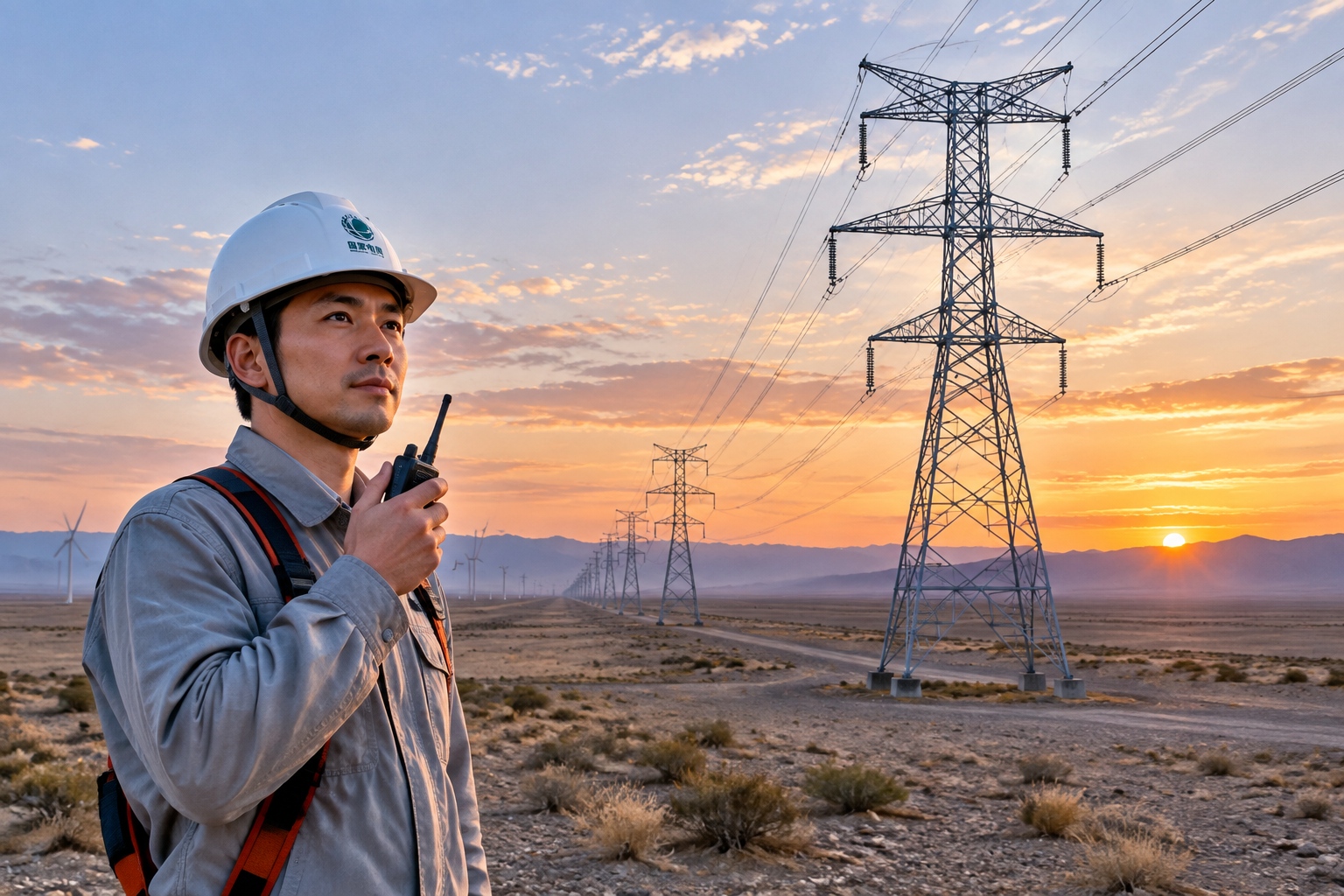
The grid that carries that load is the physical answer to the country’s climate problem. Power generated from coal, wind and solar in Xinjiang, Gansu and Qinghai is shipped east along ultra-high-voltage direct-current lines. The Changji-Guquan line runs 3,324 kilometres from Xinjiang to Anhui at plus-or-minus 1,100 kilovolts – the highest voltage in commercial operation anywhere – and can deliver 12 gigawatts, roughly the output of a dozen large power stations. It exists because the places with the best sun and wind are far from the places with the most people and the most air conditioners.
When Extremes Get More Extreme
China’s climate has always been extreme. What is changing is that the extremes are intensifying, and people notice it in very specific ways. The national average temperature in 2024 was 10.92°C, the warmest since reliable records began in 1961 and 1.03°C above the 1991-2020 average. The Tibetan Plateau is warming at roughly twice the global rate, and the glaciers that feed the Yangtze and Yellow rivers have been shrinking for decades.
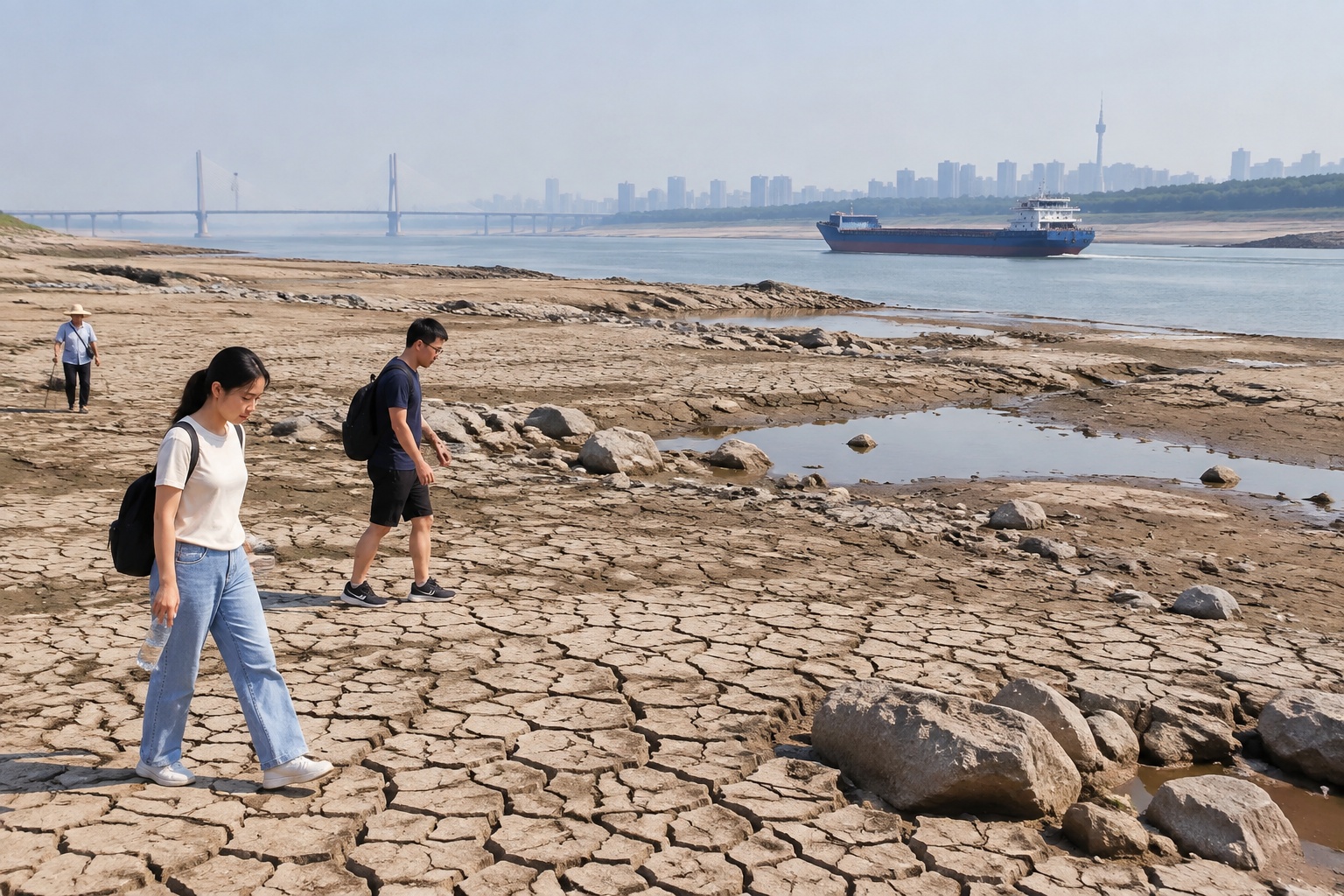
Rain has become more concentrated. On 20 July 2021, Zhengzhou, a city of 12 million people, recorded 201.9 millimetres of rain in a single hour – a national record – and the floods that followed killed at least 380 people across Henan province. In late July 2023, a storm around Beijing’s Changping district dropped 744.8 millimetres in about 80 hours, the heaviest rainfall in the capital region since records began in 1883. The summer before that, a drought along the Yangtze pushed the river to record lows near Wuhan, and in Chongqing the temperature reached 45°C. Factories in Sichuan were asked to pause production for several days so electricity could be redirected to households.
In the far north, the change looks different again. Permafrost that has supported buildings in parts of Heilongjiang and Inner Mongolia for generations is thawing, buckling roads and cracking foundations. Mohe, the town that recorded -53°C, now sees shorter and less reliable freezes on the river its winter tourism depends on.
What It Means for Anyone Trying to Understand China
The practical consequence is that “China” is a difficult unit of analysis. A clothing brand that plans its winter line for Shanghai will be wrong in Harbin and irrelevant in Sanya. A heating company, a solar developer, a logistics firm or a public health authority has to plan for a country that contains a tropical island, a desert basin below sea level, a subarctic forest and a plateau where the air is thin enough to change how engines burn fuel.
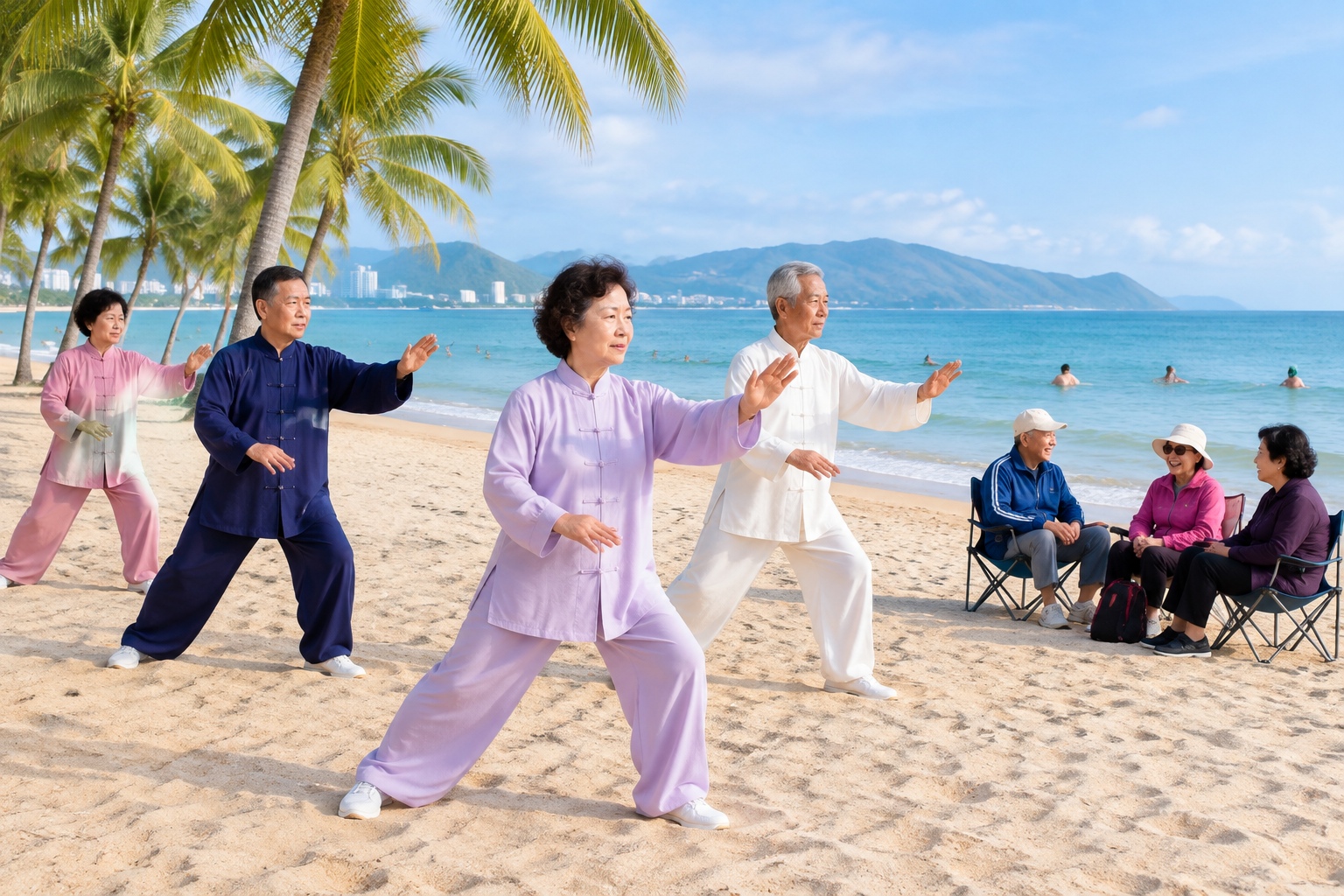
People move with the seasons, too. Each winter, hundreds of thousands of retirees from the northeast travel to Hainan and Guangxi to escape the cold. They are called “migratory birds,” and whole neighbourhoods in Sanya fill with Mandarin spoken in northeastern accents. In the other direction, Harbin’s ice-and-snow festival drew 3.04 million visitors during the 2024 New Year holiday alone, generating 5.9 billion yuan. Two ends of the same country, selling their winters to each other.
Seen from abroad, China is often described in single adjectives – hot, cold, polluted, greening, booming, slowing. Living inside it produces a different sense of scale. The country is roughly the size of a continent, and like a continent it does not have one climate, one winter, or one answer to what the weather is doing. It has several, running at the same time, on the same clock.
Start the discussion at forum.chinacomes.com