

A Bowl of Noodles That Wakes Up Guiyang
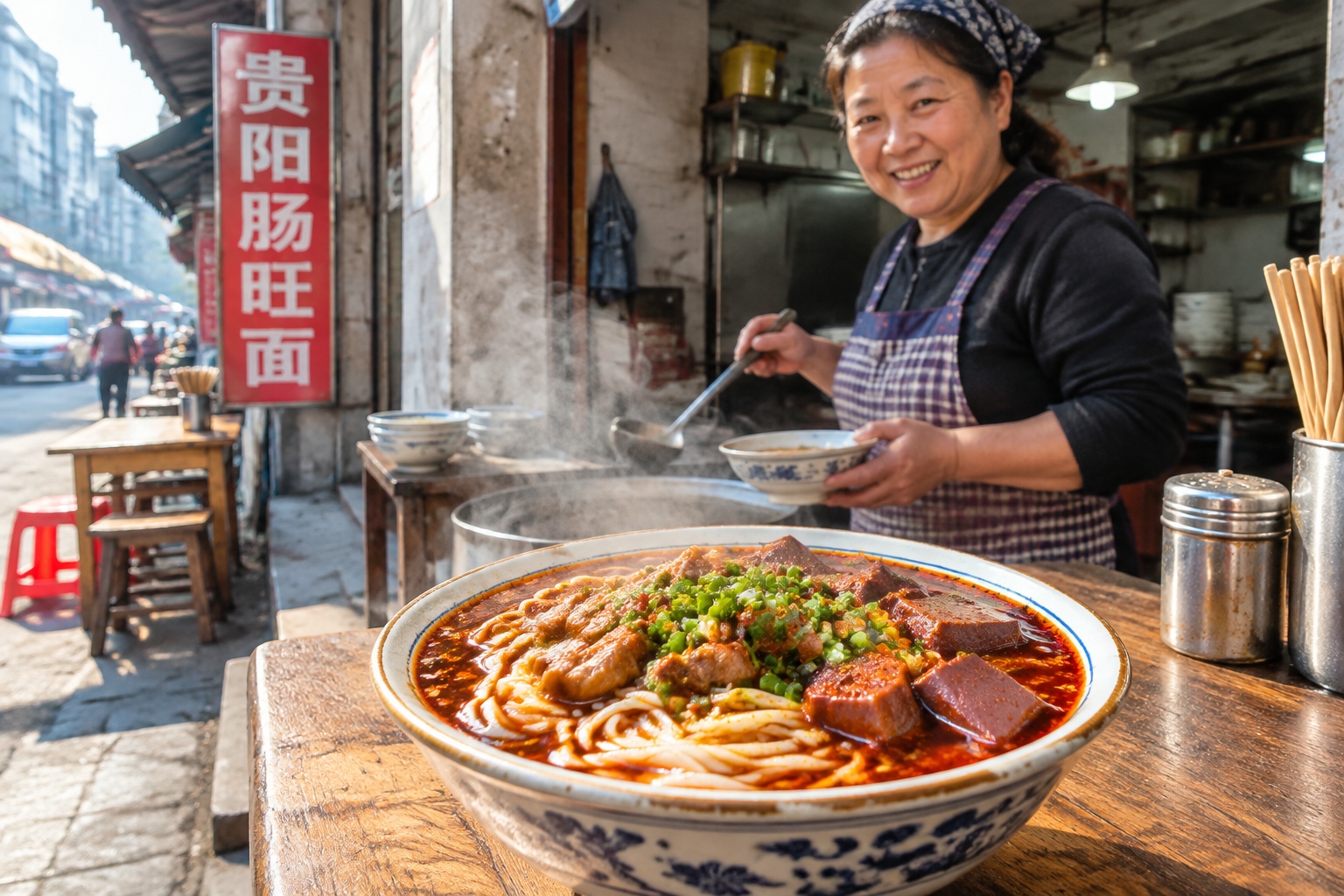
At 7 a.m. in Guiyang, the capital of Guizhou province, the air is still damp and cool. On a side street off Zhonghua Road, a small noodle shop is already packed. The owner, a woman in her fifties, lifts a handful of fresh egg noodles into a bamboo strainer, dips it into boiling water for a few seconds, and slides it into a bowl. Then come the toppings: chunks of braised pig intestine, cubes of congealed pig blood, crispy fried pork bits, and a spoonful of fiery red chili oil. Finally, a ladle of hot bone broth. This is肠旺面 (changwang mian), Guiyang’s signature breakfast.
The name says it all: “chang” means intestine, “wang” means blood, and “mian” means noodles. For locals, it is not just food; it is a morning ritual. “I eat this at least four times a week,” says Chen Wei, a 32-year-old taxi driver, slurping his noodles. “It’s sour, spicy, and rich. It wakes you up better than coffee.”
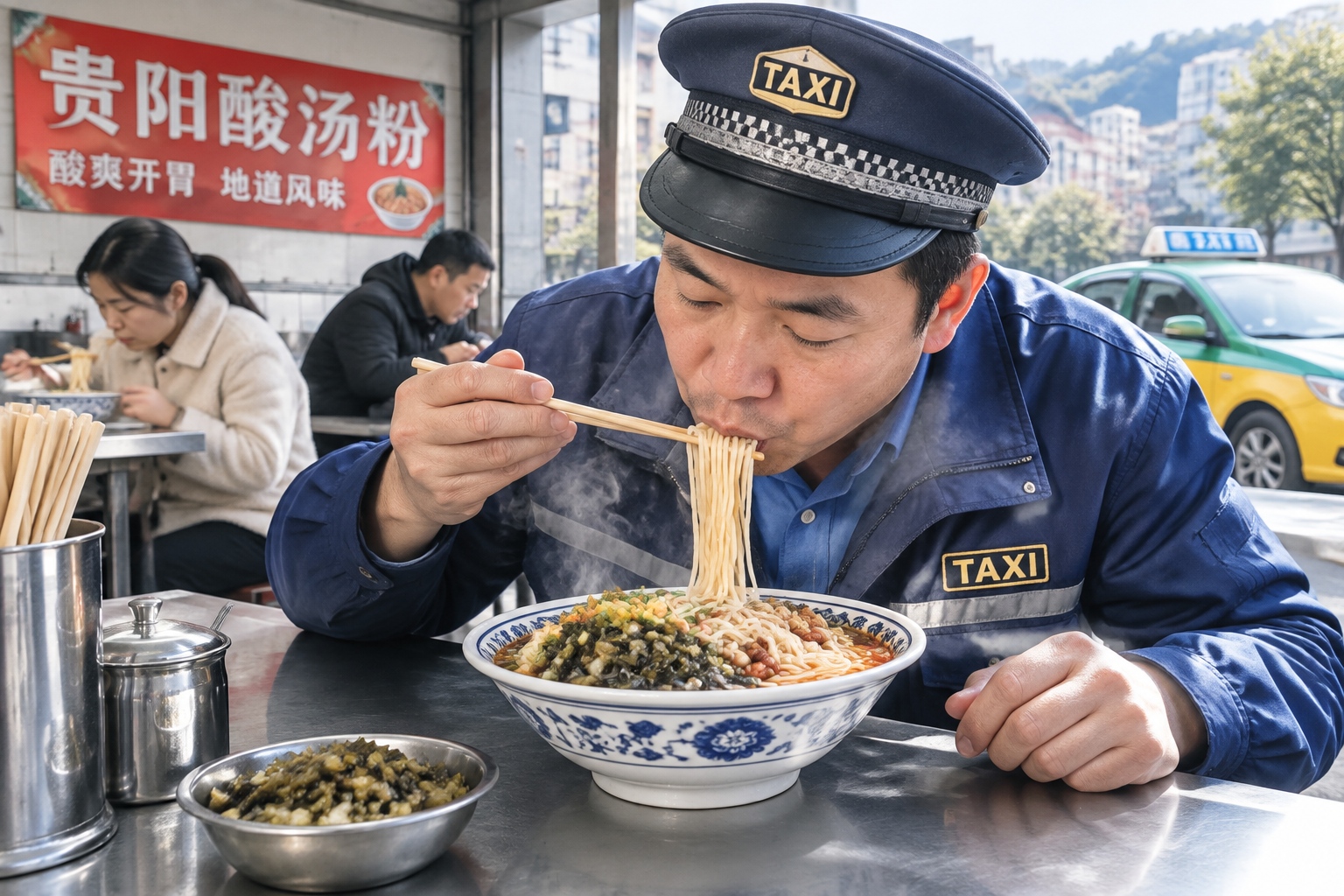
Not far away, another breakfast staple is making its own noise: sour rice noodles, or 酸粉 (suan fen). The noodles are fermented slightly, giving them a tangy flavor that pairs with pickled vegetables, peanuts, and a splash of sour soup. For many Guiyang residents, a bowl of suan fen is the taste of home. “When I was a kid, my grandmother made it every Sunday,” says Liu Fang, a 28-year-old office worker. “Now I buy it from a street stall on my way to work. It’s quick, cheap, and comforting.”
Long-Table Feasts in the Miao Mountains
Drive three hours southeast of Guiyang, and the landscape changes. Skyscrapers give way to terraced hills and wooden villages. This is the homeland of the Miao people, one of China’s largest ethnic minority groups. Here, hospitality is measured in bowls and songs.
In villages like Xijiang, a long-table feast (长桌宴) is a tradition that dates back centuries. Tables are lined up end to end along a village path, forming a continuous banquet that can stretch for hundreds of meters. Everyone sits together—families, neighbors, guests. The food is simple but deeply flavored: sour fish soup (酸汤鱼), smoked pork, sticky rice, and pickled vegetables.
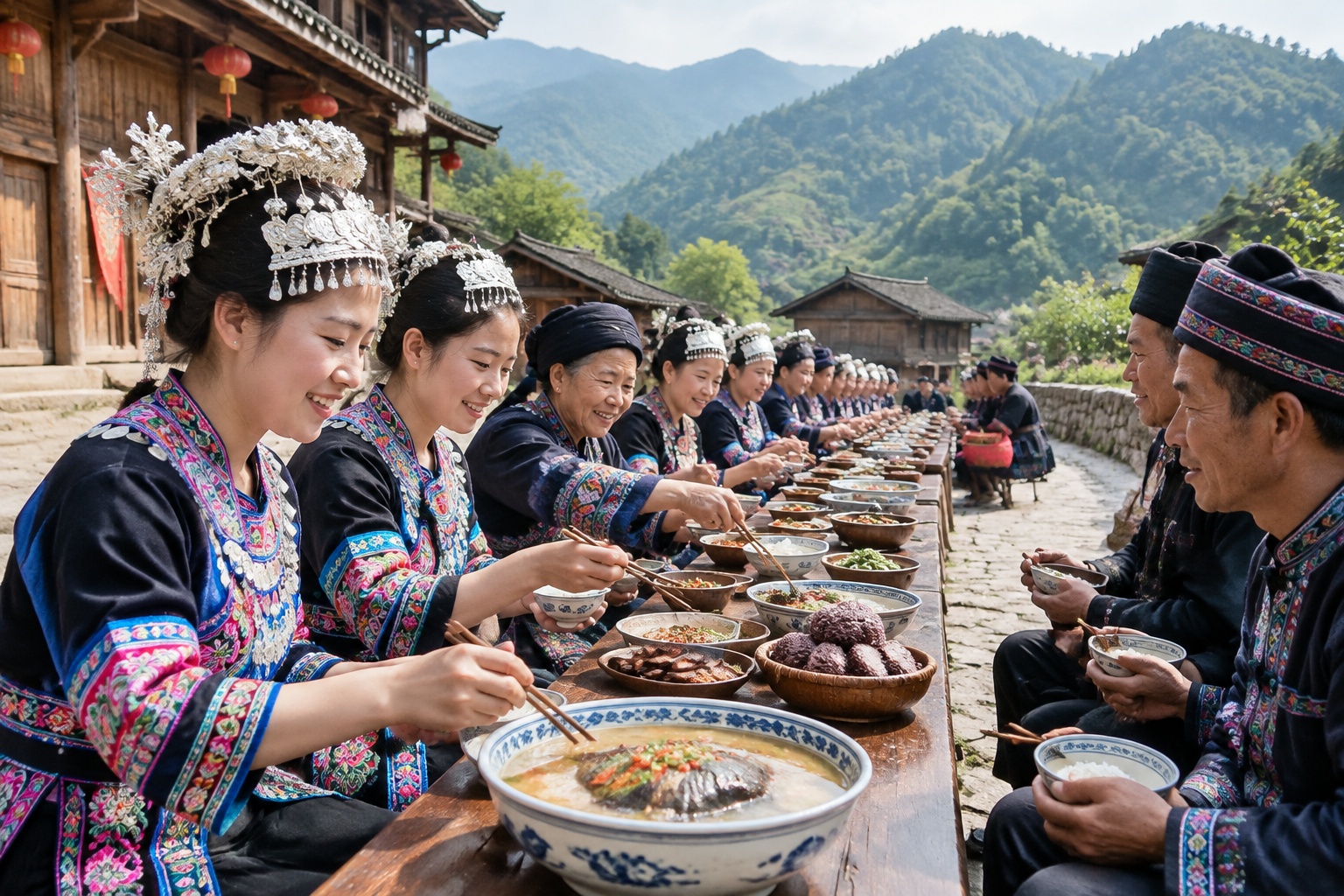
The centerpiece is the sour soup. Made by fermenting rice water or tomatoes with wild herbs, it has a bright, tangy taste that cuts through the richness of the meat. “We drink it like tea,” says Wang Mei, a 45-year-old Miao woman who helps organize the feasts. “It cools you down in summer and warms you up in winter. And it keeps the food from spoiling in the humid climate.”
That last point is key. Guizhou is one of the most humid provinces in China, with average annual rainfall of about 1,200 millimeters. Before refrigeration, fermentation was a practical way to preserve food. Over time, it became a signature flavor. Sour soup, pickled vegetables, and fermented rice are not just culinary choices; they are adaptations to the mountain environment.
The Songs That Come With the Feast
No long-table feast is complete without the drinking songs. As guests eat, young Miao women walk behind them, holding small cups of rice wine. They sing in the Miao language—melodic, repetitive, and impossible to ignore. If you don’t drink, they keep singing. If you do, they sing louder. It is playful, not aggressive. The goal is to make you feel welcome, not to get you drunk.
“The first time I experienced it, I was nervous,” says David, a British tourist who visited Xijiang last spring. “But everyone was laughing. It felt like a big family dinner, just with more singing and better soup.”
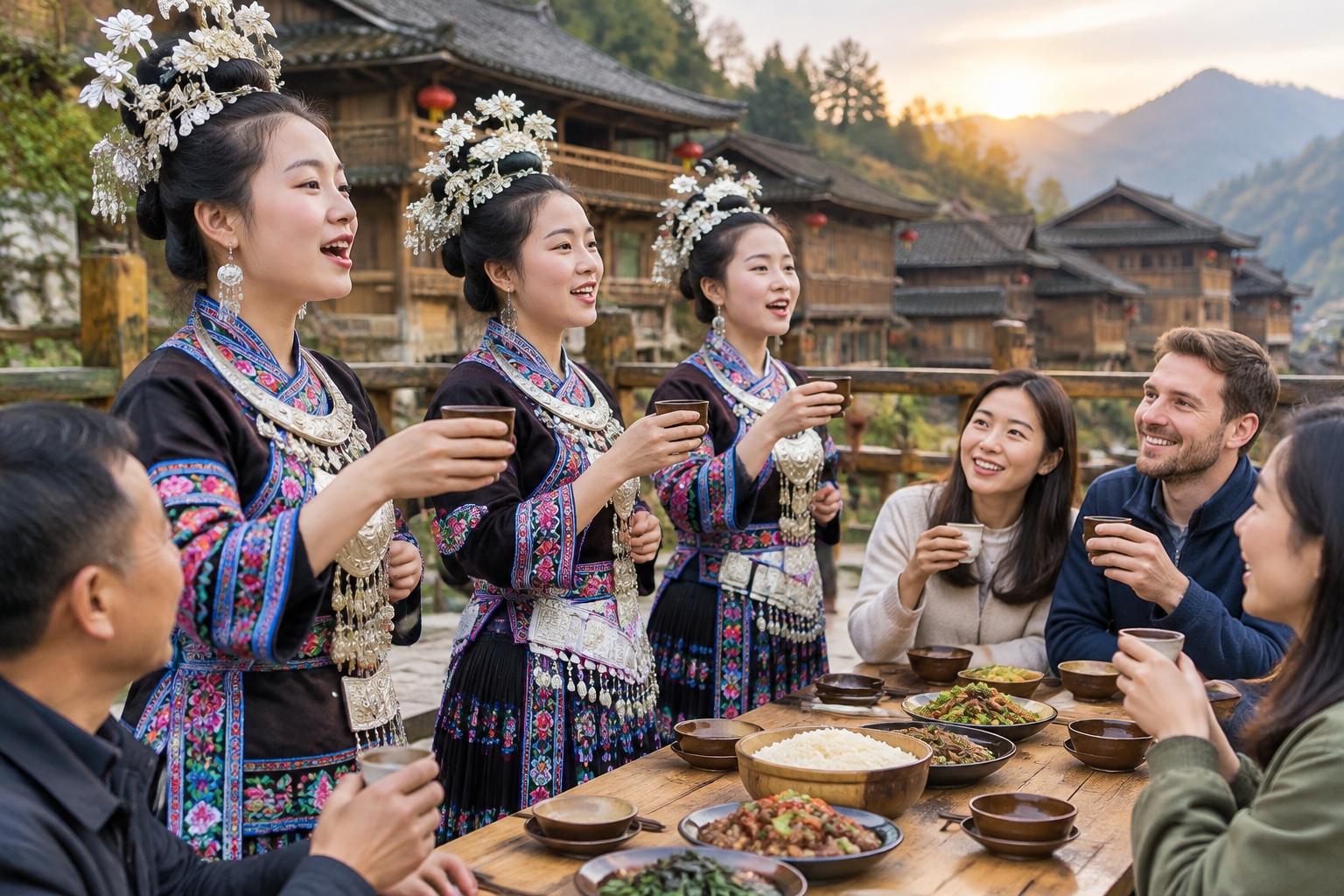
For many overseas visitors, the long-table feast recalls other communal food traditions: the Basque txoko, the Italian sagra, or the Southeast Asian “family-style” meal where dishes are shared. But the Miao version has its own rhythm. The singing, the rice wine, the sour soup—it is a full sensory experience, not just a meal.
Village Sports and the New Rural Buzz
In recent years, Guizhou has become famous for something unexpected: village sports. In Rongjiang county, the “Village Super League” (村超) draws thousands of spectators to watch amateur soccer teams from nearby villages. In Taipan village, the “Village BA” basketball tournament has become a national phenomenon. These events are not staged for tourists. They are organized by locals, for locals—but visitors are welcome.
On game days, the atmosphere is electric. Farmers, shopkeepers, and students put on jerseys and play under floodlights. The crowd bangs drums, waves flags, and cheers in local dialects. Food stalls sell grilled skewers, sour noodles, and rice wine. It feels like a county fair, a music festival, and a sports match rolled into one.
“We never expected this much attention,” says Yang Lin, a 26-year-old volunteer who helps run the Village BA. “But it’s good. It brings people together. And it shows that rural China is not just about farming—it’s about fun, too.”
What This Means for Outside Eyes
If you come from Southeast Asia, Guizhou’s sour-and-spicy breakfasts might feel familiar. Thai som tam, Vietnamese pho with lime and chili, Malaysian asam laksa—these share a love of acid and heat. But Guizhou’s fermented sourness is different. It is deeper, more earthy, and often comes from rice rather than citrus. The result is a flavor that is less bright, more complex.
If you come from Europe or North America, the long-table feast might remind you of a harvest festival or a community potluck. The difference is the scale and the structure. In a Miao village, the feast is not a special occasion; it is a regular part of social life. And the singing is not a performance; it is an invitation.

Guizhou is not an easy place to summarize. It is one of China’s poorest provinces, yet it has a rich cultural heritage and a growing reputation for grassroots energy. The food is sour and spicy, the mountains are steep and green, and the people are quick to laugh. For travelers willing to go beyond Beijing and Shanghai, it offers a different kind of China—one where breakfast is a bowl of noodles, and dinner is a song.
Start the discussion at forum.chinacomes.com