
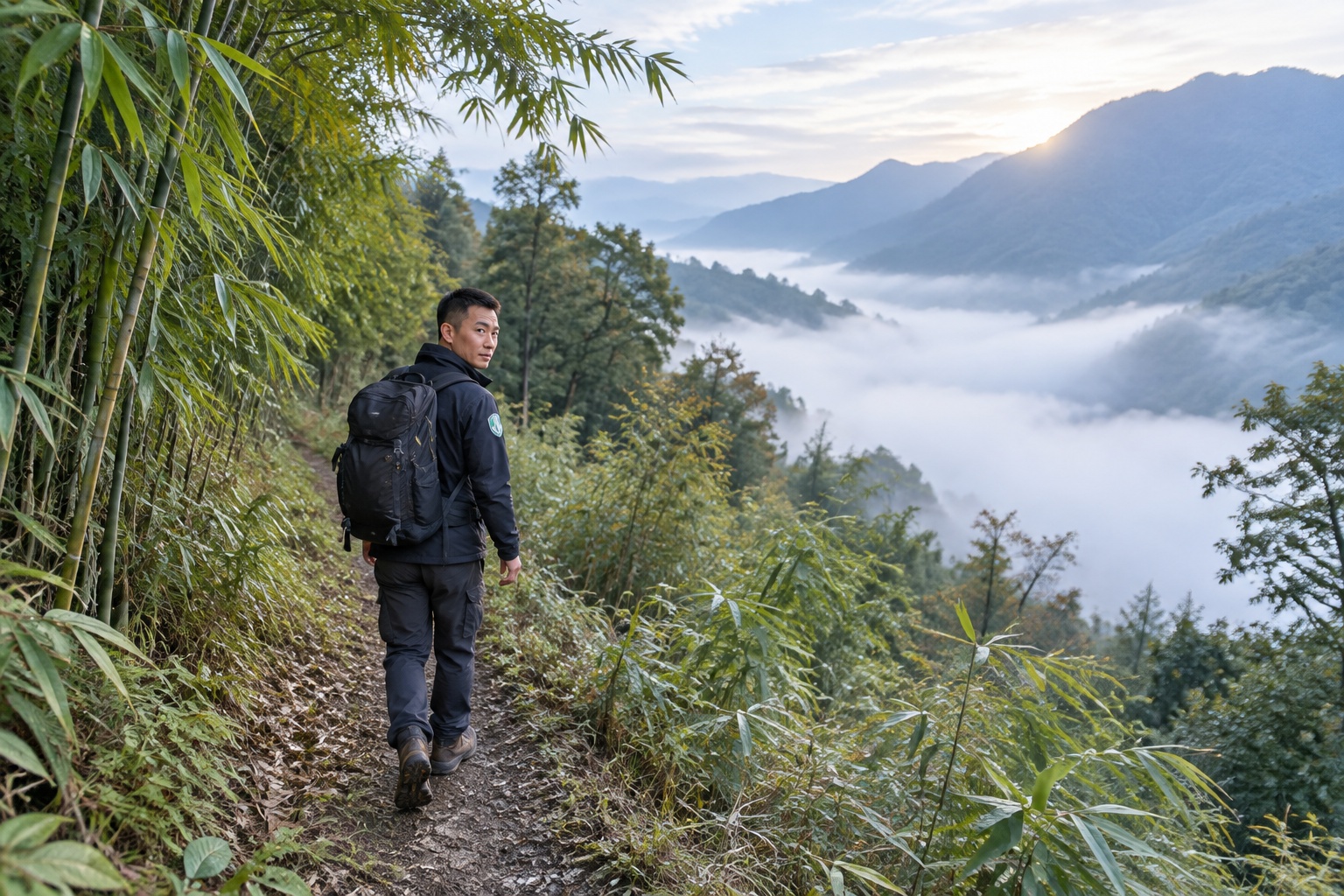

A Ranger’s Morning on the Minshan Ridge
It’s 6:40 a.m. in Pingwu County, in the mountains of northern Sichuan, and a ranger is kneeling in wet bamboo to swap the memory card in a camera trap. The trap has been out for six weeks. Back at the station, the images load one by one: a takin, a golden snub-nosed monkey, a wild boar — and at 2:14 a.m. on a Tuesday, a giant panda walking along a ridge, unhurried and alone.
Nothing about that picture is dramatic, and that is exactly what has changed. Fifty years ago the giant panda was a species in freefall. Today it is a species that a county forestry bureau manages with budgets, patrol routes and infrared cameras. The open question is no longer whether pandas can survive. It is what kind of survival they will get by 2050 — and how much of it depends on decisions made far from any panda.

What the Numbers Really Say
China’s forestry authority now puts the wild population at roughly 1,900 animals, spread across Sichuan, Shaanxi and Gansu provinces. That is up from about 1,100 recorded in the late 1980s, when a national survey found the population had collapsed after decades of logging and poaching. Another 700-plus pandas live in captivity, most of them in China.
In 2016 the International Union for Conservation of Nature moved the giant panda from ‘endangered’ to ‘vulnerable.’ The news travelled around the world as a success story, and in many ways it was. But two footnotes get lost in translation.
First, part of the increase came from better counting. Modern surveys analyse DNA in panda droppings, which identifies individuals earlier methods simply missed. Second, ‘vulnerable’ still means a species at risk. The IUCN’s own assessment flagged climate change as a threat that had not yet shown up in the population numbers.
There is a third figure that matters more than the headline number: wild pandas are split into about 33 separate groups. Many of them are small — some with fewer than 30 animals. A total of 1,900 sounds reassuring until you realise it is scattered across mountain ranges the size of small European countries, connected by almost nothing.
Four Pressures That Will Decide 2050
1. Bamboo on a shifting clock
Pandas eat almost nothing else. An adult consumes 12 to 38 kilograms of bamboo a day, which is why their famous laziness is a survival strategy rather than a personality flaw. Bamboo, however, has a peculiar lifecycle: most species flower and die back en masse on cycles of 20 to 120 years. When that happens, pandas have to walk to the next patch.
Climate change complicates the walk. As temperatures rise, suitable bamboo is expected to shift uphill and shrink; some modelling studies project that more than a third of current panda habitat could become unsuitable by the end of the century under high-emissions scenarios. A panda can move uphill. What it cannot do is move uphill through a highway, a hydroelectric reservoir and a village.
2. A habitat cut into islands
Infrastructure is the quieter threat. Roads, dams, mines and tourist development have carved the panda’s mountain forests into fragments, and pandas are slow, solitary animals that rarely cross open ground. Isolated groups lose genetic diversity over generations, which makes them more vulnerable to disease and less able to adapt.
Mitigation is now built into projects. New rail and highway links in the region increasingly run through tunnels or over green bridges designed so that animals can pass above or below the traffic. Whether these crossings work at scale is one of the most-watched questions in Chinese conservation.

3. A shallow gene pool
Small populations interbreed. Researchers have found that some isolated groups carry noticeably lower genetic diversity than the central populations, and that a single bad year — a bamboo die-off, an outbreak — can push a small group toward extinction.
The fix is unglamorous: reconnect the fragments and let the animals find each other. Since the mid-2010s, China has restored several forest corridors between panda mountain ranges, and researchers have reported pandas using them, in at least one case producing gene flow between groups that had been separated for decades.
4. Money, and the people who live there
Conservation is land-use policy, and land in Sichuan is contested. Inside and around protected areas, logging has ended, farmland and grazing are restricted, and the collection of wild bamboo shoots and medicinal herbs such as cordyceps is regulated. For a household that once earned its living from those activities, panda protection is not an abstraction. It is a change in income.
The replacement economy is partly tourism and partly public employment: ranger posts, monitoring jobs, compensation payments. It works in places where visitors actually come and where the money stays local. It works less well in remote valleys with no road, no guesthouse, and a panda that no tourist has ever photographed.
What Is Actually Working
A single park, roughly the size of Belgium
In 2021 China formally established the Giant Panda National Park, merging more than 70 existing reserves across three provinces into one management unit of about 27,000 square kilometres — slightly smaller than Belgium, and covering roughly 70 percent of wild panda habitat. The logic is straightforward: pandas do not recognise provincial borders, and neither does a watershed.
Consolidation also changes who is in charge. Before, a panda could live inside a nature reserve while the road next to it was approved by a different authority with different priorities. That is harder to do now.
Crossings, corridors and camera traps
Corridor restoration, wildlife overpasses and anti-poaching patrols are the unglamorous machinery of panda conservation, and they are the reason the numbers moved at all. Patrol data, camera-trap images and DNA from droppings now feed into management decisions in something close to real time — a level of monitoring most large mammals in the world never get.
Breeding programmes — and their limits
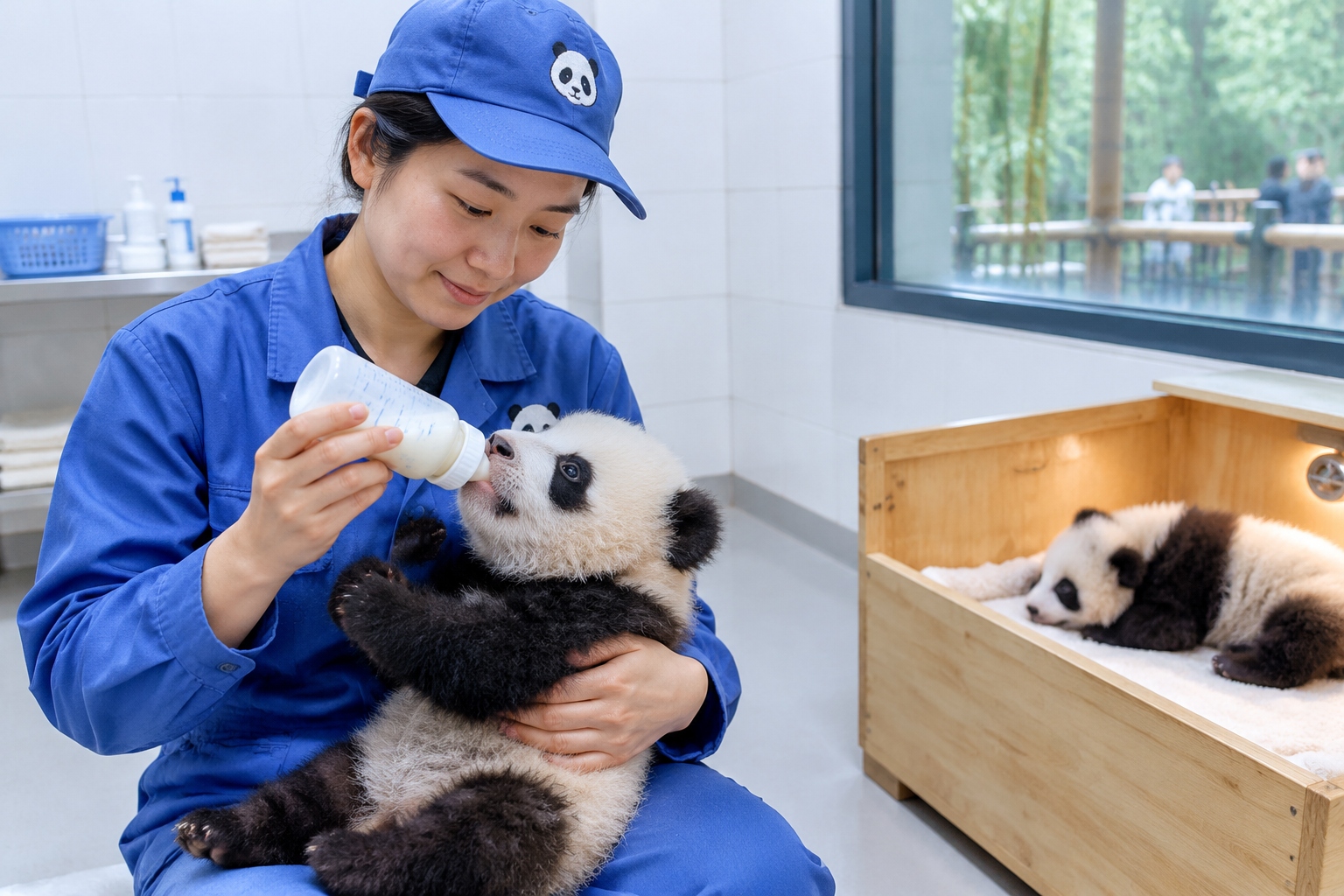
Captive breeding has been one of China’s clearest conservation successes. The zoo population went from a few dozen animals in the 1980s to more than 700 today, and expertise in panda reproduction, veterinary care and cub survival is now shared through international partnerships.
But captive pandas are insurance, not a solution. Releasing them into the wild remains difficult; only a small number have been released, and not all survived. A zoo-bred panda has to learn to find bamboo, avoid people and get through winter. Some do. Not all do.
Panda diplomacy, version 2024
The loan programme that sends pandas to overseas zoos is often described as soft power, and it is. It is also a funding and research mechanism: fees of roughly one million US dollars per pair per year are commonly reported, with agreements typically covering research, training and conservation contributions. In 2024 new pairs arrived at San Diego Zoo and the Smithsonian’s National Zoo in Washington, and cubs were born in Europe — evidence that the programme continues even as diplomatic weather changes.
The public, watching
Few animals have a bigger global audience. The breeding bases in Chengdu and Wolong draw millions of visitors a year, and that attention funds research and keeps panda conservation politically visible. The risk is that tourism turns into crowd management instead of conservation, which is why park authorities now cap visitor numbers in sensitive areas and steer people onto designated trails.
Two Ways 2050 Could Look
These are sketches, not forecasts.
High emissions, fragmented. Bamboo belts shift uphill, some subpopulations lose their food base, and the smallest groups — the ones with fewer than 30 animals — quietly disappear. The wild population plateaus near today’s figure, or slips below it. Pandas persist mainly in a few well-funded mountain strongholds and in zoos.
Managed transition. Emissions peak and fall, corridors are completed, national park management matures, and climate-smart planning moves bamboo and forest restoration to higher elevations before the pandas need it. Wild numbers edge upward, and more importantly the fragments start functioning as one connected landscape again.
The difference between the two is not panda biology. It is energy policy, road design, park budgets and village economics — decisions made by people who mostly never see a panda.
What You Can Do From 8,000 Kilometres Away
Three things, in order of impact.
Cut your carbon footprint. It is the least photogenic and most effective contribution to panda habitat in 2050.
Support habitat work, not just cubs. Organisations working on corridors, patrols and community agreements move the needle more than another photo of a fluffy newborn.
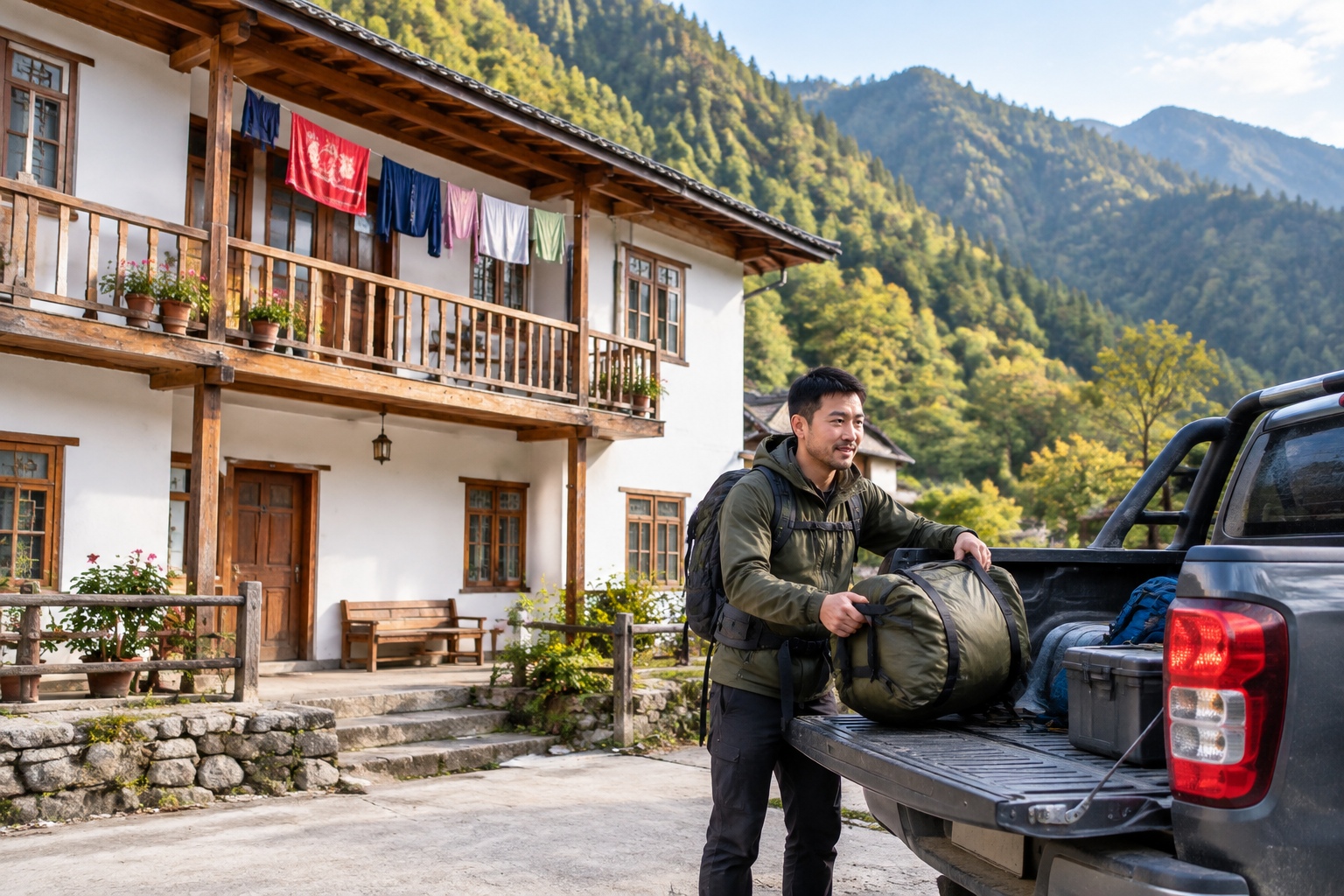
If you visit, spend locally and follow the rules. Book through park-authorised operators, keep your distance, never feed wildlife, and skip venues offering panda petting or cub photo sessions. Staying in a village guesthouse puts money where the panda actually lives.
And if you are standing in front of a panda at a zoo abroad, ask a better question than whether it is cute. Ask what the loan agreement funds.
Where Will the Panda Be in 2050?
A panda born this spring will live to see it. Twenty-five years is one panda lifetime — long enough for a corridor to mature, short enough that the decisions shaping its habitat are still being made right now.
The honest answer is that 2050 is not a date on a calendar for pandas. It is an accumulated result: every tunnel dug instead of a cutting, every valley left unfragmented, every village that gets a reason to keep the forest standing. None of that looks like saving a species. All of it is.
Start the discussion at forum.chinacomes.com