
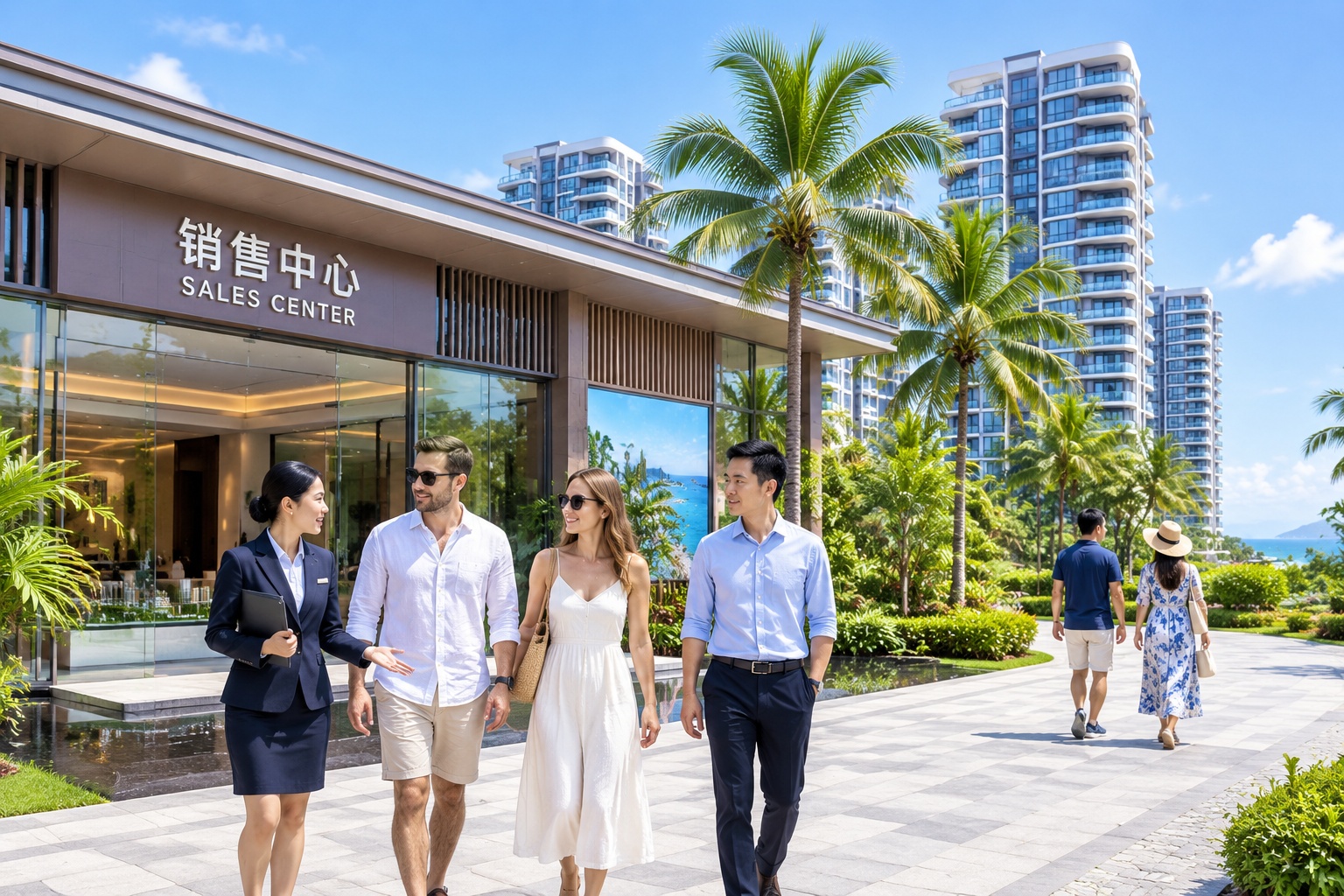

A Sunny Morning at a Sanya Sales Office
On a warm Tuesday morning, a German engineer named Markus walks into a new residential development in Sanya’s Haitang Bay. He has worked at a joint-venture hospital in Boao for two years and rented an apartment in the city for most of that time. Today, he is not just looking — he is signing a pre-sale contract. Under new rules tied to the Hainan Free Trade Port, Markus is allowed to buy one home in Hainan, just like a local resident. No two-year social security record. No complicated approval letter. Just his passport, work permit, and an employment contract.
That scenario is increasingly common across the island. In early 2024, Hainan announced a significant relaxation of housing-purchase restrictions for foreigners working or doing business in the province. The policy eliminates previous requirements such as proof of tax or social security payments for overseas buyers. Instead, eligibility is now tied to a valid work permit or business registration in Hainan.

What the Relaxation Actually Means
For years, foreigners in Hainan could technically buy property, but only under strict conditions. Most needed to have worked or paid social insurance in Hainan for at least 24 consecutive months. That ruled out many recently arrived expatriates, especially those on shorter assignments. The new policy removes that barrier. If you are legally employed or run a registered business in Hainan, you can purchase one residential unit for self-occupancy. The home must be in the city or county where you work, and you must not already own another home in that area.
Who qualifies? The policy covers foreign nationals who hold a valid work permit issued by Hainan’s labor authorities, or who serve as legal representatives or major shareholders of a company registered in the province. It also applies to foreign talent recognized under official talent programs. In all cases, the buyer must sign a legally binding employment or business contract and be in good standing with Chinese immigration and visa rules.
What About Hong Kong, Macao, and Taiwan Residents?
Residents of Hong Kong, Macao, and Taiwan are treated similarly to overseas buyers in most Hainan cities, but with an extra convenience: they do not need a work permit if they can prove they have lived in Hainan for at least one year. That residence can be shown via a temporary accommodation registration certificate or a rental contract. In practice, this makes Hainan more accessible to semiretired professionals and entrepreneurs from these regions who want to establish a second home without committing to full employment.
City-by-City Differences: Not All Hainan Is Equal
Hainan is a province, not a single jurisdiction. While the province-level policy sets a common framework, individual cities and counties retain some flexibility in enforcement. The differences matter — especially if you are deciding where to settle.
Haikou: The Practical Choice
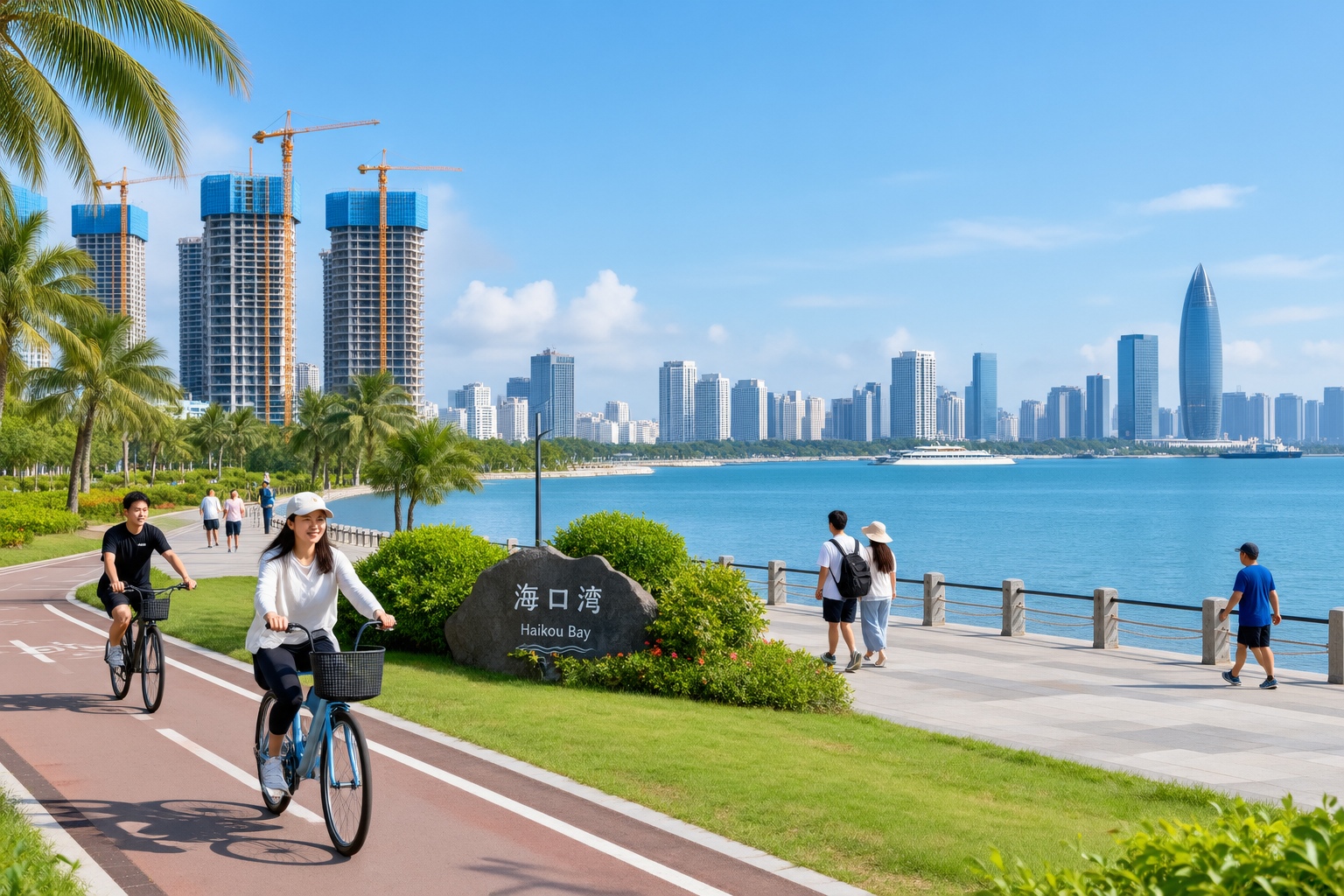
As the provincial capital, Haikou has the most developed rental market and the largest inventory of residential projects. It has implemented the provincial rules with minimal extra conditions. Foreigners working in Haikou can buy a new or resale home in the city’s main urban districts without additional approval. The average home price in central Haikou is still significantly lower than in Sanya — roughly 15,000 to 20,000 RMB per square meter compared with 25,000 to 40,000 RMB in Sanya — making it attractive for first-time foreign buyers who want city convenience and investment potential.
Sanya: The Premium Hotspot
Sanya, the island’s tourism capital, adds one nuance: a looser interpretation of “employer location.” Because many large companies in Boao or Haikou have branches in Sanya, applicants have occasionally faced extra scrutiny when their employment contract lists an office elsewhere. The practical advice is to ensure your work permit and contract explicitly mention your Sanya-based position or branch office. Sanya also has a “high-end talent” fast track: foreign engineers, doctors, and researchers with recognized certifications can process purchases through the municipal talent service center, often in less than ten working days.
Danzhou and Western Hainan: The Undervalued Frontier
Danzhou, a rapidly developing port city on the west coast, offers the most straightforward application process and the lowest housing prices in the province’s urban belt. A newly built apartment near the Yangpu Economic Development Zone can cost as little as 8,000 RMB per square meter. The catch is that the area is still building out its international amenities — fewer English-speaking medical staff, fewer international schools, and limited expatriate community networks. For those focused on long-term value rather than immediate comfort, Danzhou represents a bet on Hainan’s industrial future.
Qionghai, Wenchang, and Other Counties
In Qionghai (home of the Boao Hope City medical zone), Wenchang (the satellite launch hub), Wanning, and Lingshui, the rules mirror the province-level framework. However, because these counties have smaller populations and less administrative capacity, processing times can stretch longer. In Lingshui, for example, the land bureau sometimes asks for additional documentation such as an official Chinese translation of your degree certificate, even if your job does not require a degree. The key is to engage a reliable real estate agent or lawyer who has handled foreign purchases before.
The Simplified Purchase Process: Step by Step
The new policy is a genuine paperwork improvement. Here is what you can expect:
Step 1: Confirm eligibility. Your employer’s HR department or your company’s legal representative should verify that your work permit is valid for at least one more year. Self-employed foreigners need to show a business license in Hainan that is older than six months.
Step 2: Find a property. The restriction of “one home per person” means you cannot buy a second residence in Hainan, so choose your location carefully. Pre-sale (off-plan) homes are allowed, but you must check that the developer has a valid pre-sale permit.
Step 3: Sign and file the contract. After you sign a purchase agreement, the developer or your agent files it with the local housing and urban-rural development bureau. This filing is the critical step — without it, the purchase cannot be registered.
Step 4: Register ownership. Go to the local real estate registration center in person, or via a power of attorney, with your passport, work permit, filing receipt, and payment vouchers. The new registration certificate typically takes five to seven working days.

Eligibility at a Glance
For quick reference, here is the core criteria table based on the current province-wide policy:
Foreign employees: Must hold a valid Alien Employment Permit or Foreign Talent Visa (R visa) and an employment contract in Hainan.
Foreign business owners: Must own or co-own a limited liability company registered in Hainan with actual business operations.
Foreign talent under official programs: Need to present a talent certification issued by the local government.
Hong Kong, Macao, and Taiwan residents: Can buy with proof of one-year residence and any employment or business record in Hainan.
In all cases, the property must be your sole residential unit in the corresponding city or county. Second homes, vacation villas, and investment apartments are still not allowed for foreigners without Chinese permanent residence.
What Has Not Changed: Remaining Restrictions
Do not assume every door is now open. For instance, foreigners still cannot purchase allocation-based affordable housing or homes on collectively owned rural land. Also, the island-wide “one home per person” rule applies separately by city and county — a foreigner who bought one home in Haikou cannot buy another in Sanya, even if working in both cities briefly.
Financing is another practical hurdle. Many Chinese banks are wary of lending to foreign nationals, especially those without Chinese credit history. Some banks in Haikou and Sanya have started offering mortgages to foreigners at 40% down payment and interest rates about 30 basis points higher than for locals. In smaller cities, you may have to pay in full. Expect to prove your income with documents from your home country, translated in Chinese.
Finally, remember that real estate purchase under the Free Trade Port framework is not a path to permanent residence or citizenship. It is a policy to attract human capital, not a visa-for-sale scheme. Your right to live in the property remains tied to your valid work permit or business status in Hainan.
Why This Matters Beyond the Island
Hainan’s relaxation is part of a broader strategy to transform the island into a global trade and services hub. For an engineer from Germany or a fund manager from Singapore, the ability to buy a home is a tangible sign that China is serious about making foreign talent feel rooted. It shifts Hainan away from the era when speculative condos sat empty and toward a model where professionals actually live in the communities where they work.
That does not mean the housing market is careening toward a speculative bubble. Hainan learned that lesson between 2018 and 2020, when strict curbs snapped the market. The current rules are deliberately calibrated to allow one home per foreign worker, not a portfolio. The result is slower, steadier demand — and a chance for the island to build genuinely international neighborhoods.
Practical Advice for Prospective Buyers
If you are considering a home in Hainan, start by calling the housing authority in your target city to confirm the latest interpretation of the policy. Policies can be applied unevenly in practice. Also, set a realistic budget that includes taxes and fees — property transaction taxes, deed tax, and agent commissions add roughly 3-5% to the purchase price. English-speaking lawyers who specialize in cross-border real estate are rare but worth the fee; join an expat community or ask your HR department for referrals.
Finally, make a trip in person before you sign. The best way to understand a city is to walk its streets, sample its food markets, and talk to other foreign residents. Hainan may have opened its property door, but the house only feels like a home if you belong there.
Start the discussion at forum.chinacomes.com