

It started with a routine visa renewal
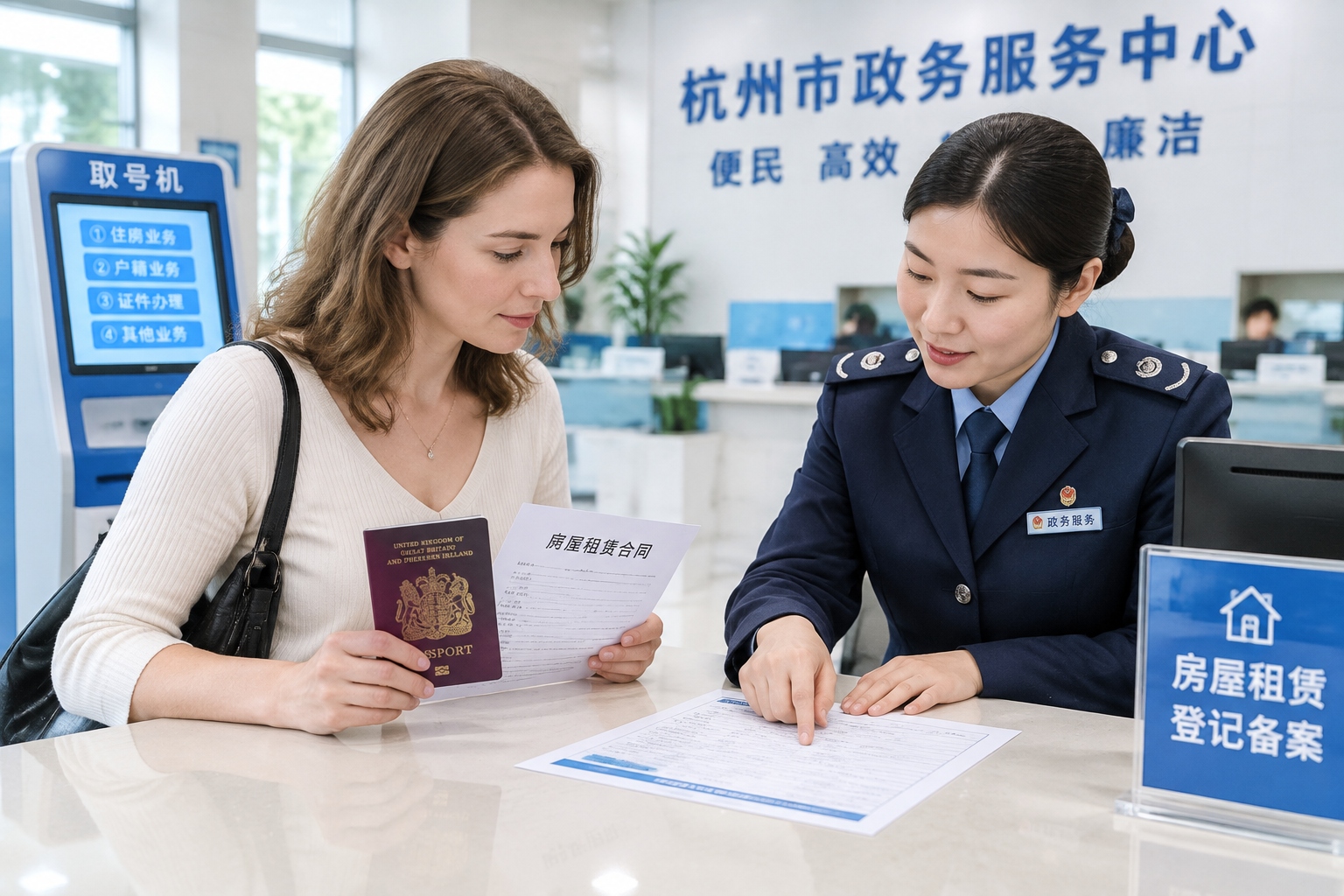
When Emma, an Australian designer living in Shanghai, walked into the Exit and Entry Administration Bureau two months before her work visa expired, she expected a quick renewal. Her paperwork looked fine: a valid passport, a work permit, an apartment lease signed eleven months earlier.
The immigration officer glanced at her address history and asked one question: “Has your rental contract been filed with the housing authority?” Emma hesitated. She had registered at the local police station when she moved in, but she had never heard of a separate lease filing.
Her application was accepted, but with a catch. She had ten days to produce a “certificate of house lease filing” (房屋租赁登记备案证明). For the next week, she called her landlord, visited two street offices, and finally found the right window at the district housing bureau. It took one afternoon of forms and a stamped document to fix the issue. For local officials, lease filing is part of the rental process. For many foreigners, it is an invisible requirement that only surfaces when visa renewal arrives.

Two separate registrations, one common mix-up
The confusion starts because China’s system asks foreigners for two different pieces of paperwork that sound similar.
Accommodation registration (住宿登记) — police requirement
Under the Exit and Entry Administration Law, any foreign national staying in China must complete accommodation registration with the local police substation within 24 hours of moving in (48 hours in rural areas). Hotels usually handle this automatically when you check in. If you rent an apartment, you or your landlord must visit the local police substation — often called a pai chu suo — and provide your passport, address, and landlord information. This registration records where you sleep at night and keeps the public security database current.
Lease contract filing (房屋租赁合同备案) — housing administration requirement
Lease filing is a separate step for the property itself. China’s Real Estate Administration Law and the Measures for the Administration of Housing Rental require landlords to file rental contracts with the district housing administration or a designated street office. This confirms that the apartment is lawfully rented, records the agreed rent, and updates the city’s official housing database.
The police registration is about the person. The lease filing is about the property and the contract. For a visa application, you always need the first one, but increasingly immigration officers also look for evidence that your address is stable and lawful. In several large cities, the online visa system now cross-checks registered housing data. An unrecorded lease can appear as a gap in that history.
What actually happens when a lease is never filed?
Nothing immediate. Your landlord may never be fined, and you may not notice a problem until the next application. The risks tend to appear at immigration, tax, or school registration desks:
- Visa renewal gets delayed while you “supplement materials.” Many exit-entry bureaus request the lease filing certificate as supplementary proof of residence. This can add days or weeks to your application.
- Your accommodation registration may be questioned in the future. Some local police stations ask for a lease contract or lease registration proof when you first register. If the contract is not filed, the officer may still process the registration, but there is no guarantee.
- If the landlord turns hostile, you have no official proof of the tenancy. A government record showing that you legally occupy the property can matter for visa support, bank account applications, or registering a family member’s visit.
- The landlord can be fined if the authorities run a check. The usual penalty under city rental rules is 1,000 to 10,000 RMB. Some landlords avoid filing because they also do not want to pay tax on rental income. This explains why a few react unhelpfully when you bring up the topic.
City practices differ. Immigration bureaus in Shanghai and Shenzhen are more likely to check lease records than bureaus in smaller inland cities. A British teacher in Chengdu might renew a residence permit without showing any lease filing, while a software engineer in Beijing might be asked for the same document. National rules do not determine every local step. But this is safe to say: an unregistered lease will never make a visa application easier.
Checklist for renters: verify and protect yourself
Use these steps before you sign, or as soon as you arrive.
Ask the landlord for the registration certificate
After a lease is filed, the landlord usually receives a paper or electronic certificate. Ask to see the original, and request a photocopy if you want. Add a clause in the contract stating that the landlord files the lease within two weeks of move-in and gives you proof.
Call the district housing authority
If you already live in the apartment, call the 12345 city government service hotline or visit the district housing office. Simply ask: “Has a lease filing been made for this address?” Staff will generally tell a tenant whether the registration exists. Have your passport and address ready.
Judge the landlord’s reaction
A legitimate landlord will not hesitate to explain the filing process. A landlord who avoids the topic, asks for cash rent, or says “the agent handles everything” is a red flag. Because filing confirms the identity of the tenant and the amount of rent, some landlords who underreport income resist it. If your visa depends on a stable address, you need a landlord who understands this.
Can a tenant file the lease registration without the landlord?
Yes and no. Many cities now accept tenant applications, but the landlord often has to unlock the property profile first.
Most first-tier cities have moved lease filing online. Shanghai uses the “One Netcom Office” app (随申办), Beijing uses a housing rental platform inside the “Beijing Tong” app, Guangzhou has “Sui Hao Ban,” Shenzhen has “iShenzhen,” and Hangzhou manages rental registration through “Zhe Li Ban.” In these systems, a tenant can enter the contract and property details and submit an application. However, many apps require the landlord to scan a QR code or enter an SMS code to confirm ownership. If the landlord refuses, the online route usually hits a wall.
Two workarounds exist:
- Use an authorization letter. Ask the landlord to write a short letter in Chinese saying you may file the lease on their behalf. Attach copies of their ID and property certificate. Some district offices accept this without the landlord present.
- Ask the real estate agent. Large agents like Lianjia (Beike), 5i5j, or 21st Century China handle lease registration routinely. If you rented through an agent, ask them to complete the filing and send you the receipt.
Lease registration step by step (for renters in most cities)
- Find the right office. In Shanghai, go to your street’s community service center. In Beijing, contact the district housing management agency. In smaller cities, the housing authority office is the usual place.
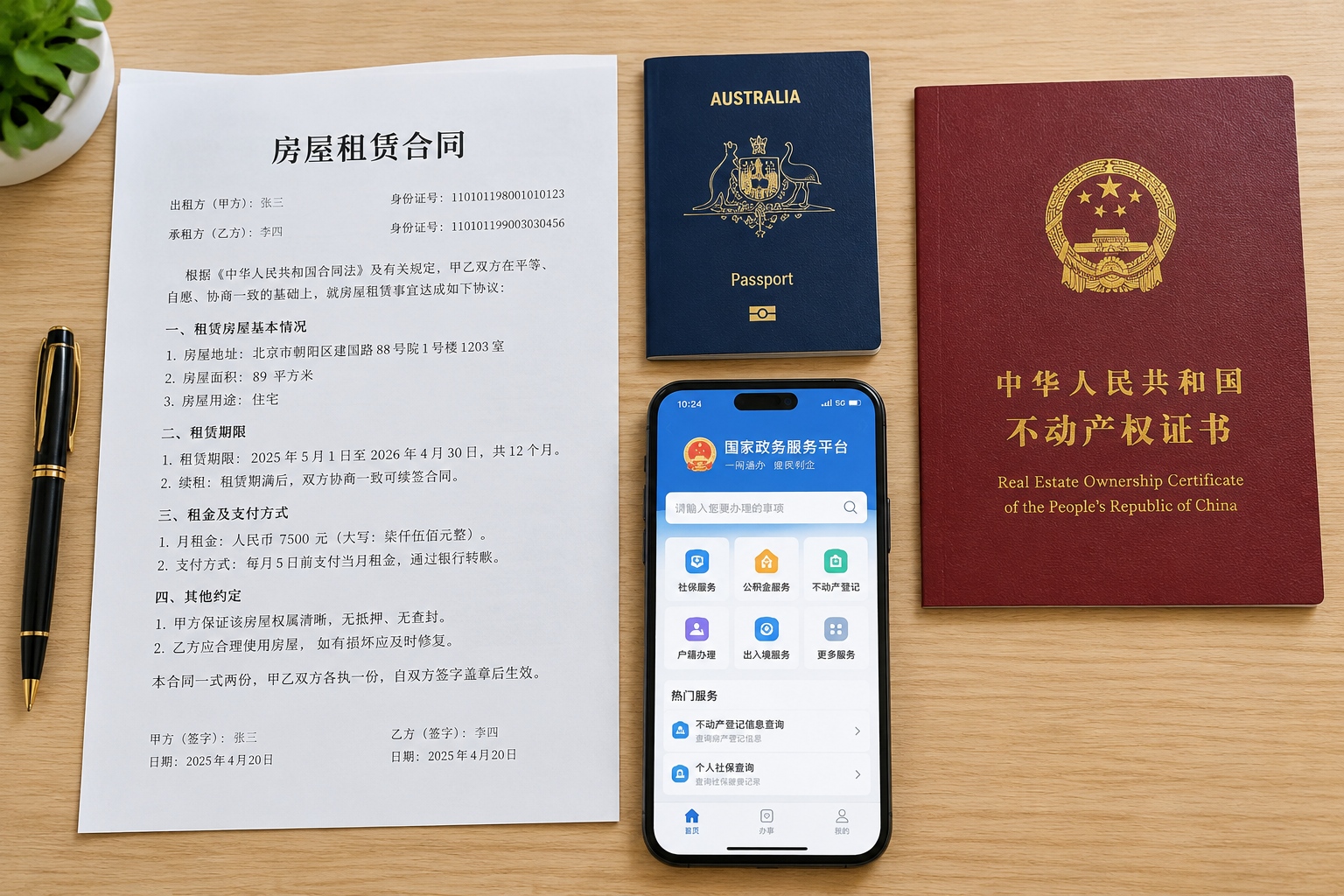
- Prepare these documents: your passport with the valid visa or residence permit page, your landlord’s ID card (clear front-and-back copies are accepted), the property ownership certificate (不动产权证) or a scanned copy, and the signed lease contract.
- Bring the landlord or bring an authorization letter. This varies by city. Check the office requirement in advance by phone.
- Submit the form. The official enters the contract details, checks the property database, and prints a certificate.
- Collect your certificate. Usually it takes 3–7 working days. You may receive an electronic record in a local government app. Keep a PDF and a physical copy.
- Still complete the separate police accommodation registration. Lease filing does not replace the 24-hour public security registration. You need both for a clean residence record.
A note on China’s 70-year residential land rights
Foreign renters sometimes hear alarming comments about Chinese property, such as “the government owns the land, and the landlord only has a 70-year lease.” That is true, but it does not affect lease registration. All apartments in urban China sit on state-owned land leased to property developers for a fixed term: normally 70 years for residential properties and 40 or 50 years for commercial ones. Under the Civil Code that took effect in 2021, residential land-use rights are automatically renewed when the term expires. The renewal fee will be set out in future legislation. For tenants, the practical point is simple: your landlord’s ownership certificate states the land term, and local rent officers check that certificate when they file a lease. It is not an obstacle to registration.

Bottom line: a stamped piece of paper is cheap insurance
For a foreign renter in China, the difference between a smooth visa renewal and a stressful one is often a lease filing certificate. The registration takes one afternoon, may cost nothing, and protects your legal residence status at every government counter. If you are renting now and cannot remember ever seeing a filing certificate, call the housing authority tomorrow. Ask about your address, gather your landlord’s ID and property certificate, and finish the paperwork before the visa clock starts ticking.
Start the discussion at forum.chinacomes.com