

A Pile of Sand in Hebei
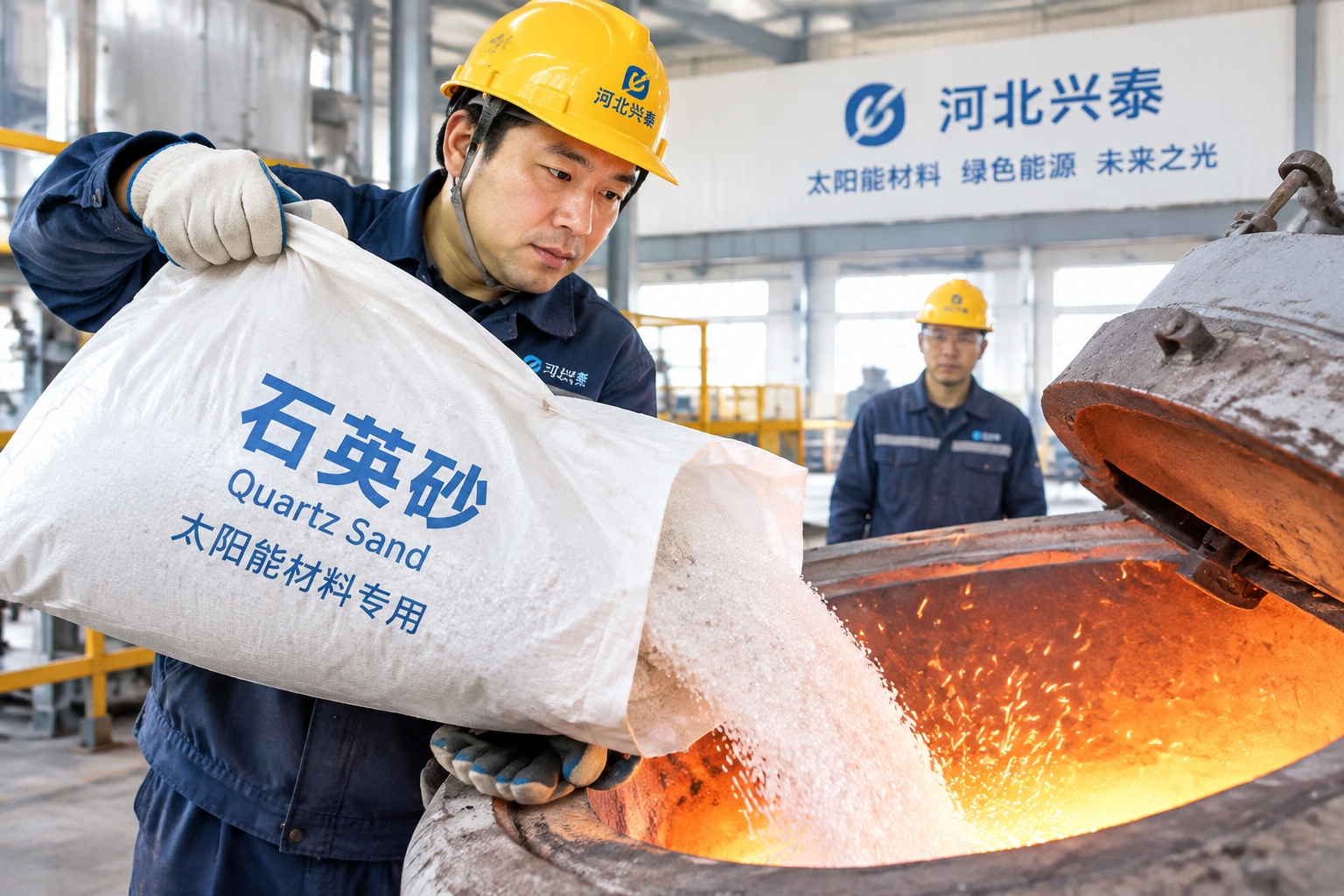
Xingtai, a city in southern Hebei, isn’t the first place you’d expect to find cutting-edge solar technology. But in a nondescript factory here, workers pour sacks of pale gray sand into a furnace that never cools down. This is not the sand you’d use for a child’s sandbox. It’s high-purity quartz, and it’s the raw material for almost every solar panel produced in China.
China makes more than 80% of the world’s solar panels. Hebei, a province that wraps around Beijing, plays a central role in that story. Understanding how sand turns into a solar panel is the best way to understand why China’s solar industry looks the way it does—and why it matters globally.
How Sand Becomes a Solar Panel
The process of turning sand into a solar panel is a chemistry lesson, a supply-chain story, and a piece of industrial history, all in one. Here’s the simplified version.
Step 1: From Sand to Metallurgical Silicon
Quartz sand contains silicon dioxide. When heated in an electric arc furnace with carbon, the oxygen is stripped away, leaving behind metallurgical-grade silicon. At about 98% purity, this is the silicon used in aluminum alloys and silicones. To make solar panels, it needs to be much purer. The furnace at the Xingtai factory runs around the clock, processing dozens of tons of sand each day. The resulting silicon looks like dark, glassy pebbles, nothing like the shiny panels they will eventually become.
Step 2: From Metallurgical Silicon to Polysilicon
The metallurgical silicon reacts with hydrochloric acid to form trichlorosilane gas, which is then distilled and reduced with hydrogen. The result is polysilicon with a purity of 99.9999999% – often described as “nine nines”. This step is energy-intensive and is mostly done in Xinjiang or Inner Mongolia, where coal-fired electricity is cheap. That reality is a contradiction you often hear about: solar panels require a lot of fossil energy to make, but they offset the pollution within months of operation. Hebei’s factories then take that polysilicon and shape it.
Step 3: From Polysilicon to Silicon Wafers
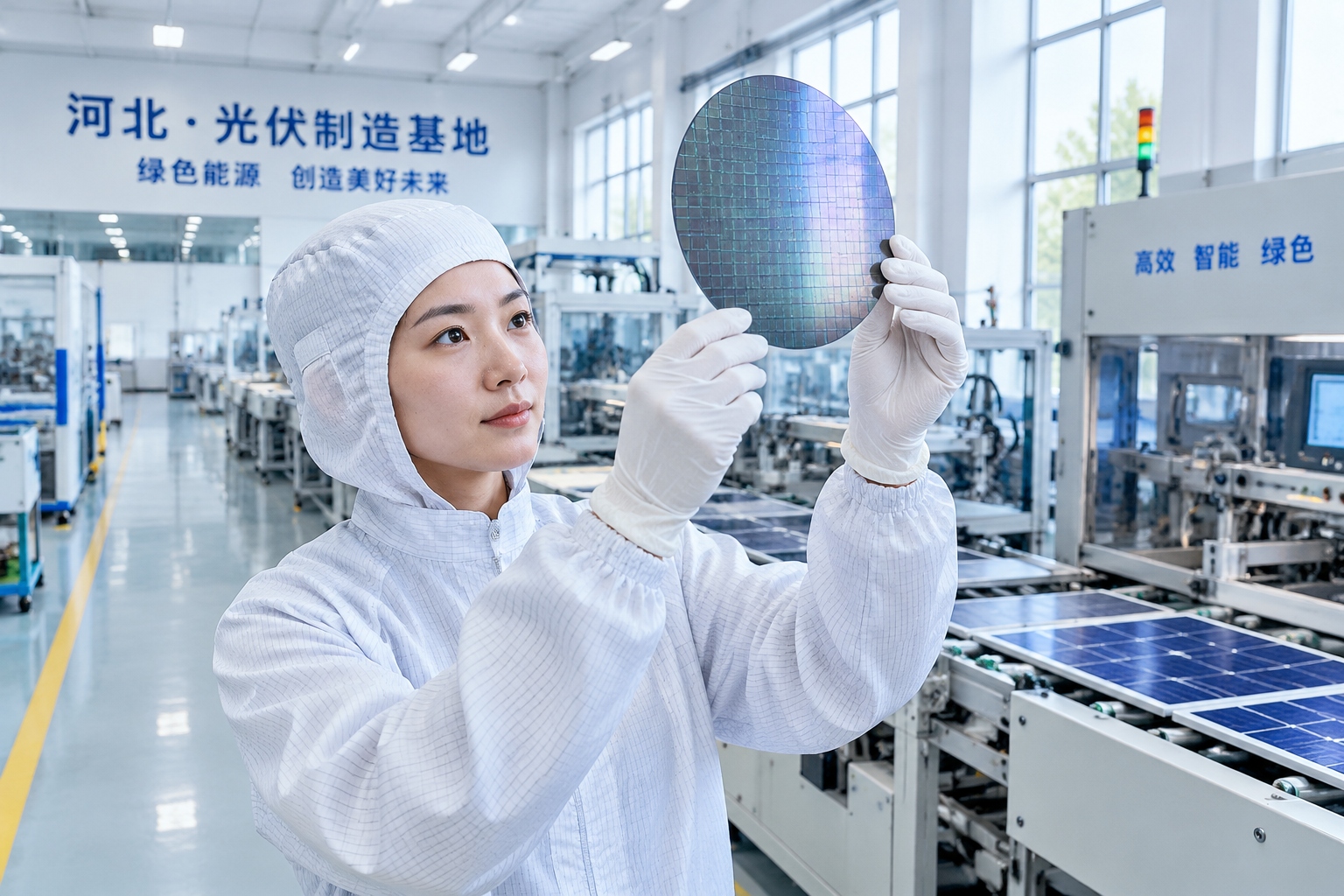
Polysilicon is melted in a crucible at over 1400°C. A seed crystal is slowly pulled from the melt to form a single ingot. This is called the Czochralski method, named after a Polish scientist who invented it in 1916. The ingot, now a cylinder of silicon, is placed on a lathe and sliced with a wire saw into wafers just 150 micrometers thick – thinner than a human hair. In older factories, this process cut away up to half of the silicon as dust. Today, diamond-coated wires have reduced that loss to near zero, and a single wire can cut hundreds of wafers at once.
Step 4: From Wafers to Solar Panels
Each wafer gets a phosphorus coating, an anti-reflective layer, and printed metal lines to collect electricity. These treatments create a semiconductor junction that turns light into an electrical current. The finished solar cells are then connected with ribbons of copper, laminated between sheets of water-clear glass and a polymer backsheet, and framed with aluminum. This final step is labor-intensive, but almost everything is automated now. In Baoding, one of Hebei’s largest cities, a single assembly plant can produce a complete panel every 18 seconds.
The whole chain—from sand to silicon to wafers to cells to modules—takes about a week. And it all happens within a few hundred kilometers of each other in Hebei.
Why Hebei Became a Solar Hub
Hebei’s solar history goes back to the early 2000s, when Yingli Solar in Baoding grew into one of the world’s largest panel manufacturers. That company may have struggled later, but it left behind a workforce, a supply chain, and a culture that kept the industry alive. Baoding is still called “China’s Electric Valley” in some industry circles.
Local governments also supported solar manufacturing with tax breaks and land for industrial parks. Over time, Hebei built a complete ecosystem: some companies make wafers, others make cells, others assemble panels, and many make the glass and frames around them. This clustering makes the province efficient. A factory can order a part in the morning and receive it the same afternoon from a nearby supplier.
Hebei also benefits from its location near Beijing. High-speed trains connect the province’s industrial cities to the capital in less than two hours, making it easy for engineers and investors to visit.
What It’s Like to Visit a Solar Factory
Inside a modern solar factory in Hebei, automation is everywhere. Robots move silicon wafers from one step to the next. Workers monitor screens and step in only when something goes wrong. It’s clean, quiet, and surprisingly high-tech for a province known primarily for steel and coal. One engineer I spoke with described it as “farming with lasers and robots” – a far cry from traditional manufacturing.
Solar Panels in Everyday Life
For most people in Hebei, the solar industry is not just a factory in the distance. It’s on the roofs of their neighbors’ houses. Grain farmers and factory workers alike have installed solar panels on their rooftops, selling electricity back to the grid.
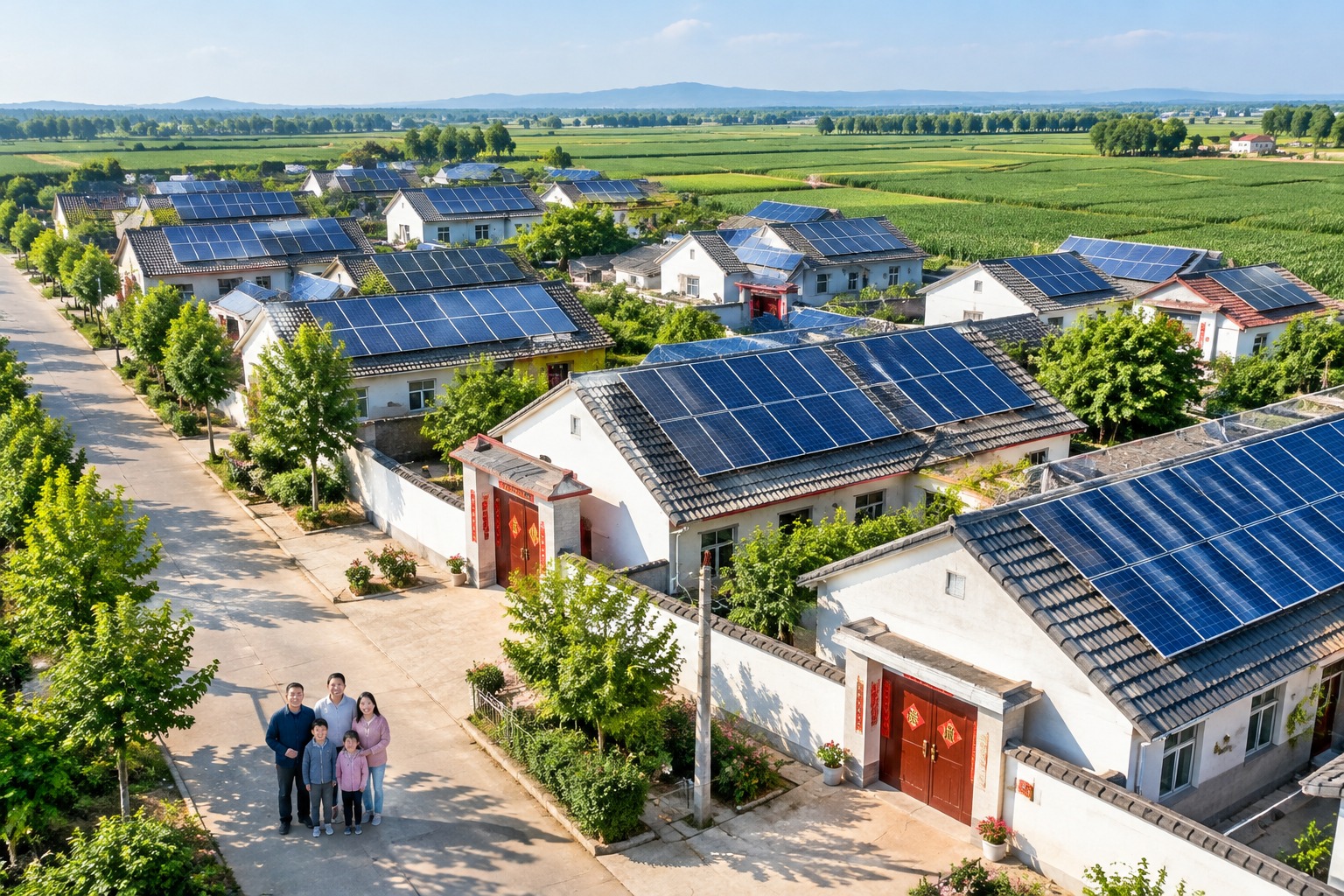
Take the village of Dongshahe in Handan. Villagers have mounted panels on their tiled roofs, earning a few thousand yuan a year from the power they produce. One local farmer, Li Wei, installed 30 panels on his roof in 2021. With the feed-in tariff, he earns about 1,500 yuan per month—nearly as much as his crop income. The Chinese government has supported these household installations through subsidies, making it a common sight in the plains of Hebei. In some villages, you’ll see more solar roofs than TV antennas.
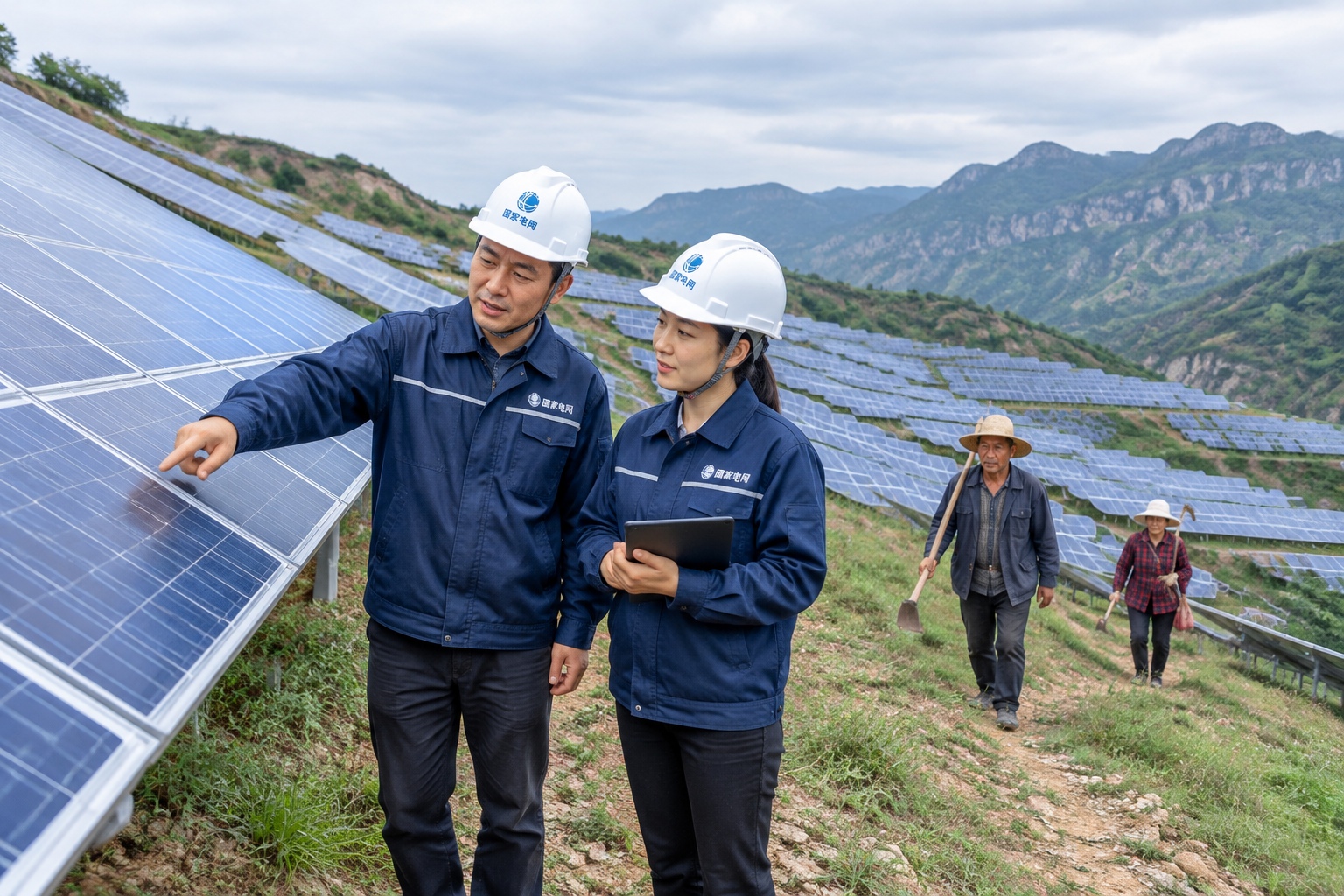
Solar power is also changing the landscape. In the dry, mountainous west of the province, vast solar farms cover hillsides. Some are built over farmland, a model called “agrivoltaics” where crops grow beneath raised panels. It’s not perfect—the shade can change which crops do well—but it helps farmers get two sources of income from one plot of land.
What Surprises Visitors from Abroad
If you come from Europe or the U.S., the first thing that strikes you is how ordinary solar panels are in China. You see them on rural homes, on apartment balconies, and stretched across the desert-like edges of cities. In Europe, installing panels involves a lot of paperwork and often a contractor. In Hebei, a local installer can put up a system in a few days as easily as someone would install an air conditioner.
This difference isn’t about employees working harder. It’s about scale. Because China produces so many panels, the cost has fallen to the point where even rural households can afford them. The same silicon that begins as sand in a furnace ends up as a tool for a farmer to earn extra income. There is also a practical simplification: in many cases, you don’t need a building permit for rooftop solar, and the local electricity company handles the grid connection. That’s a very different experience from the permitting process in, say, Germany or France.
The Challenges That Remain
It would be misleading to say everything is smooth. China’s solar industry is facing overcapacity, meaning too many panels are being made, which drives prices down and puts pressure on factories. Some manufacturers are closing or consolidating. The trade war with the West has also created uncertainty, with new tariffs on Chinese panels.
There’s also the recycling problem. Panels last about 25–30 years. As the first wave of installed systems reaches the end of its life, handling the discarded panels is a growing question. Hebei is starting to build pilot facilities for solar panel recycling, but the infrastructure is still young. Scientists in the province are working on ways to extract high-purity silicon from old panels, essentially closing the loop that starts with sand.
Still, the industry keeps pushing forward. New technologies like TOPCon and HJT cells are being developed in the same factory complexes that once produced older models. Innovation is happening where the work is.
Conclusion: From Sand to Light
In Hebei, the journey from sand to solar panel is not a metaphor. It’s a supply chain that employs hundreds of thousands of people and powers homes across the country. When you see a solar panel anywhere in the world, chances are it began in a place like this – as a pile of unremarkable sand, heated in a furnace, and transformed into something that turns sunlight into electricity. The next time you see a string of panels on a rooftop, remember: the story behind it might start with a grain of sand and a furnace in Hebei.
Start the discussion at forum.chinacomes.com