
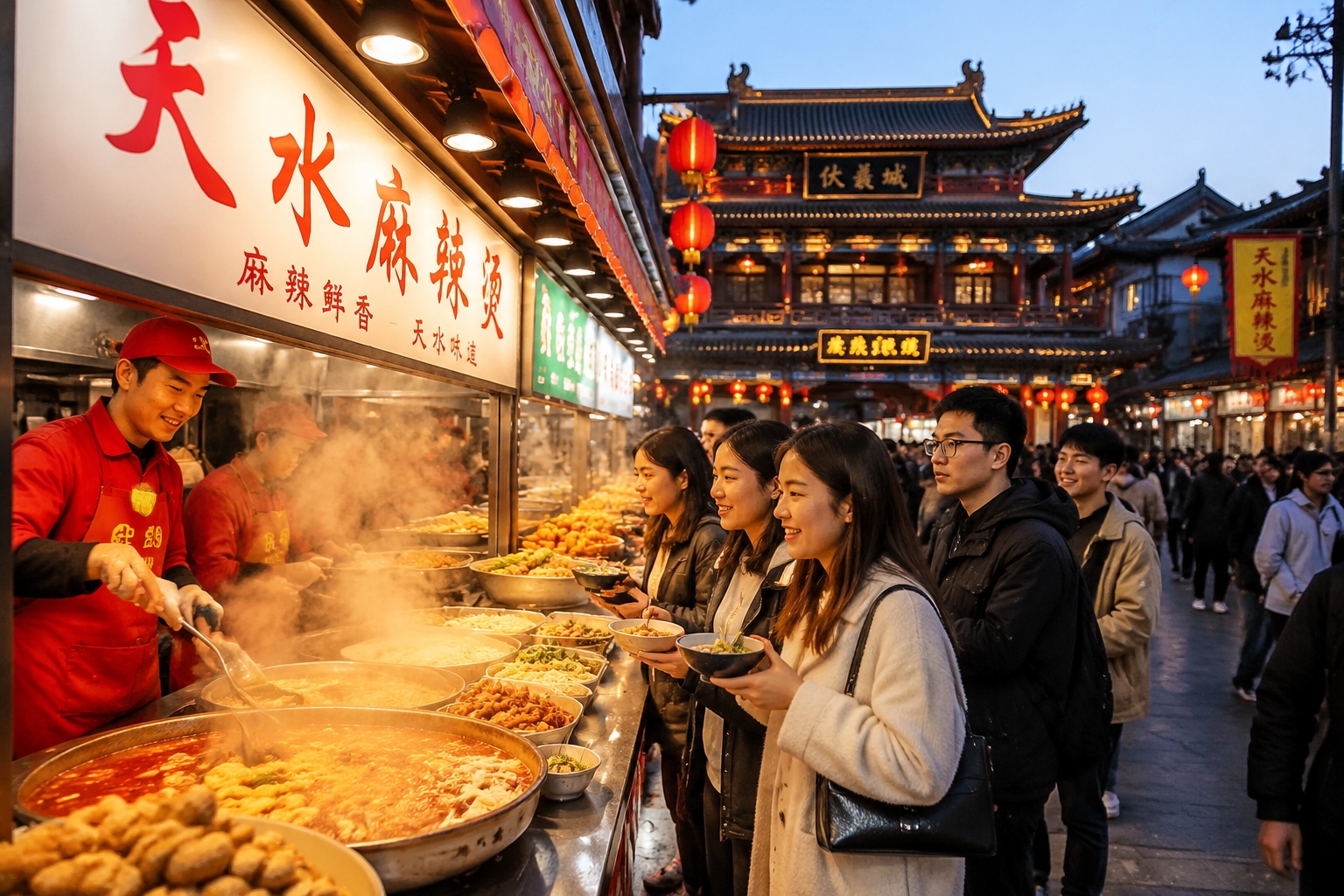

It started with a 15-second video
On a cold February morning in 2024, a young woman in Tianshui, Gansu province, filmed herself eating a bowl of malatang—a spicy, numbing hot pot–style street food. But this wasn’t the Sichuan version. The noodles were thick, hand-pulled, and drenched in a brilliant red chili oil that glistened under the fluorescent light of a small shop. She posted the clip on Douyin (the Chinese version of TikTok). Within hours, the video had been viewed millions of times. Comments flooded in: “Where is this? I need to go!” “Is that chili oil for real?”
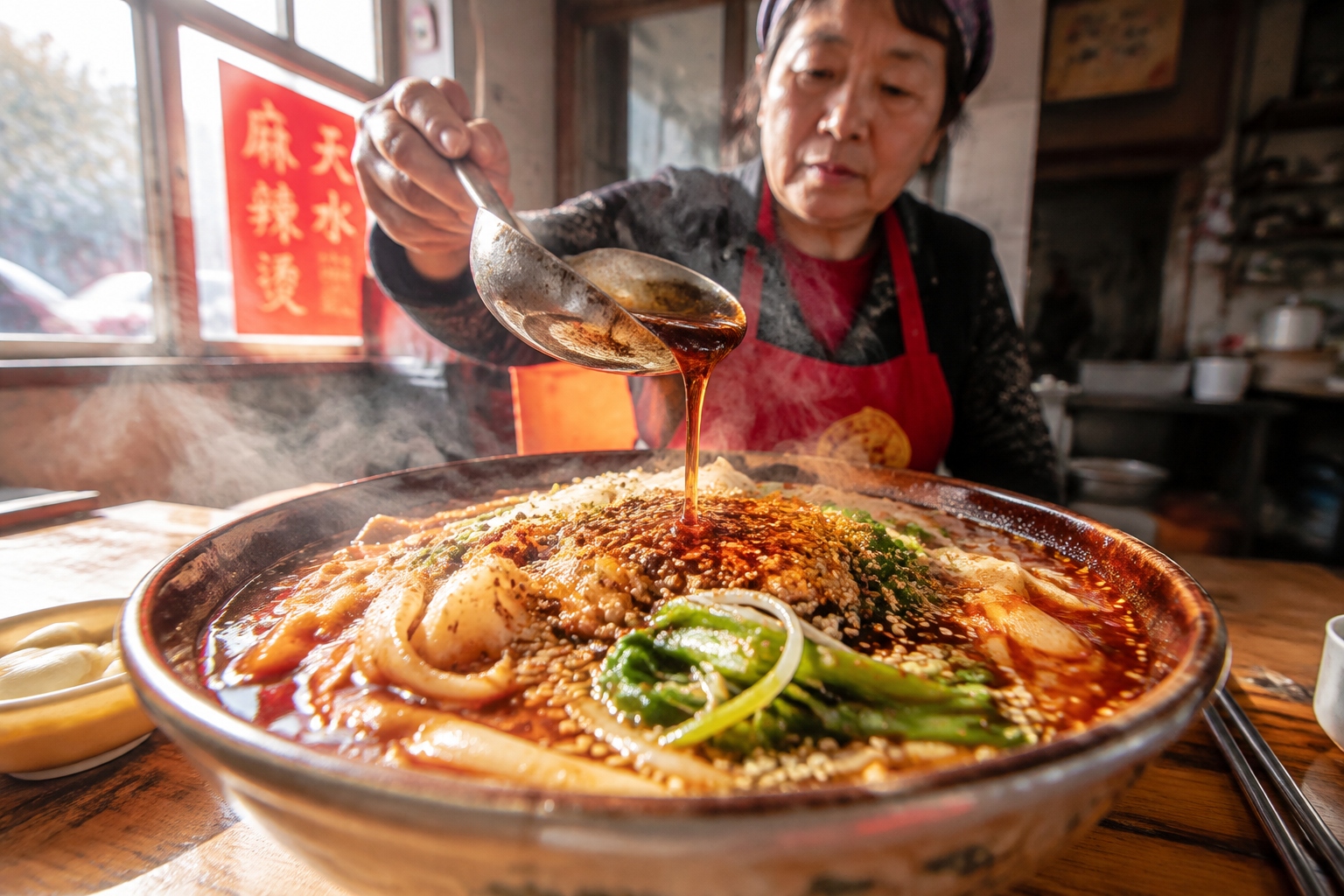
What made this particular malatang stand out was the chili oil. Locals in Tianshui have been making it for generations—toasted sesame, Sichuan peppercorns, star anise, and a secret blend of local dried chilies ground into a coarse powder, then drenched in hot oil. The result is a fragrant, deeply red, moderately spicy condiment that clings to every noodle. The video captured that texture perfectly: the way the oil clung to the thick noodles, the steam rising in the cold air, the vendor’s hands skillfully pulling the dough.
The algorithm meets a hungry nation
Over the next week, more tourists began showing up in Tianshui, a city of about 3 million people that rarely appears on travel lists. Local Douyin creators jumped on the trend. They filmed themselves eating at the same shop, comparing different vendors, and exploring the city’s other attractions—the Maijishan Grottoes, an ancient Buddhist site carved into a cliff. Each video added a new layer to the narrative: this wasn’t just about food; it was about discovering a hidden gem of Chinese culture.
By mid-March, Tianshui malatang had become a national phenomenon. On Weibo, the hashtag #TianshuiMalatang accumulated over 2 billion views. On Douyin, videos tagged with the city’s name were watched a cumulative 10 billion times. The city government quickly responded: they set up free shuttle buses from the high-speed rail station to the most popular food streets, organized volunteers to help tourists find the best spots, and even distributed small bottles of Tianshui chili oil as souvenirs.
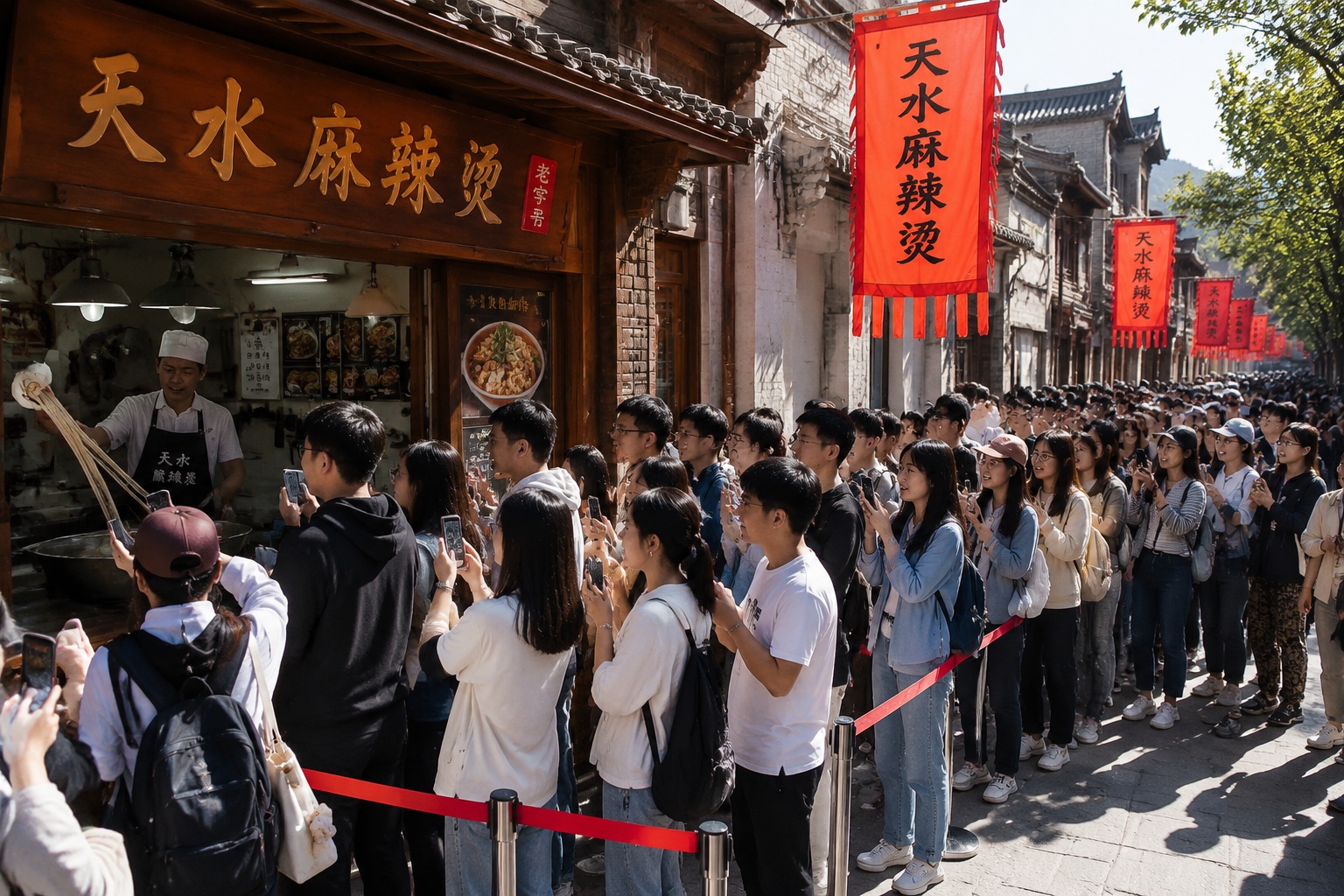
But the real story happened on the ground. In the old neighborhood where the original video was shot, shop owners who had been struggling for years suddenly faced lines that stretched around the block. Auntie Wang, a 60-year-old vendor who had been making malatang for three decades, told me: “I used to sell 80 bowls a day. Now I can’t keep up with 800. My hands are sore, but I’m smiling.”
From local comfort to national obsession
The viral wave didn’t just benefit malatang shops. Hotels in Tianshui reported 100% occupancy during weekends. The local train station added extra carriages. Small businesses selling local snacks—liangpi (cold noodles), niangpizi (fermented rice cake), and youxiang (oil-fragrant bread)—all saw spikes in sales. The city’s tourism revenue in March 2024 was triple that of the same month in 2023.
Yet what struck me most was the change in the people. For decades, Tianshui had been a quiet, aging city. Many young people had left for bigger cities. But now, young locals were returning to help with family businesses or start new ones. On social media, residents shared tips on how to navigate the crowds, posted translation cards for foreign tourists (a few actually showed up), and proudly corrected outsiders who confused Tianshui malatang with Sichuan malatang.
More than a dish: cultural identity on a plate
Food, in China, is never just food. Tianshui malatang carries the taste of the Loess Plateau—earthy, bold, and resilient. The chili oil recipe is a family heirloom in many households, passed down from grandmothers. The hand-pulled noodles represent the labor and skill that have sustained generations. When visitors travel hundreds of kilometers to taste this dish, they are also paying homage to a way of life that is slowly disappearing.
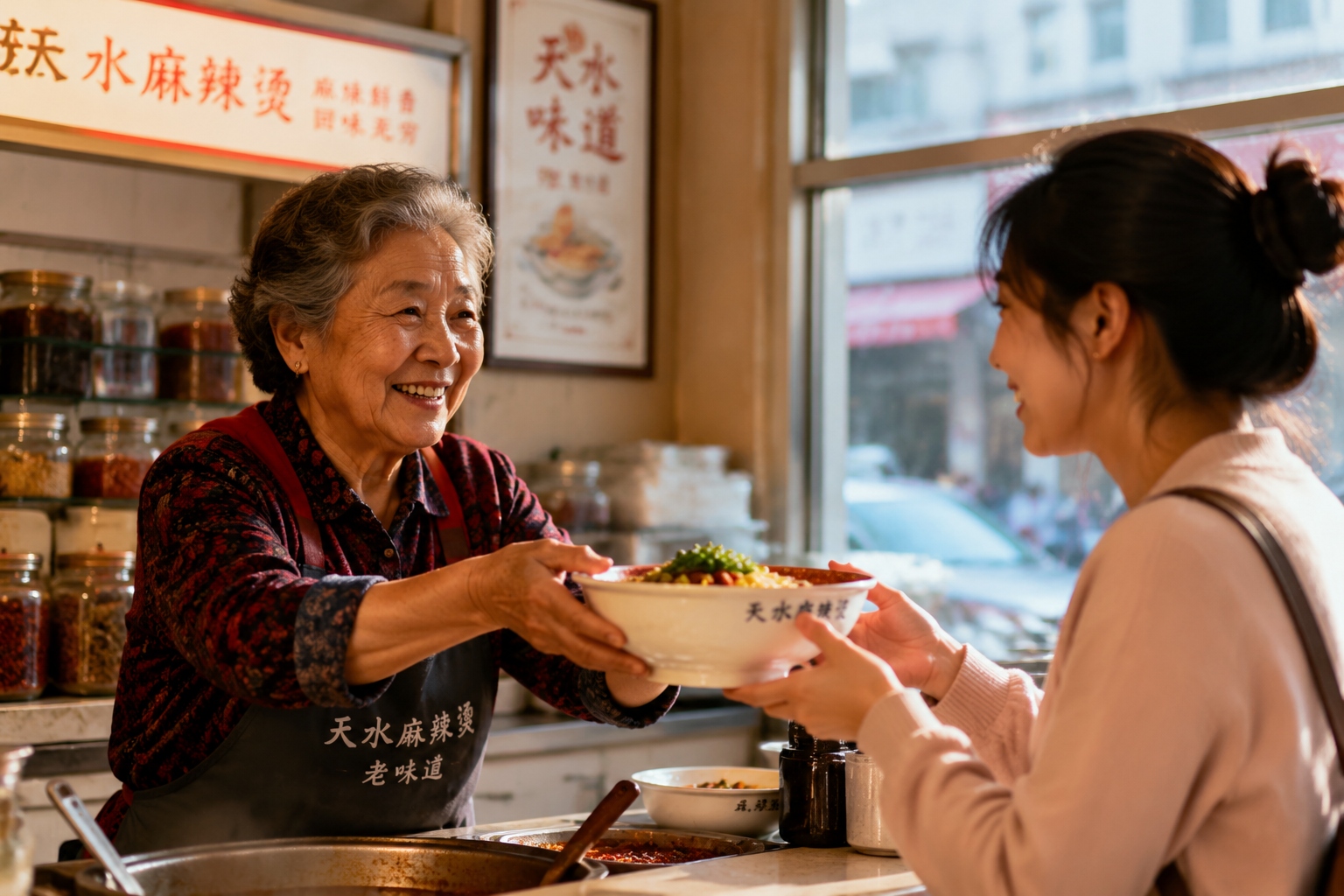
In a broader sense, the Tianshui malatang phenomenon illustrates how short-video platforms can democratize fame. Previously, a city’s reputation was built through official tourism campaigns or decades of word-of-mouth. Now, a single 15-second clip shot by an ordinary person can reshuffle the entire map of China’s food culture. It’s raw, unpredictable, and often fleeting—but when it works, it can transform a place overnight.
The limits of virality
Not everything is perfect. Some locals worry that the sudden influx of tourists has raised prices and changed the character of their neighborhoods. The malatang shops that have been around for decades now face pressure to standardize their recipes to meet the expectations of thousands of newcomers. There are concerns that once the online frenzy fades—and it will—Tianshui might be left with empty streets and a disappointed populace.
But perhaps the more lasting impact is the confidence the city has gained. Tianshui has learned that it has something worth sharing. Even after the hype settles, the city can build on its infrastructure improvements, the newfound hospitality skills of its residents, and the stories that have been written. The dish may go viral for a month, but the sense of place it awakened can last much longer.
As I sat in a malatang shop in Tianshui on a cool April evening, watching steam rise from a dozen bowls, I realized that this wasn’t just about a dish. It was about a city rediscovering itself—one spoonful of chili oil at a time.
Start the discussion at forum.chinacomes.com