
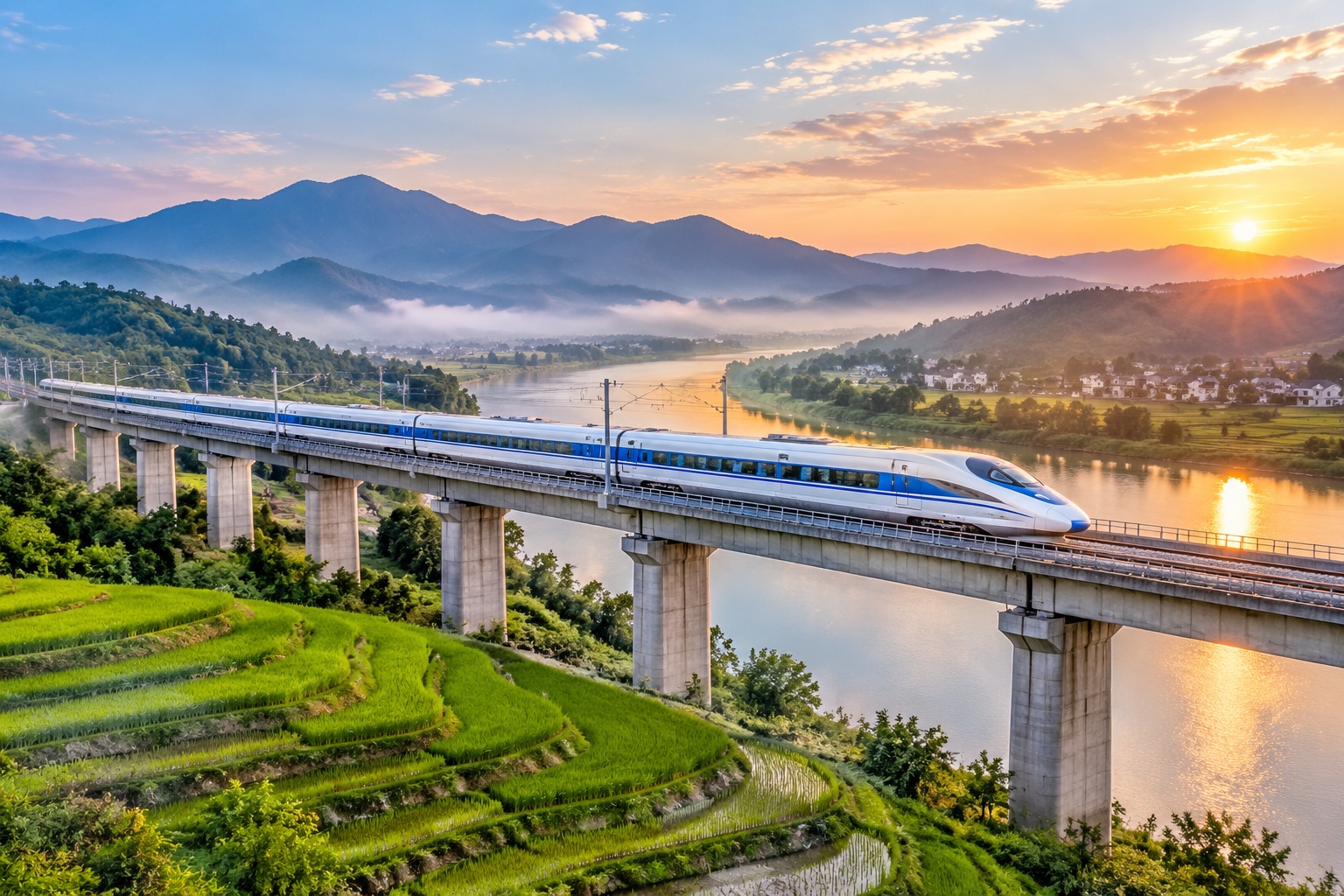

On platform 23 of Beijing South Railway Station, a streamlined bullet train glides in almost silently. With a soft beep, the automatic gate opens and a foreign visitor holding a passport walks onto the train. In less than four and a half hours, that train will be pulling into Shanghai Hongqiao, about 1,300 kilometers away. High-speed rail is not an elite experience here—it is how ordinary people travel. For foreign visitors, it is also one of the most comfortable ways to see China.
China High-Speed Rail at a Glance
China operates the largest high-speed rail network in the world, with more than 40,000 kilometers of track. G-numbered trains run up to 350 km/h, while D-numbered trains are slower, usually 200 to 250 km/h, and tend to serve more secondary routes. The busiest route, Beijing–Shanghai, covers 1,318 kilometers in about 4.5 hours on non-stop G trains; a second-class ticket starts around 553 yuan, which is roughly 75 U.S. dollars by the time of writing.
The system is not just for business travelers. Students use it to go home, grandparents use it to visit hospitals in bigger cities, and more foreign tourists are adding high-speed rides to their itineraries every year. Big-city stations often have English signs under Chinese ones, but the process of booking, security, and checking in can still feel strange at first. A little preparation will make the whole experience feel as normal as riding a subway.
How to Buy Tickets with a Passport
Foreign travelers usually choose from two practical ways to buy high-speed rail tickets:
- Official 12306—the China Railway platform. It has the best prices, but the Chinese interface is not always easy to navigate. Many foreign credit cards are not accepted, so you usually need Alipay or WeChat Pay linked to a usable payment method.
- Trip.com (Ctrip international)—the easiest for most visitors. The site and app are in English, and they accept Visa, Mastercard, and Amex. A small service fee is added, but it reduces the risk of making a mistake with the Chinese-speaking system.
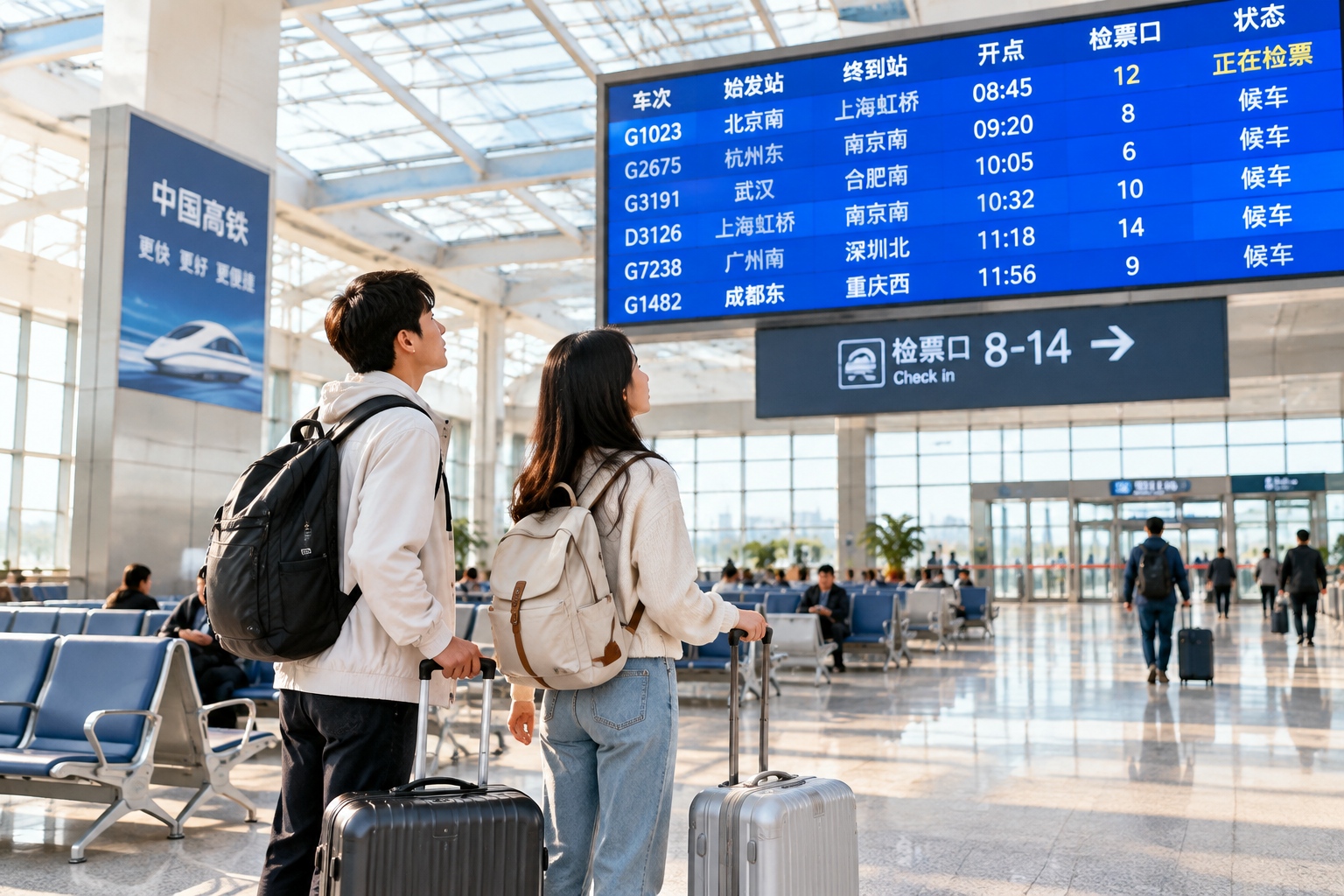
When you fill in passenger details, choose Passport as the credential type. Your name and passport number must match your passport exactly. Some platforms also ask for nationality and date of birth. Taking a photo of your passport before you begin is a simple way to avoid typos.
Tickets generally become available about 15 days before departure. On Chinese public holidays such as Spring Festival, the May Day holiday, or National Day in October, you should book as soon as the booking window opens. Off-peak, you can often buy a ticket the day before, but booking ahead is safer.
You do not need to print anything. The ticket is linked to your passport in the railway system. If you want a paper receipt or an old-style ticket for your records, use a self-service machine marked 取票 or 报销凭证. For boarding, simply place your passport on the scanner at the electronic gate.
Station Procedure: Security, Check-in, and Boarding
Large Chinese high-speed rail stations usually carry English translations, but not always around every corner. Knowing the order of steps makes the place much less intimidating.
Step 1 — Entrance and security. Find the characters 进站口, which mean entrance. All passengers and luggage go through an X-ray check. Keep your passport easy to reach, but you do not normally need to show it at the security door.
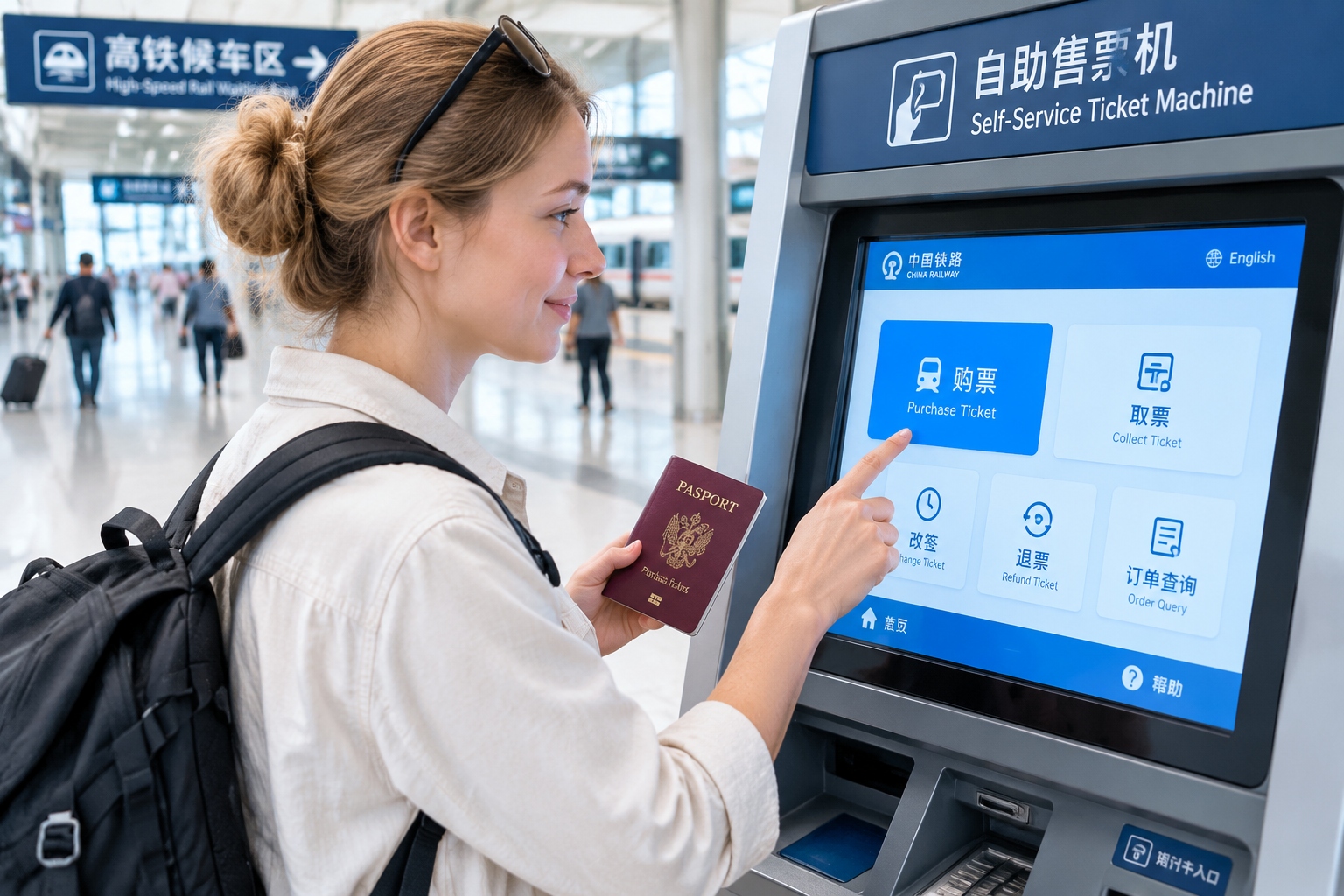
Step 2 — Find your waiting area. After security, go up into the main waiting hall. Look for the large electronic departure board. Find your train number and destination, then check the column labeled 检票口, which means boarding gate. The board may also show your platform number under 站台.
Step 3 — Wait near the correct gate. The gate number shown on the departure board may not be in logical order, so follow the number, not the nearest exit. Gates usually open about 15 to 20 minutes before departure. Watch the status change from “waiting to check in” to “checking in.” On major routes, a recorded voice repeats the announcement in Chinese and then English.
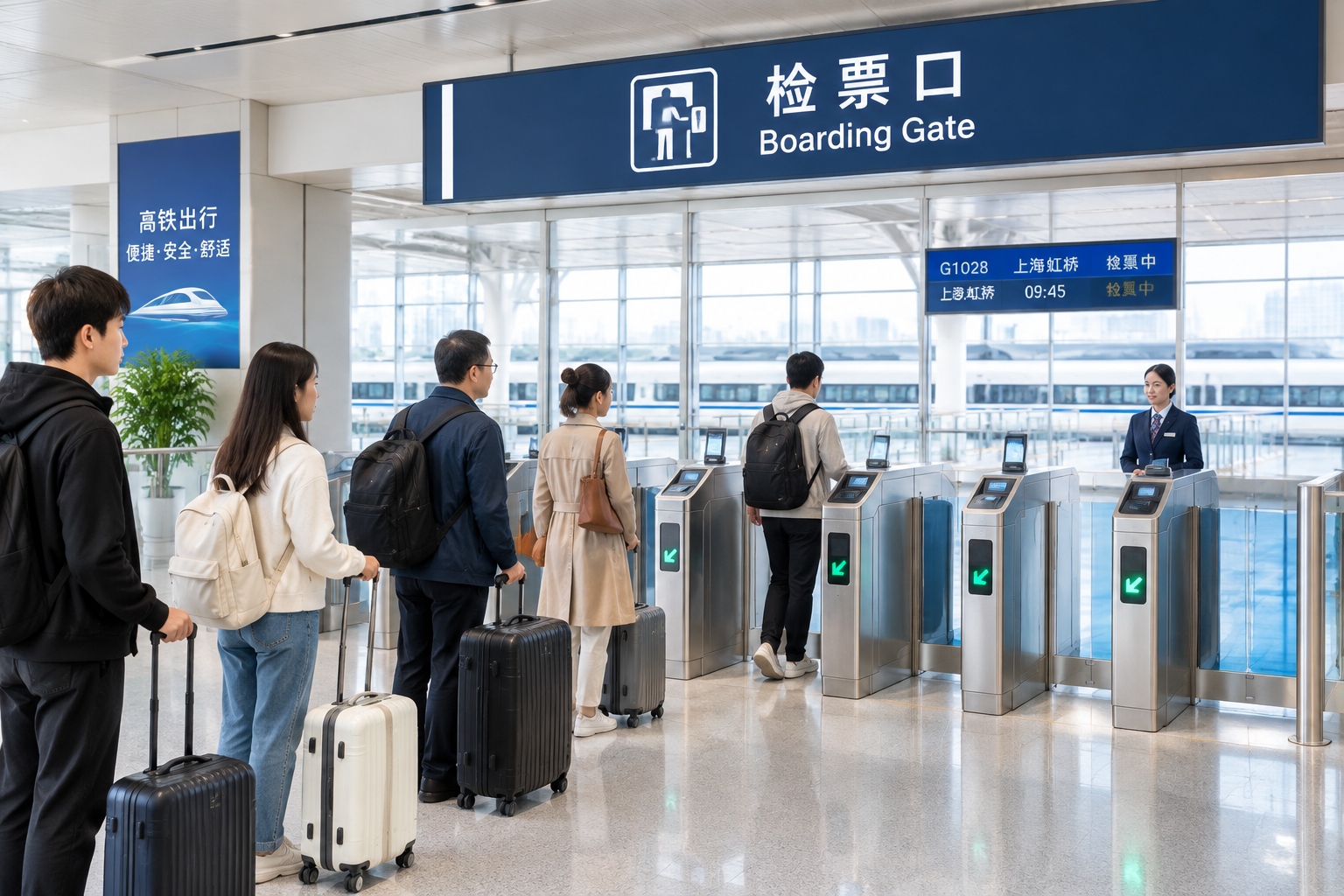
Step 4 — Pass through the gate. At the automatic ticket gate, put your passport flat on the ID scanner. If your passport is not recognized, do not walk away. Look for the staffed lane, often marked 人工通道. A railway staff member will scan your passport or check your order number and open the gates manually. In smaller stations, automatic passport recognition may not be available, but the manual lane always is.
Step 5 — Platform and coach. Once through, follow the signs to the platform. On the platform, colored floor markers show where different coaches will stop. Wait near the marker showing your coach number, such as 3车 for Car 3. When the train arrives, re-check the electronic sign above the door. If you board the wrong coach, you can walk through the train to your seat.
Choosing the Right Train and Seat Class
When searching train schedules, focus on journey time and price more than the train letter. G trains are generally the fastest and most comfortable. D trains are slower but can be useful for less-connected destinations and often operate at lower prices.
Seat classes on most G and D trains:
- Second class (二等座)—the default choice for Chinese passengers. It is similar to short-haul economy class and absolutely fine for trips of two or three hours. Seats are arranged 2+3, and there is enough legroom for most adults. A Beijing–Shanghai second-class ticket costs around 553 yuan.
- First class (一等座)—seats are in a 2+2 layout, with wider seats and fewer people in the car. If you are traveling for more than four hours or on a busy holiday, the quieter atmosphere is worth the extra money. On the Beijing–Shanghai route, first class costs around 933 yuan.
- Business class (商务座)—on newer Fuxing trains, the business seat can recline to a near-flat bed. Passengers usually have access to a waiting lounge at major stations, free water, and snacks. It is expensive, but it is a genuinely different experience when you are crossing the whole country.
Do not worry too much about luggage. Chinese high-speed trains do not apply strict airline-style baggage weight checks. Overhead racks hold typical suitcases, and there are larger luggage spaces at the end of each coach.
Life On Board: Charging, Hot Water, Food, and Toilets
High-speed trains do not always have restaurant cars, but each carriage is well equipped.
- Power outlets: Most seats have a charging socket nearby. In second class, the socket is usually between the seats near your feet. Take a universal adapter if your home plugs do not fit mainland China sockets.
- Hot water: At the end of each carriage, look for the words 开水间. There is a red tap that releases boiling water for tea, instant noodles, or a warm cup of coffee. Use the button or pedal carefully; the water is extremely hot.
- Food: A snack trolley passes through the train selling drinks, instant noodles, biscuits, and sometimes cold packaged meals. Payment is usually by Alipay, WeChat Pay, or cash; international credit cards are often not accepted. If you have not set up a local mobile payment app, buy snacks at a station convenience store before boarding.
- Toilets: Toilets are at the ends of the carriages. They are modern and clean, but you should carry tissue and hand sanitizer, as supplies run out sometimes.
- Wi-Fi: Some newer Fuxing trains have onboard Wi-Fi, but the connection can be patchy. Download your movies or podcasts before you board and keep your own mobile data as backup.
Reading Station Signs: English-Chinese Vocabulary
Electronic boards in big stations are almost always bilingual. To feel more comfortable, learn these characters before you travel:
- 进站口 — Entrance
- 安检 — Security check
- 候车大厅 — Waiting hall
- 检票口 — Boarding gate / Ticket gate
- 人工通道 — Staffed / manual lane
- 站台 — Platform
- 车厢 — Coach / car
- 座位 — Seat
- 卫生间 / 洗手间 — Toilet
- 开水间 — Hot water room
- 出站口 — Exit
- 换乘 — Transfer
With this short dictionary, you will spend less time looking up characters on your phone in a crowded station.
Three Scenic High-Speed Rail Routes Worth a Look
High-speed rail is not only about efficiency. Some lines offer views that rival the tourist destinations they serve.
Hangzhou–Huangshan (杭黄高铁). This line is perfect for anyone visiting eastern China. In about 1.5 hours, the train connects two classic destinations through tea fields, small rivers, and green mountains. If you are already visiting Hangzhou’s West Lake or the water towns around the Yangtze Delta, this route makes the mountains of Huangshan easy to reach.
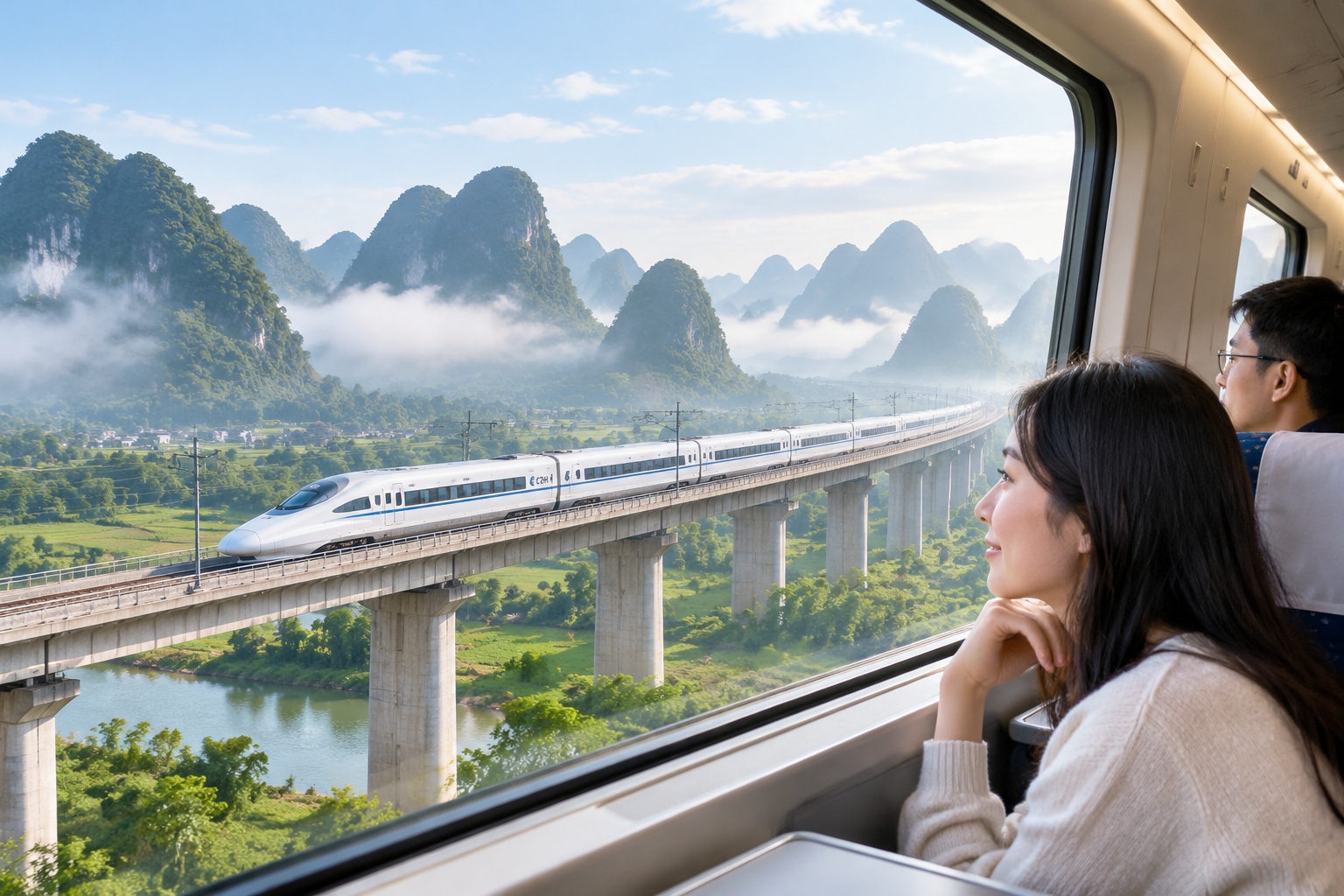
Chengdu–Guiyang (成贵高铁). The route connects the panda capital of Chengdu with Guizhou province in about three hours. The railway crosses deep river valleys and dramatic karst limestone peaks. Tunnels break the views, but the moments when the train emerges onto a high bridge are unforgettable.
Lanzhou–Urumqi (兰新高铁). For travelers who want to see western China, this is the most scenic high-speed corridor in the country. It runs through the Hexi Corridor, past snowy Qilian Mountains, sections of the ancient Great Wall, and wide desert landscapes. It is a long ride, but a daytime seat gives you a visual cross-section of China’s northwest.
Final Tips
Give yourself more time than you need on the days you are getting used to the system. Take your passport, keep the train number and departure time on a screen grab, and do not be shy about asking station staff—most will help even when you only show them your phone. After one trip, you will likely understand why high-speed rail is the first choice for people who live and work in China.
Start the discussion at forum.chinacomes.com