

Hulunbuir Is Not a Checklist. It Is a Route With Three Beds.
Most people arrive in Hulunbuir, in China’s Inner Mongolia, expecting grassland. They leave remembering the beds. Over eight days, from Hailar to the Ergun Wetland, Shiwei and Manzhouli, you sleep in three very different kinds of home: a yurt that can be taken apart and moved, a log house fixed on the border, and a city built partly in the image of its neighbor. That is the real thread of this route. Not monuments. Three ways of living.
Day 1: Start With a Map, Not a Photo Stop
Fly into Hailar and resist the urge to rush straight into the grass. Spend two hours at the Hulunbuir Ethnic Museum. It explains who lives here: Mongolians, Daur, Ewenki and Oroqen people, some herding, some hunting, some keeping reindeer. After that, the next eight days make more sense. What you see is not empty scenery. It is several groups of people finding workable ways to live in a large, cold, borderland region.
Hulunbuir sits in the northeast of Inner Mongolia, close to Russia and Mongolia. For overseas readers, the simplest way to picture it is this: grasslands the size of a small country, long driving days, and a border river that looks ordinary until you remember it separates two countries.
Night One: The Home That Can Be Packed Up
Half an hour out of Hailar, the buildings disappear. Then the power poles. Then even the reference points. The grassland’s endlessness is not a brochure phrase. You will catch yourself staring at a black dot in the distance for a long time because it might be a horse, a cow, or a shadow of cloud.
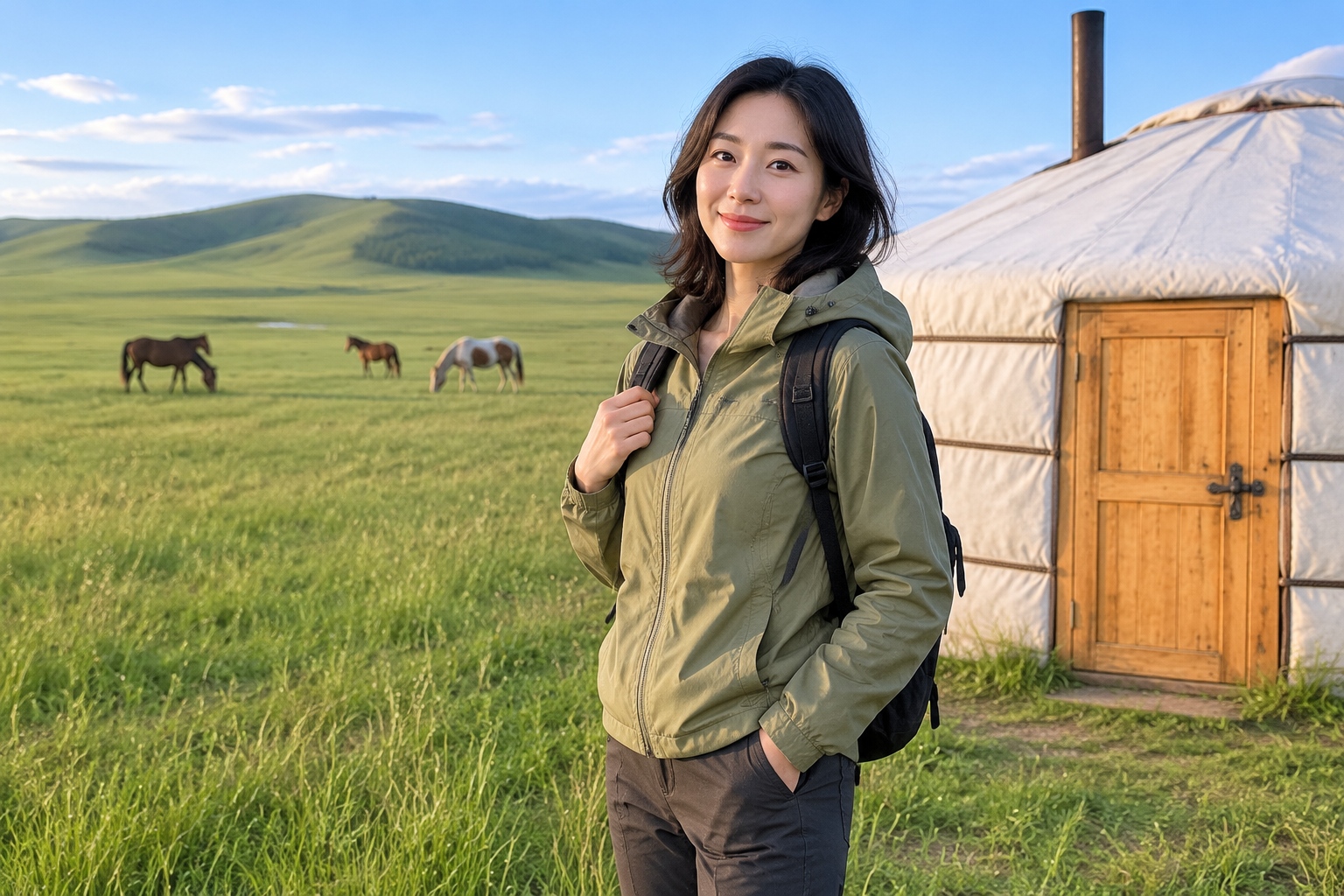
The Mongolian yurt is a house designed to leave. A wooden lattice frame opens into walls and folds flat onto a truck. A round opening at the top lets in daylight and, at night, stars. The door usually faces south, away from the northwest wind. Herding families may move several times a year, and the house moves with them. That is the whole reason it exists.
Day 2: Get on a Horse, Slowly
Do not try to prove anything on your first ride. Walk with the horse guide, learn to grip with your legs and keep your upper body loose. Horses notice tension. Ten calm minutes are better than an hour of pretending to be a hero.
Day 3: Visit a Herding Family
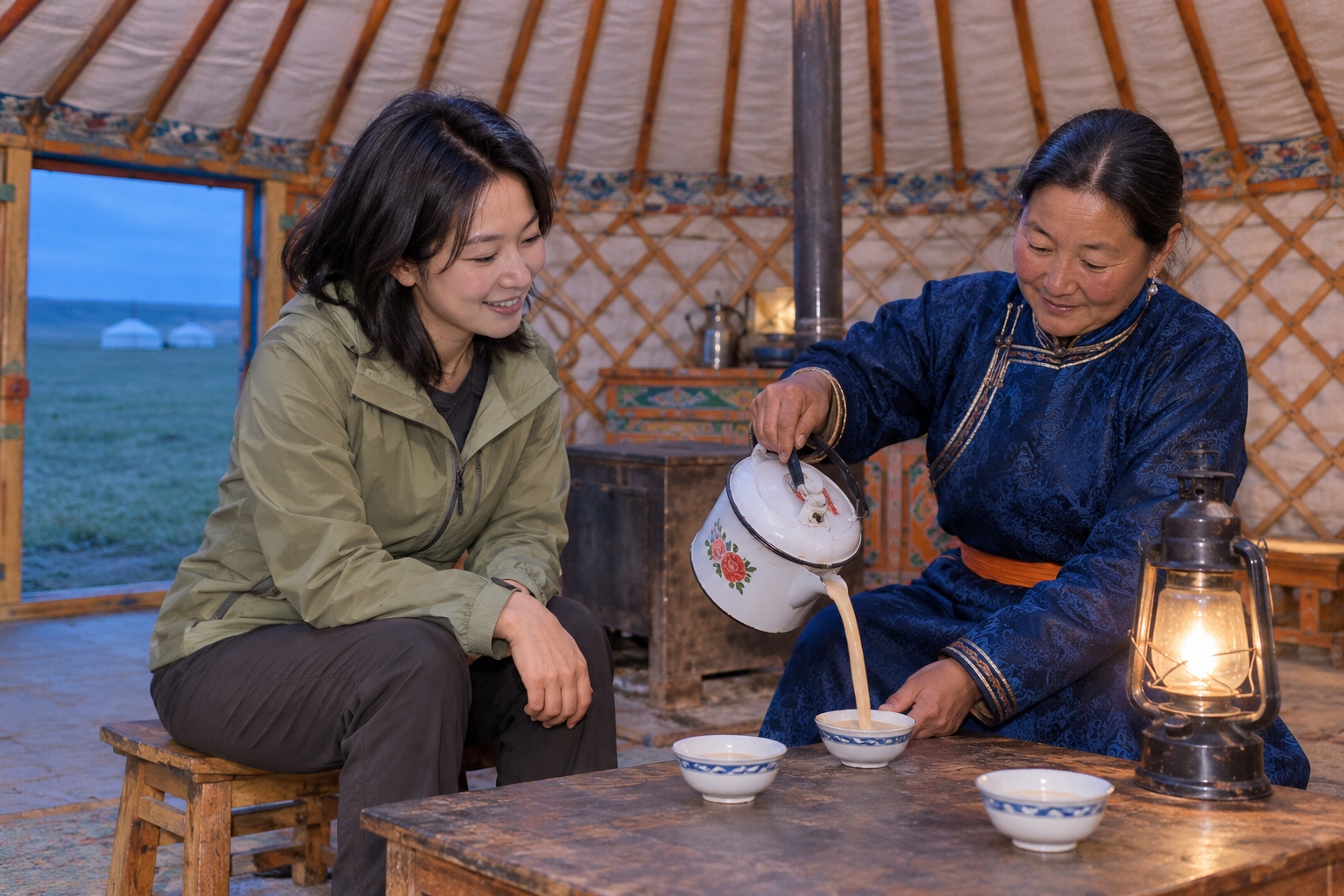
Three small rules help. Milk tea is salty, and you accept the bowl with both hands. Do not step on the threshold. Taste whatever the host offers; you do not have to finish it. Milk tofu, yoghurt and boiled mutton all follow the same grassland logic: high energy, long shelf life, no refrigerator required.
At night there is often a bonfire and roast lamb. The whole animal turns in the oven for hours, skin turning crisp before the meat goes tender. The host cuts a piece first for the oldest person at the table. Then comes morin khuur, long-song singing and khoomei, a throat-singing style where one person produces two tones at once, the lower one seeming to rise from the ground. Do not bother recording it on your phone. It will not translate. Listen while you are there.
Day 4: The One Thing on the Grassland That Bends
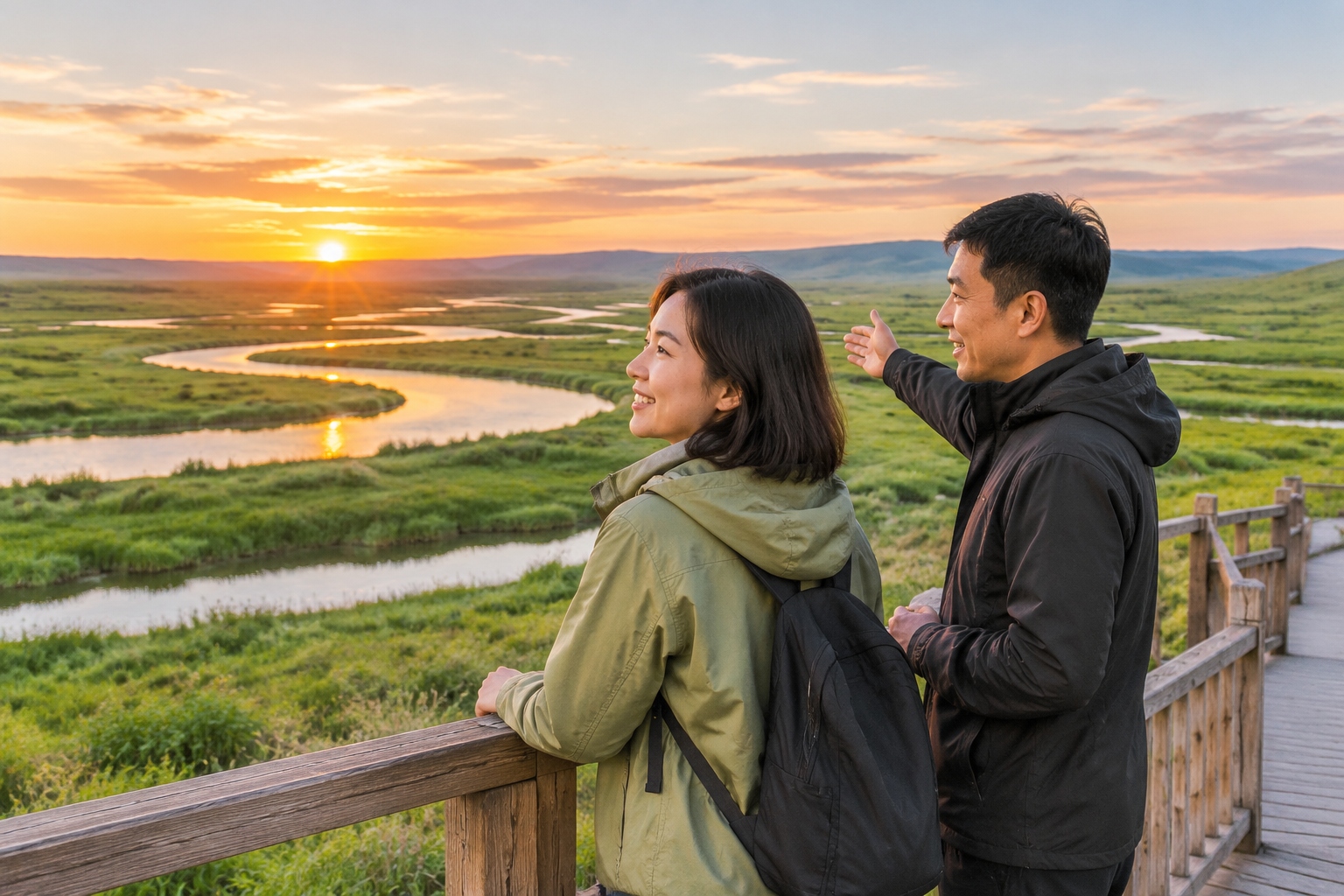
Almost everything here is straight: the road, the horizon, the wind. The Ergun Wetland is the exception. The Genhe River loops and doubles back across the marsh until, from the viewing platform, it looks like a silver ribbon dropped on green cloth. The area is often called Asia’s largest wetland. The label is big, but the scale is real.
Go up about ninety minutes before sunset. The light comes in low, and every bend in the river carries its own shadow. It is the kind of sight that makes a long driving day feel worth it.
Night Two: The Home Nailed to the Border
Shiwei is a Russian Ethnic Township. The houses here are called mukeleng: logs stacked one by one, corners interlocking without nails, iron roofs above, window frames painted blue or white. You see similar houses across Siberia because there is plenty of wood and winter lasts a long time.
Day 5: Stand by the Border River
In the evening, go to the Ergun River. Here it forms the border between China and Russia. The river is not wide. You can see the far bank clearly. Across the water is Olochi, a Russian village with houses, cows and chimney smoke that look much like the village on this side. One river, two countries, and the landscape barely changes.
Day 6: Lunch in a Chinese-Russian Home
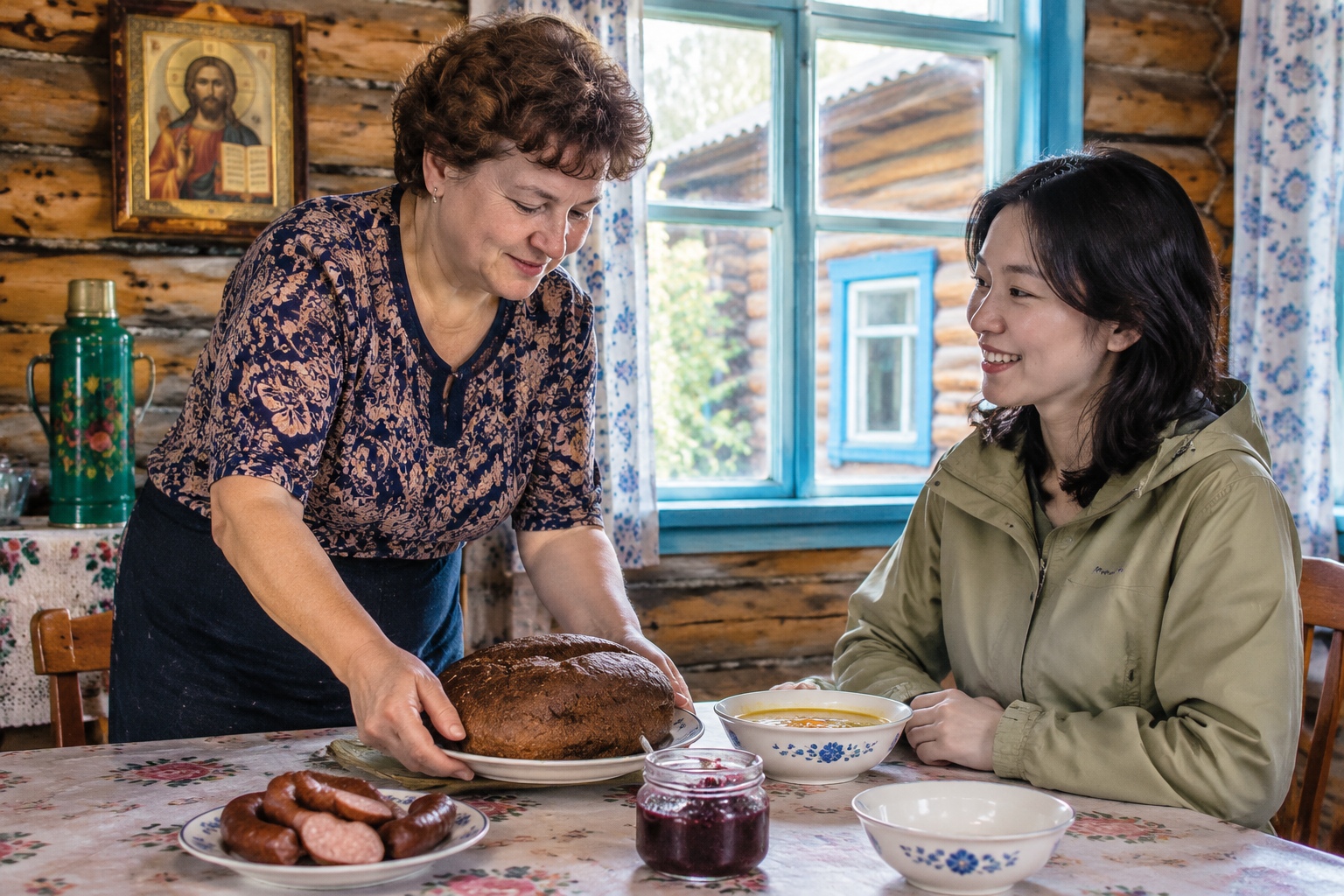
At noon, sit down with a local family. The table may include big bread, smoked sausage, soup and homemade blueberry jam. The hosts are often Chinese-Russian descendants. They may speak with a northeast Chinese accent, keep Orthodox icons on the wall, and still have a Chinese thermos on the table. It is the most mixed meal on the route, and one of the most memorable.
Keep your passport with you. In border areas, do not photograph guard posts, border facilities or patrols. If you take a river boat, stay on the permitted route.
Night Three: The City Built by Looking Next Door
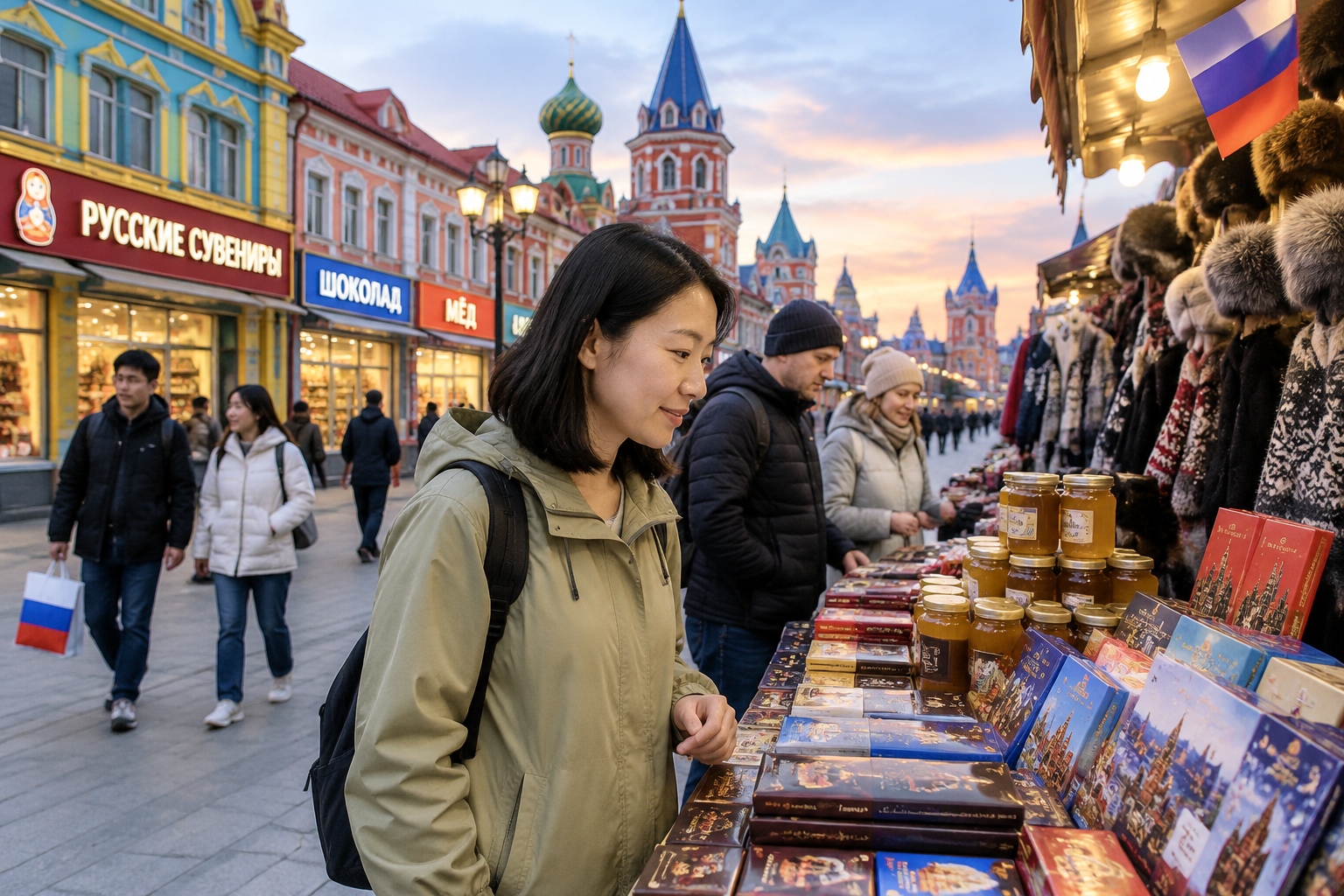
Manzhouli is a city shaped by its neighbor. Russian-style spires, colorful facades and Cyrillic shop signs are part of the streetscape. Matryoshka Square has the giant doll that appears on every postcard: one doll inside another, the same pattern getting smaller and smaller.
It can feel a little like a theme park. The more grounded reality is the border trade. In the China-Russia mutual trade zone, Chinese shoppers buy Russian chocolate and honey; Russian shoppers buy Chinese clothes and small appliances. This is where the word border stops being a line on a map and becomes a daily business.
At night, the city lights up in gold. It is flashy, but it tells you something about how border towns survive: by turning difference into trade.
Day 8: Leaving
Fly out of Manzhouli, or take the train back to Hailar and fly from there. Outside the window, there is still grassland. By now you can tell the difference between grass and grassland. That sounds like a small thing. It is not.
What to Know Before You Go
Season
June to September is green. July and August have the tallest grass and often the Naadam festival, with wrestling, horse racing and archery. From mid-to-late September the grassland turns gold, which is another kind of beautiful. Winter is a different product: minus thirty degrees Celsius and an ice-and-snow Naadam.
Temperature
You may wear short sleeves by day and need a jacket after dark, when temperatures often drop to around ten degrees Celsius. Once the wind rises on the grassland, it feels colder. Bring a windproof shell.
Mosquitoes
In July and August, mosquitoes and tiny biting midges are common. Repellent, long sleeves and long trousers matter more than almost anything else.
Roads and Phone Signal
Most travel between grassland areas and Shiwei is by hired car. Roads are good but distances are long; three to four hours in a day is normal. Deep in the grassland, signal can disappear. Download offline maps in advance.
Yurt Stays Are Not All the Same
Some yurts belong to herding families. Others are tourist camps. Camps are more comfortable, with private bathrooms, but may include staged performances. Staying with a herding family is more real and more basic. Confirm which kind you are booking before you go.
Respect
Do not step on thresholds. Do not shout in front of a yurt. Ask before photographing people. Do not chase livestock or sound your horn at animals on the road.
Who This Route Suits
It suits people who want to slow down, who have seen enough grand mountains and want a different kind of space, and who are genuinely curious about Mongolian and Russian cultural life. It also works for families with children or parents, because there is almost no physical threshold. It suits travelers who like the idea of sleeping somewhere different.
It does not suit people who need a dense checklist of sights every day. The empty space here is deliberate. It does not suit anyone who cannot tolerate insects or changes in accommodation standards. And if you come only in winter, be clear that you are choosing a different trip: minus thirty degrees is not a minor detail.
What You Take Home
Not beef jerky and nesting dolls. You take home the moment you first realize there is nothing on the horizon and you do not need to fill it. The round opening at the top of the yurt, and the stars you see lying on your back. Ten minutes on a horse when you finally stop being afraid. Two bowls of salty milk tea at a herder’s table. The bends of the Genhe River, each with its own shadow at sunset. Chimney smoke on the far side of the border river, exactly like the smoke on your side. Big bread with blueberry jam. The gold of Manzhouli at night.
Eight days, three kinds of houses. The grassland’s last lesson is simple: home is not a wall. It is the place where you are willing to stop.