

A purple field that isn’t for the camera
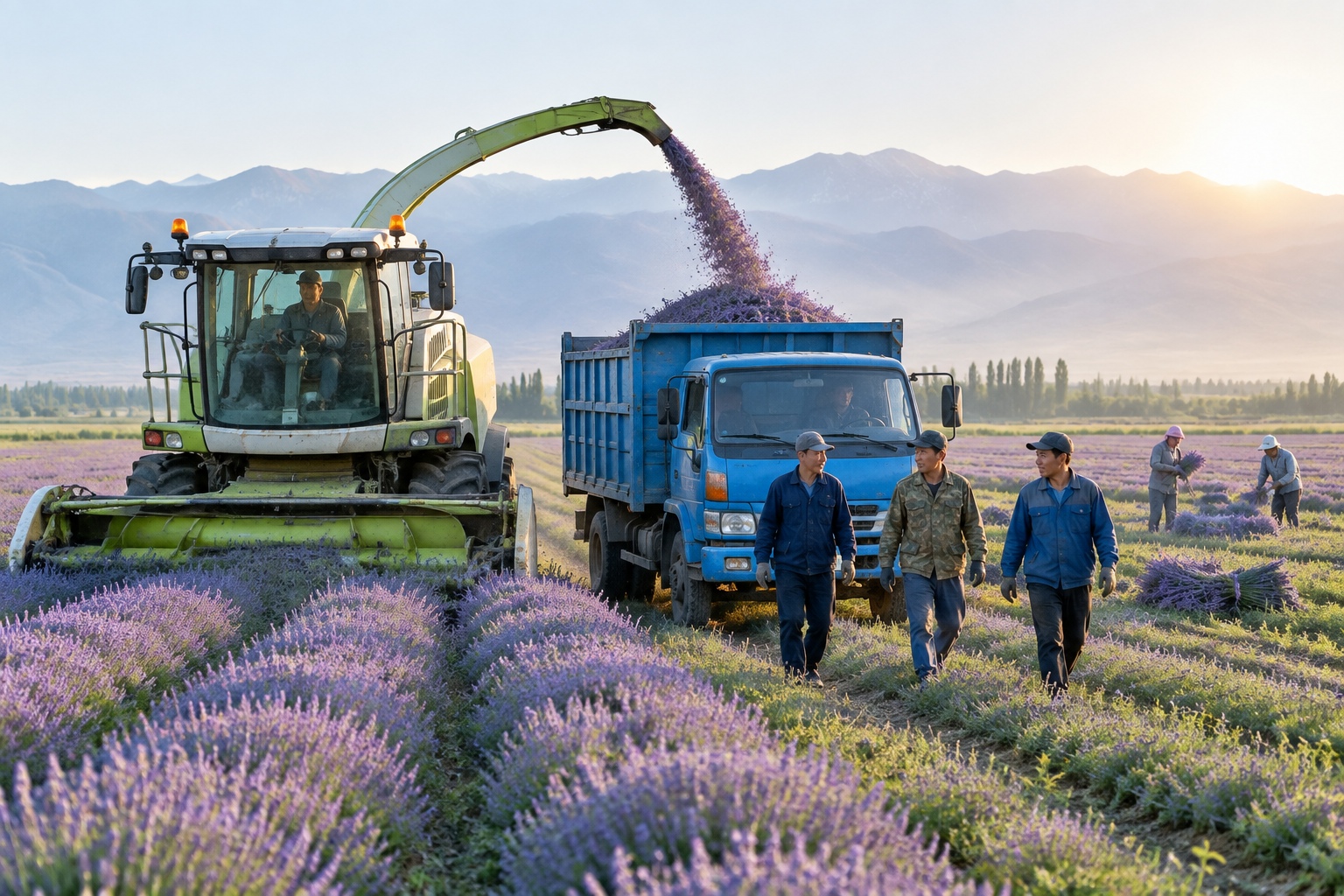
At 6:15 on a June morning in Huocheng County, in China’s far-western Xinjiang region, a field of purple is being eaten by a machine. A converted forage harvester with a wide cutting head moves along the rows, taking the top 20 centimeters of each plant and blowing the flowers into a truck that crawls beside it. Three people are running the whole operation. In the next plot over, forty people are doing the same job with sickles.
Both crews are harvesting lavender. Only one of them is harvesting for the photograph.
Huocheng sits at roughly 44 degrees north, the same latitude band as Provence, and the Ili valley around it grows the great majority of China’s lavender. Ask people outside China about this place and they usually picture a purple backdrop for wedding shoots. The valley does produce plenty of those. It also produces something far less photogenic and much more valuable: essential oil, floral water, dried buds, soap, ice cream and a small mountain of products that end up in bottles, boxes and hotel rooms across the country.
How lavender got to Xinjiang in the first place
Lavender is not native here. It arrived in 1964, brought to the state farms of the Xinjiang Production and Construction Corps as an import-substitution crop: China was buying lavender oil from abroad and wanted its own supply. The plants liked the place. Ili gets long summer daylight, a big swing between daytime and nighttime temperatures, winters cold enough to give the plants the dormancy they need, and snow cover that protects the roots. The same combination is what made Provence famous.
Sixty years later, the region accounts for the large majority of national output. Huocheng County alone plants tens of thousands of mu, a mu being about one-fifteenth of a hectare, and the wider valley, including the Corps farms, is usually described as having around 80,000 mu under lavender.
The harvest is a 20-day race against chemistry
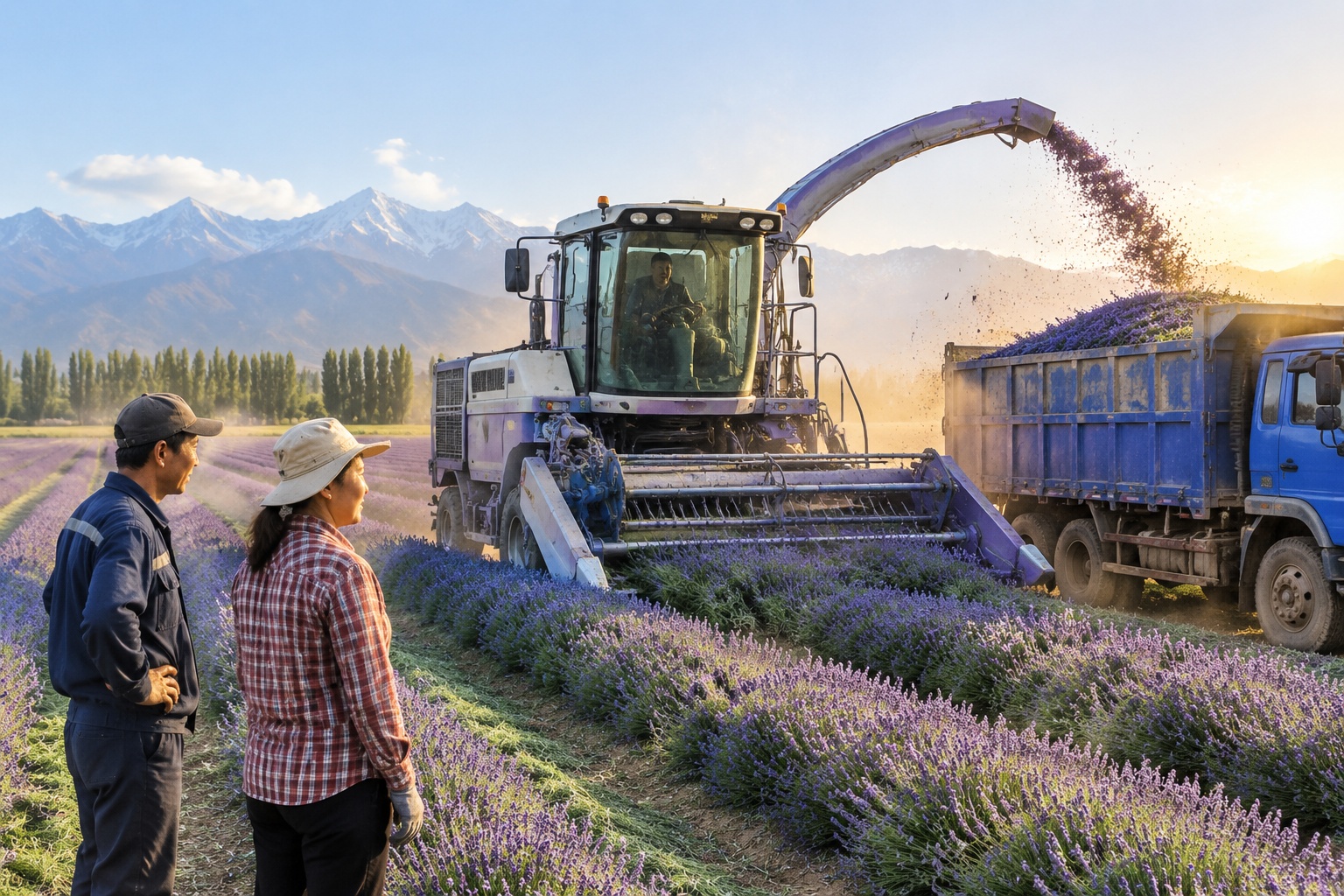
Oil content in a lavender flower peaks in a narrow window, roughly when the first flowers have opened but before the whole spike is in full bloom. Wait a week and the yield drops. Get hit by rain or a heat wave and it drops faster. That is why the harvest in Ili is compressed into about three weeks from mid-June, and why so much of the work happens in the cool early hours, when the oil is at its highest.
It is also why machines spread so quickly. Hand-cutting is still used, but it competes for the same workers who are needed for wheat and cotton at exactly the same time, and labor costs in Xinjiang have climbed steadily. A machine crew of three can clear in a day what used to take dozens of pickers. The trade-off is bruising: machine-cut flowers are fine for a distillation tank but useless for a dried bouquet that has to keep its shape on a shelf in Shanghai.
So the valley runs two harvests at once. Flowers for oil go into the machine and straight into a truck. Flowers for bouquets and sachets are still cut by hand, tied in bundles and hung in the shade.
What happens in the first six hours after cutting
This is the part almost nobody photographs. Freshly cut lavender starts losing oil immediately, so the gap between field and still is measured in hours, not days. Small distilleries sit at the edge of the fields, and during harvest season the air over a village smells like a soap shop exploded.
Inside, steam is pushed through a packed tank of flowers. The steam carries the oil out, condenses, and separates: oil floats on top, and the water underneath, called hydrosol or floral water, is drawn off separately. Depending on the variety and the season, somewhere between half a kilogram and a kilogram and a half of oil comes out of every 100 kilograms of fresh flowers. A run takes one to two hours. The oil is filtered into steel drums and stacked in a shed.
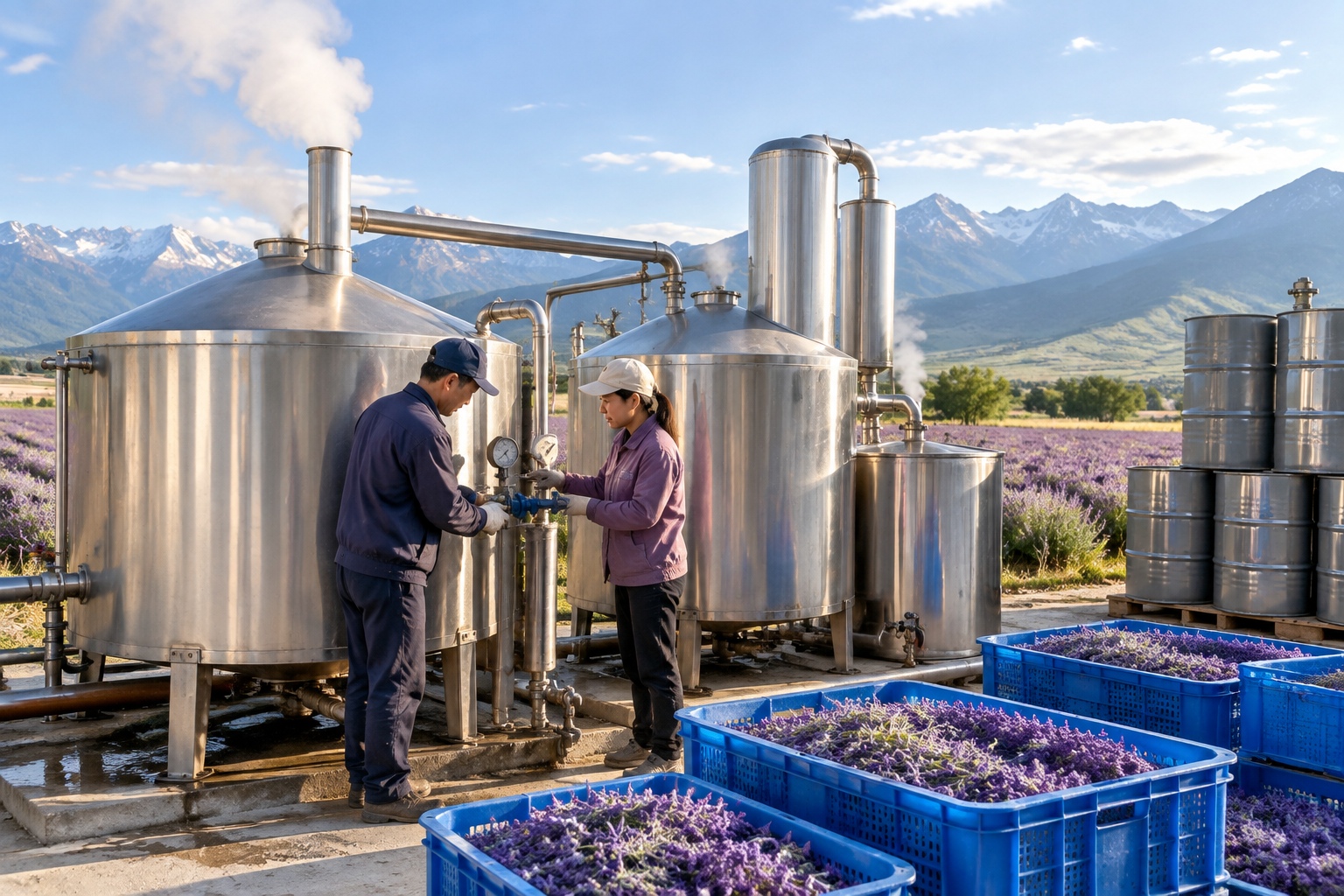
Most of the value in the chain is created right here, in a shed with a concrete floor, by workers who will never see the bottle their product ends up in.
The oil leaves in drums, not in pretty bottles
Ili lavender oil is judged on chemistry, not on how the field looked. Buyers test for linalool and linalyl acetate, the two compounds that make lavender smell like lavender, and a Chinese national standard sets the grade. The high-altitude, high-sunlight conditions in Ili tend to push those numbers up, which is why the oil has a solid reputation among domestic formulators even though it is barely known as a brand.
From the shed it goes three ways. Some is sold to Chinese cosmetics and personal-care companies that use it in face creams, shampoos and laundry scent. Some goes to fragrance houses and traders, and a portion of that is exported; regional trade data shows lavender oil moving to Europe and Japan, though tracking a specific drum of Xinjiang oil into a specific French perfume is basically impossible. And a growing share goes into small brands, online shops and factory outlets that sell directly to consumers.
Prices are volatile. Wholesale oil can move by a third or more between seasons, and a bumper crop in one valley can undercut growers in another. Farmers who planted lavender because it earned more than corn have learned that it can also lose more than corn.
Hydrosol: the half that rarely gets mentioned
For every kilo of oil, a distillery produces hundreds of kilos of hydrosol, the scented water left behind. It costs a fraction of the oil, and it is the base of most of the lavender mist, calming spray and cheap skincare sold online. By volume, hydrosol is a bigger business than oil in Ili. It is also the product most likely to be diluted, re-scented or quietly relabeled, which is one reason local producers have pushed for geographical-indication protection on the Huocheng name.
Dried flowers, lavender ice cream, and a livestream at 10 p.m.
The souvenir side of the industry is what most visitors actually see. In June and July, tour buses arrive for the lavender festival, homestay owners in the villages raise their rates, and photographers charge by the hour for a spot between the rows. For some households the photo money now rivals the oil money, which is a strange sentence to write about a farm, but it is true.
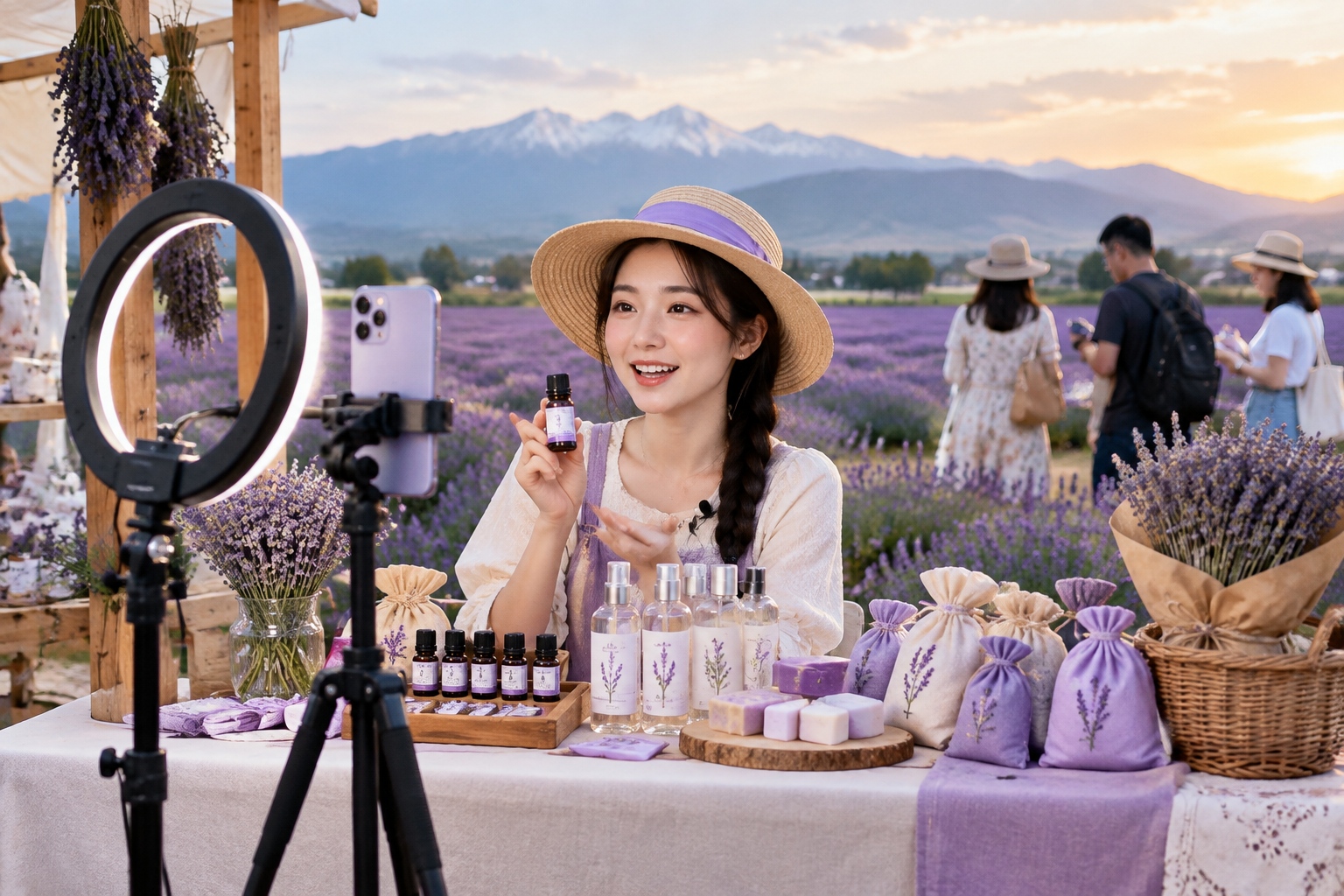
Beyond the fields, the crop turns into things you can eat and use: lavender honey, lavender tea, lavender ice cream, lavender beer, soap, pillows, sachet bags, and skincare aimed at younger buyers. Much of it is sold by livestream, often from a table set up at the edge of a field. A seller in her twenties holding up a bottle of hydrosol against a purple background at ten at night is, at this point, a normal part of the supply chain.
What is still hard
Three problems come up again and again when you talk to people in the valley. The first is price. Lavender is a perennial that produces for about eight to ten years, so a farmer who plants it is making a decade-long bet on a global market. The second is imitation: sellers far from Xinjiang label ordinary oil and dried buds as Ili lavender, and buyers rarely check. The third is weather. A late frost, a hail storm or a dry spring can wipe out the season’s oil content, and there is no insurance product that really covers it.
None of that fits the postcard. But it is what the crop actually is: an industrial raw material with a beautiful face and a volatile balance sheet, grown by people who mostly never smell it in its finished form.
The short answer to where it goes
Into drums, then into distilleries, then into face cream, laundry detergent, aroma diffusers, sachet bags and hotel toiletries. And if you happen to be in Ili in June, into an ice cream cone sold at the gate. The purple fields are real. So is the warehouse behind them.
Start the discussion at forum.chinacomes.com