


An 11:40 p.m. Walk in Chengdu
Hannah, a 29-year-old graphic designer from Austin, Texas, landed in Chengdu in March with a folder of worries already loaded. Friends had sent her articles about cameras, face scans, and social credit. On her third night she walked back to a hostel near Wenshu Monastery after hotpot, phone at 40 percent, and only realised an hour later that she had not once checked whether anyone was behind her.
“The weird part wasn’t that I felt safe,” she told me later. “It was that I felt safe and there were cameras everywhere. Those two things were supposed to contradict each other.”
That contradiction is what most American visitors bump into within a week of landing. The story they were told is about watching. The story they walk through is about order, and about how much of it they are willing to trade for a different kind of privacy.
What Surveillance Actually Looks Like on the Ground
A visitor to a Chinese city meets three layers of monitoring, and they are not the same thing.
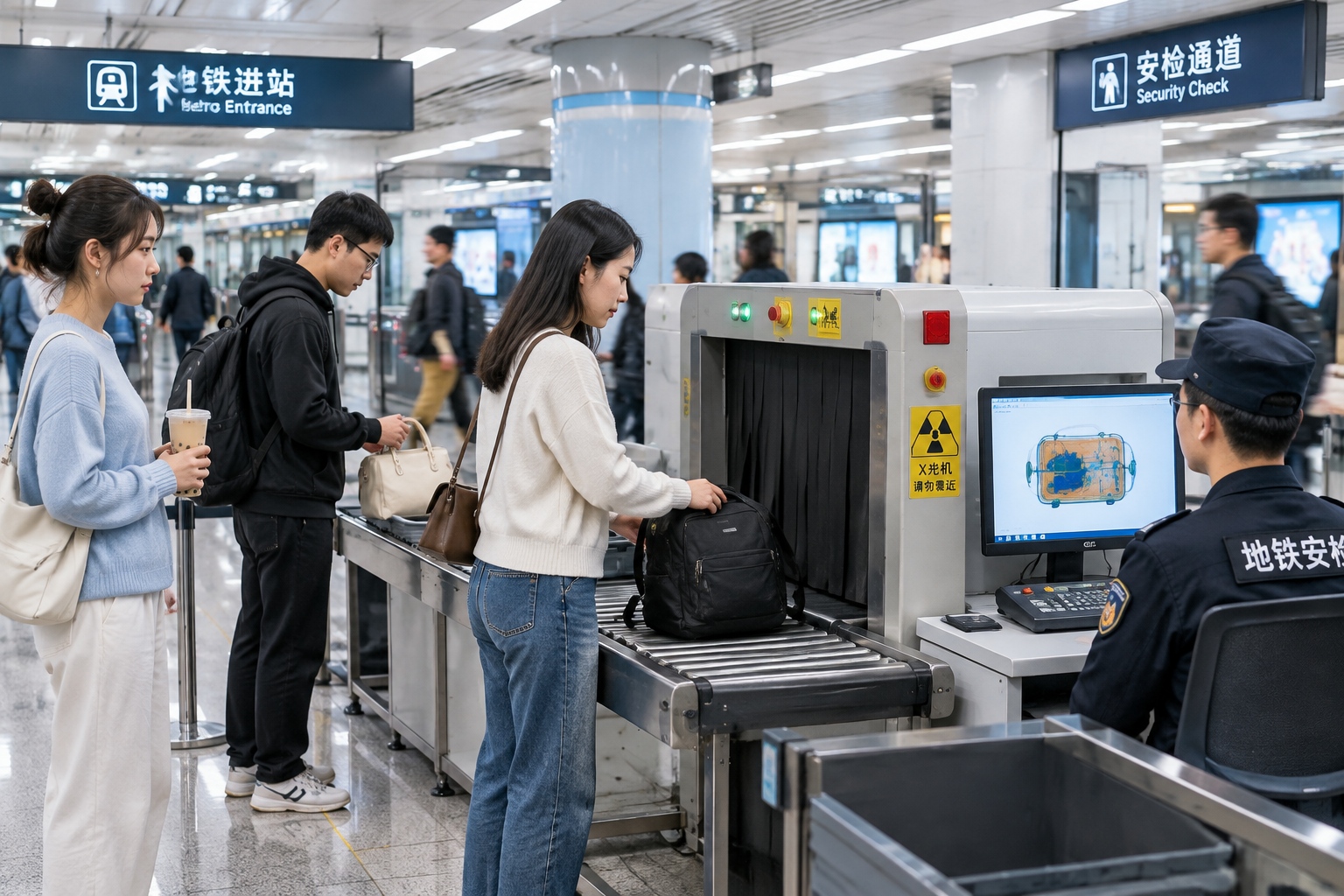
The first is physical. An X-ray machine and a metal detector at every subway entrance, a security guard at the door of malls and office towers, an ID check at some stadiums and train stations. This is closer to airport routine than to covert watching. You see it, you walk through it, and it takes about eight seconds.
The second is cameras. China does not publish a national total, and the widely circulated figure of several hundred million — one frequently quoted estimate from Comparitech put it above 540 million by 2021 — is a rough extrapolation from city-level data, not a government number. In a tier-one city you will see them on lamp posts, in elevators, above shop doors. In a small town in Gansu you may walk for twenty minutes and pass three.
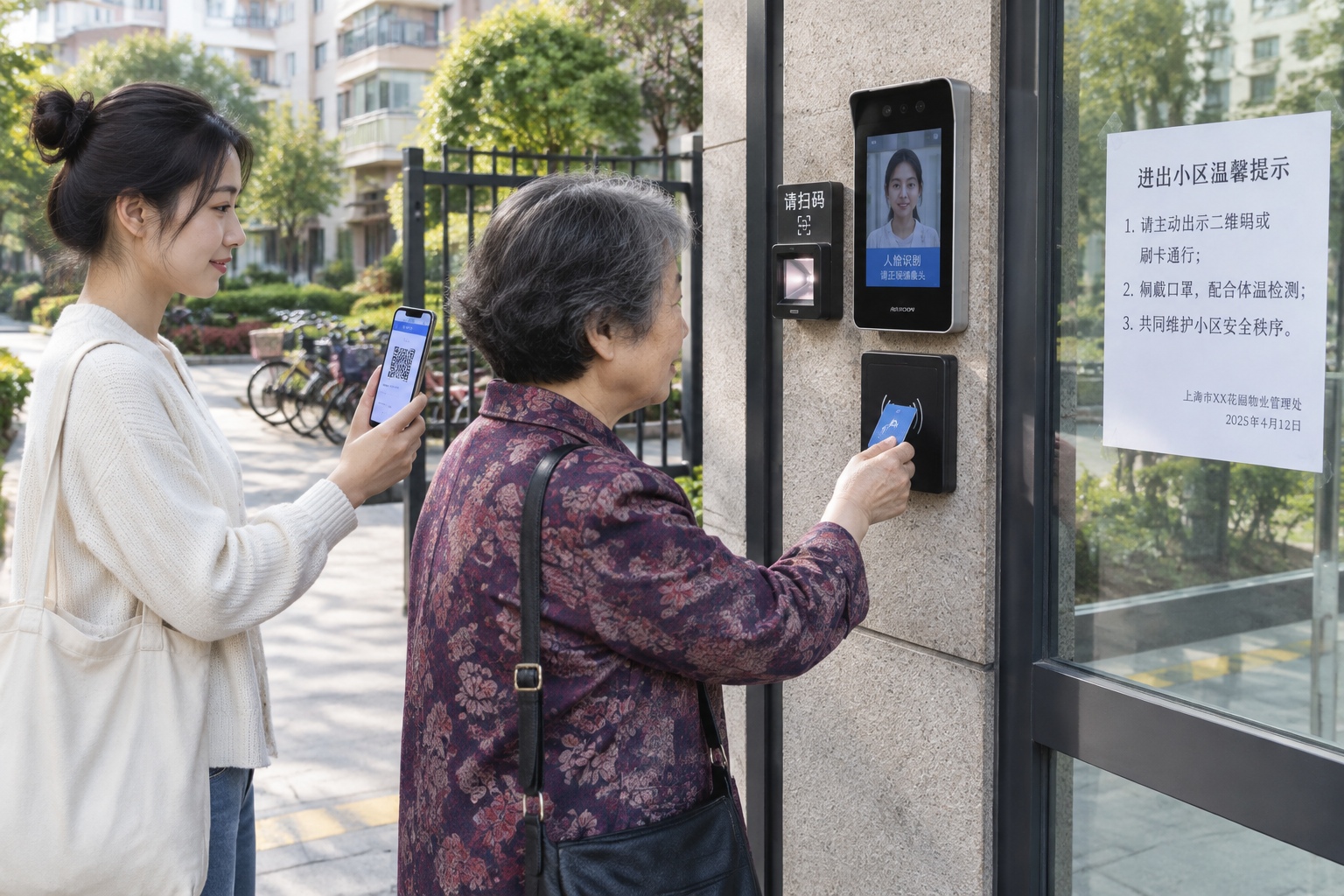
The third layer, and the one that shapes daily life most, is identity. Train tickets and hotel check-ins require a passport or ID card. SIM cards are registered to a name. A residential compound gate may open with a face scan, a key card, or a QR code on a phone.
The rules that now limit it
Foreign coverage often skips the legal layer, which has been tightening rather than loosening. Three sets of rules matter most right now.
The Personal Information Protection Law, usually shortened to PIPL, took effect on November 1, 2021. It classifies facial data, fingerprints, and medical records as “sensitive personal information,” which requires separate, explicit consent. A vague notice posted in a lobby is not enough.
The Regulations on the Security Management of Public Safety Video Image Systems took effect on April 1, 2025. They specify who may install cameras in public areas — government bodies and the management units of the premises — require visible notices for most public installations, and ban cameras inside hotel rooms, restrooms, changing rooms, and other private spaces. They also bar aiming a camera at someone else’s window or doorway.
The Security Management Measures for the Application of Facial Recognition Technology followed on June 1, 2025. They require a specific, legitimate purpose and a necessity test, ban face-recognition equipment in hotel guest rooms and similar spaces, and — the part that matters most day to day — state that where a non-face method of verification exists, an individual cannot be forced to use face recognition as the only option.
What does that mean in practice? If you check into a Chinese hotel and a camera on the counter is pointed at your face, you can ask to use your passport instead. If your apartment compound installs a face-scan gate, a key card or QR code should still be available. Written rules do not always match enforcement on the ground, especially in smaller cities, but they give people something concrete to point at when they complain.
The Safety Numbers Visitors Notice First
Here is the part that surprises Americans most. China’s homicide rate sits at roughly 0.5 per 100,000 people. The United States has run between about 5 and 7 per 100,000 in recent years. That gap is not a rounding error, and it shows up in ordinary behaviour.
Women jog alone at 10 p.m. in city parks. Delivery riders leave bags outside apartment doors and come back for them later. A wallet left in a Chengdu taxi is a plausible thing to get back, sometimes with the cash untouched. None of this is universal: pickpocketing still happens around crowded tourist markets, phone and investment scams are a real industry, and a foreign accent attracts a certain kind of con artist. But the baseline feels different from what most American visitors expect.
Why “Monitoring Equals Fear” Doesn’t Translate
The American reflex is to assume cameras exist because people are afraid. The Chinese reading is closer to this: cameras exist because density is high and the state is expected to keep order.
Roughly 200 million people in China live in cities of over a million. A single busy metro station can handle a hundred thousand passengers a day. E-bikes, fireworks, construction sites, and crowds are everywhere. In that environment, “who is responsible when something goes wrong” is a live question, and the public answer has historically been: the authorities, visibly.
That is not the same as an absence of privacy concerns. Chinese citizens file lawsuits over this, and sometimes win. In 2019, a law professor named Guo Bing sued a Hangzhou wildlife park that required annual-pass holders to scan their faces. A district court ruled in his favour in November 2020, ordering the park to delete his facial data and pay compensation. In several cities, residents have argued successfully that property managers cannot make face scanning the only way into their own building. These cases rarely travel internationally, but they exist, and they fed directly into the 2025 rules.
One more correction for visitors. The “social credit score” in so many headlines is not a single nationwide number attached to each person. What exists is more fragmented: a financial credit system, compliance ratings for companies, and court blacklists for people who refuse to comply with judgments, which can restrict flights and high-speed rail for the individuals on them.
If You’re Visiting: The Practical Version
For a foreign visitor, the rules that actually affect you are mundane.
Hotels register your stay automatically. If you stay in a private home — a friend’s apartment, a short-term rental — you are required to register at the local police station within 24 hours of arrival. Carry your passport; it is the document that gets you onto trains, into museums, and through the doors of some public buildings.
Metro security checks are mandatory and non-negotiable. Budget the time. Photography is fine almost everywhere, with the exception of military sites, some government buildings, and border areas, where signs usually make the rule obvious.
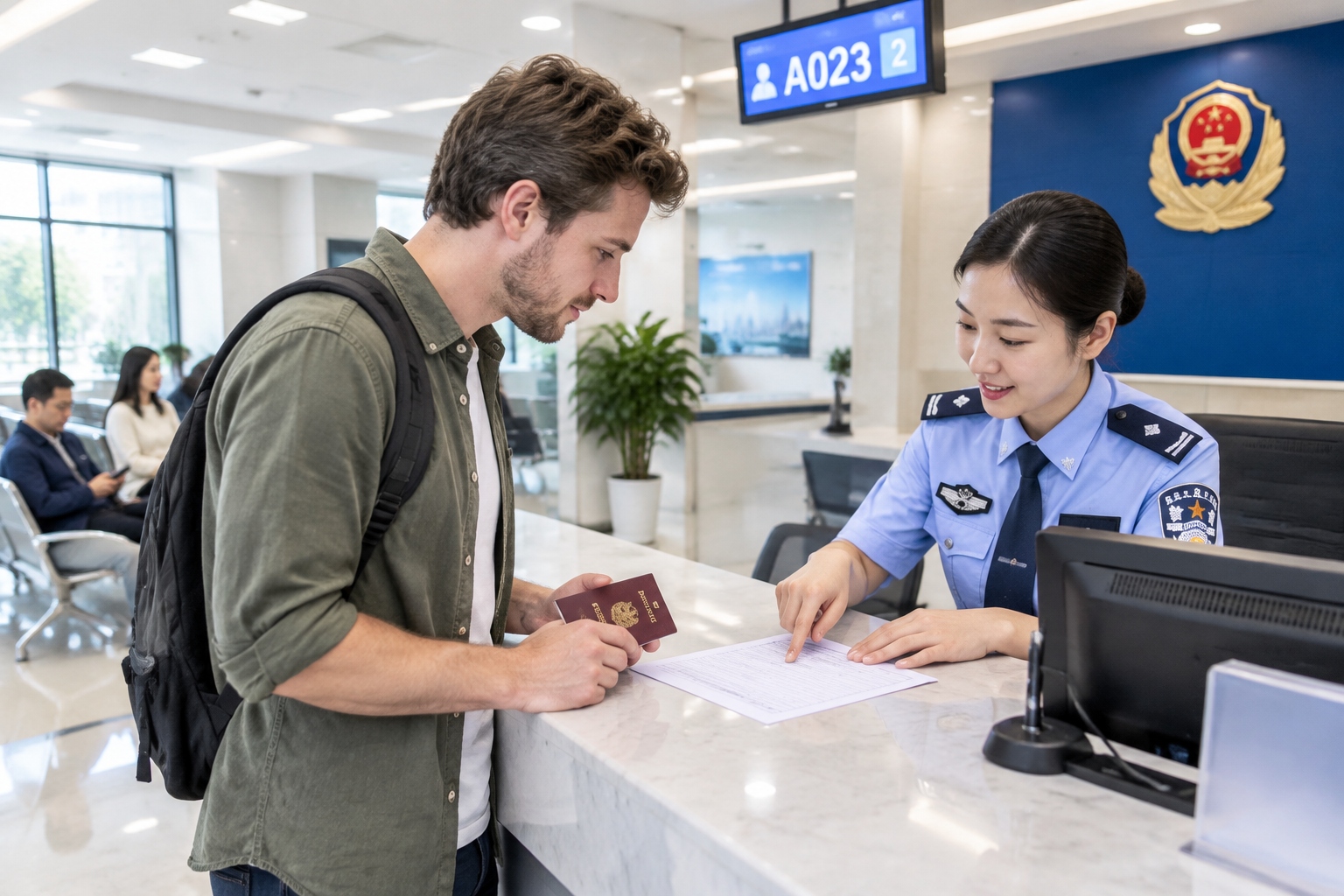
If a face scan makes you uneasy, ask. At a hotel, a residential gate, or a ticket counter there is often an alternative, and since June 2025 asking for it is no longer a strange request.
What Changed for Hannah
Hannah spent three weeks in Sichuan and Yunnan. She took a train where her passport was checked twice, walked past hundreds of cameras, and lost nothing. What shifted was not her politics. It was her sense of what the cameras were for.
“I still don’t love being filmed,” she said. “But I stopped assuming the filming meant something bad was about to happen to me. That assumption came from home, not from here.”
That is probably the honest version of the story. Visitors do not leave China thinking surveillance is neutral. Many leave thinking the trade-off is real, that it costs something, and that what it buys — a life in which an 11:40 p.m. walk is unremarkable — is something they recognise as valuable only after living inside it.
Start the discussion at forum.chinacomes.com