


The Bow That Hung Itself Up
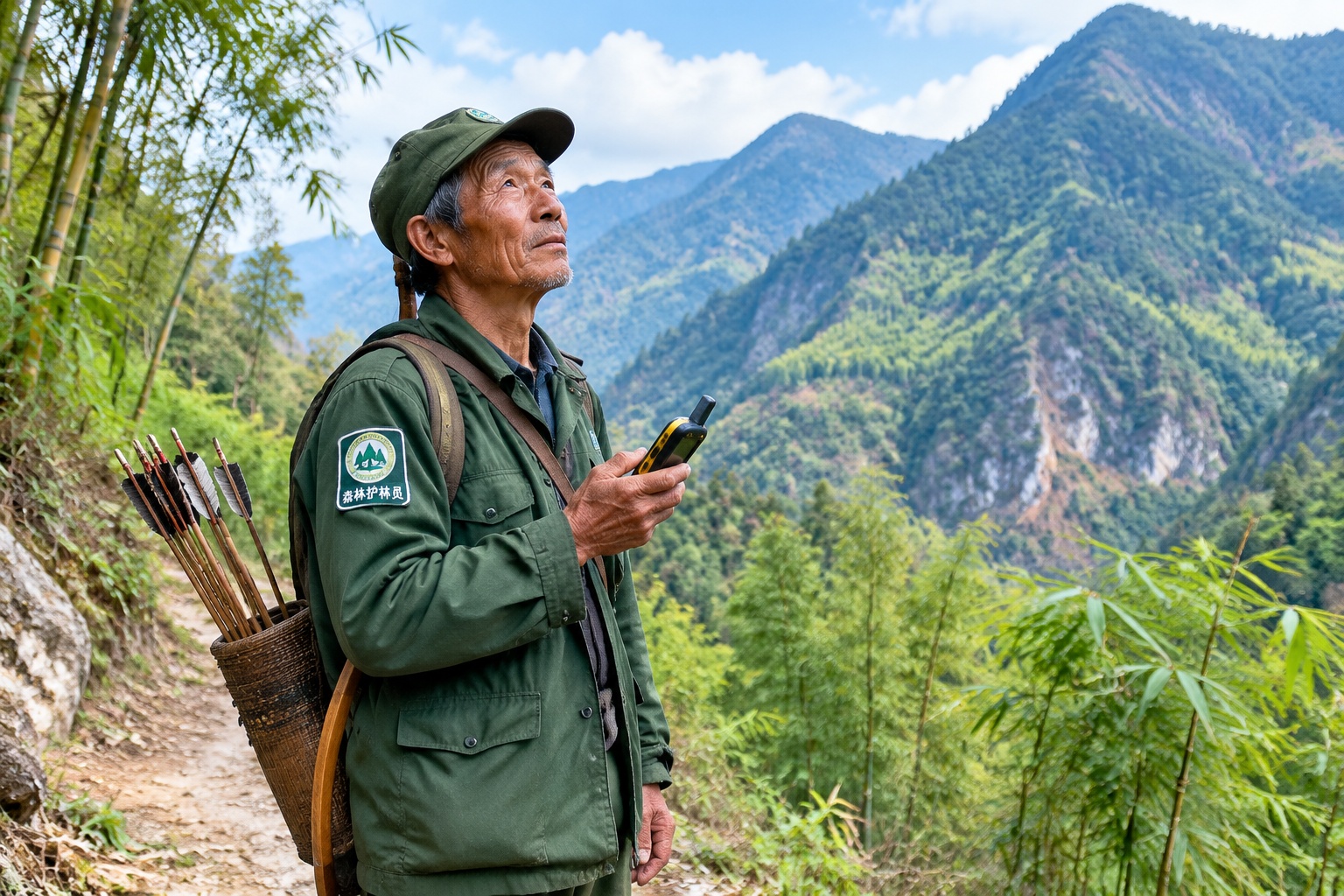
On the wall of Ah Pu’s wooden house, above a hearth still warm from the morning fire, hangs a curved bow and a quiver of bamboo arrows. He made them himself when he was 19. For more than four decades, that bow fed his family and earned him respect in his Lisu village in Nujiang, Yunnan. Today, it is a relic. Ah Pu, now 63, no longer hunts. Instead, he walks the same mountain trails carrying a GPS device, a thermos of bitter tea, and a pair of worn binoculars. He is a forest ranger, paid by the government to protect the very animals he once pursued.
Why a Former Hunter Now Protects the Prey
In 1998, after catastrophic floods along the Yangtze, China launched the Natural Forest Protection Program. Logging was banned in many state forests. Then, in 2017, a nationwide hunting ban took effect. For ethnic groups like the Lisu, who lived as hunter-gatherers for centuries, this was a seismic change. The government didn’t just take away their bows; it offered them new roles. Thousands of former hunters became forest rangers, earning a steady salary to monitor wildlife, prevent illegal logging, and report fires.
Ah Pu remembers his first months as a ranger. “My hand itched every time I saw a pheasant,” he admits with a grin. “But then I thought, if we keep killing, our grandsons will only see these animals in photos.” The transition wasn’t logical at first. Hunting was not just survival; it was identity. But the salary — about 2,500 yuan ($350) a month — provides security that unpredictable hunting never could. And the GPS, a small black device issued by the forestry station, has changed how he reads the forest.
Learning to See the Forest Again
“Before, I used my nose and ears. Now I use this,” Ah Pu says, tapping the GPS screen. He points to a red dot marking a camera trap placed near a salt lick. The device records his patrol route, proving to his supervisors that he has covered the designated area. Once a month, he uploads the data at the township forestry station, where officers track wildlife sightings and any signs of poaching.
The technology took time to master. “At first I was scared I would break it. I hid it inside my jacket when it rained,” he laughs. Now he teaches younger rangers how to mark waypoints. His favorite function is the altimeter — he can see exactly how high he is, something he once only felt in his knees.
Encounters on the Trail
One morning last spring, Ah Pu came across a fresh footprint of a black bear — not far from a village path. In the old days, he would have set a trap. Instead, he photographed the print with his phone, noted the coordinates on his GPS, and reported it to the station. The message was relayed to nearby villagers to keep their livestock penned. That week, no one lost a goat.
Not all encounters are smooth. The forest can still be dangerous. Ah Pu recalls a time he walked into a snare left by an illegal poacher. “I cut it down and marked the spot. Later, the police traced the owner.” He has seen the changes in the forest too. Wild boars have multiplied; they sometimes raid crops. Some villagers are frustrated. “But the government compensates for crop damage now,” he explains, “and we learned to plant potatoes that boars don’t like.”
Technology Meets Tradition in China’s Wild West
Nujiang, in the remote northwest of Yunnan, is one of China’s poorest and most biodiverse regions. It’s home to the Lisu, Nu, and Dulong peoples, and to endangered species like the snub-nosed monkey. The area was once a stronghold for hunting, but now protects some of the country’s most vital forest.
The rangers are part of a larger shift in rural China. “We call it ‘ecological poverty alleviation,’” explains Wang Fang, a forestry officer in Gongshan County. “We hire villagers to protect the environment, so they earn money while preserving nature.” This isn’t charity. It’s a practical marriage of conservation and rural development. More than a million people across China now work as forest rangers; many are former hunters or loggers.
What the GPS Doesn’t Capture
For all his new tools, Ah Pu prefers the melodies of the forest. He can imitate the call of a hoopoe and the sharp alarm of a squirrel. He tells me that some old hunters believe the spirits of their ancestors live in the oldest trees. When he passes a particularly giant fir, he touches its trunk and speaks a few words in Lisu. The GPS measures the distance, but not the memory.
Still, he says, the ranger identity has given him a new purpose. “Before, I was the one who took from the mountain. Now I am the one who gives back.” His son, who studied in a township school, works at a tourist lodge along the Nujiang River. “He doesn’t want to hunt. He tells tourists about the monkeys.” Ah Pu doesn’t mind.
Is This Really Happening Across China?
Ah Pu’s story is not isolated. In western China, from the forests of Sichuan to the grasslands of Inner Mongolia, former hunters, herders, and even poachers have been recruited as paid protectors of the environment. The hunting ban, part of the amended Wildlife Protection Law, is enforced strictly. In some regions, rangers use drones and infrared cameras. Yet the core remains human: people who know the land better than any algorithm.
What Visitors Can See (and How)
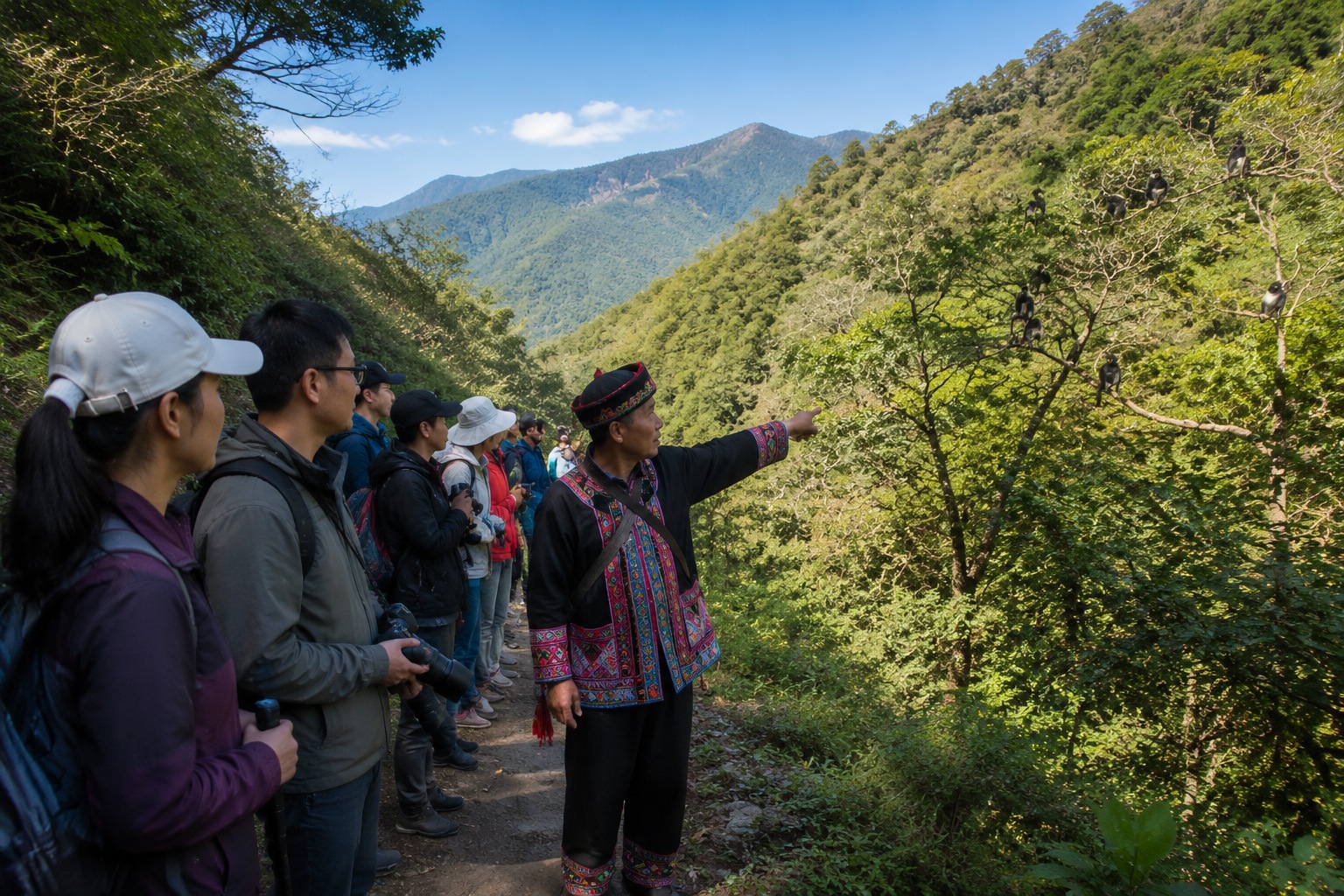
Travelers to Nujiang can hike parts of the same trails that rangers patrol. Local tourism bureaus now offer eco-tours led by former hunters. They explain tracking techniques, medicinal plants, and how GPS helps them do their job. It’s a different kind of cultural exchange — not a museum show, but a living bridge between the old and the new.
If you go, respect the rules: no trash, no loud noise, and don’t feed the wildlife. The forests here are still wild, and they are cared for by men like Ah Pu, who have traded their bows for screens and soon for solar-powered patrol towers.
“I never thought a hunter’s son would become a guardian,” he says, looking up at a bird circling high above the gorge. “But the mountain always gives you a second chance.”
Start the discussion at forum.chinacomes.com