
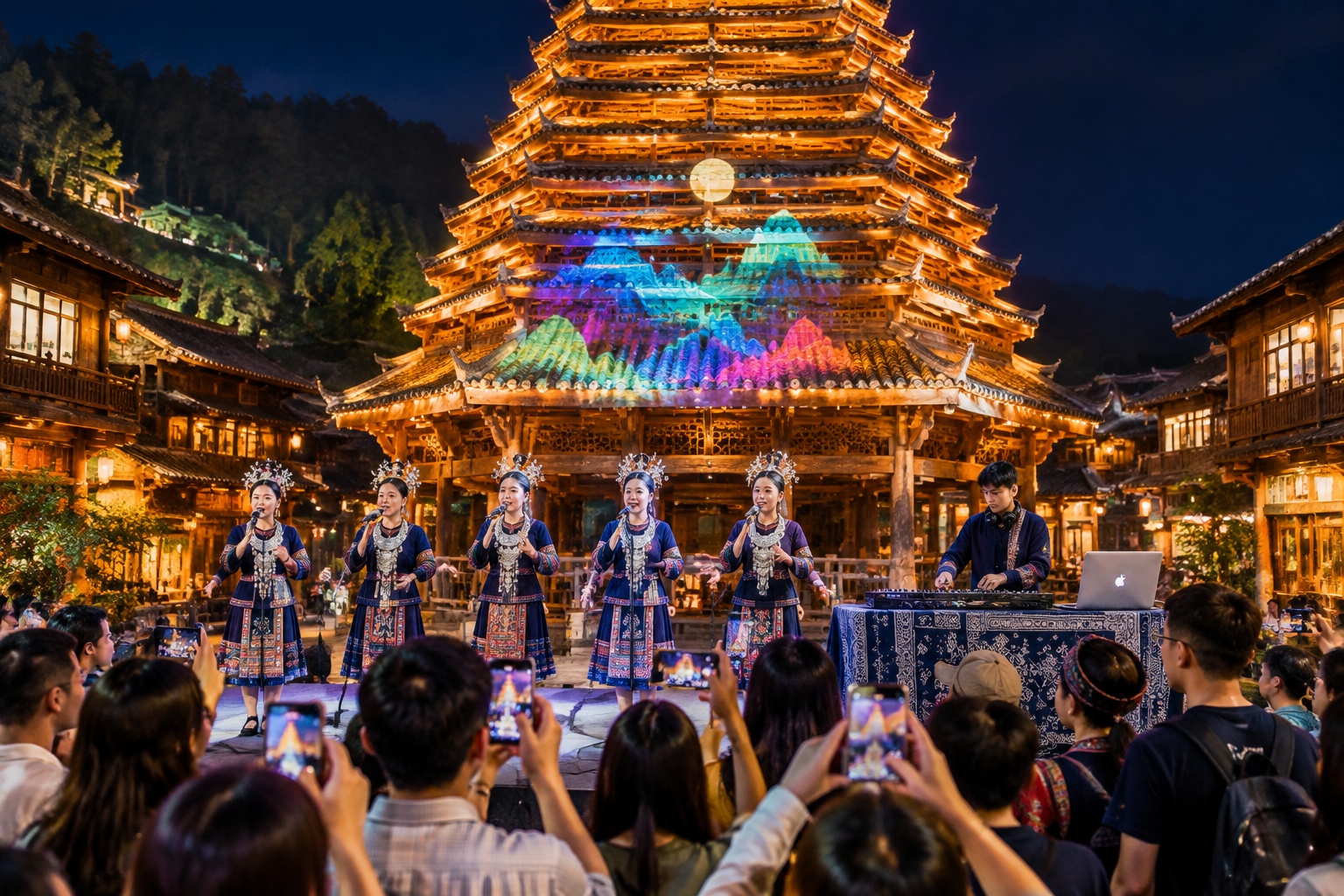

At 8 p.m. in Zhaoxing Dong Village, the air smells of wood smoke and rice wine. A crowd gathers in front of the ancient drum tower, phones raised. On a small stage, five young singers in embroidered indigo costumes hold hands, their voices rising in a cascade of overlapping melodies. A DJ crouches beside them, adjusting a synthesizer. As the tempo drops, a deep bass beat pulses through the square, and the centuries-old chorus suddenly feels like… a nightclub.
This is the new sound of an old tradition. In the remote mountains of Guizhou Province, southwest China, a generation of young Dong people is reinventing their heritage music to keep it alive—and bring themselves home.
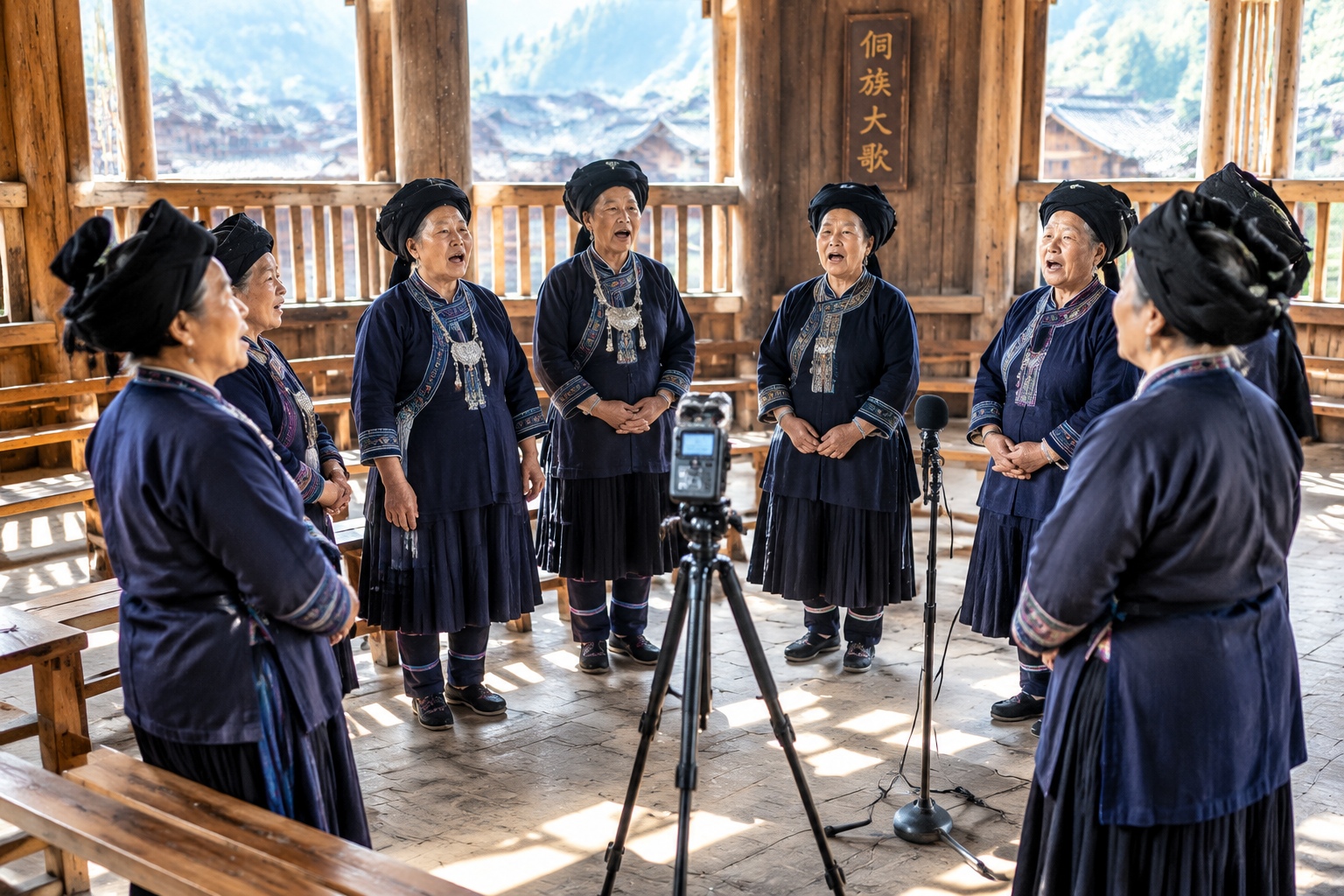
The Grand Chorus, a Heritage on the Edge
The “Dong Grand Chorus” (known in Chinese as 侗族大歌) is a UNESCO-listed polyphonic folk music developed by the Dong ethnic minority. Unlike most Western choirs, it has no conductor and no written score. Singers—often women—weave complex vocal lines that mimic cicadas, flowing water, and birds. For centuries, it was a daily part of village life, sung in the drum tower, in rice paddies, and at festivals.
But as Chinese cities opened up opportunities for young rural workers, many left their villages. By the 2000s, Zhaoxing—once a quiet farming community—had turned into an empty shell for much of the year. Grand Chorus ensembles struggled to find singers under 30, and the future of the tradition grew uncertain.
The Electronica Experiment: From Field Recordings to Festival Stages
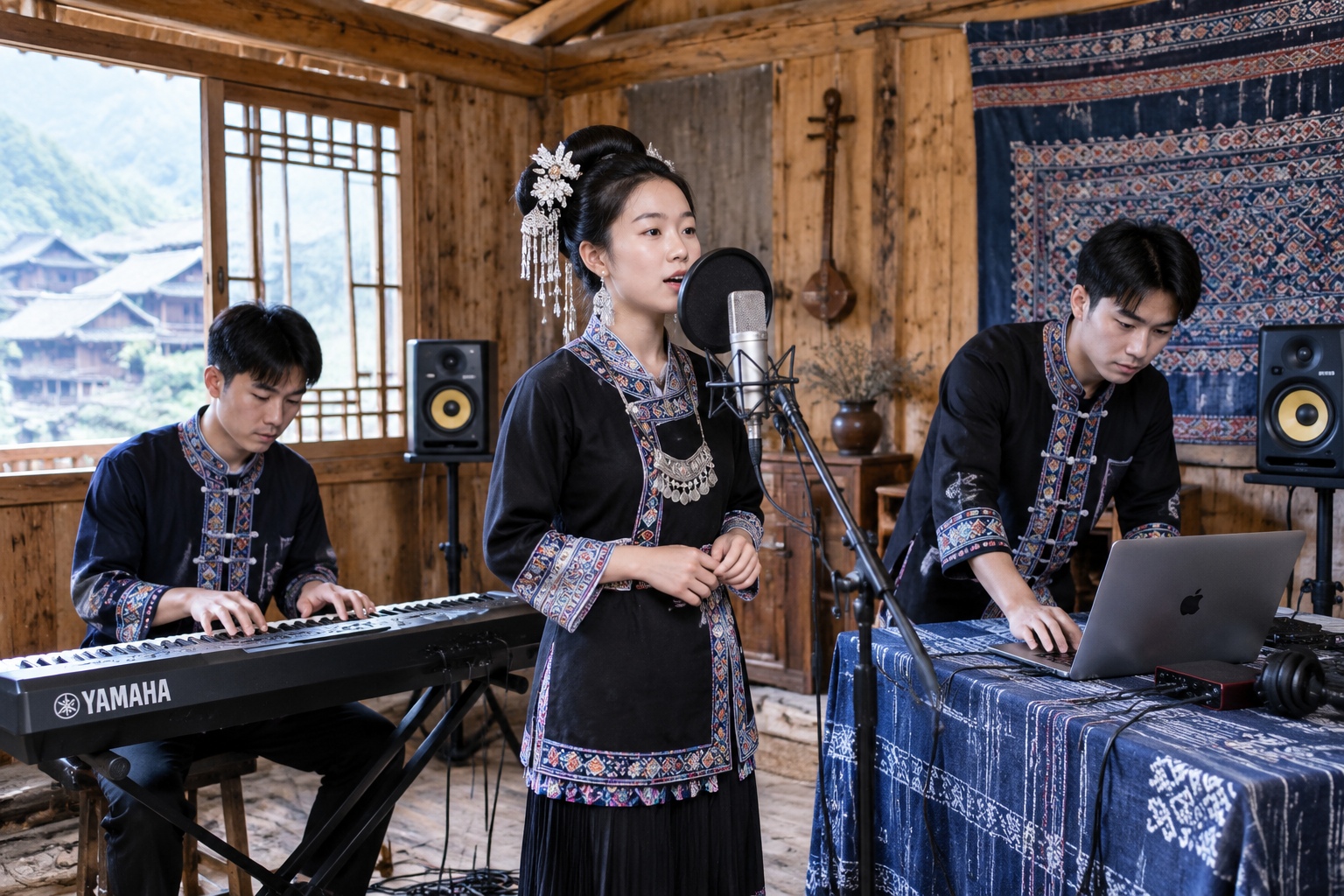
Then came the remix. A group of young Dong musicians, some of whom had studied in Beijing and Shanghai, returned to Zhaoxing with a laptop and a tambourine. They began recording the Grand Chorus on location, then adding soft electronic beats, ambient washes, and basslines in the studio. The result was “Dongtronica”—a genre that respects the original voices while giving them a modern edge.
One of the pioneers is Wu Jiahe, a 28-year-old producer who left Zhaoxing for Shanghai to study electronic music. “I grew up with my grandmother singing the Grand Chorus,” he says. “When I played my first remix for her, she laughed and said, ‘That’s not how we sing it.’ But then she started nodding to the beat.” Wu now performs regularly in the village with a collective called “Wild Cicada” (named after an insect that appears in traditional songs). Their shows blend live vocals, beats, and visual projections of mountain landscapes.
The experiment quickly caught on. Local villagers, initially skeptical, began to appreciate how remixes drew attention to their music. Tourists from Guiyang, Guangzhou, and even overseas searched for “侗族大歌” on social media, and clicks exploded. In 2023, Zhaoxing hosted 86 open-air electronic music nights featuring reinvented Grand Choruses, according to the local tourism office. That year, visitor numbers climbed to 1.1 million, with nearly half staying overnight—double the rate from 2019.
Connecting Young People to Their Roots
The popularity of these performances is not just a fad; it’s reshaping how young Dong people see their heritage. A 2024 survey by the regional cultural center found that among villagers under 35, 68% said they felt proud of the Grand Chorus, up from 42% in 2018. More tellingly, 20% of young respondents said they had learned the traditional singing technique specifically to participate in the electronic shows.
The music also serves as a social bridge. Older villagers who once complained that young people only cared about pop music now sing alongside their grandchildren on stage. Some traditional singers have even embraced the remixes, inserting their own verses into the electronic tracks. “It’s like a conversation,” says Wu. “They share their stories; we give them a rhythm.”
More Than Music: A Rural Economy Wakes Up
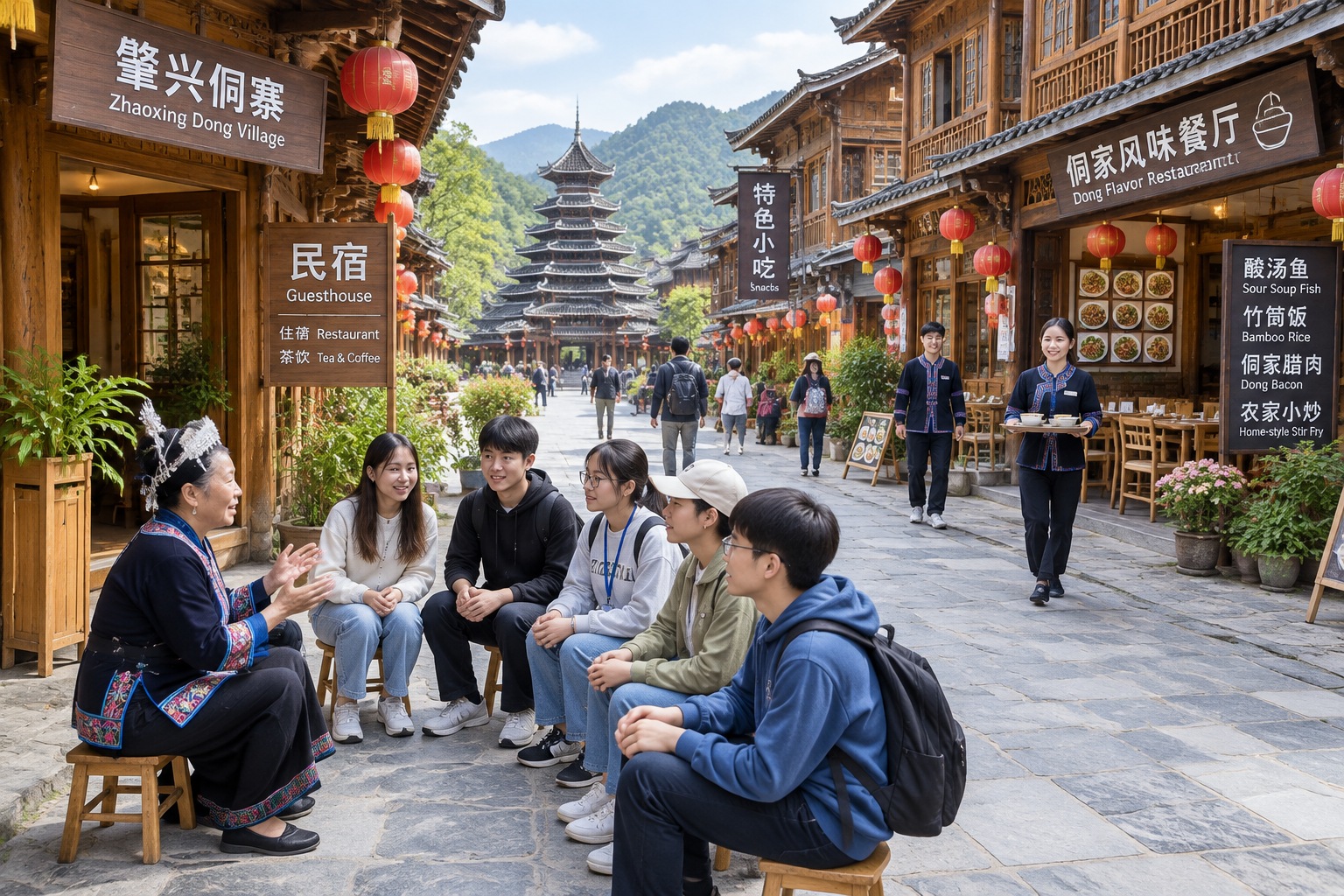
The cultural revival has started to reverse the outflow of young labor. In 2020, Zhaoxing had about 1,500 residents under 30; by 2024, that number grew to 2,200, according to village records. Many are returning to work as performers, sound engineers, event organizers, or staff in the tourism sector. Local guesthouses have risen from 30 in 2018 to 115 in 2024, with many owned by returning “migrant workers” who saved money in the city.
“I used to work on a rental website in Shenzhen,” says Yang Mei, 26, who now manages an inn and a small performance venue. “Now I cook Dong meals for tourists and help coordinate shows. I make about the same money, but I’m home with my family and my language is around me again.”
The multiplier effect is visible across the village. Restaurants offer dinner combined with Grand Chorus performances; workshops teach tourists how to sing and use electronic music software; a small recording studio built in an old grain warehouse now books sessions months in advance.
The Rhythm of Revival
Zhaoxing’s story is part of a broader pattern across rural China. Places with rich cultural traditions—from Guizhou’s Miao embroidery villages to Yunnan’s old town streets—are using local art to attract young talent and visitors back. The government has also stepped in, offering tax incentives and training programs for cultural entrepreneurs. But the real energy comes from the ground up.
Yes, there are tensions. Some purists argue that electric beats dilute the purity of the Grand Chorus. Steady fast bass might overpower the subtle rhythms of the original melodies. Others worry that tourism could commodify a sacred tradition. Wu counters: “Our ancestors already changed the songs over the centuries. If we don’t change, we lose it. The remix is our way of keeping the story alive.”
As midnight approaches in Zhaoxing, the DJ fades out the bass. The singers kneel, and their unplugged voices start a lullaby. The crowd falls silent, letting the ancient melody breathe. In that moment, the past and the future hold hands—and the village pulses with an unexpected life.
That’s the quiet power of turning heritage into a living thing. Not preserving it in a museum, but letting it dance.
Start the discussion at forum.chinacomes.com