

A Morning Walk Through the Emerald Lakes
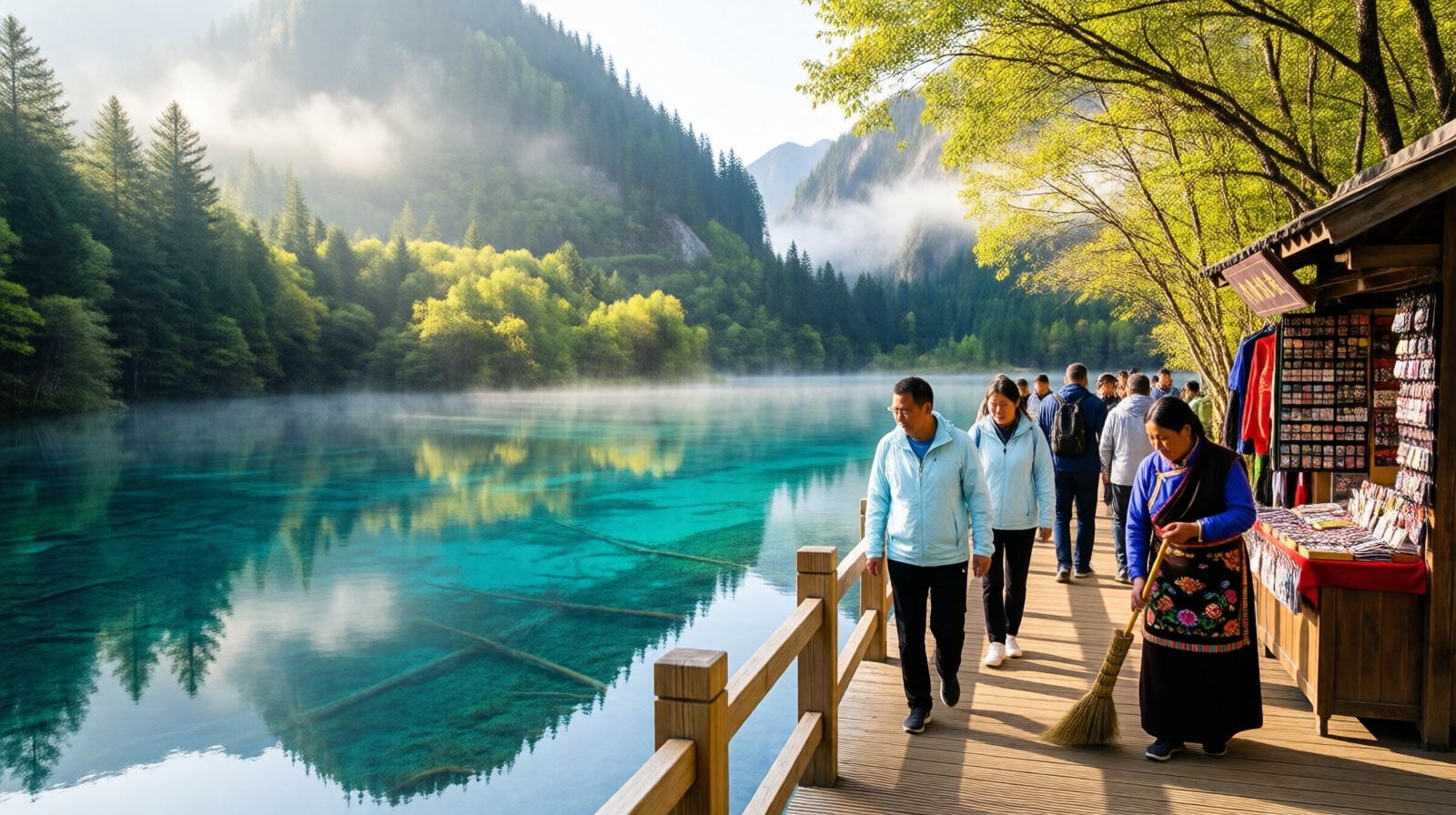
At 7 a.m., the first shuttle bus pulls into Jiuzhaigou’s Nuorilang Valley. A thin mist hangs over the lake, the water so clear you can count the fallen logs at the bottom. A group of tourists steps onto the wooden boardwalk, cameras ready. Nearby, a Tibetan woman in a traditional apron sweeps the path in front of her family’s souvenir stall. She is one of thousands of local residents whose lives are tied to this spectacular valley in Sichuan Province, southwestern China.
This scene might feel familiar to anyone who has visited a national park in the United States or Europe. But how Jiuzhaigou is managed—and how nature is imagined—differs in ways that reveal deeper cultural and political contrasts.
What Makes Jiuzhaigou Different?
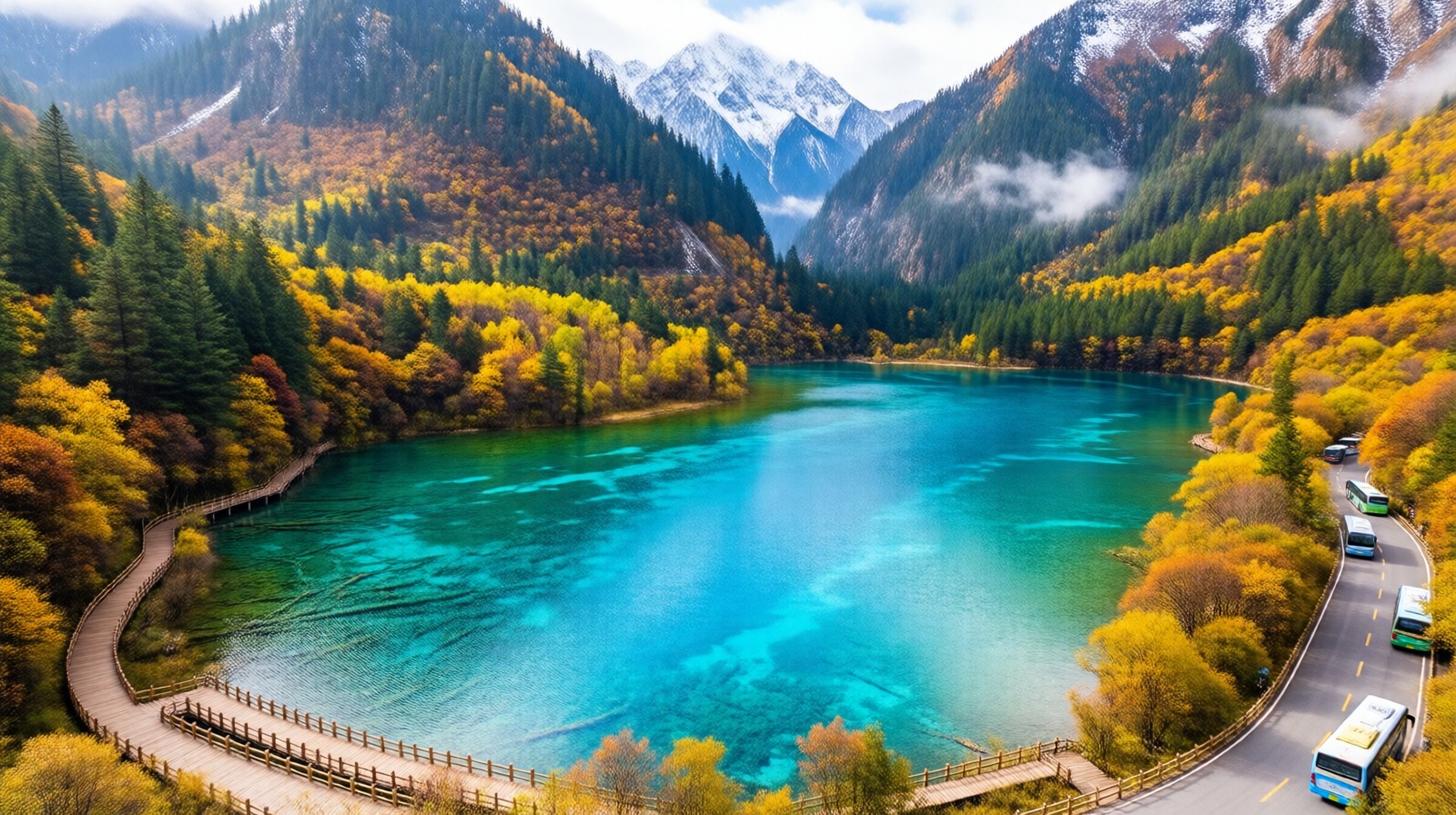
Jiuzhaigou, whose name means ‘Nine Villages Valley’ after the nine Tibetan settlements scattered through the area, is a UNESCO World Heritage site since 1992. It’s known for turquoise lakes, calcified terraces, waterfalls, and snow-capped peaks. Located in Aba Prefecture on the eastern edge of the Qinghai-Tibet Plateau, it sits at elevations between 2,000 and 4,500 meters. The valley is not huge: about 720 square kilometers, with a narrow strip of scenic attractions.
Unlike a sprawling wilderness like Yellowstone in the U.S., where visitors drive themselves through hundreds of miles of open terrain, Jiuzhaigou is compact. Everyone enters through one main gate, takes shuttle buses between spots, and follows elevated boardwalks. This might sound restrictive—and it is. But it’s also how the valley has stayed intact while hosting millions of visitors since it opened to tourism in the early 1980s.
The Chinese Approach: Managed Beauty
Chinese nature protection often takes a ‘scenic area’ approach. Jiuzhaigou is technically part of a national park pilot system, but for decades it has operated more like a scenic district—a government-run tourism enterprise that combines conservation with closely controlled visits. The model is built around three pillars: limited access, visible infrastructure, and community involvement.
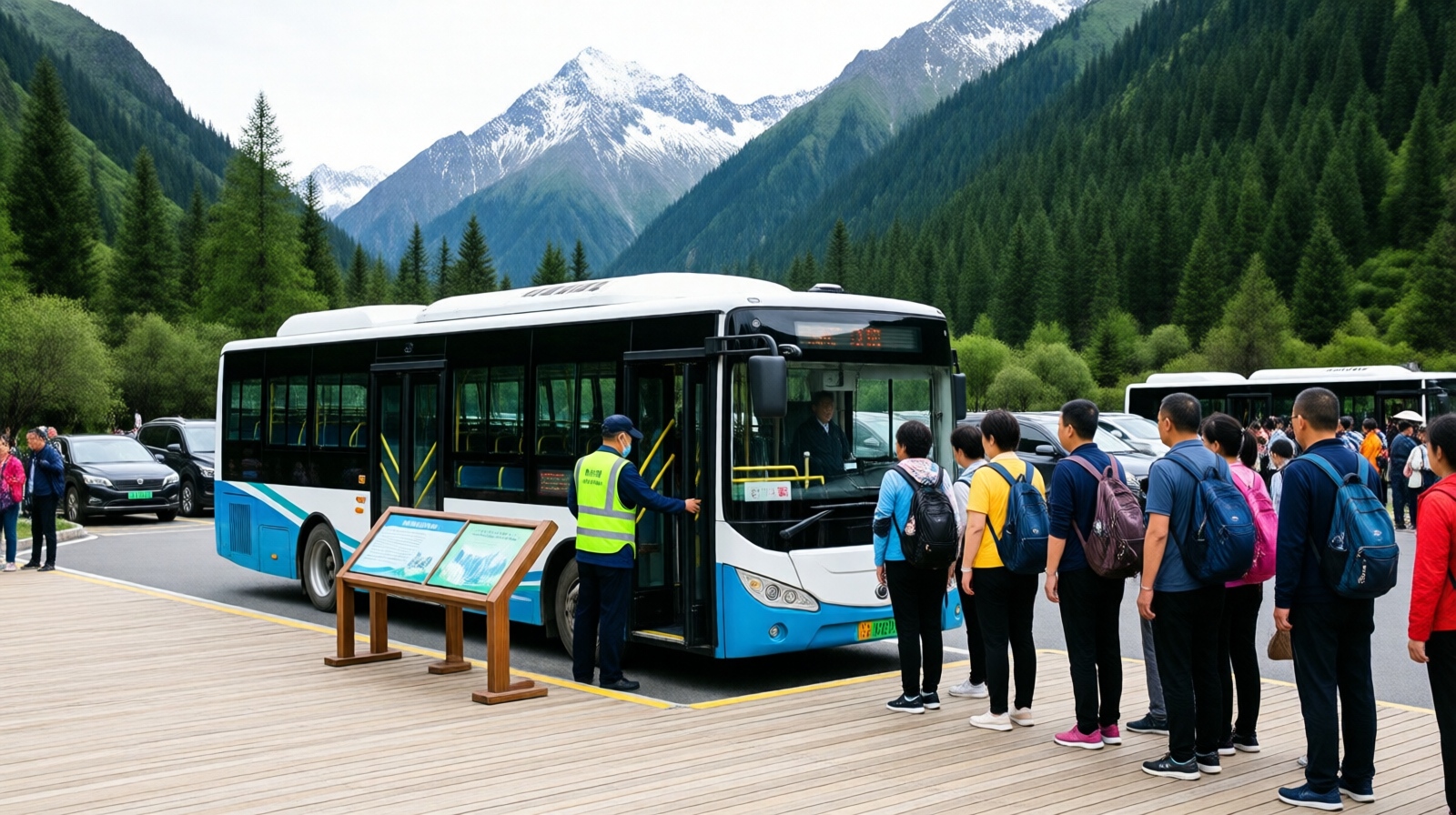
First, access is limited. All cars are parked outside the gate. Inside, low-emission shuttle buses carry visitors along a fixed route. Ticket sales are capped, and since the 2017 earthquake that damaged parts of the valley, daily visitor numbers have been cut to well below pre-quake levels. This policy, while sometimes frustrating for travelers, reduces wear on walking trails and gives the alpine ecosystem time to recover.
Second, infrastructure is visible and carefully placed. Wooden walkways keep feet away from fragile travertine pools. Restaurants and souvenir shops are concentrated in a few designated areas, not scattered across the reserve. Signs explain the geology and local culture. In many Western parks, you might see visitors picnicking on the grass; here, that is unthinkable. The ‘boardwalk’ is not just a convenience—it’s a disciplinary technology.
Third, the community is part of the management plan. The Tibetan and Qiang villagers who once farmed and herded inside the valley now work as shuttle drivers, trail cleaners, ticket sellers, or shop owners. Many receive a share of the park’s revenue through a compensation system. In exchange, they agree not to expand their houses or use chemical fertilizers. This arrangement is not perfect—some younger people say they miss their old way of life—but it has kept the population from leaving entirely.
The Western Model: Wilderness by Law
Now consider the West. In the U.S., national parks like Yellowstone or Yosemite are based on an idealized vision of wilderness. The 1964 Wilderness Act defined wilderness as ‘an area where the earth and its community of life are untrammeled by man.’ Park visitors are expected to be self-reliant. You drive your own car, hike at your own pace, and take responsibility for your own safety. Rangers enforce rules, but they don’t necessarily control where every person steps. The landscape is allowed to change naturally—forest fires burn, rivers shift course, and animal populations rise and fall.
In Europe, models vary. Switzerland’s Swiss National Park is one of the oldest in the Alps and strictly prohibits any development. In contrast, regional nature parks in Germany or France, like the Black Forest or the Cévennes, promote careful tourism while supporting traditional farming. These are closer to the Chinese model but with more emphasis on democratic local governance and less on central planning.
The key difference is philosophical. In the West, nature is often seen as something ‘out there’ that should remain separate from humans. In China, nature is also seen as a place to cultivate and enjoy. Chinese garden design has long imitated wild landscapes in miniature. Landscape painting, poetry, and travel essays all celebrated mountains and water as spaces for human insight. So managing a place like Jiuzhaigou with paved paths and buses doesn’t feel like a contradiction; it feels like a sensible way to let many people experience beauty without destroying it.
Why the Different Approaches?
One obvious reason is demographics. China has more than 1.4 billion people, and domestic tourism has grown explosively. A system like Yellowstone’s open wilderness simply wouldn’t survive if it had to absorb millions of visitors each year, many arriving in tour groups with limited hiking experience. Centralized planning—with a single gate, mandatory buses, and fixed routes—makes heavy traffic predictable and manageable.
Another reason is economics. In poorer regions like western Sichuan, protected areas are often the most valuable economic asset. Local governments rely on tourism revenue to fund schools, roads, and health clinics. Keeping visitors inside a ticket system ensures a steady income. In the U.S., national parks are funded federally and draw on visitors across the country. They can afford to treat tourism as a secondary function. In China, tourism is often the primary function, and conservation is achieved through that economic engine.
Also, Chinese environmental law and state land ownership give local governments broad power. Almost all forest land is state-owned, so it’s relatively easy to remove residents, restrict activities, and build infrastructure. In the U.S., private landownership inside park borders is rare but still exists, and any new large-scale transport system inside a park would face legal challenges for years. In China, the state can act faster, for better or worse.
Lessons for a Shared Future
Neither approach is perfect. Jiuzhaigou’s miracle—crystal-clear water, unspoiled forests—is genuine, but it is carefully staged. The valley is a human-managed landscape, as controlled as a Japanese bonsai garden. If you take away the boardwalks and shuttle buses for a decade, you might not get more wilderness; you might get more litter and soil compaction, unless you replace them with rugged rangers and strict enforcement, which is expensive.
Climate change is an equal threat. Since the 2008 Wenchuan earthquake, Jiuzhaigou’s geological stability has been uncertain. Glacial melt and extreme rainfall have increased. In the last few years, sections of boardwalk have been destroyed by landslides; lakes have looked more turbid after heavy storms. Protecting this place now requires global scientific cooperation, especially on water monitoring and ecological restoration.
Can the two worlds learn from each other? Yes. Chinese park managers could adopt more science-based wilderness monitoring used in Western parks—like tracking species migration or carbon storage. Western park managers could learn how to manage high-volume tourism without sacrificing conservation, which they will need more and more as global travel grows. And both can appreciate the wisdom of involving local communities, a lesson shared by Jiuzhaigou and many European regional parks.
Conclusion: A Shared Planet, Different Paths
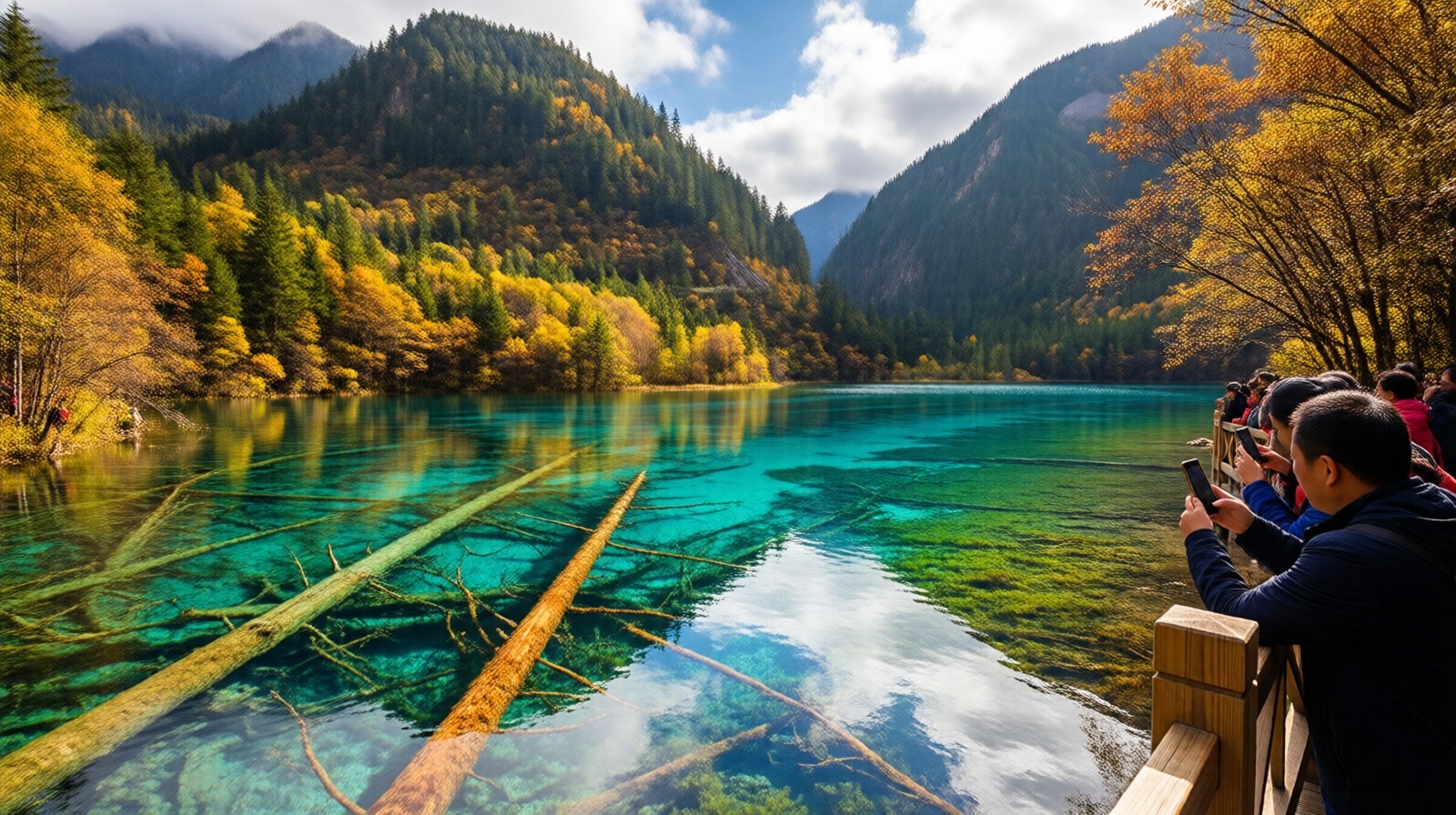
Standing at the edge of Five Flower Lake, it’s hard not to be moved by the color and clarity. You can see why Jiuzhaigou is called the ‘fairy tale valley.’ But the picture is more complicated than the postcard. This lake is protected by a fence, a boardwalk, and a ticket. The forest above it is monitored by camera and drone. Not far away, villagers sell yak kebabs and braided bracelets. That combination—beauty, bureaucracy, and commerce—is the real Jiuzhaigou. It is not the same as Yellowstone, but it is neither better nor worse. It is a Chinese answer to a universal question: how to let people love nature without loving it to death.
Start the discussion at forum.chinacomes.com