

A tray of rice, and a comment section that split in two
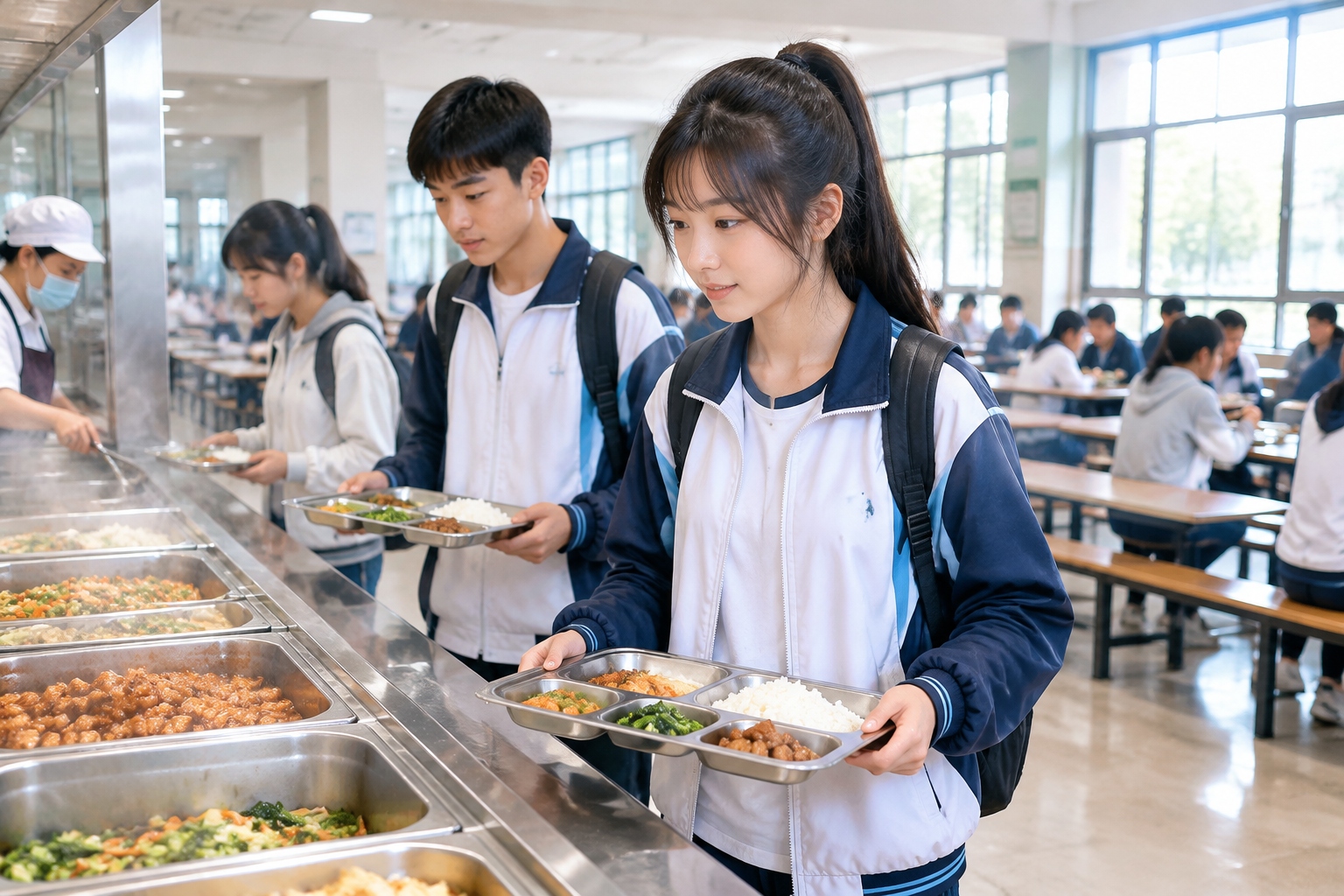
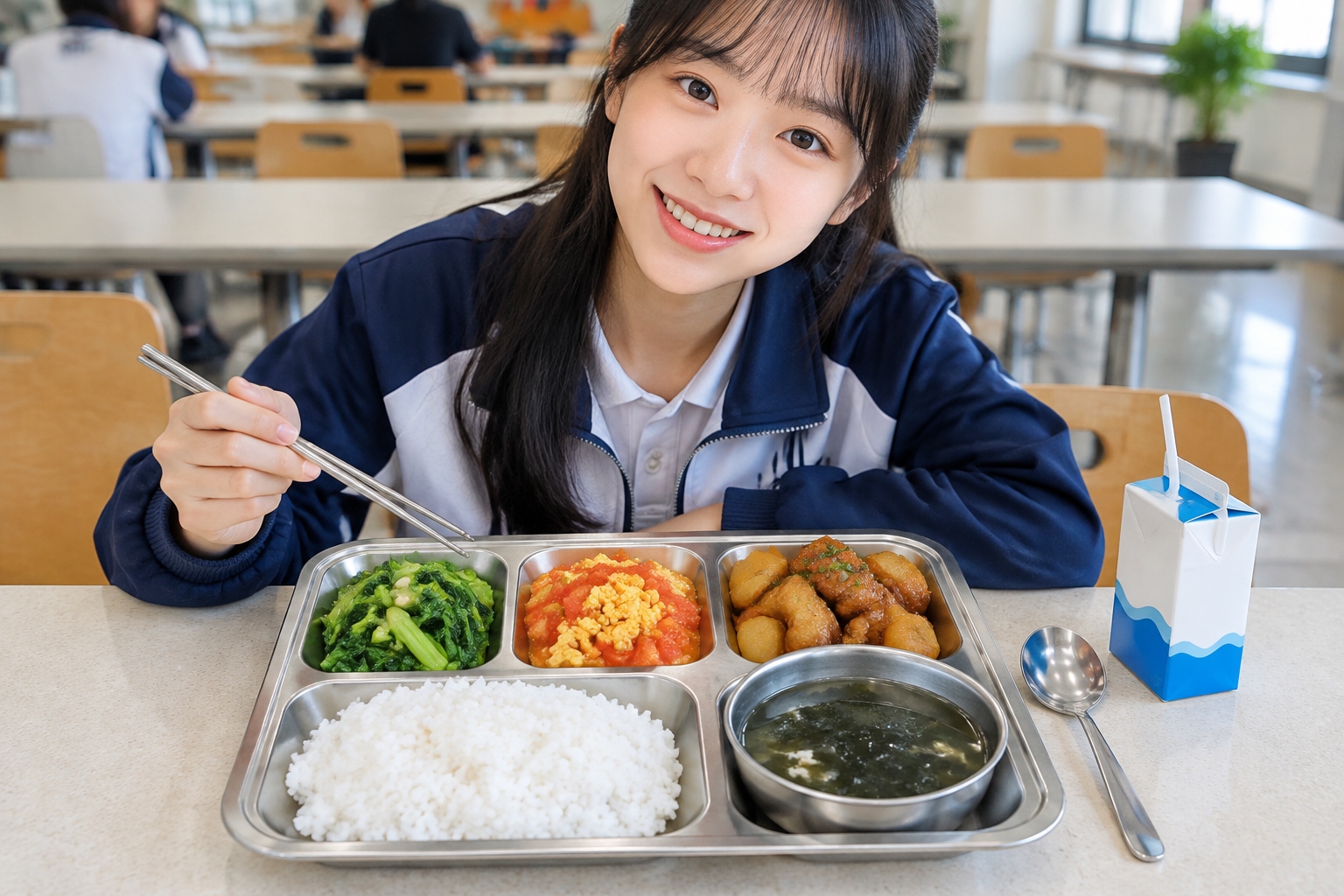
The video is 27 seconds long and looks like nothing much. A student holds a phone at chest height and walks along a lunch queue in a Chinese middle school, filming the tray in front of them. Rice. A scoop of stir-fried greens. Tomato and scrambled egg. Braised chicken with potato. A bowl of seaweed soup. A small carton of milk.
Cost: about 12 yuan. A little under two US dollars.
Reposted to a Korean forum, then to X, then to Reddit, it collected tens of thousands of comments and split cleanly in two. Korean readers shrugged. “This is just a normal school lunch.” English-language replies did something else. People paused the video, screenshotted the tray, zoomed in on the vegetables. One top comment read: “Wait. They get soup AND a hot main AND vegetables? Every day?”
That gap is the interesting part, and it is not really about food.
What is actually on the tray
Start with the plain mechanics, because “school lunch” means very different things in different countries, and the misunderstanding usually lives in the details.
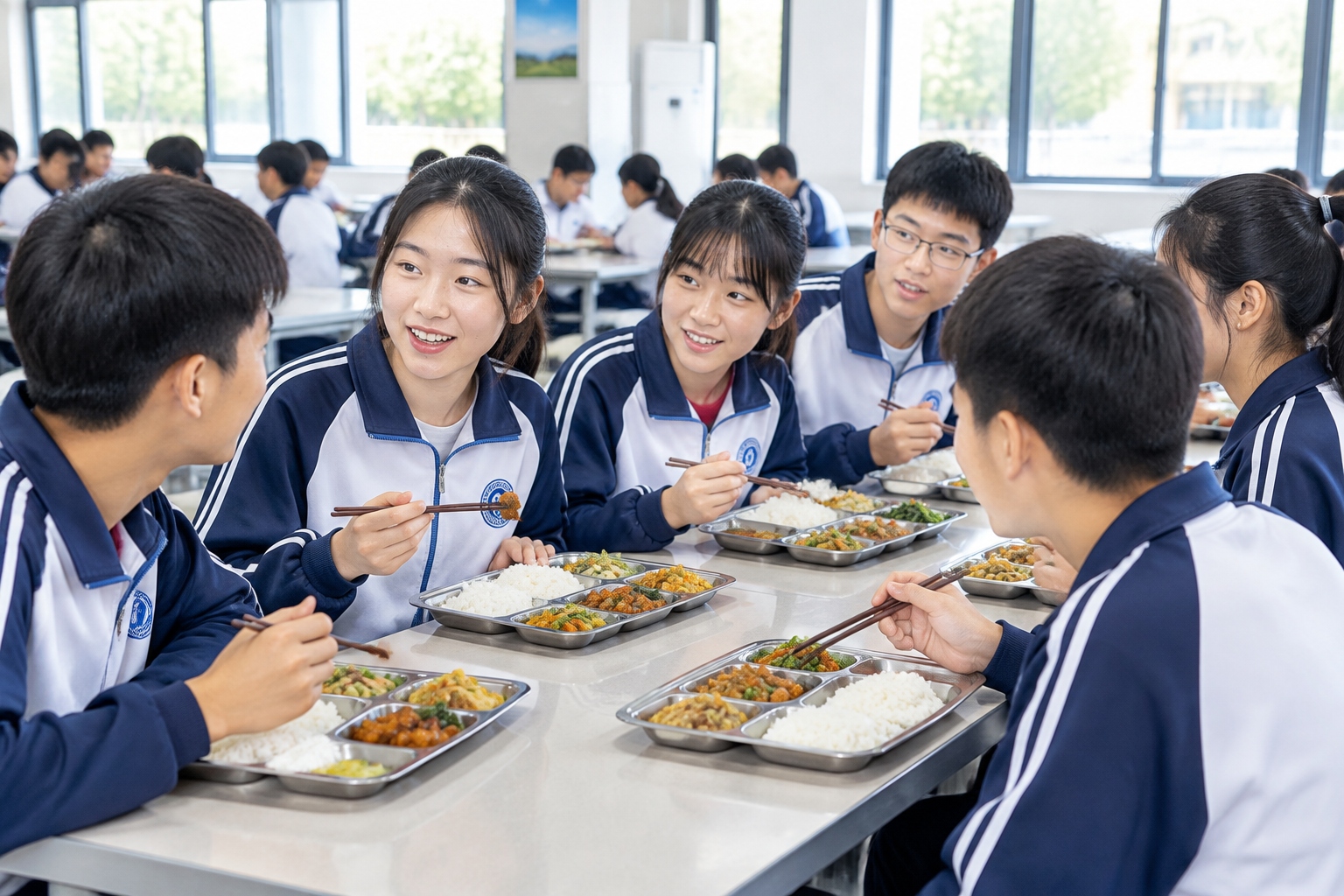
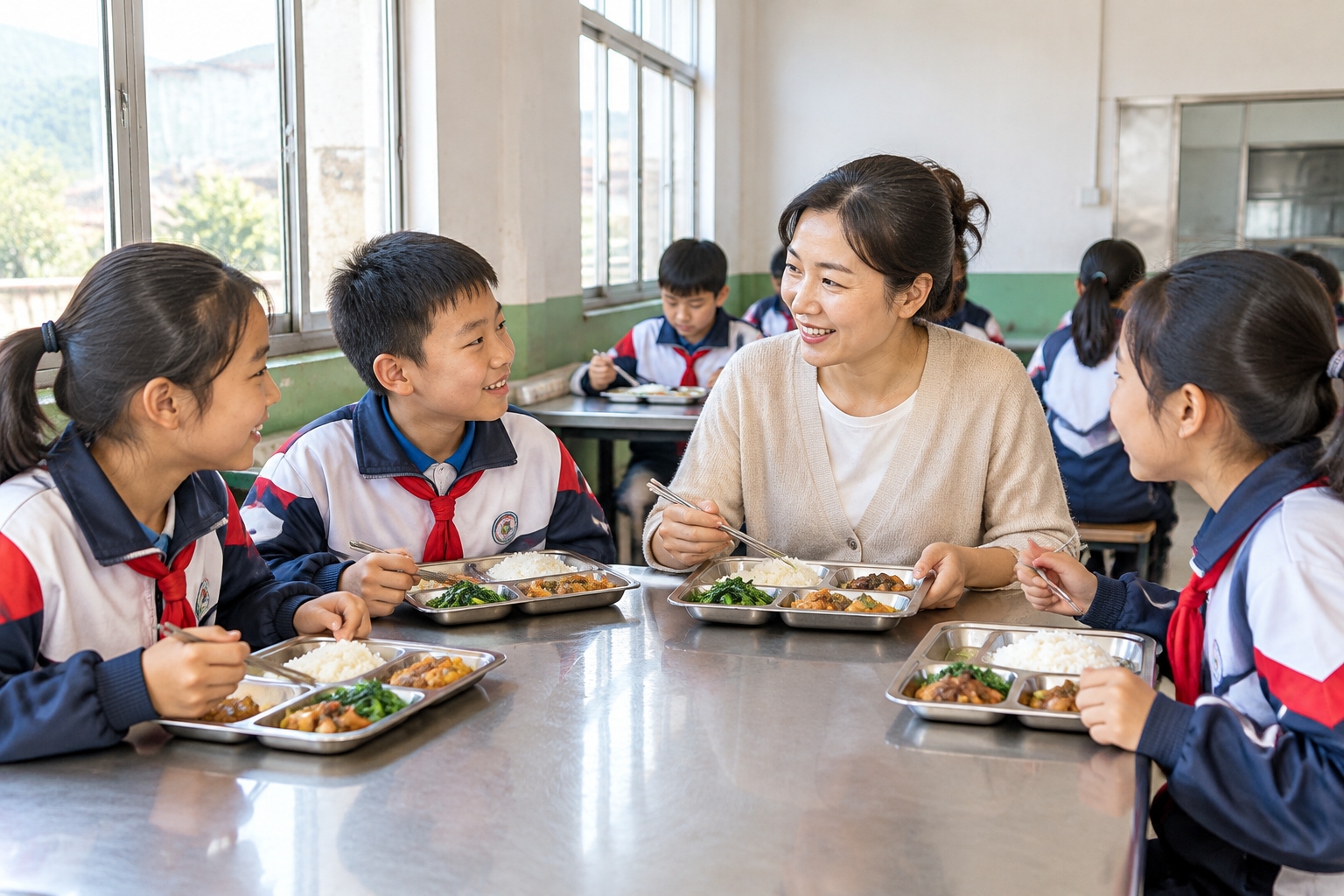
In most Chinese cities, a public school of any size either runs its own canteen or contracts a central kitchen that delivers hot food in insulated containers. Students queue with stainless steel compartment trays and move past the serving counter in ten or fifteen minutes. A whole grade eats in waves, and the lunch break runs 40 to 60 minutes.
Payment is usually through a campus card or a monthly fee. Prices in a mid-sized city sit between 8 and 15 yuan, roughly $1.10 to $2.10. Menus rotate on a one- or two-week cycle, posted on a wall near the entrance or pushed out through the school’s WeChat account so parents can see what their kid ate that day.
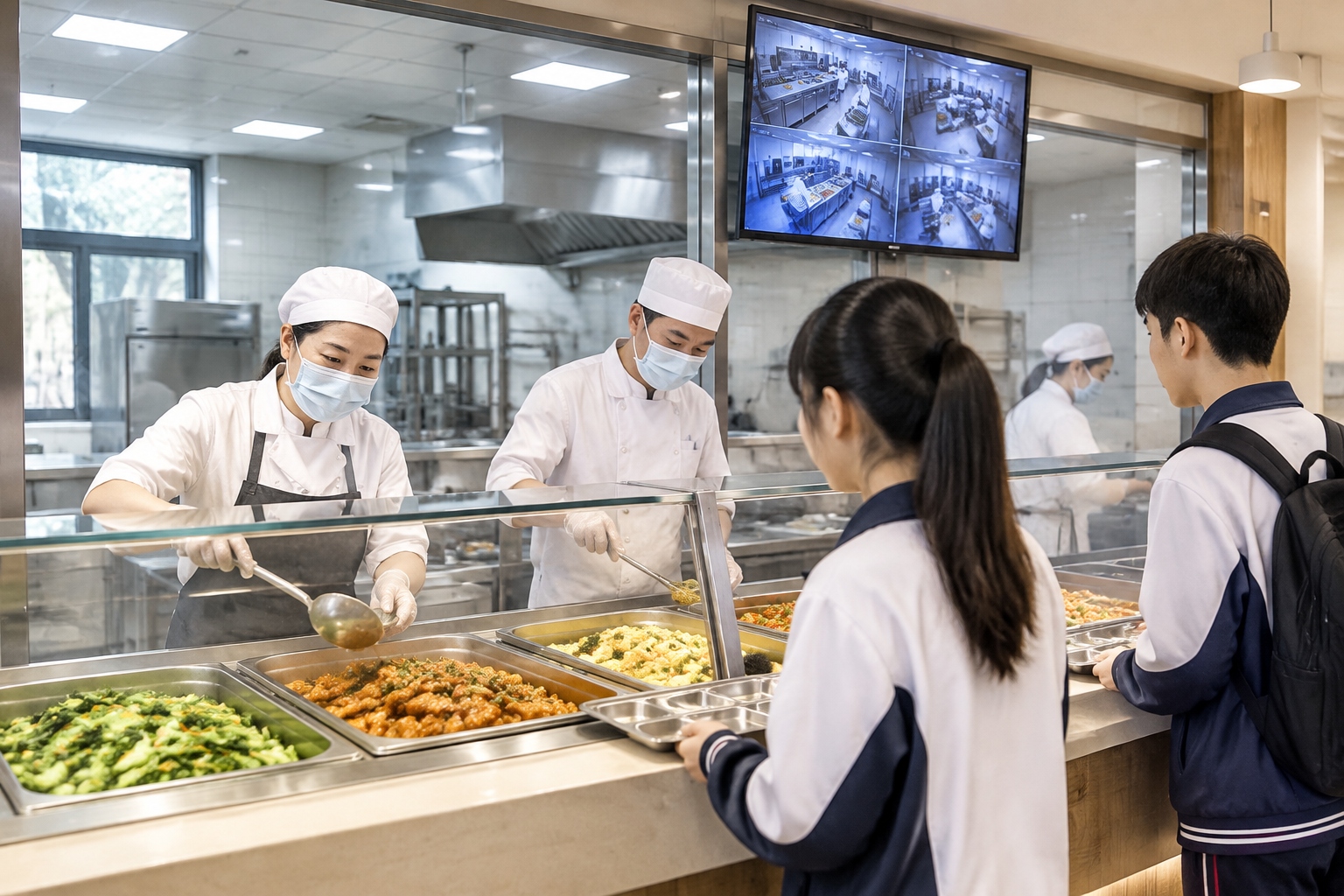
A few rules sit underneath all of it. Since a national regulation took effect in April 2019, schools must keep a 125-gram sample of every dish for 48 hours, and a school administrator has to eat the same food as the students, at the same time, every day. Kitchens are increasingly wired with cameras, and the feed runs to a screen in the dining hall, a policy known as mingchu liangzao — “bright kitchen, bright stove.”
Why Korean students called it ordinary
Read the Korean comments closely and they are not sneering. They are bored, in the way you are bored by something you see every single day.
Korea’s school meal system is one of the most developed in the world. Nearly all elementary and middle school students eat free — Seoul introduced universal free meals in 2011 after a citywide vote, and high school coverage was phased in later. A typical Korean tray holds rice, soup, kimchi and three or four banchan, with strict rules about where the ingredients come from. Korean parents argue about organic sourcing the way parents elsewhere argue about class sizes.
So a Chinese tray with four items and a carton of milk reads as… fine. Normal. Not a story. That word “ordinary” is a baseline, not a judgement — and it is exactly what makes the comparison useful. Same object, two completely different reference points.
Why everyone else hit pause
The comment section under the English repost turned into an accidental global survey of school lunch.
United States
The National School Lunch Program feeds roughly 30 million children a day, and it has improved since the 2010 Healthy, Hunger-Free Kids Act. But the image most American commenters brought with them was chicken nuggets, tater tots, canned fruit and chocolate milk, eaten in 20 minutes. What they fixated on was the money: unpaid meal balances, and the “lunch shaming” policies — handing a child a cold sandwich or taking the tray away — that several US states have only recently banned.
United Kingdom
England has offered universal free school meals to its youngest pupils since 2014, with means-tested eligibility afterwards, and a long public argument about quality that runs from Jamie Oliver’s 2005 campaign to more recent charity pushes to widen eligibility. British commenters were the ones checking the fine print. Is that oil or steam? How much salt? Is the milk UHT?
Australia
Australia has no national hot lunch program. Children bring a lunchbox: a sandwich, a piece of fruit, a snack, a drink. For an Australian parent, the idea of a cooked, hot, subsidised lunch served to every child every day is genuinely unfamiliar — and that thread was read the longest.
India
India runs the largest school feeding programme in the world — the mid-day meal scheme, now PM POSHAN — reaching well over 100 million children. Indian commenters were the most sceptical of anyone, and reasonably so: they compared state to state, pointed out how uneven quality is, and asked who actually pays.
Germany
German readers did arithmetic. Twelve yuan is about €1.50. In a German school canteen, €1.50 usually covers a side dish.
The system behind one tray
What makes the tray possible is not a well-off family. It is a budget line.
In 2011, China started the Rural Compulsory Education Student Nutrition Improvement Plan, a national pilot in 699 counties built around a very plain promise: one egg and one carton of milk per student per day. The per-student subsidy started at 3 yuan, rose to 4 yuan in 2014 and to 5 yuan in 2021, and now reaches tens of millions of children in rural schools. Many local governments add their own subsidy on top, so canteen operating costs do not land entirely on families.
Above the subsidy sits a fairly dense layer of regulation: open tendering for food suppliers, unannounced inspections by market regulation bureaus, the 48-hour sample rule, the administrator-meal rule, and parent committees that are supposed to have a say in menus and pricing. In large cities, industrial central kitchens supply dozens of schools at once — cheaper and easier to inspect, though it does trade away some variety.
What the short video leaves out
It would be dishonest to stop there. The gaps are real, and Chinese parents talk about them constantly.
Urban and rural schools are not the same. Five yuan buys more in Gansu than in Shenzhen, and some rural schools still struggle with cold food or a kitchen that is not up to standard. Boarding schools in poorer counties matter enormously, because for those students the canteen is not a supplement — it is the main meal of the day.
Then come the ordinary complaints. Too much oil. Too much salt. Not enough meat. The unmistakable flatness of food cooked in huge batches. Students post about it, and so do parents. There is food waste, scraped into buckets at the end of every lunch period. And there is cost pressure: when food prices rise, contracted operators sometimes cut corners, which is exactly why the inspection and parent-committee layers exist.
Why a lunch tray explains more than a slogan
Here is the part that connects to something bigger than food.
China has a very high rate of dual-income households, and grandparents are not always nearby. School lunch is not a nice extra in that arrangement; it is load-bearing infrastructure, the same way after-school care programs are. It also fits how Chinese families rank education spending: the big line items are tutoring, hobby classes and housing near a good school. Lunch is one of the smaller costs — and, unusually, one of the most standardised.
This is also how public services become visible to people. Ask a Chinese parent what has changed in ten years and you will not hear a slogan. You will hear about the shorter queue at the vaccination clinic, the subway line that opened, the fact that you can now see on your phone what your kid ate at noon. Boring, checkable, everyday — which is exactly what makes it believable to outsiders.
Back to the video
The tray in that clip is one tray, in one school, in one province. It cannot represent the country, and it should not be asked to. Some schools serve better food than that; plenty serve worse.
But it works as an entry point precisely because it is small, specific and comparable. You can look at it and immediately answer a question about your own life: what did your school serve at noon? Was it hot? Did it cost anything? Did anyone sit down and eat it with you?
So — what was on your tray?
Start the discussion at forum.chinacomes.com