

Introduction: A cotton field that thinks for itself
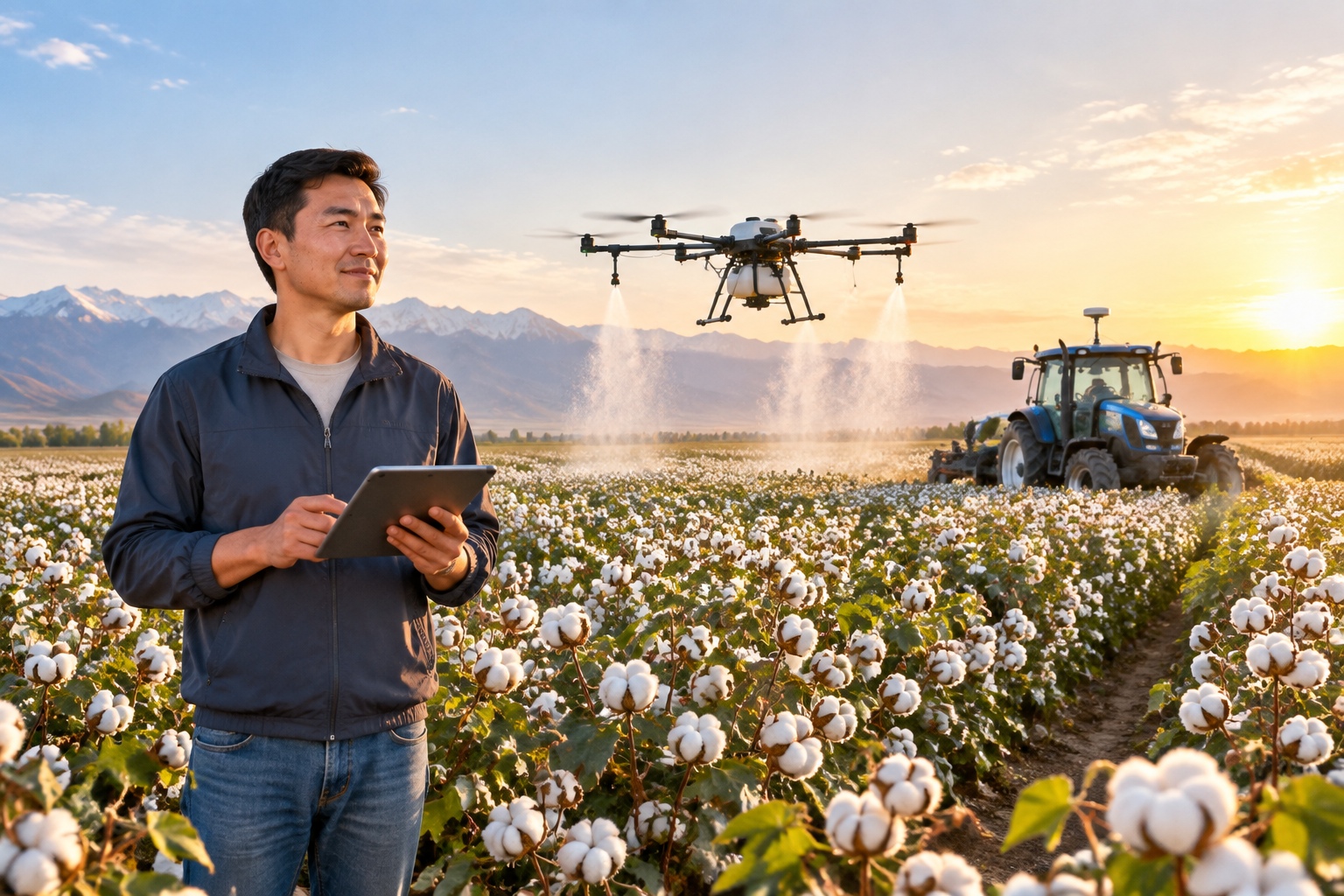
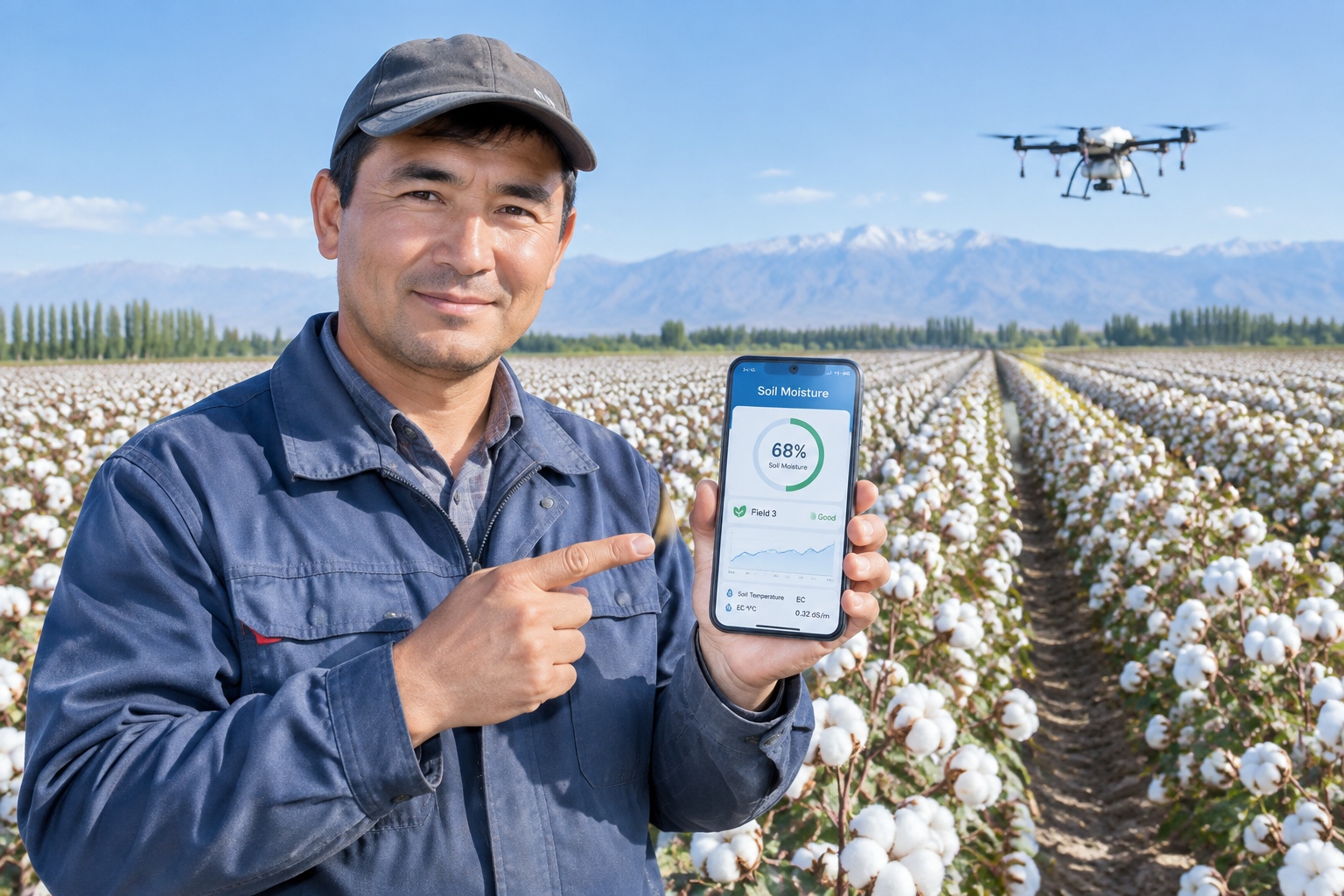
In late September, the cotton fields around Aksu turn white. But the harvest no longer starts with hundreds of workers bending over the rows. Instead, a farmer named Ma Jun opens an app on his phone. He checks soil moisture, wind speed, and the location of three drones that are already spraying defoliant. The drones are guided by BeiDou, China’s satellite navigation system. The data travels over 5G. “Ten years ago, I would walk the field to see if it was ready,” Ma says. “Now the phone tells me.”
Ma’s farm is one of thousands in Xinjiang that have adopted 5G, BeiDou, and drones. These technologies are no longer novel. They are part of the daily routine. The question is: what comes next? For farmers, agronomists, and tech companies, the next step is not more connectivity. It is intelligence—machines that can not only collect data but act on it. Welcome to the next frontier of Xinjiang agriculture.
From connected tools to autonomous decisions
Xinjiang is China’s largest agricultural region by area, and a major producer of cotton, tomatoes, fruit, and wheat. Its farms are large, often thousands of acres, which makes them ideal for testing automation. Over the past five years, the region has installed tens of thousands of 5G base stations in rural areas. BeiDou terminals are standard on tractors and drones. Agricultural drones, mostly made by Chinese companies like DJI and XAG, have become as common as pickup trucks.
But these tools still require human judgment. A drone can spray pesticide, but a person decides when and where. A sensor can measure soil moisture, but a person decides whether to irrigate. The next step is to close that loop. That means AI systems that can analyze data and make recommendations—or even take action—without a human in the loop.
The rise of the unmanned farm
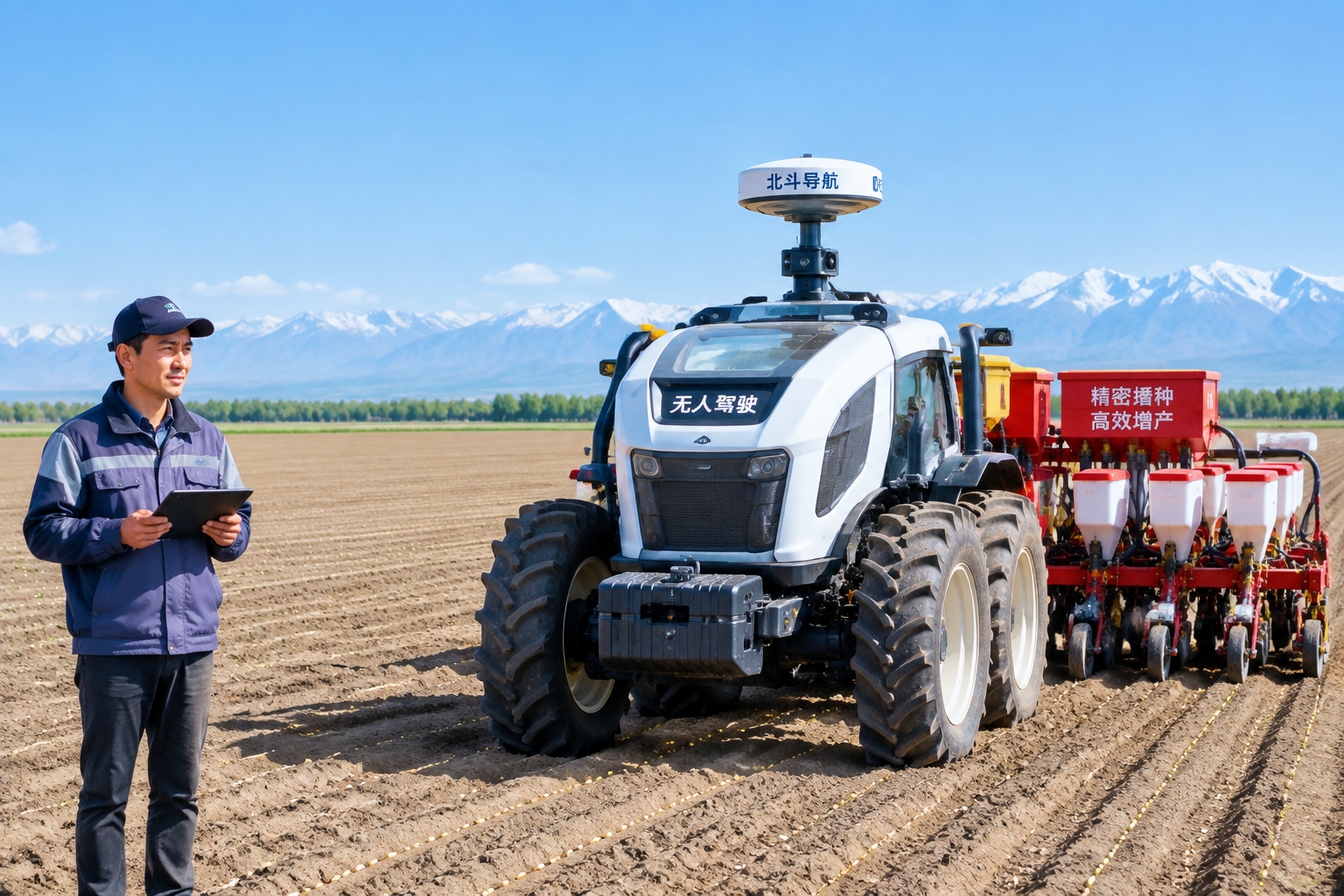
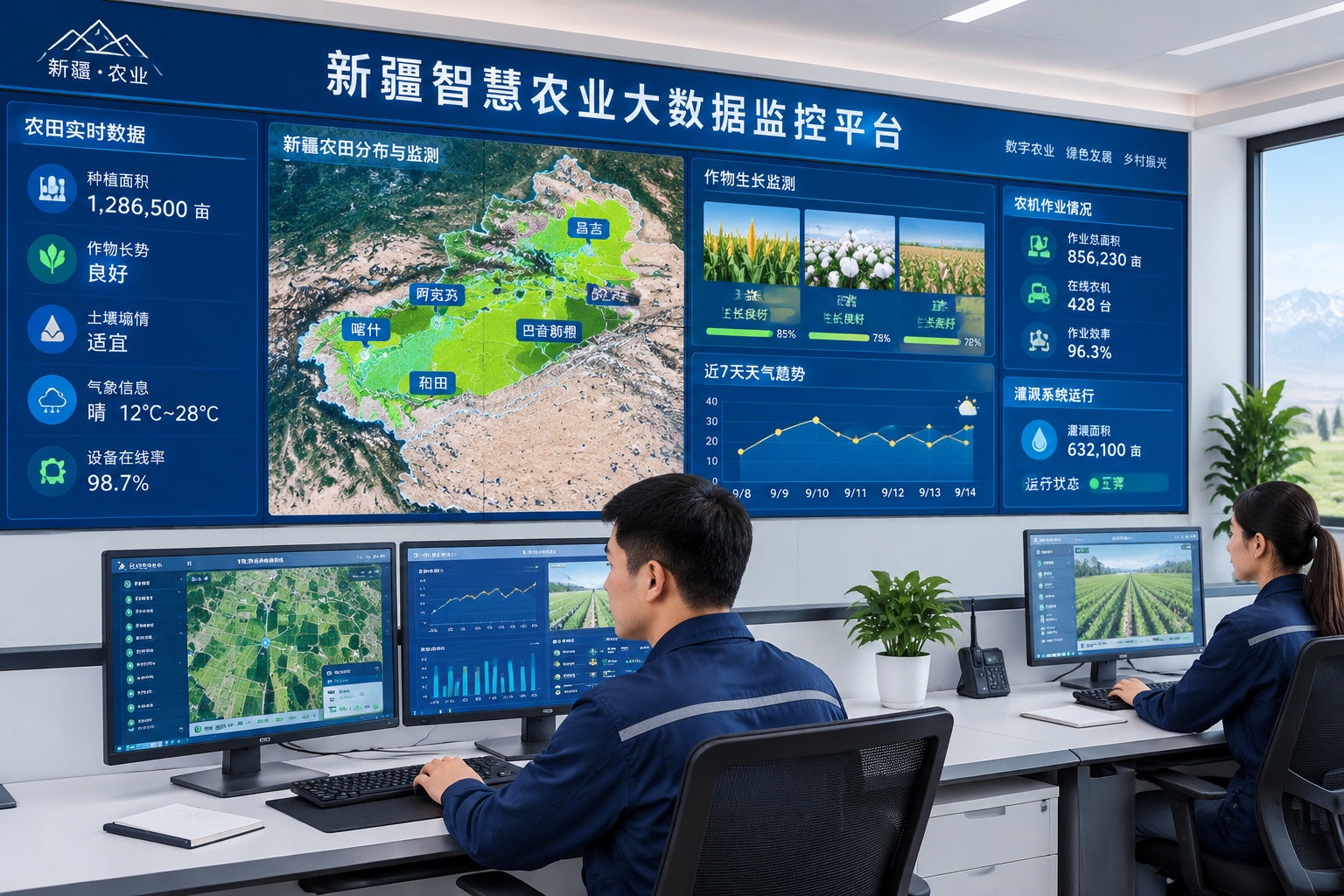
Several pilot projects in Xinjiang are already testing this. In Changji, a 3,000-acre farm has been converted into an “unmanned farm” where autonomous tractors, drones, and harvesters work together. The tractors use BeiDou for precise seeding and fertilizing. Drones monitor crop health. A central AI system decides when to irrigate based on weather forecasts and soil sensors. The farm still has human supervisors, but they are managers, not laborers.
This is not just a Chinese trend. In the United States, farms in Iowa and California use similar technologies. But China’s approach is different in scale and speed. The government has designated smart agriculture as a priority, and Xinjiang’s large, flat fields make it a natural laboratory. Companies like Huawei, DJI, and China Mobile are partnering with local farms to test 5G-enabled AI systems.
What the data says
According to the Xinjiang Department of Agriculture, more than 80% of cotton fields now use some form of precision agriculture. Drip irrigation, which saves water and fertilizer, covers over 4 million hectares. The use of agricultural drones has grown from a few hundred in 2015 to over 20,000 today. These numbers show a rapid adoption of technology. But they also show a gap: most of this technology is still controlled by humans. The next phase is about autonomy.
AI in the field: from prediction to action
The next step is AI that can make decisions. For example, an AI system could analyze satellite images, weather data, and soil sensors to predict pest outbreaks. Then it could dispatch a drone to spray only the affected area. This is already happening in some pilot farms. In Korla, a pear orchard uses AI to detect fruit maturity and coordinate harvesting robots. The robots are still experimental, but they can pick fruit without bruising it.
Another area is water management. Xinjiang is arid, and agriculture uses over 90% of the region’s water. Smart irrigation systems can reduce water use by 30-50% compared to flood irrigation. The next step is to link these systems to AI that can optimize water use across an entire farm or even a region. This is not just about efficiency; it is about sustainability.
The green angle
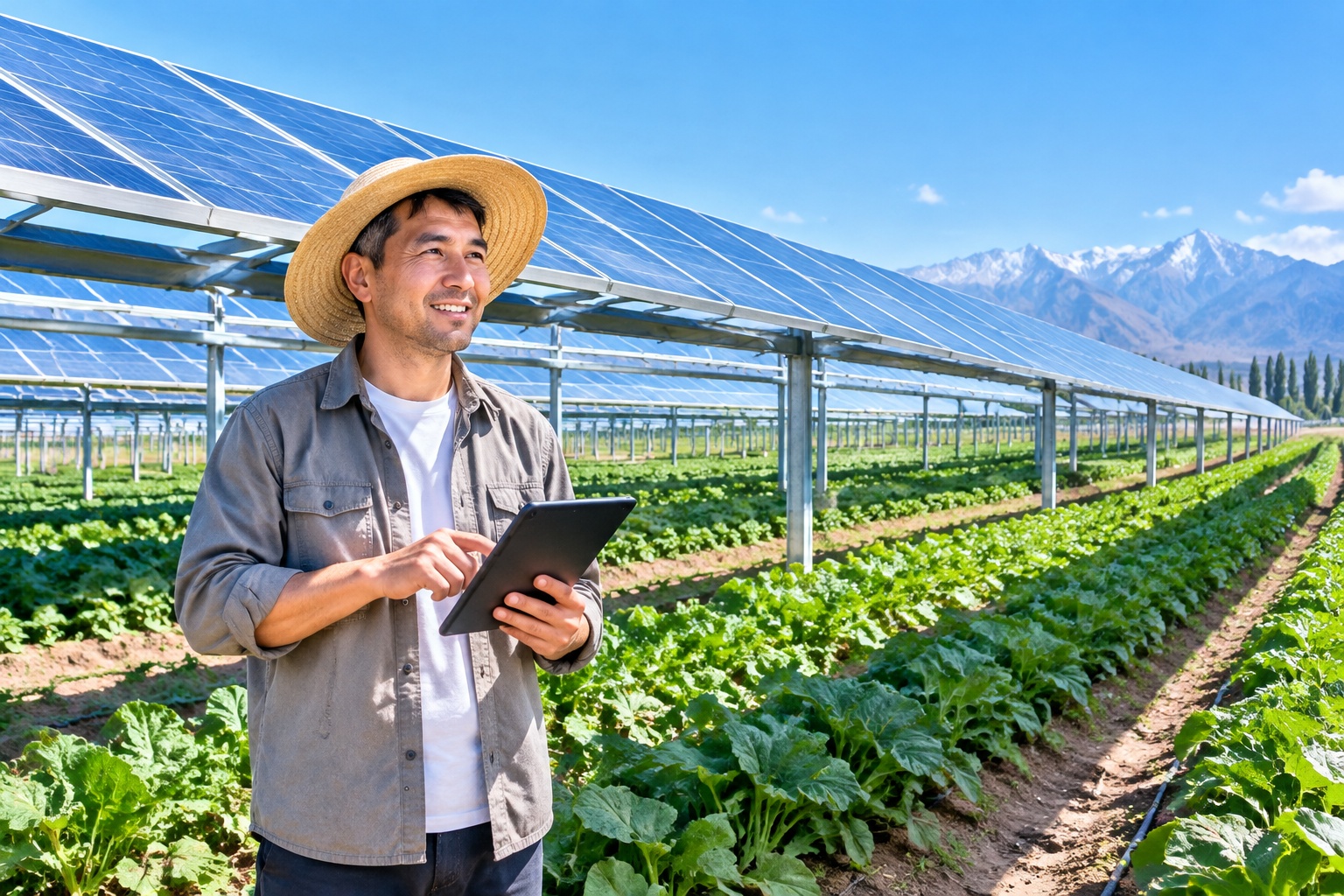
Renewable energy is also part of the picture. Many farms in Xinjiang are installing solar panels to power sensors, drones, and irrigation pumps. In some cases, solar panels are placed above crops, a practice known as agrivoltaics. This reduces evaporation and generates electricity. The combination of renewable energy, smart irrigation, and AI could make farming in Xinjiang both more productive and more sustainable.
Challenges: infrastructure, skills, and trust
Despite the enthusiasm, there are real challenges. Rural 5G coverage is not universal. Many farms still lack reliable internet. The cost of autonomous machinery is high. And many farmers are not trained to use AI tools. “I can use a drone, but I don’t know how to read the data,” says one farmer in Aksu. “I need someone to explain it.”
There is also a trust gap. Farmers are used to making decisions based on experience. Handing over control to an algorithm is a big step. Pilot projects often include human oversight to build confidence. Over time, as AI proves reliable, more farmers may adopt it.
What this means for the rest of the world
Xinjiang’s agricultural transformation is not just a local story. It is a test case for how large-scale farming can be automated. Many countries face similar challenges: aging farmers, water scarcity, and the need to increase food production. China’s experience with 5G, BeiDou, and drones shows that the technology works. The next step—AI and autonomy—will show whether it can be scaled and trusted.
For farmers like Ma Jun, the future is already here. He recently installed a new AI system that tells him exactly when to irrigate. “It’s like having an agronomist in my pocket,” he says. “But I still walk the field. I want to see it with my own eyes.” That combination of technology and human judgment may be the real next step.
Conclusion: The next station is autonomy
Xinjiang agriculture has moved from mechanical to digital. The next station is autonomous. This does not mean farms without people. It means farms where people focus on management and strategy, while machines handle the repetitive work. The technology is ready. The question is how fast it will spread, and how it will change the lives of the people who work the land.
Start the discussion at forum.chinacomes.com