
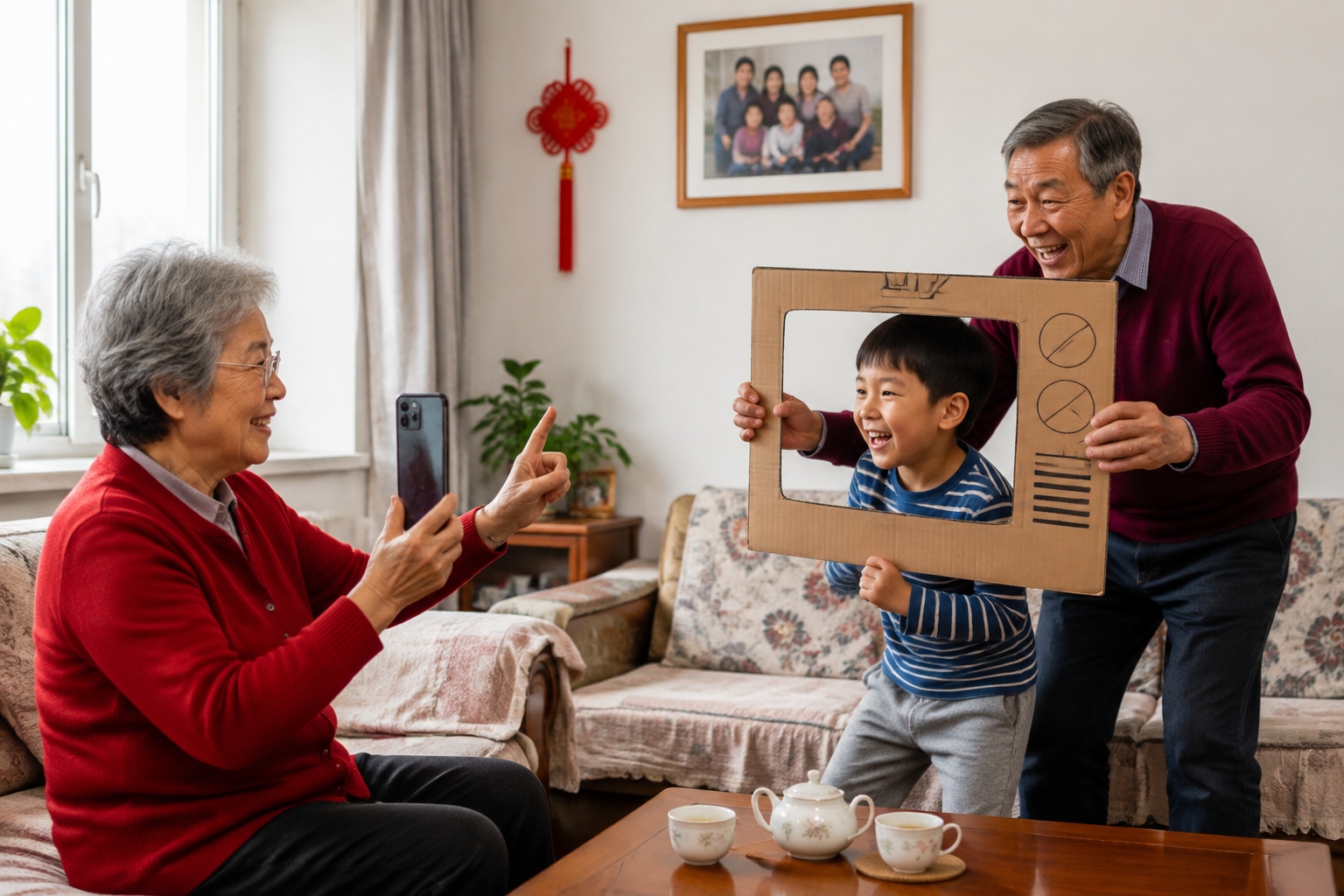

The director’s living room has no film crew — just grandma
“Action!” says Wang Xiuying, but no one is listening. Her husband is searching for a plastic sword. Their daughter-in-law is smoothing her blouse, and her seven-year-old grandson is rolling on the floor because grandma has used the phrase “AI special effect” for the third time in a minute.
This has become a fairly normal weekend scene in the home of Wang Xiuying, a retired accountant in Beijing, 63. She has never worked in film or media. She owns no camera, no studio. What she does have is a mid-range phone, a free video editing app with AI assistance, and a very patient director’s heart.
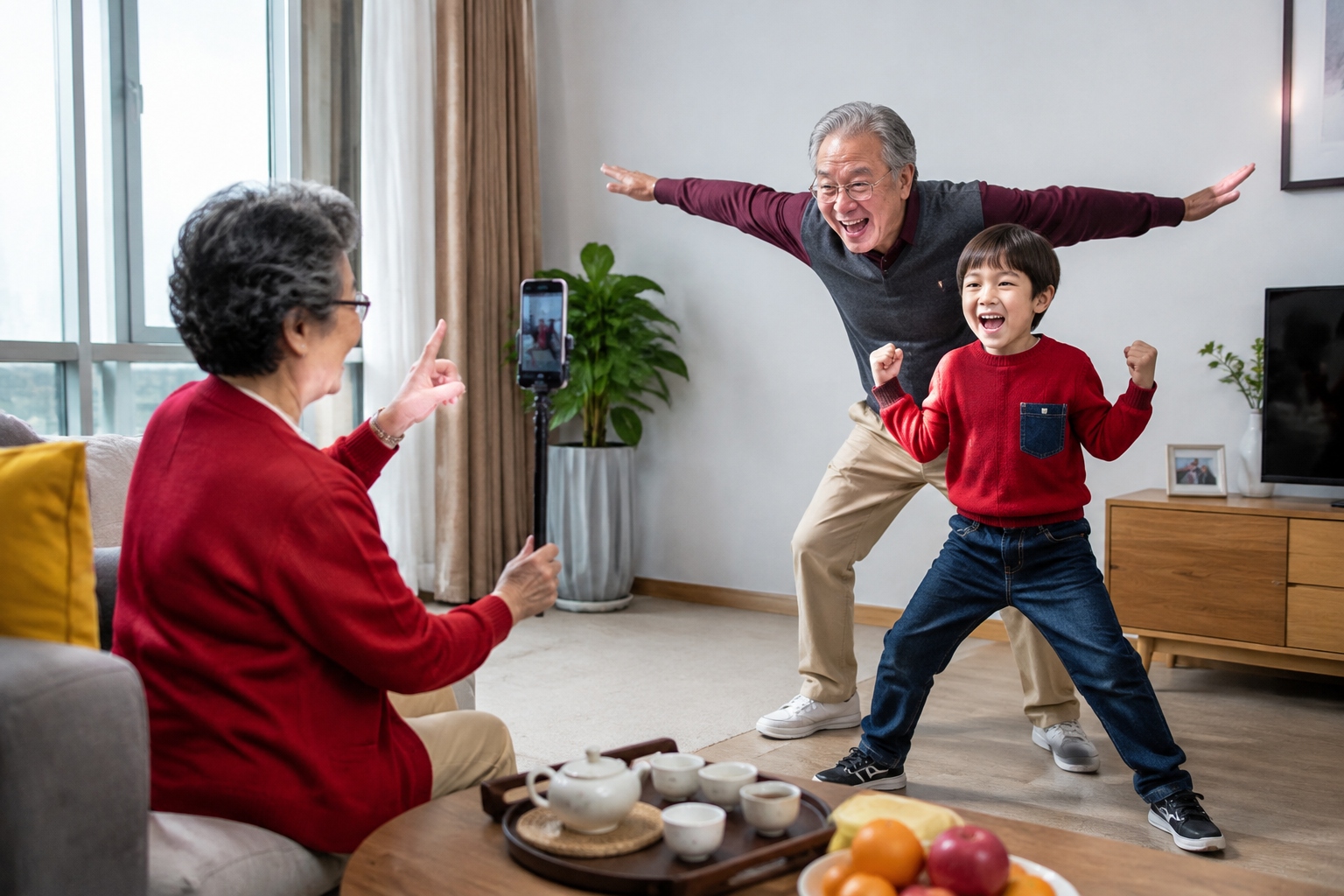
In eight months, Wang has produced more than a dozen short films starring her husband, her son, her daughter-in-law and her grandson. Some look like made-up fairy tales; some are simply home videos. But they all begin with her typing a sentence into an AI tool and end with the family arguing over whose name appears first in the credits.
It started with a community course for seniors
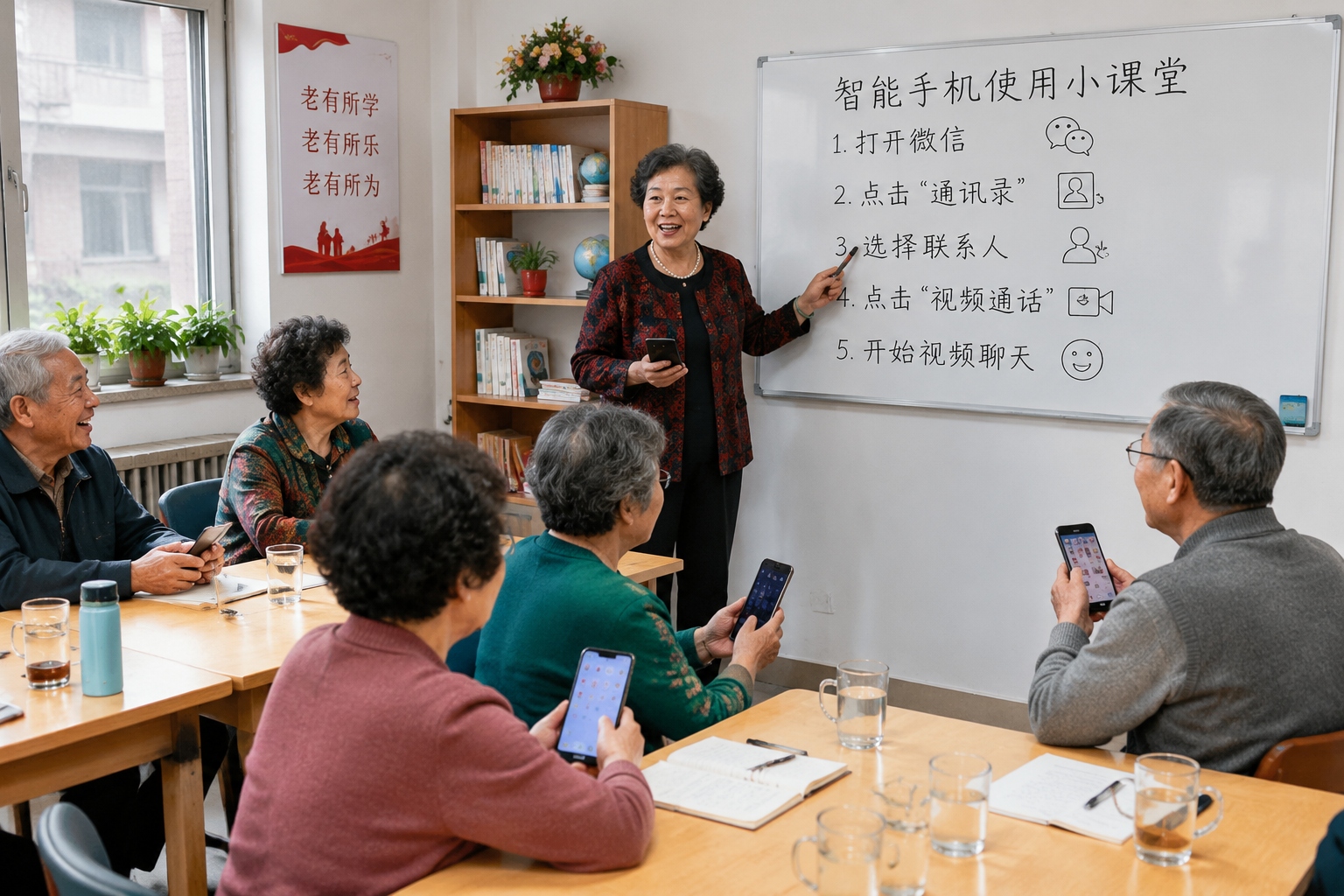
Wang’s road to directing had nothing to do with ambition. Last summer, her neighbourhood community centre put up a notice: “Free digital skills class for residents over 60.” She went because she was tired of waiting for her son to book hospital appointments or return ride-hailing reservations for her.
The class covered mobile payments, WeChat and maps. Then, one afternoon, the young teacher played a short AI-made video. It showed an old Beijing hutong that slowly transformed into a snowy alley — just from a written prompt. Wang’s jaw dropped. “I thought: this is not something only young people can do. If I can write a sentence, why can’t I try?”
She asked the teacher to install the AI app on her phone. Within a week she had watched seven tutorials while her husband watched CCTV. She began keeping a handwritten instruction booklet, the way she used to keep recipes. On the front page, she wrote, “Be patient with yourself.”
Learning, forgetting and re-learning at 60+
Editing on a phone was surprisingly difficult for someone who didn’t grow up with digital things. Pinch, zoom, press the right icon — her fingers were always doing the wrong thing. She typed slowly. Her hearing was fine, but her memory for menus was poor. “At the beginning I would forget how to save a project. For three days, I made videos and lost them,” she says with the same embarrassment she must have felt as an accounting intern many years earlier.
Her breakthrough came when she found the “text to image” function. She asked the AI to draw a picture of her husband as a 1950s railway worker. The result made the whole family laugh, and she put it into a short clip with an AI voice. The clip was silly, but it taught her the real core: not mysterious algorithms, but problem-solving.

Wang now uses two applications: an AI chatbot to draft scripts and polish dialogues, and a well-known video editor (CapCut/Jianying) to assemble scenes. She also uses filters to remove noise and subtitle generation for automatic captions, which she finds very helpful because at family dinners everyone speaks at the same time.
Why a retired woman makes her family act
It didn’t start as a plan. The first video was about a birthday cake; the second one was about her granddaughter’s first tooth. But when she was preparing for the Mid-Autumn Festival, Wang wanted a “memory film with a little more drama than a food photo”. So she asked her chatbot for a story: two old neighbours meet on a bridge, argue over a lost jade ring, discover that the grandson has hidden it.
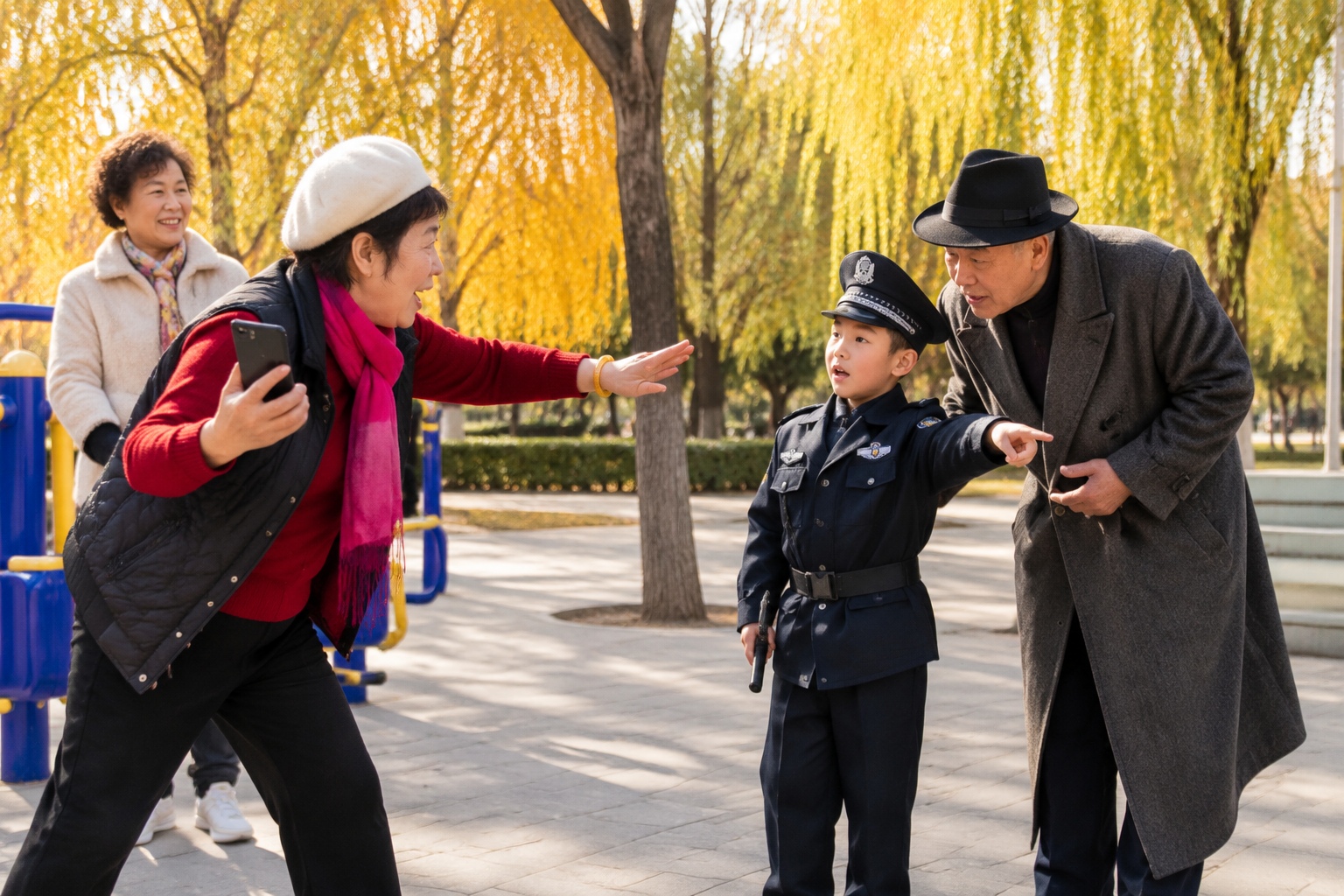
She rewrote the dialogue with real family jokes, then assigned roles. Husband? The grumpy neighbour. Son? The village official. Daughter-in-law? The kind vendor who appears to calm the argument. Grandson? The little policeman. The film was shot in the actual courtyard and park, with a few AI-generated interludes for the Great Wall background.
The neighbours were laughing at them. But Wang kept shouting, “Walk slower, the camera needs to breathe.” She didn’t know where she had heard that phrase — probably from a random tutorial. Yet they let her keep going. Her daughter-in-law later said to me: “At first I thought it was a waste of time. But by Sunday night, we had a cute six-minute film. Other parents in the family group sent thumbs up to me. It changed the way we see our own weekend.”
Family reactions: from eye-rolls to applause
Her son was not impressed at first. He feared online scams, so when Wang mentioned that an AI assistant had generated a picture, he told her: “Be careful, don’t give your home address to an app.” She replied warmly: “An old lady with no credit card is not a target.” (It was not entirely true, but she has a way of making you feel safe.)
Being part of a video changed family dynamics. Her husband, who used to complain about too many meetings when working, actually rehearsed lines in the mornings. Her daughter-in-law started choosing her own costumes, and the grandson demands to watch the final cut at least twice.
One night, Wang made a 40-second portrait of her relative’s life and sent it to a family chat. Her son shared the film on his moments. The reaction was so positive that the accountant now thought of herself as “someone who records stories that otherwise would be lost”.
A new role in the community: “Director Granny”
The little films had an audience beyond WeChat. At a neighbourhood event for the elderly, Wang showed two films in front of thirty old residents. The district newspaper wrote a short piece about “a retired employee in Beijing uses AI to become a director”. The young teacher re-invited her to class, but this time as an assistant.
Now Wang teaches a monthly “silver-haired AI and short-video class” in the same community centre where she once was a student. The class has about 15 participants, from ages 68 to 80. Some want to produce “vlogs”; others simply want to understand what their grandchildren are staring at. Wang does not teach algorithms. She uses a plain sheet: “Step one: install the app. Step two: type a sentence. Step three: don’t panic if the image looks wrong.” The class often stops for tea; they help each other in a way online forums cannot.
What AI really offers millions of Chinese retirees
Wang’s story shouldn’t be twisted into “AI is saving old China”. That would miss an important point. China is ageing fast: by 2023, about 300 million people were over 60, about one in every five. Many of them are healthier and better educated than previous generations, but they are still often left outside everyday digital services.
That is why many local governments, companies and community initiatives have launched digital literacy classes specifically for older people. It started with how to use QR codes and mobile payments, and in many cities it is expanding into richer creative territories: AI painting, synthetic voices, short video clips. Platforms are full of senior creators who walk dogs, sing, cook and, occasionally, direct their grandchildren.
At the same time, it would be dishonest to say entry is easy for all. Older adults can struggle with small text, unreliable wifi, design that assumes young eyes and memory. Some are so afraid of accidental fees or viruses that they stop, while others simply cannot concentrate for two hours. Wang’s way of personalising instructions and repeating them in handwriting is not fancy, but it is practical. As she puts it: “I don’t need to be an engineer. I need to know which button to hit and why I shouldn’t be scared.”
The next episode is still being filmed
When we last spoke, Wang was preparing a new project: a sci-fi story set in 2050, where an old grandmother is the only person still growing tomatoes and rides a flying bicycle. The main character was her grandson. Her husband, now more confident, was planned to appear as the village villain in a black sweater.
“People see a 63-year-old woman and think it’s cute that she wants to learn,” Wang says, laughing. “But here is the thing: I used to keep account books all day, now I keep memories. My eyes sometimes get tired, but my imagination finally has permission to run around.”
She looks at the notification from her latest uploaded video and breaks into a real smile. “My favourite commenter wrote: ‘Grandma, if you can do it, my mom can do it too.’ That’s the film I want to make next.”
Start the discussion at forum.chinacomes.com