
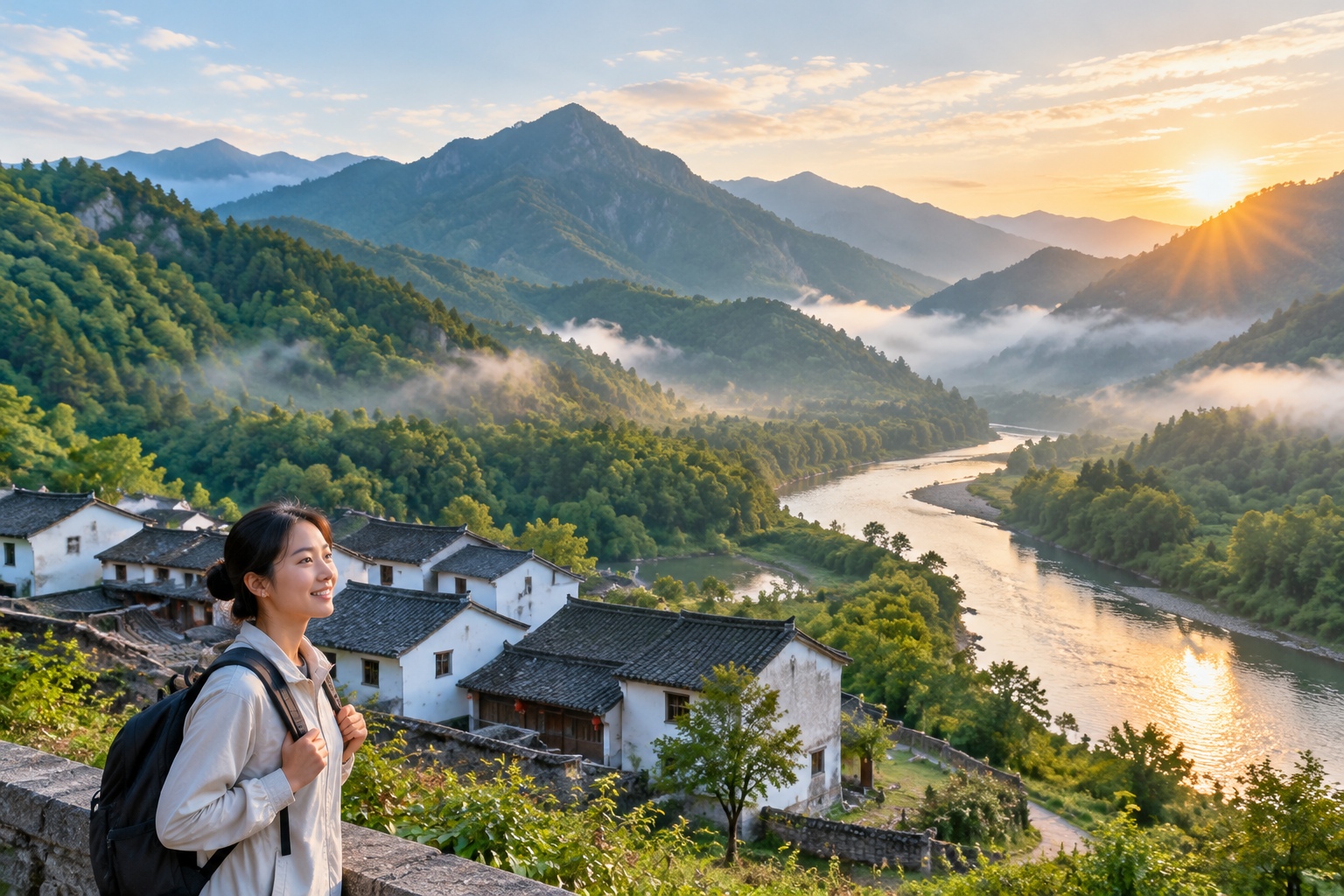

Morning in Xi’an: Where Does the Water Come From?
At 7 a.m. in Xi’an, the capital of Shaanxi Province, millions of people turn on their taps to brush their teeth, make tea, or wash vegetables. Most don’t think about where that water comes from. The answer lies to the south, where the Qinling Mountains rise like a green wall along the city’s edge.
I once met a retired hydrologist who told me, ‘Every drop of water in this city’s rivers that doesn’t come from rainfall is born in the Qinling forests.’ The mountains act like a giant sponge: they absorb precipitation in summer, store it in soil and underground aquifers, and release it slowly through thousands of streams and springs. This is not just a poetic metaphor—it’s a measurable reality.
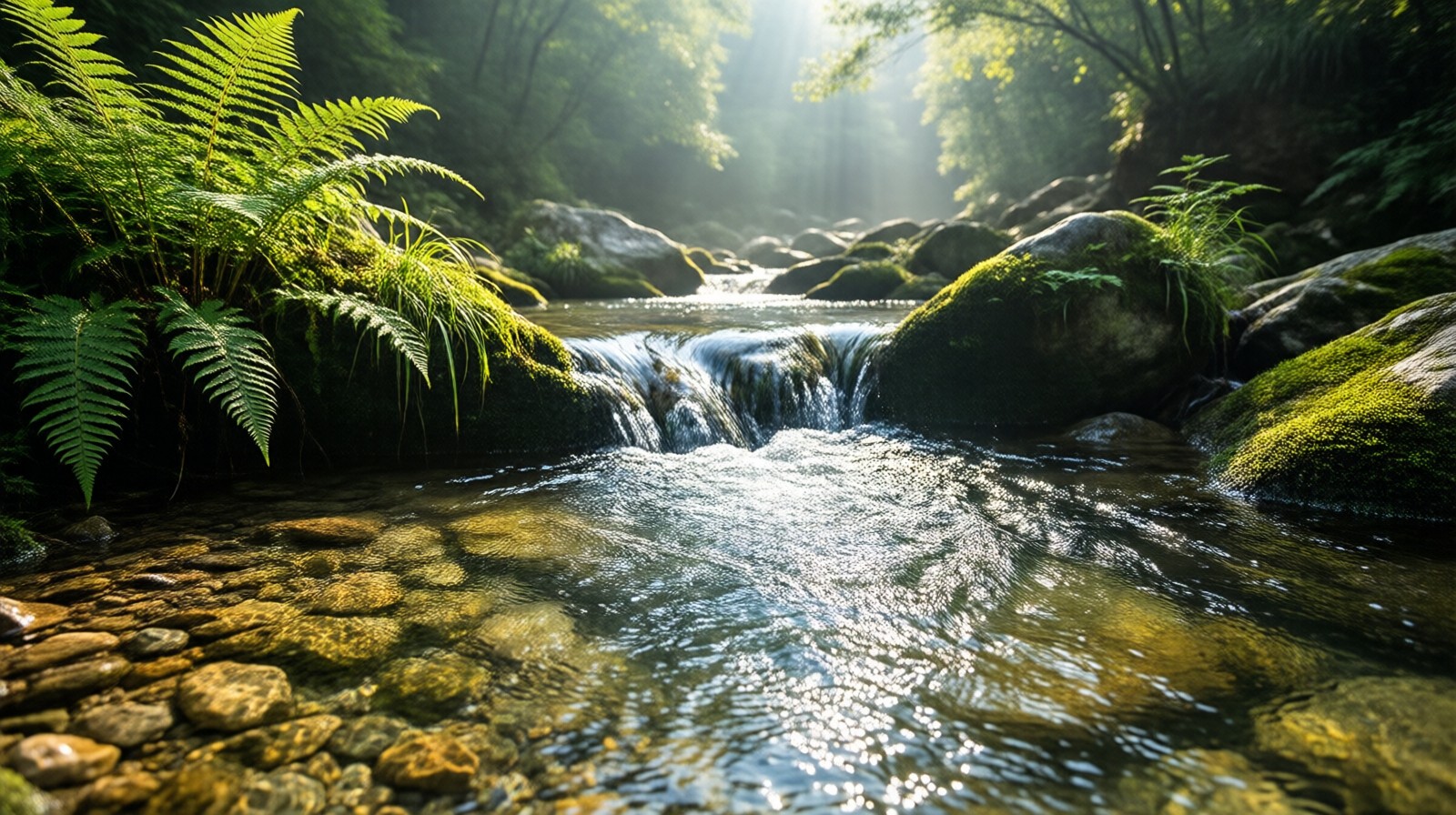
The ‘Central Water Tower’ of China
The Qinling Range is often called the ‘Central Water Tower’ of China. It forms a natural divide between the Yellow River and the Yangtze River basins, and it is the source of several major rivers, including the Hanjiang, the Jialing, and the Weihe. These rivers supply water to one of the most densely populated regions in the country.
According to official data, the Qinling area provides over 22 billion cubic meters of water resources every year. That’s enough to fill more than 8,000 West Lake-sized reservoirs. More importantly, it supports agriculture, industry, and daily life for over 50 million people directly in places like Xi’an, Baoji, Hanzhong, and Ankang. Through the South-to-North Water Diversion Project, part of the Hanjiang River’s flow is also channeled northward to water Beijing and Tianjin—two cities thousands of kilometers away.
So when a farmer in Hanzhong protects a patch of forest on the southern slope of Qinling, it helps a factory worker in Wuhan get cleaner river water, and a mother in Beijing pour a safe glass of water for her child.
Why the Qinling Ecosystem Is Fragile
The Qinling Mountains are not just a water source; they are one of the world’s most significant biodiversity hotspots. They are home to giant pandas, golden monkeys, takins, and crested ibises, as well as more than 3,000 plant species. However, this ecosystem is also vulnerable to climate change and human activity.
In the past, mining, illegal construction, and unregulated tourism caused damage to forests and riverbeds. The construction of small hydropower plants blocked fish migration routes and altered natural water flows. Even the expansion of cities and roads on the mountain fringe has led to soil erosion and water pollution.
This is why, in recent years, the Chinese government has designated a large part of the Qinling area as an ecological protection zone. The goal is not to lock the mountains away from people entirely, but to find a balance where nature and society can coexist sustainably.
The Protection Rules That Changed the Landscape
One of the most visible changes is the establishment of the Qinling National Park (officially in progress). This park spans over 8,000 square kilometers across four provincial-level administrations. Inside the park, logging is banned, mining has been phased out, and many small hydropower stations have been decommissioned. In their place, rangers patrol the forests using GPS and drones to monitor for poaching or illegal development.
Residents living inside the core protection areas have been relocated to new villages with better infrastructure. For example, in the city of Hanzhong, more than 10,000 families moved from steep slopes to flatland settlements where they can access schools, hospitals, and jobs in eco-tourism or sustainable agriculture. Some former miners have become forest rangers, using their knowledge of the mountains to protect what they once extracted.
The impact is measurable. Between 2015 and 2023, forest coverage in the Qinling area rose from 62% to 72%, and the number of wildlife sightings has increased sharply. In some streams, fish and freshwater crabs have returned because water quality improved.
What It Means for Ordinary City Dwellers
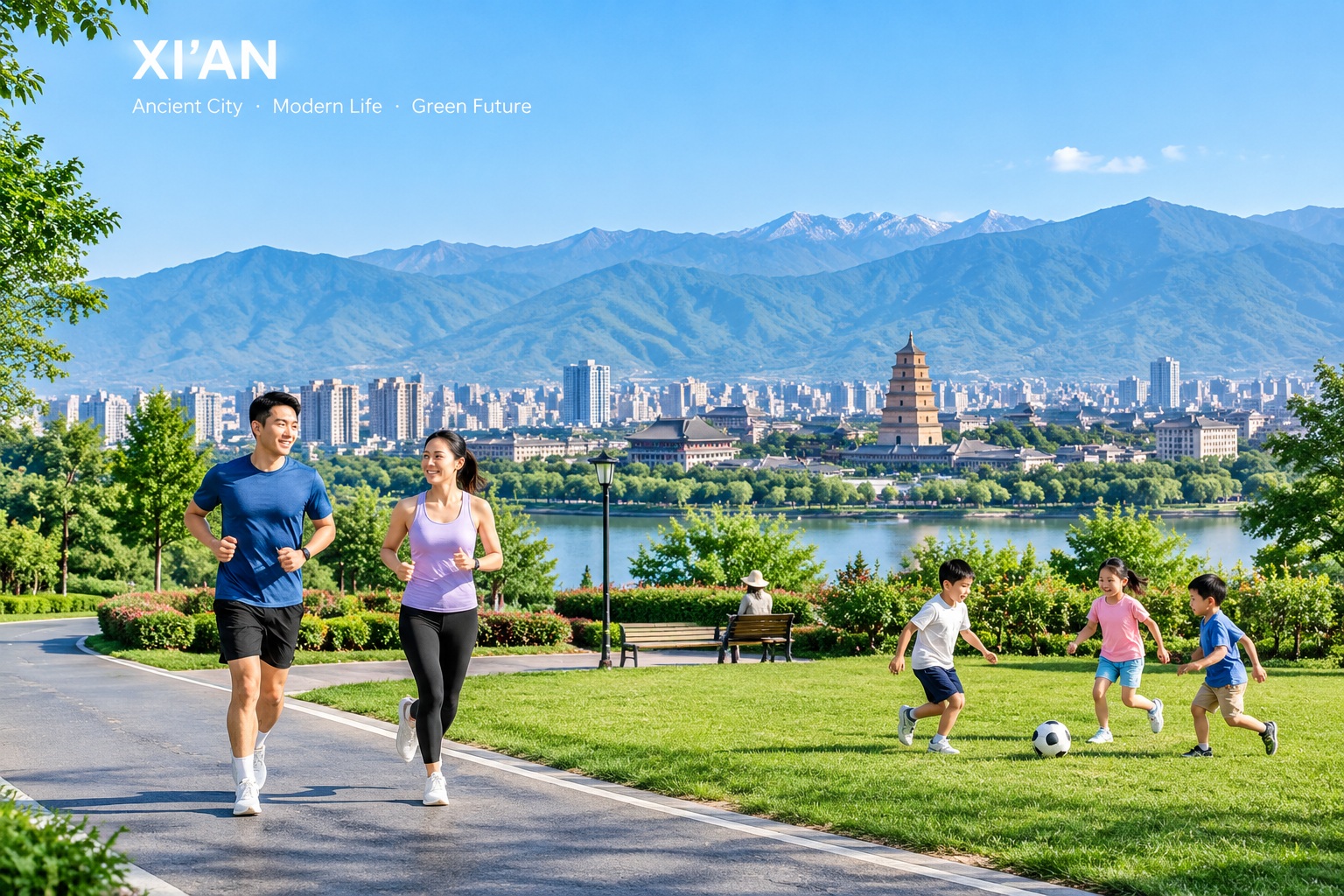
For a city dweller in Xi’an, the most immediate effect is cleaner air. The Qinling Mountains act as a natural barrier that traps pollution and regulates temperature. When the forest is healthy, it filters particulate matter and produces oxygen. On clear days, you can see the green ridges from the city’s high-rise buildings—a visual reminder of the mountain’s presence.
Another effect is the growing popularity of ‘ecological experience’ tourism. Instead of building big concrete hotels, many villages near the mountains now offer homestays, hiking trails, and farm-to-table meals. This brings income to local communities while encouraging visitors to respect nature. I’ve met a young woman in a village at the foot of the southern slope who used to work in a factory in Guangdong. She returned home to start a homestay with four guest rooms. ‘My guests come to hear birds and see stars,’ she said. ‘The mountain gives us a better life than the assembly line ever did.’

The Challenges That Remain
These successes don’t mean the Qinling protection story is simple. There are still tensions between conservation and development. Some local governments worry about losing tax revenue from banned industries. Younger people often move to cities, leaving villages with an aging population and a shortage of hands for eco-friendly farming. And climate change brings uncertain rainfall patterns to the region.
Moreover, the concept of ‘ecological transfer’—paying upstream areas to protect water sources—is still being refined. How much is a forest worth? How do you price the oxygen it gives, the carbon it stores, the floods it prevents? These questions are debated by economists and ecologists, but no one has easy answers.
Still, there is a growing awareness among ordinary people that the mountain is not just scenery. A taxi driver in Xi’an once told me, ‘When it rains in the mountains, our city breathes better.’ He wasn’t saying anything poetic. He was talking about his family’s health and his own business—a clean city attracts tourists, and clear skies mean more riders.
Why the World Should Care
The story of the Qinling Mountains offers a lesson beyond China. It shows that nature protection can be linked to economic vitality, and that large populations can rely on healthy ecosystems for basic needs like water and air. As the world faces water scarcity and biodiversity loss, China’s experience with large-scale ecological restoration is worth watching.
The Qinling protection doesn’t mean turning the mountains into a museum. It means creating a system where local people can thrive while the land and rivers recover. And it starts with a simple act: turning off a tap, and thinking about where the water really comes from.
Start the discussion at forum.chinacomes.com