

The New Rhythm of Urban Romance
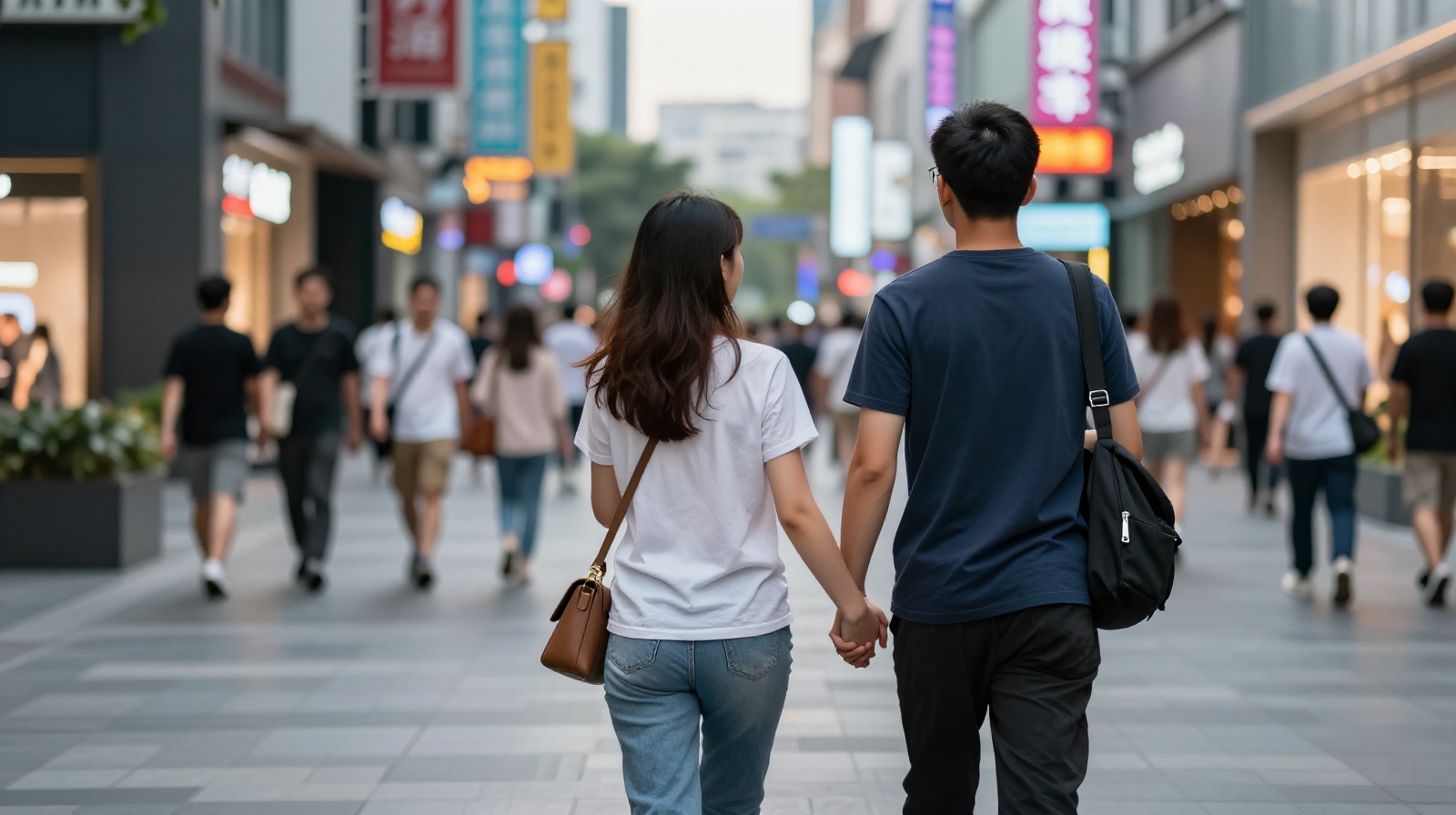
If you walk through the pedestrian streets of Shanghai, Chengdu, or Shenzhen on a Friday night, the first thing that might strike a visitor from the West is not the neon lights or the crowded malls, but the couples. They are everywhere. Young men and women hold hands tightly as they navigate the subway crowds. Some share earbuds while walking. Others, bolder still, pause for a quick kiss before parting ways.
For decades, public displays of affection (PDA) in China were muted. Romance was something private, saved for behind closed doors or whispered in quiet corners of parks. Today, that silence has broken. The evolution of PDA in China is not just about romance; it is a mirror reflecting deeper shifts in gender dynamics, economic confidence, and the generational gap.

Generational Divides: The Grandparents vs. The Gen Z
To understand the current scene, you have to look at who is on the street. In China, the difference between generations is stark, often more so than in Western societies.
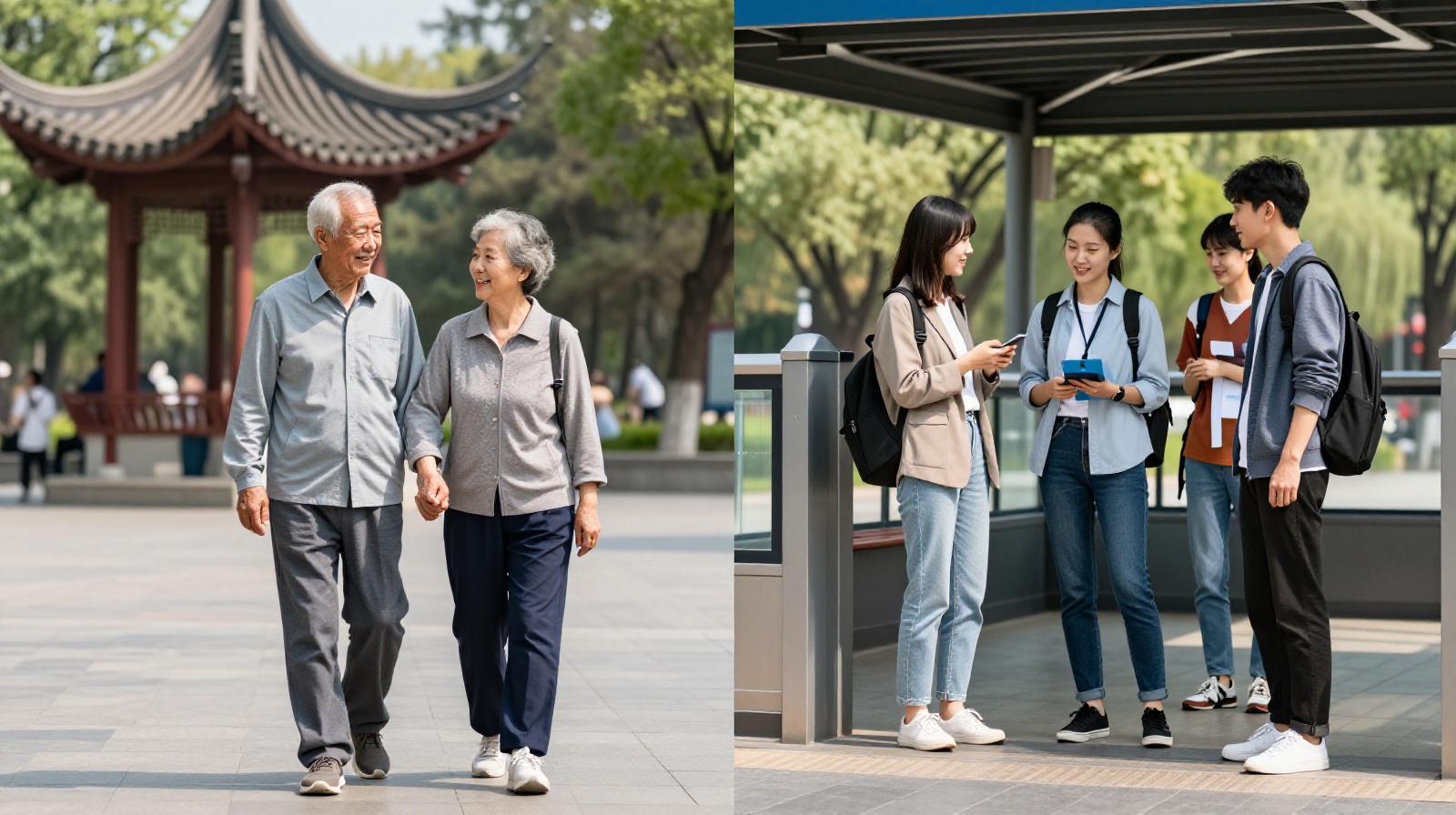
For the older generation—those who grew up during the Cultural Revolution or the early reform era—public intimacy was not just rare; it was often viewed with suspicion. Affection was seen as bourgeois or inappropriate for public spaces. You might see an elderly couple holding hands, but it is usually a functional gesture: one supporting the other while crossing the street, rather than a romantic declaration.
Contrast this with Gen Z and young Millennials. For them, PDA is a natural extension of identity. It is a way to signal relationship status, claim space, and express individuality. A young couple standing on a subway platform sharing a kiss is not trying to provoke; they are simply living their lives. This shift is most visible in Tier-1 cities like Beijing and Shanghai, where the pace of life is fast, and social norms are more fluid.
Why the Change? Economy, Culture, and Space
What drove this transformation? It is rarely just one factor.
First, there is the economic aspect. As China’s middle class expanded, so did the concept of personal consumption, including how people express themselves. Romance became part of the “experience economy.” Couples spend money on dates, travel, and gifts, and public affection is often part of that ritual. It is also linked to social media; platforms like Xiaohongshu (Little Red Book) and Douyin (TikTok) have created visual cultures where couples document their lives, normalizing public intimacy as a form of digital storytelling.
Second, there is the influence of global culture. While Western movies and music have long been present in China, their impact is now integrated rather than imported. Young Chinese people consume global media not to reject their own culture, but to blend it with local realities. The result is a hybrid norm: less conservative than traditional expectations, but perhaps more context-aware than the unrestrained PDA seen in some Western capitals.

Regional Nuances: Not All Cities Are the Same
It is important to avoid generalizing. China is vast, and the rules of engagement vary by region. In Tier-1 cities, holding hands, hugging, and even brief kisses are commonplace in commercial districts, parks, and transit hubs. In smaller, third- or fourth-tier cities, social circles are tighter. Everyone knows everyone, so public behavior is still somewhat monitored. You might see more reserved interactions there, not out of moral strictness, but out of community awareness.
However, the gap is closing. As younger people migrate from smaller towns to big cities for work, they bring their evolving views back with them. The “quiet” romance of the past is giving way to a more expressive, visible one.
Conclusion: A Quiet Revolution
The change in how Chinese couples interact in public is a small but significant signal. It shows a society where individual feelings are increasingly validated in public spaces. It is not a rejection of tradition, but an evolution of it. For the outsider, watching a young couple hold hands on a bustling Shanghai street might seem like nothing special. But for the locals, it represents a hard-won freedom to express love openly, without shame or hesitation.
In this sense, the evolution of PDA in China is not just about romance. It is about the right to be visible, to be individual, and to define one’s own happiness in public.