

The Vanishing Calligraphy
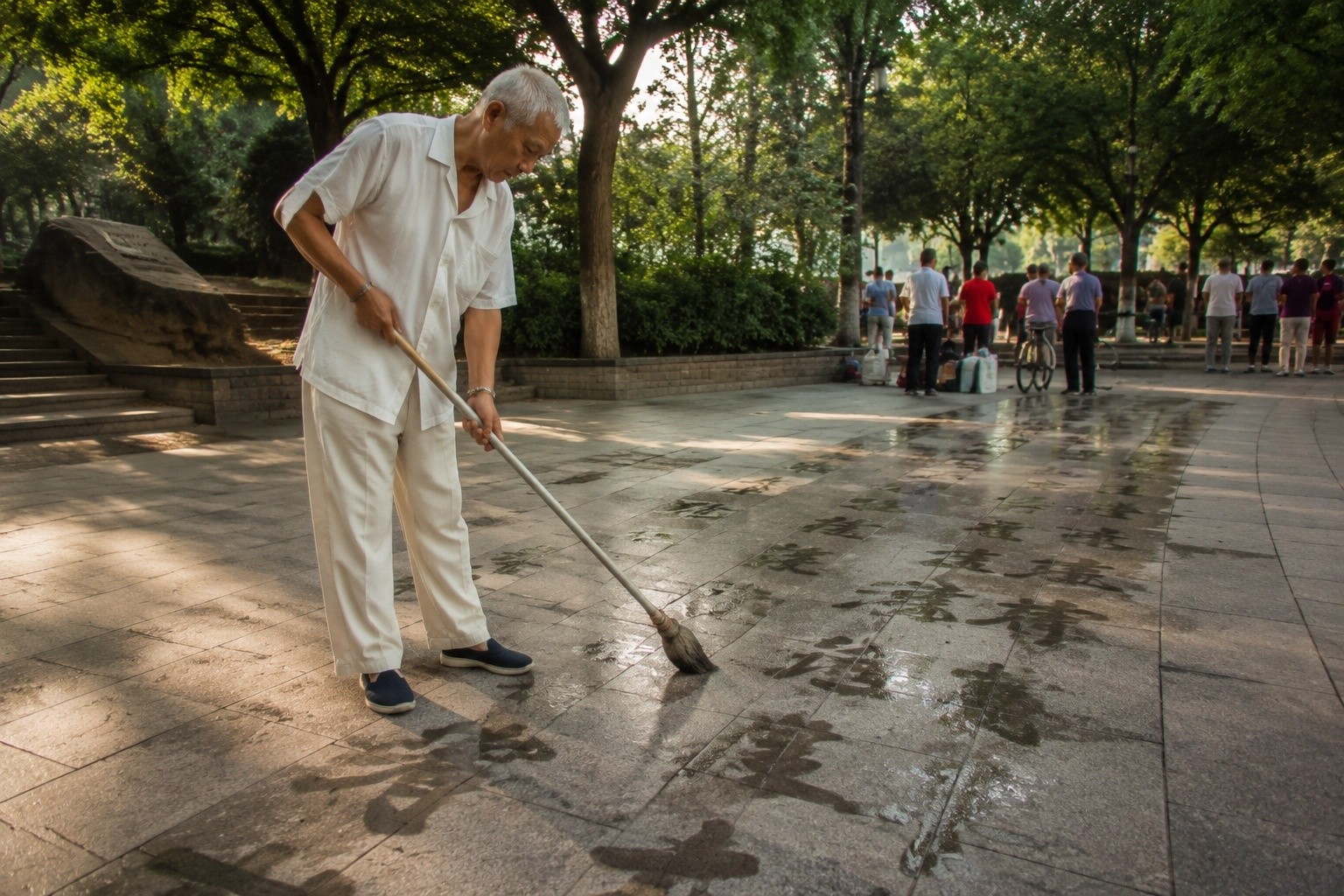
It is 6:30 AM in a public park in Chengdu. The air is still cool and damp with morning mist. On the wide, gray concrete plaza, an elderly man dressed in loose, dark exercise clothes stands before a patch of ground that looks empty to the casual observer. He holds a pole nearly two meters long, tipped not with traditional bristles, but with a thick, white sponge.
He dips the sponge into a bucket of clean water slung from his shoulder. With a sweeping motion of his wrist, he begins to write. Characters as big as human heads emerge instantly on the pavement: bold, dark strokes of wet concrete against the light gray background. He writes lines from classical Tang poetry, his body moving in a rhythmic dance—shoulders turning, feet shifting for leverage. The sound is a soft, wet shhh-shhh, like rain falling on dry earth.
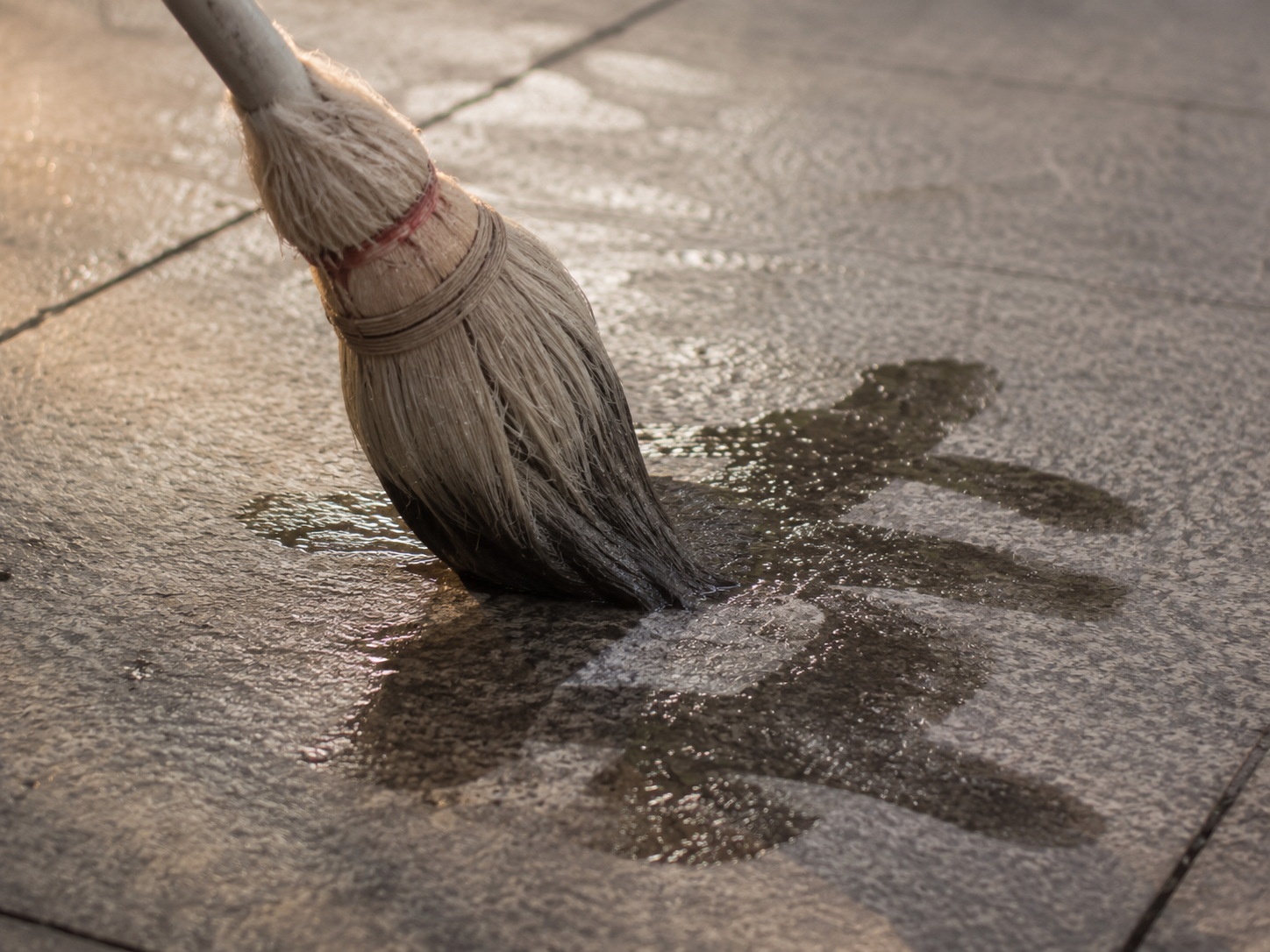
He finishes a couplet—a pair of poetic lines—and steps back to admire his work. He smiles, a quiet expression of satisfaction. Then, he moves ten feet to the right and begins again. Within minutes, the morning sun breaks through the trees. The water begins to dry. The dark strokes lighten, becoming fainter, until they vanish completely, leaving no trace that anything was ever written there.
This daily ritual is known as “Earth Writing” (Dishu 地书). It is a widespread phenomenon in Chinese public spaces, particularly in parks, where retirees spend their mornings exercising. It is calligraphy without the cost of paper, ink, or brushes, and more importantly, without the burden of permanence.
A Philosophy of Letting Go
For many participants, Earth Writing is less about artistic achievement and more about a spiritual exercise. In a society that often emphasizes accumulation—wealth, status, material possessions—Earth Writing offers a contrasting philosophy: wu wei, or non-action, and the acceptance of impermanence.
“If I write it on paper, I have to worry about mistakes, about framing it, about whether others will like it,” says Lao Li, a 72-year-old retiree and regular practitioner in Beijing. “But here? If I make a mistake, I just rewrite it. If the sun dries it up, that’s fine too. It belongs to the moment, not to me.”
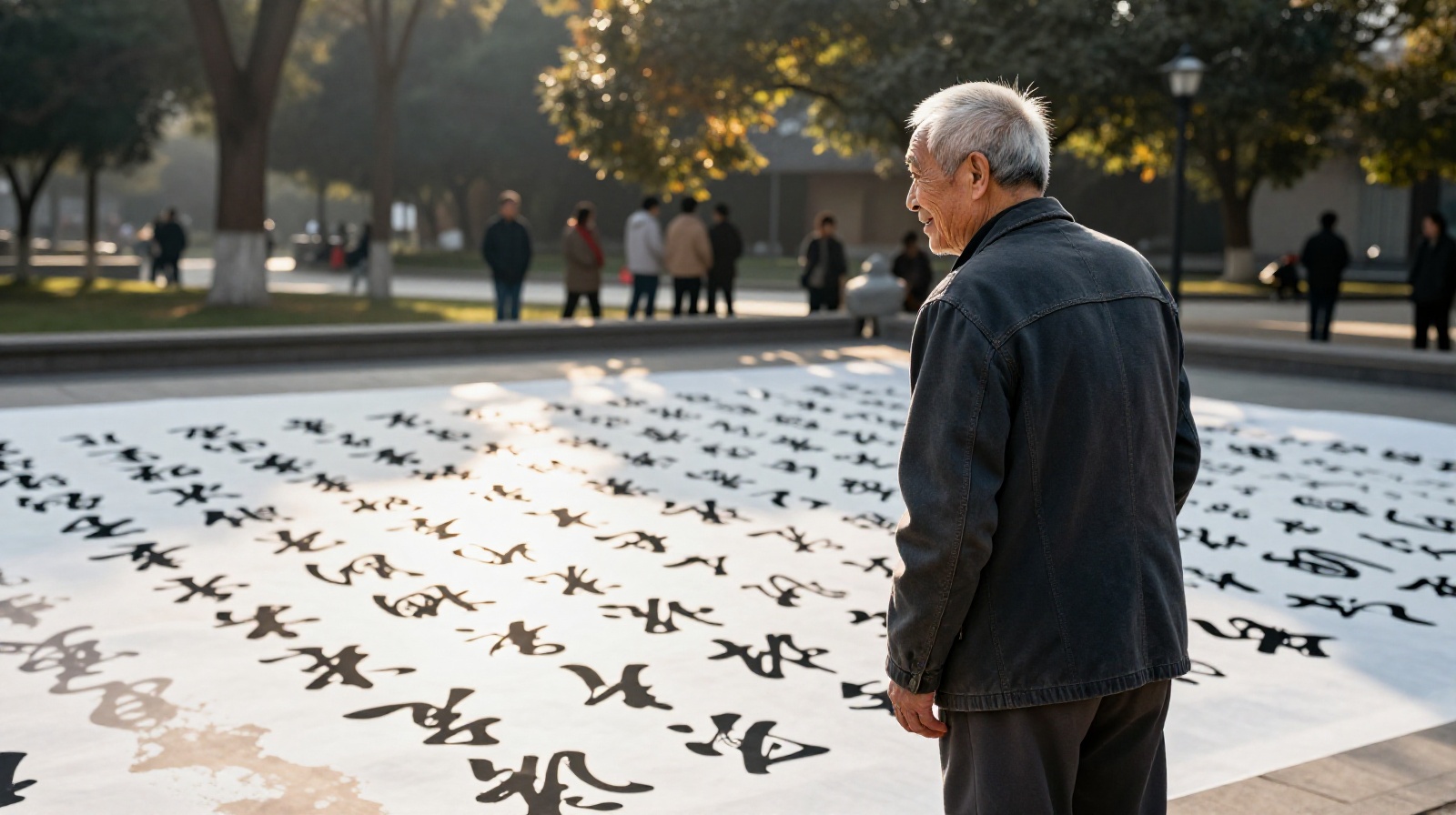
This ephemerality removes the pressure of perfection. In traditional calligraphy, a single error can ruin a valuable piece of art. In Earth Writing, the medium itself is forgiving and transient. The act of writing becomes a meditation. The focus is entirely on the movement of the arm, the flow of the water, and the mental state of the writer. It is a way to declutter the mind, shedding the worries of family, health, or finances, even if just for thirty minutes.
Social Interaction Without Comparison
The park plaza becomes an open-air classroom and social hub. Unlike high-end calligraphy studios that require expensive memberships and expensive supplies, Earth Writing is democratic. Anyone with a bucket of water and a sponge brush can participate.
Beginners often stand on the periphery, watching the masters. Sometimes, an expert might step in to correct a grip or suggest a more elegant stroke order. There is no judgment for bad handwriting; since the work disappears, there is no shame in being imperfect. This creates a low-stakes environment that encourages learning and camaraderie.
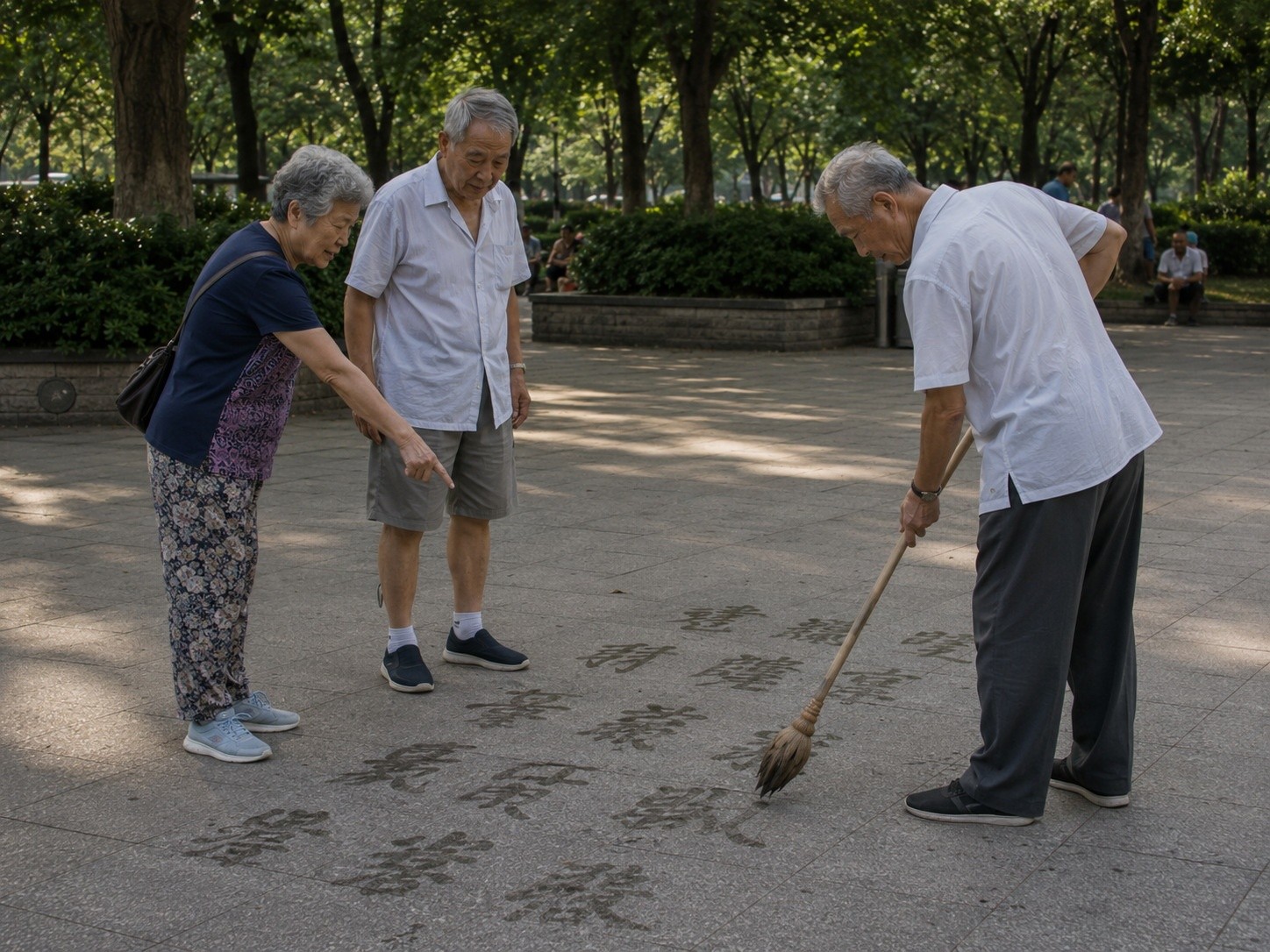
Conversations often revolve around poetry, history, and life stories. The shared activity breaks down social barriers. A retired engineer might discuss physics with a former teacher, or a migrant worker might share local folklore with a city dweller. The water on the ground serves as a common language, connecting people who might otherwise remain strangers in their daily lives.
Street Art with Zen
To Western observers, Earth Writing might superficially resemble street graffiti. Both involve writing on public surfaces for an audience of passersby. However, the intent and aesthetic are vastly different. Graffiti is often about claiming space, asserting identity, or making a political statement. It seeks to leave a mark that lasts.
Earth Writing is the opposite. It is about giving space back to the earth. It is a quiet, contemplative practice. The beauty lies not in the final product, which does not exist, but in the performance of its creation. It reflects a cultural value that finds peace in the natural cycle of appearing and disappearing.
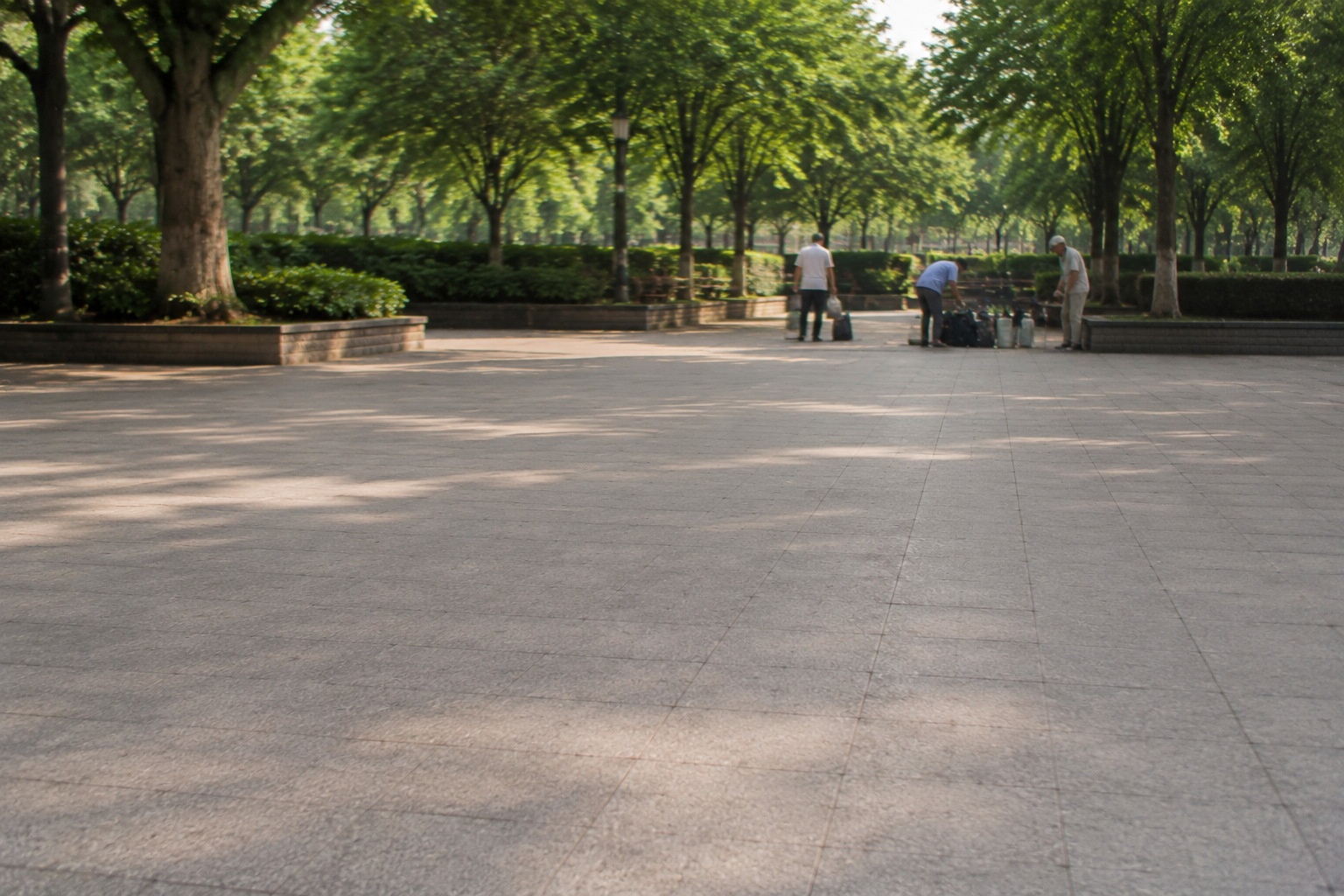
As the day grows hotter and the park fills with joggers and families, the early morning poets pack up their buckets. The ground is dry. To anyone walking by just an hour later, it would look as if nothing happened. But for those who were there, the act of writing was enough. They have expressed themselves, exercised their bodies, and shared a moment of beauty with their community—all without leaving a single trace behind.