

Aisle Fight: Two Generations, One Pastry
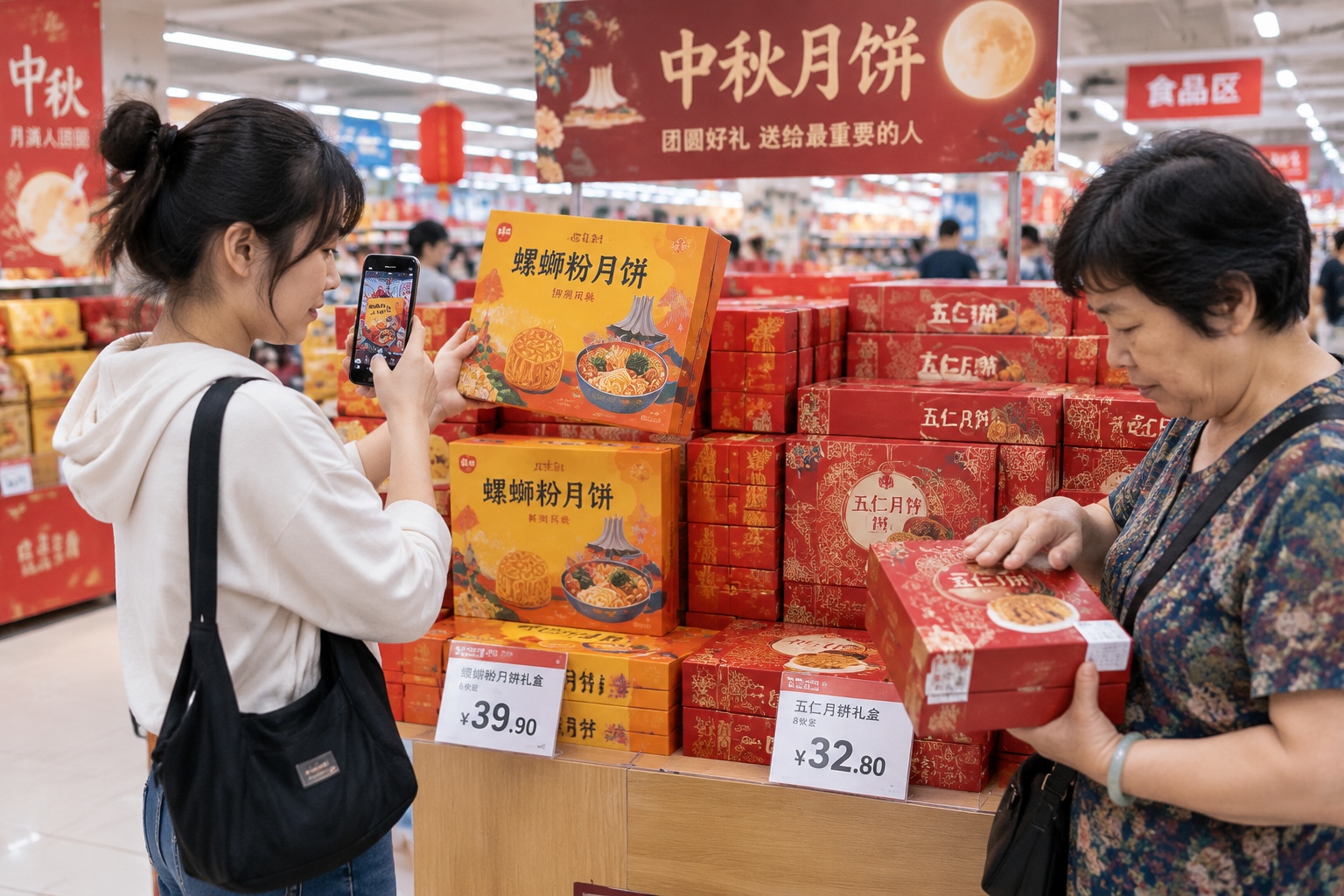
In the week before Mid-Autumn Festival, the mooncake section of a Shanghai supermarket turns into a quiet argument between generations, conducted without anyone actually speaking.
A woman in her mid-twenties holds up a box labelled luosifen flavor, photographs it, and sends it to a group chat. Three meters away, her mother is pressing the top of a five-nut mooncake with one thumb to check firmness, then comparing price stickers box by box. Neither of them considers the other’s choice to be food.
For readers outside China: Mid-Autumn Festival falls on the 15th day of the eighth lunar month, which lands anywhere from mid-September to early October. It is the second-biggest family holiday after Spring Festival. The ritual is simple — come home, eat, look at the moon. The mooncake is the edible part of that ritual: palm-sized, dense, packed with a thick sweet filling. Which is why an argument about fillings is never only about fillings.
The Old Order: How Five-Nut Became the Default, Then the Punchline
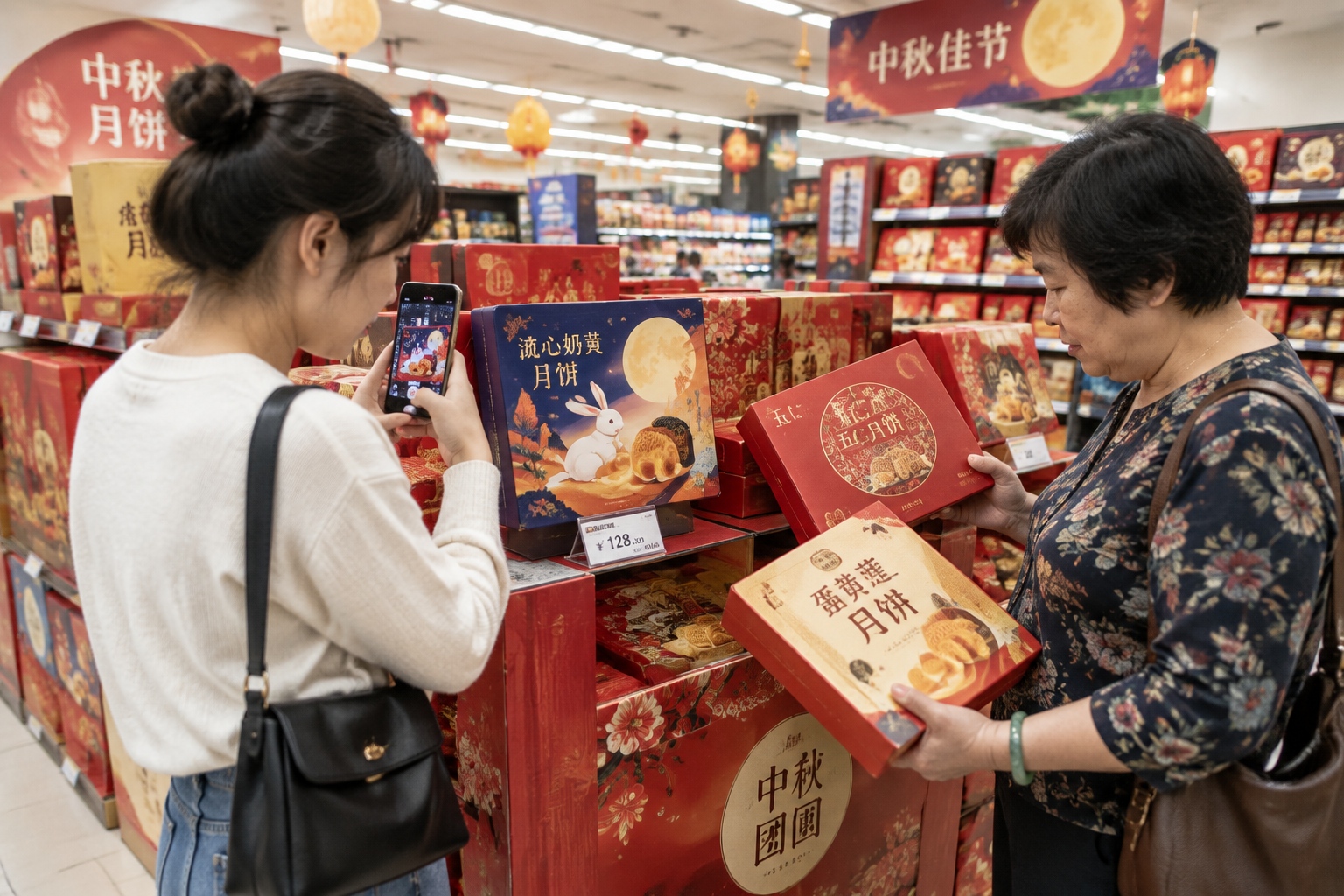
For most of the past forty years, a Chinese mooncake box meant four or five predictable names: lotus seed paste with salted egg yolk, red bean paste, jujube paste, and five-nut.
Five-nut is the one foreigners hear about first, usually as a joke. It is a compressed mix of nuts and candied fruit, sweet in a way that stops being sweet and starts being a texture. In 2015, a national mooncake standard even spelled out exactly which five nuts qualify in a Cantonese-style five-nut mooncake: walnut, almond, olive kernel, melon seed and sesame. Somewhere in China, someone decided five-nut needed a legal definition. That should tell you how seriously this is taken.
Online, five-nut is the mooncake people love to hate: too sweet, too many textures, and always that one piece of candied winter melon that seems to have wandered in by mistake. But walk through a supermarket in a smaller city two weeks before the festival, or look at what a 65-year-old receives from relatives, and five-nut is still there, selling steadily, year after year.
So five-nut stepping aside is a lazy way to describe what is happening. It has not disappeared. It has moved from default to nostalgia with a hint of controversy, the way fruitcake sits at Christmas — mocked online, quietly purchased in person.
Where Do Luosifen Mooncakes Even Come From?
Luosifen is a sour, spicy, famously pungent rice-noodle soup from Liuzhou in Guangxi. Around 2020, the flavor escaped the bowl and started turning up in mooncakes, rice dumplings, hotpot bases and potato chips. It smells exactly like you have heard.
It sounds like a gimmick, and partly it is. But there is a logic underneath. For a 24-year-old in Chengdu, a milk tea mooncake is not exotic at all. It tastes like something they already buy three times a week. The mooncake is simply the delivery vehicle.
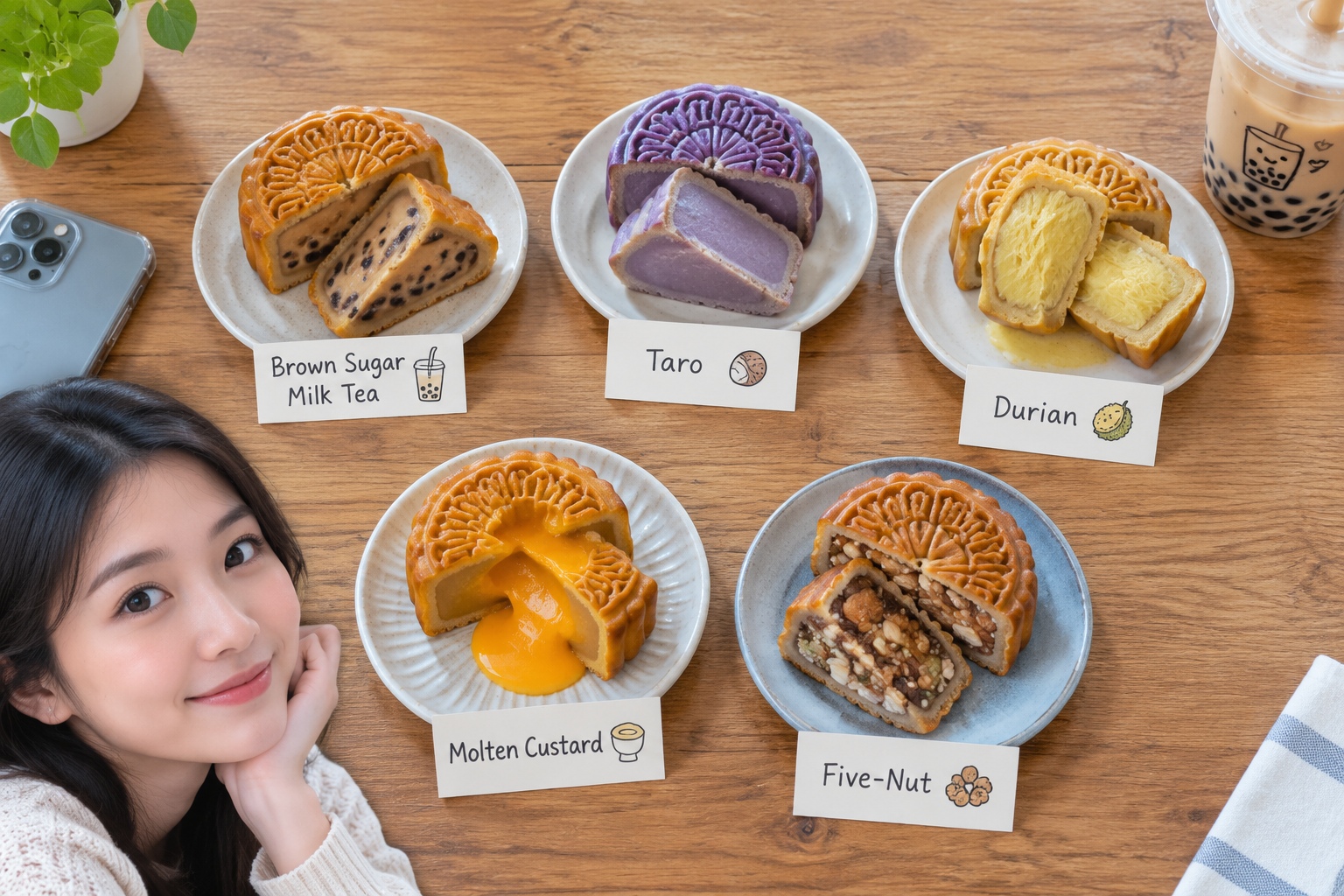
Read the labels on a modern mooncake shelf and it looks like a receipt from a convenience store: brown sugar milk tea, coconut latte, taro, durian, salted cheese foam, ice-skin mooncakes eaten cold, and molten custard — which began as a Hong Kong bakery item and has become the most successful new mooncake of the past decade. Luosifen and crayfish are the far end of the spectrum. Most people buy those exactly once, for the photo and the story.
Who Is Buying, Who Is Actually Eating
There are two markets in the same aisle. Younger buyers go small: mini mooncakes, loose ones sold by weight, low-sugar or no-sugar versions, often just for themselves and often eaten as a snack rather than a ceremony. Companies and families still buy boxes — the branded tins that get carried to a relative’s apartment, opened, and politely eaten one quarter at a time.
The route to the customer changed too. Livestream selling, Xiaohongshu and Douyin posts, limited-edition collaborations with tea brands, and convenience-store fridges where a single mooncake sits next to the sandwiches. A strange flavor can go from an idea to nationwide availability in a single season, which is roughly how long the whole market exists.
The Business Behind the Weird: Vouchers, Cold Chain, Six Weeks
Mooncakes are a strange business. Sales are concentrated in about six weeks a year, and then the shelves go back to ordinary bread.
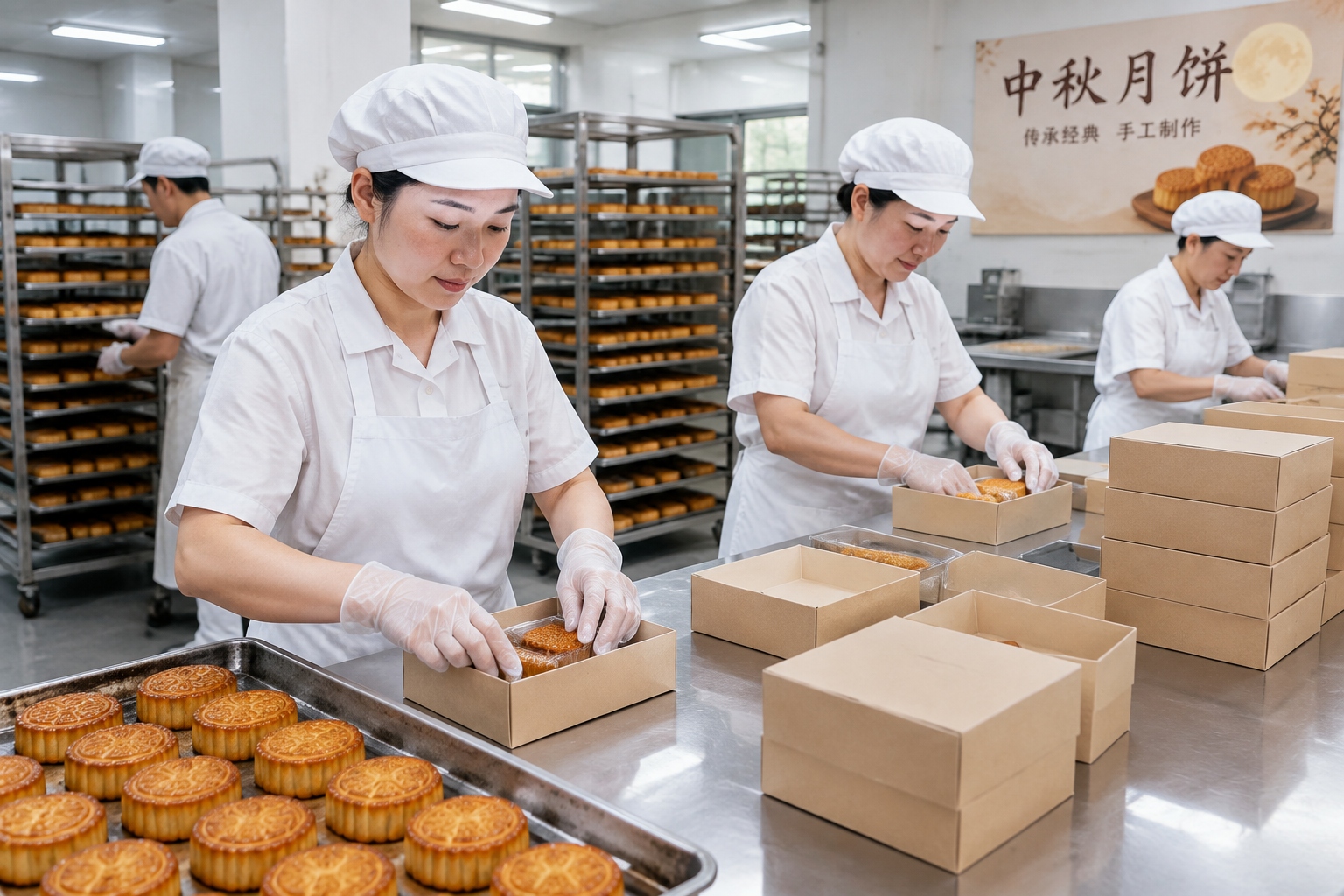
Freshly baked mooncakes, with shelf lives of five to fifteen days, need cold chain logistics and daily production planning. That is a big part of why supermarket bakeries and stores like Freshippo now matter so much during the festival — they sell something the old gift-box brands cannot: a mooncake that is still warm.
Then there is the mooncake voucher, a system so odd it has become a national joke. A company buys vouchers at a discount and hands them out as employee gifts. An employee who does not want mooncakes sells the voucher to a scalper outside the store, for cash, usually below face value. The scalper sells it on to someone who redeems it. In the most extreme version of the joke, the voucher circulates for weeks and no mooncake is ever baked. That is exaggerated — but the fact that it sounds plausible tells you how far the gift and the food have drifted apart.
The Hangover: Boxes That Weigh More Than the Mooncakes
Overpacking became a real public irritation. Velvet linings, plastic trays, ribbons, a box inside a box inside a bag, all to hold four pastries. In 2023, a national standard took effect that generally caps packaging at three layers and requires packaging cost to stay under roughly 20 percent of the price for most food products.
The results are visible: lighter boxes, smaller mooncakes, plain paper instead of velvet. The luxury end of the market has not vanished, but it is harder to sell a box that feels like furniture.
And then there is waste. Mooncakes are dense, sweet, and not something most people want to eat twice a day. Households end up with boxes nobody finishes, and offices end up with a desk corner full of unopened tins. Restaurants and neighbours do a brisk trade in passing them along.
Why This Looks Familiar Anywhere
Holiday food always bends toward the taste of whoever is doing the buying. Thanksgiving pumpkin pie, Christmas pudding, Valentine’s chocolate: all tradition, all reformulated, deconstructed or turned into a milkshake flavor within living memory. Nobody thinks the pumpkin pie has betrayed America.
The common misunderstanding is that a traditional Chinese festival requires a fixed menu. It does not. The fixed part is the excuse to gather. The food on the table is negotiable, and it always has been.
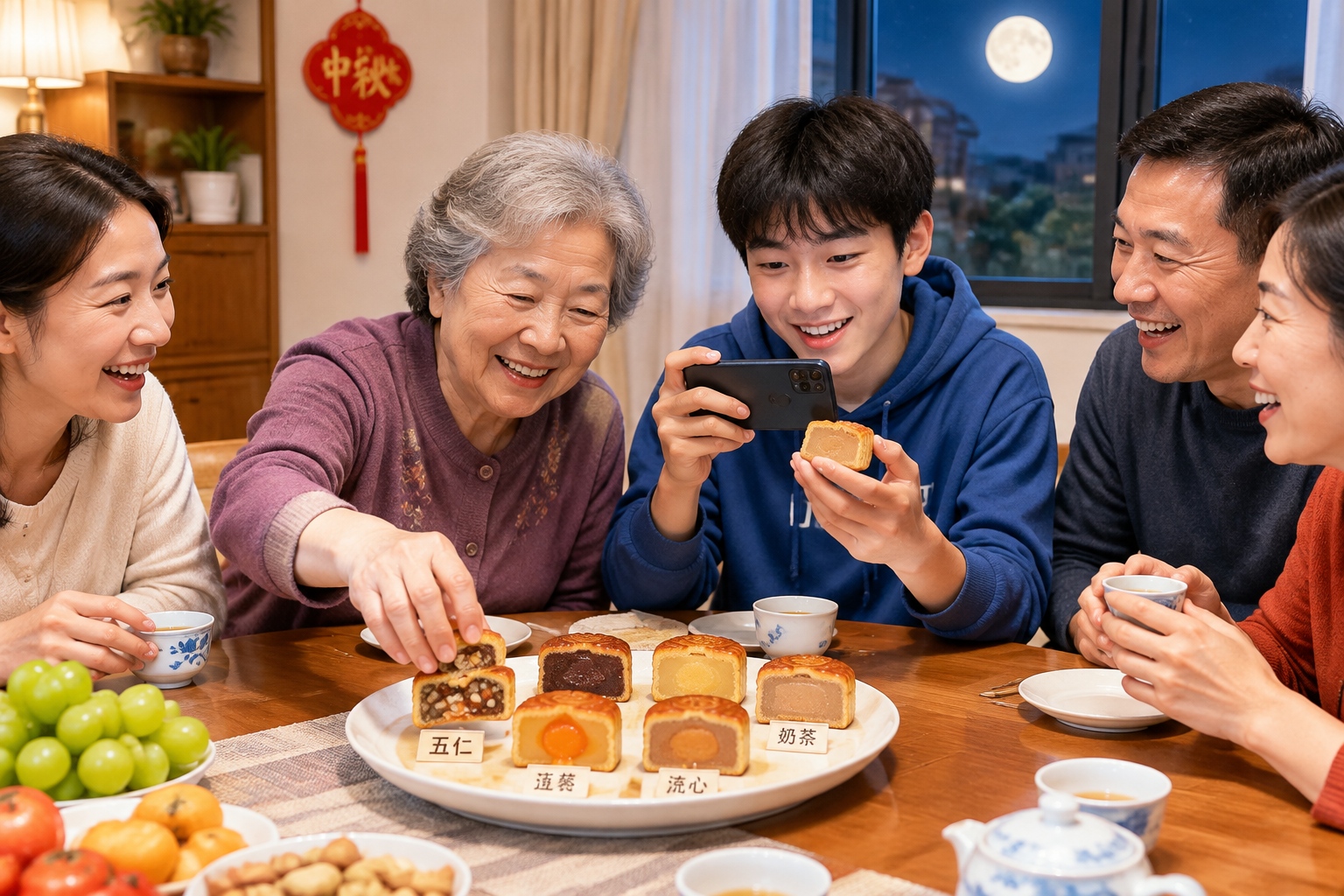
One Plate, Five Flavors
On the night itself, the plate in the middle of a family table might hold a quarter of five-nut, a quarter of lotus paste with salted egg yolk, a milk tea one, a durian one, and a mini low-sugar one that someone bought out of guilt.
Grandmother takes the five-nut, because it is what she has eaten for sixty years. Her grandson takes the milk tea one and films the first bite. Someone complains that nothing tastes like the old days. Someone else cuts the last piece in half so everyone gets a share.
The mooncake on that plate is barely the same object it was in 1995. The reasons everyone is sitting around it have not changed at all.
Start the discussion at forum.chinacomes.com