
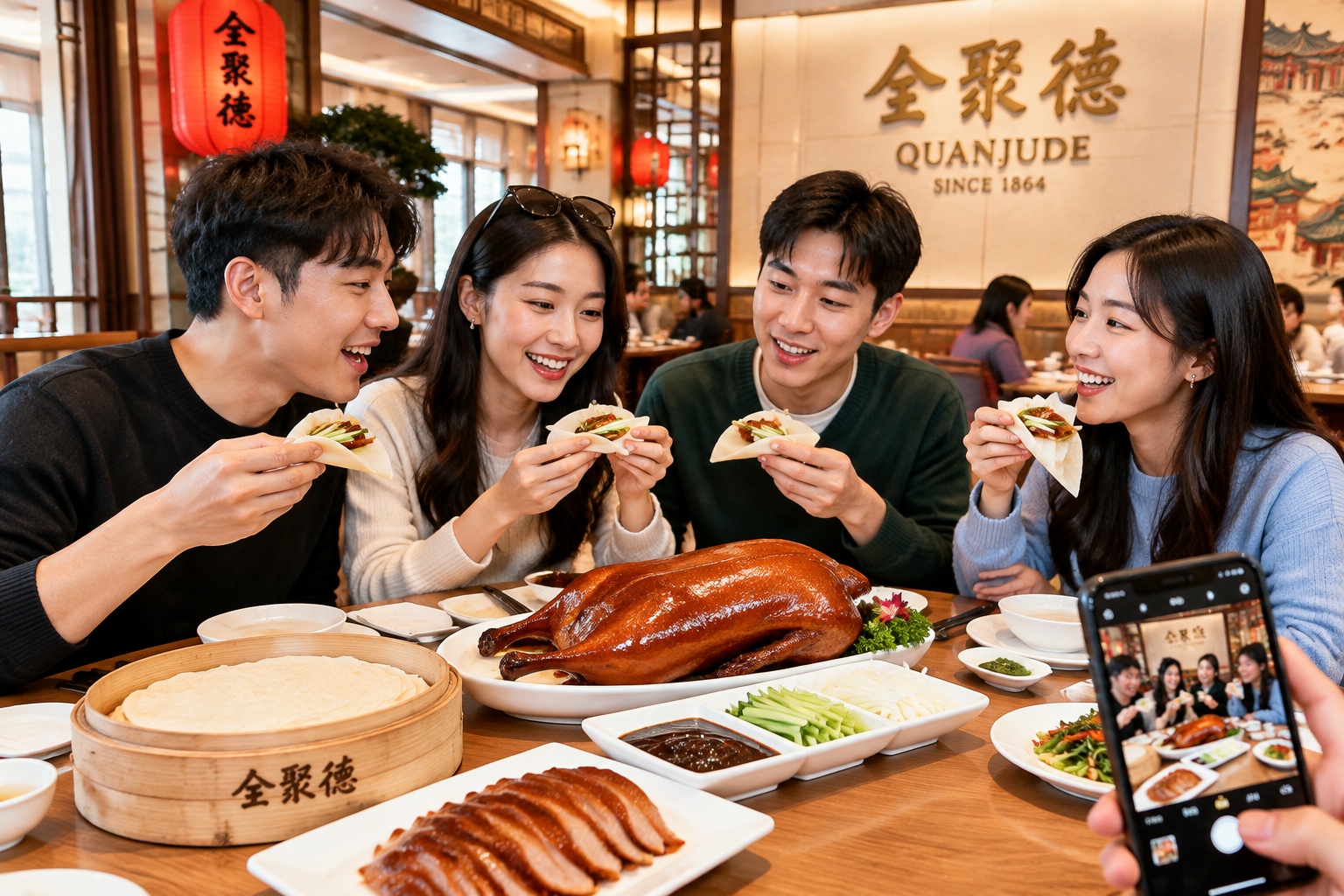

A duck dinner that feels familiar yet different
On a Friday evening in Beijing, the air outside Quanjude’s flagship Qianmen store carries the scent of roasting duck and the buzz of a young crowd. Inside, 20-somethings share photos of lacquered duck skin with their phones before taking a bite, while older diners at the next table conjure memories of family banquets from decades past. It’s a scene that could make any heritage restaurant proud—except this one is 160 years old and has spent the past several years fighting to remain relevant.
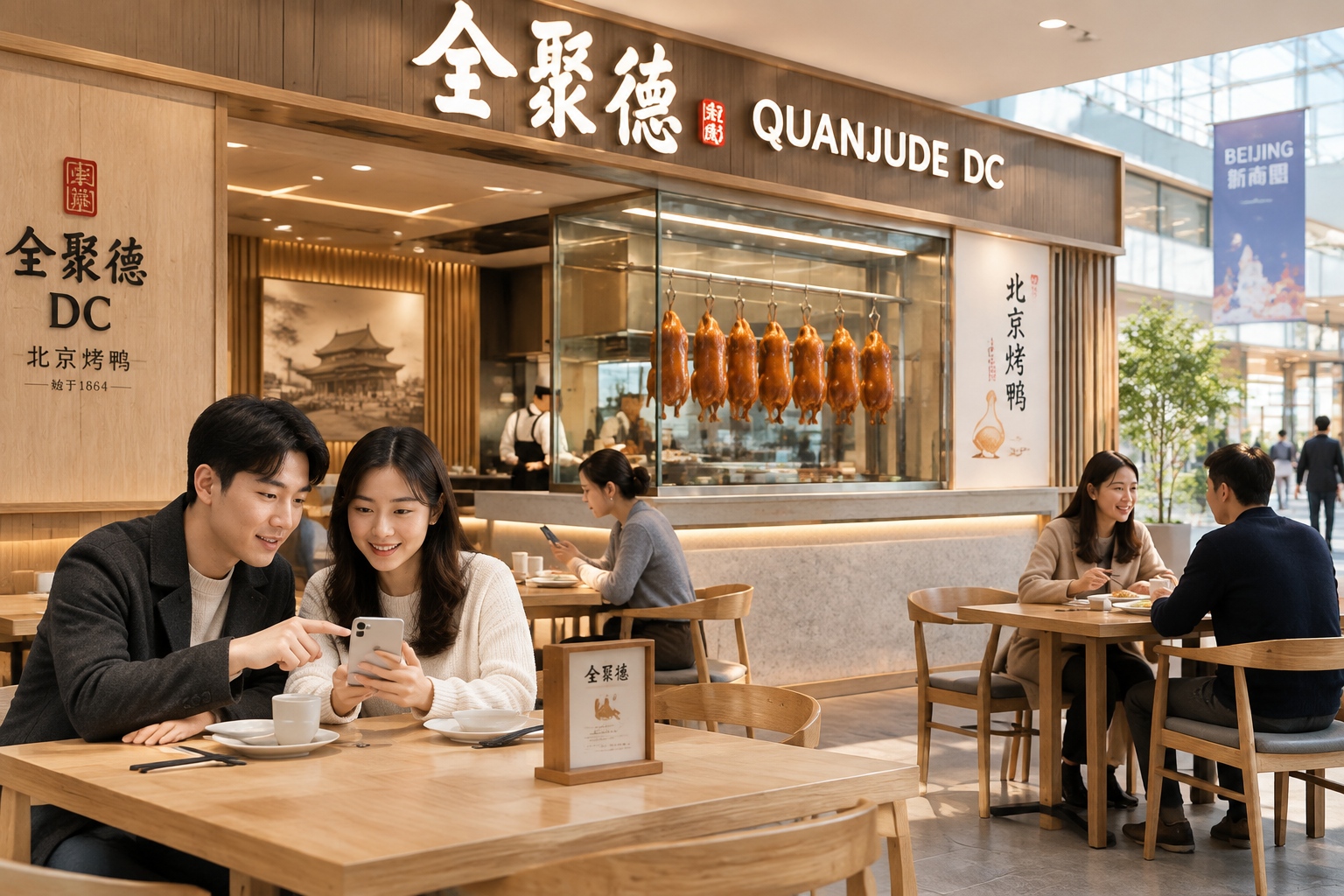
Quanjude isn’t just a restaurant; it’s a symbol of Beijing’s culinary history, with a lineage tracing back to 1864 and a roster of famous guests including former U.S. President George H.W. Bush. But by 2020, that legacy was starting to feel like a liability. The brand’s growth had stalled, its average customer age was creeping past 40, and young Chinese diners were flocking to new barbecue spots and food courts instead. Now, that dynamic is flipping—and Quanjude’s story offers a rare window into how China’s oldest brands are learning to talk to a generation raised on short videos, mobile payments, and viral internet culture.
Why China’s younger diners turned away—and what Quanjude learned
To understand the shift, you have to look at the competitive landscape. In many cities, a dozen new hotpot or fusion restaurants open every day, each one optimized for the hashtag generation: brightly lit interiors, photogenic dishes, and validation by TikTok-for-everyone platforms like Xiaohongshu (RED). For a brand associated with banquet tables and older customers, standing out feels daunting.
Yet Quanjude’s real problem was not taste—its duck is still prepared in a centuries-honed method and served with pancakes, scallions, and tianmian sauce. Instead, it was the experience. In the eyes of younger diners, Quanjude had become a “must-visit for tourists once you’re over 40,” not a place to hang out on a Saturday night with friends.
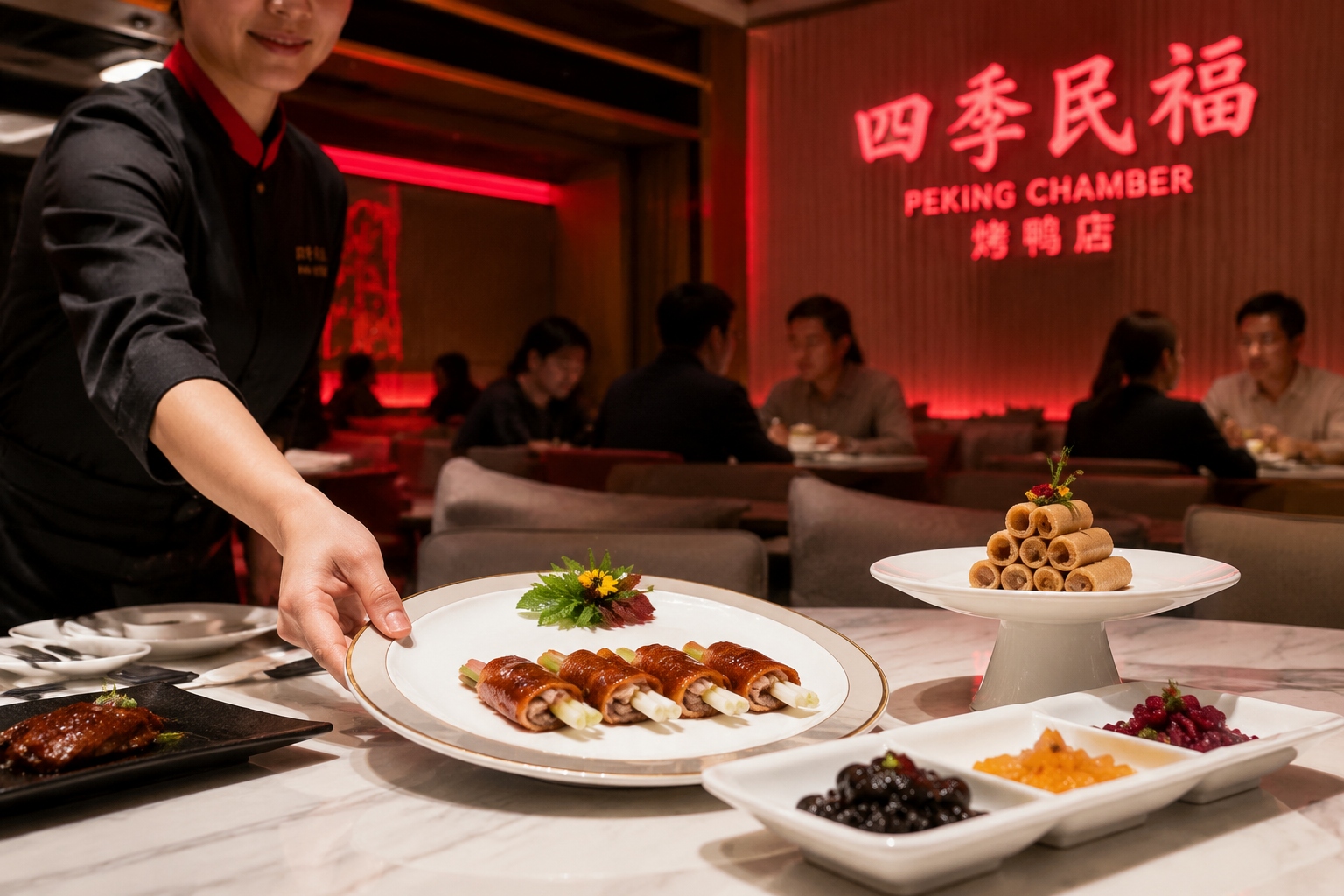
The company began experimenting. In 2021, it launched a younger, casual sub-brand called “Quanjude Pattern Booth” with a hip design, a smaller menu, and dishes like duck spring rolls that retain the heritage flavors but feel less formal. It also digitized everything: customers scan a QR code to order and pay, and young audiences can redeem membership points through games and check-ins. But the boldest move came in 2024, when Quanjude launched a series of “cyberpunk-style” duck-inspired cocktails and a light-duck feast for six under 200 yuan (about $28), a stark contrast to the haute-dining price tag it once carried.
More than a makeover: building a bridge between tradition and modern life
The transformation isn’t just about interior design or menu tweaks. It reflects a broader shift in how Chinese “time-honored brands” (老字号, laozihao) operate. For decades, these businesses—some founded in the Qing Dynasty—relied on a steady stream of older customers who valued consistency and a sense of heritage. But to attract young consumers in a market where daily screens and on-demand delivery dominate, Quanjude had to rethink what “authenticity” means.
“We used to think that being time-honored meant we didn’t have to change. Now we know it means we have to keep the root while letting new leaves grow,” a operations manager at Quanjude’s head office told a Chinese business magazine in a recent interview.
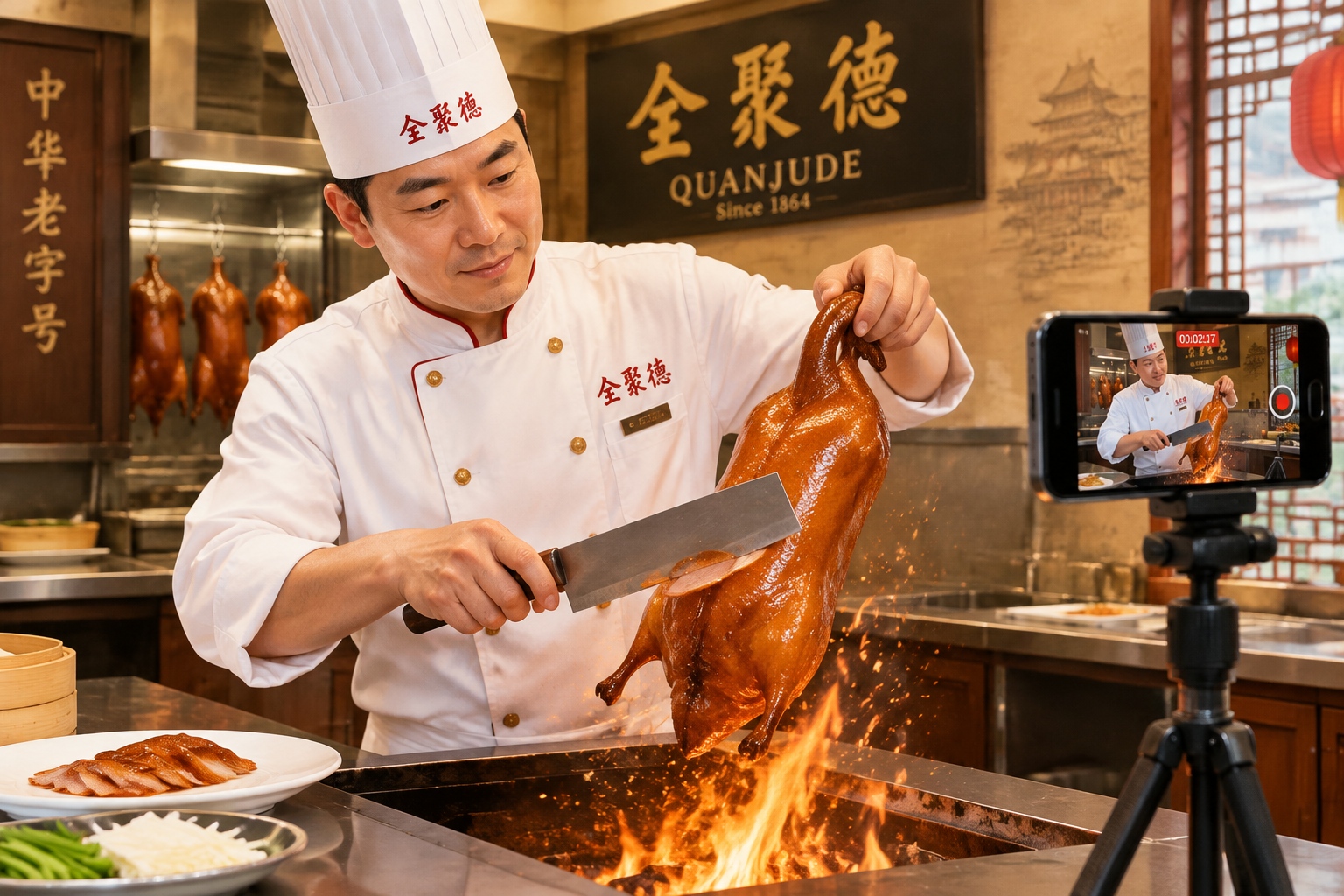
Part of this involves engaging on the platforms young Chinese actually use. The brand runs active accounts on Little Red Book, where it shares videos of its master chefs carving ducks—those maybe 50 seconds, shot in a style that feels more like a lifestyle vlog than a commercial. It collaborates with food influencers to create limited-edition dishes and attends university food festivals, where students can preview new creations before they hit the young diners’ feeds.
It also opened stores in newer suburban areas and commercial complexes, far from its original Qianmen location, to meet modern footpaths. Today you’ll spot Quanjude outlets in shopping malls with glass-walls and neon-trimmed desserts, a far cry from the ornate red lanterns of the main branch. These locations cater to a younger, more spontaneous audience, who might not plan a trip to a historical site but who want to try a famous duck in a familiar setting.
What it means for travelers and young diners
If you’re planning a trip to Beijing, seeing Quanjude today might surprise you. The menu now includes a few things your grandparents wouldn’t recognize—such as duck-fat panna cotta—and the staff are trained to explain the story behind each bite, engulfing you in the brand’s legacy without formality. Two people can share a decent meal for around 200 yuan—about $30—which makes it far more accessible to backpackers and students than it was a decade ago.
But it’s not only about price. Quanjude’s renewal attempts sit in a larger wave of similar transformations across Chinese cities. Beijing, a city proud of its old names—like Liubaoju, Asia’s oldest medicine store, and the silk shops that once lined the routine—showcase places like local food streets with engraved wooden signs. At the same time, these institutions are importing sauce from the streets of Sichuan, set up counters for freelance bean-hawkers, and apps for prediction. In Qixian Street, it’s now easy to find a century-old shop signing daily deals using digital screens, reimagining itself as a boutique of Chinese medicine teas.
The result is a model that mixes tradition and modern urban rhythm, drawing comparisons to how Japan’s Kyoto brands or Milan’s artisanal family stores have modernized while holding their craft. For Western tourists, this is probably the most visible way old China speaks to new China—through food, taste, and service, in places they can actually visit.
What’s next for Quanjude and China’s older brands
Quanjude avoided the classic trap of chasing fads like one-day-only brand deals. Instead, it’s investing in a long-term framework: redesigning interiors to be more convivial and less stiff, training staff to speak in both Cantonese and basic English for tourists, and embracing a “light tie” approach to authenticity where the food remains a live link to the past.
Numbers suggest it’s working. In 2024, Quanjude’s revenue grew by over 10% compared to the previous year, and nearly 40% of its guests are now under 30—double the share from a few years ago, according to company’s financial report. The brand’s social media followers jumped to millions, with user-created videos and reviews across X or Douyin helping to reach demographics big traditional marketing simply by.
Is there risk in dilution? Of course. Some long-time patrons complain that the duck isn’t as smoky-salted or the service isn’t as lavish as it once was in the old days. But the survival of a time-honored brand in China today depends on a delicate balance: honoring history enough that it doesn’t become a museum piece, while quietly learning the language of a generation that grew up watching short videos and rating everything except food.
Why it matters for the global audience
For visitors from the US, Europe, or Japan, Quanjude’s evolution is a reminder that “foreign” doesn’t mean “stale.” It also highlights something rather hopeful: tradition and modernity needn’t be enemies. In a world where quick-service chains often dominate, China’s top legacy brands are now learning to offer a blend—accessible price points, digital convenience, and a sense of story that goes back a century and a half.
Whether you’re a foodie planning a Beijing trip, or a traveler keen to see how a 160-year-old institution can reboot itself, going to Quanjude now feels less like visiting a museum and more like grabbing a really good meal with friends—with history as a quiet, delicious best accountable on the side.
Start the discussion at forum.chinacomes.com