
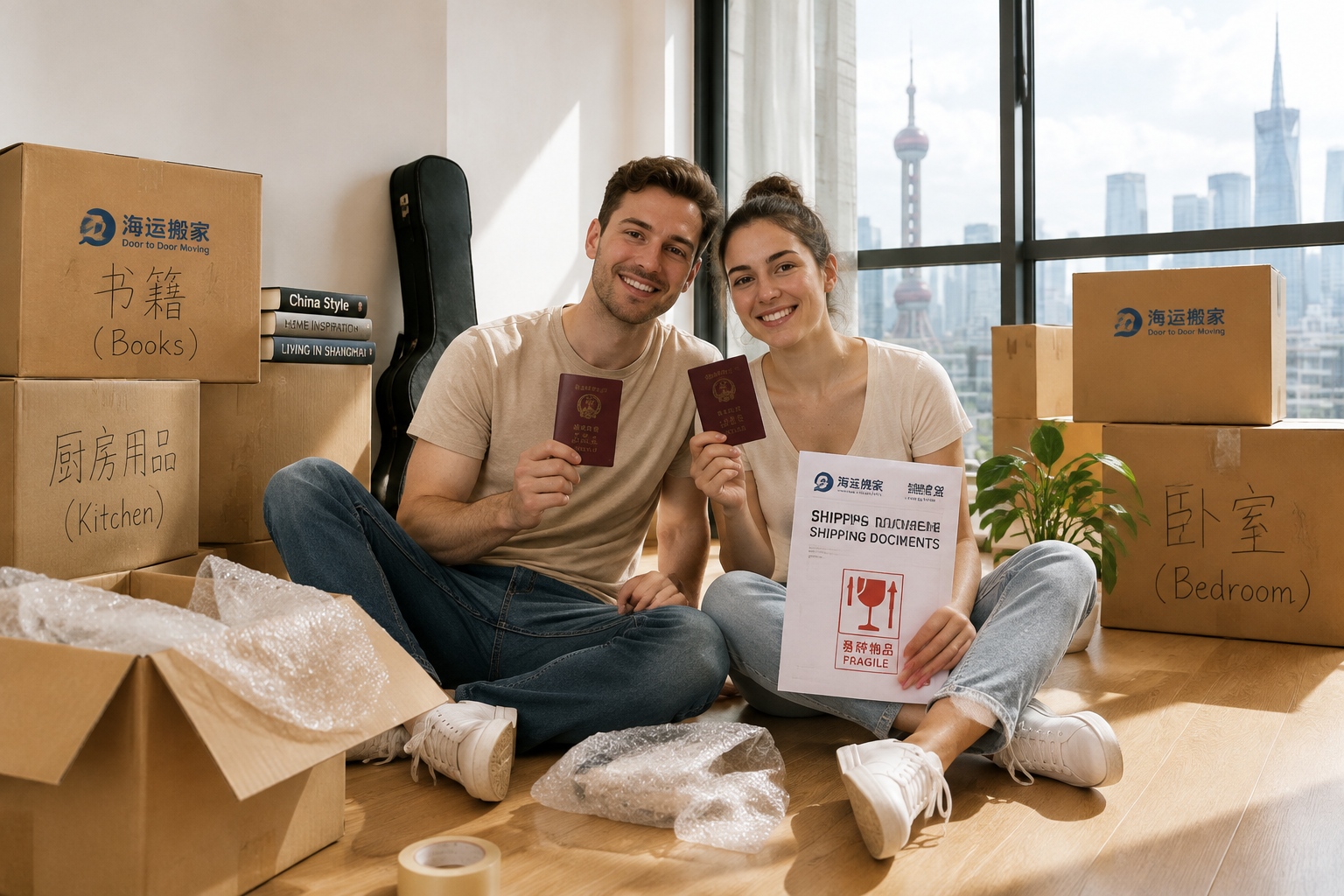

When Julia accepted a teaching job in Shanghai, she felt prepared: passport, work visa, apartment lease, and two checked suitcases. The problem was everything else in her old life. Books, winter jackets, an electric guitar, and a reliable coffee machine were too full of memory to be sold at a garage sale. So she packed one medium-sized shipping crate and sent it across the Pacific. Weeks later, she found herself at a customs counter with a thick binder of paperwork, hoping the box would be treated as one personal move, not as a commercial import. It was—because in China, personal effects sent separately from the traveler have their own category: unaccompanied luggage, in Chinese 分离运输行李 (fēnlí yùnshū xínglǐ). The process is not difficult if you understand a few rules before you fly.
What counts as unaccompanied luggage?
In Chinese customs, “accompanied luggage” is the bag that flies with you. Everything else that crosses the border on its own—by sea, air cargo, courier, or rail—is “unaccompanied luggage” or “separately transported luggage.” That category is designed for people who become Chinese residents for a period of time: expats on work visas, international students, and people moving to join family. If you’re only in China for a three-week holiday and have a friend sending you a birthday gift, that package falls under ordinary import rules and may be taxed.
The important idea is to prove that your shipment is part of your own household move. Your shipment can include clothes, books, sports equipment, kitchen tools, small furniture, electronics, and similar personal goods—all of which should be used by you and your family, not for resale.
Step 1: speak up at the airport
Most people wrongly believe that unaccompanied luggage is handled only when the cargo arrives. Actually, the first step happens at the airport, on the day you enter China.
When you pass through customs, follow the signs to the red channel, the passage for passengers with items to declare. Tell the customs officer that you have unaccompanied luggage arriving later, and ask for guidance. The officer may ask where you are going to live, what the shipment contains, and roughly when it will arrive. Then you receive a stamp or a completed passenger customs declaration form.
This seemingly boring piece of paper is vitally important. Without it, your cargo can sit at the warehouse unable to be released—or worse, be treated as a general import and taxed.
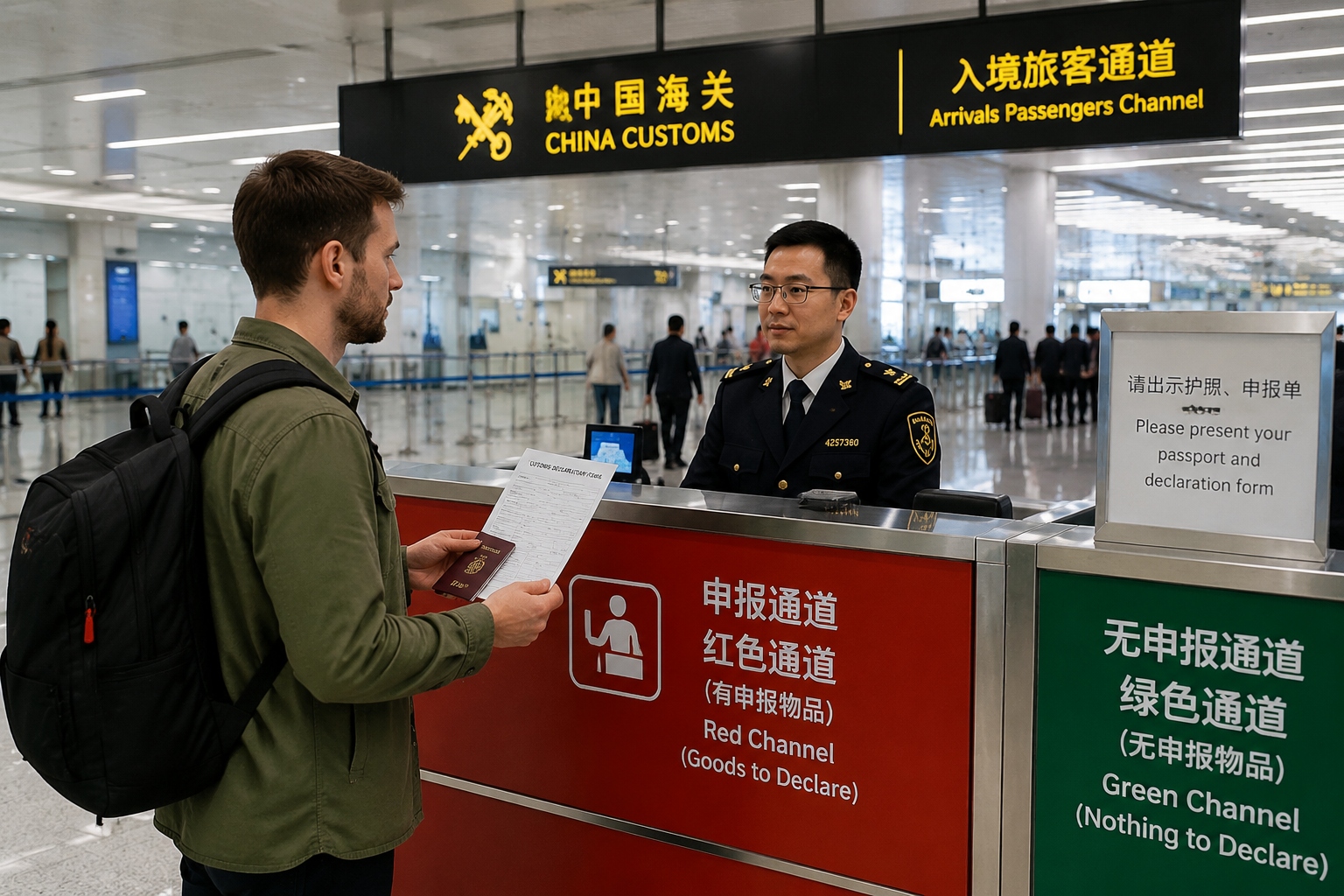
A friend once skipped this step because he was already late and confused. His boxes of books and personal art did not get cleared until several months later, after extensive explanation to customs. The moral is simple: before you leave the baggage hall, make sure your unaccompanied luggage is on the record.
Keep the six-month deadline in mind
China runs on deadlines, and this one matters. From the day you first enter the country, you have six months to complete the import procedures for your unaccompanied luggage. This includes the time it takes your shipment to arrive plus the customs clearance process.
If your sea container leaves on a normal schedule and is delivered within a few weeks, six months is plenty. But if you send things before your residence permit is approved, the shipment might arrive earlier than you are formally able to claim it. You still better resolve it within six months of your entry.
In extreme cases, items that arrive after the six-month window may need to be shipped back or cleared via standard cargo import procedures—a costly and complicated route. So if you are planning to use the unaccompanied luggage channel, make a note on your calendar the day you move in.
How to file when your items arrive
When your goods turn up at the port or the courier depot, you’ll be informed by the shipping line or freight company. Usually, you have two options: hire a customs broker (your moving company can arrange for one), or file directly at the customs office.
The documents you need are similar throughout China, though individual ports may ask for slight variations:
- Your passport, including the entry stamp
- Residence permit or long-term visa
- The stamped on-arrival customs declaration form
- A detailed packing list with item names, quantities, and used/new status
- Original or online receipts (helps when values are reviewed)
- A bill of lading, airway bill, or courier waybill for the shipment
If you are using an international moving company, their China partner will normally handle the process for you. Speak plainly and make sure the customs statement clearly says personal used household goods.
What does “reasonable quantity for personal use” mean?
Chinese law does not set a fixed quantity because normal use varies with life circumstances. Instead, customs officers apply the principle of “reasonable quantity for personal use.” That means, at the time of inspection, the officer decides whether your boxes look like a home move or a commercial shopping trip.
One laptop is normal. Five laptops are not normal for one person. A used washing machine is fine; ninety brand-new coffee machines wrapped in bubble wrap says “business.” If you are importing several similar items, be ready to explain why. For example, a family packing in winter clothes for five family members is reasonable, but 20 skiing jackets from a ski equipment store may raise questions.
Also, be transparent about the value. Under-declaring too much might lead to delays and penalties. Telling the truth usually saves time.
Items that are banned or need a quarantine check
Regardless of how personal an item is, some goods simply are not allowed in China’s traveler’s luggage channel. Typical prohibitions include weapons, ammunition, explosives, narcotics, counterfeit money, hazardous chemicals, counterfeit goods, items that break cultural relics protection regulations, and publications or media that Chinese customs considers harmful to national security and social stability.
Then there are goods that need special attention from quarantine officials. China’s customs could inspect shipments for animal and plant products to prevent pests and disease. Food products such as fresh fruit, raw or dried meat, sausage, milk powder, eggs, and live plants are usually removed from incoming parcels or require permission in advance. A few years ago, China’s customs posted many videos about packages with sausages or seeds discovered by detector dogs; they rarely end pleasantly.
If you must transport a wooden item—like a handmade table—make sure it is finished and clean, without bark or soil. Wood packaging material already needs heat-treatment certificates, which your shipping company can arrange.
Medicines are another delicate subject. Prescription drugs for your own health can usually travel with a doctor’s note and the original packaging. For large quantities or controlled substances, ask the Chinese embassy or customs in advance.
Packing tips from expats who have done it
Keep the experience as smooth as possible by following the common-sense methods:
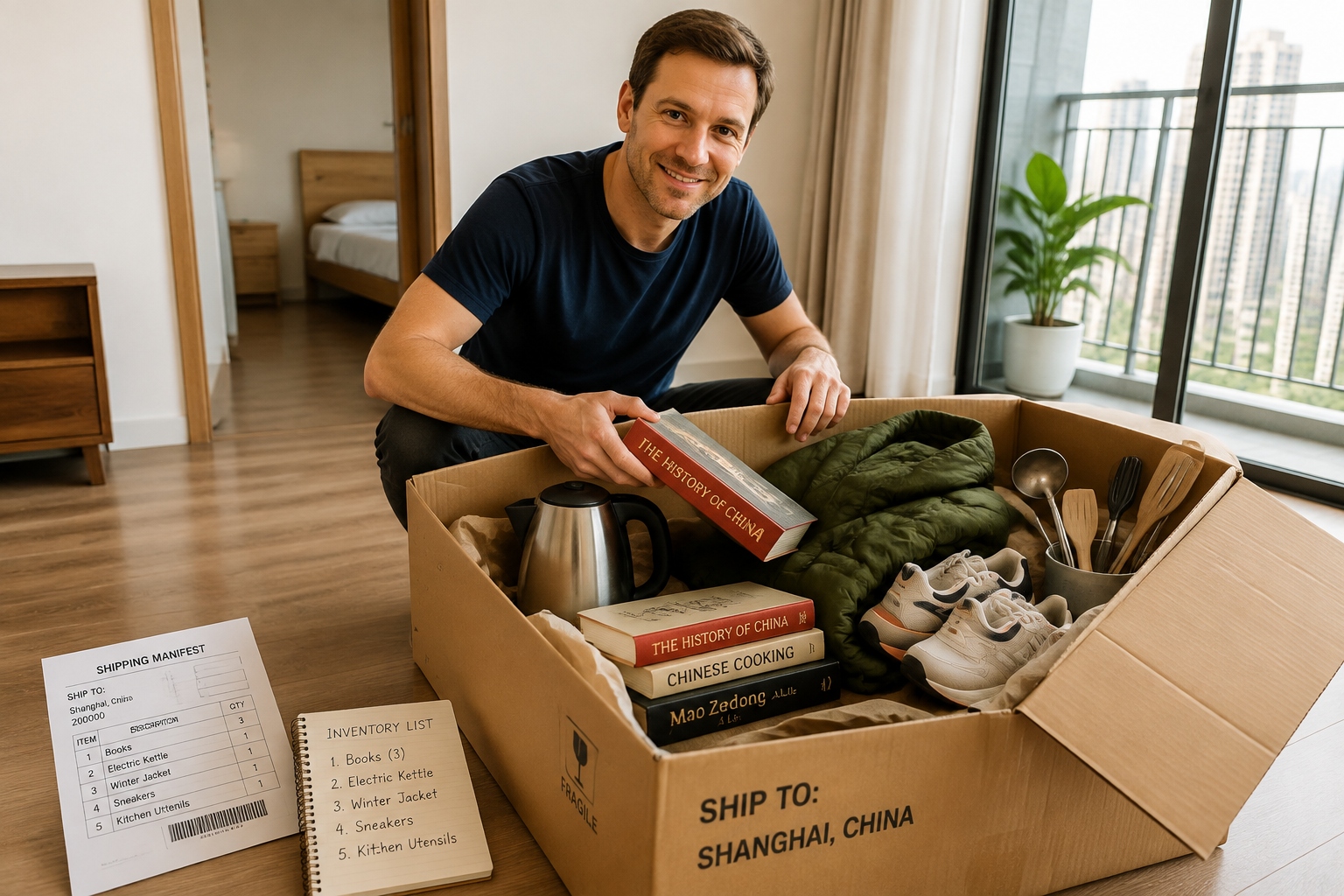
- List every box and its contents before it leaves home, with estimated values in your currency.
- Use unpacked used goods wherever possible. Items with price tags and retail wrapping are harder to classify as personal belongings.
- Keep a folder with paper (or scanned image) receipts so you can prove how much the goods cost originally.
- Label each box with your name in large letters and write “personal effects” leaving no business terms.
- If you hire professional movers, ask whether their quote includes customs clearance in China, including paperwork fees, inspection fees if any, and warehouse handling.
- Keep the same list on your phone so you can answer the officer’s questions without opening every box.
The payoff
No one enjoys interacting with customs paperwork, but Chinese officials are generally task-oriented and fair if your paperwork is honest and complete. The reward is that your own things follow you to your new home, and after a few days you can sip coffee in the same favorite mug you used back home. To make that happen, just remember: declare at the airport, finish within six months, and ship only what a one-person family can reasonably need.
Start the discussion at forum.chinacomes.com