

Before You Export: The First Question to Ask
You make organic skincare in the south of France, or you run a nutritional supplement brand in Australia. A Chinese distributor emails you, saying: “We can sell your products all over China.” Then they ask: “Have you completed the Chinese registration or filing?” If you are like most overseas producers, you haven’t. And that is where many export dreams stall.
China treats imported food, health supplements, and cosmetics as three separate categories. Each has its own registration process and labeling rules. This article explains the basics, using Australia’s health supplement sector and France’s cosmetics industry as examples. You’ll learn what a “Chinese responsible person” is, what to put on a label, and what happens if you leave that label out.
Step One: Find Out Which Category Your Product Is In
Not everything that looks like food is “regular food” in China. The country’s rules divide edible items into regular food (普通食品), health food (保健食品), and sometimes food for special medical purposes. Cosmetics are divided into “special cosmetics” (sunscreens, hair dyes, skin lighteners) and “ordinary cosmetics” (most creams, serums, and cleansers). These distinctions matter because they set the level of scrutiny.
All imported food—whether regular or health food—must come from an overseas manufacturer that has been registered with China’s General Administration of Customs (GACC). This registration applies to the factory itself, not to each product. For regular food, once the factory is on the GACC register, the product can be exported (subject to local safety standards). Health supplements, however, need more: after factory registration, each SKU (or product formula) must obtain a “health food registration” or “health food filing” from the State Administration for Market Regulation (SAMR). That is why shipping a protein bar is easier than shipping a vitamin gummy.
Imported cosmetics follow a different track. Special cosmetics, defined as those with sun protection, hair dyeing, or lightening properties, must be individually registered with China’s National Medical Products Administration (NMPA) before sale. Ordinary cosmetics—a basic moisturizer or facial cleanser—only need a product filing with the NMPA, which is usually a faster online procedure.
Who Is Your “Chinese Responsible Person”?
Every foreign brand must name a Chinese responsible person (境内责任人). This is a legal entity based in China that submits the application on behalf of the brand, handles revisions, and communicates with regulators. Under Chinese law, you cannot do this yourself from overseas. If something goes wrong later—say, a product recall or a consumer complaint—the Chinese responsible person is the party regulators contact first. So this role is not merely administrative; it carries legal risk.
Case 1: Australian Health Supplements Entering China
Let’s follow a Melbourne-based company that wants to sell fish oil capsules in China. This is a classic scenario; brands like Blackmores and Swisse have made the journey successfully.
First, check that the manufacturing plant is in the GACC register. If not, the supplier must apply, which involves inspections and documentation.
Then the brand begins the health food registration process with SAMR. For each formula, they prepare what China calls a “dossier.” This includes evidence of the product’s safety, functionality claims, stability test data, and sometimes animal or human studies. At least one or two of those clinical trials have to be done in China, which is a common frustration for foreign brands.
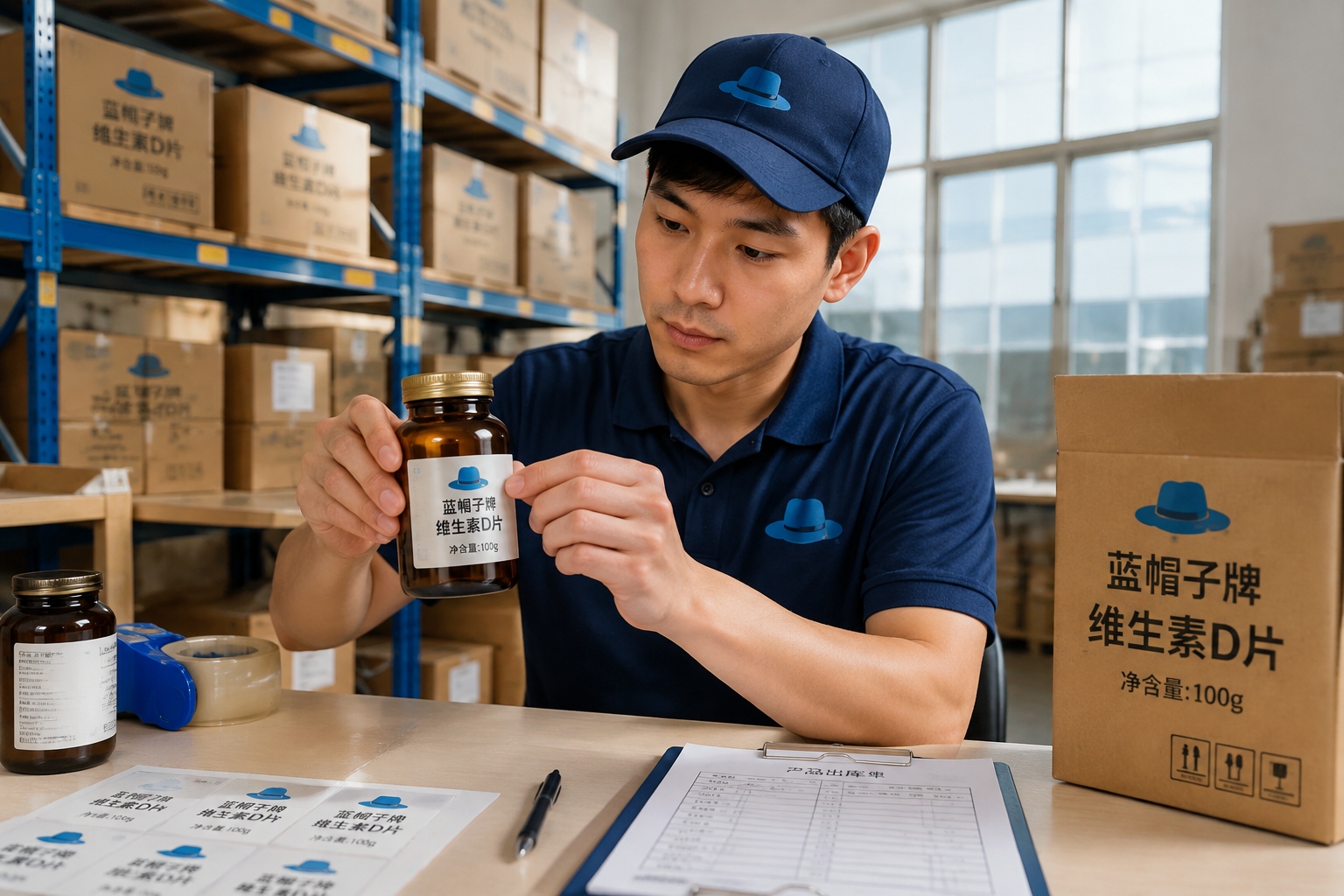
Once submitted, SAMR reviews the dossier. The waiting time can span 12 to 36 months. If the application is approved, the product earns a registration number and the right to display the famous “blue hat” logo, which signals “health food” to Chinese consumers. Without that blue hat, you cannot call your product a health food in marketing. You can sell it as regular food, but then you are prohibited from making any health claims—like “boosts immunity” or “supports heart health.”
The cost of registration can easily run into six figures in RMB, and you need patience before seeing first revenue. Many Australian brands use the China international e-commerce (also called cross-border e-commerce) route to launch earlier, selling directly to consumers online while registration is underway. But cross-border trade has its own label and consumer information rules, so that’s a separate blueprint.
Case 2: French Skincare and the Filing Path
Now imagine a French company with an organic face cream. Assuming the formula doesn’t contain banned ingredients, the cream is probably classified as an ordinary cosmetic. That triggers the filing process, not product registration.
Here’s how it works in practice. The French company appoints a Chinese responsible person, often an importer or an import-specialized agency. That agent logs into NMPA’s online system, enters the product information, and uploads documents such as the complete ingredient list, manufacturing process, and safety reports. Once the filing is submitted and accepted, the product is cleared for sale after just a few days—technically, the filing becomes effective immediately, but regulators may inspect later.
But don’t celebrate too quickly. Before filing, the cosmetic must comply with China’s Safety and Technical Standards for Cosmetics. That means running formulation tests to verify heavy metals, microbial limits, and pH levels. Some ingredients that are allowed in Europe are not on China’s approved ingredient list, so a careful pre-check is essential. The whole process, from contract to shelf, can take between two and four months for a typical cream.
Chinese Labels: The Sticker That Can Make or Break Your Shipment
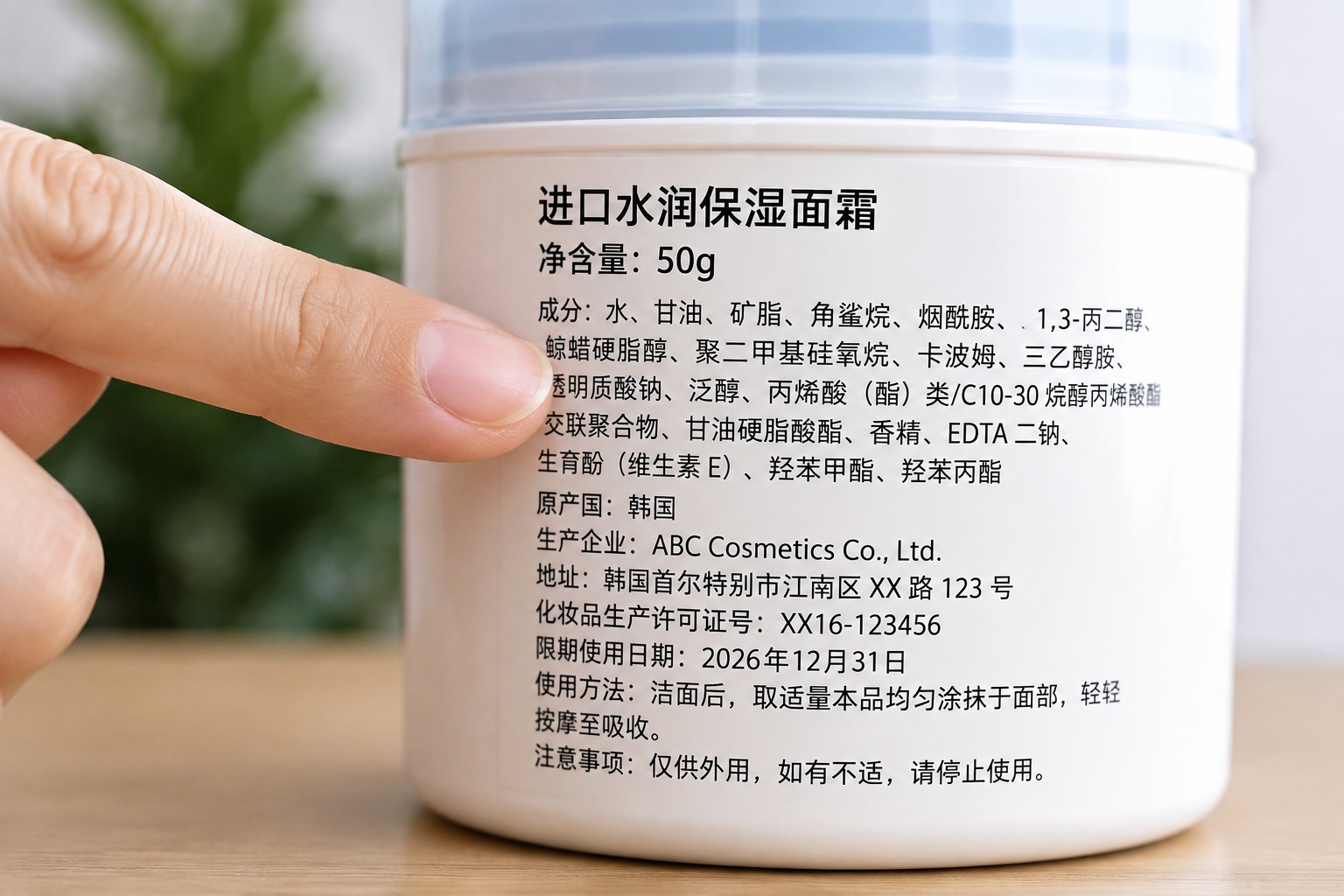
What does a Chinese label look like in real life? Often it’s a white sticker affixed over the original packaging. It must be in simplified Chinese and cannot be hidden under shrink wrap or placed so it’s hard to read. For food and supplements, the label must contain the following, at minimum:
- Product name, using the standard Chinese name.
- Complete list of ingredients and food additives, listed in descending order of content.
- Net weight/volume.
- Production date and shelf life date.
- Storage conditions (e.g., “store in a cool, dry place”).
- Country of origin.
- The name, address, and customer service phone number of the importer or agent in China.
If you sell a health food product, you also must show its “blue hat” logo, the registration number (e.g., “国食健字G2020xxxx”), and the mandatory sentence: “本品不能代替药物” (This product cannot replace medicines).
Cosmetics labels follow similar logic but need additional information:
- Full ingredient list using China’s standard Chinese ingredient names (often based on the Chinese Pharmacopoeia).
- Net content, in grams or milliliters.
- Production date and shelf life.
- Usage instructions, if needed.
- Special warnings like “for external use only” or “avoid eye area.”
- The name and address of the importer or Chinese responsible person.
A label with even one missing element can stop a shipment. For instance, if your food label lists the ingredients only by their English names, customs will consider it non-compliant, regardless of the original product’s reputation.
What Happens If You Ship Without a Chinese Label?
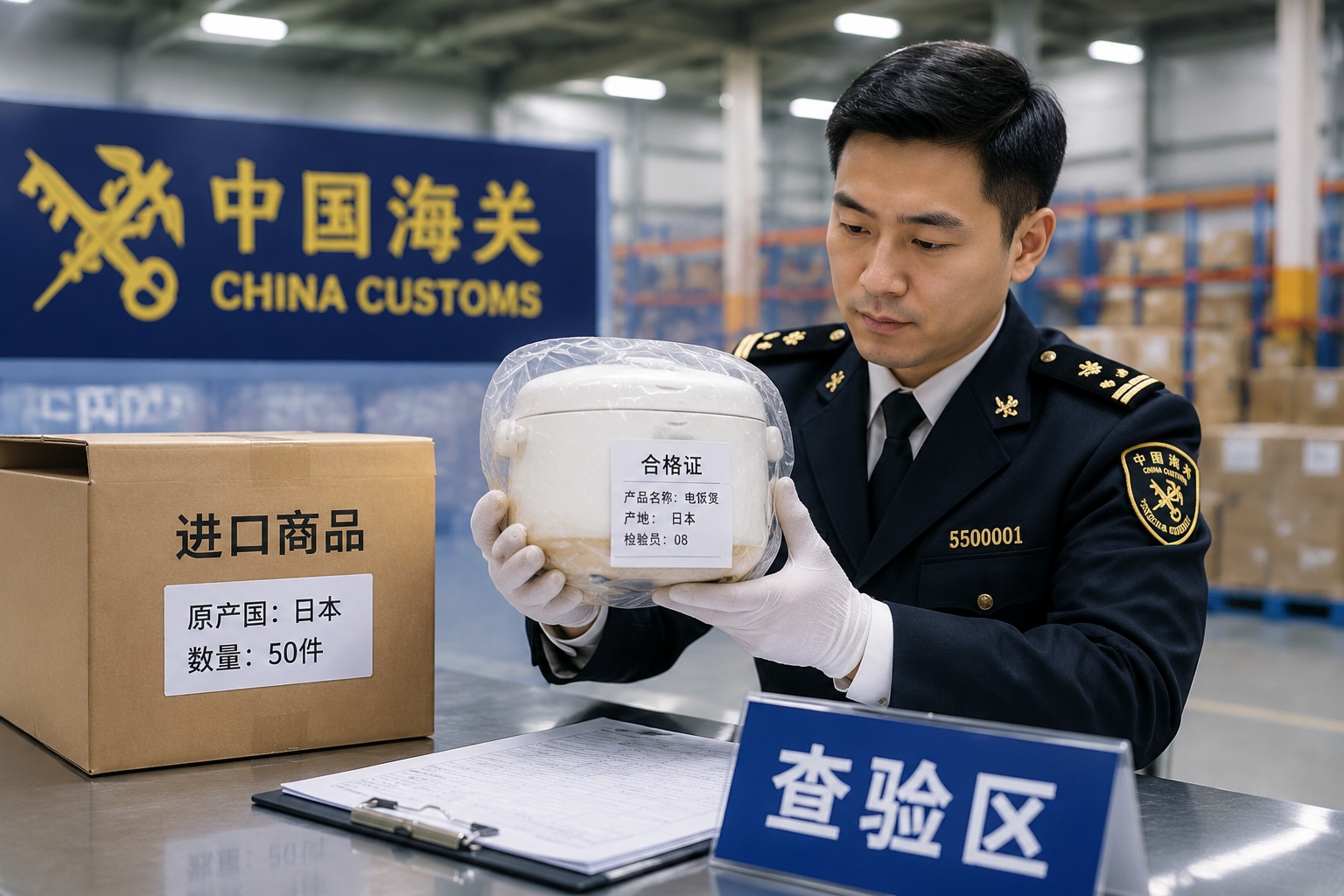
The short answer: your goods are likely to sit at the Shanghai or Tianjin port while you figure out what to do. Chinese customs regularly opens containers and scans for unlabeled or poorly labeled imports.
If customs officials find packages without a compliant Chinese label (in most cases they look for any Chinese text), they can hold the cargo. You may be allowed to relabel at a registered facility, but that costs money and delays your launch. In some cases, if the labeling is severely deficient, the goods can be returned or destroyed.
And if a shipment somehow passes customs and reaches the marketplace, local market regulators can still catch it. Consider a 2023 case in Shanghai: a convenience store sold imported fitness protein bars with no Chinese label. A consumer complained, and officials fined the store 50,000 RMB, in addition to removing the product from shelves. The store’s owner said the bars were for personal use, but the regulator found purchasing invoices showing they were for retail sale.
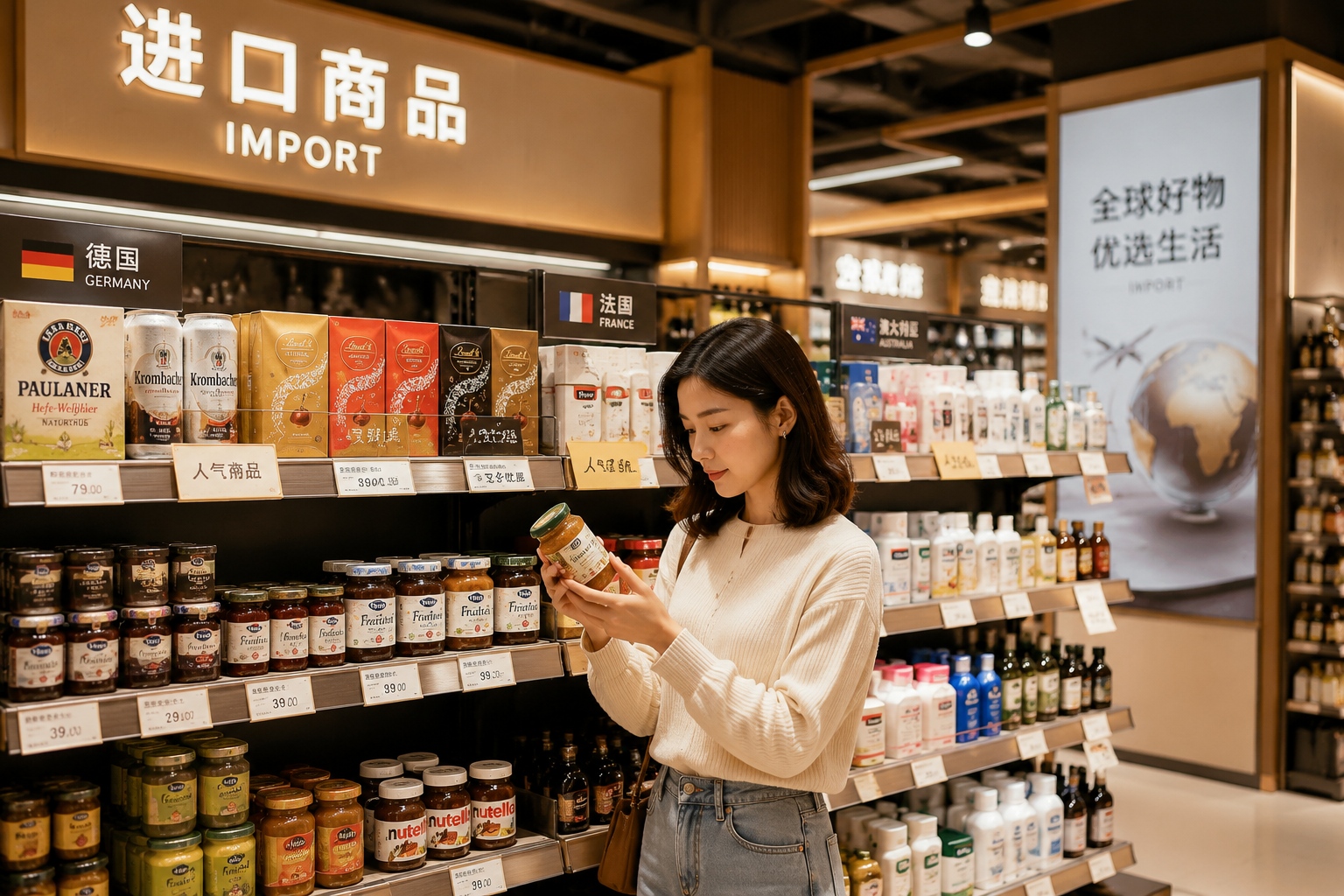
Consumers also play a role. Many Chinese shoppers actively look for the blue hat logo and the Chinese label. If the label is only in Japanese or English, they assume the product might be counterfeit. This practice makes it hard for legitimate unlabeled products to gain trust. The law is on the consumer’s side—unlabeled imports cannot be sold in Chinese physical stores. For online platforms, Tmall Global and JD Worldwide, however, the rule is slightly relaxed because those are cross-border channels where the products are technically sold from overseas, and the consumer opts in to personal import status. Yet even there, you must display certain information electronically before checkout.
What Should an Importer Do First?
If you are an overseas producer and have a serious buyer in China, don’t start planning logistics before you know your product pathway. First, ask a compliance specialist to classify your product: regular food, health food, or cosmetic (special vs. ordinary). Next, confirm your factory’s GACC registration. Then hire a Chinese responsible person or ask your buyer to help you find one.
Parallel to that, commission a label review. The Chinese label draft must be prepared before you ship; you cannot rely on the original label plus a simple “China info sheet.” Finally, research whether your target Chinese market requires general trade (import via distributor) or can work with cross-border e-commerce. For many small budgets, cross-border is a faster start.
The Chinese market is the world’s largest for many consumer goods. It values compliance and rewards preparation. Take the time to complete the registration process and design your Chinese label properly. Once your products are cleared, you will have built a durable channel that is hard to copy.
Summary
To sum up, every imported food, supplement, and cosmetic must meet two requirements before reaching Chinese consumers: the product must be registered or filed with the correct agency, and every retail package must bear a complete Chinese label. If you are an Australian supplement maker, expect a long process that requires a local Chinese partner. If you are a French cosmetics producer of ordinary products, your path is shorter, but the label requirements are equally strict. Spend time on these fundamentals, and you can turn regulatory hurdles into a competitive advantage.
Start the discussion at forum.chinacomes.com