

2 A.M. at Xinqiao: One Box Starts Moving
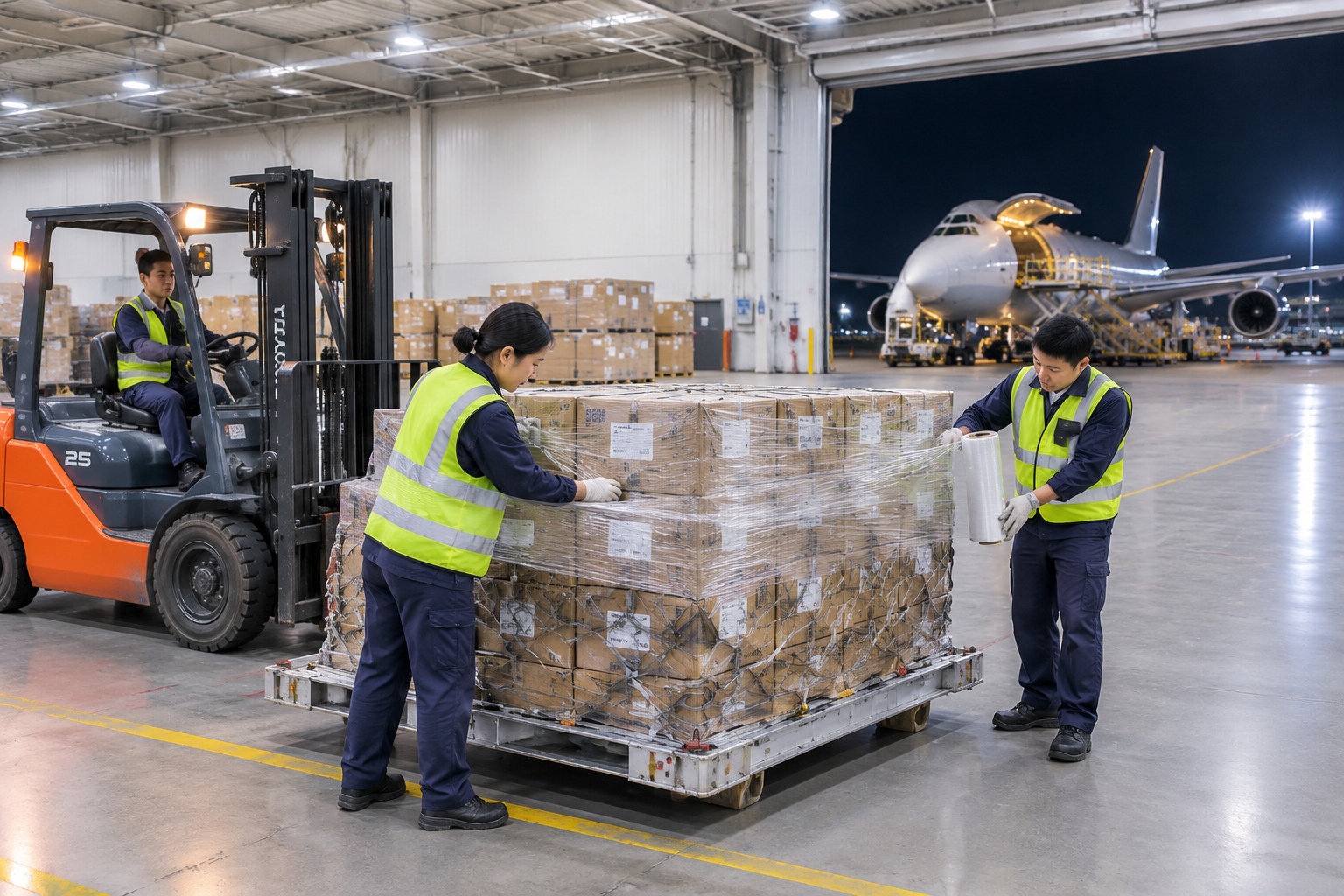
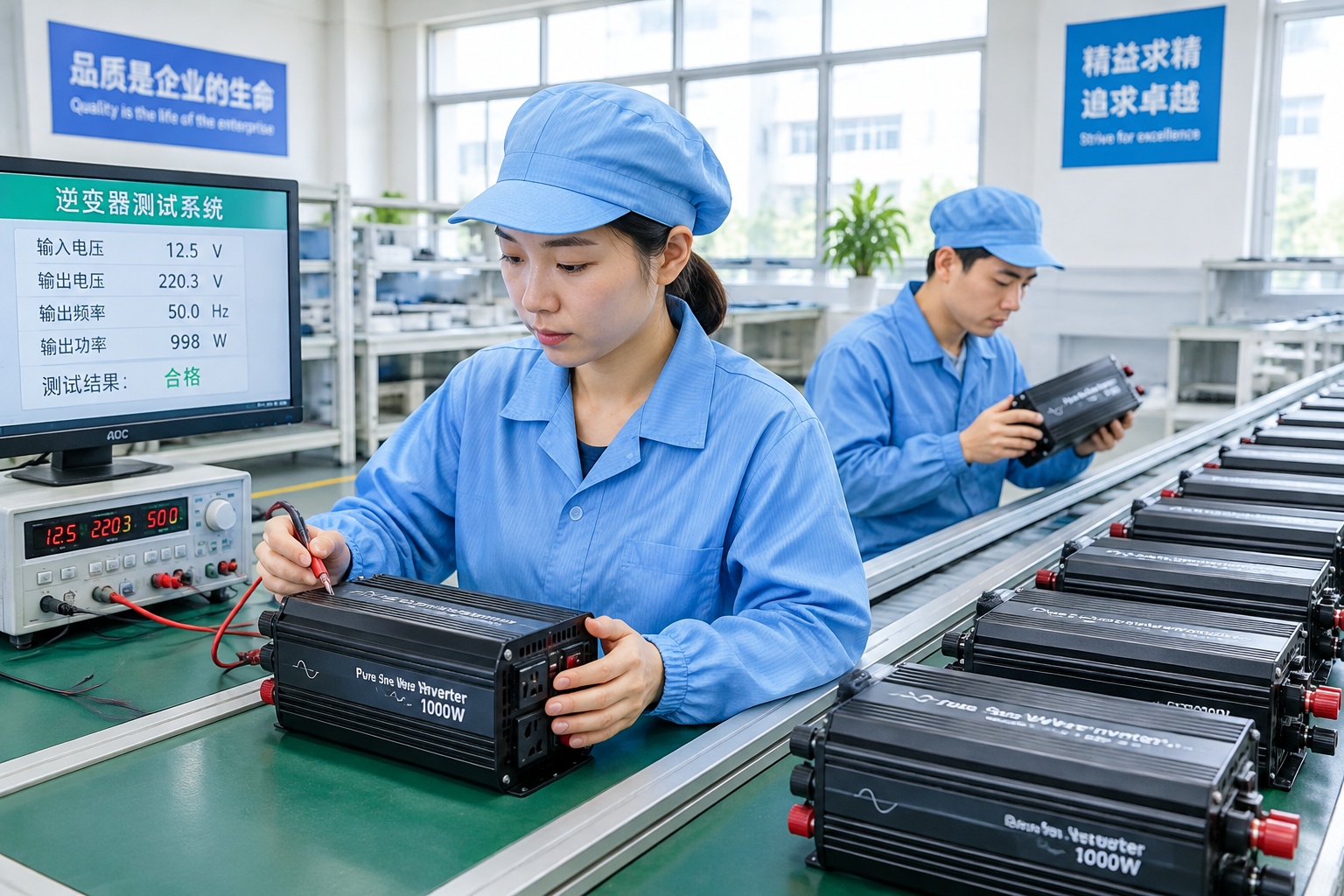
At two in the morning, the cargo terminal at Hefei Xinqiao International Airport is the brightest building for a kilometre in any direction. Inside, a forklift pivots between rows of aluminium pallets. A supervisor — call him Zhang Wei, a composite of several people I spoke to, since freight companies rarely let staff talk on the record — runs a thumb along a label on a carton the size of a suitcase. Power inverters. Made in a factory an hour east of here, sold to a distributor near Rotterdam.
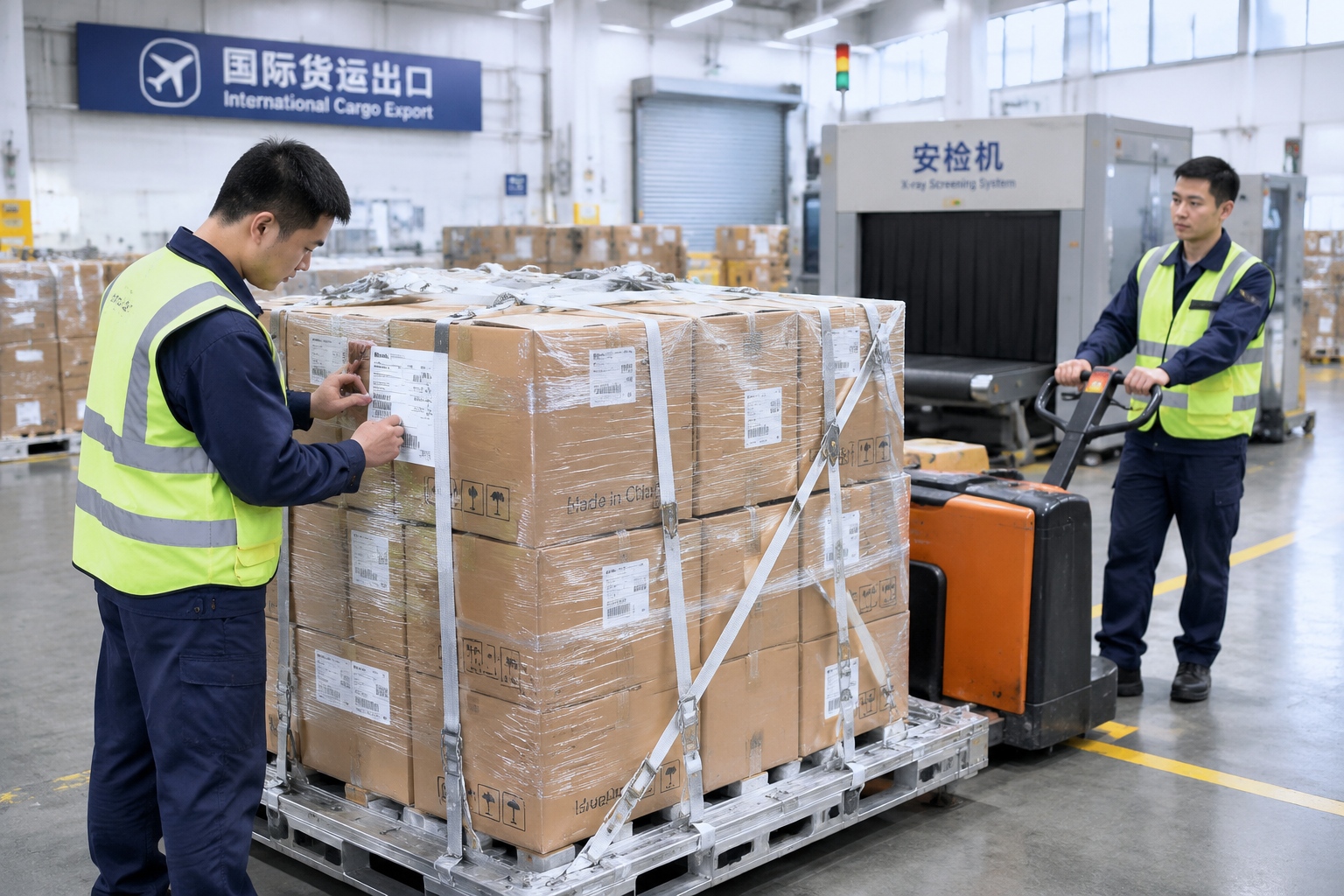
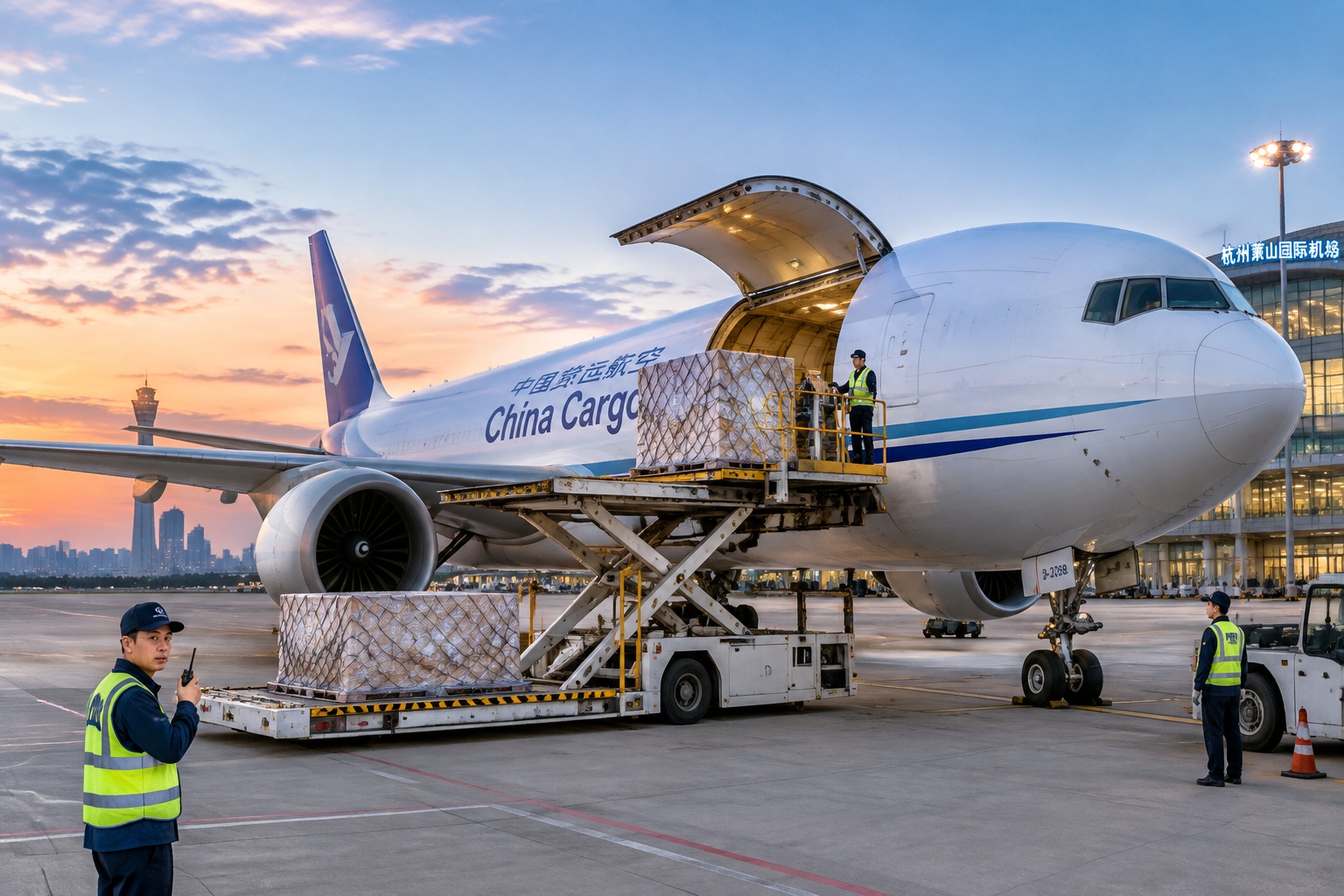
By four, the carton sits inside a screened pallet, wrapped in plastic and strapped to a metal base. By five, a customs broker has cleared it electronically through a single national declaration window: no paper, no counter queue. By six, if the freighter keeps its slot, the pallet is rolling up a ramp into the belly of a widebody aircraft that smells of machine oil and cold air.
Hefei is a city of about 9.8 million people in Anhui, a province of 61 million that sits just west of Shanghai. For most of the past forty years, anything Anhui sold abroad left by truck or barge heading east, to the ports of Shanghai and Ningbo. Some of it still does. But a growing share now goes out through an airport that opened only in 2013, on farmland about 30 kilometres from the city centre.
Why Hefei’s Air Cargo Is Growing: Factories, Not Slogans
Air freight is expensive, so it only makes sense for goods that are valuable, relatively light and needed quickly. The question worth asking about Xinqiao is not “is the airport growing?” but “what is actually in the boxes?”
Four things, mostly.
The first is home appliances. Hefei is one of China’s largest refrigerator, washing machine and air-conditioner manufacturing bases, with plants run by Midea, Haier and the local brand Meiling. Appliances normally travel by sea, but spare parts, samples and urgent orders for European and Middle Eastern retailers go by air.
The second is display panels and electronics. BOE, the Chinese screen maker, has some of its biggest fabrication plants in Hefei. Panels are the archetypal air-cargo product: high value, fragile, and cheap to fly relative to their price.
The third is electric vehicles and their components. NIO builds cars in Hefei, Volkswagen’s Anhui joint venture is based here, and BYD has a plant in the city. Cars themselves travel by ship, but battery modules, chips and after-sales parts move by air to keep overseas assembly lines and repair shops running.
The fourth is solar inverters. Sungrow, one of the world’s largest inverter makers, is headquartered in Hefei. When European households and American installers order equipment, a share of those units leaves through Xinqiao.
Notice what these have in common: they are all products of industries that Anhui deliberately built up over the past fifteen years, with local government money, land and universities behind them. The cargo growth is not a marketing achievement. It is a factory list.
The Journey of a Single Carton: Factory, Forwarder, Freighter
Freight never moves by itself. A carton like the one Zhang Wei checked passes through at least six pairs of hands.
A truck driver picks it up at the factory gate at 9 p.m., after the evening shift has finished packing. A forwarder’s operations desk books space on the flight, usually weeks in advance, and juggles the booking when a customer’s production line slips by two days. A customs broker files the declaration, checking the product code, the declared value, the country of origin. A warehouse team X-rays the pallet, because air cargo is screened piece by piece. A pallet builder stacks cartons so the weight sits evenly. A loader drives the pallet up the ramp.
Each of them is watching the same thing: the cut-off time. Miss it by twenty minutes and the box waits a week, or goes back to Shanghai.
“People think the airport is the hard part,” a forwarder’s customer-service manager told me, shouting slightly over the phone against warehouse noise. “The airport is the easy part. The hard part is the factory saying the goods are ready when they are not.”
Cross-Border E-Commerce Changed Who Gets to Export
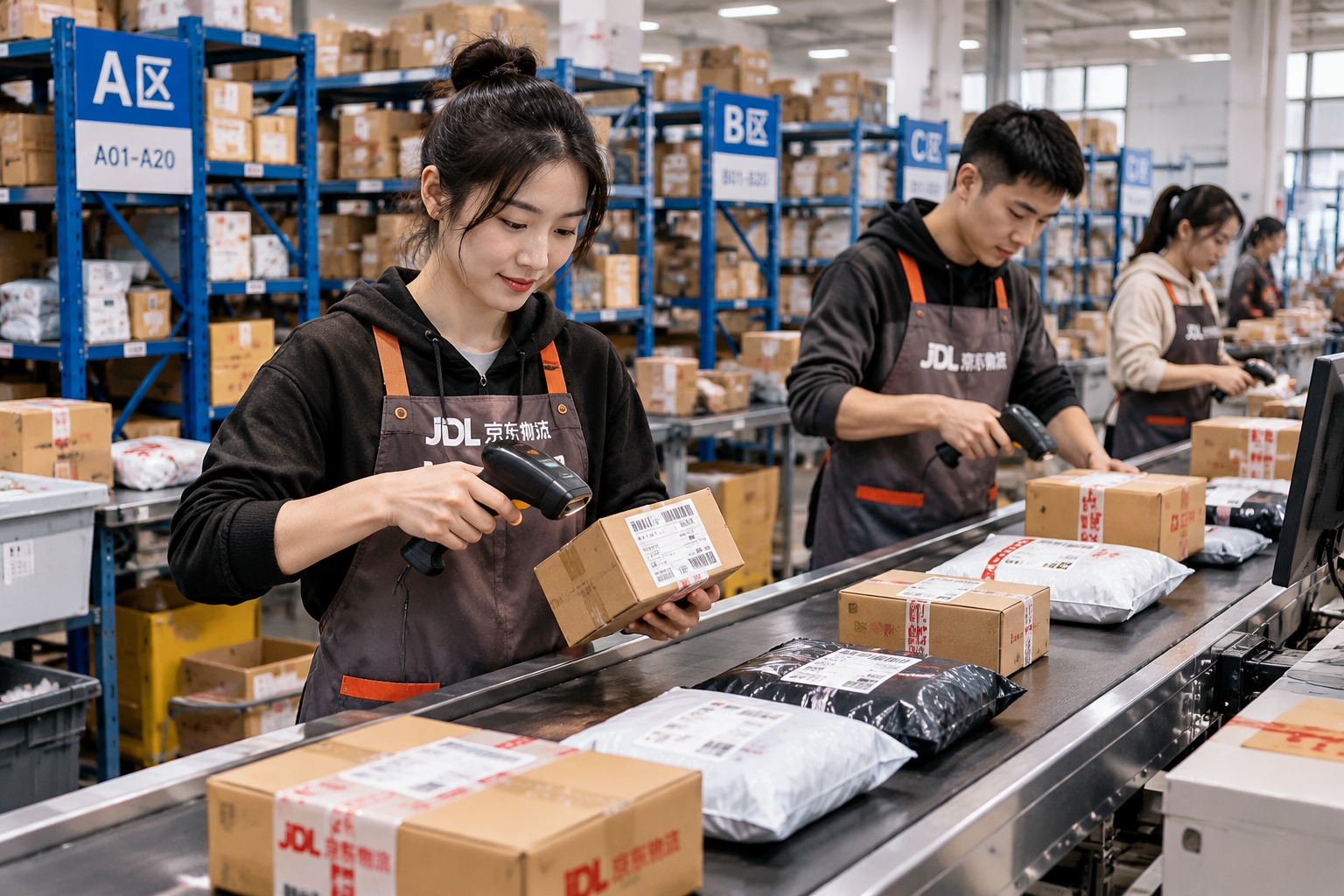
Ten years ago, a small Anhui company selling abroad needed a trading company, a container and a buyer who could order in bulk. Today it needs a laptop and a parcel label.
Hefei was designated a national cross-border e-commerce pilot zone in 2016, which let local firms use simplified customs procedures for small parcels and build bonded warehouses. Nationally, China’s cross-border e-commerce trade reached roughly 2.4 trillion yuan in 2023, and small parcels — the kind that fit through a letterbox — became a genuine export channel for workshops and small factories that would never fill a container.
For a seller, the arithmetic is simple. A sea-mail parcel to Europe takes 30 to 45 days and costs little; an air parcel takes 7 to 12 days and costs several times more. For a 30-euro item, the difference between arriving in a week and arriving in six weeks decides whether the customer buys at all. Many sellers now keep stock in overseas warehouses, sending pallets by air or rail in advance, so the final delivery happens locally.
From Inland City to Boarding Gate
Xinqiao replaced Hefei’s old Luogang airport in May 2013. In its early years, cargo and mail throughput was measured in tens of thousands of tonnes. It has since passed 100,000 tonnes a year by the airport’s own count — a small number next to Shanghai Pudong’s 3 million-plus, but a large one for a city that had no dedicated cargo terminal a decade ago.
What changed physically is easy to see. A second terminal has been under construction since 2021. New cargo facilities sit beside the apron. Hefei’s high-speed rail station puts Shanghai about two hours away and Nanjing about one, which matters because a lot of Anhui’s air freight still starts with a train ride or a truck run to a bigger hub.
Route networks grew in parallel: freighter services linking Hefei with Europe, North America and Southeast Asia, plus the belly capacity of passenger flights. Schedules matter more than maps here. A route that runs twice a week is a different product from one that runs daily, because a shipper planning production needs to know on Tuesday that Friday’s flight exists.
What This Means for a Shopper in Ohio or Rotterdam
The effect on a foreign buyer is small and cumulative. More categories of Chinese goods can be ordered in small quantities and still arrive quickly. Replacement parts for a machine in a Midwestern workshop turn up in days, not weeks. Returns become less painful, because sending something back and getting a new one is measured in days.
It also changes what small retailers dare to stock. A bike shop in the Netherlands that sells Hefei-made e-bike controllers can order twenty at a time rather than two thousand, because air freight makes frequency affordable. The airport does not show up in the invoice, but it shows up in the delivery date.
The Constraints: Route Economics, Seasonality, and Shanghai
This growth has real limits, and people in the industry are the first to name them.
Freighters need cargo in both directions. An aircraft flying out of Hefei full of inverters has to fly back with something, and Europe and North America export relatively little to Anhui by air. Planes fly home light, which raises the cost of the outbound leg. Several Chinese cities have propped up cargo routes with local government subsidies for exactly this reason; the question is how long a route stays alive once the support tapers.
Season is another factor. Volume climbs from September through December as overseas retailers stock up, then falls off a cliff around Chinese New Year, when factories close for two or three weeks.
There is also competition from inside China. Shanghai Pudong, Hangzhou Xiaoshan, Zhengzhou and the dedicated cargo hub at Ezhou all want the same freight, and air cargo rates fell sharply in 2023 and 2024 after the pandemic-era spike, squeezing margins for airports and airlines alike.
And small parcels face a changing rulebook. The United States ended duty-free treatment for low-value packages in 2025, and the European Union has been debating lowering or removing its 150-euro threshold. Rules like these can shift the economics of a whole category of air shipments faster than any terminal can be built.
A Box, a Forklift Driver, and a Plain Fact About Distance
At six-thirty in the morning, Zhang Wei finishes his shift. The pallet with the inverters has already disappeared up the ramp. He walks out through a side door into grey pre-dawn air, past a line of trucks waiting for the next wave.
In a day or so, someone in a warehouse near Rotterdam will cut the plastic wrap, check the serial numbers and put the inverters on a shelf. They will not know the box came from Anhui. There is no reason they should. The remarkable thing about a city several hundred kilometres inland becoming an international shipping point is not that it makes headlines, but that it eventually stops being interesting at all.
Start the discussion at forum.chinacomes.com