
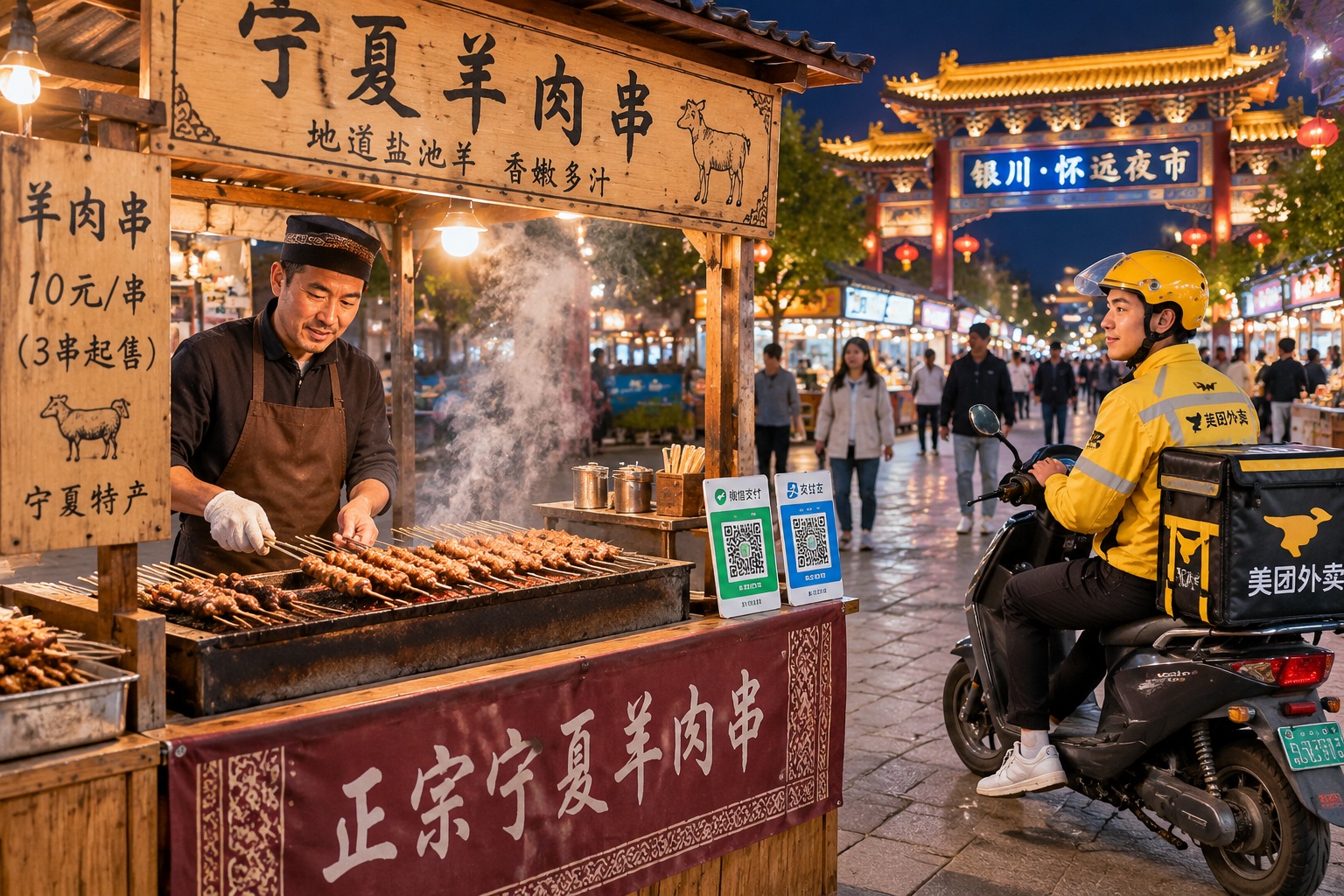

A Sizzling Start
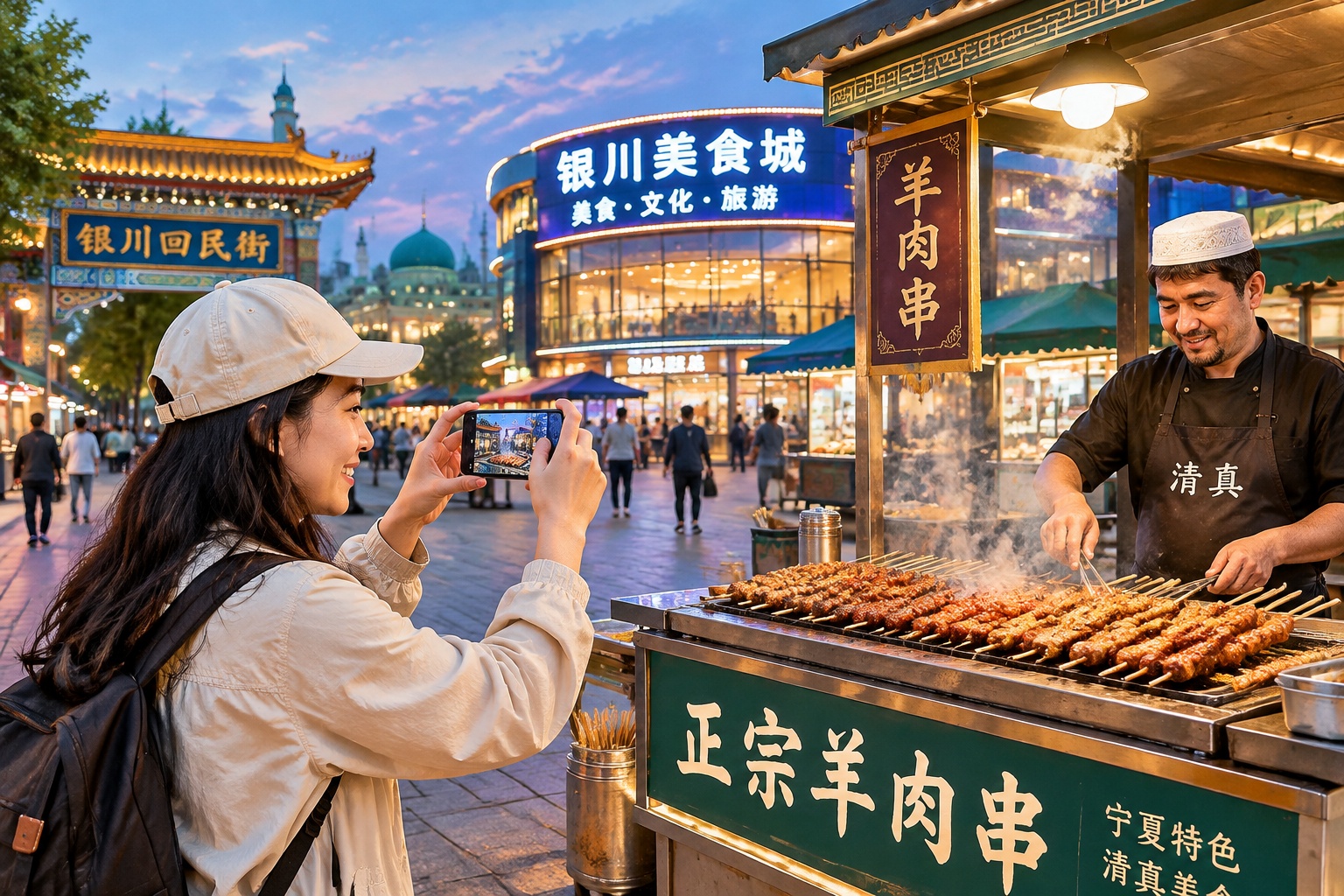
Yinchuan, 8 p.m. The air is thick with cumin and charcoal smoke. At a narrow stall in the Muslim Quarter, Ma Jianping flips lamb skewers with practiced ease. His father started this stall in 1988. “Back then, we only had one spice blend. Now customers expect 20 options,” he says, wiping sweat from his forehead. Today, he can sell 800 skewers a night. But the business is not what it used to be.
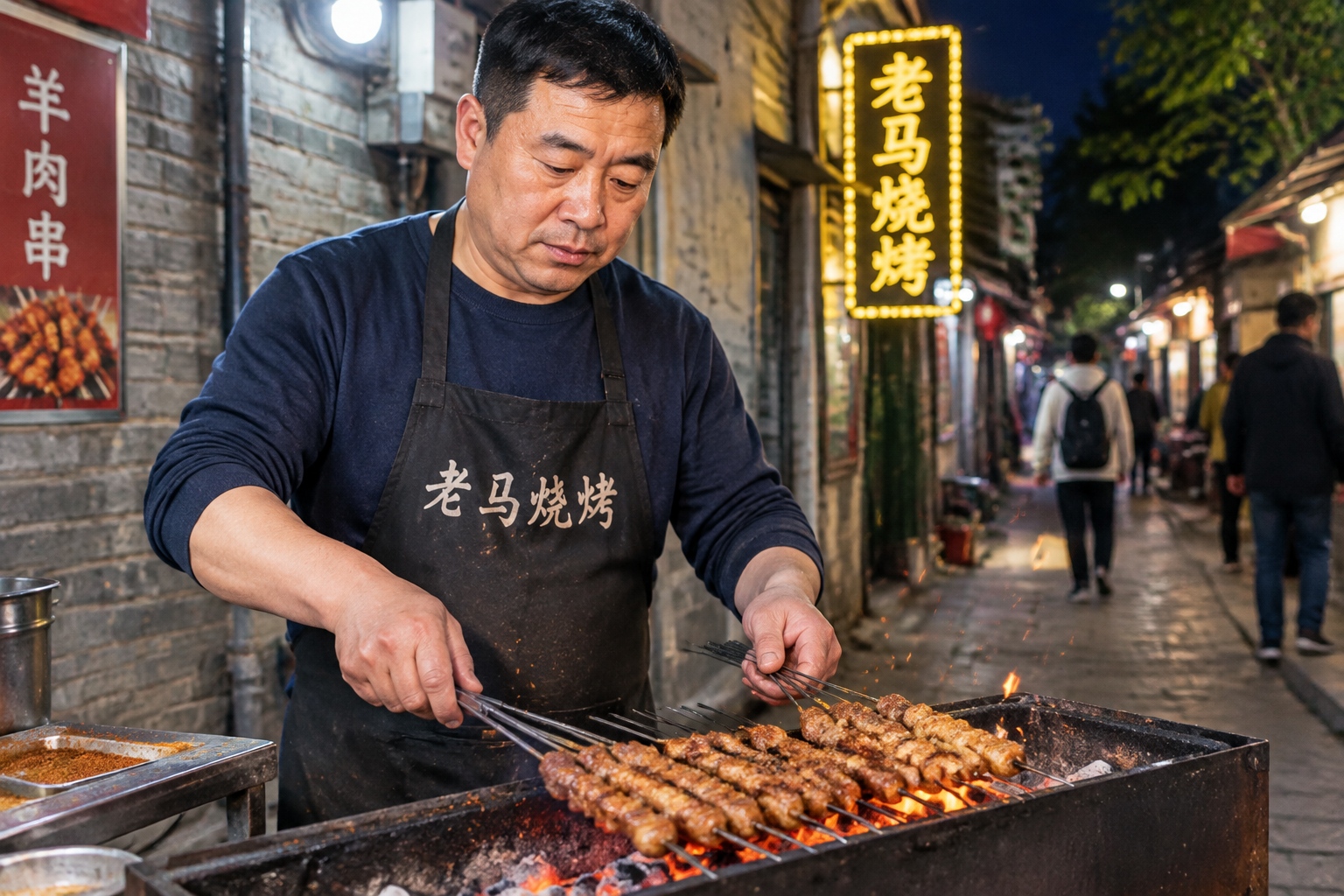
The Old Guard: Ma Jianping’s Manual Kitchen
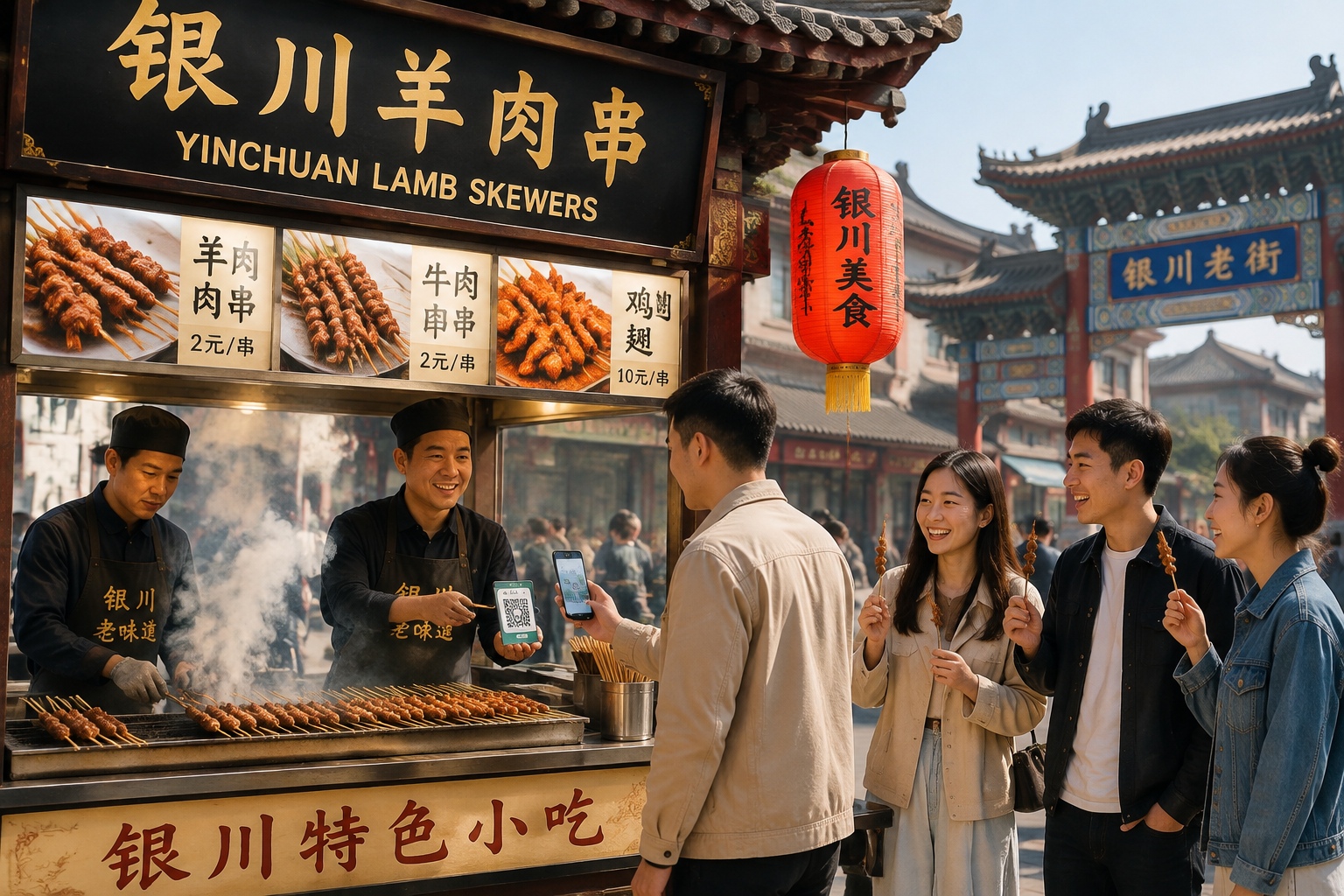
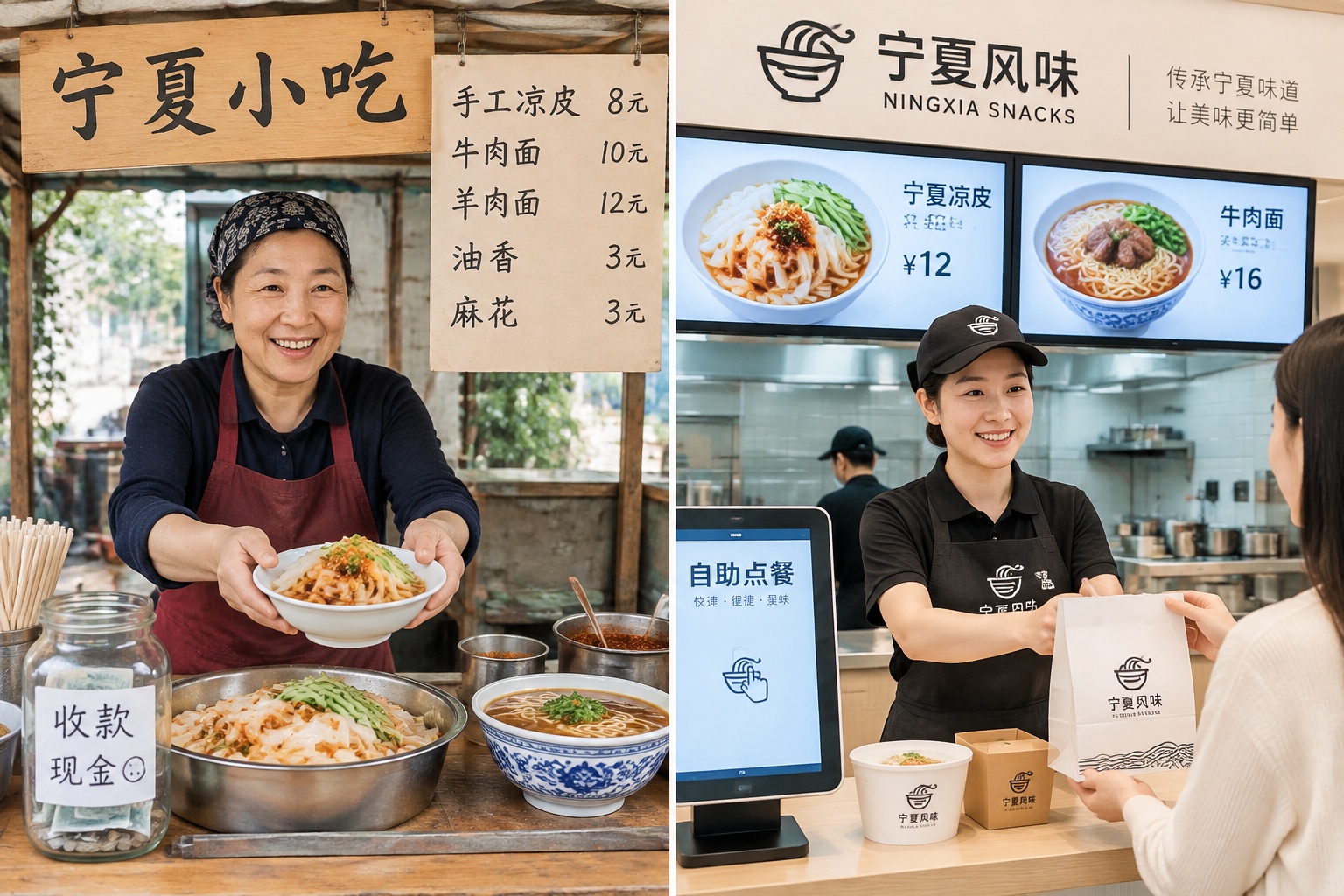
Ma Jianping, 46, has been running the family stall for 28 years. He arrives at 4 p.m. to marinate the meat, lights the charcoal at 5, and serves until midnight. His only concession to modernity is a QR code for payments. “I tried partnering with a delivery app, but the commission ate my profit. Plus, skewers need to be eaten hot and fresh. Cold lamb is terrible.” His customers are mostly regulars — taxi drivers, office workers, old neighbors. They come for the ritual: standing around the grill, chatting, eating straight off the stick.
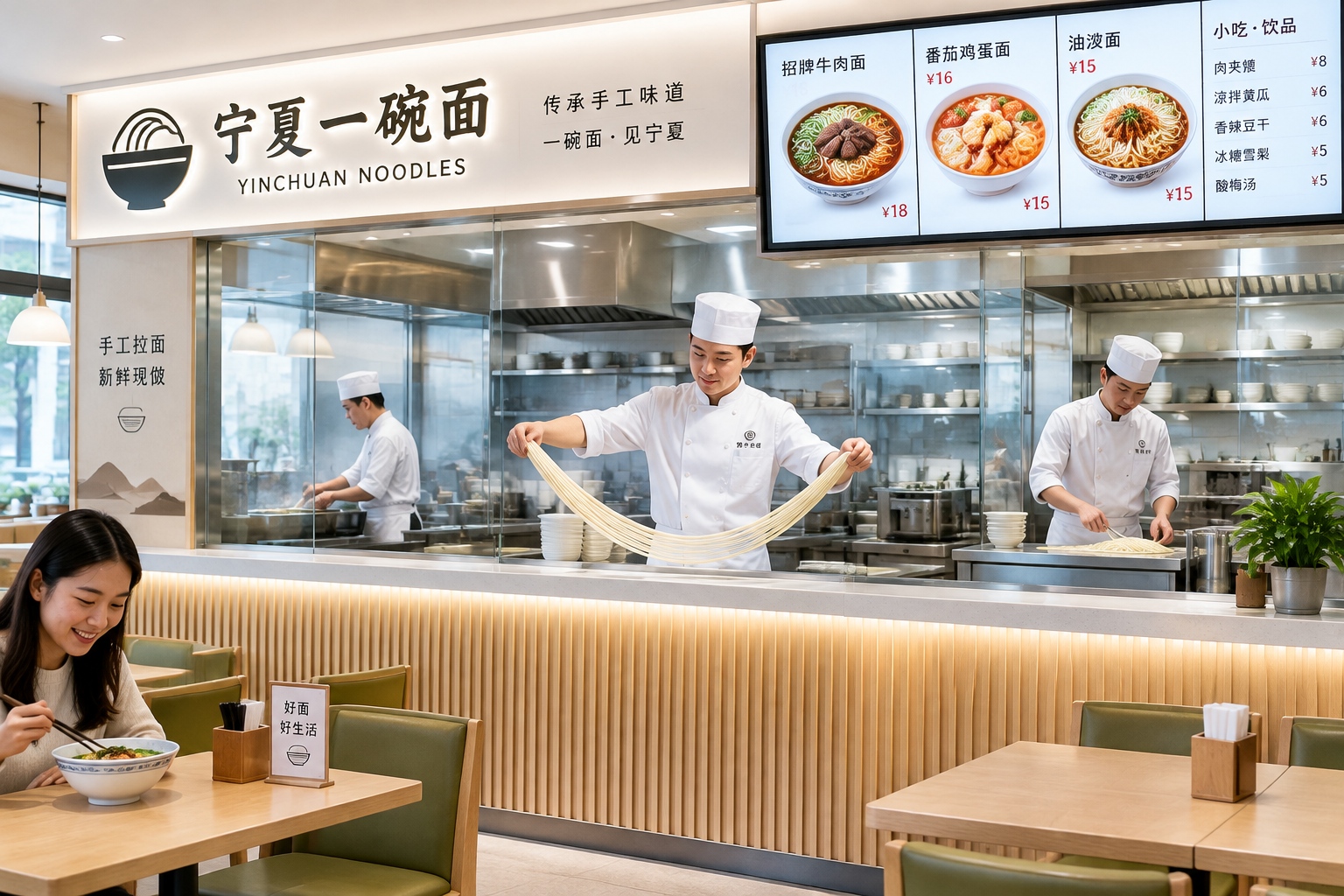
But the neighborhood is changing. Two blocks away, a shiny food court opened last year, with air conditioning and Instagram-worthy interiors. Some of his regulars have drifted there. “Young people want comfort, not smoke,” he admits.
The New Wave: Chain Stores and Digital Menus
Across town, in a modern commercial complex, 24-year-old Ma Ke (no relation) is a delivery rider for a chain called “Ningxia Noodle Story.” This chain has 15 outlets across the city, all serving standardized versions of hand-pulled noodles, liangpi (cold noodles), and spicy lamb soup. The kitchen is glass-walled, the staff wear uniforms, and the menu is optimized for delivery: leak-proof containers, separate sauce packets, heat-retaining packaging.
Ma Ke has an economics degree but chose to ride because the pay is decent and flexible. “I earn about 6,000 yuan a month, which is enough to rent a small apartment and send some money home. My parents run a small noodle shop in the countryside — they think my job is not ‘proper work.’ But I get to see the city.” Ma Ke’s app shows 42 orders waiting. He taps to accept one: a customer 3 km away ordered the signature “Sour and Spicy Liangpi” — a dish that his grandmother used to make by hand. Now it comes in a plastic box with a QR code that tracks the order from kitchen to door.
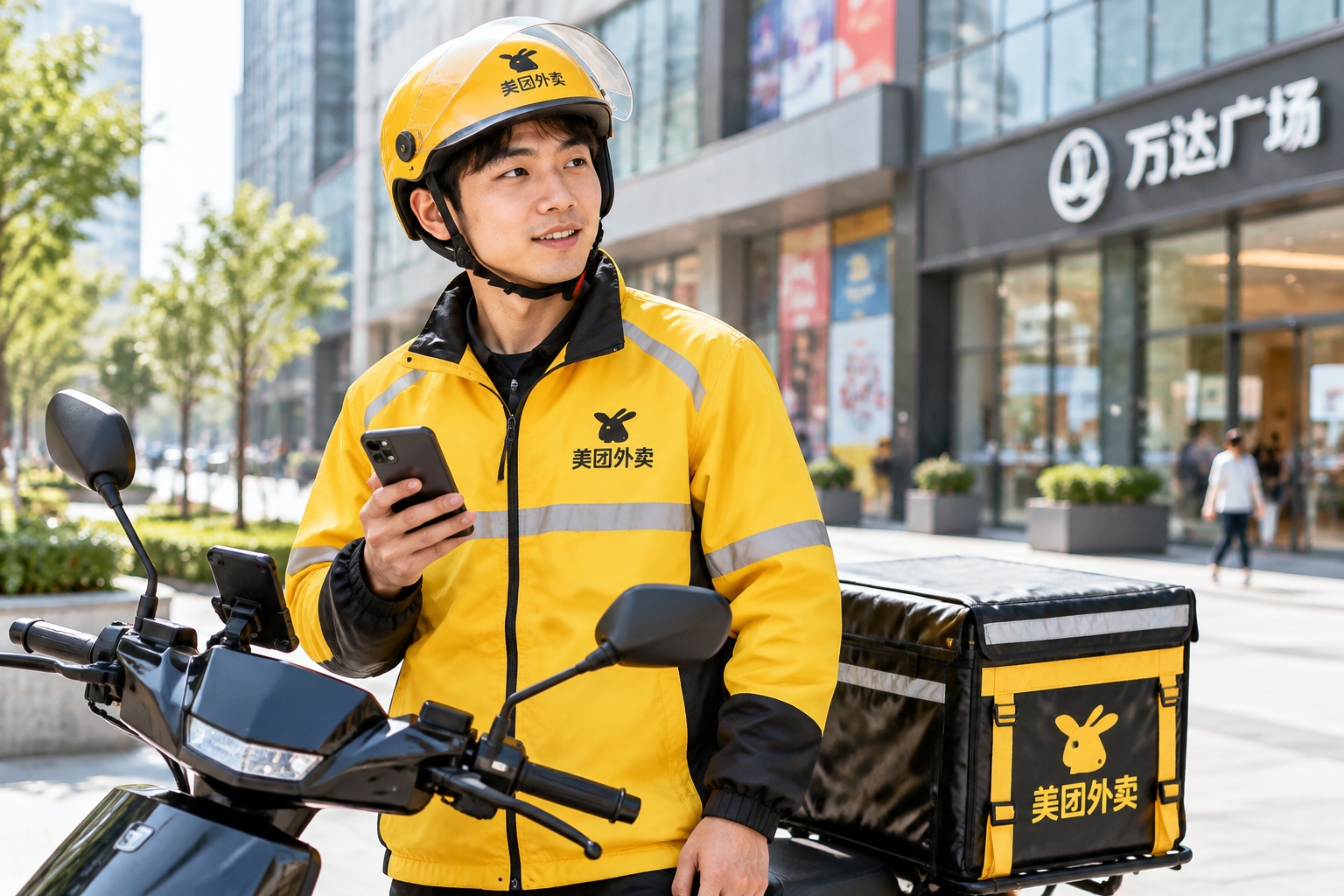
“The chain version tastes different — cleaner, less oily. Some customers complain it’s not authentic. But others prefer it because you know exactly what you’ll get every time.”
Why Delivery Changes Everything
The numbers tell the story. In 2019, Ningxia’s food delivery market was worth 1.2 billion yuan; by 2023 it had doubled. Traditional stalls now make 20-30% of their revenue from delivery, often through third-party platforms. But the commission fee — around 20% per order — forces them to either raise prices or shrink portions. Chains, with their centralized kitchens and bulk purchasing, can absorb that cost.
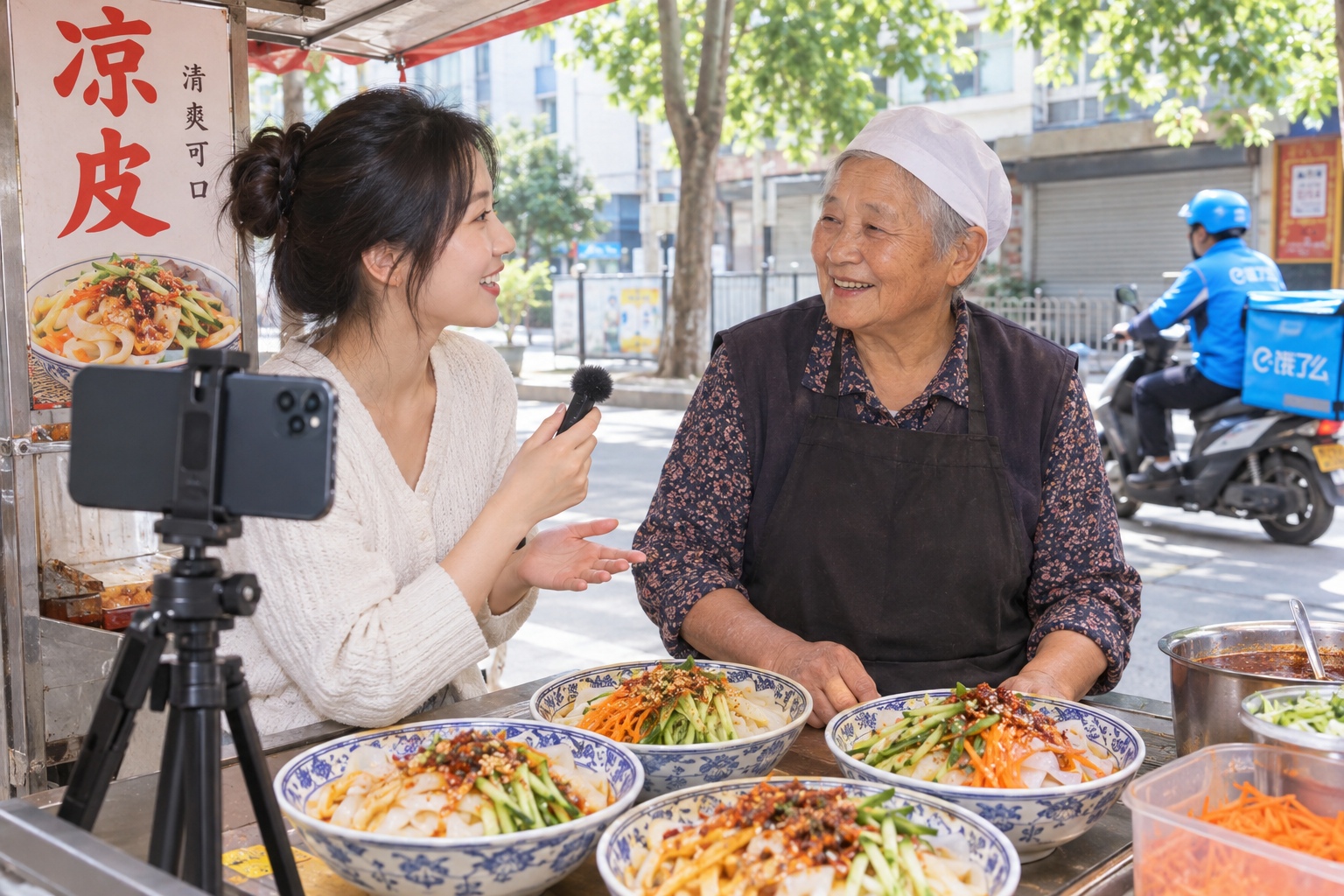
Wang Li, a food blogger in Yinchuan, notes: “Ten years ago, if you wanted real Ningxia food, you had to go to a specific alley and wait 20 minutes. Now you can get it delivered to your office in 15 minutes. But the soul of the dish — the cook’s personality — often gets lost in the process.”
Two Worlds, One Plate
I ask Ma Jianping if he would ever consider joining a chain. He laughs. “I am the chain. My hands are the recipe.” He believes food is not just fuel; it’s a relationship. Meanwhile, Ma Ke the rider says his dream is to save enough money to open his own small restaurant—one that uses the efficiency of a chain but the flavors of his mother’s kitchen. “Maybe I can have both: a QR code and a family secret.”
Ningxia’s food scene is not a story of replacement but of layering. The smoky grill coexists with the sleek food court. The old ways survive because they offer something delivery cannot: presence, patience, and a personal touch. Yet the new ways reach people who would otherwise never taste those dishes. As one customer told me: “I order liangpi on my phone while sitting in a meeting. But when I go home on holidays, I still go to Ma Jianping’s stall. We need both.”
What This Means for Travelers
If you visit Ningxia, skip the tourist restaurants. Go to the Muslim Quarter at dusk, find a stall with a long queue, and order whatever the locals are eating. But also try a chain store — not for the food, but to understand how a 2000-year-old cuisine is being reinvented for a generation that eats with their phones.
Start the discussion at forum.chinacomes.com