
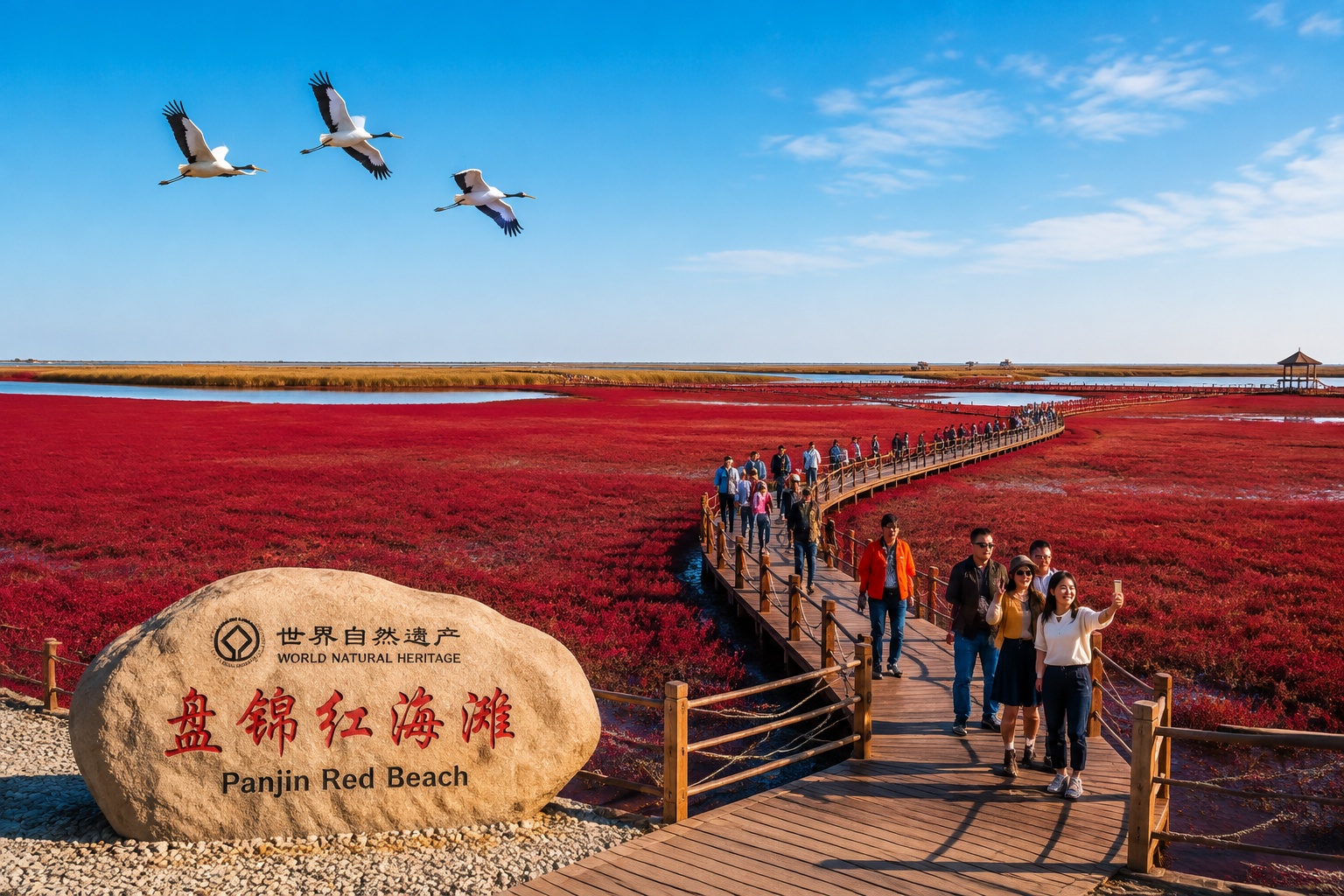

A stretch of coast that turns red every autumn
Take the high-speed train from Beijing to Panjin, a city in China’s northeast, and you might expect an industrial landscape. What appears instead, between the sea and the rice fields, is a coastline that looks like a red carpet spreading to the horizon.
This is the Red Beach Scenic Area, one of the most unusual wetlands in the world. The color comes from a plant called suaeda salsa, a salt-tolerant wild grass that grows in the mudflats. In spring it is green; by August it begins to change; from mid-September to early November it turns a deep crimson, creating a landscape so vivid that first-time visitors often stop walking just to stare.
Nature, not paint
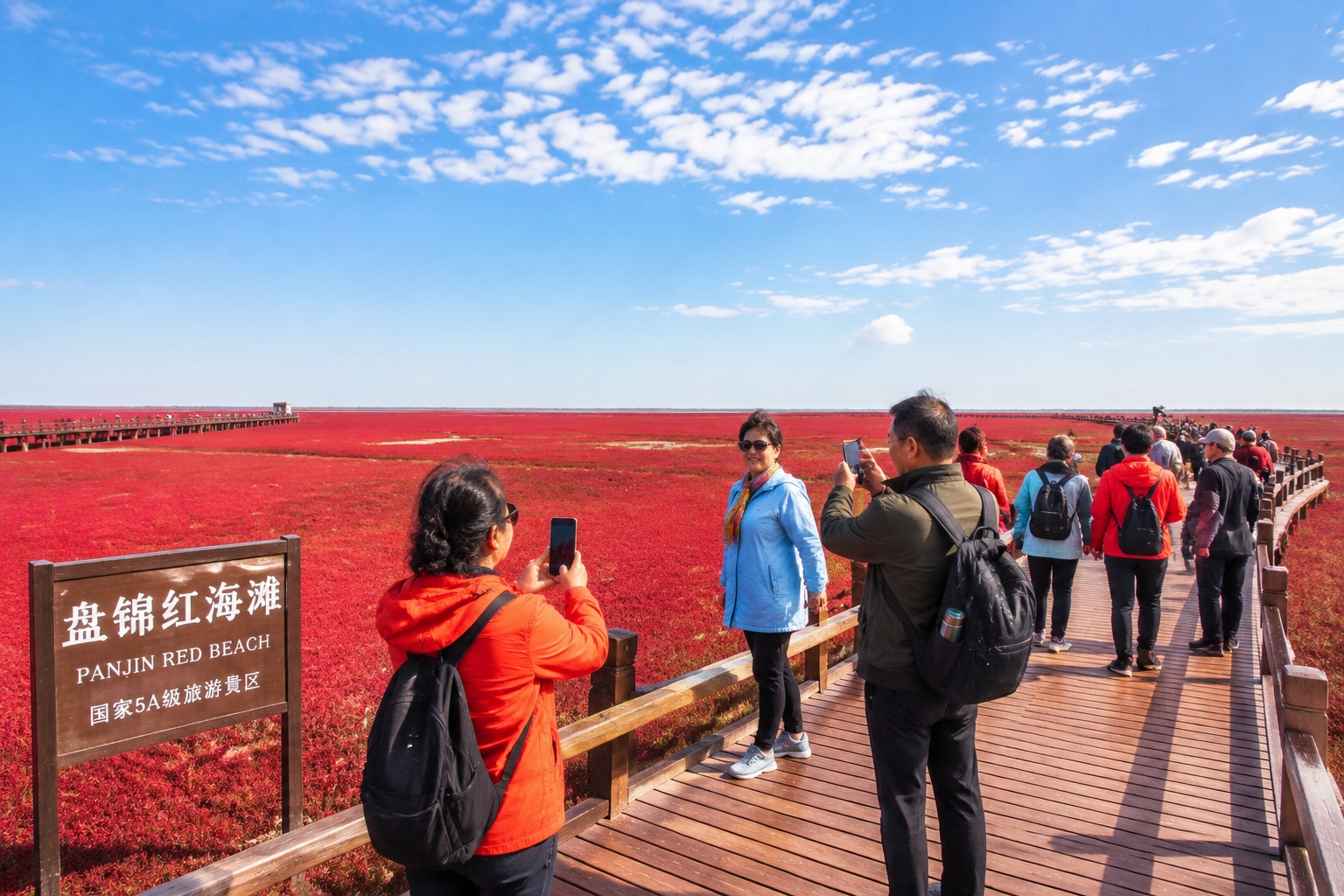
Red Beach is part of the Liaohe Delta wetland system, where the Liao River flows into the Bohai Sea. The mixing of freshwater and seawater creates a brackish environment that suits suaeda salsa perfectly. The plant stabilizes the mud, and the mud supports a rich food web. Migratory birds stop here on the East Asian-Australasian Flyway. Some, like the endangered black-beaked gull, nest in the coastal wetlands.
Visitors cannot step directly onto the beach. Instead, a wooden boardwalk lifts you above the fragile ground, stretching for more than 18 kilometers through the landscape. You can walk, take a mini train, or hire a bicycle. The design is intentional: too many footprints would harm the plants and disturb nesting birds.
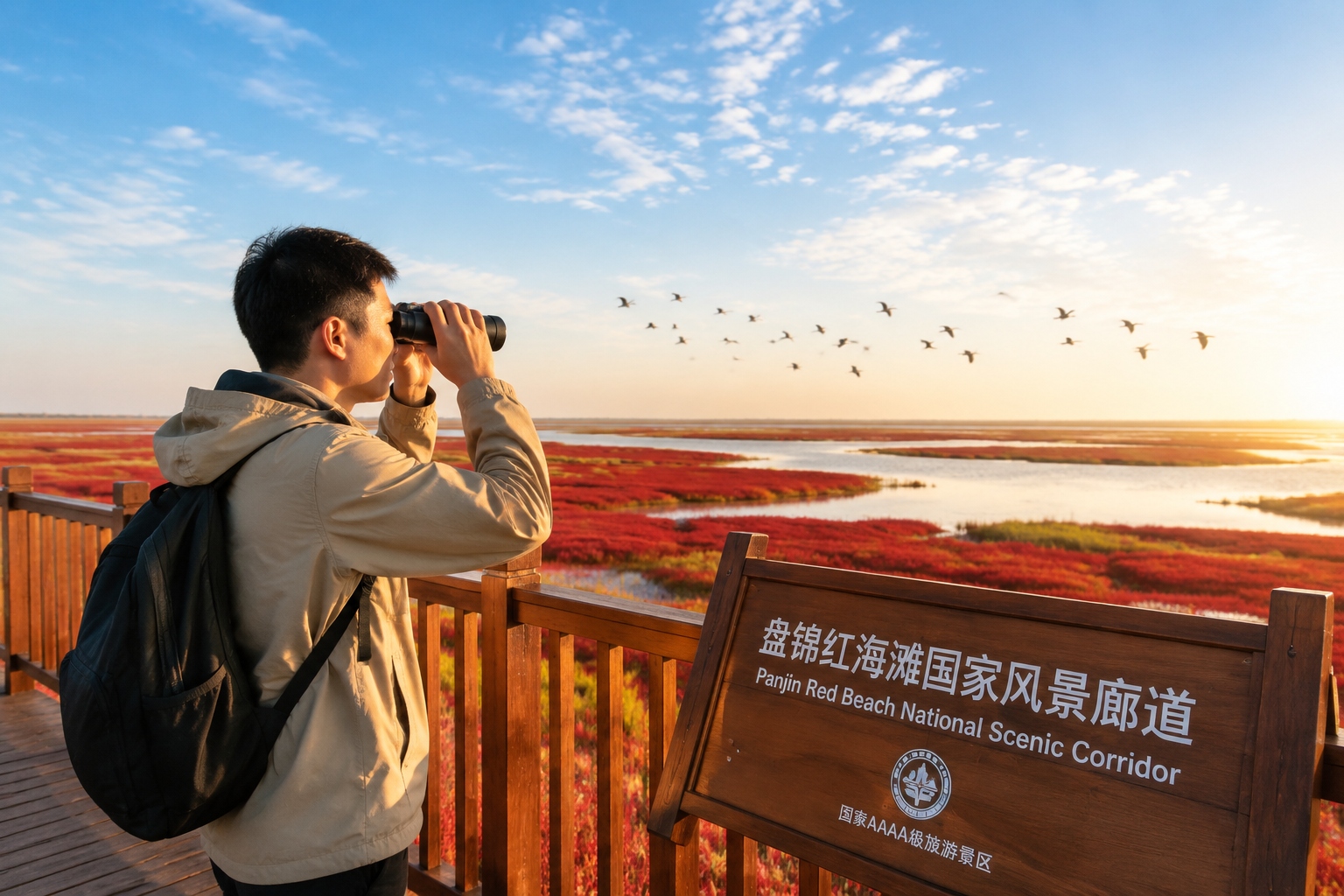
On a clear morning, if you walk far enough, you may see cranes moving slowly among the red stems. Binoculars are not required, but they help. Birdwatchers from as far away as Japan and Australia come to this spot during migration season.
Where the money comes from
For a long time, this coast was not known as a tourist draw. Local people made a living from fishing, from small-scale salt pans, and from farming. In the 2000s, as the scenic area developed, tourism began to add a second source of income. Today the Red Beach Scenic Area receives well over one million visitors a year. That demand has changed the surrounding villages.
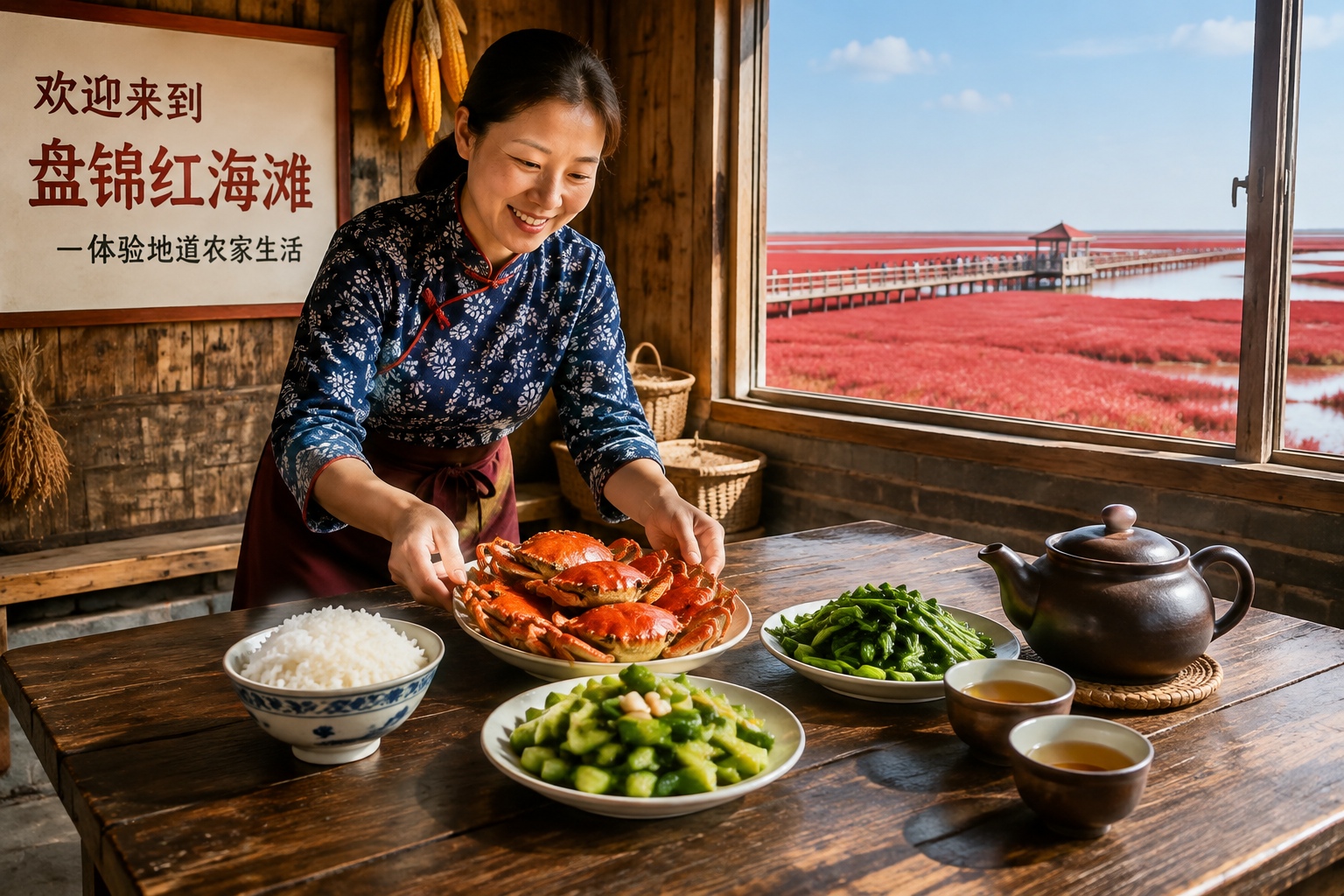
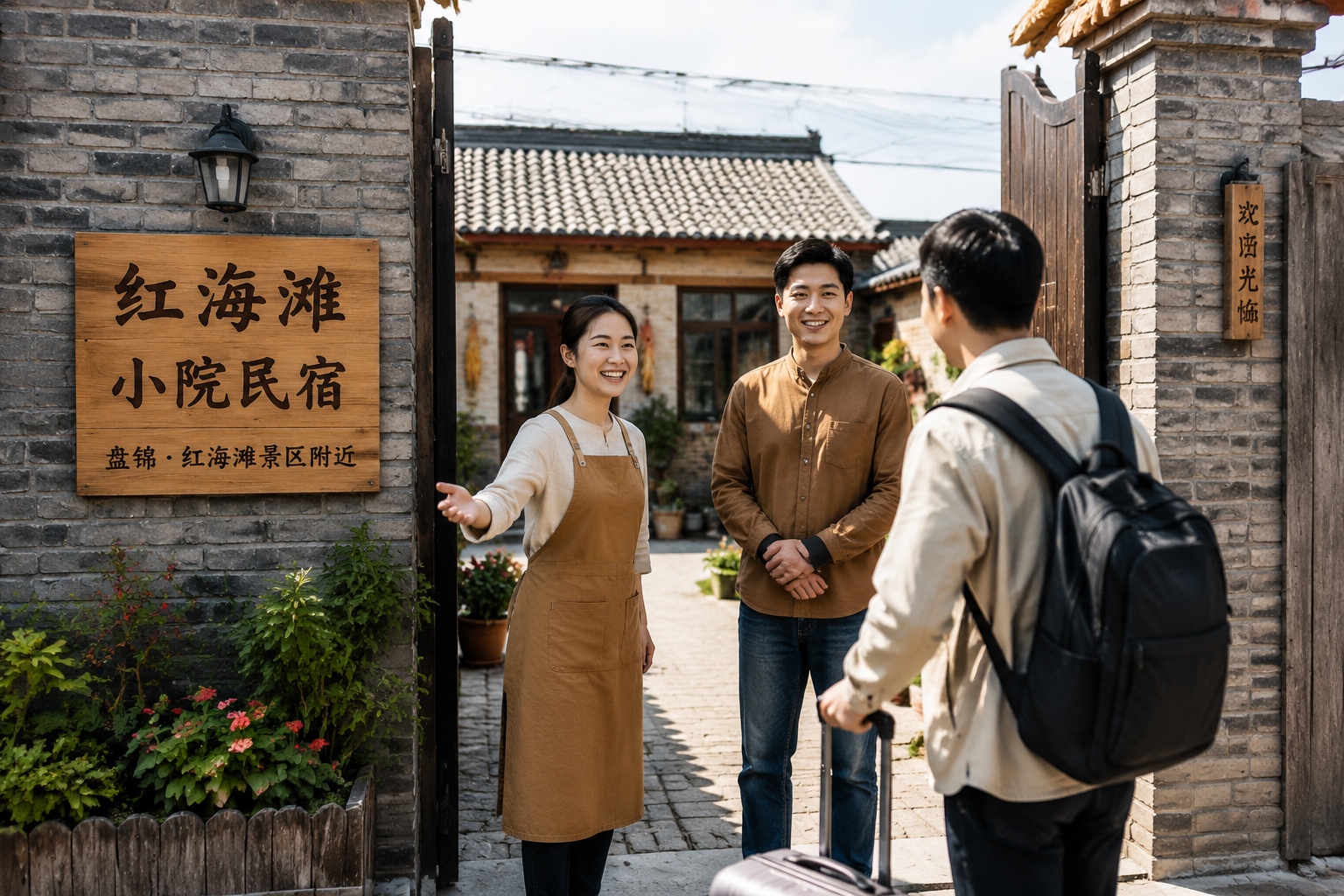
In villages near the wetland, families have converted their homes into simple guesthouses. A traveler can spend the night in a converted farmhouse, eat a dinner cooked by the host, and wake up to the sound of geese flying overhead. One popular dish is rice cooked with freshwater crab, both products of the same watery landscape. The rice is a local specialty because the fields are flooded much like wetlands, and crabs are raised in the same paddies.
For the young, tourism has created reasons to stay or return. Zhang Lei, a former construction worker, now runs two small hotels near the scenic area entrance. His father used to fish in the Liao River. “He still tells me how the river used to be,” Zhang says. “Now his grandchildren see the same river from a tour boat.” He is not the only one; the guesthouse owners’ cooperative in his town has more than fifty members.
The local government has also played a role. It has invested in wetland restoration by moving some fish farms away from critical bird habitats and paying farmers to return fields to marshland. In return, the wetland now offers flood protection and cleaner water. The economy of the area is no longer simply one of extraction; it is also one of protection.
Not a simple story
Red Beach is not perfect. Tourists arrive in large groups on sunny weekends, and parts of the boardwalk can feel crowded. The famous red color depends on the health of the wetland; in dry years, or when sediment from the river decreases, the plants grow less well. Climate change and water flows upstream are long-term uncertainties.
Park managers have responded with rules: daily visitor numbers are limited on peak days, and some sections close during bird nesting. Guided tours are kept at a distance. Farmers who once saw wetland as wasteland now understand its value. One resident in a nearby village said, “If we kill this land, we lose our jobs too.”
How to see it yourself
The best time is from late September to mid-October, when the red is deepest. From Panjin railway station, a taxi or bus takes about half an hour to the scenic area gate. The site is open year-round but features change with the seasons; in winter it is gray-blue and frozen, in spring and summer it is green. The autumn red is the reason most people come.
To avoid the biggest crowds, go early in the morning on a weekday. Wear waterproof shoes, although the boardwalk should keep you dry. There is a visitors’ center, restaurants, and clean toilets. A full visit takes two to three hours. No special medical precautions are needed.
A landscape that pays for its own protection
Panjin’s Red Beach is one of those places that resists easy labels. It is a tourist attraction, a wildlife habitat, a buffer against flooding, and a source of income for people who live nearby. The fact that these roles work together is not an accident; it is the result of planning, compromise, and a lot of small decisions.
Whatever you call it – unusual coastline, living mosaic, or lucky accident of nature – it is a reminder that in China, economic growth and environmental care are not always opposites. Sometimes they depend on each other.
Start the discussion at forum.chinacomes.com