

The Umbrellas Tell Only Half the Story
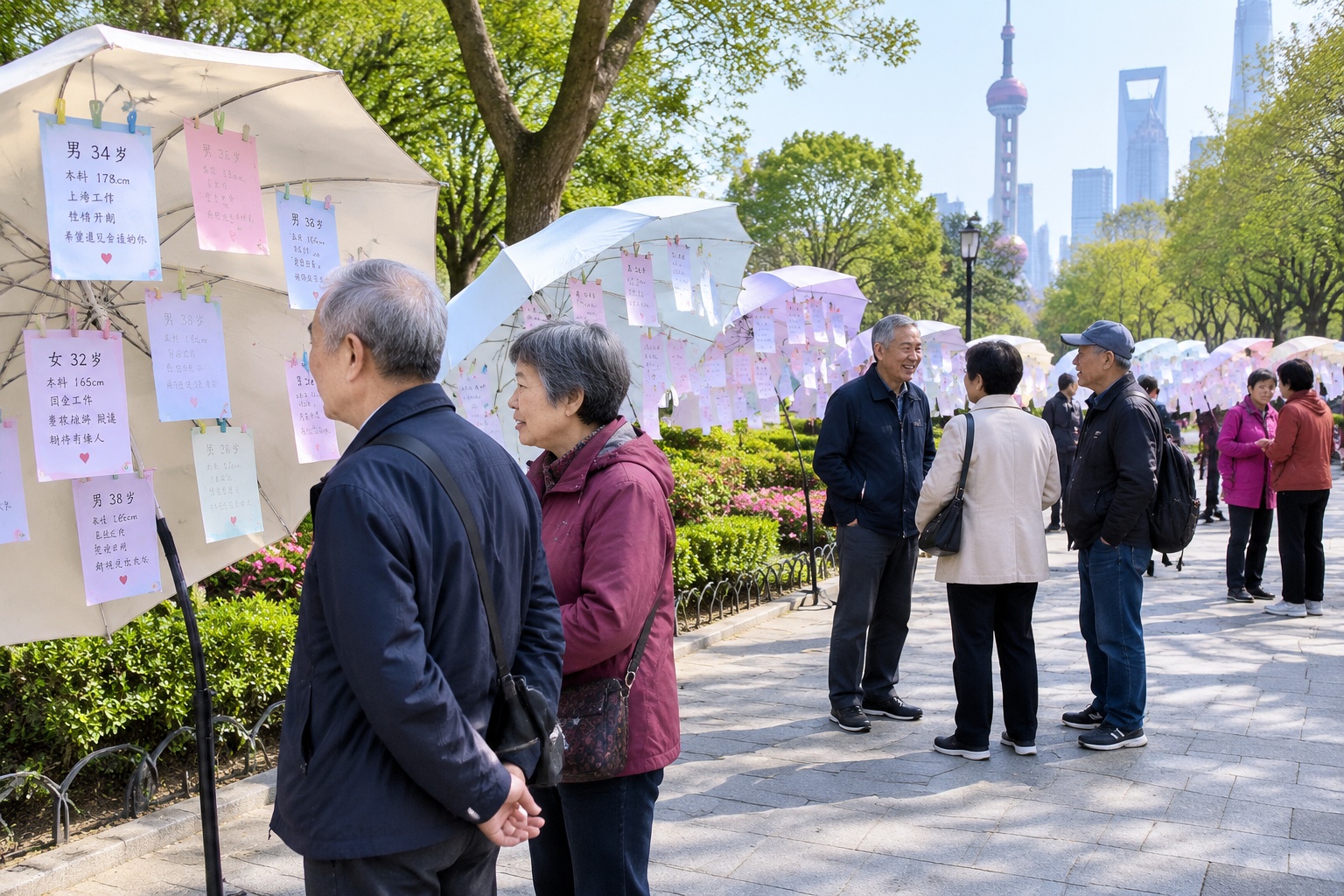
On a Saturday morning in Shanghai’s People’s Park, dozens of umbrellas stand along the walkway, each with a sheet of paper clipped to the spokes. The paper lists a birth year, a height, a salary, a job, and whether the family owns an apartment — and whether that apartment still carries a mortgage. The parents do the browsing. The children, mostly in their late twenties and thirties, are at work.
Foreign visitors often read this scene as proof that Chinese families are obsessed with marriage. The official numbers say something more complicated: fewer of those children are marrying at all, and those who do are leaving their marriages more readily than their parents’ generation did.
What the Data Actually Shows
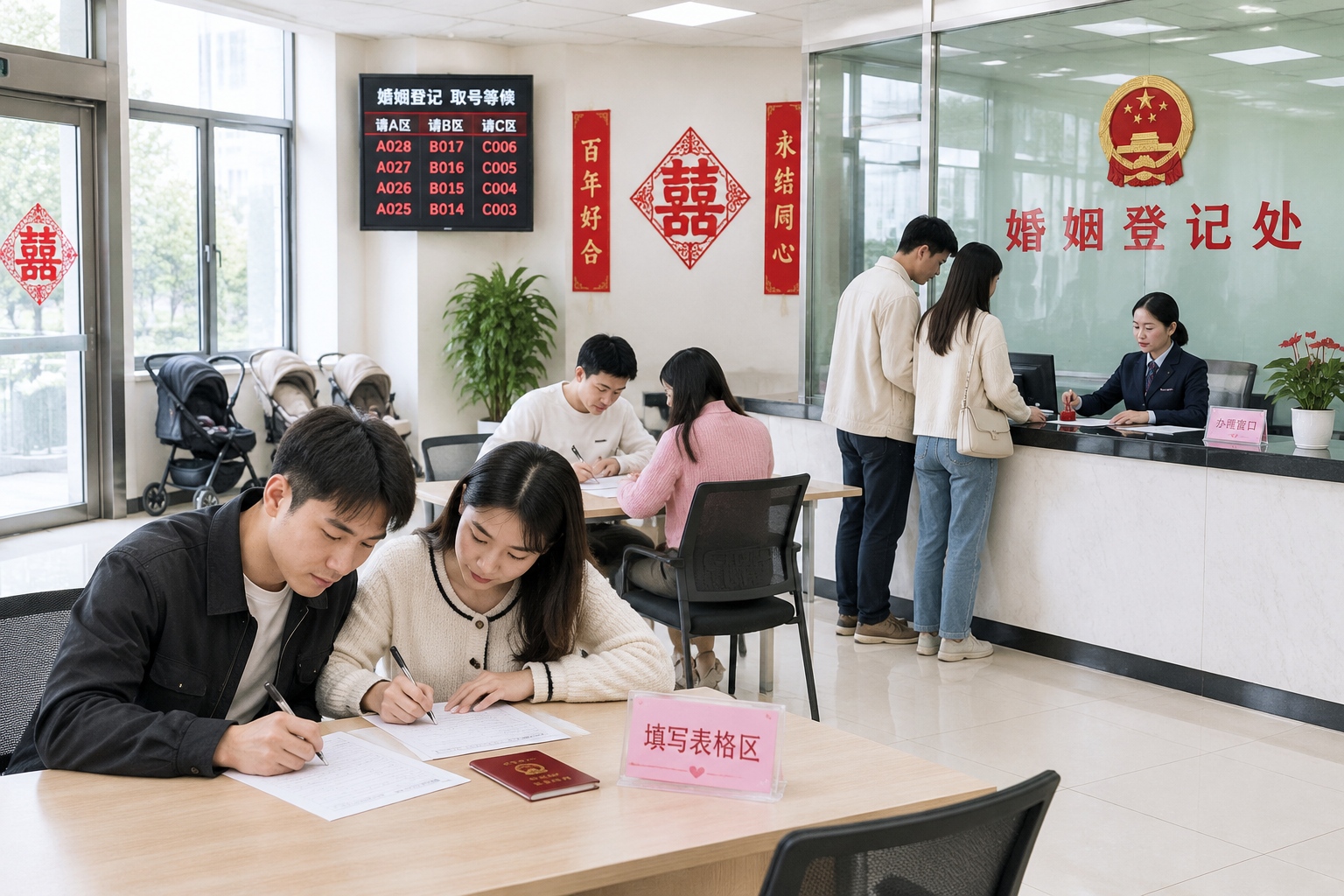
China recorded 13.47 million marriages in 2013, according to the Ministry of Civil Affairs. In 2024 the figure was 6.11 million — the lowest since the early 1980s, when the country was far poorer and far less urban. That is a 55 percent decline in eleven years.
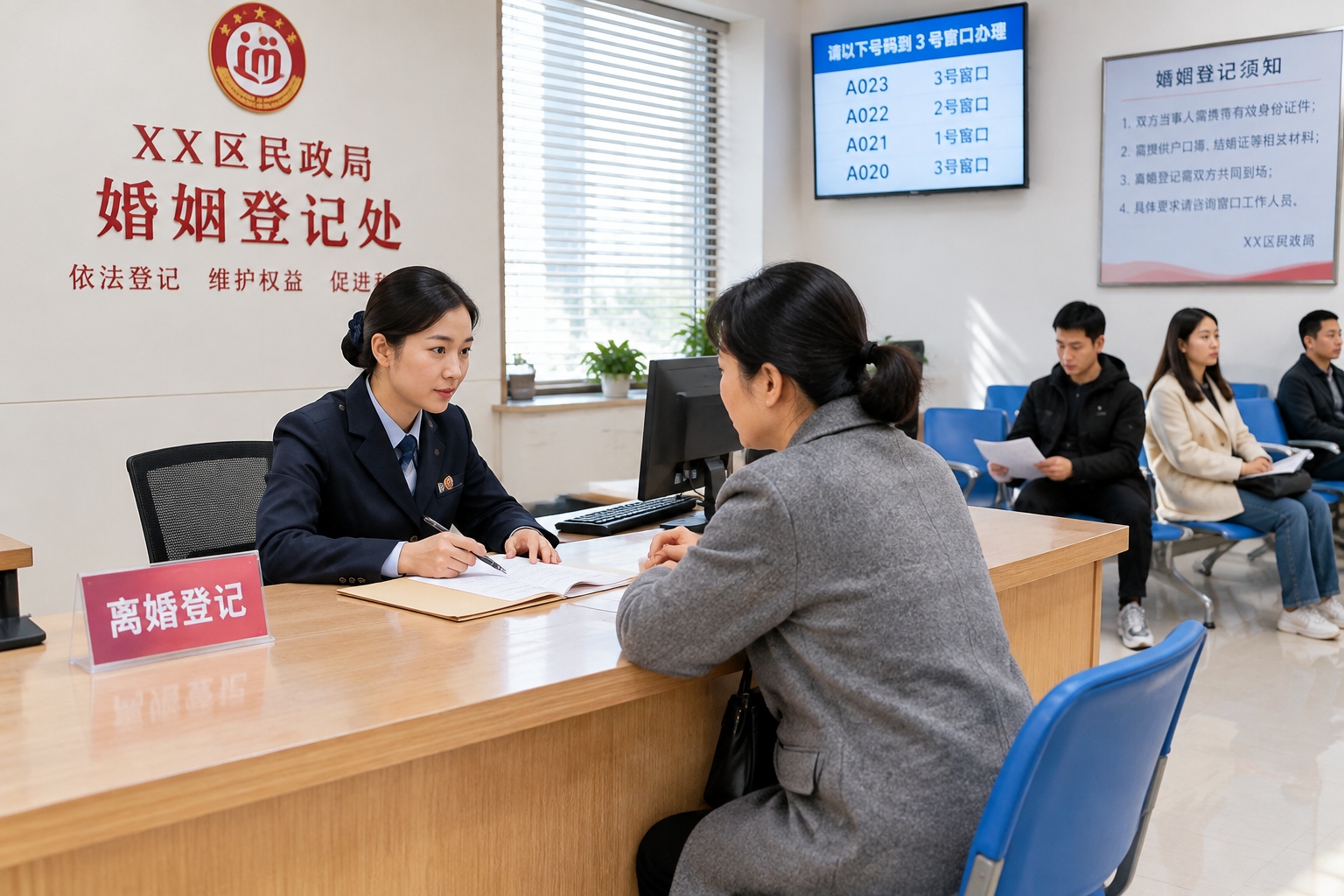
Divorce runs on a different curve. Divorces registered at civil affairs bureaus peaked at 4.04 million couples in 2019, then dropped to 2.14 million in 2021, the first year of the cooling-off period, before climbing back to 2.62 million in 2024. Those figures exclude court-ordered divorces, which add roughly 600,000 to 800,000 cases a year.
So the headline “divorce is rising” is only half true. China registers fewer divorces today than it did six years ago. What has changed is the ratio: in 2013, civil affairs bureaus handled about one divorce for every five marriages. In 2024, it was close to two for every five. Marriage is shrinking faster than divorce is growing.
Age matters as much as volume. In most provincial breakdowns, people in their thirties form the single largest group of divorcees, and court reports repeatedly flag the third to fifth year of marriage as the highest-risk window. The old phrase “the seven-year itch” now looks generous in some cities, where registry offices report a steady trickle of marriages ending within twelve months.
Why Women File First
The most consistent finding in Chinese divorce data is who starts the process. Court statistics have put the share of divorce lawsuits filed by wives at roughly 70 percent; some provincial courts report more than 80 percent.
That is what economic change looks like inside a household. About half of China’s university undergraduates are women, and among 25-to-34-year-olds in the big coastal cities, wives often hold the same job titles and draw similar salaries as their husbands. China’s female labour-force participation rate sits near 60 percent — high by international standards, against a global average closer to 47 percent.
What has not changed as quickly is the work at home. A 2018 national time-use survey by the National Bureau of Statistics found that Chinese women spent about two hours and six minutes a day on housework; men spent forty-five minutes. Childcare, elder care and the administrative labour of running a family fall mostly on the same person.
There was also a quiet legal shift many outsiders miss. Until 2003, registering a marriage or a divorce in China required a letter from your work unit or neighbourhood committee. Anyone over forty remembers a colleague having to explain a marital breakdown to an employer. Removing that requirement turned marriage from a public administrative matter into a private one, and took the social pressure out of the paperwork.
Expectations moved with it. A marriage was once a resource-pooling arrangement that also produced children; it is now expected to deliver companionship and support as well. When both partners work and only one does the housework, the arithmetic of staying becomes less obvious — especially for a woman who can pay her own rent.

The State’s Answer: Thirty Days
On January 1, 2021, China’s new Civil Code introduced a mandatory thirty-day cooling-off period for divorces filed by mutual consent. Couples submit an application, wait a month, then both must appear in person to collect the certificate. If one of them stays home, the application lapses.
The effect was immediate. Registered divorces fell about 43 percent in the first year, from 3.74 million in 2020 to 2.14 million in 2021. Several provinces simultaneously reported a jump in divorce lawsuits, as couples who could not agree — or could not wait — went to court instead.
Two readings of the policy are both defensible. Its defenders argue that it filters out impulsive decisions and shields the party with less bargaining power, usually the one who did less paid work during the marriage. Its critics point out that people who most need a fast exit are often leaving violent homes, and that a mandatory pause can be used to pressure someone into withdrawing. The cooling-off period does not apply to court divorces, though a contested case can take a year or more anyway.
Two quieter legal changes may matter more in daily life. A 2018 judicial interpretation on marital debt ruled that debts signed by one spouse beyond ordinary household needs are not automatically joint — a real protection for women whose husbands ran businesses. And the 2021 Civil Code introduced compensation for unpaid domestic work. In the first case decided under the new clause, a Beijing court ordered a husband to pay 50,000 yuan, roughly $7,000, for five years of housework and childcare. The sum is modest; the principle is not.
At the same time, the government is lowering the cost of getting married. Since May 2025, couples can register a marriage anywhere in the country without a hukou booklet, and the fee has been waived. Some local governments hand out cash gifts to newlyweds. In July 2025, a national childcare subsidy of 3,600 yuan per child under three was announced. Falling marriage numbers are now treated as a policy problem rather than a personal preference.

A Marriage That Ended Without a Villain
The following is a composite drawn from details in publicly reported Chinese divorce cases and media interviews. Names and identifying details have been changed.
Chen was 26 and working as a product manager in Hangzhou when she married in 2016, after three years together. Both families contributed to the down payment on a small apartment. The first two years were easy. Their daughter was born in 2019, and when the baby was six months old, Chen’s husband moved into the second bedroom so his early shifts would not wake them. The arrangement was practical, then permanent. Conversation narrowed to logistics: pickups, groceries, whose mother was visiting.
Both worked from home through 2020 and 2021, in eighty-nine square metres with a toddler. They stopped arguing, which Chen later described as the clearest sign. She filed for divorce in 2022, expecting a battle and getting a mediation session. The case was resolved in 2023: the apartment went to her husband, who agreed to pay her a share of its value in instalments, and their daughter lives with Chen most of the week. Nobody had an affair. Nobody was violent. They simply ran out of conversation, and she grew tired of negotiating.

What Chinese Marriage Might Become
Once marriage stops being compulsory, it starts coming in versions. Several are already visible.
Two-household marriage
In parts of Jiangsu, Zhejiang and suburban Shanghai, a practice known as liangtou hun — “two-household marriage” — has taken hold. The couple keeps ties to both families instead of the wife joining the husband’s household. No bride price is paid, no dowry is given, and if there are two children, one takes the father’s family name and one the mother’s. It emerged among families with only daughters who wanted their line acknowledged.
Living apart on purpose
“Weekend couples” were once a symptom of migrant labour: one spouse in a factory city, one at home. Today the arrangement is often chosen by two professionals whose jobs sit in different cities, or who simply function better with separate bedrooms. Chinese social media has borrowed the English phrase “sleep divorce” for the second case. It is not always a step toward separation; for some couples it is what keeps the marriage running.
Contracts before the ceremony
Premarital property agreements and notarised asset declarations remain a minority practice, but notary offices in Beijing, Shanghai and Shenzhen report steady growth. They are most common among people marrying after thirty, in second marriages, and among anyone bringing real estate into the union — which, given that housing accounts for the bulk of urban household wealth, is a large group.
Not marrying at all
Surveys of Chinese university students and young professionals have found that a majority now describe marriage as optional rather than necessary. Demography reinforces the point: every year there are fewer people in the marriage-age cohorts, and the mismatch runs in two directions. Rural men face a shortage of women; educated urban women face a shortage of men with comparable schooling and careers. That is a spatial and economic problem more than a cultural one.
What to Watch
The divorce rate is a lagging indicator. The number that will shape the next decade is the marriage rate, and it has been falling for eleven years. Chinese law and Chinese family life are both adjusting to a simple fact: marriage is no longer the default setting of adult life. Whether the modest rise in divorces in 2024 means the cooling-off period has lost its bite, or simply that a backlog cleared, is a question the next few years of statistics will answer.
The umbrellas in People’s Park will still be there. There will just be fewer children to write on the paper.
Start the discussion at forum.chinacomes.com