
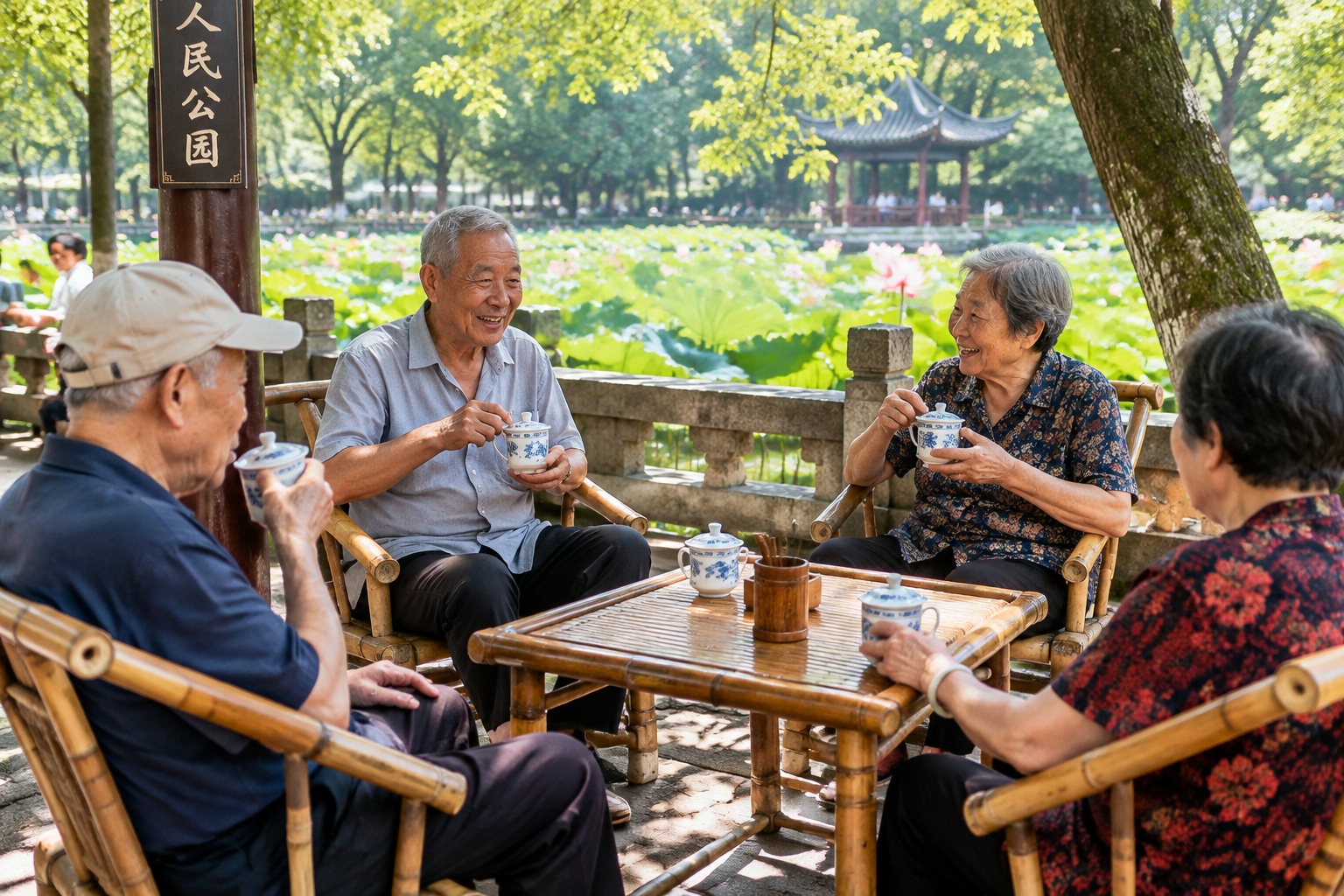

A Tuesday Afternoon in People’s Park
It’s 2 p.m. on a Tuesday, and the Heming Teahouse in Chengdu’s People’s Park is nearly full. A retired teacher named Uncle Chen is on his third cup of jasmine tea. His bamboo chair has molded to his posture over what must be years. Beside him, a woman in her sixties is having her ears cleaned — a thin metal tool gently scraping inside her ear canal — while she chats with a friend about her grandson’s school lunch.
Nobody is in a hurry. That’s the point.
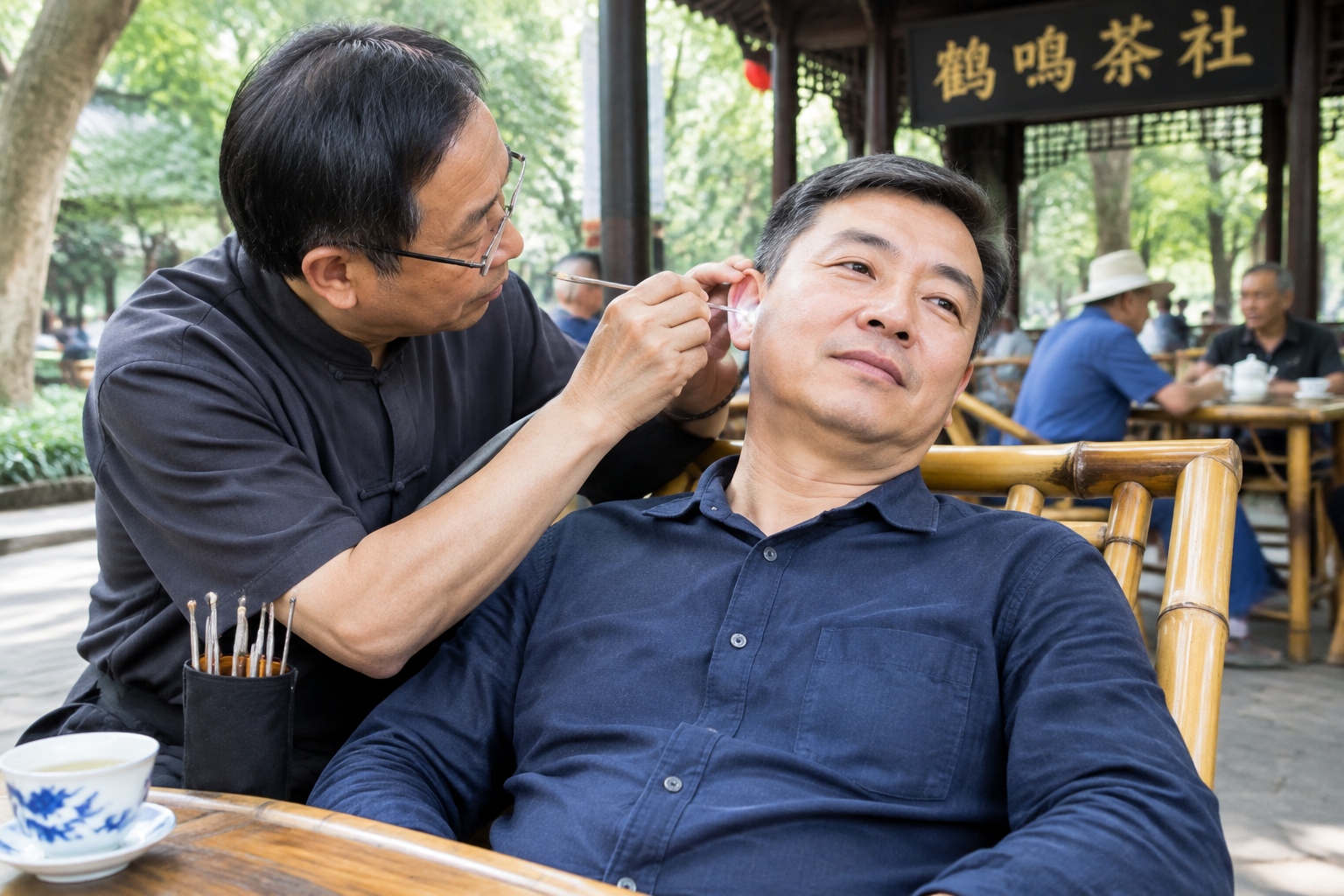
Heming Teahouse sits inside People’s Park, a green rectangle in the middle of downtown Chengdu. The park is free. The tea costs between 20 and 40 yuan (about $3 to $6), and once you sit down, nobody asks you to leave. You can stay for four hours. Many people do.
This is not a tourist gimmick. On any given weekday, the majority of people here are locals — retirees, freelancers, young parents with toddlers, college students killing time between classes. Some play cards. Some read newspapers. Some just stare at the lotus pond and do nothing at all.
What ‘Bashi’ Actually Means
Chengdu people have a word for this feeling: 巴适 (bāshì). It doesn’t translate cleanly into English. “Comfortable” is too simple. “Content” is too passive. It’s closer to a state of things being exactly right — the temperature, the tea, the company, the pace. A Chengdu friend once told me, “Bashi is when you don’t want to be anywhere else.”
The word comes from Sichuanese dialect and has been part of local speech for centuries. It shows up everywhere — describing food, weather, a good night’s sleep, a job that doesn’t stress you out. In many ways, bashi is the operating system of Chengdu life. It explains why this city of 21 million people feels slower than its size suggests.
But don’t mistake it for laziness. Chengdu has one of the busiest startup scenes in western China. Its GDP crossed 2.2 trillion yuan in 2023. The same people who spend three hours in a teahouse on Saturday are often grinding through work emails by Monday morning. Bashi isn’t about avoiding work — it’s about knowing when to stop.
Rabbit Heads, Peppercorns, and the Logic of a Chengdu Market
Walk fifteen minutes from People’s Park and you’ll hit a wet market that most tourists never find. The one I visit is tucked behind a row of noodle shops on a side street off Shaanxi Street. The entrance smells like dried chili and fermented bean paste.
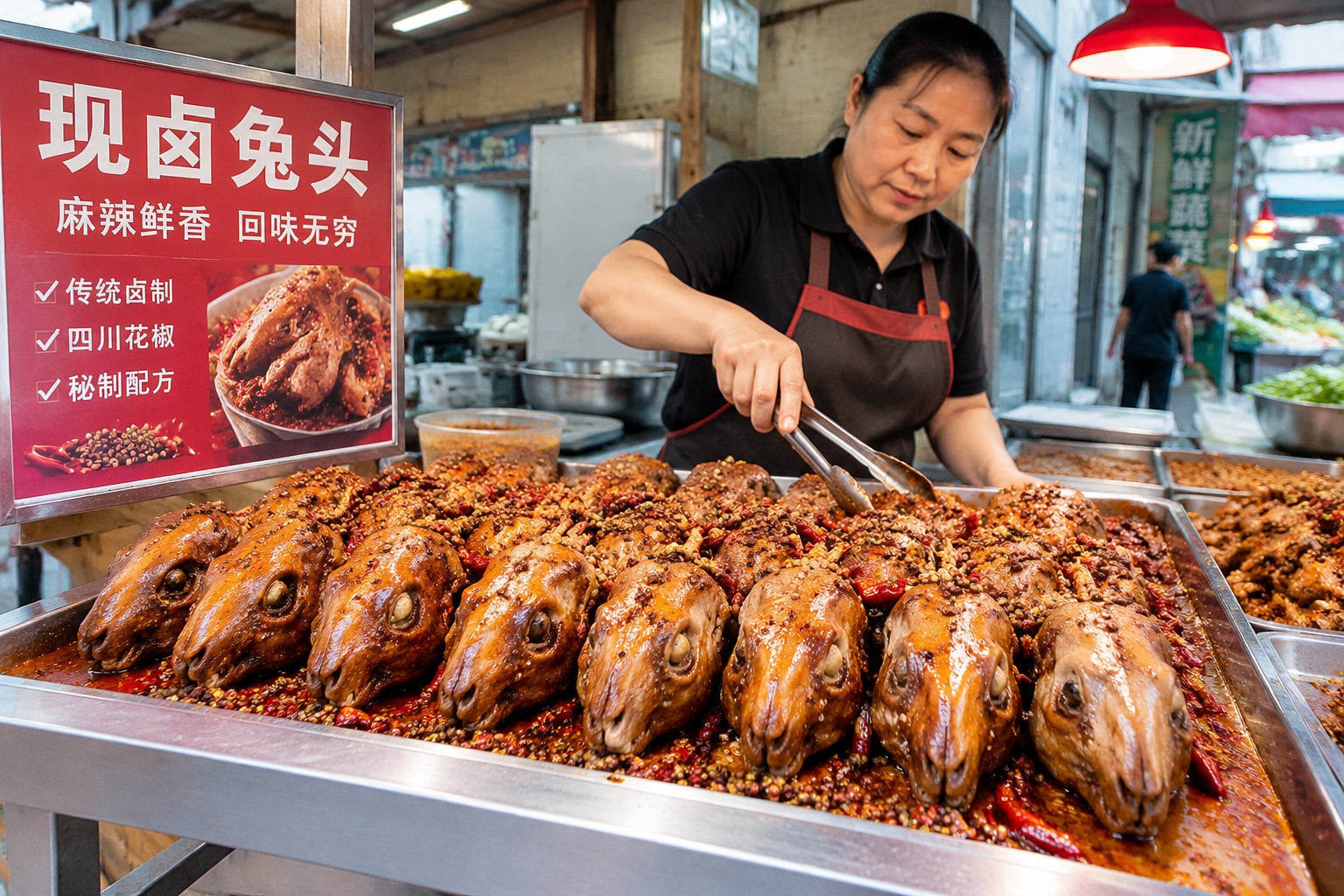
The first thing you notice is the rabbit heads. They’re stacked in neat rows, seasoned with chili oil, Sichuan peppercorn, and sesame. Rabbit head is a Chengdu snack — you pull it apart with your hands, eat the cheeks, the tongue, the brain. It sounds strange if you didn’t grow up with it. But for locals, it’s as normal as a bag of chips.
Then there’s the peppercorn. Sichuan peppercorn (花椒, huājiāo) isn’t spicy — it’s numbing. The sensation is called 麻 (má), and it’s one of the defining flavors of Sichuan cuisine. At the market, you can buy it fresh, dried, ground, or mixed with salt as a dipping powder. Vendors will let you taste before you buy. They’ll also tell you which batch is better and why, even if you’re a stranger.
The vegetable stalls are just as specific. You’ll find three kinds of bok choy, fresh bamboo shoots in spring, and yard-long beans that locals stir-fry with garlic. Prices are handwritten on cardboard. Payment is almost always through WeChat or Alipay — cash is accepted but often met with a slight pause while the vendor finds change.
Young People, Coffee, and Sichuan Opera
Chengdu’s tea culture is old. But the city’s cafe culture is new — and growing fast. In the Yulin neighborhood, narrow streets are lined with independent coffee shops run by people in their twenties and thirties. They roast their own beans, hang local art on the walls, and play lo-fi music. Some stay open until midnight.
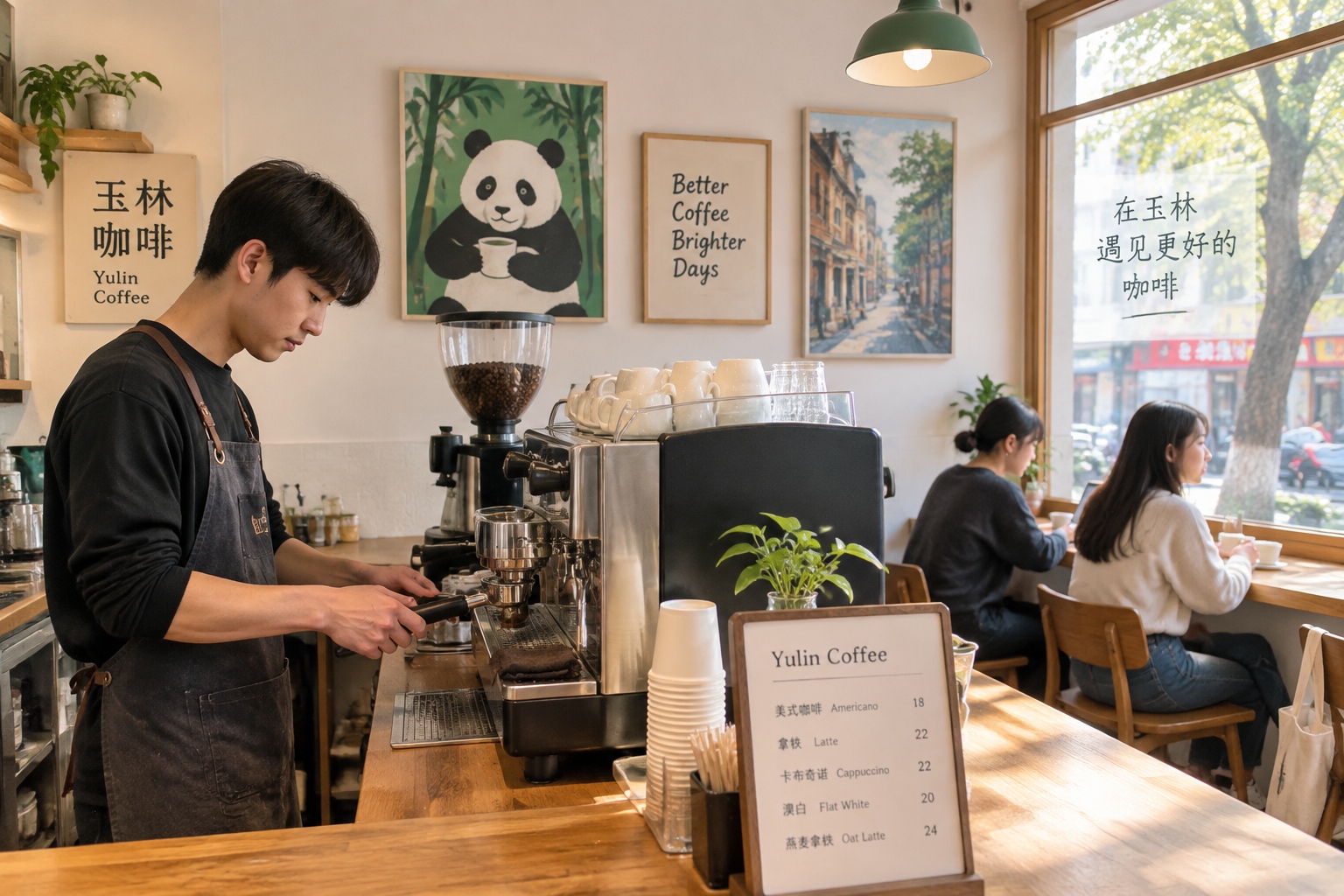
A woman named Xiaoyu opened her cafe three years ago after quitting a job at a tech company. “I wanted a place where people could sit without being rushed,” she says. Her shop seats about fifteen people. On weekends, it’s full by 10 a.m.
What’s interesting is that many of these young cafe owners also love traditional Chengdu culture. Some host Sichuan opera nights. Others sell tea alongside espresso. The line between “old Chengdu” and “new Chengdu” is blurrier than it looks from outside.
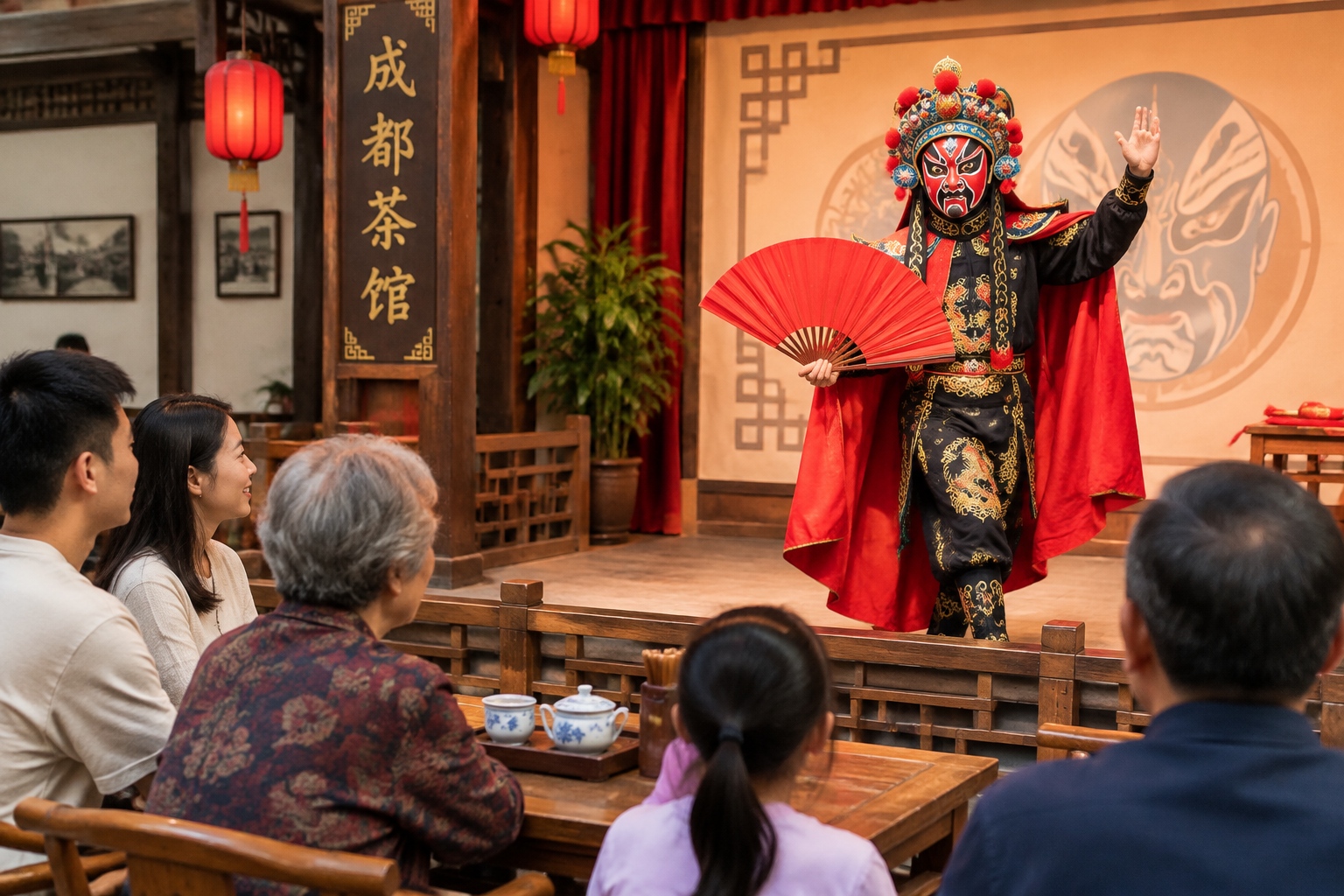
Sichuan opera itself — particularly the face-changing act known as biàn liǎn — is still performed nightly in teahouses and small theaters across the city. The audiences are mixed: tourists, yes, but also young locals who grew up watching it and still find it thrilling.
How This Compares to Europe and America
If you’re from Europe, Chengdu’s teahouse culture might remind you of a Viennese coffeehouse — a place to sit for hours, read, argue, and watch the world go by. The difference is the setting. European cafes are often indoors, intimate, and architecturally grand. Chengdu teahouses are outdoors, under trees, with plastic chairs and thermoses of hot water.
If you’re from the U.S., People’s Park might feel like a cross between Central Park and a community center. But the vibe is different. American parks are often about doing something — jogging, playing sports, walking dogs. Chengdu parks are about doing nothing, together. The social contract is simple: you show up, you sit down, you stay as long as you like.
Neither model is better. But the Chengdu version offers something that many Western cities struggle to provide: unstructured public space where people of different ages and backgrounds share the same air without needing a reason.
Why This Matters Beyond Chengdu
Chengdu is not a small city. It’s a megacity with subways, tech parks, and a growing middle class. And yet it has managed to keep a rhythm that values rest as much as output. That’s not a small achievement.
For visitors, the practical takeaway is simple. Go to People’s Park. Order a cup of tea. Sit down. Don’t check your phone every five minutes. Stay longer than feels productive. You might not fully understand bashi on the first afternoon. But you’ll feel it.
Start the discussion at forum.chinacomes.com