
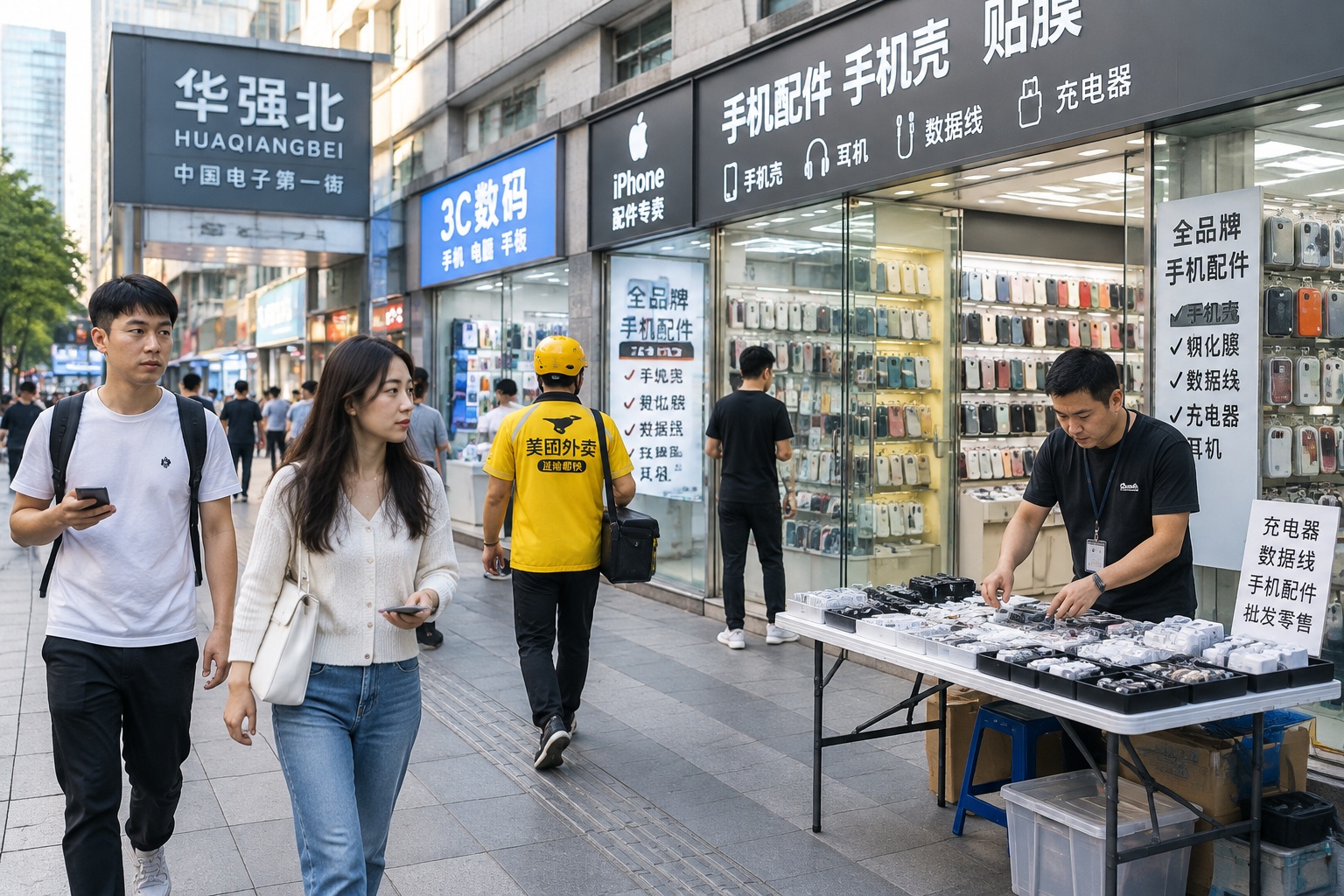

Inside Huaqiangbei, Where the “Copycat” Reputation Started
On the fourth floor of a shopping mall in Huaqiangbei, Shenzhen’s sprawling electronics district, a vendor named Chen slides a phone across the counter. It has the same camera bump and rounded corners as a model that costs ten times as much. “Same components, different logo,” he says, without a trace of embarrassment. The stall next door sells wireless earbuds by the crate.
Huaqiangbei is where the phrase “China copies everything” was born. For a generation of foreign correspondents, this was the perfect illustration: thousands of stalls, one giant photocopier.
That picture was accurate — in 2008. The mistake is treating it as a photograph of today.
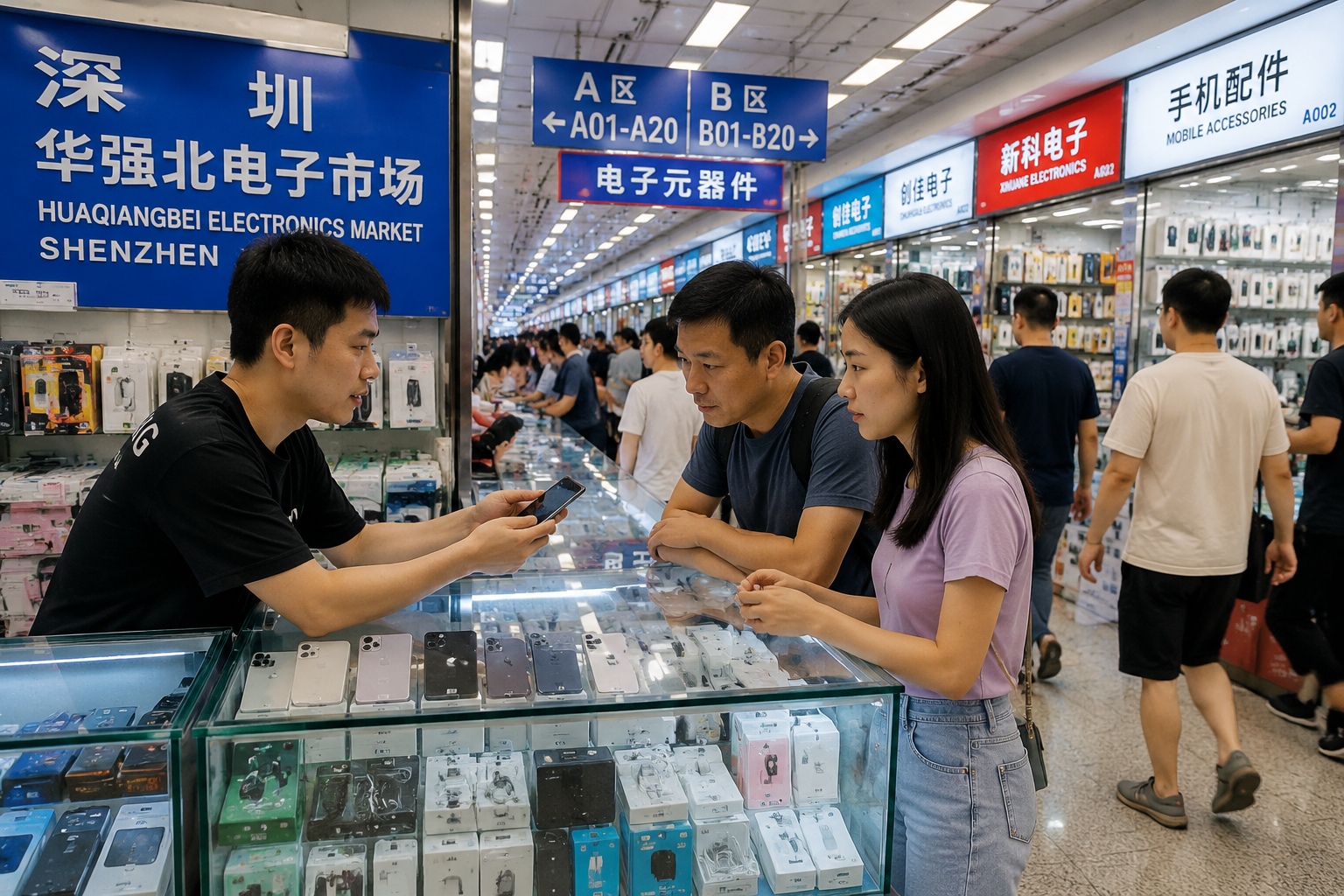
Where “Shanzhai” Came From
Shanzhai (山寨) literally means “mountain stronghold” — a bandit’s hideout. In the mid-2000s it became slang for unlicensed, off-brand electronics: phones, MP3 players, game consoles, made cheaply and sold without anyone’s permission.
The technology that made the boom possible came from MediaTek, a Taiwanese chip designer. Around 2005 the company started selling “turnkey” phone chipsets — a single package bundling processor, radio and basic software. A small workshop in Dongguan or Shenzhen could add a screen, a battery and a plastic shell, and ship a working handset within weeks. Hundreds of factories did exactly that. At the peak, shanzhai handsets likely accounted for a fifth or more of all phones sold in China.
Two details usually get left out of this story. First, most shanzhai makers were not ripping off Apple to sell to wealthy customers. They were serving people who could not afford a 4,000-yuan phone in a country where the average urban salary was a small fraction of that. Second, the same web of suppliers — chip traders, tooling shops, engineers who could reverse-engineer a circuit board in an afternoon — became the training ground for the companies that came next.
Three Companies That Left the Copy Label Behind
If Chinese industry were only a photocopier, none of the following companies should exist. All three do, and all three started in the same ecosystem.
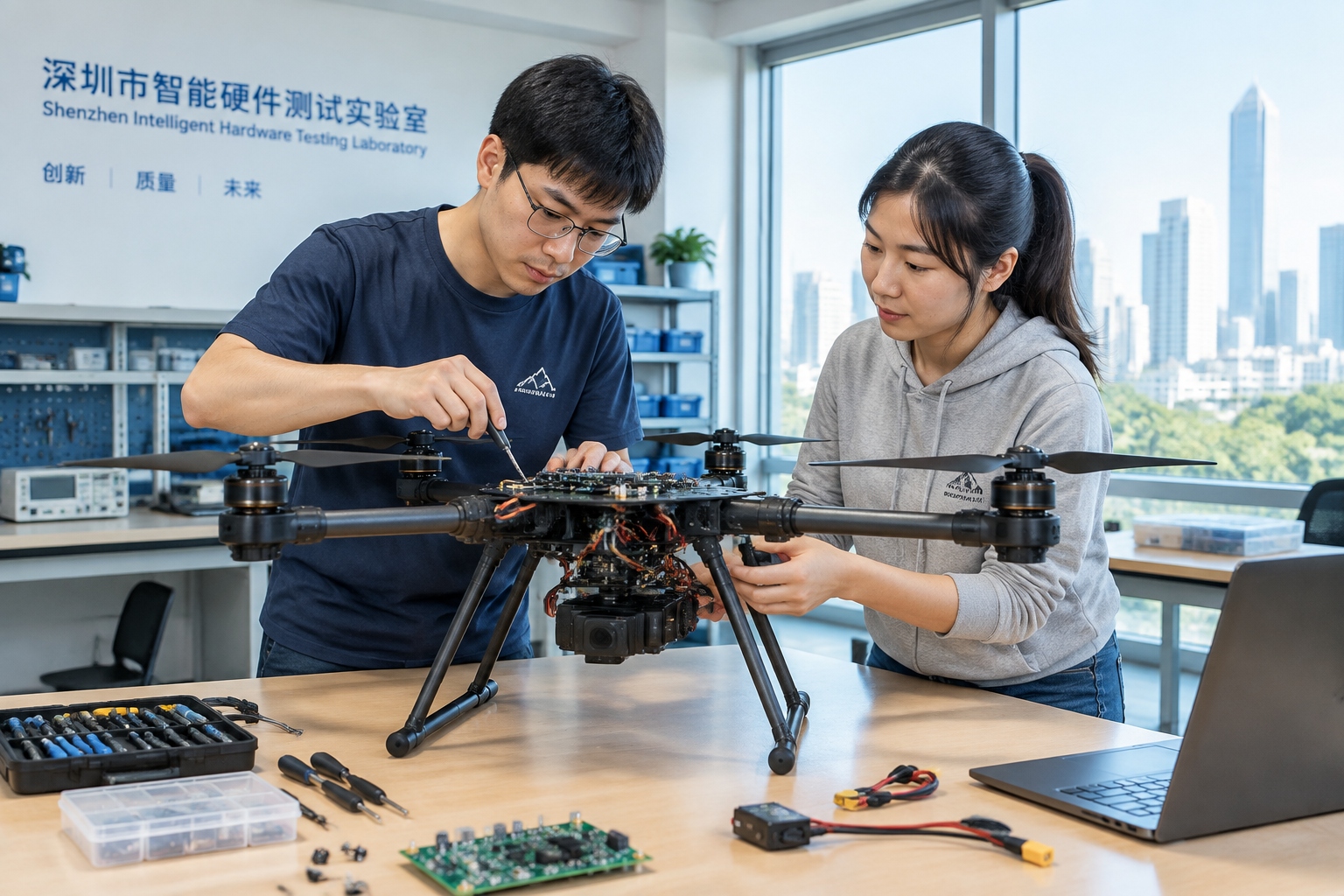
DJI: from a small office to roughly 70% of the world’s consumer drones
Wang Tao founded DJI in Shenzhen in 2006 with a handful of engineers. The first products were flight controllers — the circuit boards that keep a drone steady in the air. The 2013 Phantom was the turning point: a drone a beginner could fly out of the box, with a camera, for under $1,000.
DJI now holds roughly 70% of the global consumer drone market, plus a large share of commercial drones used in agriculture, surveying and film production. Competitors in the United States, France and China have spent a decade trying to undercut it. Most have failed, largely because DJI builds its own gimbals, cameras and flight software, and updates them faster than anyone else can respond.
BYD: the copycat that became the world’s largest EV maker
In 2005, BYD’s F3 sedan was widely described as a near-copy of the Toyota Corolla. The reputation was earned.
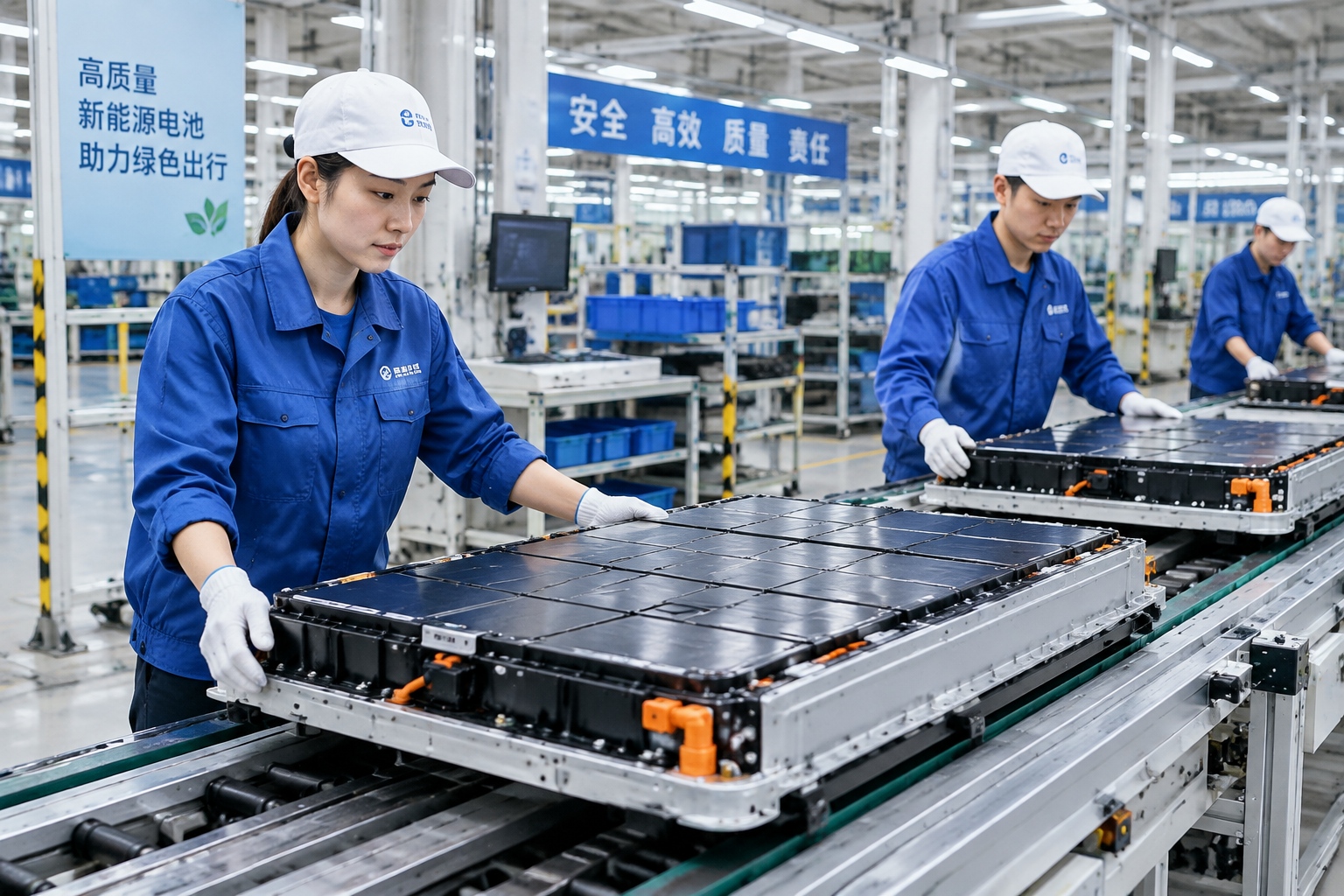
Twenty years later, BYD sold 4.27 million new-energy vehicles in 2024 — battery-electric cars plus plug-in hybrids — and overtook Tesla in global battery-electric sales in the last quarter of 2023. Its Blade Battery, launched in 2020, changed how a battery pack is assembled and became something close to a reference design for the industry. BYD also makes its own chips, motors and batteries. Western carmakers outsource most of that; BYD does not.
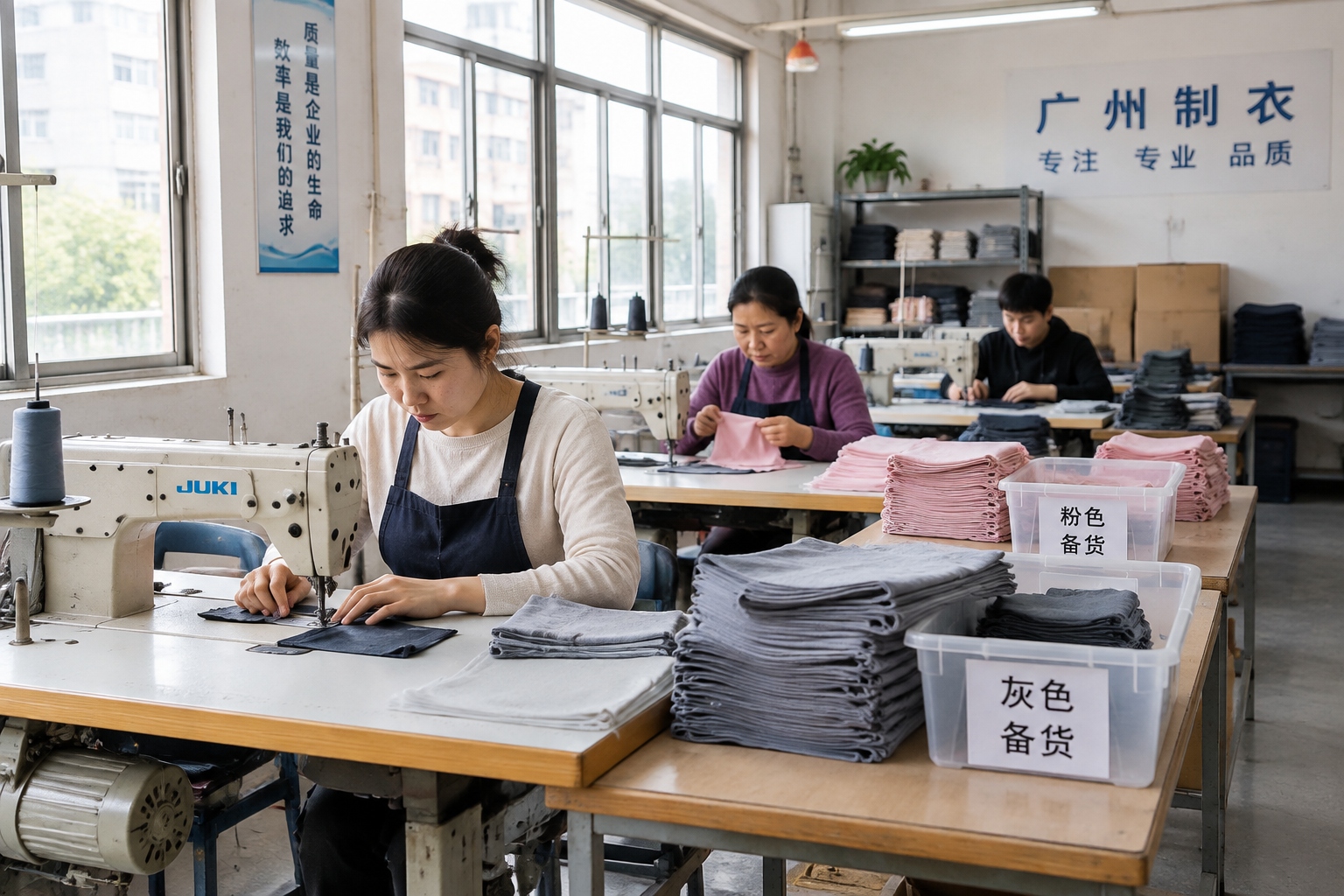
Shein: not a design pioneer, a supply chain invention
Shein is not a technology company in the way DJI is. Its innovation is organizational. In Guangzhou, it assembled a network of thousands of small garment workshops that produce in batches of 50 to 100 items — sometimes fewer — and restock within days based on real sales data. Western fast-fashion rivals typically commit to orders months in advance, in batches of tens of thousands. The result is less unsold inventory and a much faster read on what customers want.
Plenty of people find the model ethically troubling, and the labour questions around it are serious. It is still a genuine manufacturing innovation. Rivals from Zara to Temu have spent the past few years copying it.
Why Speed Gets Mistaken for Copying
This is where foreign observers most often misread what they are looking at. In the Greater Bay Area around Shenzhen and Guangzhou, an engineer with a drawing can source nearly every component for a consumer device within an hour’s drive: batteries, motors, sensors, moulded plastic, custom circuit boards, packaging. A startup elsewhere spends months on sourcing emails. Here it takes days.
That speed produces a specific illusion. A company launches a product eight months after a competitor, with a similar shape and a smaller price tag. Outsiders see theft. Often what happened is parallel iteration — two teams working from the same supplier catalogue, the same public components, the same fast feedback loop.
None of this means copying stopped. It did not. Foreign firms still win intellectual property cases in Chinese courts, and Chinese companies sue each other constantly over designs and patents. The difference is that copying is no longer the business model at the top of the market. It is mostly a strategy for the bottom, and it is a shrinking share of what China actually ships.
What the Numbers Actually Say
Start with research spending. In 2010, China spent 706 billion yuan on R&D, about 1.76% of GDP. In 2024, that figure reached roughly 3.6 trillion yuan — around half a trillion US dollars — or 2.68% of GDP. That is a five-fold increase in fourteen years, and it puts China behind only the United States in absolute research spending.
Then look at international patents. Since 2019, China has filed more Patent Cooperation Treaty applications than any other country. In 2024, applicants from China filed around 70,000 PCT applications; the United States filed about 54,000. Huawei has been the world’s top corporate filer for years and spent roughly 164 billion yuan on R&D in 2023 — about 23% of its revenue. In 5G standard-essential patents, Chinese firms collectively hold a leading share.
The honest caveats matter too. A large part of China’s patent volume consists of utility models — a lower-threshold form of protection with a shorter term — which inflates headline counts. Enforcement, while far stronger than a decade ago, is uneven. Chinese courts now handle more than half a million intellectual property cases a year, which tells you both that the system works and that disputes are everywhere. And in genuinely hard technologies — advanced lithography machines, chip design software, aircraft engines — China remains dependent on imports.
The Logic Underneath: From “Made in China” to “Made by China”
The simplest way to understand the shift is this. Copying was the cheapest available education. In the 1990s and 2000s, Chinese firms had capital, workers and a huge domestic market, but almost no proprietary technology. Reverse-engineering was how a generation of engineers learned what a good product looks like from the inside.
What changed is where the money went next. R&D tax credits, cheap industrial land, and a talent pool of well over a million science and engineering graduates a year made it rational to move from copying to designing. So did competition: in electric cars alone, China has dozens of serious brands fighting for the same buyers. Companies that survive that market tend to be unusually fit when they go abroad.
So is China still a copycat? In some corners, yes — and anyone who has walked through Huaqiangbei this year can see it. But the country that made cheap knockoff phones is now the country exporting electric buses to Europe, building the drones that Hollywood rents, and filing more international patents than anyone else. The label is out of date. The market that earned it is still there, three subway stops from the companies that outgrew it.
Start the discussion at forum.chinacomes.com