

A Night Scene You Might Not Expect
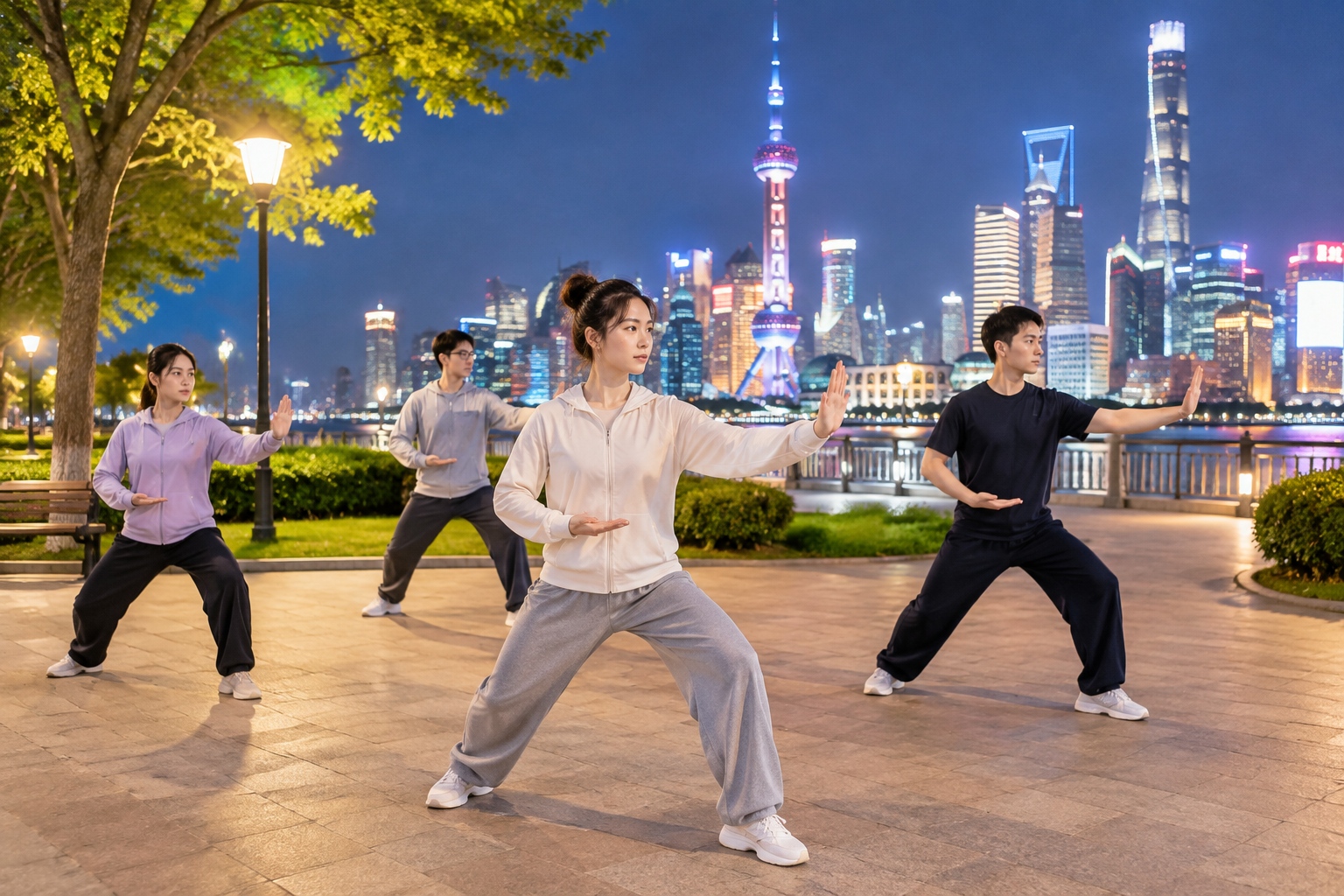
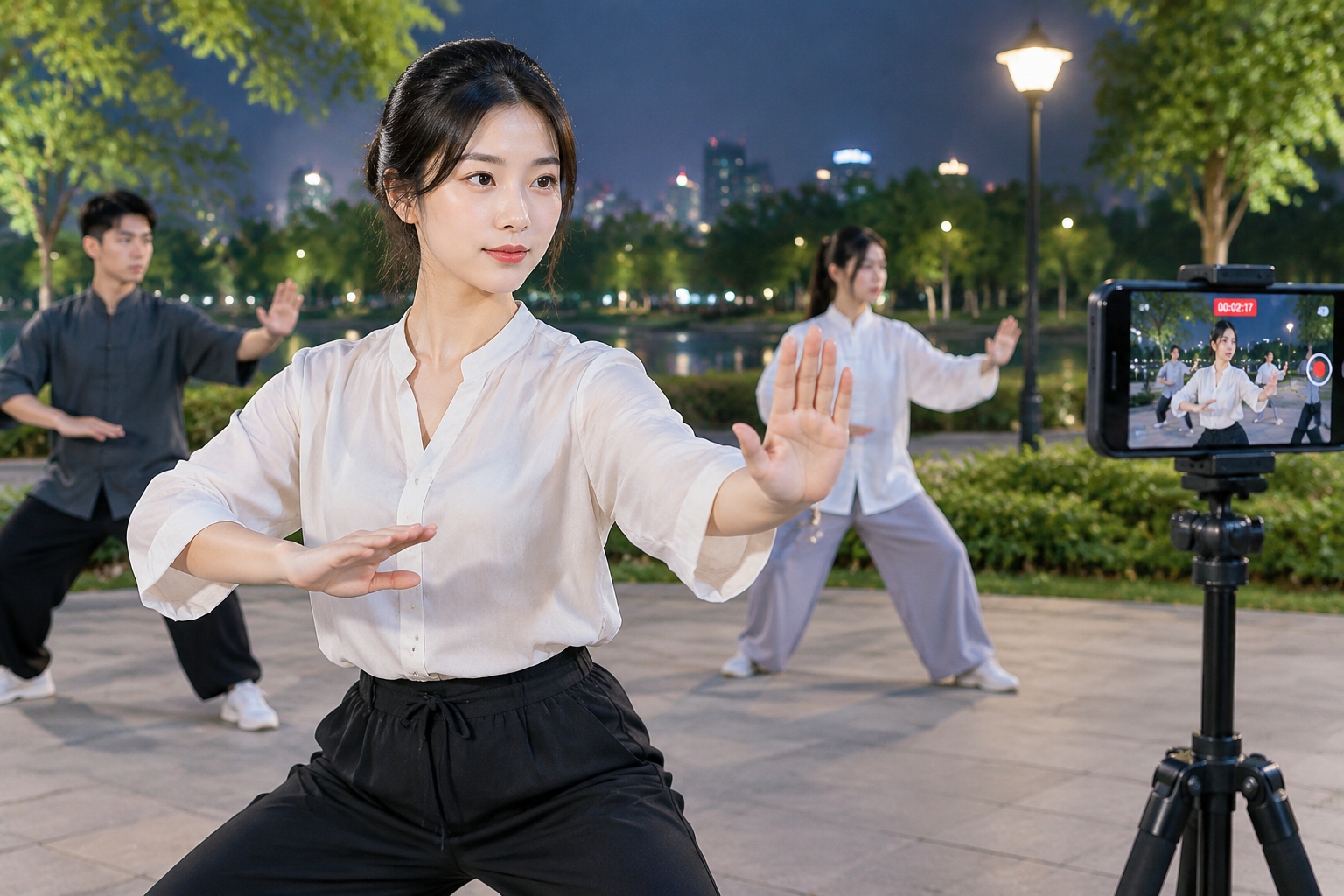
It’s nearly 10 p.m. on a Wednesday in Shanghai. In the soft glow of streetlights, a group of about twenty young people in jeans and sneakers moves slowly through a sequence of tai chi postures near the entrance of a central park. One woman pauses to adjust the tripod holding her smartphone, using the night to catch up on a personal project. Her name is Lin Wei, a 29-year-old marketing manager. She used to think tai chi was for retirees. Now she comes here three times a week after work.
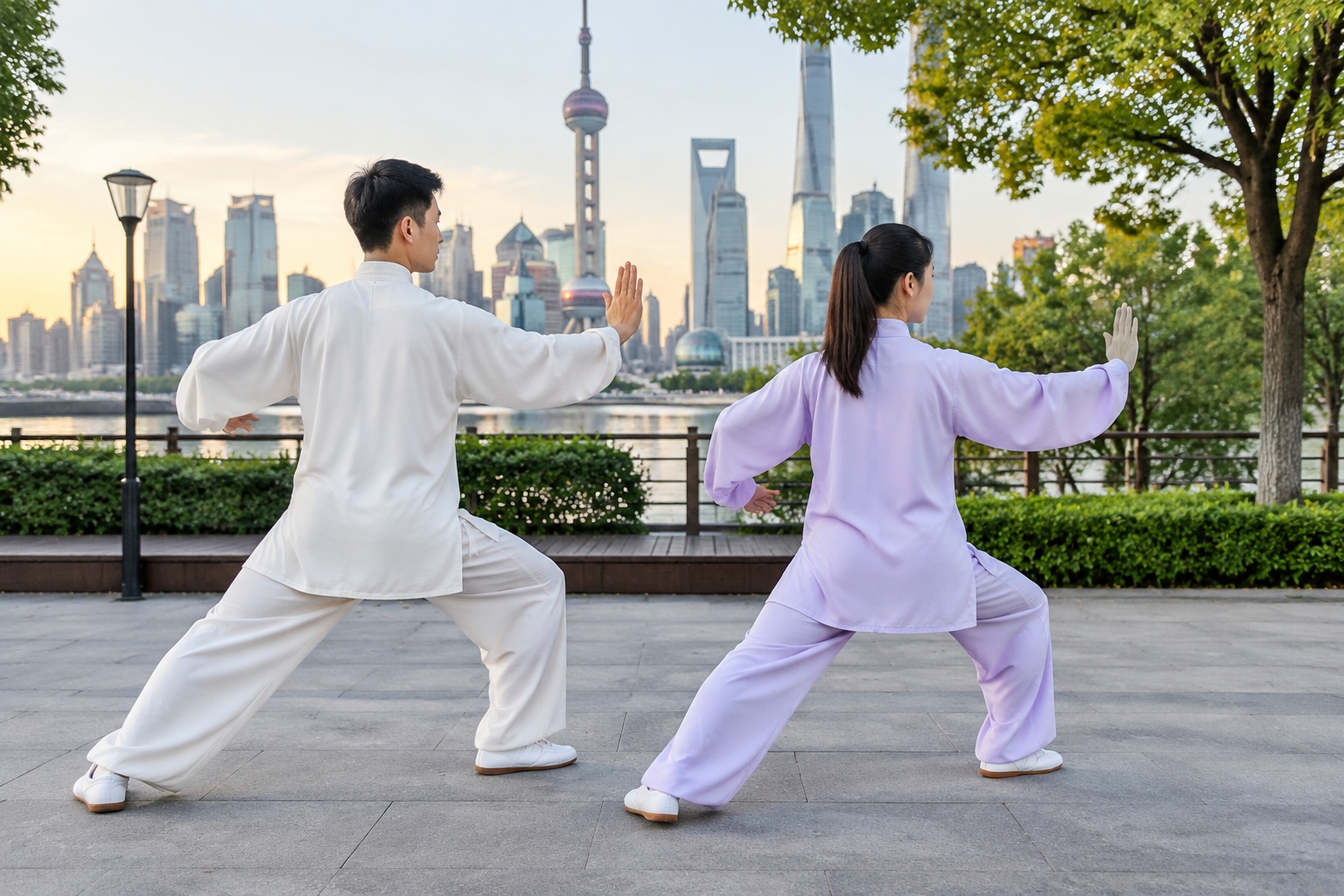
If your mental picture of tai chi is a cluster of elderly Chinese moving slowly in the morning, you’re not alone. That’s how most people—including many Chinese—have long viewed it. But in Shanghai and other large cities, a quiet shift is underway. Young professionals are showing up at parks after dark to practice a discipline their grandparents might have practiced decades earlier. It’s not ironic. It’s a response to the conditions of modern urban life.
Lin Wei discovered this group by accident. She was walking her dog one evening when she saw silhouettes moving under the trees. ‘I was curious how they kept their balance in the dark,’ she said with a laugh. ‘Then I tried it, and my lower back pain started to ease after a few weeks.’
The Stress of China’s White-Collar Life
China’s urban professionals work under intense pressure. The unofficial 996 schedule—working from 9 a.m. to 9 p.m., six days a week—has become a shorthand for the exhaustion felt by many young employees. Long commutes, high expectations, and constant connectivity via messaging apps blur the line between office and home. Sleep problems, anxiety, and chronic back pain are increasingly common lunchtime conversations.
For many, the pressure isn’t just from deadlines; it’s from the competitive social environment. Social media constantly shows success stories of peers, adding a layer of comparison fatigue. In this context, tai chi offers a non-competitive space where no one is judging your performance.
At the same time, a growing awareness of physical and mental health is pushing people to find sustainable ways to reset. For many, cost is an obstacle. Private gyms and boutique yoga studios in Shanghai can charge hundreds of dollars a year. Tai chi, offered free in public parks or taught by local masters for a small monthly fee, is both affordable and flexible. No registration, no locker room, no expensive gear—just show up and move.
Why Tai Chi, Not Yoga or Gym?
In Western cities, young professionals might join a yoga studio or a high-intensity class to de-stress. Tai chi offers a different draw. It is slow, low-impact, and centered on breath and balance, functioning like mindfulness meditation in motion. Yet it also preserves its martial heritage, which gives participants a sense of discipline and purpose. For Chinese youth, it feels less like a foreign import and more like a rediscovered homegrown practice.
That cultural familiarity matters. Practicing tai chi connects a person to a lineage that stretches back centuries. Many young people in China, as in the rest of the world, are increasingly curious about their roots in a rapidly changing society. Tai chi is one of the few traditions that can be seamlessly integrated into a modern schedule—and it gives them something to talk about with older relatives, a rare cross-generational bridge.
There’s also growing evidence that tai chi is genuinely good for you. Research from institutions such as the Harvard Medical School and the Chinese medical community suggests that regular practice can reduce stress, improve balance, and even help with conditions like hypertension. For a generation that often relies on health apps and supplements, this kind of verified benefit is appealing.
Compared with Western-style gyms where everyone wears earphones and focuses on their own mirror reflection, a park tai chi circle is inherently social. You need to be aware of others to maintain the spacing and rhythm of the form. That subtle interpersonal connection is something many people crave after a day of digital screens.
A Social Network in Slow Motion
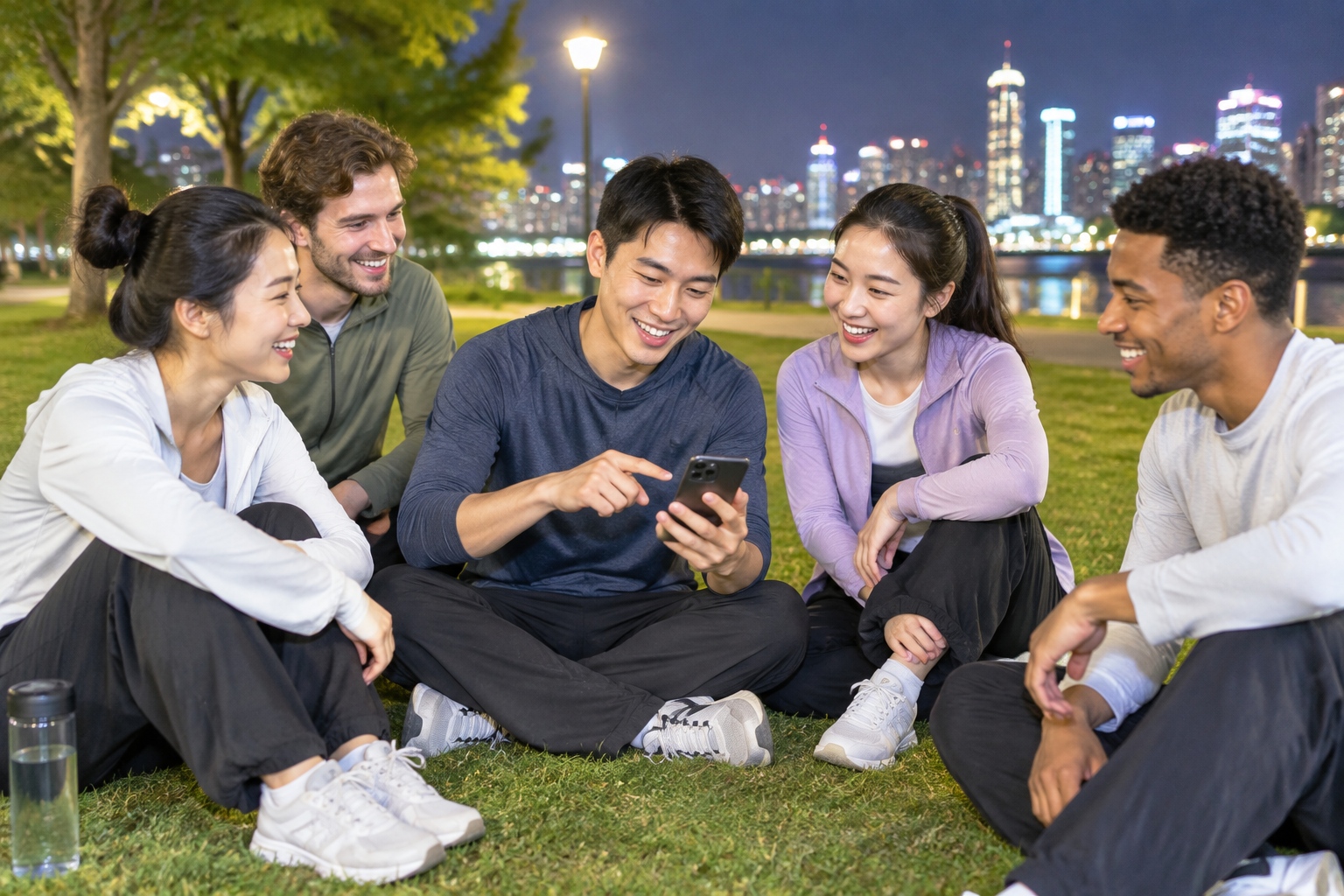
Tai chi in Shanghai’s parks is not just about exercise; it’s about belonging. Many practice groups are organized through WeChat, China’s all-purpose messaging app. A group organizer posts the weekly schedule, welcomes newcomers, and shares clips of practice moments. Members chat about work stress, weekend plans, and where to buy the best dumplings in the neighborhood. For young transplants who moved to the city solo, this creates a low-pressure social circle that doesn’t require small talk in bars.
Social media is also rewriting the image of the practice. Short video platforms like Douyin (the Chinese version of TikTok) are full of young tai chi influencers who mix traditional forms with modern urban aesthetics. Some film in neon-lit rooftop studios; others practice in rainy lanes with soft electronic music in the background. These videos regularly receive thousands of likes. The message to young viewers is clear: tai chi is not frozen in the past. It belongs to the present, and even to the future.
On weekends, some groups organise tea breaks or meals after practice. This mix of exercise and socialising has a name in Chinese: yangsheng (养生), which means nurturing your health—but it also nurtures friendships.
Parks That Make It Possible
If you’re from Europe or the U.S., you might wonder: aren’t parks closed at night? In Shanghai, many urban parks stay open until late—some even through the night—with warm lighting and security patrols. The city has invested heavily in making public spaces safe and inviting. That infrastructure, combined with a dense urban layout, turns almost every neighborhood park into a potential evening training ground. These parks usually have free Wi-Fi, which is convenient for anyone following a tutorial video on their phone. Some even have smart equipment that guides your stretches. The merging of ancient practice and modern tech is a natural fit.
For young professionals who work late, the convenience is key. Take the subway home, stop by the park for 40 minutes of practice, and still be in bed before 11 p.m. The park becomes a third place—not home, not office, but a shared open-air living room.
More Than Exercise
For many new practitioners, tai chi fills a gap that neither work nor leisure seemed able to cover. It is both a physical discipline and a mental reset. In a world where everything moves fast, it is a deliberate act of slowness. As one 26-year-old bank analyst explained, ‘When I’m practicing, I can’t check my phone. That’s the only time all day when I’m completely offline.’
This is not about retreating from modernity. It’s about finding an anchor of calm in a hyper-connected city. And it’s part of a wider pattern: young Chinese are rediscovering traditional practices like hanfu (Han-style clothing), calligraphy, and traditional medicine, often with a contemporary twist. Tai chi fits into this movement naturally.
A few years ago, mentioning tai chi at a startup company might have raised eyebrows. Now, colleagues politely ask for recommendations. It’s even seen as a sign of maturity—an ability to manage stress that many aspire to.
The next time you see a video of Chinese elders doing tai chi in the park, know that in Shanghai, the circle is getting younger—and the night is just beginning.
Start the discussion at forum.chinacomes.com